Maryland
Anne Arundel County school board rejects Pride flag ban
Vote was 4-3 against proposed policy

Anne Arundel County Board of Education members on Wednesday rejected a proposed ban on non-government flags on school property.
The policy would have banned flags, such as the Pride flag, Black Lives Matter flag and others from being hung or flown on school properties.
The board voted four to three, with one abstaining, against the proposed policy. The votes were as follows:
Board President Joanna Bache Tobin, District 6: No
Board VP Robert Silkworth, District 2: No
Eric Lin, Student Member: No
Gloria Dent, District 1: Abstain
Corine Frank, District 3: Yes
Melissa Ellis, District 4: Yes
Dana Schallheim, District 5: No
Michelle Corkadel, District 7: Yes
The ban, which Frank proposed, would have encouraged the display of the U.S. flag, Maryland flag and other local flags to fly at schools in the district. Any other flags displayed would have only been accepted for a “bona-fide educational purpose,” determined by the schools’ principals.
Along with banning the Pride and Black Lives Matter flags, the policy would have required school staff to get permission to hang military, college and sports team flags and pennants.
Advocates for the policy argued that the display of Pride and Black Lives Matter flags harm students whose religious beliefs do not support LGBTQ or Black Lives Matter communities. Others argued the flags themselves were political symbols, and their presence would influence students’ political beliefs.
The Anne Arundel chapter of Moms for Liberty, a far-right extremist group, was a strong supporter of the policy.
Opponents to the proposal argued a ban on flags would be one more step toward excluding LGBTQ studetns and students of color.
Lin, a senior at Severna Park High School and the only student representative on the board, was met with applause from his colleagues and those in the audience when he expressed concern over the labeling of flags as political.
“The Pride flag, for example, is not a political or social issue,” Lin said. “LGBTQ people exist in our society and their fight for continued equality is represented by the Pride flag. It is a human rights issue … in a public school system, the goal is to teach students that there are people who are different than them that exist, and teachers don’t teach students to be queer. They teach students that queer people exist and to treat them like human beings.”




Maryland
Anne Arundel schools now need parent permission to call trans students by preferred names
Conservative groups challenged system’s policy
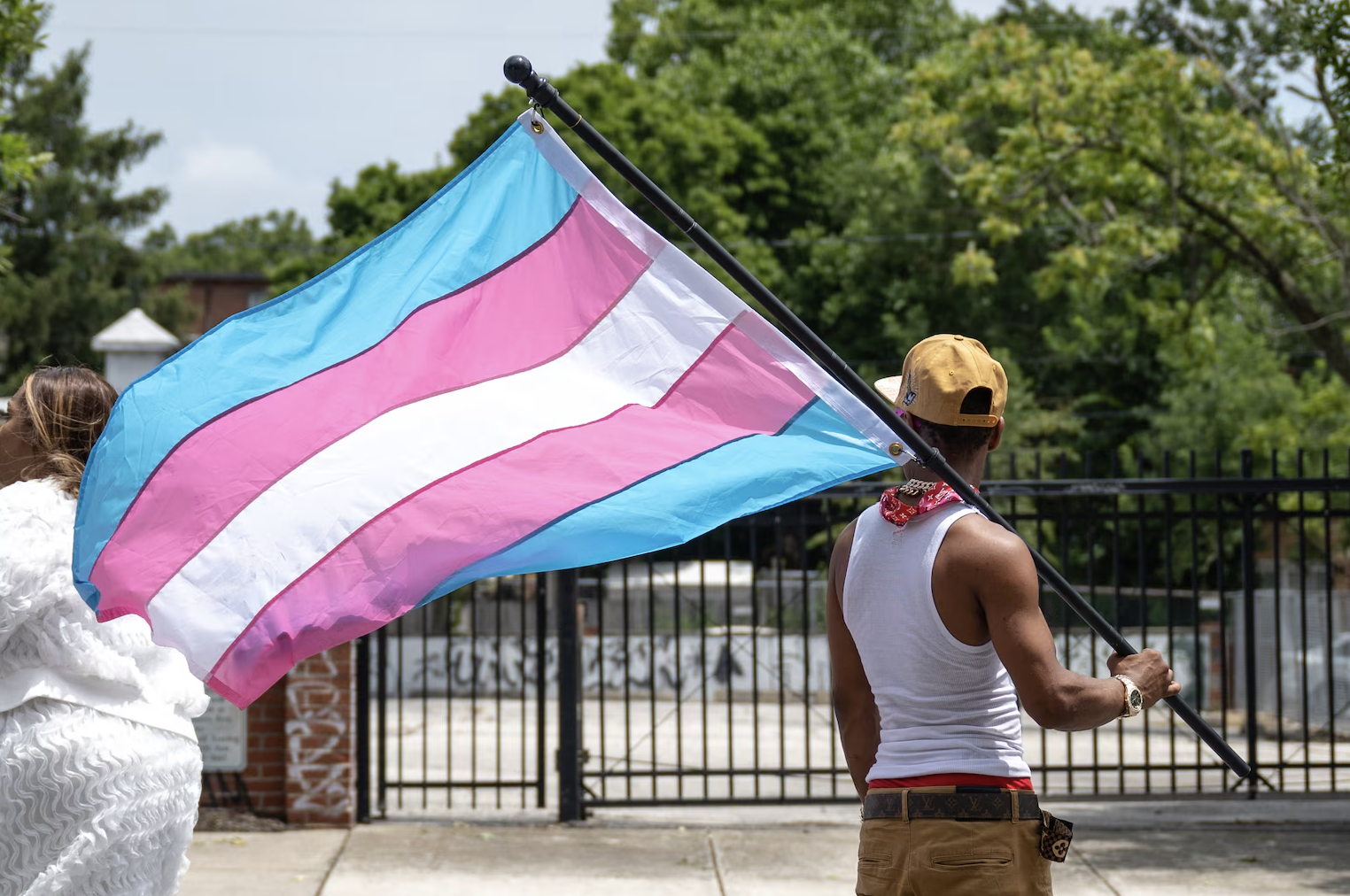
By JESSICA CALEFATI | Anne Arundel County Public Schools staff cannot use transgender students’ preferred names if their parents oppose it, according to an internal document reviewed by the Banner, a change that comes after conservative groups challenged the school system’s approach to gender identity.
Teachers union president Kristina Korona told members in an Aug. 20 email that the new guidance undermines district policy on acceptance and inclusivity and “will begin harming affected students immediately.”
Previously, the district didn’t require parental permission to use a high school student’s chosen name and pronouns corresponding to their gender identity, the internal document says. Now it does. The change comes as parents challenge the suburban school system’s gender identity policy and regulation in court and the Trump-Vance administration threatens the district’s funding.
The rest of this article can be found on the Baltimore Banner’s website.
Maryland
Girlfriends charged with Silver Spring murder to go on trial in 2027
Prosecutors charged both women with killing mother of one of them

Two women identified as a couple who are charged with the May 22, 2026, murder of the mother one of them in her Silver Spring home and who were arrested three weeks later in Ohio are scheduled to go on trial for murder April 19, 2027.
According to online records filed with Montgomery County Circuit Court in Rockville, Vanessa Tjongarero-Henderson, 29, of Clarksburg, Md., and Samantha Raebel, 36, of Phoenix are being held without bond in the Montgomery County Correctional Facility until the time of their trial.
Statements from Montgomery County police show the two women were arrested June 10 in Genoa, Ohio, after fleeing from the scene of the murder in Silver Spring. Police statements and court records show they were extradited back to Maryland in July, where prosecutors with the Montgomery County State’s Attorney’s Office obtained indictments against them for murder.
Earlier statements from Montgomery County police say their investigation into the murder led to their decision to initially charge the two women with first-degree murder for the death of Hilde Henderson, 67, who was Tjongarero-Henderson’s mother.
“Through the course of the investigation, detectives identified Henderson’s daughter, Vanessa Tjongarero-Henderson, and Vanessa’s girlfriend, Raebel, as the suspects,” one of the police statements says. It says police obtained arrest warrants for both women and launched a nationwide search seeking help from the public in in locating them.
One of the police statements says an autopsy determined the cause of Hilde Henderson’s death was blunt-force trauma injuries brought about by a murder. Police and the State’s Attorney’s Office, which is prosecuting the case, have yet to disclose whether they have determined a motive for the murder.
Court records show that prior to the start of the April 19, 2027, trial a “motion” hearing was scheduled for Oct. 30, 2026, a pre-trail conference was scheduled for Feb. 12, 2027, and another motion hearing and a status hearing were scheduled for March 12, 2027.
Court records also show that Tjongarero-Henderson is being represented by attorneys with the Montgomery County court system’s public defender service. The records show that Raebel initially had been represented by a public defender service attorney, but updated records show Aug. 14 is listed as the “removal date” for that attorney.
The docket shows that on Aug. 20, two new attorneys with the prominent D.C. law firm of Covington & Burling made their official appearance as her attorneys in the murder case. One of them, Daniel Solomon, told the Washington Blade in response to an inquiry that the defense has no comment at this time on the case.
He confirmed that Covington & Burling is representing Raebel on a no-cost, pro bono bass.
The office of the Montgomery County public defender service didn’t immediately respond to a phone message from the Blade asking for a comment on the Tjongarero-Henderson case.
Congress
Chris Van Hollen says the Democratic Party needs change. Is he the one to lead it?
Senator is backing anti-establishment Democrats across the country
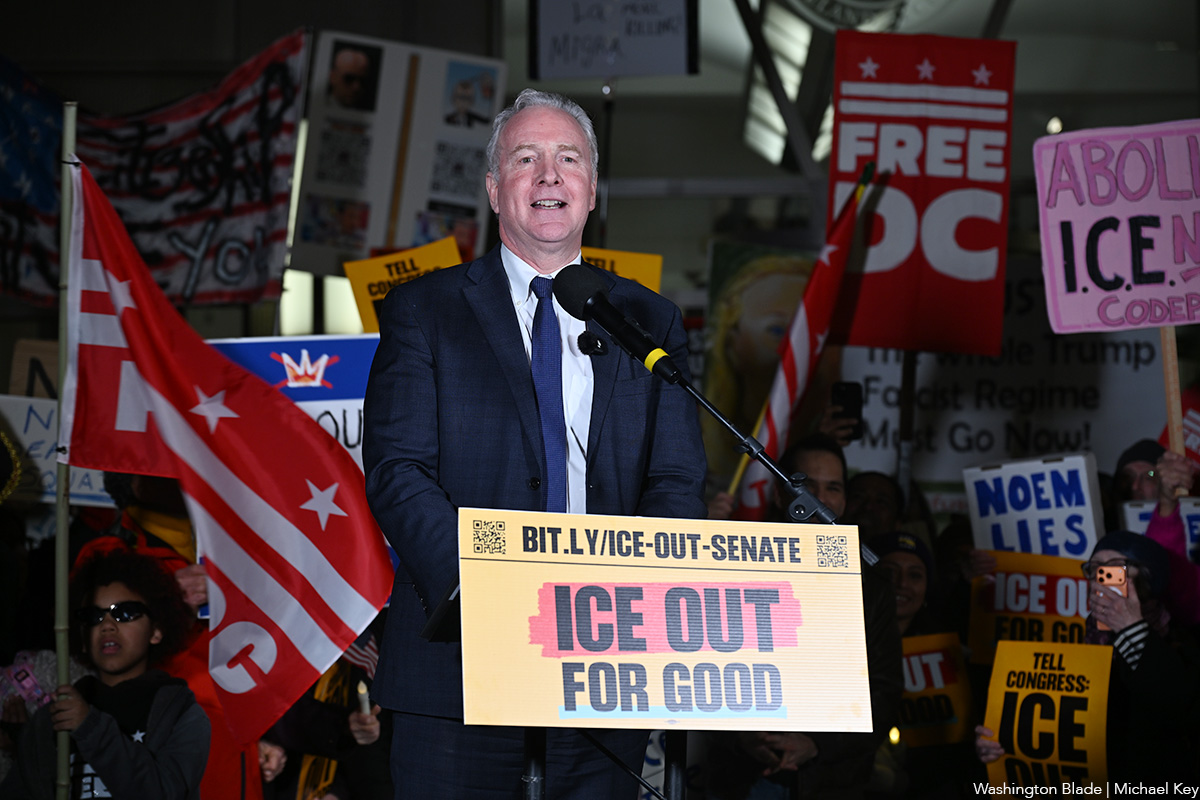
By LEE O. SANDERLIN | The Democratic Party is having something of an identity crisis — losing to President Donald Trump twice in three elections will do that.
Should the party embrace anti-establishment figures who espouse progressive policy ideas like Medicare for all and rhetoric about unrigging the economy for the 1 percent? Or should Democrats try to appeal to moderates who want to return to semi-normalcy in a time of political upheaval?
Although he’s been in Congress since 2002, with key leadership roles throughout his tenure, Maryland Sen. Chris Van Hollen, 67, counts himself firmly in the anti-establishment camp.
The rest of this article can be found on the Baltimore Banner’s website.

Iceland implements gender-neutral blood donor rules

Blade Foundation to host fundraiser in Rehoboth on Sept. 12

New book examines fashionista Audrey Smaltz’s fabulous life

Actress takes on bisexual ‘Ma’ Rainey in new Round House production

‘Here the Whole Time’ delivers queer coming-of-age comedy

The mastery of love

Gloria Steinem dies at 92

Trans people need a politics of ordinary life

Pentagon expands testosterone screening as trans troops face hormone therapy restrictions