Opinions
10 reminders of why we must vote for Harris
A strong LGBTQ turnout could swing election in key states
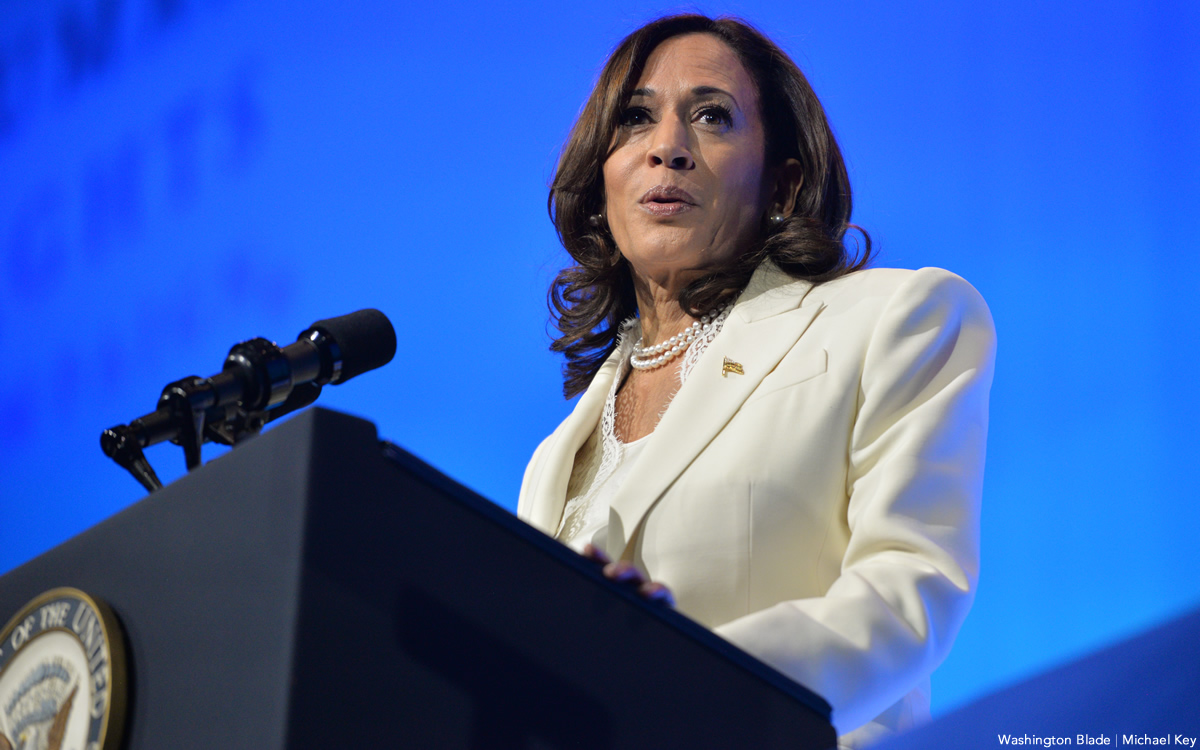
There are a million reasons to vote for Kamala Harris over Donald Trump but here are 10 of the best. If you’re not feeling the burn about casting your ballot, please remember just how close our last two elections were and how dire the 2016 consequences for the country. Indeed, a strong turnout by LGBTQ and allied voters could prove decisive in some key states.
So let’s review 10 reasons why it’s not only important — but essential — that all LGBTQ and allied voters show up to vote for Kamala Harris.
#10 The opportunity to make history. For the second time in 16 years, America has the exciting chance to make a historic choice for the White House. Kamala Harris would be the first woman and first woman of color to serve as president if elected. It’s not the #1 reason to vote for her but it’s a pretty damn good ancillary benefit.
#9 The chance to send Trump into oblivion. After eight long years of commanding endless mainstream media attention for his ever-expanding list of racist, sexist, xenophobic, and transphobic attacks, we have the chance to finally dispatch ourselves of the toxic Trump. He’s insulted everyone from Gold Star families and the disabled to Meryl Streep and Rosie O’Donnell. That there’s anyone left willing to vote for him is mindboggling. (I’m talking to you Lindsey Graham and Ted Cruz.) Imagine how much our collective blood pressure will ease without having to endure wall-to-wall coverage of his every social media post. “Morning Joe” will be hard pressed to continue without Trump to mock but it’s a sacrifice I’m willing to make.
#8 To preserve trans military service. In his first term, Trump tweeted that trans people were barred from serving their country “in any capacity.” It was a cruel stunt that damaged careers and led to a direct uptick in hate crimes targeting the trans community. There’s no doubt he would reinstate that ban on day one. It’s ironic that Trump goes after brave members of the military given his own “bone spur” excuse to avoid Vietnam. None of his kids has served either, of course. Trump has referred to dead service members as “losers” and “suckers.” That comment alone — corroborated by his chief of staff John Kelly — should be disqualifying.
#7 To continue growing the economy. I’ve never understood all the naysayers who complain about the U.S. economy, which is envied the world over. No other country emerged from COVID as strong as we did, defying all expert predictions of recession — record stock market numbers, record employment, rapidly declining inflation and interest rates. The Democrats have never been good at messaging and it’s frustrating that they allow Trump to talk down our economy at every rally without a coherent response. The truth is our economy is strong and Harris’s plans to tax the wealthiest and invest in small businesses has been endorsed by leading economists over Trump’s ridiculous and doomed idea of starting a trade war with China over tariffs. The LGBTQ community is disproportionally entrepreneurial, so Harris’s tax benefits for small business owners will boost us tremendously.
#6 To aid Ukraine. The Blade has traveled to Poland and other Eastern European countries to cover the plight of LGBTQ migrants fleeing Ukraine after Russia’s invasion. Their stories are heartbreaking. We have an obligation to stand by Ukraine along with Western Europe to stop the murderous Putin and preserve democracy. Trump will cave to Putin’s demands that he be allowed to annex large swaths of Ukrainian territory, emboldening the Russian dictator and encouraging further incursions into other neighboring countries.
#5 To stop Project 2025 in its tracks. We have documented the anti-LGBTQ horrors that await us if Project 2025 becomes the governing blueprint for a second Trump administration. The assaults are too many to recap here so just remember these lines from the document: “The next conservative President must make the institutions of American civil society hard targets for woke culture warriors. This starts with deleting the terms sexual orientation and gender identity, diversity, equity and inclusion, gender, gender equality, gender awareness, gender-sensitive….out of every federal rule, agency regulation, contracts, grant regulation and piece of legislation that exists.”
#4 To protect a woman’s right to control her body. Predictably, women are now dying as a result of Trump’s abortion bans, as reported by ProPublica. And it will only get worse if Trump is re-elected and his congressional allies push through a national abortion ban as they’ve promised to do. If you think this isn’t about you, consider that Roe v. Wade provided the foundation for the Obergefell marriage ruling, which Justices Alito and Thomas have already said should be revisited.
#3 Supreme Court. Speaking of the high court, there is credible speculation that if Trump wins, Alito and Thomas will be pressured to retire, giving Trump an unprecedented five picks and a MAGA majority. That’s game over for a generation and the end of Obergefell marriage equality, Lawrence privacy rights, and more.
#2 To preserve and advance LGBTQ equality. The last 20 years have brought unimaginable progress for LGBTQ rights, from marriage equality to the end of “Don’t Ask, Don’t Tell” to Bostock’s conferring employment protections to most of us, and so much more. There’s more to do, especially given the anti-LGBTQ state laws passed around the country giving rise to book bans, bathroom bans, and dangerous anti-trans healthcare restrictions. A Trump presidency jeopardizes all of our recent gains and puts us back on defense. A Harris presidency ensures we continue to move ahead and gives us a chance to undo some of the recent setbacks.
#1 To defend democracy. Trump and J.D. Vance whine a lot about criticism that they are undermining democracy, claiming these accusations are to blame for two recent assassination attempts. For someone who trafficks in violent rhetoric all the time, it’s a brazen and hypocritical claim. There’s an old saying about living by the sword that Trump should Google. But it’s not hyperbole to suggest that a Trump presidency would represent the end of democracy. He’s already incited an insurrection after badly losing the 2020 election. Trump and Project 2025 promise to gut the federal government, lock up critics and journalists, allow Putin to do “whatever the hell he wants,” privatize critical government functions, ban books and DEI, and even to ban pornography. The list goes on. Yes, it’s the end of American democracy if he wins.
But this election isn’t just about rejecting Trump. It’s also about embracing the promise of a Harris administration, which would bolster the economy, respect human rights, fight for equality, combat climate change, fix the border, advance gun reform, and promote many other common sense, centrist policies supported by a majority of Americans.
There you have it, a succinct reminder of what’s at stake on Nov. 5. So vote for Kamala Harris and Tim Walz and send a message that character still matters, that America remains a trusted defender of human rights, and that we won’t let a dangerous convicted felon anywhere near the Oval Office again.
Kevin Naff is editor of the Washington Blade. Reach him at [email protected].





Africa
When home becomes a journey: migration, memory, and the African diaspora
People carry pieces of previous lives wherever they go
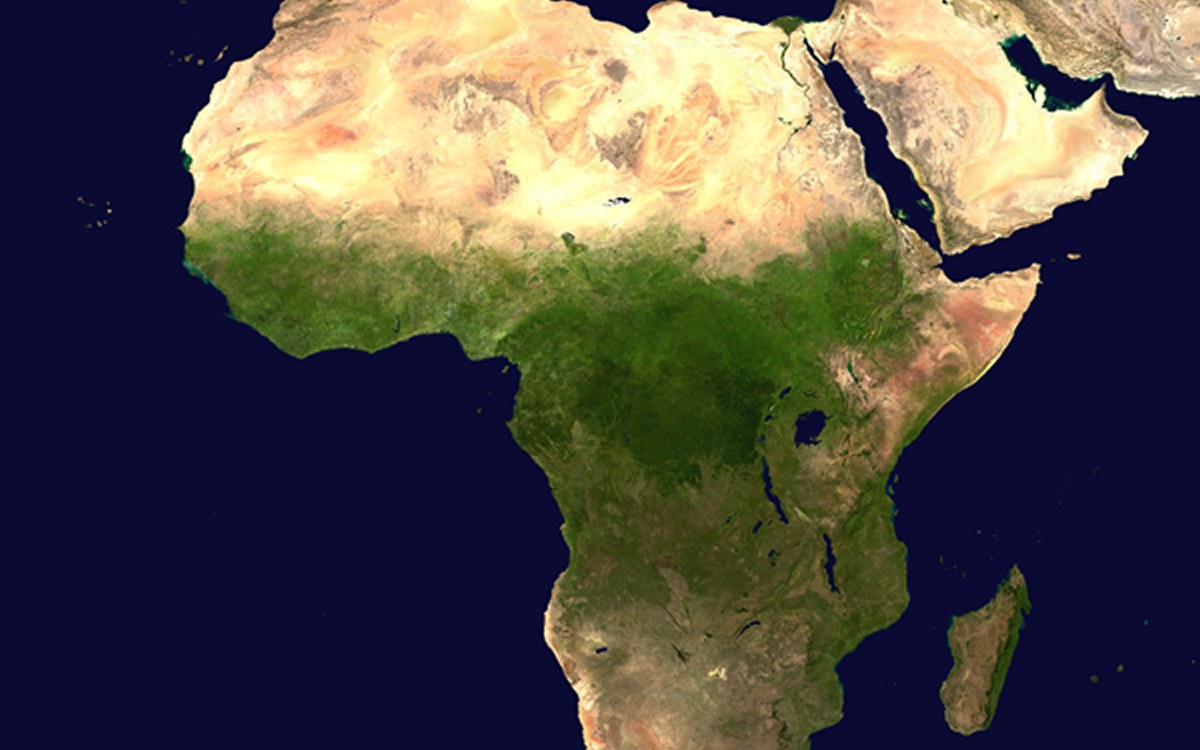
Sometimes I wonder whether home is a place or a feeling.
I have lived in places where I never imagined I would stay. I have crossed borders I never expected to cross and spent years in refugee communities where people wake up each morning wondering what the future will bring. I have known Kakuma Refugee Camp in Kenya, spent time in Zambia and South Africa, and now live in Gorom Refugee Settlement in South Sudan.
So, when I think about migration, I don’t think first about passports, borders, statistics, or immigration offices.
I think about people.
I think about the mother who leaves everything behind because she wants her children to survive. I think about the young person crossing a border with little more than a phone, a few clothes, and memories of a life that may no longer exist. I think about the refugee who has spent years waiting for a durable solution and still doesn’t know where they will eventually call home.
Migration is often described simply as movement from one place to another. But sometimes it is much more than that.
It can mean leaving behind a version of yourself.
Africa has always been moving
Africa’s migration story did not begin with modern refugee camps or today’s international borders.
People have moved across this continent for generations. They have followed trade routes, searched for pasture and water, moved for marriage, education and employment, escaped conflict, and built new communities elsewhere.
Migration has always been part of African life.
Today, people move for many different reasons. Some flee war and political instability. Others escape persecution or discrimination. Some leave because they cannot find work or see a future for themselves. Others migrate to study, find employment, start businesses, join family members or simply seek new opportunities. There is an important distinction here.
Not every African migrant is a refugee.
A refugee is someone forced to leave because returning home is unsafe. An asylum seeker is someone seeking protection and waiting for a decision on their claim. Exile can mean living away from one’s homeland, sometimes unwillingly. The diaspora is broader still: it includes people of African origin living outside their country or continent, whether they left by choice or were forced to leave.
These words matter because behind each one is a human story.
When leaving is not a choice
I know what it means when leaving is no longer a choice.
Forced displacement takes something from you that is difficult to explain. You may still have your memories, your language and perhaps a few possessions, but the ordinary things that once made life predictable can disappear.
You begin again.
Sometimes you begin again in another country. Sometimes you begin again in a refugee camp.
My experiences in Kakuma taught me that displacement does not necessarily end when you cross a border and reach somewhere safer. The uncertainty can continue for years.
Now, in Gorom Refugee Settlement, I see that uncertainty in the lives of people around me. Mothers worry about food and the health of their children. Young people wonder whether they will return to education. Others wait for resettlement or another safe pathway while trying to build a life with very limited resources. There is a strange feeling in waiting.
You are physically present somewhere, but mentally you may still be traveling towards a future you cannot see.

What happens to identity?
One of the hardest questions migration raises is: Who am I when I am no longer where I came from?
A person can cross a border in a few hours. Identity doesn’t move that quickly.
You carry your accent.
You carry your food.
You carry your mother’s stories.
You carry songs you heard as a child.
You carry the names of people who may never know where you ended up.
You carry memories.
And sometimes you carry pain.
I have met people who have lived in several countries and can no longer give a simple answer when asked where they are from. They may have been born in one country, grown up in another, lived in a refugee settlement somewhere else and now dream of resettling in a fourth.
Does that make them less African?
I don’t think so.
Perhaps it makes their identity larger.
Carrying Africa across borders
The African diaspora is sometimes discussed as though it were simply a population scattered around the world. I see it differently.
People carry pieces of home wherever they go.
An African family living in Australia, Canada, Britain, the United States, or elsewhere may still cook the food they grew up eating. They may speak their mother tongue at home, send money to relatives, listen to African music, support community projects and remain closely connected to events thousands of miles away. Migration doesn’t necessarily erase belonging.
Sometimes it creates several belongings at once.
The diaspora also contributes enormously to communities back home. Remittances help families pay school fees, buy food, build houses, access healthcare and start businesses. Migrants also carry knowledge, professional experience, ideas and connections that can benefit communities across borders.
A person may leave Africa physically and still spend much of their life contributing to Africa.
That matters.
The price of being a migrant
But migration has another side.
Not every new country means a new beginning.
For some migrants, the journey leads to racism, xenophobia, exploitation, or discrimination. People can be judged because of their nationality, accent, skin color, immigration status or refugee identity.
Others discover that qualifications earned at home are not recognized. A professional becomes a cleaner. A teacher struggles to find work. A skilled worker is told to start again.
There is nothing wrong with honest work. The problem begins when someone’s dignity is reduced because they are a migrant.
For refugees, bureaucracy can become another form of suffering. A person can become a case number, waiting months or years for interviews, decisions, relocation opportunities, or family reunification.
But life doesn’t stop while the paperwork continues.
Children grow older, parents become sick, people lose loved ones, birthdays come and go and still the waiting continues.
I sometimes wonder whether the people making decisions about migration fully understand how heavy that waiting can become for someone sitting on the other side of the process.
Women, children, and LGBTQ refugees
Migration does not affect everyone in the same way.
Women often carry enormous responsibilities after displacement. They may become the main providers for their children while dealing with their own trauma and uncertainty.
Children experience displacement differently. They may not fully understand why they had to leave home, but they understand the absence of familiar faces, schools and routines.
Young people face another difficult question: how do you plan a future when you don’t know which country you will be living in?
For LGBTQ refugees, the journey can be even more complicated. Some leave because the place where they were born no longer feels safe for them. They may have experienced rejection, threats, violence or discrimination before they ever reached a refugee settlement.
And yet, even in such circumstances, people create community.
In Gorom, LGBTQ refugees and asylum seekers come from different African countries and backgrounds. We don’t always agree on everything. But we understand something important: when the world has already made you feel unwanted, having people around you who understand your experience can mean everything.
Community can become another form of home.
Should borders decide our worth?
I understand why countries have borders. Countries have laws and responsibilities.
But I sometimes ask myself a simpler question: Should crossing a border change the value of a human life?
A child doesn’t become less deserving of food because they were born on the other side of a political boundary.
A mother doesn’t become less worthy of safety because she crossed without the right document.
A refugee doesn’t stop being a human being while waiting for an immigration decision.
From a Humanist perspective, this seems straightforward to me. Human dignity should not depend on nationality.
We can have immigration systems and still treat migrants with compassion.
We can protect borders without forgetting that the people standing behind those borders are human beings.
We can disagree about migration policy without dehumanizing migrants.
That balance isn’t easy. But perhaps that is exactly why we need more humanity in conversations about migration.
What does home mean now?
I have asked myself this question many times: Where is home?
Is it where I was born?
Where I first felt safe?
Where my memories live?
Or perhaps home isn’t always a geographical location.
Maybe home can be the people who stand beside you.
Maybe it is the language you speak when you are emotional.
Maybe it is the smell of food that takes you back to childhood.
Maybe, after so much has been taken away, home becomes something you slowly rebuild.
My birthday falls on Sept. 12. Birthdays usually invite us to think about another year of life. But for someone who has experienced displacement, another birthday can mean something deeper.
It means I made it through another year.
I am still here.
And I think about the many refugees who don’t know whether they will be safe long enough to celebrate their next birthday. I think about children growing up in camps who deserve to celebrate their birthdays in a home they can call their own.
That thought stays with me.
We are more than where we come from
Migration has taught me that people cannot be reduced to the countries printed on their passports.
We are our memories, our relationships, our struggles, our dreams, and our choices.
Africa’s diaspora is not simply a story of people leaving Africa. It is also a story of people carrying Africa with them.
And the refugee experience is not simply a story of loss. It is also a story of survival.
I don’t know where my own journey will eventually take me. Perhaps that is one of the things migration teaches us: we can make plans, but life sometimes writes a different story.
What I do know is that every person deserves the chance to live without fear, to love without persecution, to work with dignity, to raise children safely and to imagine a future.
Borders may separate countries.
They should never separate us from our humanity.
If migration has taught me anything, it is that home is not always the place we left behind. Sometimes home is the safe place we are still searching for.
And sometimes, while searching, we become one another’s home.
Opinions
Why we need to protect ‘sacrilegious’ art
Australia sets dangerous precedent for classifying LGBTQ works as offensive
On July 8, Divine Playhouse opened inside a deconsecrated 158-year-old former church on Kent Street in Sydney, Australia. Although the organizers had a permit and received a $100,000 grant from Create NSW to host events in the previously unused space for a whole year, the organizers were forced to shut down after just three days of operations after receiving a tenant breach notice about “offensive trade” under the 1919 Conveyancing Act.
A day after the Divine Playhouse opened, Redevelop, the company leasing out the church (that was deconsecrated almost a century ago) to Heaps Gay Events cited a clause in their contract that prohibits tenants from noisy business. The clause didn’t include any note about political or religious imagery, but even so, Redevelop wrote that Divine Playhouse “insulted and mocked the sincerely held religious beliefs of millions of Christian Australians.”
On opening night, members of conservative Christian and Catholic groups including Fit for the Kingdom and Prodigal Sons protested (without proper authorization) the live music, cabaret shows, and performances they argued mocked the Christian faith. Protesters called drag queens dressed as nuns (the legitimate vestments of the Sisters of Perpetual Indulgence) and events like the Sunday Mess, a brunch party that incorporated religious imagery, “equivalent to hate speech” according to the Redevelop landlords and their lawyers.
But as reports show, the organizers were aware of concerns from the nearby Christian community and made changes in good faith to address those concerns before opening, including changing the name from Unholy Playhouse to Divine Playhouse. Organizers intentionally changed the name in order to make it more inclusive, rejecting the idea that they were mocking religious beliefs in their performances.
But this has not swayed members of conservative Christian groups who, on opening night, shouted at attendees that they “should be ashamed” and were “disgusting.” Redevelop gave the organizers two days to cease operations. As The Guardian reported, volunteers and organizers took down signage and painted over a mural that had all been commissioned for the year-round residency.
While the organizers initially explored whether they could sue for discrimination against LGBTQ+ individuals, the organizers decided to cancel all upcoming events and close the space to protect performers, as protesters filmed people entering and leaving the event without their consent on opening night. Along with facing a breach of contract, Meta also shut down all of Divine Playhouse’s social media accounts, along with personal accounts and LGBTQ+ community accounts. This is an increasingly common problem for queer content creators.
Now, the LGBTQ+ community is in a justified uproar, and conservative Christians in Australia and beyond are furious about what they are calling “offensive art.” The lease violation sets a dangerous precedent for classifying LGBTQ+ art as offensive, which could lead to laws or local restrictions that could be used by developers to discriminate against people who they deem “offensive,” i.e. LGBTQ+ individuals and organizations. This already exists in the United States, where racial covenants enforcing segregation remain on the books.
As theater lecturer Charlotte Farrell wrote, there is a long history of art and performance in church spaces, but Farrell largely cites art in more progressive Christian spaces as opposed to Catholic ones. Queer art in Catholic spaces (including operational and consecrated Catholic churches) do exist, including God is Trans: A Queer Spiritual Journey hosted by the Church of St. Paul the Apostle in New York City in 2023 (although this show also generated controversy).
With the risk of empowering conservatives to lobby for laws or restrictions that would allow them to deny renting to “offensive” people or on the grounds that a person’s art is “offensive,” I argue further that there is an urgent need to call out what this situation was–the explicit attempt to equate queer art that challenges religious institutions, trauma, and abuse as inherently “offensive” and to use this to deny an artist and community’s right to exist in a space.
Art has historically been a vital way not just to evangelize but also to challenge religious institutions that use their power and influence to not just isolate and abuse LGBTQ+ people and other marginalized communities but to systematically oppose their rights. Take for example Sinead O’Connor’s protest performance on the October 3, 1992 episode of Saturday Night Live. O’Connor, who had experienced severe institutional confinement in a Magdalene Laundry run by the church and had experienced intense physical and emotional abuse by her devout mother, tore up a photo of Pope John Paul II.
While she originally planned to hold up a photo of a refugee child, she swapped it with a photo of the pope after singing an a cappella version of Bob’s Marley’s “War” where she changed the lyric to “child abuse.” She looked at the camera and said “fight the real enemy” before throwing the pieces to the ground. At the time, the Irish singer faced intense backlash and a lifetime ban from SNL, but as more information came out about her time in the Laundry, her mother’s emotional abuse, and systemic sexual abuse and people attempting to cover it up in the Catholic Church, people today recognize her protest as the start of a vital conversation.
For some people, O’Connor became a secular saint, a prophet exposing systemic sexual abuse before people were willing to confront the lived experiences that survivors were sharing and religious leaders were covering up. Dr. Margaret Kennedy, founder of Ministry and Clergy Sexual Abuse Survivors and author of “The Courage to Tell,” wrote for Premier Christianity that “when she tore apart a picture of the Pope on Saturday Night Live in 1992, she was preaching.”
Is O’Connor’s religious liberty to preach through this act of protest not equal to that of her critics? Did O’Connor, like anyone at the Divine Playhouse, threaten any religious person?
No, they made a statement about religious institutions and people that continue to abuse people. If that can be targeted so can any other form of protest or acts of resistance that threaten systems of power.
Protest art like O’Connor’s is at the bedrock of human rights in any democratic country. When people stop creating art or move out of spaces out of fear of precipitating anti-LGBTQ+ violence, or are forced out because of claims of lease violations, the whole society loses a vital way to challenge and confront abuse and exploitation. There is a need not just to legally protect people creating protest art but also protest artists themselves so that their work cannot be censored or attacked on the grounds of religious liberty.
To be clear, protecting people’s rights to create protest art is not the same as allowing people to insult or desecrate the imagery of marginalized faiths that face persecution and misrepresentation in the United States today. It’s also not a license for anti-religious bigotry or violence that hurts anyone. Instead, the protection of protest art is a protection of the right to protest itself, the right to challenge and grapple with institutional abuse and religious trauma in ways that cause no one physical harm.
As James Thorpe, co-chair of the Night Time Industries Associates, explained to The Guardian, “Christians have a right to preach, protest and stand outside Divine Playhouse and pray. Queer artists have the right to make art that is confronting, irreverent, and yes, offensive.” Thorpe says that LGBTQ+ artists and communities, and all marginalized groups, have a fundamental right to create art that unsettles people, that challenges social systems that prioritize and sacralize a cisgender, heterosexual norm intrinsically connected to Christian nationalism.
Because in a society where Christian nationalism is fast becoming mainstream, protest art, sacrilegious art is the only language that far right religious groups understand. At the heart of the issue is civility politics, or a strategy used by conservative and far right groups to argue that marginalized communities censor their protests and calls for change to be “respectful.” What respectful is and who deems it respectful is deeply subjective, often the creation of a dominant social group like Christians in the United States.
If far-right forces want to call LGBTQ+ protest art like that at the Divine Playhouse “offensive” or “sacrilegious” so be it. Yes, calling our art, our identities, “offensive” is a form of bigotry, a practice of hate. It reminds many of us raised in high control religious spaces that we are outsiders to the very religious systems that raised us and cultivates the same shame, guilt, and abuse that caused many of us to leave or explore affirming religious or spiritual traditions.
But calling art “offensive” doesn’t change or invalidate the fact that it is a fundamental exercise of our right to free speech, and our fundamental human right to create art that unsettles and upsets people in positions of power. It also doesn’t change the fact that for many of us, creating protest art is a spiritual practice, a form of sacred resistance that helps us challenge systems that have long abused us through purity culture, conversion therapy, and cultures of shame.
Protecting the right to create protest art isn’t just enshrining our right to free speech but for many of us, our right to practice a spiritual act of resistance. And in a time where LGBTQ+ identity, people, and bodies are deemed “offensive. Because at its core, this isn’t just an issue about art anymore, it’s about protecting our right to exist in public spaces and our right to create safe spaces for ourselves.
Emma Cieslik is a D.C.-based museum worker and public historian.
Opinions
Not all trans people are the same
Media, activists need to do more to challenge stereotypes

It’s interesting how the mainstream media, especially the conservative part of it, likes to write about transgender subculture when they should speak up about trans people.
How often do you see mentions of blue or purple hair, Marxism, specific clothing styles and ecology when you see a mention of a trans person?
It happens more often than it should. It looks like the mainstream media, even the ones that don’t demonise us, sincerely believe that being trans means sharing a whole bunch of characteristics that have nothing to do with having a gender identity different from the one that was assigned at birth.
Here are four reasons why it may create problems, and what to do about them.
1. A subculture idea
The assumption that being trans is part of a subculture creates a very specific kind of discrimination, because the mainstream audience who read those stories sincerely believes that being trans is a personal choice or a trend in the same way as being a K-pop fan, a goth, or a metalhead. It basically means that being trans is nothing more than a trend, and trends, as we all know, can change. People who believe in this idea are more likely to speak about “gender ideology” and “propaganda trends” and less likely to listen to scientists and studies around trans issues, or to different experiences of what it means to be trans.
Even if trans people made a choice to be trans, they shouldn’t be discriminated against. In a democratic, free country, no one should be punished for choosing what to do with their body. And hate for subcultures is a real thing that leads to violence. But the problem is that, despite there being a trans subculture, most trans people are statistically not part of it. But where are they in activism?
2. Misleading about goals
Let’s be honest. We are partly to blame for this stereotype. And before you stop reading, let’s just think about the topics most people discuss before the average protest or radical Pride event. Or let’s imagine trans-friendly events. They are mostly leftist, and people at these events share the exact same interests, hobbies, and political positions.
At my last protest about the new draconian Equality and Human Rights Commission guidelines in the U.K. that say trans people can only use public places according to the sex assigned to them at birth, we were speaking about anything else. For example, some speeches were about abolishing “bourgeois democracy,” speaking up for socialist revolution, and saying some other things I definitely couldn’t support.
I’m not against socialism, but I’m against the idea that all trans people are socialists. That is inherently misleading, at best, and harmful, at worst. I support universal basic income and free healthcare, but not revolution or Marxist reform. If I were a cis person who generally supported trans rights but knew too well about the Russian Revolution of 1917 and how it ended for indigenous people and queer people, if I were a bystander, I wouldn’t stop at a protest like that. I probably wouldn’t even believe that the situation is as bad as they are saying.
There is nothing bad about inviting a socialist speaker. The problem begins when all trans events become socialist events. Those protests don’t look like protests for trans rights – they look like protests for socialist revolution or just like a rebel teens gathering.
3. Self-fulfilling prophecy
At the protest I mentioned and at other similar protests, including the ones from the U.S. I saw online, there weren’t a lot of “traditionally” trans people — the ones you may have been able to see in old TV programs about trans experiences, where trans people were presented to be more gender-conforming.
Most activists are young, white, poor but not extremely poor, citizens of the country where they are living, gender-non-conforming, leftist, and non-religious. They like trans horror, drag queen shows, drawing and reading MfM romantasy. And despite the fact that I just finished writing my own trans horror novel, I wonder — where are the other trans people? With different hobbies and lifestyles?
Where are all those “traditional” trans women from old TV shows who like make-up and want to give birth to kids if only it was possible, and trans men who like to spend their time drinking beer in pubs and going to the gym with their bros? I think we need them more than we think. They may give new ideas and perspectives. And they need us.
Why don’t we see them? Why do we see so few trans refugees who came from Middle Eastern, Asian, and African countries? May they be triggered by the world then because the U.S. had the worst dictatorship on the planet, or that the U.K. is a fascist country when they saw something worse than the British government or even MAGA? For some trans person who survived Bashar al-Assad in the Syrian government or fled Eastern Turkestan, such slogans would feel like gaslighting — and I knew because I met many refugees.
Why, finally, do so many trans activists have similar clothing styles, similar interests, and similar experiences?
Because it’s a self-fulfilling prophecy. When trans activists create this kind of culture, they accidentally gatekeep all other trans people who may feel less comfortable within a subculture that has its own rules, style, and ideology, even if none of those things have anything to do with being trans.
4. Media misrepresentation
When the media — conservative and not very conservative — sees the same thing, it doesn’t matter if we are speaking about a trans man who is traditionally masculine and wants a traditional family, or if we are speaking about soft, nice gay boys who happen to promote socialist revolution like many modern stereotypical trans activists. It is equally misleading.
I hate the idea that we need to pretend to be more convenient and normal in order to be accepted by society, because society has never worked that way. But pretending to be accepted by the community is no better.
Trans people are different — and sometimes problematic — and despite the core of activist trans culture, we can have some distinctions when we speak with the media. We should never try to tell people that all trans people are similar.
Now, when trans rights are under attack, it is more important than ever to show that all trans people are just people. We are different, like everyone else. We have our rights, even if we are wrong. Even if we are ugly. Or struggle with inner transphobia. Or some of us internalise traditional roles, or; the opposite, too weird for any culture and subculture. We can make mistakes. But we are not a political party or a monolithic group. Being trans is not a lifestyle, because we have different lifestyles.
Trans kids need to see that they can be whoever they are and still be true, real trans people. And the media should always be questioned when they try to push all trans people into the frame of a subculture.
But to do so, we need to look at our activism and at the representation we are creating.

Dolly Parton dies at 80

Monument to LGBTQ Canadians officially unveiled

The fight to save one of Baltimore’s last gay bars

When home becomes a journey: migration, memory, and the African diaspora

Gay-owned pizzeria in Dupont Circle burglarized

Trump-Vance administration’s LGBTQ brain drain: what you need to know

UPDATE: Impulse Group’s ‘PrEP Pool Party’ cancelled

Not all trans people are the same

Calendar: August 21-27