Ghana
Ghanaian cardinal reiterates support of LGBTQ people
Country’s Supreme Court considering challenge of anti-LGBTQ law
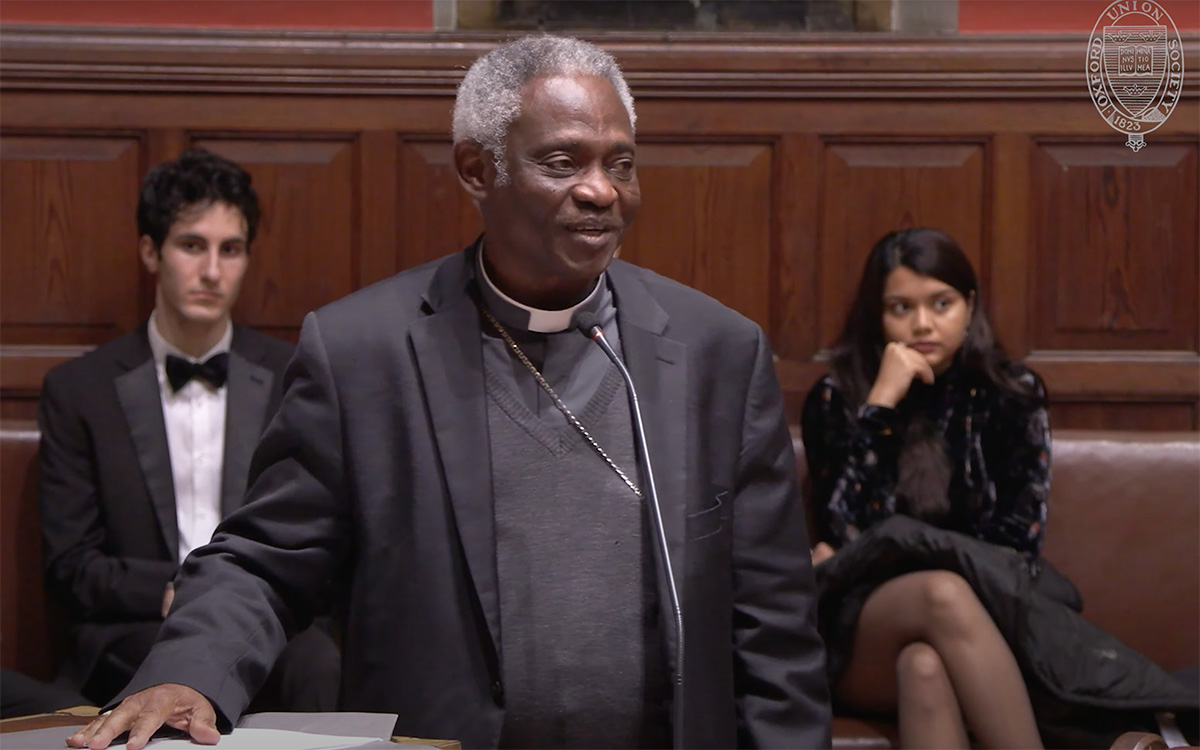
A Catholic cardinal in Ghana has reiterated his support for LGBTQ people.
Peter Turkson has been vocal against the criminalization of LGBTQ people, advocates, and organizations. He is also among the few African cardinals who have supported the Fiducia Supplicans (Supplicating Trust) document that Pope Francis released last year.
The document offers a narrow set of conditions under which a priest or deacon can offer a blessing to a same-sex couple or unmarried heterosexual couples.
In an interview with TV3 News, a Ghanaian television station, Turkson expressed his grave concerns over the Human Sexual Rights and Family Values Bill currently before the Supreme Court.
The bill, among other things, would further criminalize LGBTQ people and make advocacy on their behalf illegal.
Lawmakers in February approved the measure. President Nana Akufo-Addo has said he will not sign it until the Supreme Court issues its ruling.
Turkson said homosexuality is not new to Ghanaian culture and those who identify as LGBTQ should be treated like any other person.
“Who controls how one is born? And if one is born this way, how does it in itself constitute a crime? You criminalize them for what,” he asked.
Turkson also said there should be respect for diverse views, urging against the criminalization of identity.
Father Peter Knox from the Jesuit Institute in South Africa said there is an almost what he described as a neurotic denial of the fact there are African people who are attracted to people of the same sex.
“The fact that people of the same sex enter into a permanent, loving, supportive, stable, fruitful relationships is beyond the imagination of many Africans. The very notion runs contrary to what many theologians and pastors claim is African culture,” said Knox.
Knox also questioned why homosexuality is regarded as a Western concept, noting South Africa offers asylum to many LGBTQ Africans who are fleeing persecution from their countries of origin.
“For decades South Africa has recognized the refugee status of people who are persecuted or whose lives are endangered because of their sexual orientation,” he noted. “For those who do not try to make it to Europe, South Africa is often a second-best destination.”
Knox noted one South African parish has a support group for LGBTQ parishioners.
“It is noteworthy that none of the members of the group are so-called Europeans. They all come from African countries,” he said. “One also hopes for more prophetic protection of a severely marginalized group on this continent.”
Cardinal Maurice Piat of Mauritius, along with Turkson, is the only other of the continent’s 22 Catholic cardinals who has spoken publicly in support of LGBTQ people. Non-Catholic officials in Africa have largely dismissed Francis’s document.
Cardinal Stephen Ameyu, archbishop of Juba in South Sudan, has said the church’s role is to respond to sinners with mercy. He questioned the blessings of same-sex marriages last December during a press conference at a Christmas event.
“The church takes mercy first. That’s why sometimes we are concerned about people who are criminals, people who have killed people. We turn to them in mercy,” said Ameyu. “So, the state of life that somebody lives does not exclude one from the concern of the church. Be merciful to others provide services to others who need the services, and the church can do a lot in order to convince people in their state of sins to come back to the church and be converted.”
Francis in 2023 visited South Sudan and the Democratic Republic of Congo.





Ghana
Ghanaian lawmakers approve anti-LGBTQ bill
Measure that would criminalize allyship awaits president’s signature
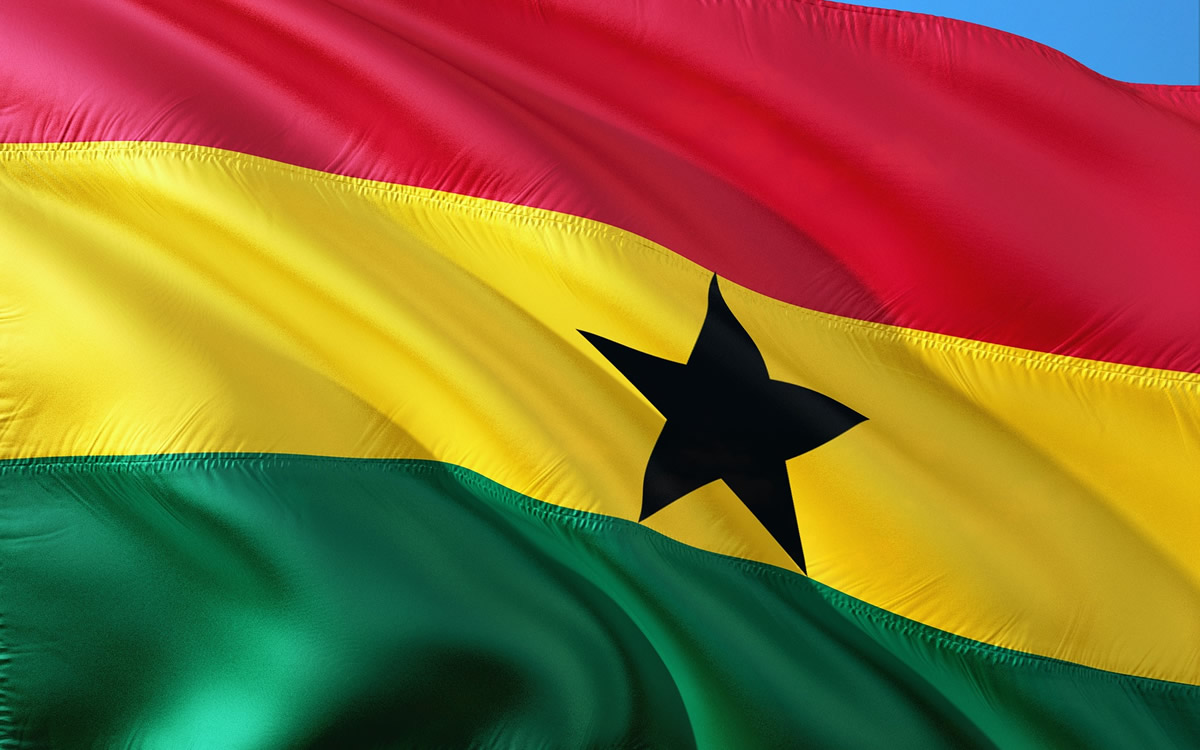
Ghanaian lawmakers on Friday approved a bill that would, among other things, criminalize LGBTQ allyship.
Reuters reported MPs approved the Human Sexual Rights and Family Values Bill, 2025, in a voice vote after parliament’s Constitutional and Legal Affairs Committee backed it.
MPs in 2024 approved a similar bill, but it faced legal challenges and then-President Nana Akufo-Addo didn’t sign it. Lawmakers last year reintroduced the measure after President John Dramani Mahama took office.
The bill awaits his signature.
Rightify Ghana, a Ghanaian LGBTQ advocacy group, in a series of social media posts notes MPs passed the bill days before the 4th African Inter-Parliamentary Conference on Family Values and Sovereignty will take place in Accra, the country’s capital.
Ghana
Intersex lives, constitutional freedom, and the dangerous future of Ghana’s Human Sexual Rights and Family Values Bill
Lawmakers continue to consider draconian measure
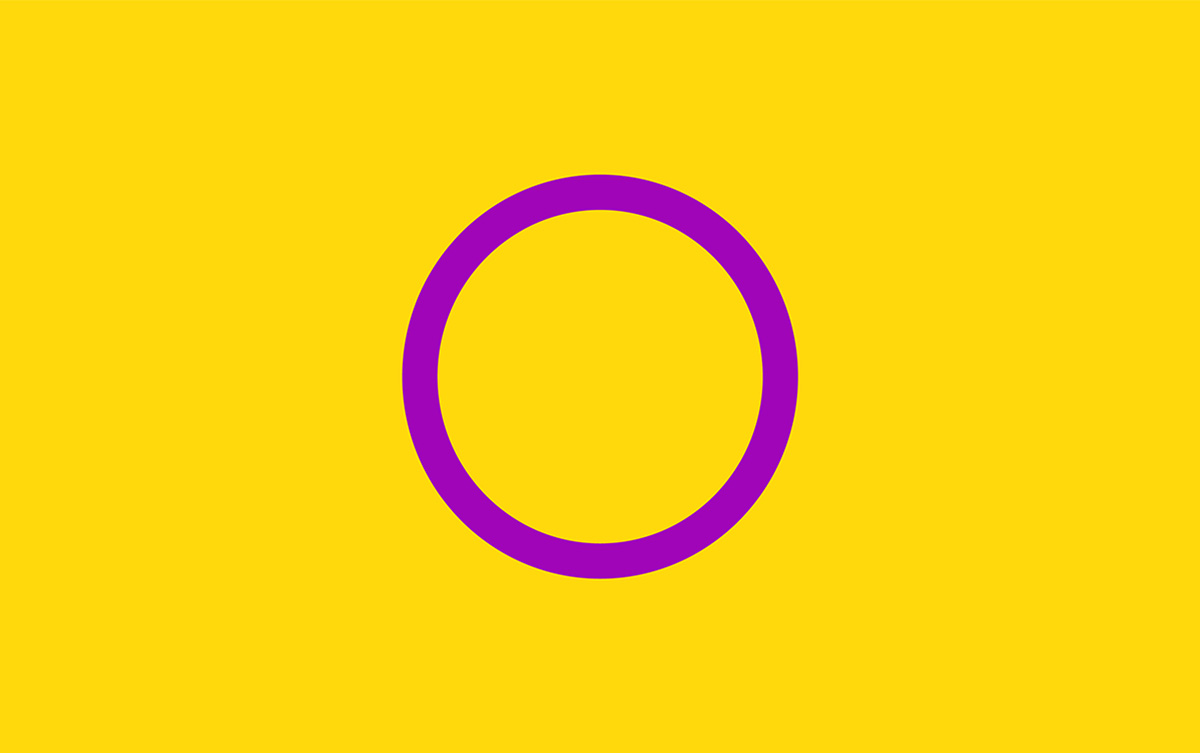
There is a dangerous silence surrounding intersex lives in Ghana — a silence shaped by fear, misinformation, cultural misunderstanding, and institutional neglect. Today, amid discussions around the possible passage of the Human Sexual Rights and Family Values Bill, 2025, that silence risks becoming law, reinforcing exclusion and deepening the marginalization of already invisible lives.
Much of the national debate surrounding the bill has focused on LGBTQ+ identities. Yet buried within it are implications for intersex persons that many Ghanaians do not fully understand because intersex realities remain largely invisible.
Intersex persons are born with natural variations in chromosomes, hormones, reproductive anatomy, and/or genital characteristics that do not fit typical definitions of male or female bodies. Intersex is not a sexual orientation or gender identity. It is a biological reality. Ghana’s Commission on Human Rights and Administrative Justice (CHRAJ) has clearly acknowledged this distinction.
Despite this distinction, the bill mistakenly collapses intersex realities into a legal framework linked to LGBTQ+ criminalization.
Although the bill contains only limited references to intersex persons, under certain medical exceptions, these references do not amount to recognition or protection. Instead, they frame intersex bodies as abnormalities requiring regulation, correction, and institutional management. This approach is inconsistent not only with Ghana’s constitutional guarantees of dignity, equality, privacy, and liberty, but also with emerging African and international human rights standards. The African Commission on Human and Peoples’ Rights Resolution on the Promotion and Protection of the Rights of Intersex Persons in Africa – ACHPR/Res.552 (LXXIV) 2023 affirms protections relating to bodily integrity, dignity, freedom from discrimination, and against harmful medical practices. Additionally, the United Nations has repeatedly condemned medically unnecessary and non-consensual interventions on intersex children. Rather than affirming the humanity and autonomy of intersex persons, the bill risks legitimizing systems of surveillance, coercion, violence, and institutional erasure.
This is not protection.
It is managed erasure.
A child born intersex in Ghana already enters a society shaped by secrecy and stigma. Families are often pressured to hide intersex children or seek “correction” to make their bodies conform to social expectations.
The bill risks intensifying this pressure.
Clause 17 creates space for “approved service providers” to support interventions relating to intersex persons, yet offers little protection around informed consent, bodily autonomy, confidentiality, or coercive treatment. Under the language of “correction” or “support,” harmful interventions may become normalized.
The intersex community has documented painful lived experiences of intersex Ghanaians that reveal the devastating consequences of stigma and invisibility.
One heartbreaking case involved intersex twins born in Ghana’s Eastern Region in 1993, who were repeatedly forced to move from village to village because of rejection and ridicule. After losing their father, their main source of protection and support, they became even more vulnerable and reportedly experienced severe emotional distress, including suicidal thoughts linked to years of stigma and exclusion. This is what invisibility looks like in practice.
Another painful example is the story of Ativor Holali, whose lived experience exposed the cruel realities intersex persons face in sports and public life. Ativor Holali endured invasive scrutiny, public humiliation, and social suspicion because her body did not conform to rigid expectations of femininity. Rather than being protected as a Ghanaian athlete deserving dignity and privacy, she became the subject of speculation, gossip, and institutional discomfort.
Her experience reflects a broader social crisis: when society insists that every body must fit a narrow binary definition, intersex people are forced to defend their humanity in spaces where dignity should already be guaranteed.
Intersex Persons Society Of Ghana (IPSOG)’s Ŋusẽdodo research further revealed that approximately 70 percent of intersex respondents reported depression, anxiety, trauma, or severe emotional distress linked to medical mistreatment, family rejection, bullying, and social exclusion.
The bill risks transforming these existing prejudices into institutional policy. Several provisions risk deepening surveillance, restricting advocacy, weakening confidentiality, and discouraging public education around intersex realities. Intersex-led organizations providing healthcare guidance, legal referrals, psychosocial support, and community services may face serious challenges.
This places IPSOG and other intersex-led organizations in Ghana at serious risk.
For many intersex Ghanaians, these spaces are not political luxuries.
They are survival mechanisms.
Governments derive legitimacy by protecting the natural rights of all persons, including dignity, liberty, bodily autonomy, and freedom from arbitrary interference. The bill raises concerns because it risks weakening these protections for intersex persons through surveillance, coercive interventions, and restrictions on advocacy.
Ghana’s Constitution declares that “the dignity of all persons shall be inviolable.” Articles 15, 17, 18, and 21 specifically protect dignity, equality, privacy, expression, and freedom of association. These protections should apply equally to intersex persons.
Intersex persons are not threats to Ghanaian culture.
Intersex children are not moral dangers.
Intersex bodies are not political weapons.
They are human beings deserving dignity, healthcare, safety, and constitutional protection.
The true measure of a democracy is how it protects those most vulnerable to exclusion. At this moment, Ghana faces a choice: deepen fear and silence, or uphold dignity, bodily autonomy, and constitutional freedom for intersex persons.
History will remember the choice we make.
Fafali Delight Akortsu is the founder and president of the Intersex Persons Society of Ghana (IPSOG).
Commentary
Is Ghana’s selective justice a human rights contradiction?
Country’s commitment to human rights appears inconsistent
Ghana’s mission to have the United Nations recognize the trafficking of enslaved Africans and racialized chattel enslavement as the gravest crime against humanity is a historic milestone. The resolution adopted on March 25, 2026, with 123 out of about 180 countries in support, marks a major step toward global acknowledgement of the brutality and inhumanity of slavery. A 2022 report by the Equal Justice Initiative, “The Transatlantic Slave Trade,” highlights how during the slave trade, Africans who were enslaved had no rights, freedom, recognition or protection under the law. They had no voice, no bodily autonomy, no respected identity and could be brutally violated with no legal protection. This history represents a grave crime against humanity.
In my opinion, Ghana and the other countries that voted in favor are entirely right to say that such historic events cannot be sanitized or reduced to diplomatic language. Recognition is the first step towards accountability. This matter is important because it is arguably the foundation of the modern-day injustice and inequality people experience, including wealth inequality, racism, sexism, xenophobia, and queerphobia.
The double standard
Yet, despite this important step on the world stage, Ghana’s commitment to human rights appears inconsistent. The same government advocating for justice for enslaved Africans is enacting laws that jeopardies the rights of Africans today. This contradiction between Ghana’s international stance and its domestic policies is at the heart of the discussion.
In February 2026, the Ghanaian parliament formally received the Human Sexual Rights and Family Values Bill. The bill is a grave threat to the rights to nondiscrimination, protection under the law, privacy and freedom of association, assembly, and expression. It expands criminalization of LGBTQ+ people, and anyone associated with them. This Human Sexual Rights and Family Values Bill calls for a three-year imprisonment for anyone who identifies as LGBTQ+, anyone who has gender affirming treatment, anyone who enters into a same-sex marriage or attends a same-sex wedding and anyone who promotes equal rights for LGBTQ+ people. It turns enforcement into a societal obligation rather than just a state function, encouraging people to report anyone who looks suspicious or different. This further legitimizes the brutal attacks on LGBTQ+ people socially, which leaves the people of Ghana with blood on their hands.
Ghana’s proposed and reintroduced anti-LGBTQ+ legislation is said to be among the most restrictive in the world and will result in the inhumane treatment of LGBTQ+ people. It not only further criminalizes consensual same-sex relations but also targets civil society organizations that are perceived to be supporting equal rights for LGBTQ+ people. So, if this law passes, it will be illegal to support equal rights and challenge the inhuman treatment of queer Ghanaians and allies. Is this not a double standard? Ghana seeks justice for the ill-treatment of Africans during the transatlantic slave trade but is actively in the process of seeking to harm its own people.
This is not theoretical harm; it is practical harm. According to the Human Rights Watch, LGBTQ+ people in Ghana already face systemic stigma, discrimination, harassment and violence, often enabled by both legal frameworks and social stigma, resulting in a hostile climate.
Ghana falls short of upholding human rights at home
On the global stage, Ghana is arguing that the dehumanization of Africans through slavery was so severe that it constitutes the gravest possible violation of human dignity. This argument rests on a core principle that reducing people to less than fully human is unacceptable under any circumstances.
Back at home, the state is endorsing laws that do exactly that to LGBTQ+ people. Criminalizing identity, suppressing expression, clamping down on civic space, monitoring and surveilling citizens and advocating for social exclusion. These are elements of dehumanization signaling that some are less deserving of protection, dignity, respect, and justice. That is the definition of a double standard.
Supporters of these laws often frame homosexuality as un-African, but this claim does not hold up under scrutiny. In his article, “The ‘Deviant’ African Genders That Colonialism Condemned”, Mohammed Elnaiem emphasizes that historical and anthropological evidence shows that diverse sexualities and gender expressions existed across African societies long before colonial rule. Ironically, many of the laws used to criminalize LGBTQ+ people today trace directly back to the colonial-era. This is even supported by the African Court, which, in December 2020, through its Advisory opinion, made it clear that these colonial-era laws are discriminatory and perpetuated marginalization. The African Court also called on African states to take action in this regard.
It is no secret that anti-rights actors are actively operating in Ghana and supporting leaders to advance their anti-rights agenda. They are increasingly organized, visible, well-funded, and influential in shaping state policy. The upcoming 4th African Inter-Parliamentary Conference on Family and Sovereignty, scheduled to take place in Accra from May 27-30, 2026, is a clear example of this coordination. The conference endorses the so-called African Charter on Family Values, a deeply contested initiative that frames LGBTQ+ people as a threat to children and positions queer identities as foreign ideologies. This platform is being used to legitimize and advance anti-LGBTIQ+ legislation, restrict comprehensive sexuality education and roll back sexual and reproductive health rights. In this context, the treatment of LGBTQ+ people in Ghana cannot be viewed as isolated policy choices, but rather as part of a broader coordinated anti-rights agenda that normalizes and legalizes discrimination. It fuels increasingly inhumane conditions for queer communities and civil society. Ghana is simultaneously rejecting colonial injustice in one breath while enforcing colonial-era morality laws in another.
There is also a legal inconsistency worth noting. Ghana’s own Constitution guarantees the right to life, protection from violence, the right to personal liberty, the right to human dignity, equality and freedom from discrimination and the right to a fair trial. Yet, in practice these rights are not equally applied to LGBTQ+ individuals. Depriving equal rights to LGBTQ+ persons is the same as what the slave owners did to slaves.
You cannot build a credible human rights position on selective application
To be clear, recognizing slavery as a crime against humanity is not diminished by pointing out this contradiction. Both truths can coexist: the UN resolution is a victory and Ghana’s domestic policies remain deeply troubling. In fact, holding both realities together is necessary if the language of human rights is to mean anything at all. Ghana has taken a powerful stand on the global stage. The question now is whether it is willing to apply that same moral clarity at home.
Bradley Fortuin is a consultant at the Southern Africa Litigation Center and a human rights activist.

Annie Andrews denounces trans athletes after Trump targets her

On Republican Long Island, gay Democrat Chris Gallant bets on public service over politics

Report: LGBTQ exclusion costs Japanese economy billions a year

Center for Black Equity honors leaders, activists at BE. Gala

In ‘The Lost Brontë,’ a complicated lie can lead to danger

U.S. int’l trade negotiator, consultant James Bedore dies at 82

Campaign urges Virginia High School League to reverse stance on trans athletes

Calif. GOP gubernatorial candidate ad ‘disgusting attempt to exploit lesbian intimacy’

Center Arts Gallery celebrates 10 years with reception, auction

Trump, Netanyahu, and Putin are all war criminals
-

 Obituary5 days ago
U.S. int’l trade negotiator, consultant James Bedore dies at 82
-
Virginia5 days ago
Campaign urges Virginia High School League to reverse stance on trans athletes
-
California5 days ago
Calif. GOP gubernatorial candidate ad ‘disgusting attempt to exploit lesbian intimacy’
-
Commentary5 days ago
Center Arts Gallery celebrates 10 years with reception, auction