Theater
D.C. holiday theater preview 2024
Need a little cheer? We’ve got you covered

In need of a little cheer? Fortunately, there’s a fix. The DMV boasts a wealth of holiday-themed theater, music, and dance guaranteed to lift spirits and warm hearts. Here’s a sliver of what’s out there.
Arena Stage invites audiences “to step back into the holiday spirit with the joyful return of ‘Step Afrika!’s Magical Musical Holiday Step Show’ (Dec. 13-22) where the rich tradition of African-American stepping blends with the magic of the season.” DJ Nutcracker and his Arctic friends promise to amplify the festive atmosphere. Arenastage.org
Looking for a new way to experience a Christmas favorite? With the Kennedy Center’s “Elf in Concert: Film with Live Orchestra” (through Dec. 1), you can relive the endearing comedy on a giant screen as every note of John Debney’s wonderful score is played live by the National Symphony Orchestra.
Another Kennedy Center holiday treat is “Finn” (through Dec. 22). From Chris Nee, the out creator of TV’s “Doc McStuffins” and “Vampirina,” “Finn” is filled with vibrant sea creatures and catchy tunes. Hilarious and heartening, this world premiere musical chronicles the coming-of-age journey of a young shark following his dreams. Kennedy-center.org
For those in search of yuletide camaraderie and keyboards, there’s the National Cathedral Christmas Day Organ Recital (Dec. 25), a tradition featuring festive music performed (at the Cathedral) by Cathedral organist Thomas Sheehan, and organ scholar Ariana Corbin. Tickets not required. Livestream available. Nationalcathedral.org
At Baltimore Center Stage, ArtsCentric’s production of “Black Nativity” (Nov. 30-December 22) uses a fusion of blues, soul, jazz, spirituals, dance, and the powerful words of gay poet Langston Hughes, to tell the Christmas story through a wide-ranging African-American lens. Centerstage.org
For one night only, the Music Center at Strathmore in North Bethesda presents “A Swingin’ Little Christmas!” (Dec. 4), a nostalgic, Christmas kitsch cabaret featuring out TV star Jane Lynch (“Glee,” “The Marvelous Mrs. Maisel”), alongside Kate Flannery (“The Office”), Tim Davis (“Glee’s” vocal arranger), and The Tony Guerrero Quintet.
The following night, Dave Koz and Friends celebrate the 27th anniversary edition of the longest running jazz-based Christmas tour at Strathmore on Dec. 5. Koz, a longtime out musician (primarily sax), has released eight holiday albums, including his most recent, “Christmas Ballads.” Strathmore.org
Round House Theatre presents the world premiere of “A Hannukah Carol” (through Dec. 29). The family-friendly musical comedy tells the story of millennial influencer Chava Kanipshin who in pursuit of more followers, shuns family, friends, and holiday traditions. But on the first night of Hanukkah, Chava is visited by the ghost of deceased social media star Mimi Marley and other spirits who warn her to change her ways — or live to regret it. Roundhousetheatre.org.
Historic Ford’s Theatre again presents “A Christmas Carol” (through Dec. 31), a popular Washington tradition for decades. Conceived by Michael Baron, this dynamically staged take on the Dickens’ classic features Craig Wallace as the miserly Scrooge who after a night of ghostly visits, rediscovers Christmas joy. In case you haven’t seen it, do. Fords.org
At Olney Theatre, award-winning out actor Michael Russotto is stepping into the shoes of Paul Morella to star in this year’s edition of Morella’s celebrated solo adaptation of “A Christmas Carol: A Ghost Story of Christmas” (Dec. 29). Russotto portrays more than 50 characters, from the miserly Scrooge to the haunting spirits, to the entire Cratchit family, including, of course, Tiny Tim. Olneytheatre.org
The adage that music can transport you to another time with just a couple of notes proves true at the Folger Library where Folger Consort, the estimable early music ensemble-in-residence, marvelously upholds a glorious Washington holiday tradition with “A Mass for Christmas Eve: Baroque Music for the Season” (Dec. 6-15). Folger.edu
In Falls Church, Creative Cauldron presents “Madeline’s Christmas” (Dec. 6-22), a charming show based on the classic book by author and illustrator Ludwig Bemelmans. It’s Christmas Eve and taking care of 11 flu infected little girls and Miss Clavel isn’t easy, but when Madeline finds help from a magical rug merchant, all that’s miserable is brushed away, and the girls embark on an unforgettable Christmas journey. Matt Conner directs. Creativecauldron.org
The Washington Ballet’s “The Nutcracker” at the glittering, gilded Warner Theatre (through Dec. 30). Featuring Tchaikovsky’s instantly familiar music and splendid choreography by Septime Weber, this Georgetown circa 1882-set production features historical figures ranging from George Washington to King George III, along with the usual suspects like children, rats, fairies, and a mysterious godfather. Washingtonballet.org
The Gay Men’s Chorus of Washington is back with its annual holiday extravaganza “The Holiday Show” (Dec. 4, 14, and 15) at Lincoln Theatre. This year’s uplifting lineup includes eclectic songs with exciting rhythms and beautiful harmonies, and features the high-kicking, bedazzled 17th Street Dance as well as small ensembles and the GenOUT Youth Chorus! Songs include “See Amid the Winter’s Snow,” “Feliz Navidad,” “Love is Christmas,” and “Silent Night.” Gmcw.org





Theater
New GALA show about WWII spy full of conflict, intrigue
‘GARBO: The Actor Who Saved the World’ an inspired true story
‘Garbo: The Actor Who Saved the World’
Sept. 3-27
GALA Hispanic Theatre
3333 14th St., NW
$25-$50
galatheatre.org
Conflict, intrigue, and abundant imagination – all the elements for an extraordinary story. Add real-life Spanish spy Juan Pujol García who worked as a double agent loyal to the United Kingdom against Nazi Germany during World War II to the mix and it’s truly inspired.
Code-named “Garbo” by the British (a nod to his acting prowess), the anti-fascist’s mission took him from Madrid to Lisbon and later a London suburb where he created fictitious reports while unassumingly blending in with middle-class commuters.
By inventing a phony spy network of 27 agents with intricate backstories and tales of espionage worthy of Balzac’s pen, Garbo convinced Hitler’s generals that the D-Day invasion would hit Calais instead of Normandy, saving thousands of lives along the way.
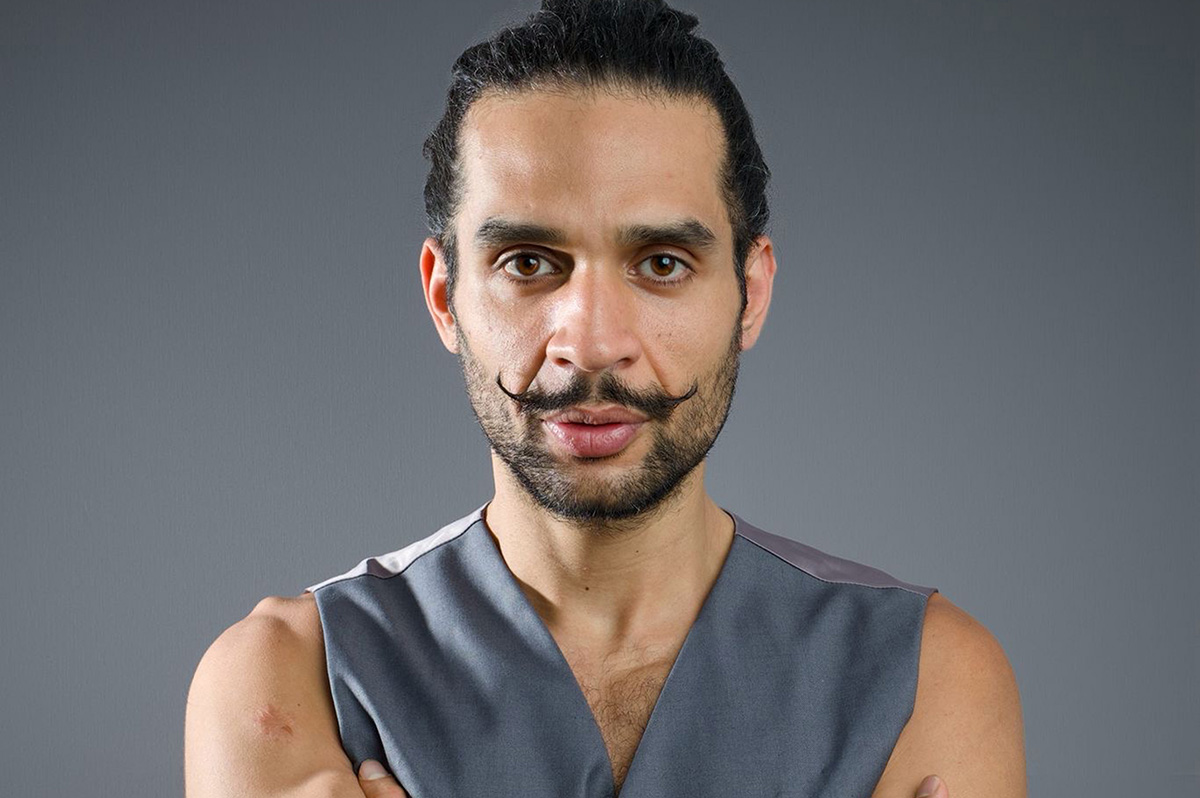
And now the tale unfolds on stage in “GARBO: The Actor Who Saved the World,” a premiere thriller at GALA Hispanic penned by GALA artistic director Gustavo Ott, staged by Cuban director Carlos Celdrán, and starring out actor Kevin Jorges in the title role.
When Jorges was tapped to play Garbo, he (like the rest of the cast) was utterly unfamiliar with the play’s cunning protagonist.
But that changed quickly. Jorges, 37, has immersed himself in the biography and become increasingly interested and somewhat enamored with the character.
Charismatic with an easy smile and rich, warm voice, Jorges says he had to put aside his sensibility as a gay man in order to portray Garbo, who was a straight, patriarchal figure. But he also embraced similarities with the spy, like their shared aversion to physical violence.
And Jorges cites what he finds a pivotal moment: Garbo says to his British MI5 case officer and handler Thomas Harris (played by gay GALA veteran Carlos Castillo) that after what they’ve been through, neither will be what they once wanted to be. They are changed. They’ll never be the same.
Performed at 90 minutes in Spanish with user friendly English surtitles, “Garbo” is about imagination as resistance. “It’s also about a theatrical vocation that went unfulfilled,” says Ott. “That is perhaps the greatest disappointment of modernity: the insurmountable obstacles a vocation faces.
“Through his imagination, Garbo attempts to reclaim his lost calling—that of being an artist—and in his new trade as a spy, he uses it as a lifeline.”
Ott adds, “Walt Whitman viewed imagination as a traveling companion. He could rely on it when he was alone, when he lost hope, and when life slammed every door shut.”
Jorges was was attracted to acting at an early age, but the murder of his father in Caracas in 1999, made it more than an interest, theater became a refuge that saved him from tragedy. Today, he believes that theater is a refuge for many Venezuelan artists, it’s a way for them to contribute to society despite difficult circumstances.
Despite enjoying a successful early career in Caracas with many roles and accolades, Jorges had no choice but to seek new horizons. Political turmoil and economic collapse prompted him to leave Caracas in 2019 for Spain where he worked outside of his profession for a few years.
The actor credits “migrant persistence” for his return to the stage. On New Year’s Eve in 2022, Jorges made a pilgrimage to the famous monument to Cervantes at Plaza de España in Madrid where he made a heartfelt wish to act again.
Soon after, Jorges was collaborating with playwright and director Elio Palencia on “Timón Of(f) Caracas,” a personal one-man adaptation of Shakespeare’s “Timon of Athens, reframing the universal themes of betrayal, excess, and misanthropy to mirror the sociopolitical realities of Venezuela. To much success and acclaim, the production toured important cities throughout Spain.
It was Palencia who suggested to GALA’s Ott that Jorges hop the pond to play Garbo in D.C.
While he once viewed each acting job as an opportunity, Jorges now sees them as gifts. And, he says, the part of Garbo is a gift filled with possibilities: “It’s wonderful performing in Spanish with English translation. I love the interaction of culture. I really enjoy seeing the way things are done at GALA. Maybe sometime I’ll be performing in English too.”
Theater
National tour of ‘The Notebook’ retains its tearjerking power
Talented queer actor Grace Rundberg joins cast fresh out of college

‘The Notebook’
Aug. 18-30
National Theatre
1321 Pennsylvania Ave., N.W.
$89-$197
Broadwayatthenational.com
When Grace Ohwensadeyo Rundberg first imagined a career in musical theater, she wasn’t sure exactly how she’d fit in. As a gay actor would she play queer characters? Outside of “Rent” and a few other shows, would there be lesbian parts coming her way?
Rundberg, 23, remembers an acting class in college. “I was doing a romantic scene opposite a male actor when the professor interrupted to say it was ‘unconvincing.’ Well, I’d never had the experience of what it’s like to be with a man, so I’m not surprised it looked a little awkward.”
But for Rundberg, being in the national tour of “The Notebook” has quelled those misgivings. Of course, booking the show straight out of college bolstered her confidence, and playing a woman whose love interests are men has put Rundberg in a place where she’s fine playing straight or gay.
Opening this week in D.C.’s National Theatre (Aug. 18-30), “The Notebook” is a genuine tearjerker (the book, the film, and the musical). It’s the decades long love story of Noah and Allie who despite vast differences, fall in love as teenagers. Over the years, their romance faces separation, societal pressures, the challenges of Alzheimer’s disease, yet somehow prevails.
Shortly after graduating from Pace University’s musical theater program in 2025, the upfront and buoyant Rundberg was signed to play ensemble member Georgie and understudy for Middle Allie (a young woman caught between youthful passion and reflective memory).
A mezze soprano mixed belter experienced with folk, pop, contemporary styles, she proves an ideal performer to sing Ingrid Michaelson score and act Bekah Brunstetter’s romantic libretto.
And when she understudies the role of Middle Allie, whether by scheduled design or insanely short notice, she sings the familiar tune “My Days,” a standout track from the musical that serves as the show-stopping “11 o’clock number.” Here, she captures the emotional climax when Middle Allie chooses the life and loves she desires.
During a musical childhood spent in Pittsford, N.Y, just seven miles outside of Rochester, Rundberg began music classes at four; she learned piano and belonged to choirs. And though, she says, the family was not really into theater, her mom was a Cher impersonator for a while.
Significantly, Rundberg (whose middle name Ohwensadeyo translates from Cayuga as “Beautiful Earth”) is a citizen of the Cayuga Nation, an Indigenous nation native to New York state.
Recently, she began learning the Cayuga language, a very important part of the culture, particularly since it’s almost exclusively a spoken language. Rundberg’s cousin, a professor at Cornell University where he teaches Cayuga language and culture, has been a great help. She feels fortunate: “Not everyone has access to their ancestry I’m blessed in this way.”
The Brooklyn-based actor’s ambitions are bold and varied. While landing a national tour was high on her bucket list, she longs to work on Broadway and auditions for TV and film. Being the first to create a character in a new work, especially a lesbian character, is a big goal. “That would tie a lot of things together,” she says. “That’s the ultimate dream.”
In the meantime, Rundberg is working professionally and seeing the country. But touring isn’t without its drawbacks. “I miss New York a lot,” she says. “My girlfriend is there; long distance is a challenge for sure. I’m always in a different place often with different time zones. Still, she has come to see me in San Francisco, Miami, Cleveland, and a few other stops. And I fly to New York when I can. We make it work.”
As a kid, Rundberg watched and rewatched the movie version of ‘The Notebook.’ She says, “It’s one of my favorites. It’s kind of a cliché, I know, but I’m a hopeless romantic.”
The show touches a lot of people; it’s evident at every performance. From the stage, the cast sees audience members crying. In fact, “The Notebook” sells branded souvenir tissue boxes at its merchandise stands for five dollars a pop.
“Beyond elements of sadness there’s also joy,” she adds. “There’s the never-ending devotion and getting through hard times together too. We do our best to send the audience home with hope and love.”
Theater
Don’t miss summer productions at Clear Space in Rehoboth Beach
‘Cher Show,’ ‘Pretty Woman’ among season’s standouts
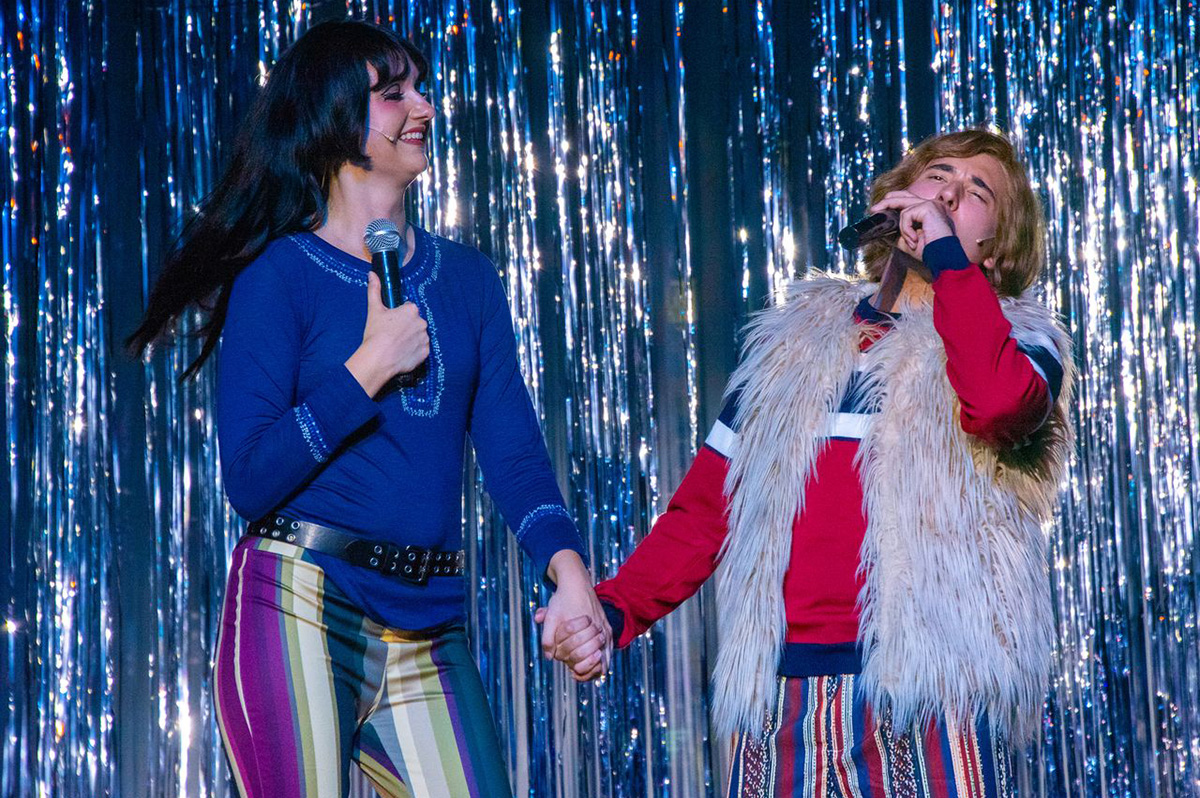
“The Cher Show” at Clear Space Theatre is wonderful. I am always amazed at the talent they attract for their summer series. Kudos to Wes Drummond, the artistic director of the theater. “The Cher Show” is written by Rick Elice. Compliments to the talented director, James FitzSimmons, who brought to life this production. His immensely talented cast includes Shannen Hofheimer as Star, Breanna Lemerise as Lady, Abby Lynne as Babe, and Anya Kay, as young Cher. Each is a pleasure to both watch and listen to. They command the stage. Then more kudos to the entire cast and ensemble. Also, the creative team, which includes among so many who make this show a hit, choreographer Shondelle Graulich; scenic designer, David Chappell; lighting designer Brendan Smith; costume designer Valerie Beardsley; and the entire orchestra led by conductor, Jerry Birl.
But the actor who I was looking forward to seeing in the production, was a young actor I had written about, and reviewed, when I saw him at Clear Space two years ago. In this production he is Sonny Bono, and he definitely didn’t disappoint.
Let me introduce Caetano de Sá. I have written about him before, but his resume is worth repeating. It says; Height: 5’7 ½, Eyes: Brown, Voice part: Tenor G2 – C5, Build: Athletic. All true. Then you add to this he speaks Brazilian Portuguese, is certified in stage combat by the Society of American Fight Directors, and is a 2nd Degree Black Belt in Taekwondo. Then as his resume of roles confirms, he can act, sing, and dance with the best. He does a great job as Sonny and is fun to watch on stage. Here he displays his talents as a singer and actor, and they are as good as I remembered them when I first met Caetano while he was still in school in 2024, and was starring as Frankie Valli in “Jersey Boys,” at Clear Space. At the time he was a rising senior at the Boston Conservatory at Berklee BFA Musical Theater program. I interviewed him, and Harry Sperduto, who played Tommy Devotee, after seeing them in the show, and being amazed by their talent. Since that time, I have followed their careers. When I heard Caetano was coming back to Clear Space for the summer, I reached out, and he agreed to sit down and chat, which we did. I knew Clear Space Theatre was planning a busy summer season. Their lineup of shows included “The Cher Show,” “Mean Girls,” and “Pretty Woman.” They always have talented casts, including the many college students who are getting their first chance to shine, which was the case for Caetano in 2024. Now he is back as a graduate, with more experience under his belt, a little more established. This season he was going to play Sonny in their production of “The Cher Show,” Martin/Coach Carr, in “Mean Girls,” and Mr. Hollister in “Pretty Woman,” and being a part of the ensemble. He told me he really enjoys being at Clear Space, and that his castmates are all talented. He is a lot more experienced than when he was here before, having performed in productions at the Prairie Repertory Theatre, the Emerald Coast Theatre Company, Firehouse Center for the Arts, and the Sullivan Rep, among others. In productions as diverse as “Oklahoma!,” “Mystic Pizza,” “Hairspray,” and “Rock of Ages.” He now lives in New York City and clearly New York is the perfect place for an aspiring actor. He has an agent at Bramante Artists, who is getting him gigs, like the one he had at 54 Below and even a TV commercial for AFLAC.
“The Cher Show” is the second show I have seen at Clear Space this summer. After our chat I got one of the last tickets available that evening for “Pretty Woman.” In that production he has a smaller role, and is part of the incredibly talented ensemble. It is also an entertaining show and its very talented stars, Abby McDonough as Vivian, and Jaiden Leo Riley as Edward, are a pleasure to watch. Kudos to the talented director, Ashley Williams, and the entire creative team.
For anyone living at the beach, or coming for a visit, I urge you to plan a night at Clear Space. You won’t regret it. But know tickets for all the shows, and Sunday evening cabaret nights, sell out fast. So, I suggest you see what’s available online and buy yours today.

Why we need to protect ‘sacrilegious’ art

New GALA show about WWII spy full of conflict, intrigue

Exploring Renée Richards’s life through lens of a trans author

Log Cabin Republicans remove transgender rights from mission

Not all trans people are the same

Man charged with anti-gay assault in D.C. accepts plea offer

Thailand’s first openly gay senator attends World Pride in Amsterdam

Philadelphia gayborhood preservation battle raises questions about displacement

Anne Arundel schools updates gender identity regulation following Trump administration threats

I respect AOC, even though I often disagree with her
-

 District of Columbia5 days ago
Man charged with anti-gay assault in D.C. accepts plea offer
-
Netherlands5 days ago
Thailand’s first openly gay senator attends World Pride in Amsterdam
-
Pennsylvania5 days ago
Philadelphia gayborhood preservation battle raises questions about displacement
-
Maryland4 days ago
Anne Arundel schools updates gender identity regulation following Trump administration threats