Opinions
Protecting trans rights is a moral duty, not a liability
Incoming administration seeks to define us out of existence

Nov. 20 marked Transgender Day of Remembrance — an international day of mourning where the trans community and its allies come together to honor and mourn those lost to violence, hate crimes, and suicide. Much of this violence is fueled by discriminatory policies and deep-seated hatred against transgender people.
Yet, just two days before TDOR, Rep. Nancy Mace (R-S.C.) introduced HR1579, a transphobic resolution aimed at prohibiting “members, officers, and employees of the House from using single-sex facilities other than those corresponding to their biological sex.” The resolution’s definition of “single-sex facilities” goes beyond restrooms to include changing rooms and locker rooms within the Capitol or House Office buildings.
This resolution is a blatant attempt to ban Rep.-Elect Sarah McBride (D-Del.), the first openly transgender congresswoman, from using women’s bathrooms and locker rooms in Congress. Far-right Rep. Marjorie Taylor Greene (R-Ga.) claimed that Speaker of the House Mike Johnson (R-La.) expressed support for the resolution behind closed doors, stating, “He committed to me, there in the conference, that Sarah McBride will not be using our restrooms.” In an interview, Rep. Mike Johnson doubled down: “For anyone who doesn’t know my established record on this issue, let me be unequivocally clear: a man is a man, and a woman is a woman, and a man cannot become a woman.”
Both Greene and Mace repeatedly misgendered McBride on social media and in comments to reporters. On Transgender Day of Remembrance itself, Speaker Johnson declared McBride would be treated as a man under House rules, forcing her to use men’s restrooms or gender-neutral facilities.
Mace claimed her actions were about “safety,” even suggesting McBride could pose a threat of sexual assault. However, during an appearance on Greg Kelly Reports, Mace went full mask off, calling it “offensive” that McBride could consider herself her equal.
This decision and language is more than offensive — it is outright discriminatory. McBride will have no other choice but to walk to her office every time she needs to use the restroom, unable to access the common bathrooms like her colleagues. Additionally, the resolution jeopardizes the safety of hundreds of transgender staffers, all of whom lack McBride’s visibility or privilege. Trans staffers have long used restrooms matching their gender identity without issue, but this policy opens the door to increased harassment and exclusion, with reports of such incidents already surfacing.
McBride issued a statement saying that while she “disagrees” with the rules, she will comply. Unsurprisingly, McBride’s compliance was not the end of the conversation. Mace introduced a bill to ban transgender people from using bathrooms matching their gender identity in federally owned spaces, from national parks to major airports. Mace declared on social media, “This fight isn’t over just yet. We want to ban men from women’s spaces in EVERY federal building, school, public bathroom, everywhere.”
Adding to this, Congress’s gendered dress code could also be weaponized to further degrade and bully McBride, targeting her presentation or honorifics. This was never about bathrooms, safety, or fairness—it has always been about control and erasing transgender people from public life.
Despite these attacks, multiple studies have found no evidence supporting claims that transgender people pose safety threats in bathrooms. Yet transphobic rhetoric dominated the 2024 election, with anti-trans ads like “Kamala is for they/them; President Trump is for you,”, signs targeting McBride at polling places in Delaware, and violent vitriol aimed at dehumanizing transgender Americans.
This tidal wave of hate culminates in the upcoming Supreme Court case, U.S. v. Skrmetti, a case that will determine whether bans on gender-affirming care for youth are unconstitutional. The stakes are high: 27 states already ban gender-affirming care, and 26 have implemented restrictions on trans youth in sports. With Donald Trump’s return to the White House and a Republican-controlled government, the situation doesn’t look great.
In the Delaware State Senate, Sarah McBride championed policies like paid family leave. The idea that she’s a danger to others is laughable. The real danger to others lies in the multiple Republican cabinet nominations with histories of sexual assault and abuse.
If a respected lawmaker who happens to be transgender is considered a threat, where does that leave the rest of the trans community?
In the wake of Kamala Harris’s election loss, trans people have been used as scapegoats, with moderate Democrats and political pundits alike calling them political liabilities. For the past few weeks, we’ve seen op-eds in the New York Times and Washington Post claiming that trans rights have gone too far and are political bombs.
How dare they? In the face of violent transphobia in our nation’s Capitol, now is the time to strengthen support for our transgender siblings. The moment the public and political establishment abandon transgender Americans, is the moment we’ve entered the last steps of the waltz into fascism.
The mere presence of a transgender woman in power asking to be treated as an equal has sent the GOP into a media frenzy. Mace has been running to Fox News and Newsmax to attack her future co-worker. She’s been obsessively posting on X (formerly Twitter) about Sarah McBride and “men in women’s spaces.”
Mike Johnson’s seeming endorsement of a “separate but equal” framework also evokes painful memories of segregationists during the Civil Rights Movement. This behavior is not only unacceptable but shines a light on the long history of white far-right politicians from the South fighting for their “right” to discriminate.
This isn’t a culture war thing; this is a fight for our very right to exist. Transgender Americans are facing a crisis. The incoming administration seeks to define us out of existence: they want us to detransition, to hide, to live in fear. They want us to remain in the closet.
For many, the closet is deadly. Trans people already die by suicide at higher rates, denying us the right to exist will only skyrocket the mental health crisis in America. Since Nov. 5 alone, the Trevor Project, a crisis organization for LGBTQ youth, reported a heartbreaking 700% increase in calls. People are dying now, and now is the time to protect trans people.
Defending McBride is the easiest way to signal support for trans people. This is about more than supporting one congresswoman — it’s about standing for the safety, dignity, and respect of every transgender American. We need leaders who will defend us in the face of the fascistic far-right.
As trans people, we recognize the emergency facing our community and are screaming our lungs out to a party that is considering abandoning us. It’s been said again and again but we need each other now more than ever.
LGBTQ voters pay attention to which representatives support and fight for their right to exist. According to the 2022 U.S. Transgender Survey’s Civic Engagement data, 82% of eligible transgender individuals are registered to vote. In the 2020 presidential election, 75% of eligible respondents reported voting, compared to 67% of the general U.S. population. Furthermore, initial exit polls showed that LGBTQIA+ voters overwhelmingly supported Kamala Harris.
The Democratic Party is at a crossroads: Will they fight for equality or allow the GOP’s attacks to stain their legacy and lose a vital and engaged voting bloc?
The truth is stark: transgender Americans deserve to exist without fear. This fight is about more than politics — it’s about life and death. In the reality we woke up to on Nov. 6, trans people and LGBTQ rights in general are on the chopping block.
Democrats have the chance to make history by standing on the right side of it. The fight for trans liberation is far from over, but this moment demands strong, progressive leadership. The future of the party — and our country—depends on it.
Vienna Cavazos (they/them) is the Diversity Lead and LGBTQIA+ Public Policy Specialist at Bulletproof Pride.



Opinions
Will Michigan save the GOP?
We must stop fighting each other as Democrats and rid country of Trump

Last week in Michigan we saw how dramatically wrong, and misleading, political polling can be. Because of that, and the media hype, it might have made a difference in the Democratic primary for the United States Senate. Haley Stevens lost by about 16,000 votes, and the second Democrat closest to Stevens’s views, withdrew from the race, but her name was still on the ballot, and she received 61,000 votes. So, what would have happened if she had withdrawn in time to keep her name of the ballot? We will never know.
The media have been hyping the few wins the DSA, and far-left Democratic candidates, have had, to the point you might think they are winning hundreds of primaries around the country. I think they have won fewer than 15. But those 15, and the hype, could actually make a difference in the general election. They could make a difference because they clearly divided the Democratic Party, and we don’t know if it will come back together in time to rid ourselves of the control of the felon, his fascist advisers, and their sycophants in Congress, now running our country.
While strongly opposed to parts of the platform of the Democratic Socialists of America, (DSA), and those who would espouse them, I am even more opposed to the felon in the White House who has proven he has no redeeming values. The DSA platform is a mixed bag. In my view there are some frightening parts such as calling for total defunding of the police, for workers to own every business, for the abolishment of the State of Israel, telling their endorsed candidates they may not meet with any Zionist organization, and now, elimination of the United States Senate. Before you respond telling me about what is not in the platform, please just read some of it. But then I am for the parts calling for universal healthcare, a higher minimum wage, strong union support, and working toward affordable housing, and a decent life for all.
So, what do the candidates who won with the support of the DSA do between now and Nov. 3? They must be very clear which parts of the DSA platform they believe in, and tell voters clearly, how they will govern and legislate. Make clear their priorities. That is the only way we will unite Democrats in time to win the general election.
Then those who lost to them should do what Rep. Stevens did in her concession statement in the Michigan U.S. Senate primary. It was a classy statement responding to the election results. She said: “I want to congratulate Abdul El-Sayed on winning the Democratic nomination for U.S. Senate. He is a doctor, a community health official, a Rhodes Scholar, and a dedicated Michigander. I am proud to offer my support as he takes on Mike Rogers in the general election. This was a thorough and rigorous campaign that brought out the full span of views within the Democratic Party – and that is why we have primaries. I am proud to have put up my hand to serve, and prouder to continue to work together to make sure this Senate seat remains blue, that we flip the United States Senate and continue the work for Michigan. Now I hope Dr. El-Sayed will run a campaign understanding which voters he needs to appeal to in order to win, and to keep the Michigan United States Senate seat in Democratic hands. When a vote is split 50/50, which was basically the case in this race, reading the 50% who voted against you correctly, is the key to winning. Many of those voters didn’t trust Dr. El- Sayed for a multitude of reasons. But he must now convince them, even with what they didn’t like about him, he is still a better choice than the Republican candidate. This is no different than in so many races around the nation, although it might be harder for a very far-left candidate to sway more moderate voters.”
I would say to the voters of Michigan, “While I did not support Dr. El-Sayed in the primary, I would definitely vote for him in the general election. The goal is saying to the felon in the White House that we will not let you continue to destroy our country. We Democrats may speak with a host of different voices, but they should all say to the felon: you are a loser, and we will see you, your fascist government, and your sycophants in Congress, defeated.”
We must stop fighting each other as Democrats, at least long enough, to accomplish this goal.
Peter Rosenstein is a longtime LGBTQ rights and Democratic Party activist.
Opinions
Treat our political opponents as neighbors not enemies
I want an America where each party makes the other better

For much of my adult life, people have assumed they know my politics before I open my mouth. As a transgender man writing for an LGBTQ publication, many assume I fit neatly into one political camp. The truth is more complicated. I have long felt politically centrist. I believe deeply in protecting LGBTQ Americans from discrimination and violence, and I also vehemently believe in Black Lives Matter, but I also believe in fiscal responsibility, a strong national defense, and institutions that encourage personal responsibility. I have found wisdom on both sides of the aisle, and I have found blind spots on both sides as well. I’ve also found some Republicans close to me to love me deeply, and I’ve found Democrats to do the same.
That leaves me with an unfashionable conclusion as a sort of pioneering transgender man: America desperately needs more bipartisanship.
Not because disagreement is unhealthy. Democracy depends on disagreement. But because democracy cannot survive if we begin treating our political opponents as enemies instead of neighbors.
Sen. John McCain understood this better than most. During his concession speech after losing the 2008 presidential election, supporters booed when Barack Obama’s name was mentioned. McCain immediately stopped them. “No, my friends,” he said. “Senator Obama is a decent person and a person you do not have to be scared of as president.” At a time when it would have been politically convenient to inflame partisan passions, McCain instead reminded Americans that losing an election did not mean losing a country.
Years later, after being diagnosed with brain cancer, McCain returned to the Senate to cast one of the defining votes of his career. More memorable than his famous thumbs-down vote on repealing the Affordable Care Act was the speech he delivered beforehand, pleading for senators to return to “regular order” and legislate together rather than behind closed doors. It was not simply a procedural argument. It was a moral one: institutions work best when neither party assumes it possesses all the answers.
American history repeatedly validates that lesson. The Civil Rights Act of 1964 did not become law because one party overwhelmed the other. It passed through bipartisan coalitions that included Democrats and Republicans willing to work across ideological divides. The Voting Rights Act of 1965 followed a similar path. Even President Ronald Reagan, remembered today as a conservative icon, ultimately signed legislation establishing Martin Luther King Jr. Day as a federal holiday after bipartisan support made the case impossible to ignore.
LGBTQ equality has followed a similar trajectory.
One of the most significant LGBTQ legislative victories in recent years—the Respect for Marriage Act—was not a partisan triumph. The bill passed the Senate by a vote of 61-36 with the support of 12 Republican senators after bipartisan negotiations added religious liberty protections that broadened its coalition. It later became law with bipartisan support in the House as well. Those Republican senators deserve much attention and a decent amount of respect.
As the son of two State Department diplomats, I also grew up overseas, living in embassies with legions of Marines that protected us kids from violence outside and potential assaults from foreign agents and spies. I learned from a young age that the American military is necessary to the survival of our nation. We need bases in foreign lands, Navy ships, and a CIA apparatus to defend us from overseas enemies. This is the reality that America faces, yet some in the LGBTQ community advocate for the demolition of the military.
As someone who is transgender, I understand why many LGBTQ Americans are skeptical of this argument. There are lawmakers advancing legislation that threatens our dignity or our rights. Those concerns are real. But political victories that endure rarely come solely from defeating opponents. They come from persuading them—or at least persuading enough of them that they become partners rather than permanent adversaries.
Right now, America is in a hellish partisan crisis. Trump is verging on a crazed dictator and Alexandria Ocasio Cortez and Bernie Sanders are yelling platitudes condemning Republicans. This crisis needs to be resolved. We need to dull the flames of political hate. We need to come back to the center, as McCain rightfully said.
This is called the politics of the neighbor. When you step outside your house or apartment, you will inevitably meet neighbors who carry different political views than you. They may believe in gun rights, or even vote for Trump, but if they act decently toward you, you should probably act decently toward them.
The neighbor coaches your child’s soccer team. They teach your daughter mathematics in middle school. They are therapists in addiction centers. They are bus drivers. They are bankers. They are lawyers. They could very well be politicians, too.
The neighbor helps shovel your driveway after a snowstorm. They give you a plant to put in your garden. When you have to go in for a biopsy, they stand by your side and help you through medical results.
The neighbor attends a different church, watches a different cable network, votes differently than you do—and still shows up when your family is in crisis.
But the neighbor means a lot to you, and you should mean a lot to them.
I do not want an America where Republicans disappear. I do not want an America where Democrats disappear. I want an America where each party makes the other better.
That aspiration should not sound naïve. It should sound patriotic.
The measure of a democracy is not whether it eliminates disagreement. It is whether disagreement remains compatible with mutual respect. We can argue fiercely over taxes, immigration, foreign policy, and LGBTQ rights while still recognizing that the person casting the opposite vote is not necessarily a villain.
America has always been strongest when it remembered that political opponents are still fellow citizens. Before they are Republicans or Democrats, conservatives or progressives, they are our neighbors. And neighbors, unlike enemies, have to find a way to keep living together.
Isaac Amend is a transgender man and writer based in D.C. In 2017, he starred in National Geographic’s ‘Gender Revolution’ documentary, hosted by Katie Couric. His author’s portfolio is available at isaacamend.com, and you can catch him on Instagram at @isaacamend.
Opinions
Insured on paper, excluded in practice
How fertility coverage definitions discriminate against LGBTQ+ workers
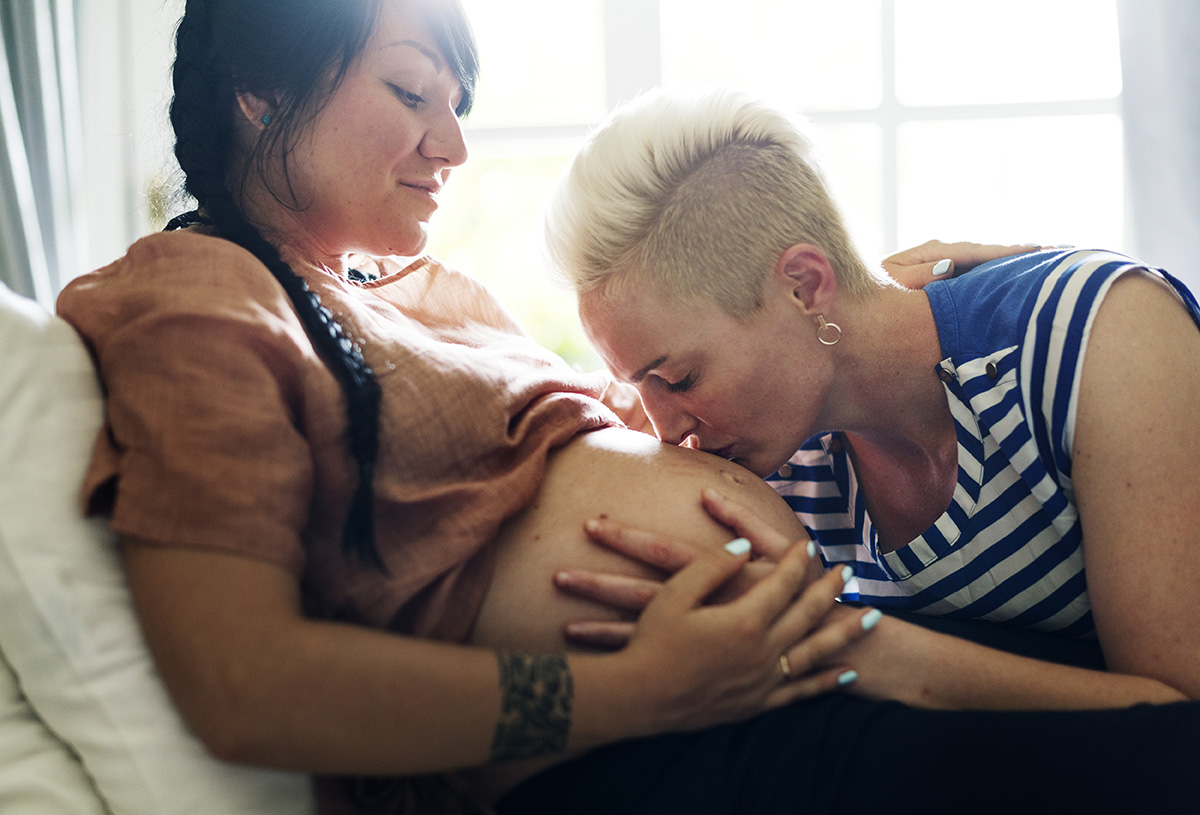
Pregnant workers in the LGBTQ+ community often encounter greater barriers than their cisgender or heterosexual counterparts, particularly when accessing company-sponsored health insurance. The challenges for pregnant workers are especially prevalent in obtaining fertility care, such as intrauterine insemination (IUI) and in vitro fertilization (IVF). Section 1557 of the Affordable Care Act prohibits sex discrimination in any federally funded health program, and a growing body of federal litigation now applies that prohibition to insurer-administered fertility benefits that exclude LGBTQ+ workers. Presently, 18 states and Washington, D.C. have infertility insurance laws, with requirements ranging from mandating private insurers to cover fertility treatments to merely offering coverage, which employers may choose not to select (MAP – Movement Advancement Project, “Fertility Healthcare Coverage”). Of these, six states and Washington, D.C. have language that is explicitly inclusive of LGBTQ+ people, while three states have language that may exclude LGBTQ+ people or couples. Where this coverage is not offered or is exclusionary, LGBTQ+ people must spend thousands of dollars for fertility care, while it may be guaranteed for other individuals. Today, 53% of LGBTQ+ adults live in states with no private-insurer fertility mandate, and a single IVF cycle can exceed $18,000 out-of-pocket.
Legal Framework: Section 1557 of the Affordable Care Act
Section 1557 of the Affordable Care Act protects individuals from sex discrimination in any health program or activity that receives any funding from the Department of Health and Human Services. It specifies that in terms of sex discrimination, an individual’s sex, including pregnancy, childbirth, and related medical conditions are protected. In turn, many claims challenging health insurance’s fertility policies invoke Section 1557 to argue that definitions of infertility or proof requirements that exclude same-sex couples constitute unlawful discrimination. Recently, the Ninth Circuit held that Section 1557 of the Affordable Care Act applies to an insurer if any part of the entity receives federal funds, even when the specific health plans at issue are not federally funded, though whether the insurer is ultimately liable under that section is a fact-specific inquiry. Pritchard v. Blue Cross Blue Shield of Illinois, No. 23-4331, slip op. (9th Cir. Nov. 17, 2025). Specifically, how insurers can be held liable in the context of fertility care to LGBTQ+ employees remains to be tested.
Case Study: Kulwicki v. Aetna Life Insurance Company
In 2022, a lesbian registered nurse, Tara Kulwicki, filed a complaint alleging that the medical plan offered by her employer, Wellstar Health System Inc. and Wellstar Cobb Hospital Inc., and administered by Aetna, Inc. and Aetna Life Insurance Company imposed discriminatory barriers on homosexual couples to seeking access fertility care. Under Kulwicki’s medical plan, fertility treatment such as intrauterine insemination (IUI) and in vitro fertilization (IVF) is covered only for couples who can meet the plan’s definition of “infertile.”
The medical plan’s definition for “infertile” is as follows: “For a woman who is under 35 years of age: 1 year or more of timed, unprotected coitus, or 12 cycles of artificial insemination; or [f]or a woman who is 35 years of age or older: 6 months or more of timed, unprotected coitus, or 6 cycles of artificial insemination. For heterosexual couples, infertility could be established by showing that six to twelve months of unprotected sex without contraception did not result in a pregnancy. The plan, however, defines “unprotected sex” as exclusively sexual intercourse between a man and woman. This definition effectively excludes homosexual couples as they do not have the capacity to become pregnant through unprotected sex with their partner. If couples are unable to prove they meet the definition, as in Kulwicki’s case, they are forced to pay high out-of-pocket costs, often totaling thousands of dollars, for IUI and IVF treatments before they qualify for coverage.
In Kulwicki’s case, Section 1557 is used as the basis for the claim. Kulwicki alleged Aetna administered Wellstar’s plan, denied her IUI precertification for not meeting “infertility,” and that the plan and Aetna’s policy tied infertility to unprotected heterosexual intercourse or multiple insemination cycles, resulting in out-of-pocket costs for non-heterosexual women.
The United States District Court for the District of Connecticut later denied Aetna’s renewed motion to dismiss for failure to join Wellstar, holding Aetna could face Section 1557 liability for its own role and that damages could provide complete relief without Wellstar. Most recently, on September 24, 2025, the court denied Aetna’s motion for partial summary judgment, finding factual disputes about Aetna’s collaborative role in shaping the plan language and its reserved contractual rights to align plan terms with Aetna systems, policies, and governing law. As a result, Tara Kulwicki’s class action will continue against Aetna. The court noted Aetna’s active role in shaping the plan’s infertility definition and retaining authority to ensure terms aligned with its systems, policies, and governing law.
Comparative Cases: Echoes of Kulwicki
Courts addressing similar infertility definitions have allowed claims to proceed where LGBTQ+ members face cost or proof burdens not imposed on heterosexual couples.
In Berton v. Aetna Inc. et al. (4:23-cv-01849, 2023), Mara Berton filed a suit against Aetna in violation of the Affordable Care Act after her insurance denied coverage for fertility treatment. This case raises question of first impression as to the “burden of proof” required to demonstrate infertility. In this case, the court denied Aetna’s motion to dismiss a Section 1557 claim where the plan formerly required “frequent, unprotected heterosexual sexual intercourse” or donor insemination cycles, and postJanuary 2023 language still required “eggsperm contact,” allowing heterosexual couples to attest through intercourse while same-sex couples had to incur costs for donor insemination cycles. The court found these allegations plausibly facially discriminatory. The court also rejected Rule 12(b)(7) arguments, concluding complete relief through damages could be afforded without joining the employer plan sponsor.
In Murphy v. Health Care Service Corporation (Blue Cross Blue Shield of Illinois) (No. 22-cv-2656, 2023), the court denied a motion to dismiss, holding that even under a 2020 policy listing multiple infertility pathways, the definition of “unprotected sexual intercourse” as malefemale intercourse left similarly situated samesex participants with no costfree route to establish infertility, plausibly alleging intentional discrimination under Section 1557 standards.
Two parallel actions against Aetna have already produced settlements that reshape the landscape. In Goidel v. Aetna Life Insurance Co., No. 1:21-cv-07619 (S.D.N.Y.), the court granted final approval on October 14, 2025 of a class settlement that aligned Aetna’s infertility definition with American Society for Reproductive Medicine guidelines and made intrauterine insemination a standard medical benefit. Weeks later, in Berton v. Aetna Inc., No. 4:23-cv-01849 (N.D. Cal.), the Northern District of California preliminarily approved a settlement under which most eligible class members who submit a qualifying claim will receive approximately $11,000 in compensation, with claims due by June 29, 2026.
Conclusion
Recent litigation underscores that insurers cannot avoid responsibility where they actively shape, interpret, or administer plan terms that disadvantage LGBTQ+ patients, including fertility coverage definitions and proof requirements. Section 1557 of the Affordable Care Act applies to health programs or activities receiving federal funding, and courts have allowed claims to proceed where infertility definitions or evidentiary burdens effectively exclude same-sex couples. The court in Kulwicki allowed a class action to proceed based on allegations that the insurer administered a plan tying “infertility” to unprotected heterosexual intercourse or multiple insemination cycles and played an active, collaborative role in shaping infertility language while reserving contractual rights to align plan terms with its policies. Other courts have similarly denied motions to dismiss Section 1557 claims where plans with definitions of “unprotected sexual intercourse” limited to male-female intercourse, leaving same-sex participants with no cost-free route to establish infertility. Taken together, courts are scrutinizing not only employers’ selection of plans but also insurers’ roles in designing and administering plan terms that may impose discriminatory barriers.
Employers should be proactive in counteracting harmful policies by incorporating specific protective language into their company policies and providing robust support systems for their transgender, nonbinary, and intersex employees. Employees who suspect their plan’s infertility definition imposes additional cost or proof burdens on same-sex couples should preserve all denial letters, plan booklets, and out-of-pocket receipts, and consult counsel promptly.
Isabelle Megosh, Lily Miller, and Ting Cheung are with Sanford Heisler Sharp McKnight, a national civil rights and employment law firm that represents employees in discrimination, harassment, and benefits-related litigation.

Live music drag cabaret set for Shaw’s Tavern

Calendar: August 14-20

Comings & Goings

Beloved pastor, AIDS activist Rainey Cheeks dies at 74

Supreme Court ruled Boy Scouts could exclude James Dale. Now he says that same rule protects LGBTQ scouts from Trump

Don’t miss summer productions at Clear Space in Rehoboth Beach

Todd Blanche’s record on LGBTQ issues comes under scrutiny as he takes over DOJ

2 former NBA players launch cheap anti-trans stunt to exploit WNBA rules

HISTORIC: Susan Stewart elected Rehoboth’s first out mayor

Same-sex couples challenges India income tax law
-

 Theater4 days ago
Don’t miss summer productions at Clear Space in Rehoboth Beach
-
Federal Government4 days ago
Todd Blanche’s record on LGBTQ issues comes under scrutiny as he takes over DOJ
-
Sports4 days ago
2 former NBA players launch cheap anti-trans stunt to exploit WNBA rules
-
Rehoboth Beach4 days ago
HISTORIC: Susan Stewart elected Rehoboth’s first out mayor