Real Estate
Pride, patriotism, and prosperity
Real estate plays role in honoring servicemembers’ legacy

As the calendar turns to late May and early June, several powerful movements and celebrations converge in a profound and colorful tapestry of remembrance, Pride, and progress.
Memorial Day in the United States honors the sacrifices of military personnel who gave their lives in service. Simultaneously, WorldPride and Black Pride commemorate both the historical struggles and enduring strength of LGBTQ+ communities worldwide.
Though these observances may seem distinct, they share powerful commonalities — solemnity, resilience, and the pursuit of equity. When viewed through the lens of real estate and community development, their intersection reveals the critical importance of space, ownership, and inclusion.
Memorial Day is more than a barbecue, a long weekend, or the unofficial start of summer. It is a solemn remembrance of those who laid down their lives for the ideals of freedom and democracy. Many of these fallen heroes came from marginalized backgrounds, including a rainbow of LGBTQ+ Americans who served valiantly, often without recognition or equal rights at home.
LGBTQ+ service members have fought in silence for decades, only gaining the right to serve openly in recent years and then having that opportunity for some individuals snatched back simply because of who they are. Memorial Day is a chance not only to honor their service but also as a reminder of the injustices they endured.
Real estate plays a role in their legacy. For decades, returning veterans used the GI Bill to buy homes and build generational wealth; however, discriminatory practices like redlining and restrictive covenants denied Black veterans the same opportunities, contributing to the racial wealth gap that persists today. Similarly, LGBTQ+ veterans and their partners often faced housing discrimination with little legal recourse. These systemic barriers underscore how access to safe and equitable housing is part of the fight for justice.
Black Pride events emerged in response to racism within the broader LGBTQ+ movement, asserting that Black queer lives matter and deserve visibility. Held in cities across the globe, Black Pride is not just a festival — it is a political and cultural declaration. It amplifies voices at the intersection of race and sexuality, advocating for people who are disproportionately impacted by housing insecurity and gentrification.
Many urban neighborhoods that were once cultural havens for queer communities are being transformed by rising rents and redevelopment. While revitalization can bring economic opportunity, it must be done equitably, with safeguards in place to ensure that long-standing residents are not displaced. Real estate, in this context, becomes a tool for resistance and renewal.
WorldPride, a global event celebrating LGBTQ+ rights and visibility, is hosted by a different city every few years. It draws millions of participants, shines an international spotlight on LGBTQ+ issues, and highlights disparities in rights and protections worldwide. In countries where queer identities are criminalized, safe housing can be a matter of life and death.
Even in more progressive regions, LGBTQ+ individuals often face subtle yet persistent discrimination from landlords, real estate agents, and lending institutions. In the real estate industry, advocacy groups are working to increase representation, offer training, define ethical responsibilities, and advocate for inclusive policies to ensure housing is truly accessible to all.
The convergence of WorldPride with Memorial Day and Black Pride invites deeper reflection: What kind of world are we building in memory of those who came before? How can we ensure that freedom, the very principle so many fought and died for, includes the right to live openly and securely, regardless of race, gender, or sexuality?
The real estate industry has a unique role in shaping the future. From urban planning to homeownership policy, to income-based downpayment grants, it directly influences who has access to stability and opportunity.
Developers, policymakers, and community leaders must work together to address housing disparities. This includes funding affordable housing, protecting tenants from discrimination, and investing in communities that have been historically excluded. It also means respecting cultural legacies and ensuring that neighborhoods reflect the diversity of the people who live in them.
Memorial Day reminds us of the cost of freedom. International Pride events remind us that the fight for freedom is ongoing. As we honor the fallen, let us also honor the living – those who continue to fight for their right to exist, to love, and to call a place home. Whether waving a flag at a Pride parade, laying a wreath at a soldier’s grave, or signing a first-time homebuyer agreement, these moments are connected by the enduring belief that everyone deserves dignity, safety, and a place to belong.
Valerie M. Blake is a licensed Associate Broker in DC, MD & VA with RLAH @properties. Call or text her at (202) 246-8602, email her at DCHomeQuest.com, or follow her on Facebook at TheRealst8ofAffairs.





Real Estate
Under-the-radar Delaware beach towns smart buyers are targeting
There are other options if Rehoboth prices are scaring you off
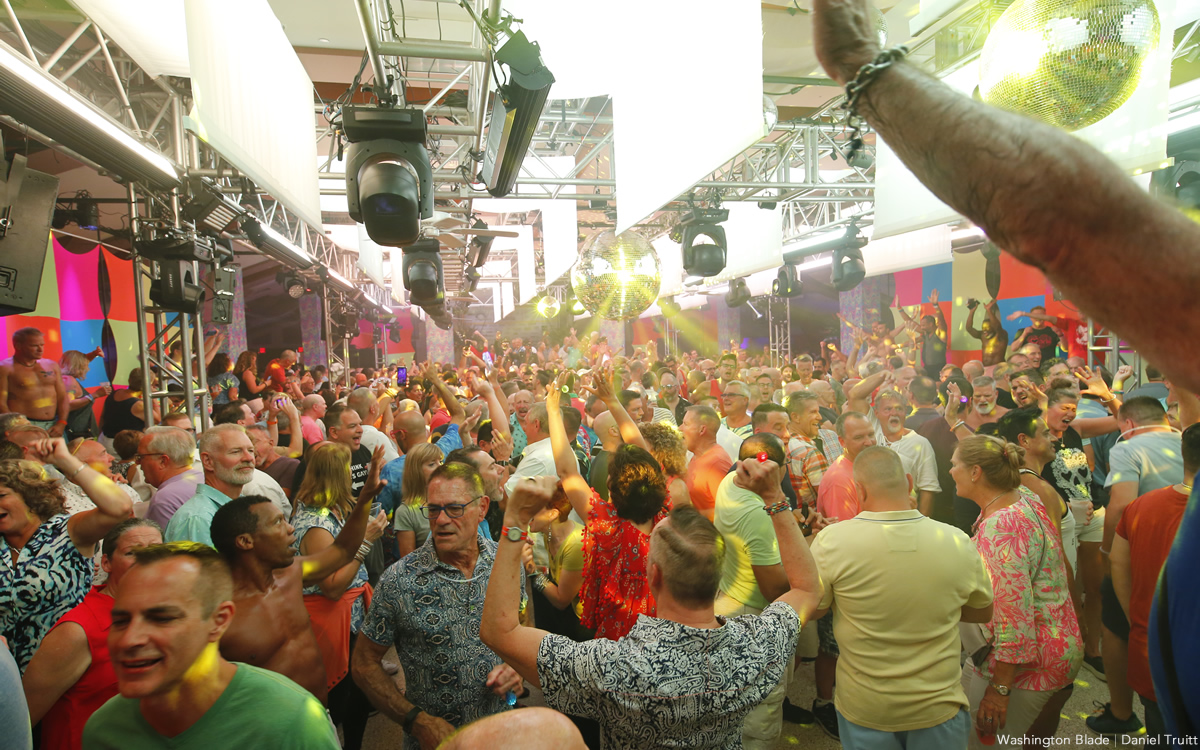
Look, we love Rehoboth. We will always love Rehoboth. Queer folks have been flocking there since the 1940s, and with scores of LGBTQ-owned businesses and a Pride calendar packed tighter than the boardwalk in July, “Rehomo” earned its crown fair and square.
But let’s be honest with each other: trying to buy property there right now feels a lot like trying to get a reservation at the one good restaurant in town on a Saturday in August. Everyone wants in, inventory is tighter than your swim trunks after Labor Day brunch, and the prices have officially entered “are you kidding me” territory.
So here’s a thought: What if you didn’t fight the crowd? What if, instead, you let Rehoboth keep doing its glorious, chaotic, glitter-bomb thing and you quietly built your beach life 15 minutes away for considerably less drama and considerably more square footage? Here are four towns ready for their close-up.
Lewes: The Charming Overachiever
Lewes is what happens when a beach town actually has its life together. Historic charm, walkability, proximity to Cape Henlopen State Park, less crowding, and a strong year-round community. Unlike towns that turn into ghost towns after Labor Day, Lewes maintains a real community all year long, which is more than we can say for some situationships.
And right now, the market is practically begging you to make a move. It’s one of the most desirable and stable markets in the county — built for buyers thinking long-term, not flippers, and Sussex County overall has flipped into genuine buyer’s market territory for the first time in years. Translation: you finally get to be the one with leverage.
Bethany Beach: My Personal Pick
Full disclosure: I own in Bethany. So consider this section a little biased — and also the most honest thing I’ll tell you in this whole article.
When I drive down from D.C., I’m not looking for more of D.C. I love this city, but I also love leaving it — and yes, some of the people in it too (you know who you are, and so do I). Bethany gives me that full exhale. It’s quiet in the way that actually means something: fewer crowds, slower mornings, a soundtrack that’s mostly waves instead of nightlife. It leans hard into its “quiet resort” reputation, with low property taxes and a limited geographic footprint, and it is not the least bit sorry about it.
But quiet doesn’t mean isolated. I’ve got a genuinely excellent food scene nearby, real shopping, and a string of charming neighboring beach towns — and when I do want a taste of Rehoboth’s energy, it’s a short, easy drive away. I get to choose my dose of chaos instead of living inside it.
And here’s the part that matters most for this article: the price. If you’ve looked at Rehoboth listings and quietly closed the tab in despair, I need you to hear this — you can absolutely afford a beach house. It just doesn’t have to be in Rehoboth. Bethany’s average home value sits around $848,592, which is still real money, no question — but it buys you more house, more land, and more peace than the same budget gets you closer to the boardwalk. Bethany is welcoming too, just without Rehoboth’s decades of built-in queer institutional history — and for plenty of us, that trade-off is more than worth it.
Fenwick Island: Small Town, Big Flex
Fenwick rarely gets mentioned and, frankly, it should be insulted. It’s tiny, it’s quiet, and it has beach access without the carnival energy. The market data tends to lump it in with Bethany, where single-family oceanfront homes clear $1 million while entry-level condos start in the $600s — proof that “under-the-radar” doesn’t mean “bargain bin,” it means “fewer people fighting you for it.”
South Bethany: For the Boat Gays
Some of us want sand between our toes. Others want a private dock and a boat named something deeply unserious. South Bethany’s canal communities are built for the latter — water access on both sides, fewer crowds, and a lifestyle that says, “I have a captain’s hat and I am not afraid to wear it.”
The Math Works in Your Favor Now
Here’s the part that should really get your attention: Sussex County’s median sold price has dropped to $440,000, down 3.3% year-over-year, and buyers are routinely closing around 88 cents on the dollar compared to asking price. That’s a far cry from the unhinged bidding wars of 2021 and 2022, when overpaying was basically a competitive sport. Inventory across the county sits at nearly 2,500 active listings — the most of any county in Delaware, meaning you actually get to be picky for once. Revolutionary, we know.
And no, choosing one of these towns doesn’t mean leaving your people behind. Sussex Pride serves the entire county, not just Rehoboth proper, and CAMP Rehoboth’s resources extend well beyond town limits too. You’re not exiling yourself to the suburbs of queerness — you’re just getting a bigger kitchen, a quieter porch, and a much shorter line for the bathroom.
Add in the fact that Delaware has no estate tax and some of the lowest property taxes around, savings that genuinely add up over a retirement horizon, and the case writes itself. Rehoboth will always be the beating, sequined heart of queer beach culture in Delaware. But if you’ve been telling yourself a beach house isn’t in the cards — I’m here to tell you it absolutely is. It just might be 15 minutes south, with your own quiet porch, your own salt air, and considerably more room to breathe.
Have a real estate question or Rehoboth market tip? Reach out to [email protected] for LGBTQ-friendly real estate resources in the Rehoboth area.
Justin Noble is a Realtor licensed in D.C., Maryland, and Delaware with Monument Sotheby’s International Realty. Reach him at [email protected] or 302-897-7499.
Real Estate
‘Culture eats strategy for breakfast’
Real estate agents must adapt, learn how to manage from within

“Culture Eats Strategy for Breakfast” was a phrase often repeated in many of my management courses from the University of Illinois. The concept was discussed at length – how the best laid plans can sometimes be supported or derailed by the culture of the people involved in whichever project to be implemented. Whether it be a project to implement new software, roll out a new product or service, or just reaching a sales target, the way the team involved works together can indeed affect the outcome.
Perhaps this is just another way to say, “teamwork makes the dream work!” Most teams usually have someone who is designated as a leader. The leader can try to lead through authority and control or can alternatively try to lead through influence and encouraging a more collective framework for solving problems.
Why does this matter when picking the right real estate agent or team to work with? Besides having a job as a salesperson for the brokerage, the real estate agent is contractually bound to act on their client’s behalf. The buyer broker agreement is in place so that the agent and the client can work together as a team in communications regarding offer strategy, during negotiations, implementing marketing plans, as well as selecting which renovations or upgrades to choose before selling a property. After the property goes under contract, the job isn’t “done”. There is still work to do.
At this point, the agents then turn into a project manager of sorts – coordinating communications between the lending team, the title attorneys, the other client’s agents, any governmental agencies that could be involved in down payment assistance or helping to clear a property for a sale, and often times groups like a condo board, a home inspector, or contractors when arranging repairs and estimates before a final walk through.
In short, the agent takes on somewhat of a “leadership role” in the transaction and ensures that all the ducks stay in a row until the project is complete. That agent will hopefully be very fluid and forthcoming with their information, copying the required parties on all communications and creating a “paper trail” of who said what or didn’t offer to fix A, B, or C, so that all the minutiae of the contract can be addressed and fulfilled before the settlement date. The agent often must wear many hats and quickly learn the communication styles of an entire new set of people in a short period. One person may not return calls for a week after being contacted. Another person may go on vacation at the beginning of the process and not return emails for two weeks. Another person may wish to have daily updates of the progress of the process.
In this way – an agent quickly learns in each transaction that “culture can eat strategy for breakfast.” Because the agent must adapt to a wide variety of communication styles, learn how to “manage from within”, build support for closing the project by the due date, and somehow keep all the interested parties invested, engaged, and responsive.
Who you work with matters when picking the right person to represent you in your next transaction – so, just remember that “teamwork makes the dream work!”
Joseph Hudson is a referral agent with RLAH. Reach him at 703-587-0597 or [email protected].
Real Estate
Does Pride decor resemble Trump’s design aesthetic?
Glitter, gold, and rejecting the idea that a home should be understated

Interior design is often a balancing act between taste, personality, and restraint. Sometimes, however, restraint leaves the building entirely. Such is the case when the colorful exuberance of gay Pride-inspired decorating collides with the famously excessive decorating style associated with the current occupant of the White House. The result can be a fascinating study in maximalism, spectacle, and unapologetic visual overload.
Donald Trump’s personal decorating style has long been a subject of debate among designers and critics. Admirers see luxury and grandeur. Critics see something else: a dizzying display of gold leaf, marble, mirrors, crystal, and oversized furnishings that often crosses the line from elegant into what many designers would call tacky. More is rarely enough. If one chandelier sparkles, three are better. If a room has gold accents, why not make every available surface gold? (See Oval Office and ballroom rendition for details.)
In many ways, this excess shares common ground with certain Pride celebrations. Pride has never been about blending into the background. It celebrates visibility, self-expression, individuality, and joy. Rainbow colors, dramatic costumes, glitter, flamboyant artwork, and bold statements have long been part of Pride culture. Yet there is an important difference. Pride’s extravagance is often playful, self-aware, and rooted in personal expression, while Trump’s aesthetic has frequently been criticized for equating luxury with sheer quantity and visual intensity.
Combining these influences creates an interior that could best be described as “glamorous chaos.”
Imagine entering a living room in which gold-trimmed mirrors stretch from floor to ceiling. Crystal chandeliers hang above a bright rainbow velvet sectional. Marble floors gleam beneath metallic furniture that appears determined to reflect every available light source. Pride flags become framed artwork surrounded by ornate gold moldings. A room designed this way doesn’t whisper. It shouts.
Color is central to the concept. Pride-inspired interiors often embrace the full spectrum of colors. Trump’s style, meanwhile, traditionally favors cream, gold, black, and glossy finishes. Combining them means introducing vivid jewel tones against a backdrop of faux-palatial luxury. Emerald green chairs, ruby-red draperies, sapphire-blue accent walls, and gold-trimmed furniture can coexist in a way that feels deliberately theatrical.
The key word is theatrical.
Many professional designers spend years learning how to create visual balance. A Pride-meets-Trump interior intentionally ignores many of those rules. Pattern competes with pattern. Shine competes with shine. Artwork competes with furniture. The eye rarely gets a chance to rest. For some homeowners, that sounds exhausting. For others, it sounds like the perfect party.
Lighting offers another opportunity to embrace excess. Crystal chandeliers, mirrored lamps, illuminated shelves, and color-changing LED lighting can transform a room into something resembling a cross between a luxury hotel lobby and a Pride festival. The goal is not subtlety. The goal is spectacle.
A dining room inspired by this combination might feature a massive glass table, gold dining chairs, rainbow floral arrangements, mirrored walls, and enough crystal accessories to keep a polishing cloth busy year-round. Critics would call it gaudy. Fans would call it fabulous.
Artwork becomes particularly important. Pride-themed pieces featuring LGBTQ+ history, activism, and culture can provide meaning beneath the decorative excess. Without these personal and cultural elements, the room risks becoming little more than a collection of expensive looking, but not necessarily expensive, objects. Pride design can work best when it reflects identity and community rather than simply displaying color for color’s sake.
While normally a haven for restful sleep, bedrooms can take a similar approach. Plush velvet fabrics, oversized tufted headboards, metallic and mirrored finishes, colorful accent lighting, and dramatic artwork create a space that feels more like a boutique hotel suite than a traditional bedroom. Again, the challenge is avoiding the temptation to add one more decorative element to an already crowded visual landscape.
What makes this design combination interesting is that both aesthetics reject the idea that a home should be understated. Both embrace visibility. Both invite attention. Both encourage occupants to take up space unapologetically. Yet where Pride design often celebrates authenticity and self-expression, Trump’s decorating style is frequently criticized for prioritizing conspicuous luxury over cohesion and refinement.
The result is an interior style that many people would consider delightfully outrageous and others would consider a decorating nightmare. Either way, nobody is likely to forget it.
In the end, a Pride-inspired interpretation of Donald Trump’s famously over-the-top aesthetic would be colorful, glittering, excessive, and impossible to ignore. It would break nearly every rule of minimalist design while embracing the philosophy that if something is worth doing, it is worth overdoing. Whether one sees that as fabulous or tacky may depend entirely on how much gold leaf and rainbow velvet one can tolerate in a single room.
Valerie M. Blake is a licensed associate broker in D.C., Maryland, and Virginia with RLAH @properties. Call or text her at 202-246-8602, email her at [email protected] or follow her on Facebook at TheRealst8ofAffairs.

Campaign launched to elect more LGBTQ candidates to ANC seats

Gay librarian to discuss new novel at Green Lantern

Calendar: July 10-16

Gay Fla. Democrat Elijah Manley sees opportunity in Trump’s second term

Ron Singer, owner of popular Mount Vernon gay bar Leon’s, dies

As Washington shifts right, Democratic Socialists gain ground

Madonna roundup: Reviews, sales, and love for ‘Danceteria’

Susan Stewart could make history as Rehoboth’s first openly gay mayor

Silky Nutmeg Ganache talks sex and dating, gender, politics, weight loss journey

Three overlooked court rulings limited White House anti-trans policies
-

 2026 Midterm Elections4 days ago
As Washington shifts right, Democratic Socialists gain ground
-
National5 days ago
Madonna roundup: Reviews, sales, and love for ‘Danceteria’
-
Rehoboth Beach5 days ago
Susan Stewart could make history as Rehoboth’s first openly gay mayor
-
Celebrity News5 days ago
Silky Nutmeg Ganache talks sex and dating, gender, politics, weight loss journey