Virginia
VCU halts gender-affirming care
Broader healthcare threats loom as White House threatens to withhold federal funding

On Tuesday, Virginia Commonwealth University announced it would stop providing and researching gender-affirming care at the Children’s Hospital of Richmond at VCU for anyone under the age of 19.
In a post on the hospital’s website, it said the decision was made to stay within federal and state directives and was a result of “a thoughtful and thorough assessment that revealed no other viable options at this time.”
VCU staff — part of one of the largest healthcare providers in the state — were notified by email of the change, which announced they would “wind down these services,” a claim the hospital has made before.
In January, President Donald Trump signed the “Protecting Children From Chemical and Surgical Mutilation” executive order which is, at its core, designed to vilify transgender people. Since then, VCU stopped providing trans-specific care, then backtracked, allowing doctors to prescribe puberty blockers and hormone therapy, according to Axios.
Wyatt S. M. Rolla, a senior transgender rights tttorney for the American Civil Liberties Union of Virginia, spoke with the Washington Blade about the negative impact VCU’s decision will have on trans children’s healthcare.
“I think a really important starting point is that gender-affirming care is legal in the state of Virginia, including for individuals under the age of 19, and there are doctors, nurses, clinicians across the state that are committed to still providing that care to patients,” Rolla said.
Rolla went on to explain that even though providing gender-affirming care for minors is legal in Virginia, this executive order has a chilling effect on hospitals and is preemptively causing institutions like VCU to stop offering it.
“The primary impact of that executive order was to threaten the disruption of federal funding to hospitals that were providing that care,” they added. “There have been multiple pieces of litigation filed to challenge that threat to disrupt grants to institutions that are providing this care, and the executive order — that provision of it — is actually enjoined by multiple federal courts right now and cannot be used as a basis to terminate federal funding.”
They continued, explaining that this is not the only method of control the Trump-Vance administration is using.
“The Trump administration is weaponizing the Department of Justice, the Department of Health and Human Services, the Federal Trade Commission, [and] other federal agencies to try to bully healthcare providers into discriminating against their patients, and that should disturb everyone, because it won’t stop at trans people.”
These other fears, Rolla explained, could encroach on broader issues of bodily autonomy and safety that Republicans deem “controversial” — especially if medical boards, which are supposed to be non-political, are affected by orders like this one.
“I mean, it is setting a really dangerous precedent for all Virginians,” Rolla said. “And I think it’s not just a question of how other hospitals in Virginia will respond regarding gender-affirming care. Tomorrow, this could be a conversation about reproductive health services or HIV treatment or other vital health care that someone has decided is politically controversial. It’s really important to recognize the threat of undermining public trust in our medical institutions and endangering the communities that they’re meant to serve by refusing to provide medical care that providers have determined is necessary.”
When asked what the ACLU of Virginia hopes children seeking gender-affirming care will know, Rolla said:
“I want those young people and their families to know that again, there are doctors, nurses, clinicians across the state that are working around the clock to make sure they are able to provide you the care that you need, and there are advocates [and] community members that are going to fight on every terrain necessary to preserve the legal ability of those health care providers to do that. So while those young people are being cynically targeted for political advantage, I want them to know that they’re not alone and that there is a deep bench of people that are fighting to have for them to access the resources they need to thrive and grow into the beautiful adults that we know they deserve to be.”
The ACLU also sent a statement condemning the actions of VCU.
Equality Virginia, He She Ze and We, Side by Side, Planned Parenthood Advocates of Virginia, the Transgender Assistance Program of Virginia, Seven Hills Family Medicine, Health Brigade, Thriving Trans Men of Color, Virginia LGBTQ+ Bar Association, the Calos Coalition, the Shenandoah LGBTQ Center, Progress Virginia, and the Campaign for Southern Equality co-signed the statement. They claim VCU’s decision is a direct result of Trump and the Republican Party’s “hateful political agenda” and has nothing to do with healthcare.
“We see the political strategy. We reject it. We’ll keep fighting for trans youth, their families, and providers who support them,” reads the statement.




Virginia
Virginia Anti-Violence Project struggles to fill federal funding gaps
Group has lost 54 percent of funding since 2020
A loss of federal funding has threatened to adversely impact the Virginia Anti-Violence Project’s work in the state.
The group’s mission is to assist LGBTQ and BIPOC (Black, Indigenous and people of color) victims of domestic, sexual, interpersonal, and state violence with direct support, education, and advocacy. The VAVP seeks to build a future where LGBTQ and BIPOC individuals can live freely without a sense for worry about violence.
“Virginia Anti-Violence Project helps to close the distance between services existing and LGBTQIA+ survivors actually being able to reach safety, stable housing, and support that they can trust,” VAVP Executive Director Ebony Clark told the Washington Blade on Tuesday. “Our mission is to provide direct services and advocacy to LGBTQ+ survivors across Virginia.”
Clark said obtaining state and federal funds has become increasingly difficult.
“One of the reasons that we can talk about is politics and how you know queer diverse, queer communities are targets when it comes to politics, and so that may be a reason why the funding is decreasing in in very niche areas, but overall, state funding, federal funding has been lost or significantly reduced when it comes to culturally specific marginalized populations,” Clark said. “The bigger picture is that funding that was purposed for diversity, equity, inclusion, marginalized populations, or you know culturally competent programming, those funds have been strategically reduced or eliminated on state and federal levels overall.”
Even more so with the current Trump-Vance administration.
Data shows federal funding for one “major federal victim-services funding stream in” Virginia has dropped 54 percent over the last six years: from $25.1 million in fiscal year 2020 to $11.6 million in fiscal year 2026.
Clark noted some federal funding has been denied due to VAVP’s DEI policies — it has had to “water down” their language. These cuts have forced VAVP to limit housing and economic support, which has resulted in fewer resources for its clients.
The organization has set up a goal for receiving between $250,000-$300,000 a year that would allow it to operate — and focus on client housing.
“Housing is fundamental to safety,” Clark told the Blade. “If you know leaving violence puts someone on the street or forces them back to the person harming them, that means the crisis isn’t over. So there needs to be other prevention strategies and reactive strategies in place to be able to prevent further violence from folks.”
VAVP has set up a link for anyone who is interested in making a donation. It is here.
The VAVP website is also accepting donations.
Virginia
Winsome Earle-Sears ‘Life and Marriage Tour’ to include Northern Va. stops
Voters to consider marriage equality, reproductive rights referenda in November
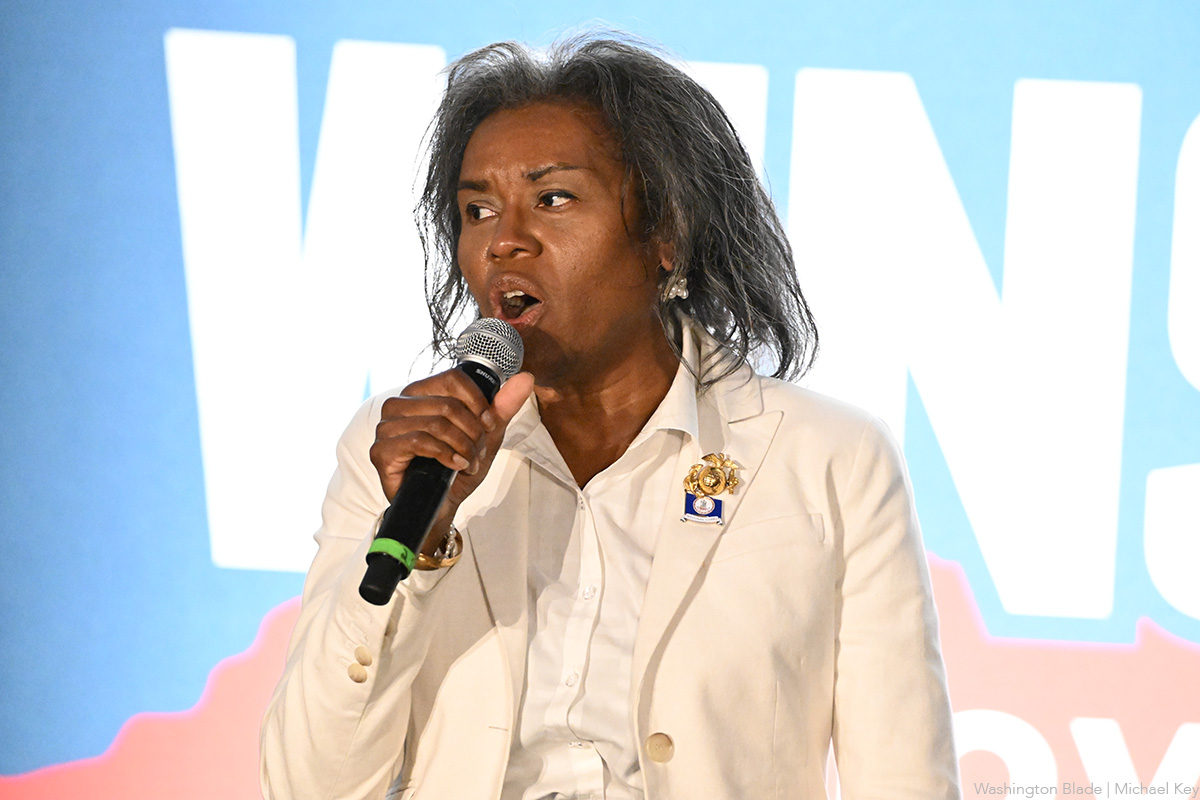
Former Virginia Lt. Gov. Winsome Earle-Sears has announced her campaign against efforts to enshrine marriage equality and reproductive rights in the state constitution will make several stops in Northern Virginia.
Her “Life and Marriage Tour” will include stops in Manassas, Winchester, and Harrisonburg. Earle-Sears said the “Life and Marriage Tour” will also travel to Virginia Beach, Lynchburg, Roanoke, Charlottesville, and other cities across Virginia “throughout September and October.”
The announcement did not include specific dates.
“Virginia, you’ve been asking where the Life and Marriage Tour is headed — here’s a look at our current tour locations,” she said on X on Tuesday. “We’ll be traveling across the commonwealth throughout September and October, and we’re still building the journey.”
Current Gov. Abigail Spanberger, a Democrat, last November defeated Earle-Sears, a Republican, in the race to succeed Republican Glenn Youngkin.
Voters in 2006 approved the Marshall-Newman Amendment, which defined marriage in Virginia as between a man and a woman.
Same-sex couples have been able to legally marry in Virginia since 2014. Youngkin a decade later signed a bill that codified marriage equality in state law.
Two successive legislatures must approve a proposed constitutional amendment before it can go to the ballot.
Spanberger signed bills that finalized the marriage equality and reproductive rights referenda’s language.
The referenda will take place on Nov. 3.
Virginia
Doug Ollivant to face Eugene Vindman in Va. 7th Congressional District
Republican defeated challengers in Tuesday’s primary
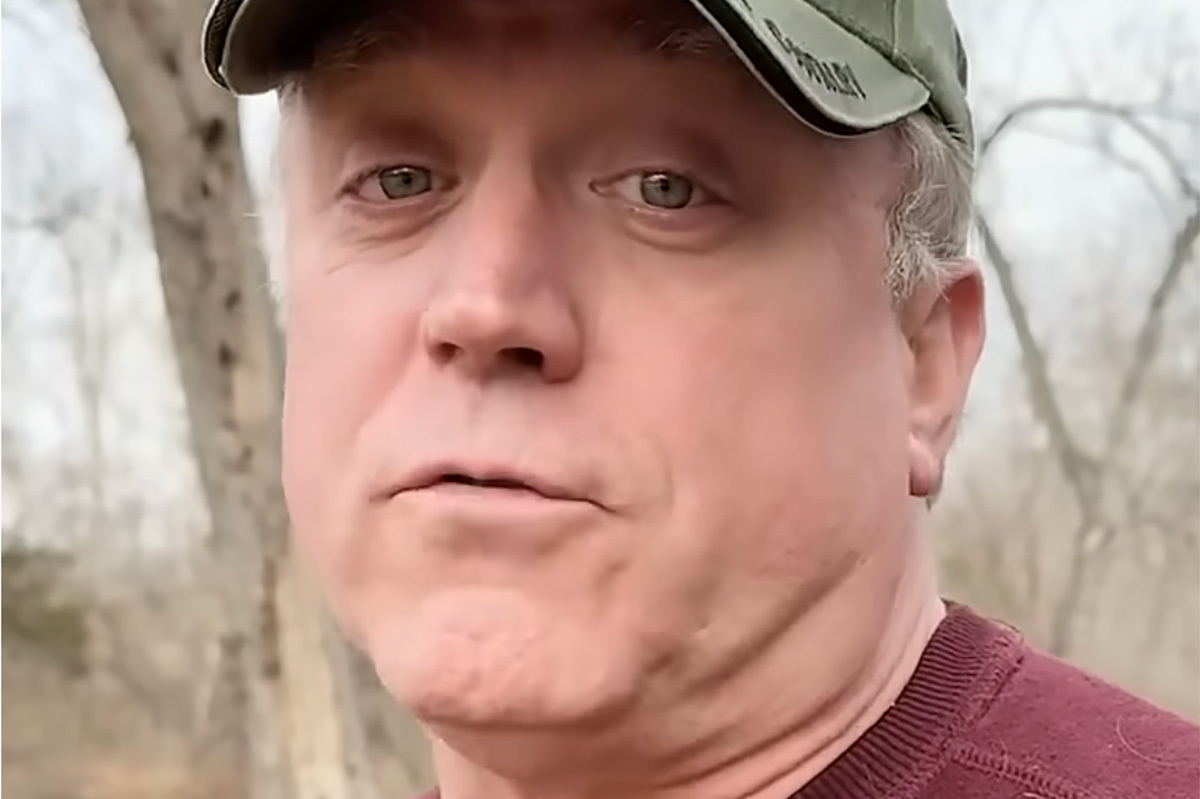
Republican Doug Ollivant will face off against incumbent U.S. Rep. Eugene Vindman (D-Va.) in Virginia’s 7th Congressional District.
Ollivant defeated his Republican opponents in Tuesday’s primary. Vindman ran unopposed.
Vindman in 2024 ran to succeed then-Congresswoman Abigail Spanberger in the U.S. House of Representatives after she ran for governor. Spanberger succeeded Republican Gov. Glenn Youngkin in 2025.
U.S. Sen. Mark Warner (D-Va.) on Tuesday easily won his primary. All other Democratic incumbent members of Congress from Northern Virginia also won their respective primaries.

Vote now! Best Of LGBTQ DC readers’ choice awards

Meet the LGBTQ candidates running for U.S. House, Senate

Ana Brnabić becomes world’s first openly lesbian head of state

529 openly LGBTQ candidates running in Brazilian election