Virginia
An inclusive romance bookstore blossoms in Old Town after fire
Friends to Lovers celebrates diverse storytelling
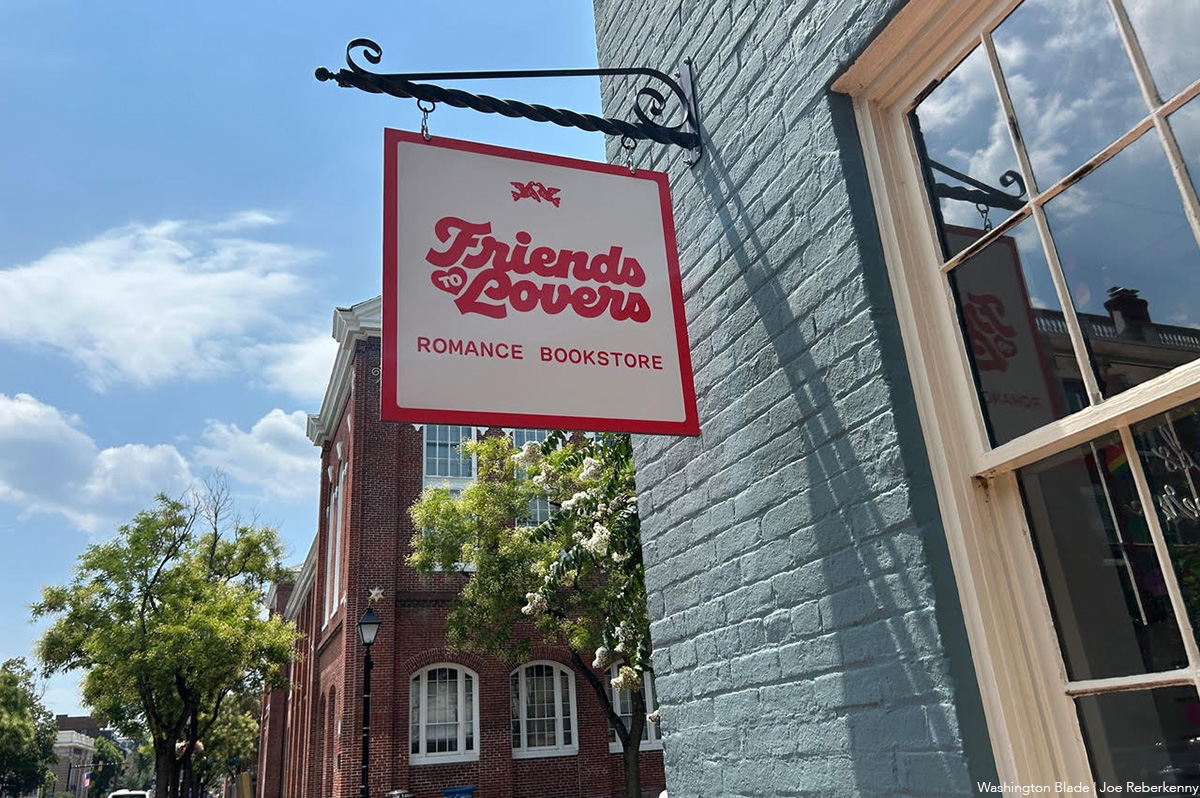
Last fall, something revolutionary started in Old Town Alexandria.
It has nothing to do with the cobblestone streets that date to the 1790s, nor the tavern where George Washington raised a birthday pint.
Instead, this revolution arrived with sapphic love stories, Black historical magic fiction, and a declaration founded on providing a space for all things romance novels. Friends to Lovers bookstore (301 Cameron St., Alexandria, Va.) the first bookstore of its kind in the DMV area, opened its doors less than a year ago. But based on the number of people flocking to the store—combined with its more than 30,000 social media followers—it is clear founding fathers are not the only noteworthy thing to come from Old Town.
Jamie Fortin, the store’s owner and founder, sat down with the Washington Blade just in time for National Book Lovers Day (Aug. 9) to discuss how an idea for her “niche” interest and passion for more diverse storytelling became a social media sensation and a newly welcome fixture in Alexandria’s sapphic and literary scenes.
“I realized if I wanted to open a business in this area—there are so many beautiful and unique businesses around here—that I wanted something that I was really invested in personally, and also something that I didn’t really see anywhere else,” Fortin said. “And once I thought of a romance bookstore, I was like, ‘OK, this is it.’”
Once she decided on a romance bookstore, Fortin said that she could hear the judgment from folks who ‘didn’t get’ the importance of creating such a space.
“We could have 100 sports bars in D.C. and no one bats an eye—but not everyone likes sports… Yet the second you create a space for women or queer people, suddenly it’s ‘too niche.’ Why is that? A lot of people had no idea that they would never actually be the intended customers, and it’s been interesting to watch those same people be like, ‘Oh, wow, what a good idea,’ now that it’s actually successful.”
And so Fortin and her team got to work. They found the perfect spot to open her dream bookstore—on the second story of a building surrounded by other small local businesses in the heart of Old Town. She consulted with a branding company to make sure the theme and feeling of the store were cohesive. She researched what romance books were doing online and started to stock her shelves.
“I think a lot of romance bookstores in the U.S. that have been popping up are really focused on uplifting marginalized communities,” Fortin explained, describing some of the inspiration to open the genre-specific bookstore. “I’m a woman, I’m also a queer person—these are the kinds of spaces that I’m really looking to create for folks. Not really seeing something like this, that is specifically intended to celebrate women’s joy and queer joy, is something I wanted to create.”
And create that space she did. After months of planning, strategic social media posts, and collaborating with other LGBTQ and women artists, it was finally time to open the bookstore’s doors in November of 2024.
Three days after its grand opening, a fire broke out, damaging the store and its books.
So Fortin utilized the same social media sites she had days and months earlier used to find which books she would sell in her store—Instagram and TikTok—but this time to post pictures of the damage the fire had caused and to ask for any financial help anyone could spare.
Her posts about the store made their way onto “#BookTok,” a subcommunity on TikTok with more than 100 billion videos about books, literature, and all things bibliophile.
“We posted on TikTok, and got 300,000 views,” she said. “And then raised $46,000 in a week just from the reach [of the social media videos]. A lot of it was local, but most of it was people who had never been in the store, or heard of it, but they just loved the concept and thought that this was something that our community needed.”
With such a clear sign from people all over the country—and the world—supporting her store’s mission to foster a safe, joyful space to discover romance novels, Fortin forged ahead.
“It really gave me a lot of hope that people are just nice and kind as part of it, but also made me feel a lot more connected to our mission—because people didn’t know me; they’re not giving money to Jamie, the girl who lives in Alexandria. They’re giving money to Jamie the girl, creating this safe space for these communities and creating a real community zone to celebrate these things.”
She got back to work, finding the perfect location one block away from the famous King Street in Old Town (complete with tremendous foot traffic). Fortin emphasized that the kindness from other LGBTQ people and women when recovering from the fire was a source of inspiration for her while finding her footing. She met with local women-owned businesses to select perfect pieces of furniture for the new space and hired a local artist to paint a new sign to hang outside the store.
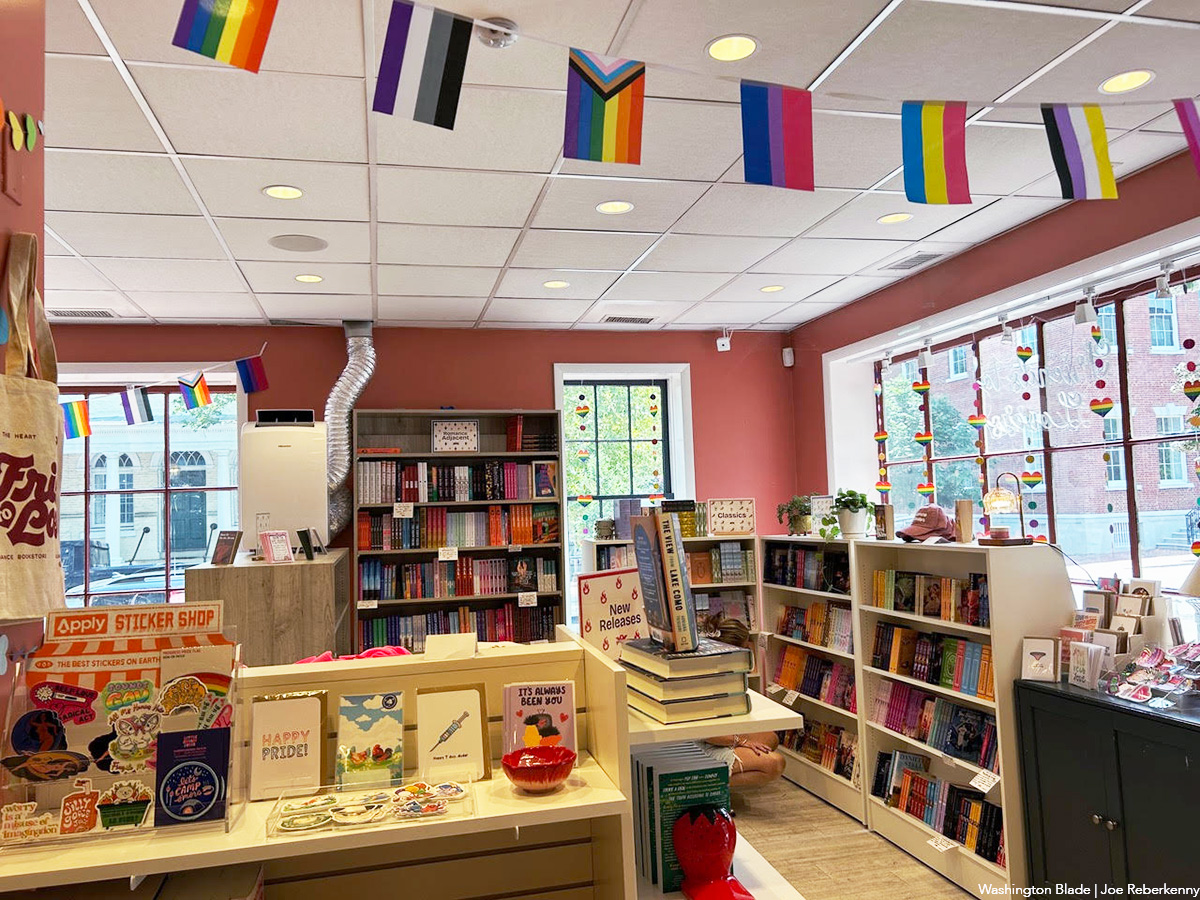
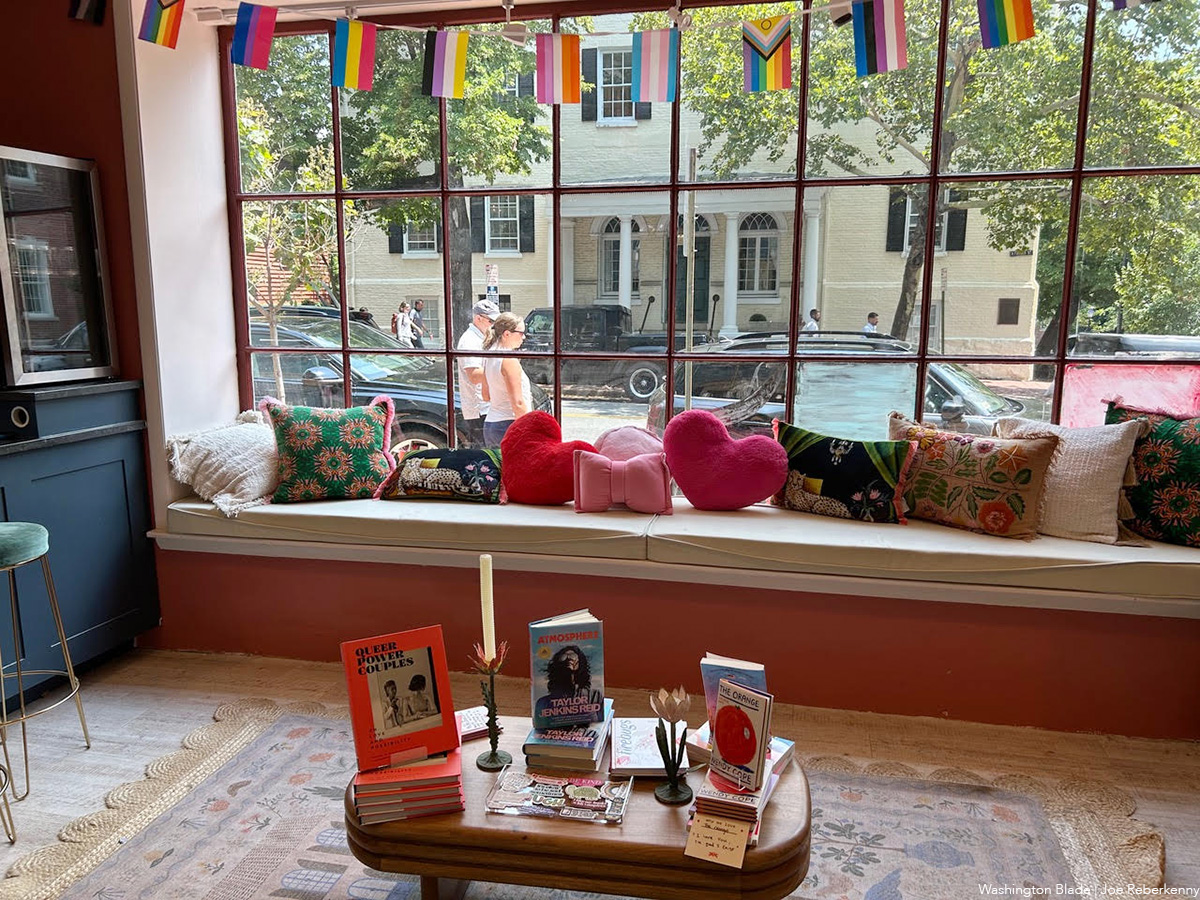
With the new space decorated with pink walls, Pride flags, and art by women and LGBTQ artists, Friends to Lovers reopened once again.
This August, Fortin and her team are gearing up for a weekend-long celebration in honor of National Book Lovers Day and the broader Romance Bookstore Weekend — just in time for Alexandria’s annual Sidewalk Sale.
“We have Jenna Voris coming in on the ninth,” said Fortin. “We’re kind of celebrating it through the whole weekend… We’ll also have three or four authors in on Saturday and Sunday—different authors both days—to sign their books and talk about what they’re selling. A few vendors are coming in too, some of our favorites we’ve worked with before—selling cute little goodies, maybe ceramics… I honestly don’t know which ones yet, but lots of vendors.”
“I think we have always stayed true to our mission, but I think it makes us feel a lot more empowered to act out that mission, because we know that there are so many people that want it,” she said. “I really learned from that whole experience. The business community is beautiful here, and it really intends to uplift and support each other.”
That appreciation for social media’s role in keeping the bookstore alive at a time when nearly everything can be accessed online was not lost on her.
“I feel really grateful that through TikTok and Instagram, we have found our audience,” Fortin said. “So the people who come in 90% of the time know what they’re looking for, know what to expect. And they’re like, ‘Yeah, we’re coming here for this.’”
When asked what’s something about romance novels that some people might not understand, Fortin was ready with an answer: that there are diverse voices if you look.
“Even now, the default you’re going to be fed—books, media, everything—is straight and white,” she said. “You have to go out of your way to find diverse stories, but they’re out there. Desi women write incredible romance. Queer white readers can read outside their experience—it’s not that hard, I promise.”
Recently, one of Friends to Lovers’ staff witnessed firsthand what these dedicated “niche” spaces can do.
“One of our booksellers tells this story of a group of Midwestern kids that came in. And it makes all of us cry every time we share this, because they came in and they were like, ‘I’ve never seen a space like this!’ They could see it was Pride month—we have all the flags up—and they’re like, ‘We’ve never had a space where we can feel welcome and seen.’ And ‘if we talk to the staff here, I can say I want to read ‘XYZ book’ and they won’t judge me. Or I can show that I’m attracted to this person!’ It was such a powerful space for them. And I think, having them be able to leave their homes and now know these places exist, and that people who support them are around.”
“I think it’s really powerful finding people who are going to be safe for you and that are going to love and support you no matter what,” Fortin said.



Virginia
Campaign urges Virginia High School League to reverse stance on trans athletes
Equality Arlington and other advocacy groups behind ‘Right 2 Play’ VA’ initiative

Virginia advocacy groups have launched a campaign that urges the Virginia High School League to once again allow student athletes to compete on sports teams that correspond with their gender identity.
Equality Arlington on Sept. 16 published an article about the “Right 2 Play VA” campaign. Amy, a group representative, spoke about the initiative with the Washington Blade.
“The primary goal is to reverse the Virginia High School League’s discriminatory ban on allowing transgender girls to play on girls’ sports and replace it with a policy that is fair for all students.” they said.
The Virginia High School League in 2025 announced the policy, which reversed a previous position in support of transgender and nonbinary athletes. The 2025 policy coincided with President Donald Trump’s executive order — “Keeping Men Out of Women’s Sports” — that threatened to “rescind all funds from educational programs that deprive women and girls of fair athletic opportunities, which results in the endangerment, humiliation, and silencing of women and girls.”
The Arlington Gender Identity Alliance, Equality Virginia, and the American Civil Liberties Union of Virginia have also joined the “Right 2 Play VA” campaign.
“We had a policy in Virginia for 12 years that allowed transgender girls to play on girls’ sports teams, and we had not one instance — not one instance — that was brought forward demonstrating an unfair advantage or any type of safety concern,” said Amy.
Amy then discussed what they described are the benefits of trans youth playing sports.
“There are physical benefits. There are mental health benefits. There are community and social development benefits, and those are all well documented,” they said. “All kids should have the right to benefit from playing youth sports. We are talking about kids. We are talking about youth. We are not talking about Olympians. We are not talking about Division One college athletes. We are talking about kids in Virginia, and because the benefits of sports are so well documented, we think that every kid should have the ability to play sports.”
Virginia
Gay Va. couple hopeful voters will enshrine marriage equality in state constitution
Early voting has already begun in the state
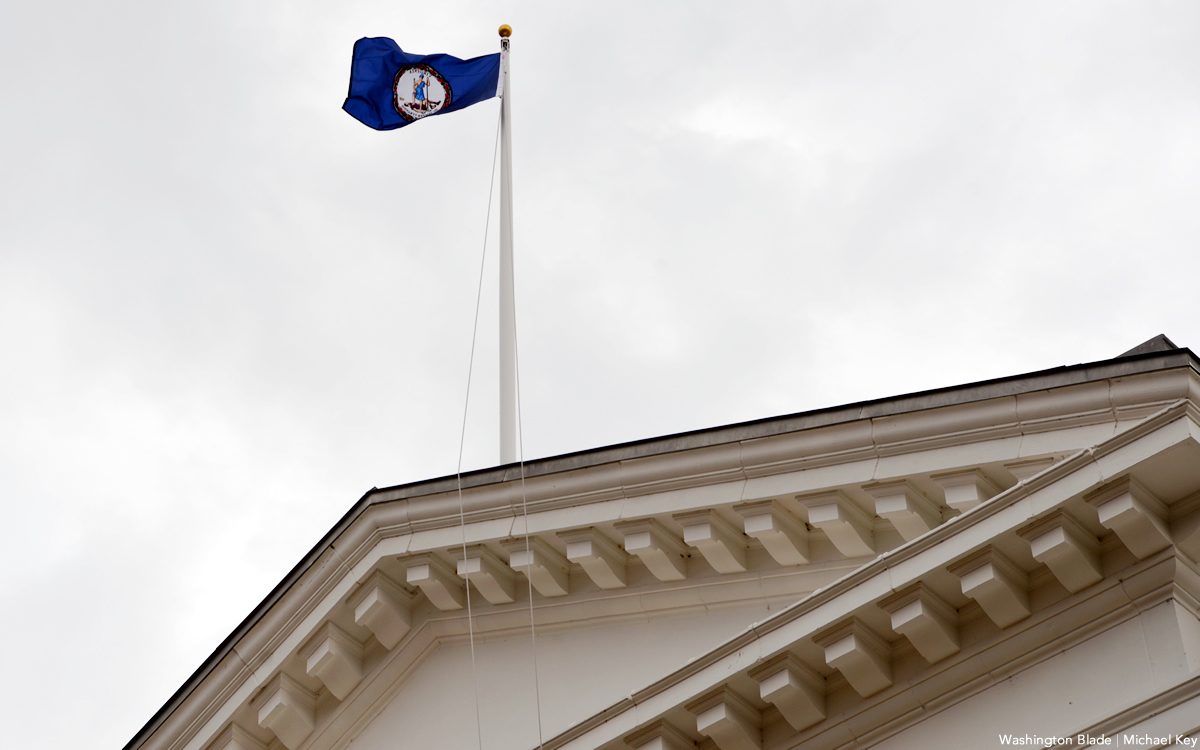
A referendum on whether to enshrine marriage equality in Virginia’s constitutional amendment is on the ballot this year.
If voters approve Question 2, it will codify the U.S. Supreme Court’s Obergefell ruling in 2015 that extended marriage rights to same-sex couples across the country — gays and lesbians have been able to legally marry in Virginia since Oct. 6, 2014.
Ron Bookbinder and James Fisher are a married couple who live in Arlington.
They have been together for 38 years — Bookbinder and Fisher married in 2014.
“We think this is a critical vote to remove this discriminatory language from the constitution and to ensure that going forward, no matter what happens, the state of Virginia will ensure marriage equality,” Fisher told the Washington Blade. “It is it is really difficult and upsetting to think that our current state constitution would prohibit same-sex marriage, even though the federal government overrides that now. There’s no saying what may happen in the future.”
Bookbinder said it was important for him and Fisher to get married “to gain social equality.”
“I was surprised how good it felt, how important it was to begin to say, ‘my husband rather than my partner,'” Bookbinder said.
Bookbinder then explained why it feels good to be married.
“Is it a legal partner, a business partner, a tennis partner, you know, or a romantic partner? But when you say my husband James, everyone knows exactly what you mean and confers an equal status with everyone else who’s married, and we were both surprised at how good it felt and how equal it felt to suddenly be married and be able to state that you were married and discuss your husband rather than your partner, and I would hate to lose that,” he said.
Bookbinder and Fisher said they are hopeful that voters will approve the amendment, noting Virginia has become more progressive over the years.
“I think people have, with the Supreme Court decision, people have seen that a same-sex marriage is just a marriage,” stated Fisher. “It’s just two people who love each other, and I think more and more people have attended a same-sex marriage, someone in their family or a friend, and the experience of what this is, firsthand experience, is so important in shaping people’s opinions, and I think the period of time that we’ve had since the Obergefell decision has given a lot of voters that experience, which I think is really important and powerful.”
The couple also said the push to enshrine marriage equality in Virginia’s constitution is in response to the Trump-Vance administration.
“And I think due to President Trump doing all the horrible things he’s done to so many groups, including LGBTQ, especially trans people, that Virginians are kind of pushed to be even more progressive to protect those who need protection, which would include the LGBTQ community in terms of marriage equality, so I’m confident it will pass,” said Bookbinder.
Narissa Rahaman, executive director of Equality Virginia, sent the Blade a statement about early voting on Question 2 that has already begun.
“With early voting now underway, our focus is making sure every Virginian knows Question 2 is on their ballot,” said Rahaman. “The outdated ban on same-sex marriage still in Virginia’s state constitution leaves a gap in protections for the thousands of same-sex couples that call this state home, but after 20 years we have the chance to fix it.”
Log onto www.mobilize.us/vaformarriage to find out more about the campaign in support of Question 2.
Virginia
Virginia Anti-Violence Project struggles to fill federal funding gaps
Group has lost 54 percent of funding since 2020
A loss of federal funding has threatened to adversely impact the Virginia Anti-Violence Project’s work in the state.
The group’s mission is to assist LGBTQ and BIPOC (Black, Indigenous and people of color) victims of domestic, sexual, interpersonal, and state violence with direct support, education, and advocacy. The VAVP seeks to build a future where LGBTQ and BIPOC individuals can live freely without a sense for worry about violence.
“Virginia Anti-Violence Project helps to close the distance between services existing and LGBTQIA+ survivors actually being able to reach safety, stable housing, and support that they can trust,” VAVP Executive Director Ebony Clark told the Washington Blade on Tuesday. “Our mission is to provide direct services and advocacy to LGBTQ+ survivors across Virginia.”
Clark said obtaining state and federal funds has become increasingly difficult.
“One of the reasons that we can talk about is politics and how you know queer diverse, queer communities are targets when it comes to politics, and so that may be a reason why the funding is decreasing in in very niche areas, but overall, state funding, federal funding has been lost or significantly reduced when it comes to culturally specific marginalized populations,” Clark said. “The bigger picture is that funding that was purposed for diversity, equity, inclusion, marginalized populations, or you know culturally competent programming, those funds have been strategically reduced or eliminated on state and federal levels overall.”
Even more so with the current Trump-Vance administration.
Data shows federal funding for one “major federal victim-services funding stream in” Virginia has dropped 54 percent over the last six years: from $25.1 million in fiscal year 2020 to $11.6 million in fiscal year 2026.
Clark noted some federal funding has been denied due to VAVP’s DEI policies — it has had to “water down” their language. These cuts have forced VAVP to limit housing and economic support, which has resulted in fewer resources for its clients.
The organization has set up a goal for receiving between $250,000-$300,000 a year that would allow it to operate — and focus on client housing.
“Housing is fundamental to safety,” Clark told the Blade. “If you know leaving violence puts someone on the street or forces them back to the person harming them, that means the crisis isn’t over. So there needs to be other prevention strategies and reactive strategies in place to be able to prevent further violence from folks.”
VAVP has set up a link for anyone who is interested in making a donation. It is here.
The VAVP website is also accepting donations.

Essential queer horror classics for Halloween

Solidarity beyond the parade: the actual cost of Pride

Physician: addiction doesn’t always look the way you think it does

Calendar: October 9-15

ICC unseals arrest warrants for Taliban officials accused of persecuting LGBTQ people, women

Alianza para la Inclusión fortalece la defensa de derechos LGBTQ en Centroamérica

The facts about Victory Fund’s investigation and the path forward

In Ga., 2 trans candidates believe voters are ready for them

Bessent says Trump chose him for his qualifications, not his sexuality

10 years later, we still can’t shake Barry Jenkins’s ‘Moonlight’
-

 Central America5 days ago
Alianza para la Inclusión fortalece la defensa de derechos LGBTQ en Centroamérica
-
Opinions5 days ago
The facts about Victory Fund’s investigation and the path forward
-
Georgia5 days ago
In Ga., 2 trans candidates believe voters are ready for them
-
Federal Government5 days ago
Bessent says Trump chose him for his qualifications, not his sexuality