Obituary
Honoring the whole woman: remembering Wallis Huberta Annenberg
Queer pioneer championed creativity, compassion, and community
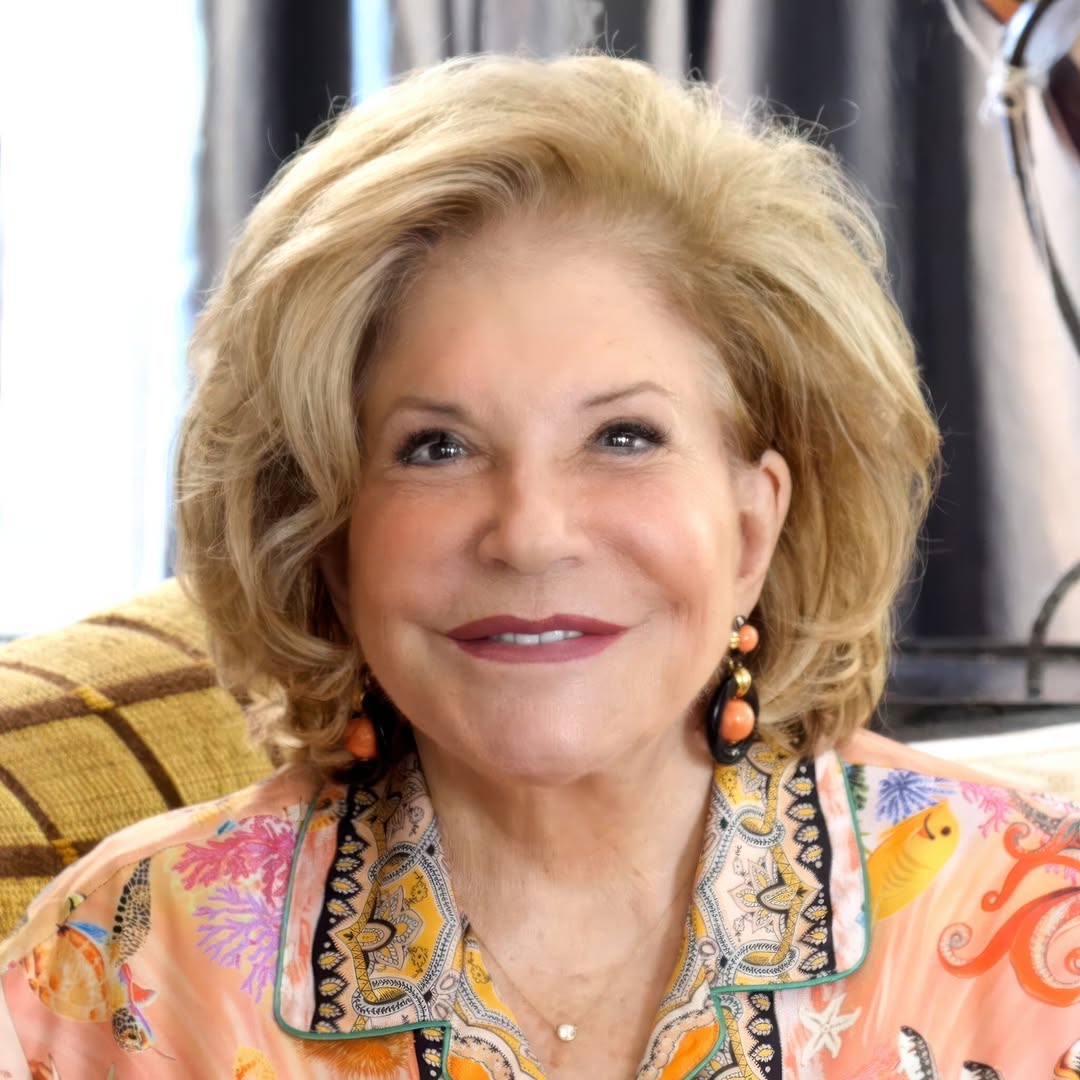
By AJ SLOAN FOR THE LOS ANGELES BLADE | Wallis Annenberg, who passed away shortly after her 86th birthday on July 28, left behind a legacy that few philanthropists of any era could hope to match. A passionate leader, cultural patron, and unapologetically generous force in Los Angeles, she spent her life championing creativity, compassion, and community. But what often went unsaid, sometimes politely ignored, was that Wallis was also a queer pioneer. In a world that didn’t always make room for women like her, she quietly yet courageously carved out space not just for herself, but for others on the margins, channeling her power and privilege into building a more inclusive world.
Born into one of America’s most influential media families, Wallis Annenberg was raised in Philadelphia with ink practically in her veins. Her father, Walter Annenberg, founded “TV Guide” and “Seventeen,” and built a philanthropic legacy as prominent as his publishing empire. After graduating from Pine Manor College in 1959, Wallis dipped a toe into the family business at “TV Guide” before eventually diving headfirst into the deeper waters of philanthropy. It wasn’t until her father’s death in 2002 that she properly took the reins, steering the Annenberg Foundation into its most impactful era as president and CEO from 2009 until her passing.
Under her leadership, the foundation funneled a staggering $1.5 billion into a wildly diverse portfolio of causes, from arts and culture to environmental conservation, journalism to gerontology, and yes, even animal overpasses. Her imprint on Los Angeles is practically architectural — the Wallis Annenberg Center for the Performing Arts, GenSpace in Koreatown, PetSpace for animal lovers, the ambitious Wildlife Crossing set to open in 2026, and the science-sparking Annenberg Building at the California Science Center. Her boardroom resume reads like a cultural tour of LA and then some — USC, LACMA, MOCA, the Philharmonic, the Music Center, and Harlem Children’s Zone, to name just a few. In 2022, President Joe Biden awarded her the National Humanities Medal, sealing her place in history as part of the only three-generation family to earn such a distinction, further proof that giving back wasn’t just in the Annenberg bloodline but a full-fledged dynasty.
Most obituaries have captured her vast philanthropic footprint, her roles in the public sphere, and her institutional endowments quite accurately yet have almost entirely glossed over or minimized a central truth: Wallis Annenberg lived as a lesbian woman, and openly supported LGBTQ and HIV/AIDS causes with strategically courageous generosity.
To fully and properly honor Wallis is to acknowledge not only her generational wealth and philanthropic vision but also her very much so queer identity: a lesbian woman whose visibility was moderately limited by her time and place yet meaningful when and where it counted. Her sexuality and identity shaped her empathy toward marginalized people.
Ignoring that part of her story perpetuates the ever-constant sanitization of queer public figures, simplifying them into neutered benefactors while erasing the very identity that informed the bulk of their charitable giving. Wallis’s lived experience as a lesbian deserves proper and public acknowledgment not merely as a footnote but as integral to her philanthropy, her community care, and her story — a story layered with courage, complexity, and an undertone of quiet and careful defiance.
Wallis faced addiction head-on, and the recovery journey didn’t just save her — it connected her to journalist Karen Ocamb, who became to Wallis a close companion and confidante. Wallis didn’t shy away from vulnerability and fueled that same vulnerable energy into generosity, building a philanthropic approach shaped by her experience rather than detachment.
Among the many tributes after her passing, it was only Ocamb who celebrated and honored Wallis’ sexuality with clarity and care. In her heartfelt Substack tribute, Ocamb wrote, “Wallis never came out — but she lived out loud, fiercely loving women and channeling her passion into transformative giving.”
Back in 1985, when AIDS was still drenched in stigma and so many people, including health professionals, kept their distance, Wallis stepped forward to co-chair the Commitment to Life dinner. That decision was in no way a headline grab but most certainly was a risk on her part for the time. In a day and age when silence was safest when protecting one’s reputation, Wallis chose to speak out through action. Her courage didn’t need a spotlight. It simply showed up where it mattered most.
Navigating public life came with its own choreography. Wallis maintained what some might call “strategic privacy,” presenting a heteronormative front in certain circles while sharing her life, deeply and authentically, with women in more trusted spaces. It wasn’t about hiding but surviving the era she lived in, and, like so many others, choosing when and how to live freely.
Wallis brought that same intentional care to her philanthropy. While major media celebrated her support for the arts, education, and conservation, far less attention was paid to her contributions to LGBTQ elder communities. Initiatives like Gay and Lesbian Elder Housing made a genuine, tangible difference in people’s lives, even if her name wasn’t always highlighted in the coverage.
And through it all, there was Kris Levine, Wallis’s steadfast partner, legally acknowledged near the end of Wallis’s life but largely absent from obituaries. Their relationship, though rarely publicized, was integral. It stood as one more example of how much of Wallis’s real story lived just beneath the surface.
Wallis reshaped what philanthropy could look like. Her leadership turned the Annenberg Foundation toward place-based investments, inclusive community programs, aging and wellness initiatives, and bold infrastructure like GenSpace and the Wallis Center. Her vision made space not just for ideas, but for people too often overlooked. Her presence sent a message, whether spoken or not, that queer women, especially those of her generation, have always helped shape the culture, even when they weren’t given a slot up at the mic.
Wallis Annenberg leaves behind more than just her sprawling physical legacy. She also leaves us with a moral legacy grounded in generosity extended to communities she truly and deeply cared for, in particular the queer community that she was very much so part of. Let us all remember Wallis not only as a philanthropist, but as a queer woman whose identity was at the epicenter of her compassion. Let this tribute stand as an acknowledgment that she was more than her institutions. She was human, nuanced, hidden, and honest. And let it serve as an invitation to future remembrances. I more than dare you to include the truth of sexuality, the courage of love, and the quiet acts of resistance that defined her.
Wallis Annenberg, may your spirit continue to guide all communities — arts, aging, wildlife, and LGBTQ — toward a world that you helped shape for the better. Your gifts were vast. Your love was real. And your full story deserves telling.
Obituary
Rev. Peter Leland DeGroote dies at 86
Trailblazing gay United Methodist pastor once worked at Blade

(The following statement was prepared by friends of Rev. Peter Leland DeGroote.)
Peter Leland DeGroote, a trailblazing gay United Methodist pastor, was born on January 19, 1940, to Leland Peter and Lea (Sitnik) DeGroote in Rochester, New York. The family moved to Syracuse during Peter’s early years. Peter had an older stepbrother, Robert, and brother, Joseph, and was followed by three sisters—Mary, Martha and Margaret. Lea, their mother, had been Roman Catholic but was ostracized from her parish after marrying a Protestant. So she took the children to Lafayette Street Methodist Church every Sunday for worship and Christian education.
Peter attended West Virginia Wesleyan University, graduating with a bachelor’s degree in psychology in 1961. While he considered a career in pastoral ministry—his brother Joseph was a long-time United Methodist clergy—Peter thought that his same-sex orientation would hinder his career in the church. He enlisted in the U.S. Army in October 1961 and served a three-year term, spending one year in Heidelberg, Germany. This provided the opportunity to explore Europe. In August 1964, he was granted early release and honorable discharge to go to school.
He began graduate studies in public administration at American University in Washington, D.C. Peter met Tom McKain in January 1967 and they began a five-year relationship and remained best friends thereafter. One of Peter’s professors was an executive with the International City Management Association (ICMA) who recognized Peter’s talents and arranged for him to help with some projects there. During summers Peter directed camping programs at the YMCA’s Camp Letts in Edgewater, Md. While he worked on a Ph.D. and did some teaching at American University, he did not complete his dissertation and so received an M.A. degree in 1971.
In 1972, Peter was hired to initiate the ICMA Retirement Corporation (now MissionSquare Retirement) in order to develop a portable retirement plan for local government administrators. During his 16 years directing the ICMA-RC, the plan grew to over $1 billion in assets and over 100,000 participants. At his retirement in 1988, Peter was heralded as having “done a remarkable job in helping create one of the most outstanding retirement corporations in the country and is probably the most knowledgeable person in this field.”
In the 1970s Peter volunteered with the production of a gay newspaper in Washington, D.C., serving as news editor of the Washington Blade for three months in 1975. Peter met Leslie Lugo in Fort Lauderdale in 1977. Leslie moved to D.C. the next year and they were in a seven- year relationship and remained good friends in the years following.
In 1984, Peter joined Foundry U.M. Church, where his college friend Rev. Don Stewart was on the staff. Stewart told Peter about a local group of LGBT United Methodists. Peter began attending weekly worship and social gatherings with Mid-Atlantic Affirmation and became deeply involved in providing leadership and hospitality for the group.
Peter proposed that Foundry sponsor an Affirmation Bible Study group as part of its neighborhood Bible study program. He asked Ralph Williams to host the group and Peter led it at the onset. The Bible study group met for several years and played a significant role in the process of Foundry becoming a Reconciling Congregation in 1995, a public affirmation that LGBTQ persons were full participants in the life of the church.
In November 1988, Peter made a radical life change as he retired from ICMA-RC and began an international romantic adventure, moving to Caracas, Venezuela. However, in a tragic turn of events, Peter was abducted and later found abandoned in a rural area, badly injured. Peter recounted that, as he lay suffering and awaiting rescue, he prayed that if he recovered he would commit to entering the ministry. After returning to Washington, D.C., and spending time in healing and recovery, Peter enrolled at Wesley Theological Seminary, graduating with honors and an M.Div. degree in 1994.
Peter resolved to challenge the United Methodist Church’s ban on the ordination of LGBTQ clergy. He began the ordination candidacy process at Foundry, stating publicly that he was gay and willing to be celibate. He steadily moved forward through the process and was eventually approved by the Baltimore-Washington Conference in a close vote. He was ordained deacon on June 13, 1993, and elder on June 16, 1996.
Peter served in active ministry for 16 years serving these congregations: Shady Side (1993-1996); Centenary Baltimore (1996-1998); Back River Essex (1998-2003); College Park (2003-2004); Foundry as associate (2004-2006) and The United Church (2006-2009). Peter retired from ministry in 2009. One of Peter’s noteworthy achievements during these years was the formation of BWARM (Baltimore-Washington Area Reconciling United Methodists). When Bishop John Schol arrived in Baltimore-Washington in 2004, he announced his intention to meet with various ethnic and gender groups in the conference. Peter challenged the bishop to also meet with LGBTQ members. The bishop asked Peter to arrange such a meeting. Peter invited a cross-section of LGBTQ persons and allies from around the conference to converse with the bishop. As a result of that meeting, this network of persons began to organize what has become a strong, influential BWARM group.
In retirement, Peter continued annual summer excursions to Rehoboth Beach with friends, involvement at Foundry U.M. Church and enjoying reading and writing. On May 13, 2025, the Baltimore-Washington Chapter of the Methodist Federation for Social Action honored Peter with its God’s Foolish One Award. After a period of declining health, he died on May 9, 2026.
He is survived by his sister, Martha Straub; her son, James Oliver, and his husband; long-time companion Luis Herrera; caregivers Michael Thompson and Ralph Williams and numerous dear friends. A memorial service, followed by a luncheon, will be held at 10 a.m. on Saturday, June 27, 2026, at Foundry U.M. Church, 1500 16th St., N.W., Washington, D.C.
Obituary
Thomas A. Decker of Arlington dies at 73
Active in visiting AIDS patients, urging Congress to fight HIV
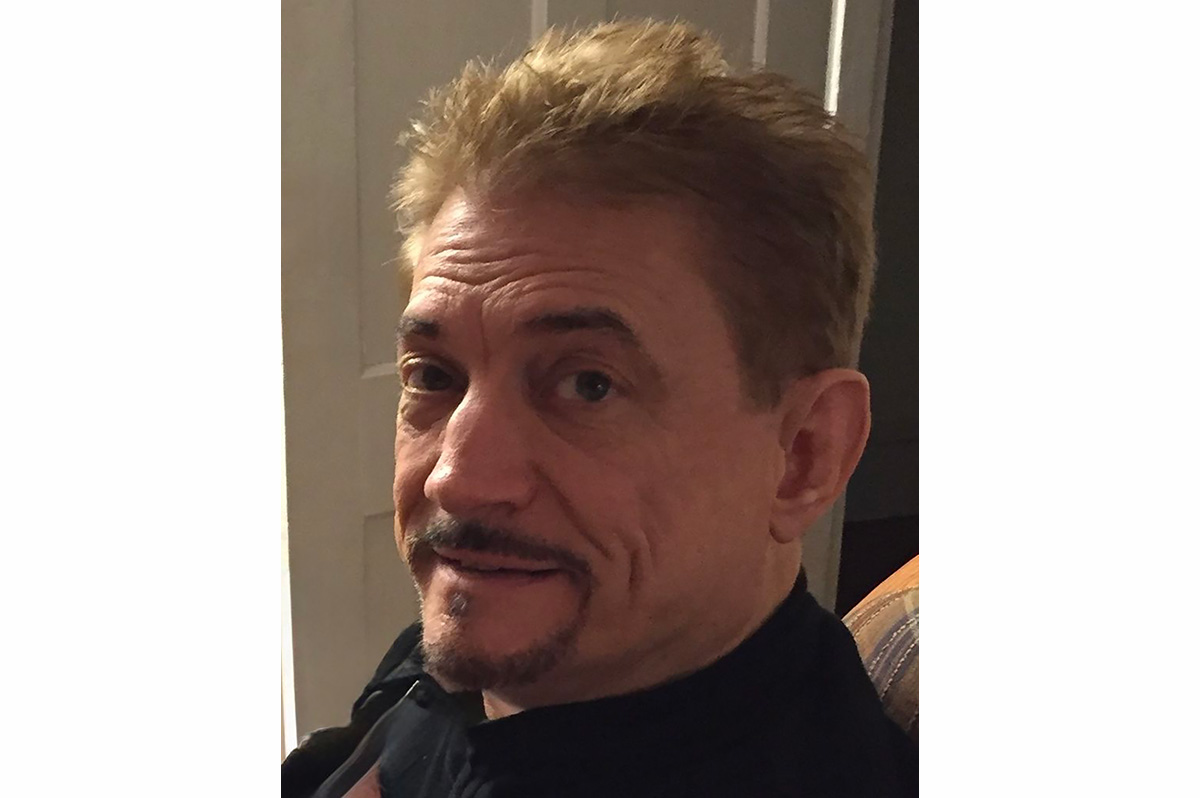
Thomas A. Decker Jr, of Arlington, Va., died March 3, 2026 following an extended illness, according to a statement released by his family. He was 73.
Born and raised in Canton, Ohio, Decker attended the University of Akron and earned his bachelor’s degree in political science. He then moved to the Washington, D.C. area and accepted a position with Beaver Press where he worked for 32 years, according to the statement.
He later worked in the Inova Juniper Program working with HIV/AIDS clients to assist them with support services and was active as a volunteer visiting AIDS patients in the hospital or advocating on Capitol Hill for HIV funding.
Tommy, as he was called by family, is survived by three sisters, a sister-in-law and two brothers-in-law: Carol Decker and Kathryn Kramer of West Newbury, MA, Margaret and Thomas Williams of Bluffton, SC, Mary Sue and Timothy Desiato of New Philadelphia, Ohio, Niece’s Trina and Chad Wedekind of Jacksonville Fl and great niece Isabella, Lindsay and Will Burgette of Dublin, Ohio and great nephews Colin and Luke and Nephews David Williams of Jacksonville, Florida, and Michael and Lucy Desiato of Dublin, Ohio and great nieces Lena and Stella. In accordance with Tom’s wishes, he will be buried at Calvary Cemetery in Massillon, Ohio.
District of Columbia
Acclaimed bisexual activist, author Loraine Hutchins dies at 77
Lifelong D.C.-area resident was LGBTQ rights advocate, sex educator
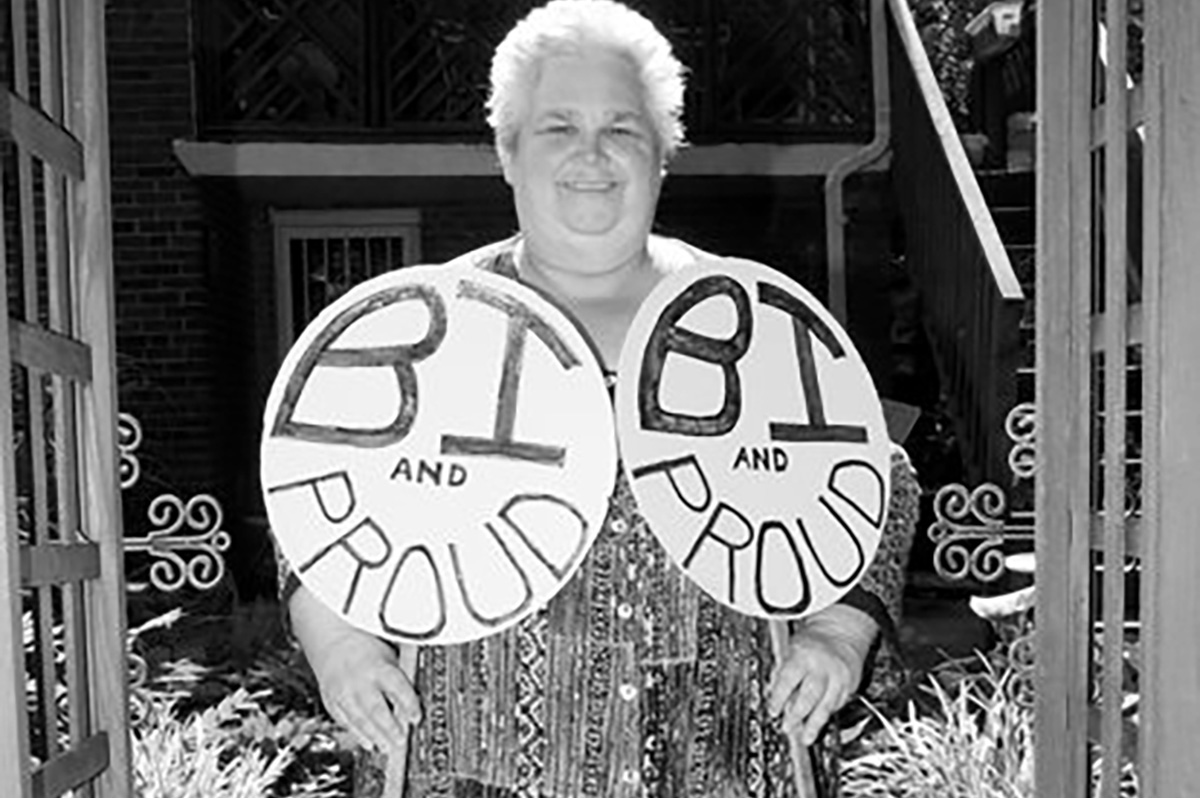
Loraine Adele Hutchins, a nationally known and acclaimed advocate for bisexual and LGBTQ rights, co-author and editor of a groundbreaking book on bisexuality, and who taught courses in sexuality, and women’s and LGBTQ studies at a community college in Maryland, died Nov. 19 from complications related to cancer. She was 77.
Hutchins, who told the Washington Blade in a 2023 interview that she self-identified as a bisexual woman, is credited with playing a lead role in advocating for the rights of bisexual people on a local, state, and national level as well as with LGBTQ organizations, many of which bi activists have said were ignoring the needs of the bi community up until recent years.
“Throughout her life, Loraine dedicated herself to working and speaking for those who might not be otherwise heard,” her sister, Rebecca Hutchins, said in a family write-up on Loraine Hutchins’s life and career.
Born in Washington, D.C., and raised in Takoma Park, Md., Rebecca Hutchins said her sister embraced their parents’ involvement in the U.S. civil rights movement.
“She was a child of the ‘60s and proudly recalls attending Martin Luther King’s ‘I Have a Dream’ speech with her mother on the D.C. Mall,” she says in her write-up. “She was steeped in the civil rights movement, was a member of the Student Non-Violent Coordinating Committee, and was proud to say she had an FBI record.”
The write-up says Hutchins received a bachelor’s degree from Shimer College in Mount Carroll, Ill. in 1970, and a Ph.D. in 2001 from Union Institute. It says she was also a graduate of the Institute for the Advanced Study of Human Sexuality’s Sexological Bodyworkers certification training program.
The family write-up says in the 1970s Hutchins became involved with efforts to assist tenants, including immigrant tenants, in affordable housing programs in D.C.’s Adams Morgan neighborhood.
“In 1991, she co-authored the groundbreaking book, ‘Bi Any Other Name: Bisexual People SPEAK OUT’ with friend and colleague Lani Ka’ahumanu,” the write-up says. It notes that the acclaimed book has been republished three times and in 2007 it was published in Taiwan in Mandarin.
According to the write-up, Hutchins delivered the keynote address in June 2006 at the Ninth International Conference on Bisexuality, Gender and Sexual Diversity. In October 2009, D.C.’s Rainbow History Project honored her as one of its Community Pioneers for her activist work.
“Loraine is one of the few people who has explained, defended and championed bisexuality and made sure the “B” got into the LGBT acronym,” the Rainbow History Project says on its website in a 2009 statement. “Sensitivity to bisexual issues, civil rights, and social justice issues is Loraine’s life work,” the statement concludes.
The write-up by her sister says that up until the time of her retirement, Hutchins taught women’s and LGBT studies as well as health issues in sexuality at Montgomery Community College and Towson University in Maryland.
“She was a friend and mentor to many in the LGBTQ community,” it says. “She thoroughly enjoyed adversarial banter on the many topics she held dear: sexuality, freedom of speech, civil rights, needs and support of those with disabilities, especially in the area of mobility, assisted housing, liberal politics and many other causes,” it points out.
She retired to the Friends House community in Sandy Springs, Md., where she continued her activism, the write-up concludes.
Hutchins was among several prominent bisexual activists interviewed by the Washington Blade at the time of her retirement in June 2023 for a story on the status of the bisexual rights movement. She noted that, among other things, in her role as co-founder the organizations BiNet USA and the Alliance of Multicultural Bisexuals, she joined her bi colleagues in prodding national LGBTQ advocacy organizations to improve their advocacy work for bisexuals, which Hutchins said had been inadequate in the past but had been improving in recent years.
Hutchins is survived by her sister, Rebecca Hutchins; her husband, Dave Lohman; nephew, Corey Lohman and his wife Teah Duvall Lohman; and cousins, the family write-up says.
It says a private memorial service was scheduled for December and a public memorial service recognizing her contributions to the LGBTQ community will be held in the spring of 2026.

Campaign launched to elect more LGBTQ candidates to ANC seats

Gay librarian to discuss new novel at Green Lantern

Calendar: July 10-16

Gay Fla. Democrat Elijah Manley sees opportunity in Trump’s second term

Ron Singer, owner of popular Mount Vernon gay bar Leon’s, dies

In Trump’s divided America, Michael Weinstein’s AHF responds

Turkish authorities refuse to allow gay cruise to dock in country

PHOTOS: Crush Dance Bar

As Washington shifts right, Democratic Socialists gain ground