District of Columbia
High cost of living shuts essential workers out, threatens D.C.’s economic stability
City residents don’t always reflect those who keep it running
When Nic Kelly finishes her 6 a.m. shift as a manager at PetSmart, she walks to her bartending job at Alamo Drafthouse in Crystal City to serve cocktails, beers, and milkshakes for hundreds of guests.
Kelly, 26, doesn’t work a combined 60-65 hours per week to pocket extra cash –– she does it to barely make her almost $1,700 rent each month.
“I’m constantly working, and some days I work two jobs in the same day,” Kelly said. “But twice now I’ve had to borrow money from my mother just to make sure I pay my full rent.”
Yesim Sayin, D.C. Policy Center executive director, said this is unfortunately how the D.C. area is structured –– to keep essential workers, service employees, and lower-income people out and those with greater economic mobility in.
The DMV area’s high cost of living makes it near-impossible for employees who keep the area running to make a living, Sayin said. In 2022, only 36% of D.C.’s essential workers lived in the city, according to a D.C. Policy Center report. D.C. is also ranked 13th in the world for highest cost of living as of Nov. 7.
But for Sayin, there’s more work for policymakers to get done than simply acknowledging the high cost of living. Take a look at how current policies are impacting residents, and what long-term solutions could help the DMV thrive.
Feeling the high cost of living
D.C. has the highest unemployment rate in the country at 6.0% as of August. Sayin said the city’s high unemployment rate reflects a lack of geographic mobility in its population, meaning those who can’t find jobs can’t afford to look outside of the DMV area.
Though there are job training groups working to close the unemployment gap, securing a job –– let alone two –– rarely guarantees a comfortable lifestyle for essential and service employees.
A single-person household in D.C. with no children must make at least $25.98 an hour to support themselves, according to the Living Wage Calculator. That number jumps to $51.68 an hour for a single adult with one child. Minimum wage in D.C. is $17.95 an hour and $10 an hour for tipped employees.
Whether it’s utilizing free meals at the Alamo to save on groceries or borrowing money to make rent, every week could bring a different sacrifice for Kelly.
While Kelly lives and works a few minutes south of D.C., Sayin said the connectedness of the DMV means you don’t have to travel far to feel the withering effects of the area’s high cost of living.
“People don’t really care what flag adorns their skies,” Sayin said. “They’re looking for good housing, good schools, cheaper cost of living, and ease of transportation.”
For those that stay in the DMV area, those conditions are hard to come by. This can lead to people working multiple jobs or turning to gigs, such as Uber driving or selling on Etsy, to fill income gaps. Sayin said there are short-term benefits to securing these gigs alongside a primary job, such as helping people weather economic storms, avoid going on government assistance or racking up debt.
But she said the long-term implications of relying on gigs or other jobs can harm someone’s professional aspirations.
“You can spend three extra hours on your own profession every work week, or you can spend three hours driving Uber. One gives you cash, but the other gives you perhaps a different path in your professional life,” Sayin said. “And then 20 years from now, you could be making much more with those additional investments in yourself professionally.”
There’s a strong demand for work in D.C., but when the city starts suffering economically, those who live outside the area –– usually essential or remote workers –– will likely find work elsewhere. Sayin said this negatively impacts those employees’ quality of life, giving them less professional tenure and stability.
D.C.’s cost of living also centralizes power in the city, according to Sayin. When lower-wage employees are priced out, the residents who make up the city don’t always reflect the ones who keep it running.
“Ask your Amazon, Uber or FedEx driver where they live. They’re somewhere in Waldorf. They’re not here,” Sayin said.
Working toward an accessible D.C.
Build more. That’s what Sayin said when thinking of ways to solve D.C.’s affordability crisis.
But it’s not just about building more –– it’s about building smartly and utilizing the space of the city more strategically, Sayin said.
While D.C. has constructed lots of new housing over the years, Sayin noted that they were mostly built in a handful of neighborhoods tailored to middle and upper-class people such as The Wharf. Similarly, building trendy small units to house young professionals moving to the city take up prime real estate from struggling families that have much less geographic mobility, she said.
“The affordability problem is that today’s stock is yesterday’s construction,” Sayin said.
Solving these issues includes ushering in a modern perspective on outdated policies. Sayin cited a D.C. policy that places restrictions on childcare centers built on second floors. Since D.C. parents pay the highest rates in the country for childcare at $47,174 annually, she said loosening unnecessary restrictions could help fuel supply and lower costs for families.
Sayin said policymakers need to consider the economic challenges facing residents today, and whether the incentives and tradeoffs of living in D.C. are valuable enough to keep them in the city.
For Kelly, the incentives and tradeoffs of staying in the DMV area aren’t enough. She’s considered moving back in with her mom a few times given how much she has to work just to get by.
Aside from wanting higher compensation for the work she does –– she noted that businesses can’t operate without employees like her –– Kelly also questioned the value of the tradeoff of moving so close to the city.
“There’s no reason why I’m paying $1,700 for a little studio,” Kelly said. “You also have to pay for parking, utilities aren’t included and a lot of residents have to pay for amenities. We are just giving these property management companies so much money, and we’re not really seeing a whole lot of benefit from it.”
Sayin said placing value on the working people of the city will inject fresh life into D.C.’s economy. Without a valuable tradeoff for living in or around the city, there’s little keeping essential and service employees from staying and doing work taken for granted by policymakers.


District of Columbia
Over 2,000 turn out for Hands Around the Kennedy Center protest
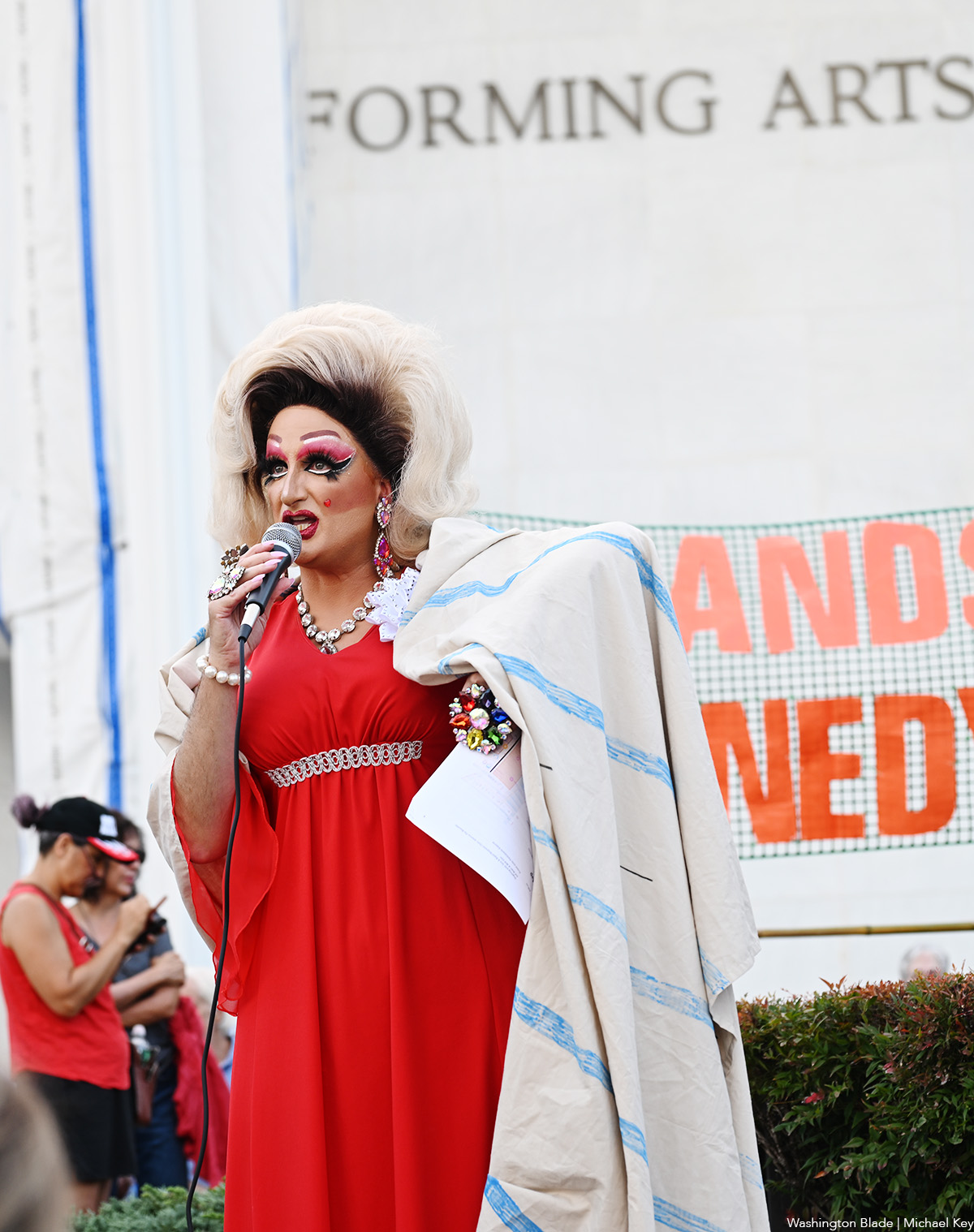
Drag performer Tara Hoot serves as MC, Gay Men’s Chorus of DC performs, attendees shout for Trump to keep ‘hands off’ Kennedy Center
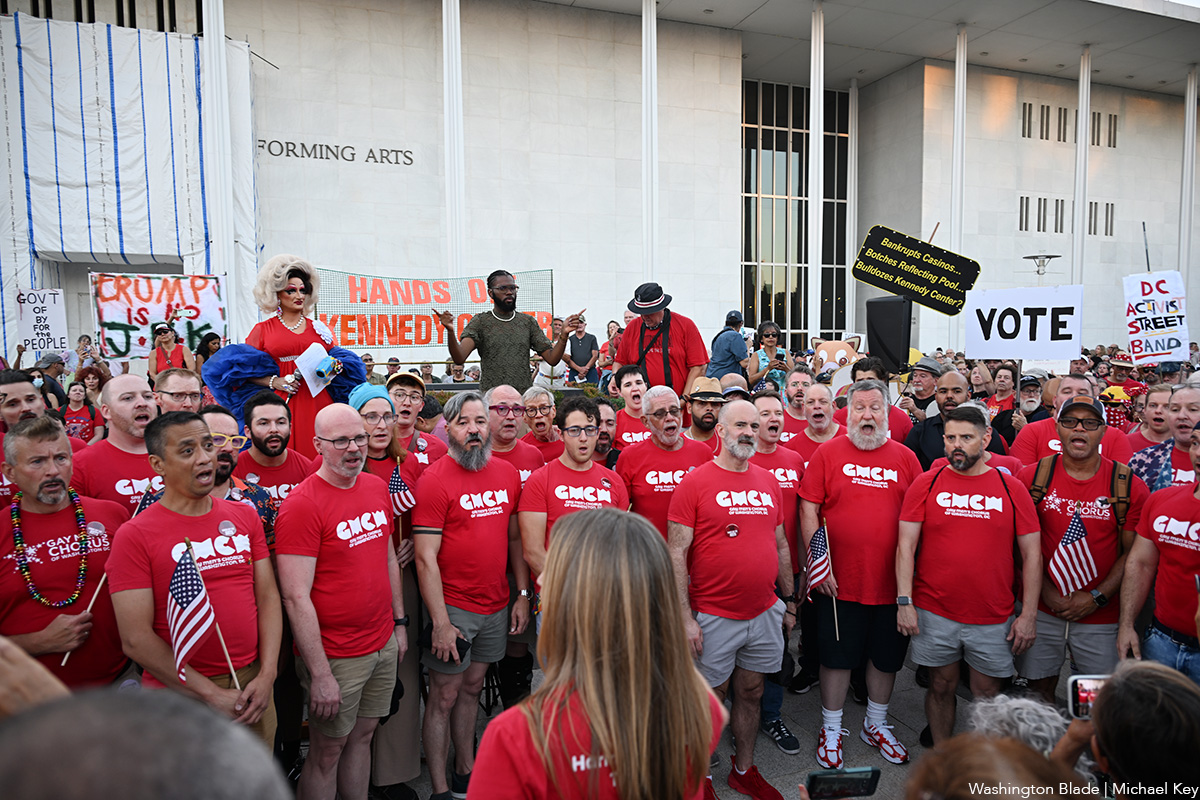
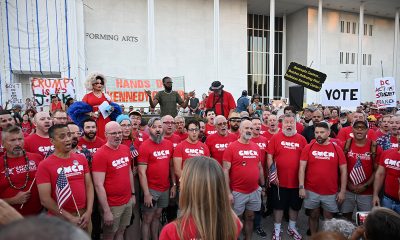
More than 2,000 supporters of the John F. Kennedy Center for the Performing Arts turned out on Sept. 18, for a rally in support of the performing arts center and a vocal protest against President Donald Trump’s threats to permanently close the center and possibly demolish it.
The event was organized by a group called Hands Off the Arts, which initially called for participants to form a “human chain” around the Kennedy Center’s main building following a rally on the plaza in front of the building.
However, due to a decision by the Trump-controlled Kennedy Center’s board of trustees to close the center earlier in the week and install fencing around part of the building, participants could only form the chain around part of the building, according to organizers.
Drag performer Tara Hoot, who co-organized the event and served as master of ceremonies for the rally preceding the “human chain,” said the large turnout could have fully surrounded the building at least twice had the fencing not prevented a full encirclement.
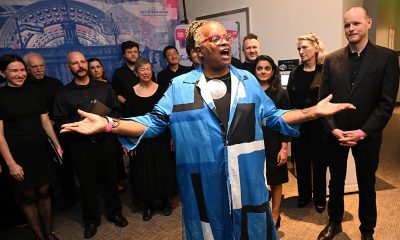
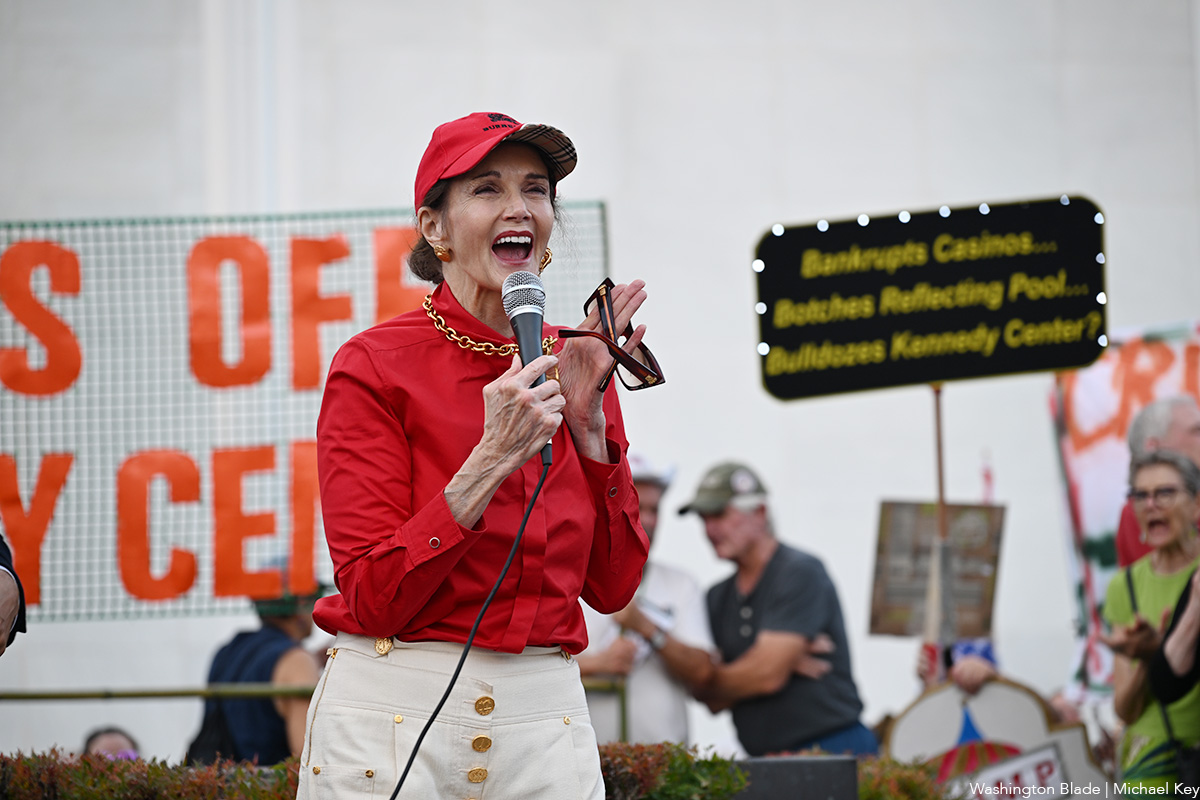
Among the musicians and singing groups that performed at the rally was the Gay Men’s Chorus of Washington, which, like other rally performers, had performed at the Kennedy Center in past years. They drew loud applause after singing one of their favorite songs from the Broadway musical show Ragtime, which includes the lyrics, “Will justice be demanded by 10 million men? Make them hear you. When they hear you, I’ll be near you again.”
View on Threads
Prior to their performance, Gay Men’s Chorus of Washington’s artistic director, Thea Kano, spoke at the rally, reminding participants that shortly after the Trump takeover of the center last year, Kennedy Center officials cancelled a concert the chorus was scheduled to perform there for World Pride 2025.
A Kennedy Center spokesperson said the cancellation was due to a scheduling conflict, but chorus members and LGBTQ activists believe it resulted from policies put in place by Trump and his leadership team at the Kennedy Center following Trump’s statements that he would end controversial “woke” performances that he claimed the majority of Americans disapprove of.
“Now this building sits empty in silence,” Kano told the crowd at the rally. “Let us raise our voices together and bring back the Kennedy Center as it was intended, a place where American culture could be celebrated and elevated, embracing the vibrancy with the spectrum of identify without censure and without politics,” she said.
Among the others who spoke at the rally were U.S. Rep. Don Beyer (D-Va.), U.S. Rep. Jonathan Jackson (D-Ill.), and D.C. Councilmember Robert White (D-At-Large).
Most speakers, along with LGBTQ participants in the hands-around-the-building event expressed strong opposition to Trump’s demand that the Kennedy Center name be changed from the John F. Kennedy Center for the Performing Arts to the Donald J. Trump and the John F. Kennedy Center for the Performing Arts.
At Trump’s request, his appointed board initially made that name change and placed Trump’s name on the front wall of the building along with the Kennedy name. But following legal action taken by opponents who pointed out that Congress must approve such a name change, a judge ordered the removal of Trump’s name from the building. Trump has said he will take steps to reverse that order and has said he will stop plans to renovate the Kennedy Center building and possibly demolish it if his name is not restored in the Kennedy’s Center’s official name.
Throughout the Sept. 18 rally, LGBTQ participants repeatedly responded to the Trump threats by shouting, “Hands Off!”
Chris Raleigh, one of the founders of Hands Off the Arts and a lead organizer of the Sept. 18 event at the Kennedy Center who spoke at the event told the Washington Blade that more similar events are being planned and he welcomes the support the event has received from the LGBTQ community.
“The LGBTQ community was here first, and we’re following them,” he said. “They’ve been the spearhead; they’ve been the vanguard. And I’m so thankful for heroes like Tara Hoot,” he said, adding, “It’s because they know what it means and how this is a safe place – the theater – for many LGBTQ people.”
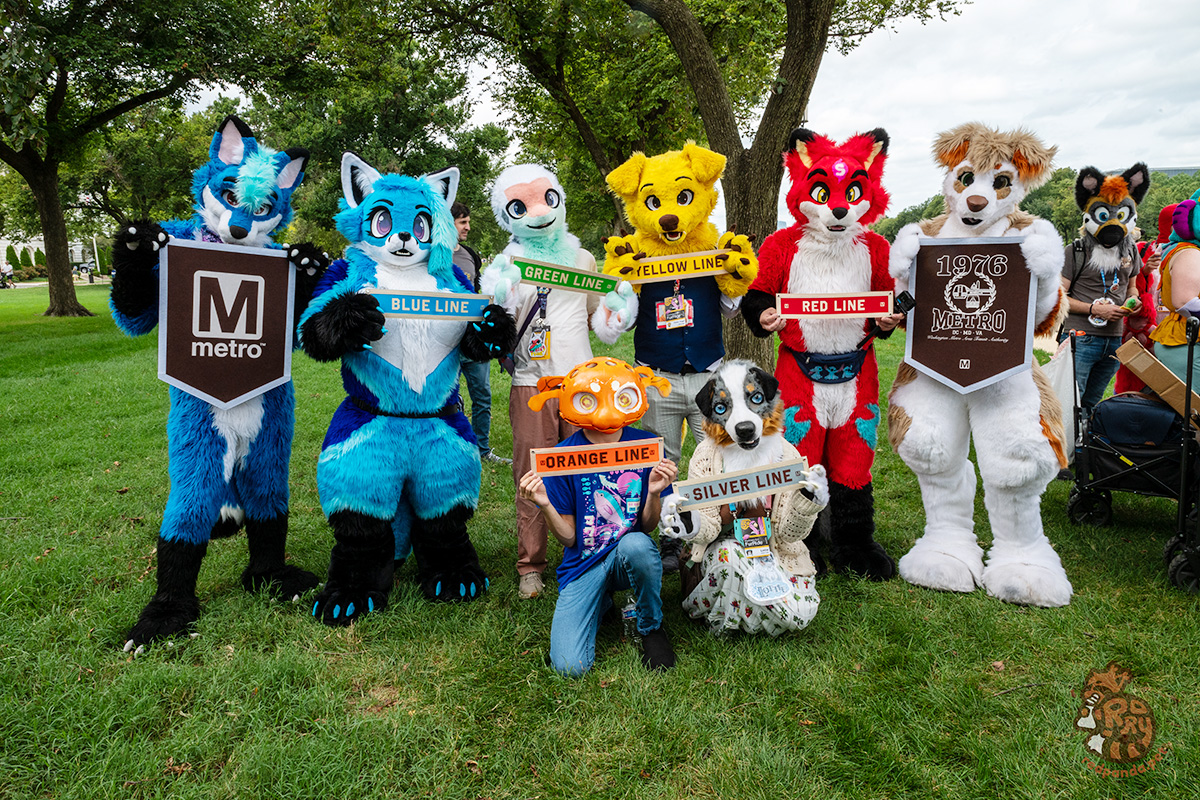
The DMV’s own furry group was on full display on the Metro on Sept. 12.
Shutterpaws is a volunteer-led 501(c)(3) non-profit organization located in Maryland.
The furry group has been doing the FurRide event since 2024 and has blown up in popularity for furries around DMV. They showcased themselves on the Silver and Blue Lines near the Smithsonian on Sept. 12.
“A lot of careful planning goes into running these events, with the goal being a seamless and enjoyable experience for everyone who attends,” says Zayre, a Shutterpaws staff member. “There’s a lot that you learn just by trial and error, and as Shutterpaws hosts more and more events, our team of event organizers continues to learn and refine our approach to keep things running smoothly and finding new ways to engage with our community.”
With a larger growth of participation in the community comes many challenges with the group, especially when it comes to the Metro rides and organizing.
“The biggest challenge that we face as organizers is keeping things fresh and finding new and engaging venues to host events,” says Zayre. “Recently we saw a lot of success hosting a meet at On Target Battlezone, an indoor NERF gun battle arena where our crew was welcome to show up and play both with and without a fur suit.”
Nevertheless, Shutterpaws receive overwhelming support from the community and partners.
“Across the DMV there are so many amazing places to host a Shutterpaws event so we can pursue our mission of helping connect fur suiters and photographers, and we’re blown away with the amount of support we’ve received from our community partners,” says Zayre.
Shutterpaws plans to do more events for anyone in the DMV who is interested.
Their next event in collaboration with DC Fur Meet will take place at Pitchers (2317 18th St., N.W.) on Saturday. Visit Shutterpaws’ website for more information.
District of Columbia
Hands Off the Arts to form ‘human chain’ around Kennedy Center
Drag performer Tara Hoot among event organizers
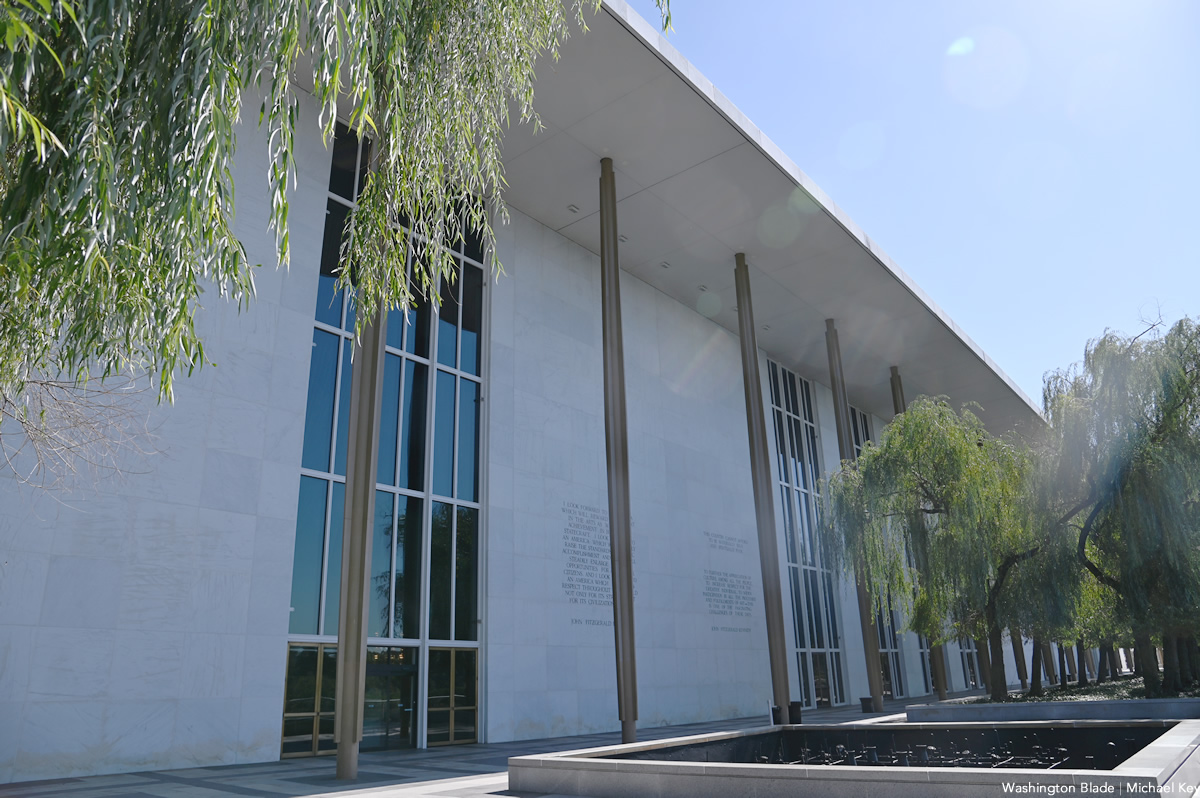
An organization called Hands Off the Arts has announced it is holding a protest on Friday, Sept. 18, in which between 400 and 800 participants are expected to create a “human chain” around the Kennedy Center to voice their strong objection to President Donald Trump’s call for possibly demolishing the Kennedy Center.
“Hands Off the Arts is organizing a rally Sept. 18 against the president’s defacing of JFK’s memorial, his removal and censorship of art, and the threat to demolish the center if he can’t remake the site in his image,” a statement released by the group says.
The statement says the event will start with a rally at 6:30 p.m. on the Kennedy Center steps and culminate with a “human chain” around the building. “There will be musical performances, testimonials from current and former employees, along with other special guest speakers,” it says
A separate announcement by the group says longtime D.C. drag performer Tara Hoot, who has performed at the Kennedy Center in past years, was among the organizers of the Sept. 18 protest.
The planned protest follows Trump’s decision last year to use his authority to replace the existing members of the Kennedy Center’s board of directors with new members loyal to him. Over the objection of longtime Kennedy Center supporters, the Trump-appointed board changed the name of the center, at Trump’s request, from the John F. Kennedy Memorial Center for the Performing Arts to the Donald J. Trump and the John F. Kennedy Center for the Performing Arts.
But following the threat of legal action by opponents who pointed out that the name change could not be legally made unless approved by Congress, the name change was cancelled, with Trump saying he would take steps to restore it later.
The Washington Post, meanwhile, reports in a Sept. 13 news story that because of negative publicity related to Trump’s actions, the Kennedy Center was facing “fiscal collapse” and possible bankruptcy and could be forced to shut down as early as this week.
According to the Post report, a 57-page document presented to the Kennedy Center’s board of trustees says the center was facing a financial and structural building crisis, with the recent collapse of part of the building’s inside ceiling, indicating the building was unsafe for employees and the public. Among other things, the document says the Kennedy Center may not be able to make payroll or pay for routine maintenance “within a matter of weeks,” the Post reports.
Some LGBTQ advocates were among those who joined others in boycotting the Kennedy Center to express their objections to Trump’s actions, including a statement by Trump that he objected to the Kennedy Center’s practice of hosting drag performances.
The Gay Men’s Chorus of Washington has been among the LGBTQ performing arts groups and artists that have performed at the Kennedy Center.
“With the future still very much uncertain, now more than ever, the Center needs you to stand up for freedom of expression and against authoritarian overreach into arts and culture institutions,” the Hands Off the Arts group says in its announcement of the Hands Around the Kennedy Center protest.
“You have the opportunity to make a difference — show up with Hands Off the Arts and show your power as part of Hands Around the Kennedy Center,” it says.
A spokesperson for the Kennedy Center couldn’t immediately be reached for comment.

White House press pool pushes back after Trump bars three outlets

PHOTOS: Shenandoah Valley Pride

Long-time DignityUSA executive director announces retirement

PHOTOS: Walk and 5K to End HIV

PHOTOS: Wanda Alston Foundation Fall Reception

Gun reform is an LGBTQ rights issue

All the queer things to watch this fall

Parties, dinners, concerts and more on tap for fall nightlife

Jeremy Moss looks to bring LGBTQ advocacy from Lansing to Capitol Hill