News
Why queer spaces often fail South Asian women
Homosexuality stigmatization often compounds discrimination in conservative cultures
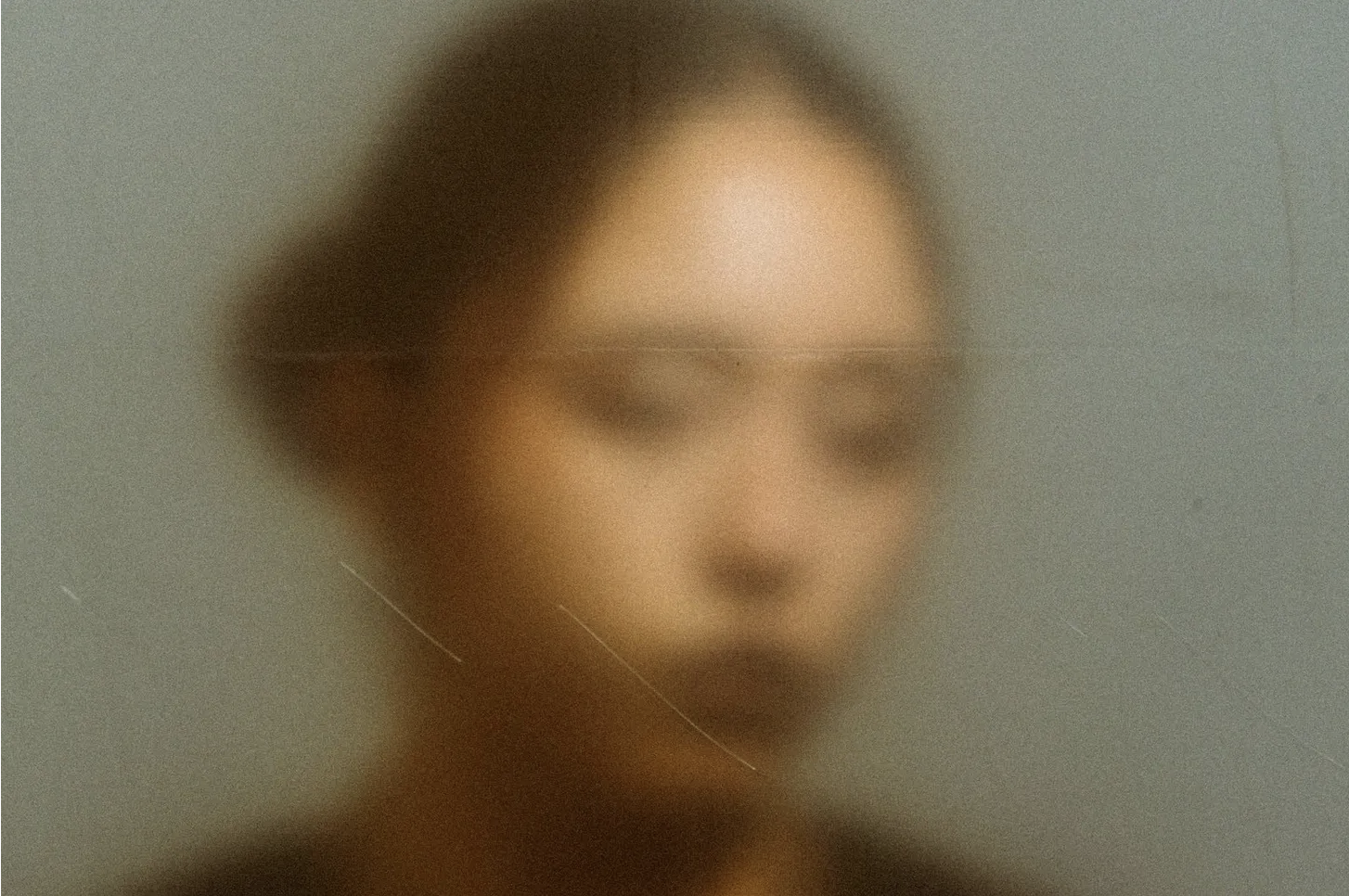
Uncloseted Media published this article on Dec. 16.
By NANDIKA CHATTERJEE | “I want to change your last name to make it sound whiter,” Sonali “Alyy” Patel remembers her white girlfriend saying to her while they were spending a quiet evening at home.
Patel felt a wave of grief wash over her. “I [have] to give up my South Asian-ness in order to be in a queer relationship,” she remembers thinking.
Patel and her girlfriend had been dating for some time and were sketching out a future together, even starting sentences with, “When we get married.” But as they built a foundation, she continued to feel marginalized because of her Indo-African heritage.
“I remember I was in [my girlfriend’s] household, and her father made a comment that was racist to brown people,” Patel told Uncloseted Media. When her girlfriend called him out, Patel remembers him responding by saying, “You were racist before you started dating a brown girl.”
Patel, a 29-year-old researcher and LGBTQ activist living in Vancouver, Canada, says comments from girlfriends and society kept popping up. So she began investigating them academically and went on to create the Queer South Asian Women’s Network.
In a 2019 study she published in the Journal of Lesbian Studies, Patel conducted in-depth narrative interviews with nine queer South Asian women in Toronto. She found that these women routinely experienced microaggressions, erasure and pressure to conform to white, Western queer norms, with one participant being told her queerness wasn’t that important during a conversation with her partner. Another said she was advised by friends and family to stick to other people of color when it came to dating.
This discrimination is often compounded in many conservative South Asian cultures where homosexuality is still stigmatized and viewed as a violation of religious or family values. In addition, women are expected to uphold family honor through modesty, heterosexual marriage and self-sacrifice.
A 2019 Pew Research Center survey found that only 37 percent of Indians believe homosexuality should be accepted by society, compared to majorities in most Western nations.
In Patel’s experiences in queer circles, she believes that what often felt like a visceral sense of South Asian identity loss was actually enforced assimilation. “I had no language or framework to understand that this was racism. I grew up in a white town. … People were very openly racist and okay with it,” she says. She adds that in addition to facing racism in LGBTQ spaces, South Asian women face rejection for being queer at home.
“Our families are like, ‘Haha no, you’re not gay,’” she says.
Coming out
Patel says coming out poses unique challenges for South Asian women compared to women of other ethnicities.
In a 2025 study in the Canadian Review of Sociology, Patel interviewed 40 queer South Asian women in Canada and found that staying closeted can protect them from judgment from family and community.
This leaves these women vulnerable to contrasting pressures where their LGBTQ circles want them to come out.
“There was a participant who [was told by another] queer woman who was white that she just needs to ‘try harder to come out to [her] family,’” says Patel. “But that’s not how it works. [She] did try coming out to them, [but] they didn’t listen.” When she did come out, she was told by her family, “You’re not really gay.”
“Our culture prizes silence, sacrifice and family reputation over individual truth, so falling in love with a woman isn’t just about your personal life,” Suja Vairavanathan, a life coach in Essex, England, who works with South Asian women, told Uncloseted Media. “It feels like you’re challenging an entire system.”
Vairavanathan, who grew up in a traditional Indian family, came out later in life.
“For me, it wasn’t a typical ‘I always knew’ story. I didn’t grow up identifying as gay or even questioning my sexuality,” she says. “I spent 20 years in a marriage, raising kids, living what looked like the ‘right’ Tamil woman’s life. Then I fell in love with my best friend, who happened to be a woman.”
After Vairavanathan left her marriage, she came out in a TikTok video where she is smiling ear-to-ear with on-screen text reading: “You’d have to be a little delulu to think that a 42-year-old Tamil divorcee, mum of two sons, eldest daughter, recently turned gay woman had the audacity to show up on social media and live life unapologetically.” Her caption added: “Yet here I am.”
While there were many positive comments on the video, Vairavanathan says the backlash from many folks in the South Asian community was intense: “I had comments calling me ‘a disgrace,’ saying I’d ‘ruined my family’s name,’ even messages telling me I was ‘corrupting Tamil culture’ or that I must have been ‘brainwashed by the West.’ People reduced my whole life to a scandal just because I chose to live honestly.”
Internalized shame
This community rejection can be painful. “It wasn’t strangers attacking me. It was my own people, speaking the same language I grew up with, who decided I didn’t deserve respect anymore. And that hurts in a way racism from outsiders never could, because it feels like rejection from your own bloodline,” says Vairavanathan.
Mental health professionals who work with South Asian clients say that collectivist traditions, where family reputation is often prioritized over individual expression, can lead to the stigmatization of LGBTQ identities.
On the AAHNA South Asian therapy website, they write that understanding taboos associated with sexual orientation “is crucial for effective therapeutic practice, as they can significantly influence mental health and well-being.”
Balancing dual identities
Jiya Rajput, a British Indian content creator and founder of the QPOC Project, says the balancing act of her sexual and racial identity can be tough: “Being both South Asian and queer sometimes feels like having two vastly different identities,” Rajput told Uncloseted Media. “I have tried my best to blend my queerness with my desi identity. However, it is not often easy, with stereotypes and prejudice sometimes making me feel out of place.”
This balancing act may involve navigating stereotypes and racism inside queer spaces, which can have negative mental health outcomes. A 2022 survey of LGBTQ Asian Americans found that discomfort with one’s race or ethnicity within queer communities was associated with lower psychological well-being for those who consider their racial identity important.
Dating as a queer South Asian woman
Balancing this dynamic can make dating challenging. A 2023 study revealed that queer Asian American women are frequently subject to rigid racial dating preferences, with most preferring to date within their own racial group, often as a reaction to feeling fetishized or rejected from white queer spaces.
And even dating within communities of color presents its own set of challenges. “Racism is not exclusively a white people’s issue,” Patel says, noting that she experienced subtle discrimination with another girlfriend who was Punjabi.
“[She] was genuinely trying to relate with me, she just couldn’t,” she says.
Patel remembers her girlfriend holding many assumptions, such as the belief that all South Asians share the same cultural traditions, such as Bhangra, a lively Punjabi dance, or Garba, a traditional Gujarati folk dance performed during festivals.
“It comes from a place of just wanting to be seen for their own culture,” Patel says, noting that many people of color aren’t accustomed to being truly heard or understood. “There’s so much excitement in dating someone from a different background that sometimes you forget to actually listen and receive the culture through their lens.”
When South Asian women do decide to date white women, Patel says it can feel like one “should just assimilate … and try to keep the pressures of being brown [and] growing up in a stricter, possibly patriarchal, culture at bay.”
These pressures in queer spaces caused Lavina Sabnani to leave her culture behind in an effort to feel accepted.
“It felt wrong to push away everything my ancestors carried with them for so long,” Sabnani told Uncloseted Media. “There’s a standard of whiteness at Pride, at lesbian parties, at cultural and social clubs. … Me and the other brown girls never get noticed. It was like you’re invisible within a community where you’re supposed to be counted in.”
“Being a lesbian South Asian means breaking the mold in every possible way,” says Hubiba Ali, a first-generation Pakistani American, self-described “butch lesbian” and food scientist from Chicago. “Pakistani women I was raised around don’t wear boyish clothes, have short, cropped hair, thick muscles, and hairy legs. They do not eat with gusto, laugh and joke boisterously, or take up space. I gave up a lot of my birthright participation in my culture in order to live free.”
Underrepresented and under researched
To make change, Sabnani says South Asian representation in queer spaces is essential. But it’s not happening yet. According to GLAAD’s “Where We Are on TV” 2024-2025 study, Asian Pacific Islanders represented only 11 percent of LGBTQ characters on broadcast, 2 percent on cable and 14 percent on streaming.
Even shows that strive for diversity, like “The L Word: Generation Q,” fail to include South Asian characters. “They had everyone — Black, Latinx, East Asian — but not a single South Asian woman,” says Patel.
She recalls a dating app called Her that featured an image of two white women kissing — one of whom had a tattoo of a Hindu deity.
“They’ll use our gods, but not our faces,” she says.
Outside of Patel’s research, little information exists about racism and homophobia toward queer South Asian women.
And even in queer nightlife, Ali describes feeling sidelined. She says that while there are a few South Asian LGBTQ organizations in Chicago, finding meaningful representation is hard even in those scenes.
“They tend to be hosted in a part of town colloquially known as ‘Boystown,’ which semantically already does not center women or lesbians,” she says. “The events are usually held at gay bars for gay men.”
Finding acceptance
Patel says that to make spaces truly inclusive, folks need to “start by listening to queer brown women, understanding our unique challenges, and amplifying our voices.”
And despite all of these challenges, many queer South Asian women are still surviving and building a more inclusive future.
Artists like MANI JNX, a British Punjabi indie musician, are using music to explore queer South Asian love, trauma and joy. And visual creators like Mina Manzar are building online communities through art. “Funnily enough, here in NYC, so far from Pakistan, is where I’ve found the most vibrant and beautiful South Asian queer community,” Manzar told Uncloseted Media.
As for Patel, she has found a relationship with a Tamil woman that is grounded in mutual respect and cultural exchange. “I’ve learned how to make Tamil food, I’m learning the language, and she comes to Garba with me and dances every year,” she says. Their shared commitment to honoring each other’s traditions illustrates the importance of genuine cultural understanding in queer relationships that goes beyond surface-level acceptance or stereotypes.
Her hope is that the commitment to understanding that she has developed with her partner can become more reflective of how society tries to understand the experiences of queer South Asian women.
“Let’s just address each racialized group as a different racialized group and give them some damn visibility,” Patel says. “It’s not that hard.”



White House
White House press pool pushes back after Trump bars three outlets
As President Trump refuses entry to outlets he deems unreasonable, lawsuits have been filed to regain access to the West Wing
Past the first checkpoint to get into the White House, multiple carts filled with camera equipment sat along a fence. Wagons loaded with tripods, cables, mics, and cameras sat just past where they normally would be working at full power. Today, they were turned off and packed away.
Last week, President Donald Trump decided to bar CNN, MS NOW and POLITICO from the White House following reporting he considers “FAKE NEWS.”
Trump, in a post on Truth Social on Monday morning, described his move as “instituting an assault on the FAKE NEWS,” which he said has “grown like Cancer in our beloved United States of America.”
“It is corrupt, purposeful, pervasive, fully coordinated, and totally out of control,” he wrote on the social media site he owns. “It is a threat to our National Security, and must be stopped, NOW!”
As a result, all of the major television networks that comprise the television press pool — ABC, CBS, NBC, CNN, and Fox News — suspended their White House TV pool coverage. They decided to no longer send camera crews to cover President Donald Trump’s events.
“The public has a vital interest in receiving accurate, independent information about its government,” the five White House TV pool networks said in a joint statement Monday. “No administration should restrict a news organization because it objects to its reporting.”
POLITICO, CNN and MS NOW filed a lawsuit Monday to immediately restore access for their reporters, who had their credentials confiscated by the Secret Service.
In the White House, there was a noticeable shift in the atmosphere. The Washington Blade is the only LGBTQ news outlet that is part of the White House Press Pool, and was acting as the primary print pooler as the situation unfolded on Monday.
Whispers about who might be kicked from the press pool next could be heard both in the press area of the West Wing, as well as outside the part of the White House dedicated to filming the president’s office. The area where TV stations normally film their live shots of the White House while reporting looked less busy than a normal Monday — especially as the president made his way to New York City ahead of the UN General Assembly meeting this week.
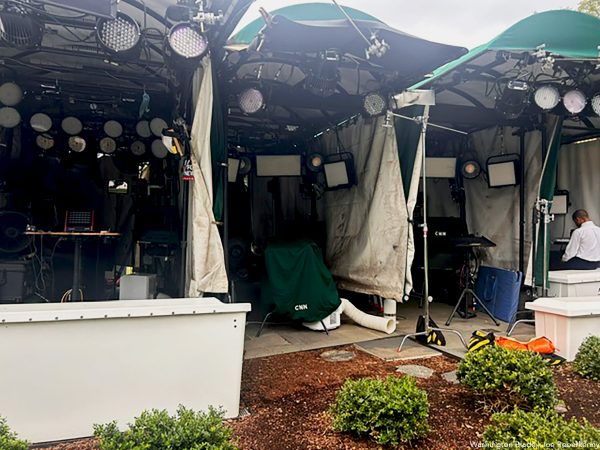
CNN’s outdoor filming area, which is staffed nearly at all times, sat dark with a green cover over the space that normally houses its cameras and political reporters like Kaitlan Collins.
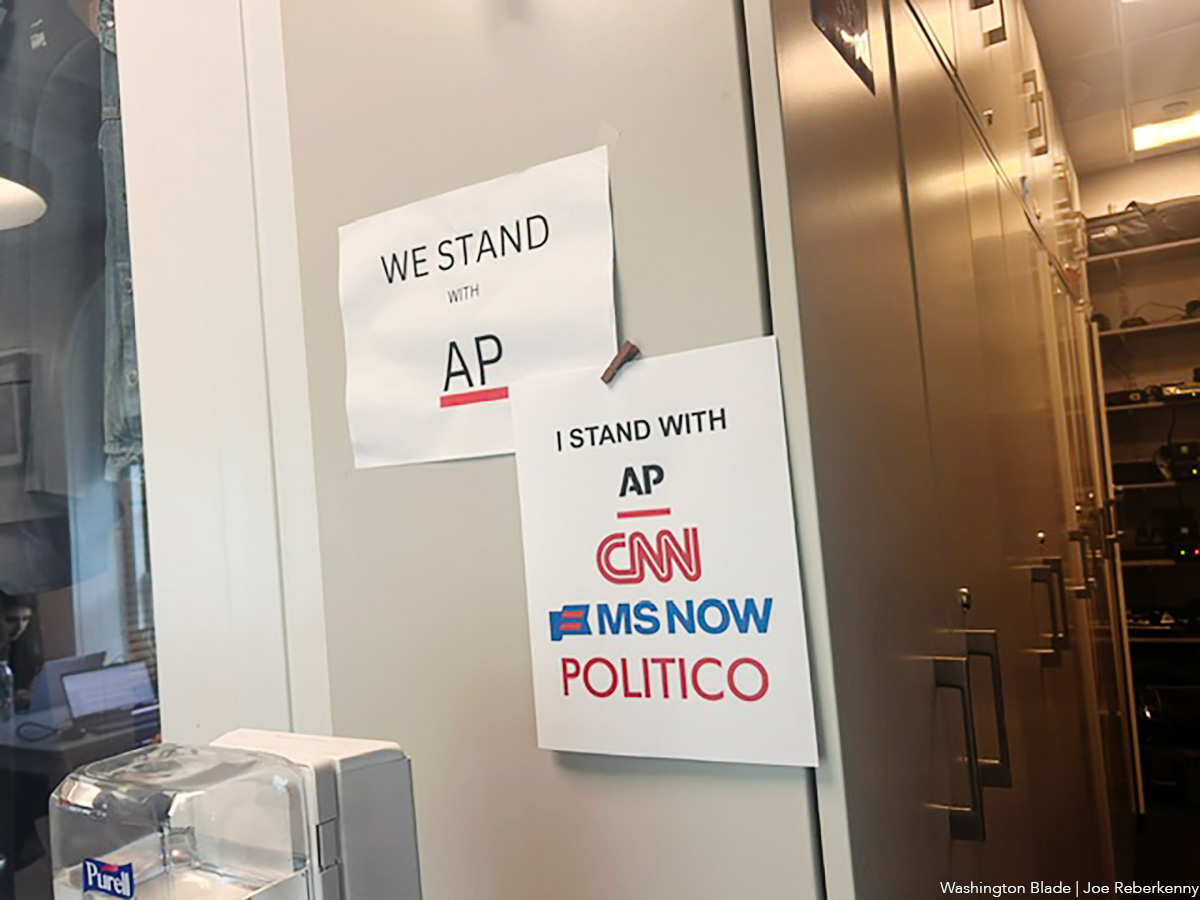
There were small signs of solidarity from other outlets in the press office. A sign that has hung outside one of the news offices in the West Wing was updated. It originally read, “WE STAND WITH AP” following President Trump’s first attempt at removing a news outlet he deemed unfavorable. It now includes “I STAND WITH AP CNN MSNOW POLITICO.”
The change could also be felt as the press pool attempted to cover the president.
There was a ribbon cutting in honor of the $6 million helipad installed at Trump’s behest — which had nearly no audio as a result of fewer microphones in the space following the outlets’ removal on Monday afternoon, and partly because of the loud sound of Marine One.
Vice President JD Vance defended Trump when asked about the changes to TV access at the White House, standing with the president despite this likely being a violation of the First Amendment’s guarantee of a free and fair press.
“He’s not banning media outlets. What he’s doing is saying we’re not going to give you special access to the White House if you engage in what is effectively propaganda,” Vance said, alleging that 92% of the stories from CNN, MS NOW and Politico about Trump are “negative.”
“That’s not representative of the American people. It’s not representative of public opinion,” Vance said.
He pushed back on the notion that this is a hindrance on free speech — claiming access to the president through White House visitation is a privilege — a privilege that in this administration, at least until courts weigh in, could change the landscape of the American media system.
“It’s about basic fairness. They can still report. They still have the access to free speech. They’re just not going to get an office in the White House anymore,” Vance said.
Jacqui Heinrich, the White House Correspondents Association President condemned the president’s actions in restricting media access in a statement sent to WHCA members on Saturday.
“Today’s action revoking access for journalists from CNN, POLITICO, and MSNOW violates the First Amendment. The implications extend beyond these organizations: a standard used to exclude one news outlet because of its coverage could be applied to any outlet in the future.
“The American people, through a free and independent press, must be able to scrutinize those elected to power, regardless of whether government officials view it favorably. That’s why courts have repeatedly held that once the White House provides access to journalists, it cannot deny that access arbitrarily or based on the content of their reporting. The WHCA calls on the administration to immediately restore our colleagues’ access.”
National
Long-time DignityUSA executive director announces retirement
Marianne Duddy-Burke has been with LGBTQ Catholic group for decades
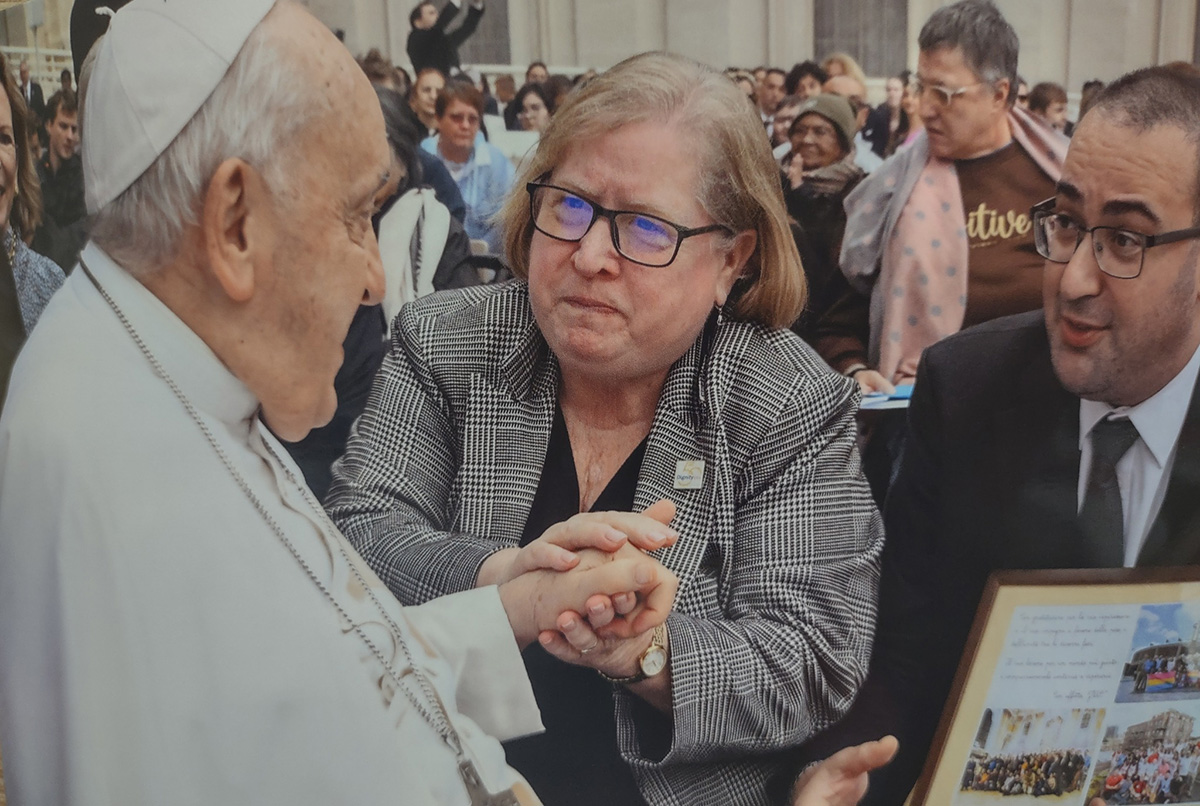
The executive director of the world’s oldest LGBTQ Catholic organization has announced she will retire once her successor has been chosen.
Marianne Duddy-Burke has been with DignityUSA for more than four decades. She has been the group’s executive director since 2007.
DignityUSA announced Duddy-Burke’s retirement on Sept. 17.
Duddy-Burke during her tenure has urged the Vatican to do more to welcome LGBTQ Catholics. She has also, among other things, championed marriage equality and advised the State Department on LGBTQ-specific issues. (The Trump-Vance administration’s decision to freeze nearly all U.S. foreign aid shortly after it took office in January 2025 has had a devastating impact on the global LGBTQ and intersex rights movement and efforts to fight HIV/AIDS around the world. A report that Outright International released earlier this month notes 90 percent of LGBTQ and intersex rights groups around the world have lost funding since 2025.)
Duddy-Burke met with Pope Francis in 2023.
She traveled to Rome in 2025 for the papal conclave to choose the Argentine-born pope’s successor. Pope Leo XIV, who was born in Chicago, succeeded Francis.
DignityUSA in the press release that announced Duddy-Burke’s retirement notes she expressed “particular appreciation to people who spoke honestly about the reality of being a queer Catholic or family member.”
“I have been inspired every day by your stories and have done my best to lift them up,” said Duddy-Burke. “It is your lives, your faith, your struggles, your hopes that I have strived to reflect in my work, and doing this has been a great honor.”
DignityUSA President Meli Barber praised Duddy-Burke.
“It is almost impossible to sum up the scope and depth of Marianne’s achievements and contributions to DignityUSA over her more than four decades of service,” said Barber. “Under her wisdom and leadership, DignityUSA has only grown in stature as an advocate for LGBTQIA+ Catholics and as a visionary thought leader for LGBTQIA+ ministry and spirituality.
“Marianne has been more than an extremely able executive director,” added Barber. “Her care for and ministry to chapters, her deep personal relationships with countless Dignity members, her connections to LGBTQIA+ Catholics around the world, the relationships she has built with other progressive Catholic organizations, her skill as a public representative, the respect with which she is universally regarded, and her tireless devotion to service all leave an indelible mark. It is not an exaggeration to say that she has shaped not only Dignity but a generation of LGBTQIA+ Catholics.”
Barber said DignityUSA will “soon begin a search for a new executive director.” Barber added Duddy-Burke “will assist with the transition.”
District of Columbia
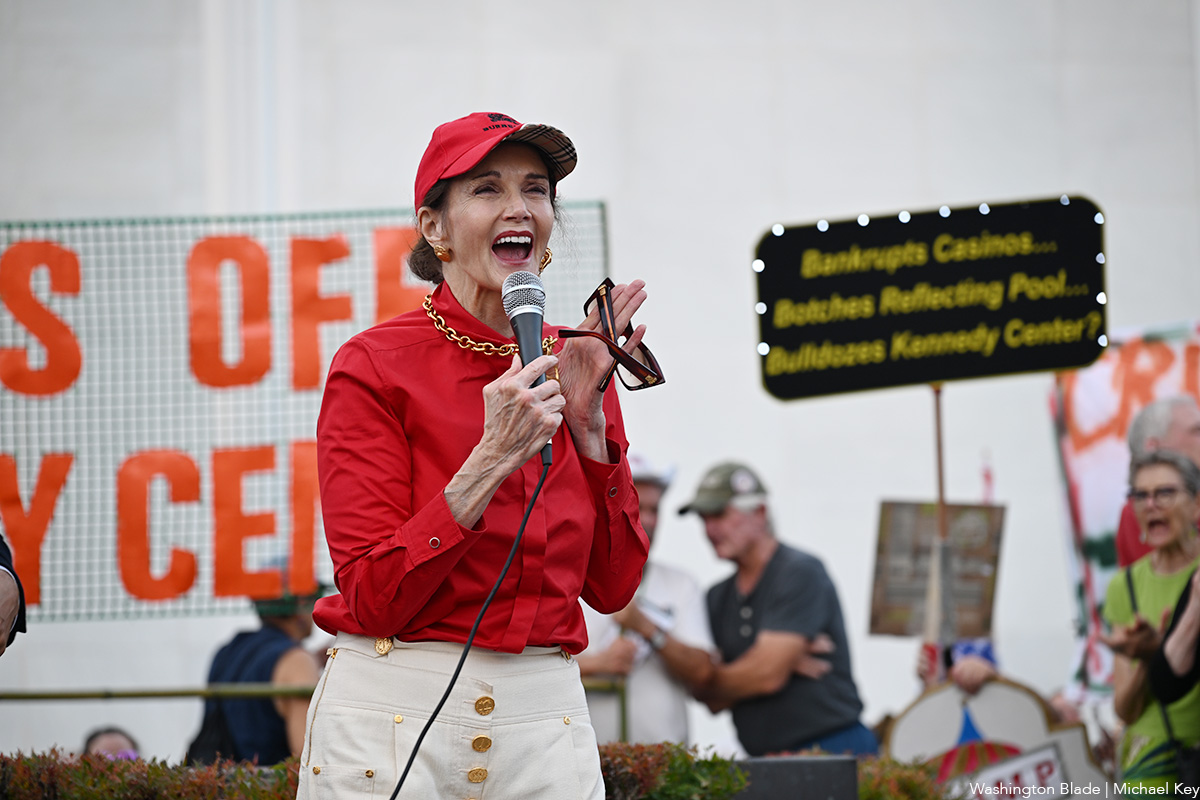
Over 2,000 turn out for Hands Around the Kennedy Center protest
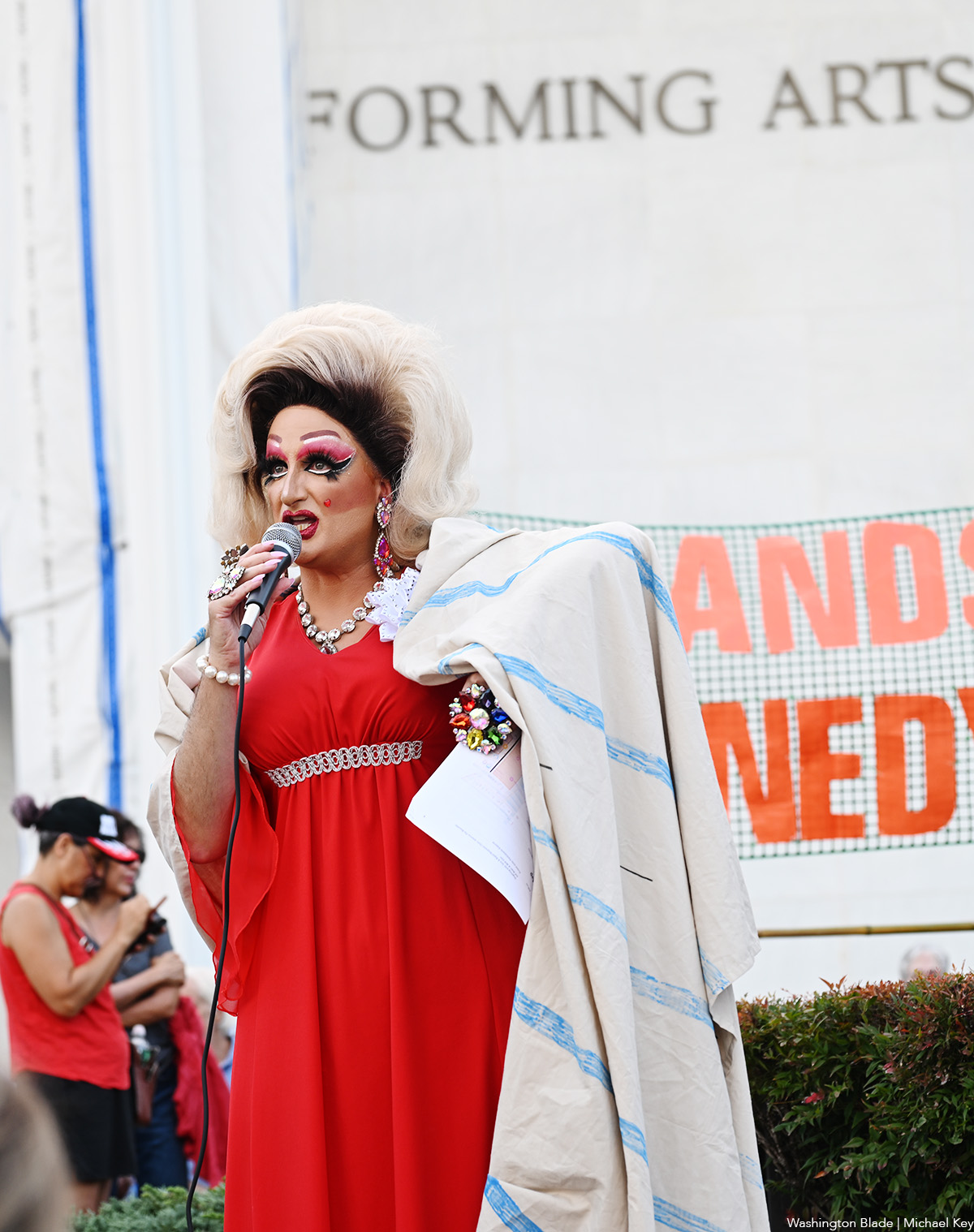
Drag performer Tara Hoot serves as MC, Gay Men’s Chorus of DC performs, attendees shout for Trump to keep ‘hands off’ Kennedy Center
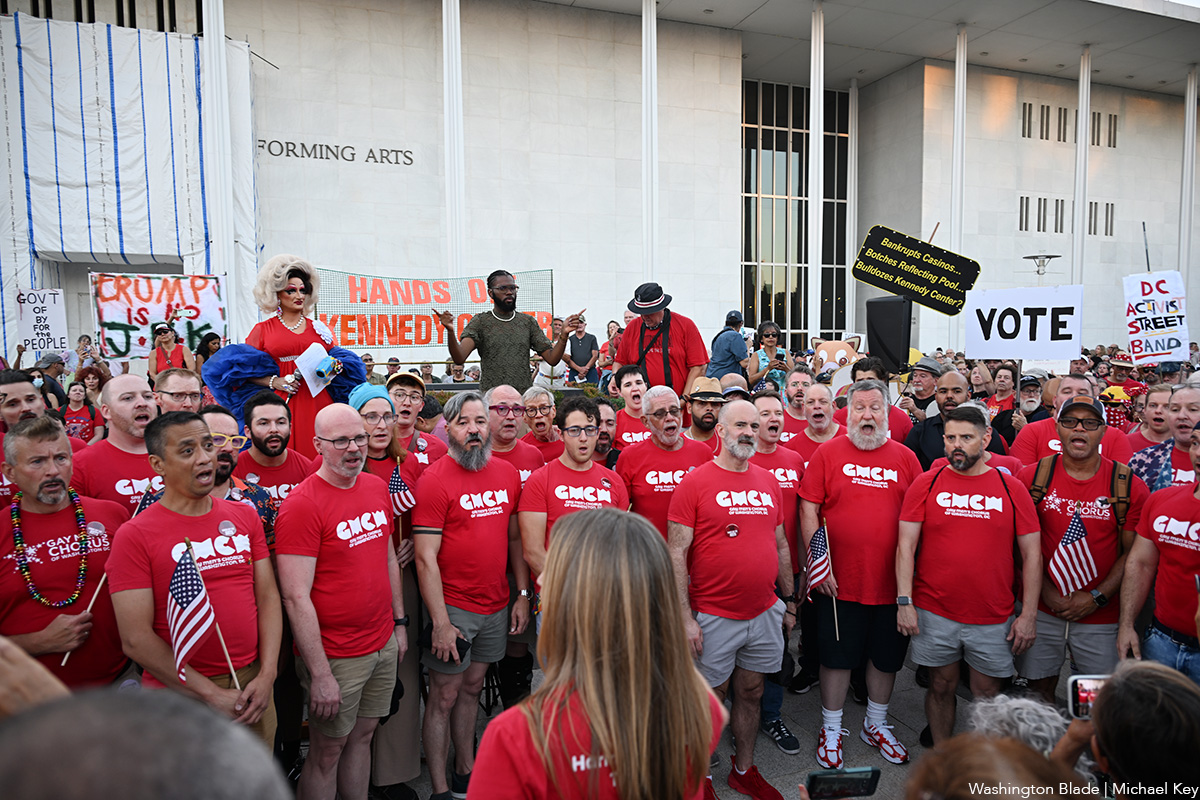
More than 2,000 supporters of the John F. Kennedy Center for the Performing Arts turned out on Sept. 18, for a rally in support of the performing arts center and a vocal protest against President Donald Trump’s threats to permanently close the center and possibly demolish it.
The event was organized by a group called Hands Off the Arts, which initially called for participants to form a “human chain” around the Kennedy Center’s main building following a rally on the plaza in front of the building.
However, due to a decision by the Trump-controlled Kennedy Center’s board of trustees to close the center earlier in the week and install fencing around part of the building, participants could only form the chain around part of the building, according to organizers.
Drag performer Tara Hoot, who co-organized the event and served as master of ceremonies for the rally preceding the “human chain,” said the large turnout could have fully surrounded the building at least twice had the fencing not prevented a full encirclement.
Among the musicians and singing groups that performed at the rally was the Gay Men’s Chorus of Washington, which, like other rally performers, had performed at the Kennedy Center in past years. They drew loud applause after singing one of their favorite songs from the Broadway musical show Ragtime, which includes the lyrics, “Will justice be demanded by 10 million men? Make them hear you. When they hear you, I’ll be near you again.”
View on Threads
Prior to their performance, Gay Men’s Chorus of Washington’s artistic director, Thea Kano, spoke at the rally, reminding participants that shortly after the Trump takeover of the center last year, Kennedy Center officials cancelled a concert the chorus was scheduled to perform there for World Pride 2025.
A Kennedy Center spokesperson said the cancellation was due to a scheduling conflict, but chorus members and LGBTQ activists believe it resulted from policies put in place by Trump and his leadership team at the Kennedy Center following Trump’s statements that he would end controversial “woke” performances that he claimed the majority of Americans disapprove of.
“Now this building sits empty in silence,” Kano told the crowd at the rally. “Let us raise our voices together and bring back the Kennedy Center as it was intended, a place where American culture could be celebrated and elevated, embracing the vibrancy with the spectrum of identify without censure and without politics,” she said.
Among the others who spoke at the rally were U.S. Rep. Don Beyer (D-Va.), U.S. Rep. Jonathan Jackson (D-Ill.), and D.C. Councilmember Robert White (D-At-Large).
Most speakers, along with LGBTQ participants in the hands-around-the-building event expressed strong opposition to Trump’s demand that the Kennedy Center name be changed from the John F. Kennedy Center for the Performing Arts to the Donald J. Trump and the John F. Kennedy Center for the Performing Arts.
At Trump’s request, his appointed board initially made that name change and placed Trump’s name on the front wall of the building along with the Kennedy name. But following legal action taken by opponents who pointed out that Congress must approve such a name change, a judge ordered the removal of Trump’s name from the building. Trump has said he will take steps to reverse that order and has said he will stop plans to renovate the Kennedy Center building and possibly demolish it if his name is not restored in the Kennedy’s Center’s official name.
Throughout the Sept. 18 rally, LGBTQ participants repeatedly responded to the Trump threats by shouting, “Hands Off!”
Chris Raleigh, one of the founders of Hands Off the Arts and a lead organizer of the Sept. 18 event at the Kennedy Center who spoke at the event told the Washington Blade that more similar events are being planned and he welcomes the support the event has received from the LGBTQ community.
“The LGBTQ community was here first, and we’re following them,” he said. “They’ve been the spearhead; they’ve been the vanguard. And I’m so thankful for heroes like Tara Hoot,” he said, adding, “It’s because they know what it means and how this is a safe place – the theater – for many LGBTQ people.”

White House press pool pushes back after Trump bars three outlets

PHOTOS: Shenandoah Valley Pride

Long-time DignityUSA executive director announces retirement

PHOTOS: Walk and 5K to End HIV

PHOTOS: Wanda Alston Foundation Fall Reception

Gun reform is an LGBTQ rights issue

All the queer things to watch this fall

Parties, dinners, concerts and more on tap for fall nightlife

Jeremy Moss looks to bring LGBTQ advocacy from Lansing to Capitol Hill