Local
Minister alleges conflict of interest at election board hearing
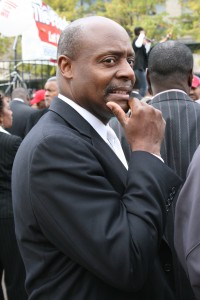
Rev. Anthony Evans (DC Agenda photo by Michael Key)
A local minister calling for a voter referendum to ban same-sex marriage in the nation’s capital startled a D.C. Board of Elections & Ethics hearing when he asked the board’s two members if they have “homosexual” family members or friends.
Rev. Anthony Evans, associate pastor of D.C.’s Mount Zion Baptist Church and a same-sex marriage opponent, questioned the board’s objectivity Jan. 27 in its role to decide whether a referendum seeking to ban gay marriage is an appropriate subject for the ballot.
“Deep down in your heart, are you for same-sex marriage?” Evans asked during his testimony. “Are any of your family members or friends homosexuals? Do you have any hatred in your heart towards the church … or towards clergy?”
Evans, who was applauded by some of the hearing’s spectators, called on the two board members to withdraw from the proceedings if they “answered yes to any of these questions.”
Board members Errol Arthur, who serves as chair, and Charles Lowery did not respond to Evans’ questions. The two thanked him for his testimony and called the next witness.
Evans was one of about 50 witnesses who urged the board to allow a marriage referendum to be placed on the ballot. Eighteen witnesses, including LGBT activists, testified against holding a referendum, saying such a ballot measure would violate the city’s human rights law.
The hearing was the third one held by the board during the past seven months to decide whether a ballot measure seeking to ban same-sex marriage could be held. The board ruled against two earlier requests — one for a referendum and the other for an initiative seeking to ban marriage.
D.C. Superior Court judges upheld both board rulings, saying members were correct in determining that a ballot measure seeking to ban same-sex marriage in the city would violate the city’s Human Rights Act. The act, among other things, prohibits discrimination based on sexual orientation.
Rick Rosendall, vice president of the Gay & Lesbian Activists Alliance and one of the witnesses to testify against the proposed referendum, called Evans’ questions to the election board “outrageous” and said they represented an escalating anger and vehemence among same-sex marriage opponents.
“They already lost twice and they’re certainly going to lose again on this one,” Rosendall said. “They’re beginning to sound increasingly shrill and desperate.”
Several witnesses, including D.C. residents Odessia Tolliver and Corinthia Boone, cited biblical passages. They said the excerpts showed that same-sex marriage is immoral and would hurt society and “traditional” culture.
“I teach history,” Boone said. “Every great empire where they dared to redefine marriage as [something other than being exclusively] between a man and a woman declined and no longer exists.”
Among those testifying against the proposed referendum were D.C. Council member Phil Mendelson (D-At Large), who worked with Council member David Catania (I-At Large) to shepherd the Religious Freedom & Civil Marriage Equality Amendment Act of 2009 through the Council.
The bill is undergoing its required congressional review following its approval by the Council in December and Mayor Adrian Fenty’s decision to sign it. It’s expected to become law in early March, with nearly all political observers predicting Congress won’t overturn it.
U.S. Rep. Jason Chaffetz (R-Utah) has introduced a motion to overturn the same-sex marriage bill, but the Democratic-controlled Congress is expected to block his resolution.
Two attorneys opposed to the referendum joined same-sex marriage advocate Bob Summersgill in raising last week what some called a new and novel argument against ballot measures seeking to ban gay marriage in the city.
The three said the proposed referendum, if approved, would violate the D.C. City Charter by preventing the city from obtaining projected tax revenue generated from same-sex weddings. The revenue could total more than $1 million annually.
Brian Flowers, general counsel for the City Council, and Mark Levine, an attorney representing the Gertrude Stein Democratic Club, noted that a provision in the City Charter strictly prohibits initiatives and referenda that would appropriate funds, cut taxes or negatively impact the city’s budget.
To invoke the provision, they cited a report issued in December by the city’s chief financial officer projecting that same-sex weddings would generate millions of dollars a year in revenue for D.C. businesses that specialize in services related to weddings. That revenue, in turn, would result in additional tax revenue for the city, according to the report.
“Another study predicts that more than $50 million over three years would be generated in local tax and fee revenues, potentially creating approximately 700 new jobs,” Flowers said in his testimony before the election board.
Flowers and Levine pointed to a 2004 decision by the D.C. Court of Appeals barring an initiative seeking to ban smoking in restaurants and bars and an appeals court ruling in 1994 rejecting an initiative to prevent the city from booting cars that are illegally parked. In those cases, the court ruled that advocates for a smoking ban and an anti-booting policy could not seek to enact those polices through a ballot measure because the policies would reduce city revenue by curtailing taxes generated by restaurants and bars or fines generated by booting cars.
Some legal observers believe the “revenue” argument may be stronger than the human rights act argument because the revenue-related restriction against ballot measures is written in the City Charter. The human rights law restriction is part of a regular city law passed in 1978 to implement the City Charter’s creation of the initiative and referendum process.
Cleta Mitchell, an attorney representing supporters of the ballot measure to ban same-sex marriage, testified at the election board hearing that the human rights law argument used by marriage equality advocates is flawed. Mitchell and others calling on the board to allow a marriage referendum have argued that the human rights law restriction could only be used if they were embedded in the City Charter.
Two Superior Court judges have rejected that argument, however, and marriage equality activists said they were hopeful that the election board and yet another court ruling would support their view that the ballot measures must be rejected if they would result in discrimination against minorities protected by the Human Rights Act.





Rehoboth Beach
HISTORIC: Susan Stewart elected Rehoboth’s first out mayor
Thanks LGBTQ supporters and vows to protect city’s small town charm
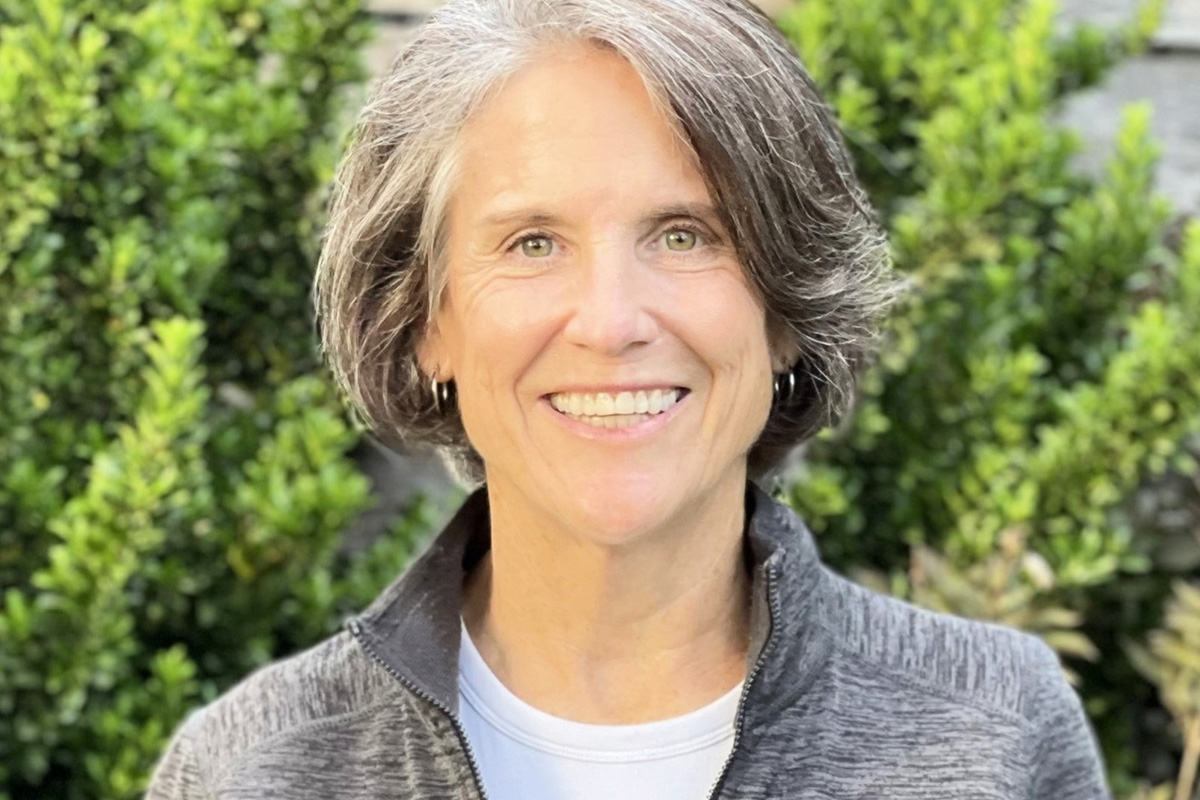
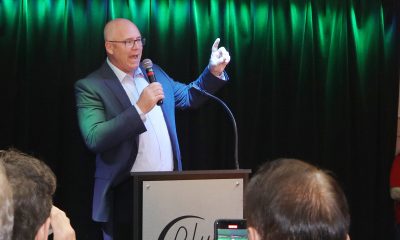
Residents of Rehoboth Beach elected City Commissioner Susan Stewart with 61% of the vote on Aug. 8, making her the city’s first openly gay mayor.
Stewart beat fellow commissioners Craig Their and Suzanne Goode in the race, as well as newcomer Jake Raak.
The final mayoral vote results were:
- Susan Stewart: 632
- Craig Their: 203
- Suzanne Goode: 177
- William “Jake” Raak: 23
“I’m very grateful because the LGBTQ+ community not only voted for me, but also supported me,” said Stewart.
Stewart said that she is particularly grateful for the support she received on social media from members of the LGBTQ+ community.
“I’ve had incredible support,” said Stewart.
Stewart said that her campaign showed her just how much residents of Rehoboth are engaged and care about the city.
“They really want to see what’s best for the community,” said Stewart.
Stewart spoke about the master planning initiative she has been working on as a commissioner, which she plans to continue as mayor.
“We’ve undertaken rewriting the commercial zoning code, and that’s foundational to the next step of the initiative,” said Stewart.
She said that she was proud of the results of charette week that was held last month where residents and business owners had the opportunity to speak with hired urban planners to give feedback for a zoning code update.
Stewart said that Rehoboth is at a tipping point as the city must find a way to balance the growth of the commercial district while improving the quality of life for residents.
“I don’t believe there needs to be tension between the business community and the residential experience,” said Stewart.
“I’m excited about a new master plan because we have a couple hotels coming, and we also have Clear Space Theatre looking for a new home, and we’re working with them,” said Stewart. “We want businesses to stay here.”
Stewart also said that she aims to embrace the concept of a ‘15-minute city,’ making the city much more accessible in terms of transportation in the downtown area for residents.
“The goal is to protect the small town charm and natural beauty of Rehoboth,” said Stewart. “I want to keep the momentum going.”
The Blade asked Stewart about any concerns she might have working with Commissioner Goode, whom she has criticized for sending inappropriate and offensive emails to city staff. Goode finished a distant third in the mayoral race and her husband fell short in his bid for a Commissioner’s seat. In that race, Jeffrey Goode received 239 votes; Patrick Gossett, who’s gay, received 813 votes and Mark Saunders 852. Saunders and Gossett will be sworn in next month.
“I’m really eager to move past this issue with Commissioner Goode,” said Stewart.
She said that she’s heard ‘loud and clear’ from the city that they want to move past this situation as best as they can while Goode remains in her seat as commissioner.
“There are no mechanisms for us to remove a sitting commissioner. Our laws don’t allow it,” said Stewart.
Stewart clarified that she has always focused on Goode’s behavior toward city staff.
“One thing I feel really passionate about is that the city employees have to know that they are heard. They are real people with real jobs, real professional reputations, and they’ve been harmed,” said Stewart.
The Blade also asked if Stewart had made a final decision on whom she plans to nominate to fill her Commissioner seat.
“I’m considering who to appoint and I have not made any final decisions,” said Stewart.
She noted that, as mayor, she only has the power to nominate a candidate and that the board of commissioners will have the final vote on whom to appoint to the board.
Stewart shared that she has received interest from a number of people and finds that to be a good sign.
“I think that’s a great sign because people want to serve. I’m eager to have someone in that seat who’s smart and has the best interests of the city,” said Stewart.
Stewart will be sworn in during the Board of Commissioners meeting on Sept. 18.
District of Columbia
D.C.’s Mary’s House For Older Adults names new executive director
Charlene Leach to succeed Imani Woody as leader of LGBTQ-supportive seniors home
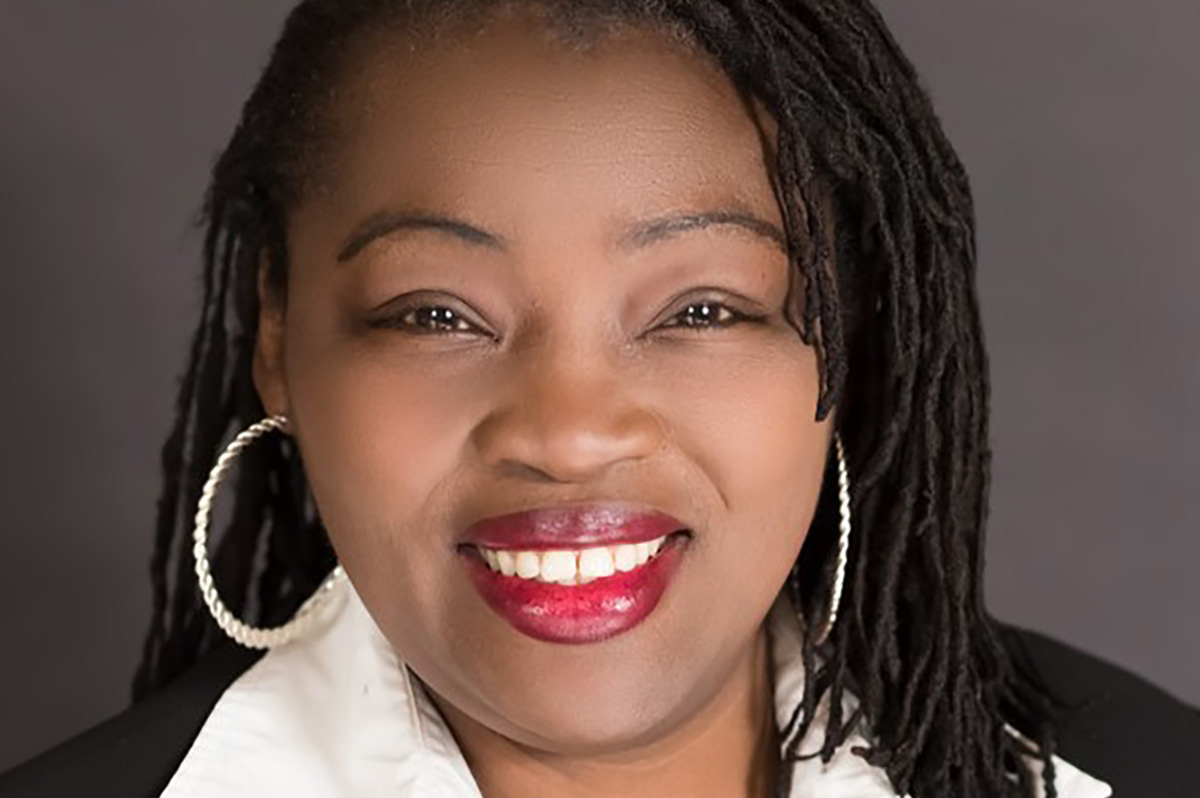
The board of directors of Mary’s House for Older Adults, the D.C.-based home dedicated to providing affordable housing for LGBTQ seniors, has announced it has named longtime nonprofit organization leader A. Charlene Leach as its new executive director.
Leach, who is now serving in the executive director’s position, is succeeding Dr. Imani Woody, the Mary’s House founding president and CEO, who announced her retirement from her official leadership role at Mary’s House on July 7.
Woody, who holds a PhD in Human Services, is credited with playing the lead role over many years in arranging both city and private funding needed to construct and operate the Mary’s House three-story building located at 401 Anacostia Road, S.E., in the city’s Fort DuPont neighborhood.
“With over three decades of nonprofit experience and 15 years serving as an executive director, Charlene brings a wealth of knowledge in organizational leadership, program development, and community engagement,” the Mary’s House board says in a statement.
“Her proven track record of building impactful programs and leading mission-driven organizations makes her uniquely suited to guide Mary’s House into its next phase of growth,” the statement continues. “Charlene is deeply aligned with the mission of Mary’s House and is committed to advancing its work to provide safe, inclusive housing and supportive services for LGBTQ+ older adults,” it says. “Under her leadership, the organization will continue to expand its impact while remaining grounded in the values that define our community.”
Leach’s LinkedIn page shows she has most recently served since 2022 as executive director of the African American AIDS Task Force in Minneapolis. Prior to that, it shows she served as executive director of the Fredericksburg Area Health and Support Services organization in Fredericksburg, Va., and before that as director of development for the D.C.-Baltimore area Women’s Collective.
Her LinkedIn page says she has been involved with Mary’s House as a volunteer and grant writer since 2016.
The newly built and enlarged Mary’s House, which opened in March 2025, with a grand opening ceremony held in May 2025 attended by D.C. Mayor Muriel Bowser, includes 15 single-occupancy residential apartments and more than 5,000 square feet of shared communal living space.
An earlier statement released by the Mary’s House board announcing Woody’s retirement said Woody would continue to be involved with the organization as a member of the board. The earlier statement and board’s more recent statement on July 29 announcing Leach’s appointment as executive director did not say whether the board plans to name someone else as president and CEO, the title that Woody held before her retirement. But the latest statement says Leach will be running Mary’s House’s day-to-day operations as Woody did.
Virginia
Doug Ollivant to face Eugene Vindman in Va. 7th Congressional District
Republican defeated challengers in Tuesday’s primary

Republican Doug Ollivant will face off against incumbent U.S. Rep. Eugene Vindman (D-Va.) in Virginia’s 7th Congressional District.
Ollivant defeated his Republican opponents in Tuesday’s primary. Vindman ran unopposed.
Vindman in 2024 ran to succeed then-Congresswoman Abigail Spanberger in the U.S. House of Representatives after she ran for governor. Spanberger succeeded Republican Gov. Glenn Youngkin in 2025.
U.S. Sen. Mark Warner (D-Va.) on Tuesday easily won his primary. All other Democratic incumbent members of Congress from Northern Virginia also won their respective primaries.

2 former NBA players launch cheap anti-trans stunt to exploit WNBA rules

Same-sex couples challenges India income tax law

HISTORIC: Susan Stewart elected Rehoboth’s first out mayor

Todd Blanche’s record on LGBTQ issues comes under scrutiny as he takes over DOJ

Don’t miss summer productions at Clear Space in Rehoboth Beach

Perez Hilton’s live breakdown reveals social media mental health crisis

HRC files class action over federal ban on gender-affirming care coverage

Dutch PM: More needs to be done to defend trans rights

HRC condemns DoE removal of LGBTQ bullying data from federal survey

New book chronicles gay man’s life in hippie commune
-

 Celebrity News5 days ago
Perez Hilton’s live breakdown reveals social media mental health crisis
-
The White House5 days ago
HRC files class action over federal ban on gender-affirming care coverage
-
Netherlands5 days ago
Dutch PM: More needs to be done to defend trans rights
-
National5 days ago
HRC condemns DoE removal of LGBTQ bullying data from federal survey