National
White House rejects gay judicial nominee
Supporters urged Schumer to fight for attorney accused of anti-Christian remarks
The White House has rejected the recommended nomination of a New York attorney who would have become the first openly gay man to sit on the federal bench, because of comments he reportedly made about the Pledge of Allegiance and Christmas that were deemed anti-Christian.
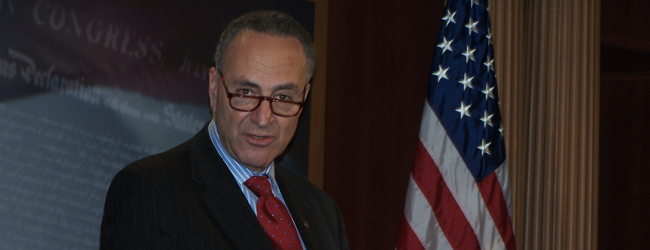
In February, U.S. Sen. Chuck Schumer (D-N.Y.) recommended the nomination of Daniel Alter to serve as a judge for the U.S. District Court for the Southern District of New York. Presidents traditionally follow the guidance of senators from the state where there’s a vacancy for judicial nominations.
But informed sources told the Washington Blade that the White House rejected Alter’s nomination because of remarks he reportedly made regarding a case challenging inclusion of the phrase “under God” in the Pledge of Allegiance. In addition, the White House reportedly objected to remarks that Alter made suggesting that merchants not wish shoppers “Merry Christmas” during the holidays.
In a 2005 article published by Cybercast News Service, Alter is quoted as saying that a general holiday greeting is more appropriate and inclusive for retailers as opposed to saying “Merry Christmas.”
“It seems both from a business … and a community perspective, that if merchandisers were going to do that … they would try to wish those in the community who may not share in celebrating Christmas a happy holiday as well,” Alter is quoted as saying.
“Our diversity has made us great and will continue to make us great and [‘Merry Christmas’] undermines both the holiday spirit as well as the message I think Americans should be sending to each other,” Alter reportedly continued.
The 2005 quotes were apparently reprinted in a 2008 CNS article that is stored in the archives on the organization’s website.
Additionally, in a 2004 article published in The New Republic, Alter is quoted as saying the U.S. Supreme Court case Elk Grove United School District v. Newdow “was a good case at the wrong time.” The case challenged use of the “under God” phrase in the Pledge of Allegiance in public schools.
The article reported Alter was “relieved” the Supreme Court decision “left open a window for future challenges.” The Anti-Defamation League had filed a friend-of-the-court brief in support of the Newdow case.
“When the right case does come along,” Alter reportedly said, “We’re there.”
Alter was previously an assistant U.S. attorney for the Southern District of New York and specialized in First Amendment and terrorism issues. He also served as national director of the civil rights division of the Anti-Defamation League, an organization that works to fight anti-Semitism.
The comments he reportedly made came in his capacity as an official with the Anti-Defamation League. The White House decision to reject Alter disappointed his supporters, who rallied around him and urged Schumer to advance his nomination anyway.
Schumer announced his recommended nomination of Alter during a Human Rights Campaign dinner in New York City and emphasized that his selection would make him the first openly gay male judge on the federal bench.
In a February statement, Schumer said he recommended Alter because he’s “a brilliant attorney who possesses the knowledge, balanced views and temperament required of a federal judge.”
“His outstanding leadership skills, his commitment to justice, and his extensive experience make him an exceptional choice for a position on the federal bench,” Schumer said. “I’m proud to nominate Daniel Alter. Period. But I am equally proud to nominate him because he is a history-maker who will be the first openly gay male judge in American history.”
But based on those reported statements, the White House and Schumer determined that Alter wouldn’t be able to reach the 60-vote threshold needed in the Senate to overcome a filibuster of his nomination. It’s unclear when the decision to reject Alter was made.
Schumer’s office didn’t respond to multiple requests for comment. A White House spokesperson declined to comment. Alter also declined to comment for this story.
Deborah Lauter, director of civil rights for the Anti-Defamation League, said the apparent decision to reject Alter’s nomination based on reported comments he made on behalf of the organization is “just plain unfair and unjust.”
“Any statements he made in the course of his job with ADL were just that — he was representing the views of our organization,” she said. “It’s dismaying if in fact that led to the derailing of his nomination.”
Lauter said Alter doesn’t recall speaking to The New Republic for the 2004 article and that Alter was misquoted in the 2005 CNS article.
“It was an inaccurate report and ADL should have insisted the record be corrected at the time,” Lauter said.
Lauter clarified that the Anti-Defamation League has never objected to retailers wishing customers “Merry Christmas.”
“But the bottom line is even if he made the comment, which he didn’t, it shouldn’t have disqualified him from service as a judge,” she said.
The decision to refuse the Alter nomination likely came sometime before July, when his supporters urged Schumer to go to bat for his recommended nominee.
In a letter dated July 2, 2010, a group of 66 attorneys who worked with Alter at the U.S. Attorney’s Office for the Southern District of New York wrote that the designation of Alter to the federal bench is “a nomination worth fighting for.”
“We urge you to take all possible steps to ensure that Mr. Alter is nominated to the federal bench and promptly considered by the Senate Judiciary Committee,” the letter states.
Among those who signed the letter is James Comey, who served as deputy attorney general during the Republican administration of former President George W. Bush.
The attorneys wrote that Alter’s “nomination to the federal bench is in jeopardy” because of “demonstrably false statements” that reporters made while he was working for the Anti-Defamation League. The missive doesn’t detail why the statements Alter reportedly made to media outlets are “demonstrably false.”
“While we will let others set forth the factual reasons why these allegations are baseless, we write to state emphatically that the sentiments falsely ascribed to Mr. Alter are inconsistent with everything that we know about him,” the letter states. “Mr. Alter has dedicated his life to tolerance, public service, moderation, and fidelity to law. He is unfailingly kind, respectful, and open-minded. In both deed and character, Mr. Alter is the antithesis of the views that have been misattributed to him.”
The signers state that they “cannot imagine a more highly qualified nominee” and that the loss of Alter to the federal judiciary based on “false allegations” would be significant.
“By temperament, he is well-suited to the bench, possessing every quality one seeks in a judge: respect for all views, dedication to the public, tireless pursuit of the best legal argument, and a determination to reach decisions that will command the respect of all parties,” the letter states.
Lauter said the Anti-Defamation League sent its own letter to Schumer in July urging the senator to push for Alter’s nomination, but she declined to make the letter public.
“It was a private letter to the senator just clarifying the record and expressing support — enthusiastically and without reservation — for Danny Alter’s nomination,” she said.
Also lamenting the derailment of Alter’s nomination is Richard Socarides, a gay New York attorney who served as an adviser to President Clinton.
Socarides told the Blade the White House’s rejection of Alter’s nomination was evidence of a broken system.
“I don’t know Daniel Alter personally,” Socarides said. “I’m told he is highly qualified. We need more people like him in the federal judiciary. I don’t know why his nomination got derailed, but certainly a system in which someone like Alter can’t get confirmed is badly broken.”
HRC heralded Schumer’s announcement of his recommended nomination of Alter in February, but the organization is mum on his rejection.
At the time of the announcement, Joe Solmonese, HRC’s president, said in a statement that Alter “is eminently qualified for a position on the federal bench.”
“America is taking a step forward toward equality by evaluating an individual based on his accomplishments and without regard to his sexual orientation,” Solmonese said. “We commend Senator Schumer for his historic recommendation, and look forward to the President’s nomination.”
Fred Sainz, HRC’s vice president of communications, this week declined to comment on the White House rejection of Alter.
Schumer has since recommended the nomination of another openly gay man, J. Paul Oetken, to become a district judge for the U.S. District Court for the Southern District of New York.
The New York senator made the announcement in a Sept. 23 statement that said Oetken has “the right combination of skills, experience and dedication to [be] an excellent judge on the court.”
Oetken served as an attorney in private practice and was an associate counsel for former President Bill Clinton, according to the Schumer statement.




National
What to watch for in 2026: midterms, Supreme Court, and more
Federal policy battles carry grave implications for LGBTQ Americans
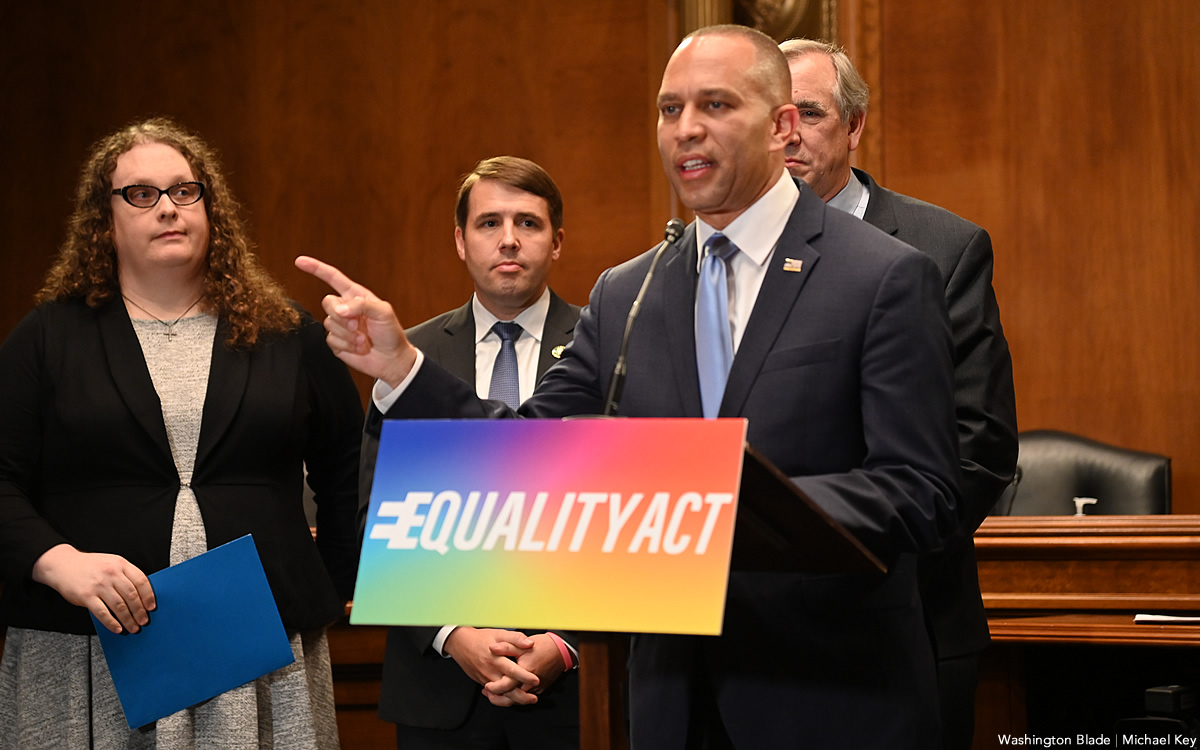
With the start of a new year comes a new slate of legal and political developments poised to change our world. From consequential Supreme Court cases and a potential House of Representatives leadership flip to preparations for the United States’s 250th anniversary, 2026 is expected to be a critical year—particularly as LGBTQ rights, and transgender rights specifically, remain a focus of national debate.
Across Congress, the courts, federal agencies, and statehouses, decisions made this year are poised to shape the legal and political landscape for LGBTQ Americans well beyond the next election cycle.
Congress
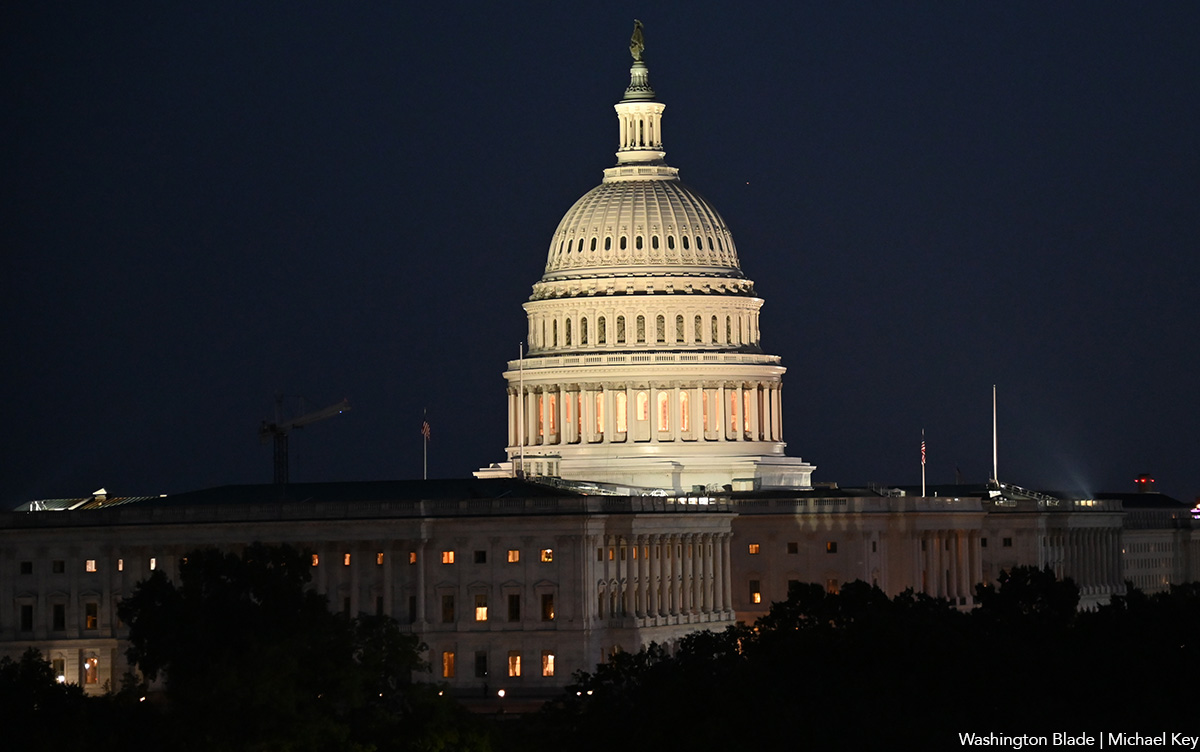
In 2026, a sizable number of federal seats will be up for grabs. All 435 districts in the U.S. House of Representatives will be on the ballot, offering Democrats a chance to flip the chamber and reclaim a measure of control from Republicans, who have held the House since 2022. Control of the House will be especially critical as lawmakers weigh legislation tied to civil rights, health care access, and the scope of federal protections for LGBTQ Americans.
A Democratic majority would also determine committee leadership, oversight priorities, and the ability to block or advance legislation related to transgender health care, education policy, and federal nondiscrimination protections.
Several House races are expected to be particularly significant for LGBTQ representation and leadership, including contests in Texas’s 32nd Congressional District, New York’s 17th, and Illinois’s 9th.
In Texas’s 32nd District, Democratic incumbent Julie Johnson is seeking reelection in the northeastern Dallas-area seat. Johnson is the first openly LGBTQ person ever elected to Congress from Texas or the South, according to her congressional website. Her reelection bid comes amid Republican efforts to redraw the district to consolidate GOP power, following demands from President Trump — moves that have made the race increasingly challenging.
While in office, Johnson has pushed for expanded Medicare access, stronger LGBTQ rights protections, and broader health care equity. The race has become a key test case for LGBTQ incumbents navigating increasingly hostile political and electoral environments, particularly in southern states.
In New York’s 17th Congressional District, Democrat Cait Conley is mounting a challenge against Republican incumbent Mike Lawler in the lower Hudson Valley, just north of New York City. Conley is a former active-duty Army officer who was deployed six times and has leaned into that experience to connect with the district’s mixed constituency.
The district has frequently flipped between parties and includes a politically influential conservative Hasidic community, making it one of the more competitive seats in the region. An out lesbian, Conley has spoken forcefully in support of LGBTQ rights and has received the endorsement of LPAC, positioning herself as a pro-equality candidate in a closely watched race that could help determine control of the House.
The Illinois 9th Congressional District is also shaping up to be a competitive open-seat contest. The district spans parts of Cook, Lake, and McHenry counties and includes much of Chicago’s North Side. In 2025, Democratic Rep. Jan Schakowsky announced she would not seek reelection after representing the district since January 1999.
Mike Simmons, who was elected to the Illinois State Senate in 2021, is seeking the seat. Simmons was the first openly LGBTQ person and the first Ethiopian American elected to the state Senate, where he has focused on expanding LGBTQ rights, strengthening democratic institutions, and addressing cost inequities in health care, housing, and support for community-based organizations. Given the district’s suburban makeup, the race could emerge as a frontline contest for pro-equality legislative influence.
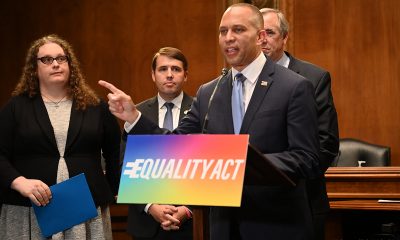
If Democrats are successful in reclaiming control of Congress, the outcome would reshape leadership at the highest levels. One potential result would be Hakeem Jeffries becoming the first elected Black Speaker of the House, a historic milestone with implications for legislative priorities, representation, and the direction of Democratic leadership.
Beyond the House, control of the U.S. Senate will also be in play. In total, 35 of the Senate’s 100 seats will be up for election in 2026. Of those, 33 are regularly scheduled races, with two additional special elections set to take place in Florida and Ohio. Several of these contests are expected to hinge on issues such as abortion access, federal oversight, judicial confirmations, and the future of LGBTQ protections at the national level. Political observers view the Senate as a tougher flip for Democrats but not an impossible task.
Governorships
Gubernatorial races will further shape the policy environment across the country. A total of 36 states and three U.S. territories could elect new governors in 2026, many of whom will have significant influence over education policy, health care access, and the enforcement—or rollback—of civil rights protections.
One notable development is Republican Sen. Marsha Blackburn’s entry into Tennessee’s gubernatorial race. Blackburn has been an outspoken opponent of LGBTQ rights and has previously proposed constitutional amendments aimed at banning same-sex marriage, making the race one to watch closely for LGBTQ advocates.
Two races to watch

Colorado governor’s race:
Jared Polis made history in 2018 as the first openly gay man elected governor in U.S. history, but his tenure in the Mile High State is coming to a close. Polis cannot run for reelection in 2026 because of term limits. U.S. Sen. Michael Bennet and Colorado Attorney General Phil Weiser are the Democratic frontrunners in a race that could determine whether the state continues its trajectory on LGBTQ-inclusive policy.
Iowa Senate seat:
Zach Wahls is running for Iowa’s U.S. Senate seat. An Iowa State Senator, Wahls has built a record focused on expanding health care access, minimizing government corruption, and protecting LGBTQ equality. Wahls, who was famously raised by two lesbian moms, has frequently pointed to his family as shaping his advocacy, positioning his campaign around personal experience as well as legislative record.
SCOTUS
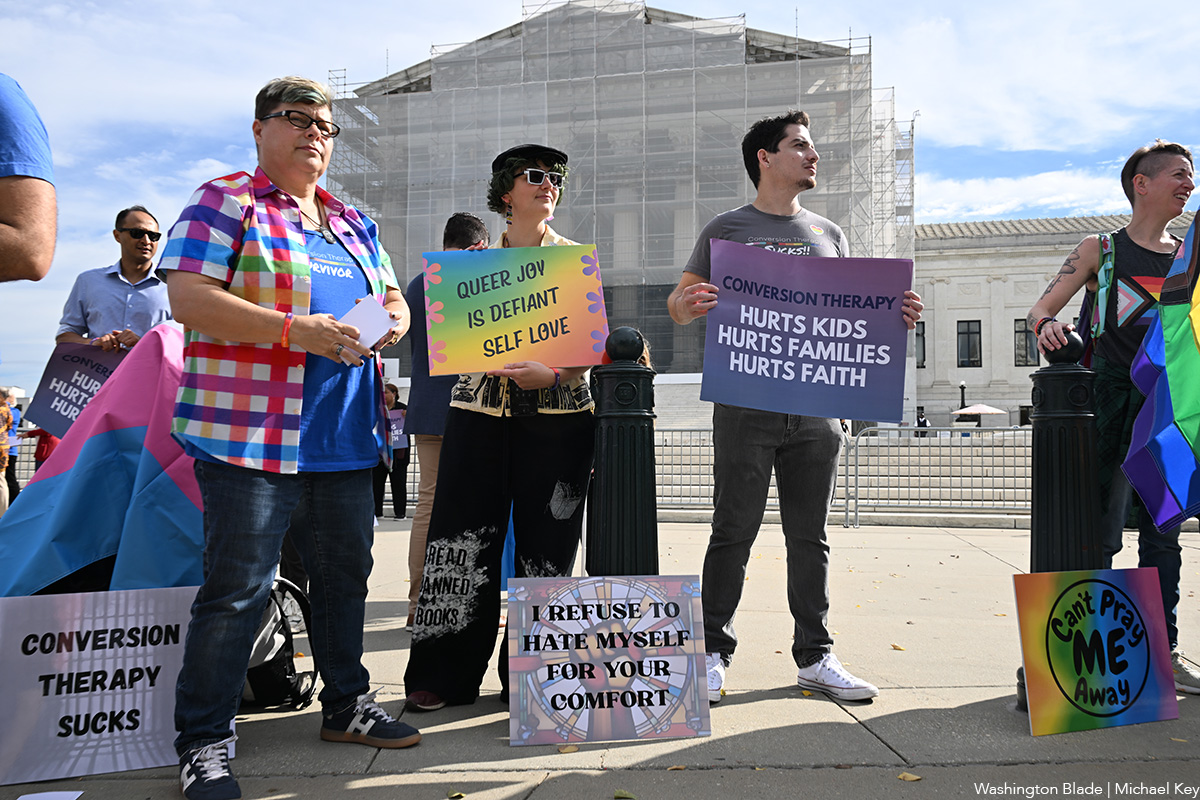
The Supreme Court is expected to issue several rulings this year that could have far-reaching consequences for LGBTQ rights nationwide. Two of the most closely watched issues involve transgender athletes in school sports and the legality of conversion therapy bans.
Two cases heard in 2025 involving transgender athletes in school sports—West Virginia v. B.P.J. and Little v. Hecox—are expected to receive rulings later this year. Oral arguments are scheduled for Jan. 13, with the Court poised to determine whether states can ban transgender girls and women from participating on girls’ sports teams.
Legal experts have warned that the decisions could carry broader civil rights implications beyond athletics, potentially reshaping interpretations of sex discrimination and Title IX protections across education and employment.
The Court is also expected to rule on the future of conversion therapy bans and whether such restrictions are protected under the First Amendment. In October 2025, the justices heard oral arguments in Chiles v. Salazar, a case that will determine whether state and local bans on conversion therapy for LGBTQ youth violate free speech or free exercise of religion protections. A ruling in favor of the plaintiffs could weaken or overturn bans that have been enacted in dozens of states and municipalities.
Federal policy changes
Several new federal policies are being implemented as the year takes shape, with some of the most immediate impacts falling on LGBTQ people. One of the most significant changes is the elimination of gender-affirming care coverage for federal employees.
The policy, put into place by President Trump’s Office of Personnel Management, eliminates health insurance coverage for most gender-affirming medical care in the Federal Employees Health Benefits (FEHB) and Postal Service Health Benefits (PSHB) programs. The change affects hundreds of thousands of federal workers and their families.
The Human Rights Campaign has filed a lawsuit against the OPM policy, alleging that the change violates Title VII’s ban on sex discrimination in employment. Advocates argue that the policy not only limits access to medically necessary care but also signals a broader federal retreat from LGBTQ-inclusive health protections.
Similar proposals are under consideration for the broader American public, including efforts to restrict Medicaid and Medicare coverage for gender-affirming care—moves that could disproportionately impact low-income transgender people, people with disabilities, and those living in rural areas.
Historic anniversaries
In 2026, several historic anniversaries will take place nationwide. The most prominent is the United States’ Semiquincentennial, marking 250 years since the Declaration of Independence. Events are planned across the country, from small-town commemorations to large-scale national celebrations in Washington, D.C.
Among the most anticipated events is the July 4 celebration commemorating 250 years since independence from Great Britain, which is expected to be one of the largest national events of the year.
However, the anniversary planning has already created ripple effects. Capital Pride—Washington’s annual Pride celebration—was forced to move from the second week of June to the third week after the White House announced plans for a large June 14, 2026 celebration on the South Lawn marking President Trump’s 80th birthday.
The White House said the event will include a large-scale Ultimate Fighting Championship (UFC) exhibition involving boxing and wrestling competitions, a decision that has drawn scrutiny from LGBTQ advocates amid ongoing concerns about federal priorities and messaging during a landmark year for the nation.
It also marks 11 years since SCOTUS ruled same-sex marriage is legally protected nationwide with Obergefell v. Hodges.
Minnesota
Tim Walz drops out of Minn. governor’s race
The longtime LGBTQ ally and Democratic party figure blames ongoing fraud investigations supported by Trump and the GOP for his withdrawal.

Minnesota Gov. Tim Walz announced Monday that he is withdrawing from the 2026 Minnesota governor’s race, citing what he described as political interference and attacks from Republican Party leaders.
Walz made the announcement on social media, where the post quickly gained traction, drawing more than 30,000 likes on Instagram and 23,000 reactions on Facebook.
In his statement, the incumbent governor directly blamed President Donald Trump and his allies, both in Washington and in Minnesota, for fueling what he characterized as politically motivated accusations of widespread fraud tied to federal nutrition programs in the state.
According to a 2024 ABC News story, more than 70 people have been charged as part of a “wide-ranging criminal conspiracy” that allegedly exploited two federally funded nutrition programs during the COVID-19 pandemic, resulting in more than $250 million in fraudulent claims.
“I won’t mince words here,” Walz wrote. “Donald Trump and his allies — in Washington, in St. Paul, and online — want to make our state a colder, meaner place. They want to poison our people against each other by attacking our neighbors. And, ultimately, they want to take away much of what makes Minnesota the best place in America to raise a family.”
In his announcement, Walz also cited recent reports from Somali American child care center operators in Minnesota who said they have faced violent threats and vandalism after right-wing YouTuber Nick Shirley posted a video alleging fraud at their facilities. Following the video’s release, the Trump-Vance administration cut federal child care funding nationwide.
Walz also criticized the federal government’s decision to withhold child care funding from states amid the allegations.
“They’ve already begun by taking our tax dollars that were meant to help families afford child care,” he added. “And they have no intention of stopping there.”
Last week, a Department of Health and Human Services official confirmed that the Trump administration is pausing child care funding to all states following the Minnesota allegations, stating that funds will be released “only when states prove they are being spent legitimately.”
“Republicans are playing politics with the future of our state,” Walz said. “And it’s shameful.”
Walz previously served as the Democratic vice presidential nominee alongside then–Vice President Kamala Harris during her unsuccessful 2024 presidential campaign.
Meanwhile, longtime Trump ally and MyPillow CEO Mike Lindell announced in December that he is running for Minnesota governor and has already received Trump’s endorsement.
Walz has been a longtime ally of the LGBTQ community, dating back to 1999, when he served as a football coach and teacher at Mankato West High School in Mankato, Minnesota, about 80 miles southwest of Minneapolis.
It is also possible that U. S. Sen. Amy Klobuchar (D-Minn.) is considering entering the race to succeed him.
National
Top 10 LGBTQ national news stories of 2025
Trump, Supreme Court mount cruel attacks against trans community
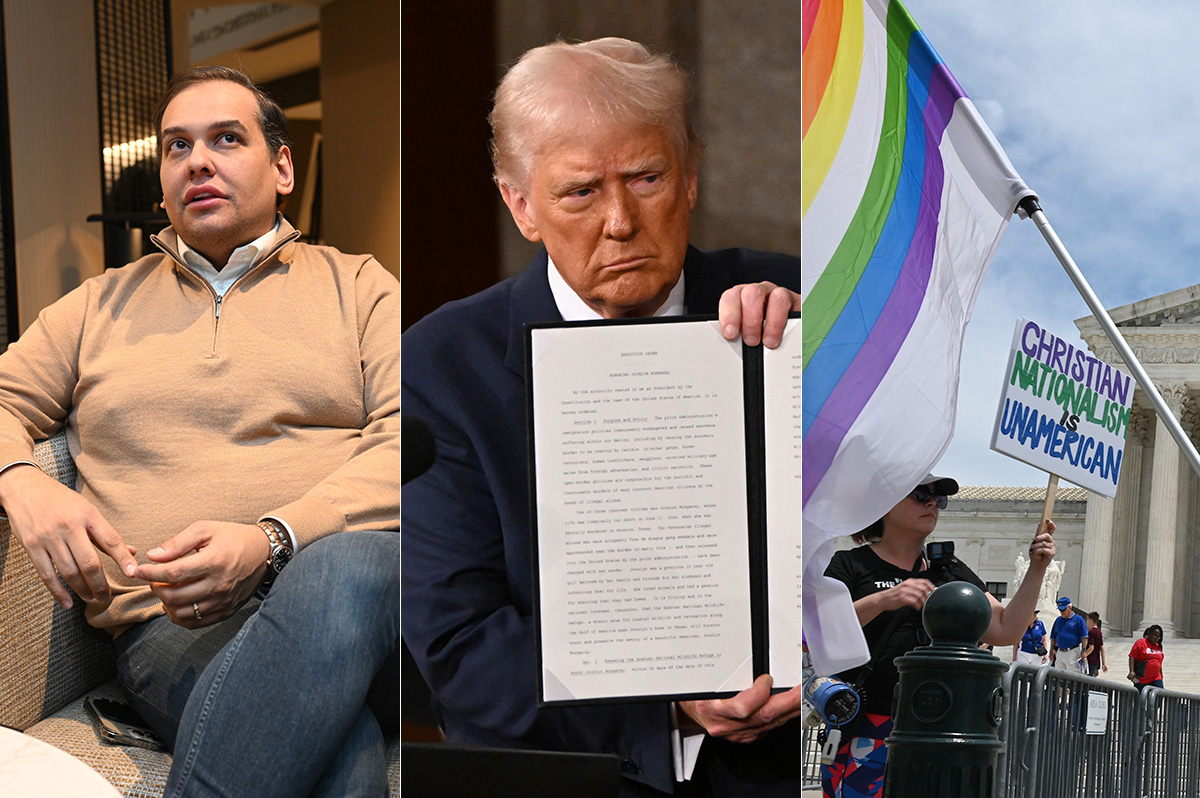
President Trump’s anti-LGBTQ agenda dominated national news in 2025, particularly his cruel attacks on trans Americans. Here are our picks for the top 10 LGBTQ news stories the Blade covered in 2025.
10. Trump grants clemency to George Santos
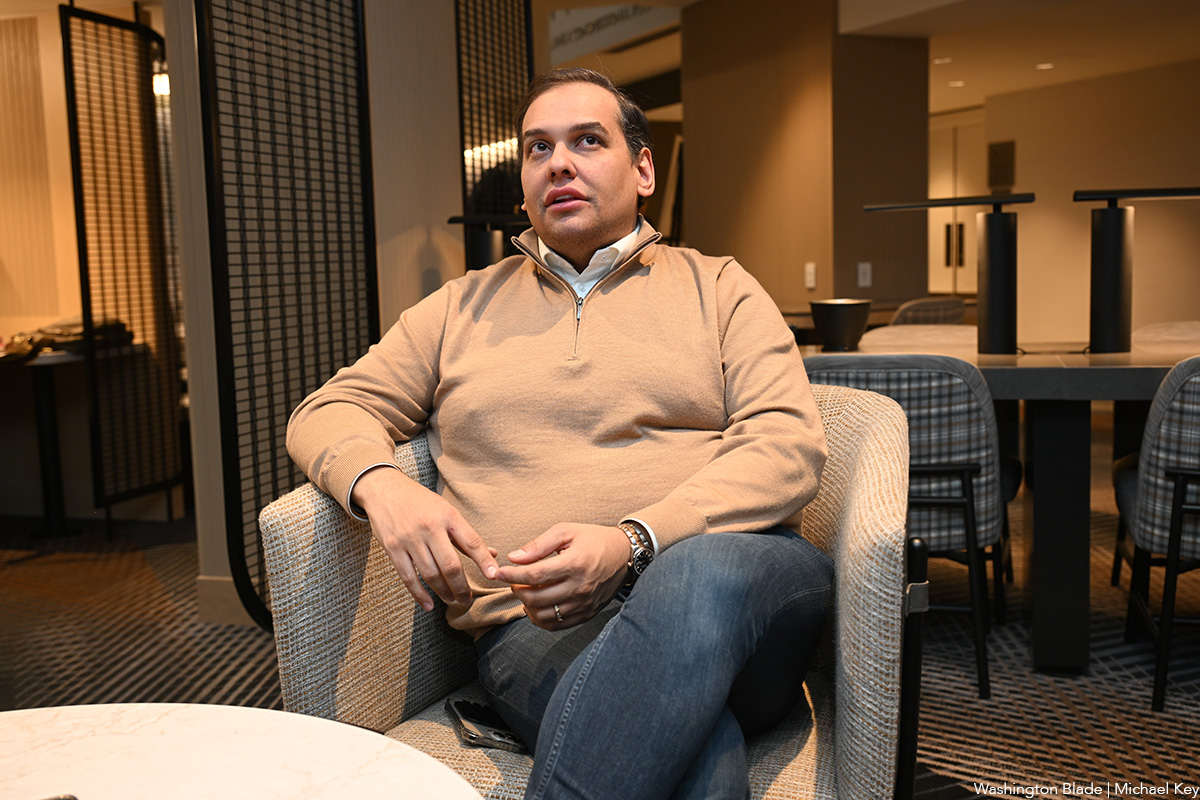
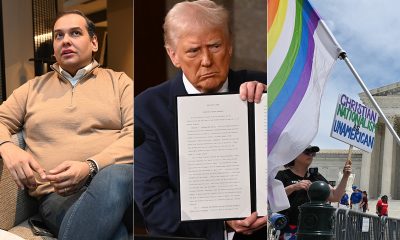
President Donald Trump granted clemency to disgraced former Long Island Rep. George Santos. Santos was sentenced to 87 months in federal prison after pleading guilty to wire fraud and aggravated identity theft and had served just 84 days of his more than seven-year sentence. He lied to both the DOJ and the House Ethics Committee, including about his work and education history, and committed campaign finance fraud.
9. U.S. Olympics bans trans women athletes
The United States Supreme Court decided in 2025 to take up two cases — Little v. Hecox and West Virginia v. B.P.J.— both of which concern the rights of transgender athletes to participate on sports teams. The cases challenge state laws under the Equal Protection Clause of the 14th Amendment, which prevents states from offering separate boys’ and girls’ sports teams based on biological sex determined at birth. Both cases are set to be heard in January 2026. The developments follow a decision by the United States Olympic & Paralympic Committee to change eligibility rules to prohibit transgender women from competing in women’s sporting events on behalf of the United States, following Trump’s Executive Order 14201, “Keeping Men Out of Women’s Sports.”
8. FDA approves new twice-yearly HIV prevention drug
The U.S. Food and Drug Administration on June 18 approved a newly developed HIV/AIDS prevention drug that needs to be taken only twice a year, with one injection every six months. The new drug, lenacapavir, is being sold under the brand name Yeztugo by pharmaceutical company Gilead Sciences. According to trial data, 99.9 percent of participants who received Yeztugo remained HIV negative. This emerging technology comes amid direct cuts to HIV/AIDS research measures by the Trump–Vance administration, particularly targeting international HIV efforts such as PEPFAR.
7. LGBTQ people ‘erased’ from gov’t reports
Politico reported in March that the Trump–Vance administration is slashing the State Department’s annual human rights report, cutting sections related to the rights of women, people with disabilities, the LGBTQ+ community, and more. Members of Congress objected to the removal of the subsection on “Acts of Violence, Criminalization, and Other Abuses Based on Sexual Orientation, Gender Identity or Expression, or Sex Characteristics (SOGIESC)” from the State Department’s Annual Country Reports on Human Rights Practices.
In a Sept. 9 letter to Secretary of State Marco Rubio, U.S. Reps. Robert Garcia (D-Calif.), Julie Johnson (D-Texas), and Sarah McBride (D-Del.) urged the department to restore the information or ensure it is integrated throughout each report, noting that the reports serve as key evidence for asylum seekers, attorneys, judges, and advocates assessing human rights conditions and protection claims worldwide.
6. Trump admin redefines ‘sex’ in all HHS programs
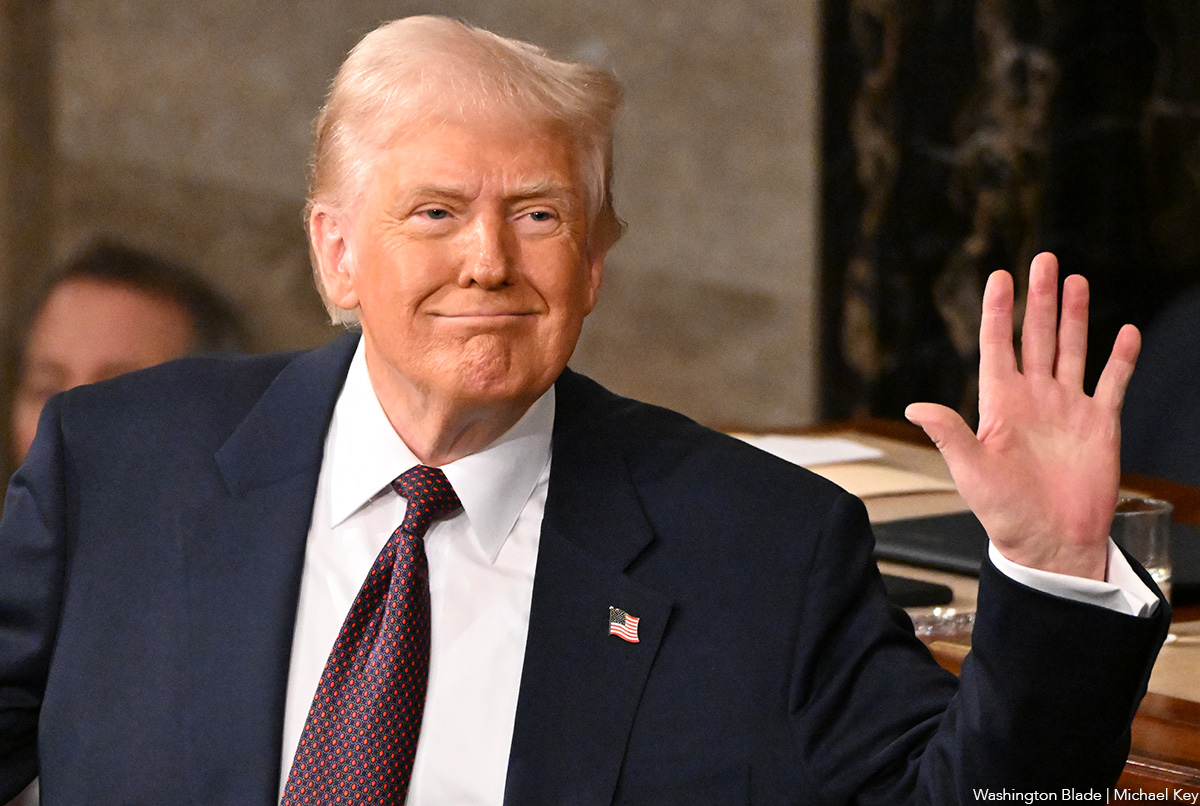
The Trump administration canceled more than $800 million in research into the health of sexual and gender minority groups. More than half of the National Institutes of Health grants scrapped through early May involved studies of cancers and viruses that disproportionately affect LGBTQ people.
The administration is also pushing to end gender-affirming care for transgender youth, according to a new proposal from the Department of Health and Human Services, NPR reported. The administration is considering blocking all Medicaid and Medicare funding for services at hospitals that provide pediatric gender-affirming care. “These rules would be a significant escalation in the Trump administration’s attack on access to transgender health care,” said Katie Keith, director of the Center for Health Policy and Law at Georgetown University.
5. FBI plans to label trans people as ‘violent extremists’
The Human Rights Campaign, Transgender Law Center, Equality Federation, GLAAD, PFLAG, and the Southern Poverty Law Center condemned reports that the FBI, in coordination with the Heritage Foundation, may be working to designate transgender people as “violent extremists.” The concerns followed a report earlier this month by independent journalist Ken Klippenstein, who cited two anonymous national security officials saying the FBI is considering treating transgender subjects as a subset of a new threat category.
That classification—originally created under the Biden administration as “Anti-Authority and Anti-Government Violent Extremists” (AGAAVE) — was first applied to Jan. 6 rioters and other right-wing extremists. Advocates said the proposal appears to stem from the false claim that the assassination of Charlie Kirk was committed by a transgender person.
4. Pentagon targets LGBTQ service members

Acting in agreement with the growing anti-LGBTQ sentiment from the Trump administration, during a televised speech to U.S. military leaders at Marine Corps Base Quantico in late September, Defense Secretary Pete Hegseth denounced past military leadership for being too “woke,” citing DEI initiatives and LGBTQ inclusion within the Department of Defense. During the 45-minute address, Hegseth criticized inclusive policies and announced forthcoming directives, saying they would ensure combat requirements “return to the highest male standard only.”
Since 2016, a Navy replenishment oiler had borne the name of gay rights icon Harvey Milk, who served in the Navy during the Korean War and was separated from service under other than honorable conditions due to his sexuality before later becoming one of the first openly LGBTQ candidates elected to public office. In June 2025, the ship was renamed USNS Oscar V. Peterson.
The U.S. Air Force also announced that transgender service members who have served between 15 and 18 years would be denied early retirement and instead separated from the military without benefits. Transgender troops will be given the option of accepting a lump-sum payout offered to junior service members or being removed from service.
In February, the Pentagon said it would draft and submit procedures to identify transgender service members and begin discharging them from the military within 30 days.
3. Trump blames Democrats, trans people for gov’t shutdown
Republicans failed to reach an agreement with Democrats and blamed them for the government shutdown, while Democrats pointed to Republicans for cutting health care tax credits, a move they said would result in millions of people paying significantly higher monthly insurance premiums next year. In the White House press briefing room, a video of Democrats discussing past government shutdowns played on a loop as the president continued to blame the Democratic Party and “woke” issues, including transgender people.
“A lot of good can come from shutdowns. We can get rid of a lot of things. They’d be Democrat things,” Trump said the night before the shutdown. “They want open borders. Men playing in women’s sports. They want transgender for everybody.”
2. Supreme Court joins attacks on LGBTQ Americans
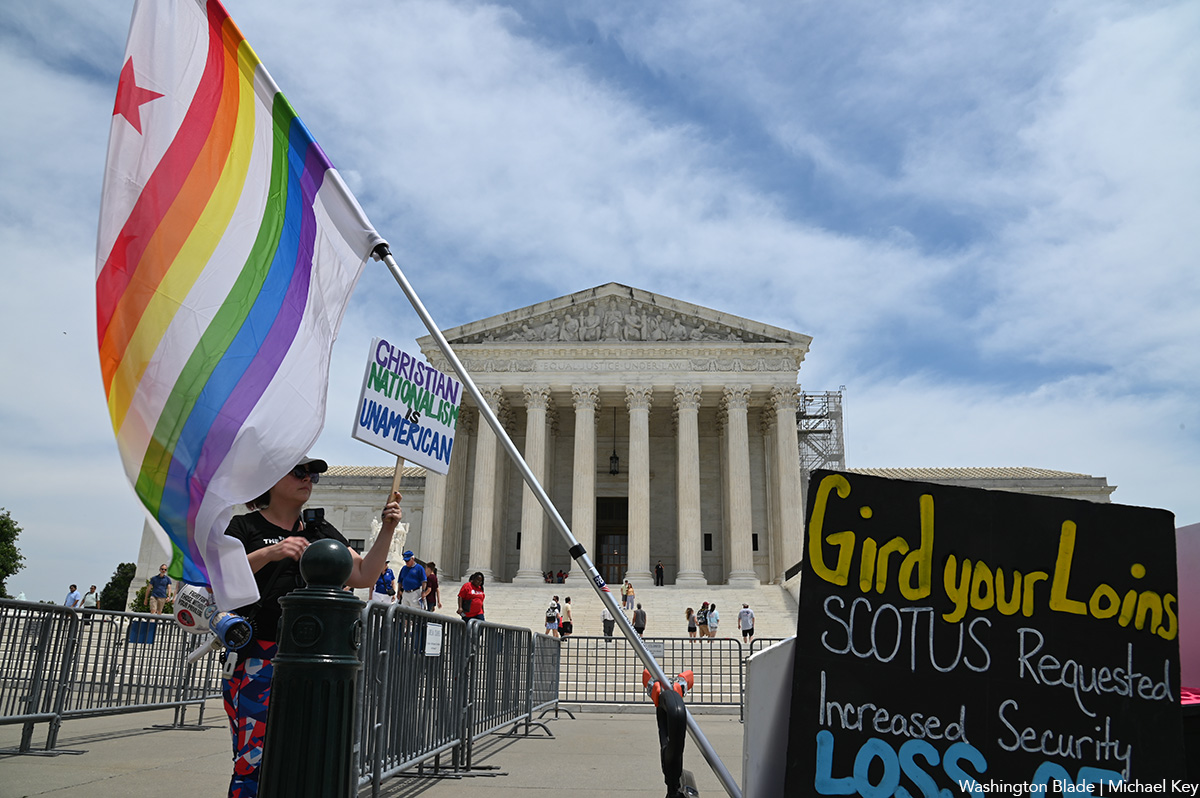
The U.S. Supreme Court issued multiple rulings this year affecting LGBTQ people. In Mahmoud v. Taylor (6–3), it ruled that public schools must give parents advance notice and the option to opt children out of lessons on gender or sexuality that conflict with their religious beliefs. The case arose after Montgomery County, Md., schools added LGBTQ-inclusive storybooks to the elementary curriculum.
In June, the court upheld Tennessee’s ban on gender-affirming care for transgender minors, protecting similar laws in more than 20 states. Lawmakers and advocates criticized the ruling, and a coalition of seven medical associations warned it strips families of the right to direct their own health care.
The Court also allowed the Trump administration to enforce a ban on transgender military personnel and to implement a policy blocking passports with “X” gender markers, with the federal government recognizing only male and female designations.
1. Trump inaugurated for second time
President Donald Trump became the 47th president after winning Wisconsin, securing 277 of the 270 electoral votes needed. His guidebook, Project 2025, outlined the Republican Party’s goals under his new leadership, with a particular focus on opposing transgender rights.
Trump nominated openly gay hedge fund executive Scott Bessent as U.S. Treasury Secretary, a role he eventually assumed. Bessent became the highest-ranking openly gay U.S. government official in American history.

Honorable mention: The war on rainbow crosswalks escalates around the country
Florida Gov. Ron DeSantis (R) ordered state transportation officials to remove a rainbow-colored crosswalk in Orlando next to the Pulse gay nightclub, where 49 mostly LGBTQ people were killed in a 2016 mass shooting. The move follows a July 1, 2025, announcement by U.S. Transportation Secretary Sean Duffy that, with support from President Trump, the department adopted a “nationwide roadway safety initiative” that political observers say could be used to require cities and states to remove rainbow street crosswalks.

Colombians protest against Trump after he threatened country’s president

Kennedy Center renaming triggers backlash

New interim D.C. police chief played lead role in security for WorldPride

2026 Most Eligible LGBTQ Singles nominations

Gay Venezuelan man who fled to Colombia uncertain about homeland’s future

The year in photos

Safer Ways to Pay for Online Performances and Queer Events

Two pioneering gay journalists to speak at Thursday event

Queer highlights of the 2026 Critics Choice Awards: Aunt Gladys, that ‘Heated Rivalry’ shoutout and more