Living
In shakeup, HRC poised to lead Md. marriage effort
Longtime activist Dana Beyer will serve as executive director of a new group, Gender Rights Maryland, which will work to pass a gender identity anti-discrimination bill; HRC poised to lead revamped Md. marriage effort.

The Human Rights Campaign is expected to emerge as the coordinator of a reorganized coalition of national and local LGBT groups pushing for passage of a same-sex marriage bill in the Maryland Legislature next year, according to sources familiar with the effort.
In a separate development, a new statewide transgender advocacy organization called Gender Rights Maryland announced its presence on the Maryland political scene this week, saying it will take the lead role in pushing for a “comprehensive” gender identity non-discrimination bill.
Attempts failed earlier this year to pass same-sex marriage and gender identity bills in the Maryland Legislature. Now, insiders familiar with LGBT politics in the state say these two new developments represent a shakeup of the established order, where the LGBT group Equality Maryland led lobbying efforts on behalf of the two bills for the past seven years.
Meanwhile, rumors that HRC has offered to make a significant cash contribution to the financially troubled Equality Maryland in exchange for the group allowing HRC to select its next executive director were heightened this week when HRC’s regional field director, Sultan Shakir, began working at Equality Maryland’s headquarters office in Baltimore on Monday.
“HRC is working with local and national groups to help build a strong campaign to pass Equality Maryland’s entire legislative agenda next year,” said HRC spokesperson Fred Sainz. “While HRC currently has a field staffer working in the Baltimore headquarters to support their new executive director, there are no set plans to keep him there,” he said.
“Reports of large cash contributions in return for certain actions are completely false as evidenced by the fact that Equality Maryland has a leader,” Sainz told the Blade on Wednesday.
Sainz was referring to the selection last month by the Equality Maryland board of LGBT rights advocate Lynne Bowman of Ohio as Equality Maryland’s interim executive director. The board, which said it was conducting a search for a permanent executive director, named Bowman to the interim post after firing the previous executive director, Morgan Meneses-Sheets.
Meneses-Sheets’ dismissal prompted the group’s development director and chief fundraiser, Matthew Thorn, to resign in protest, raising questions about whether the staff turmoil would further hinder the group’s finances.
Two sources familiar with Equality Maryland who spoke on condition that they not be identified, said some Equality Maryland staffers and board members reported that HRC had expressed an interest in installing HRC’s Shakir as the lead decision maker for Equality Maryland regardless of the title he would assume.
The sources said Shakir is well-liked by most LGBT activists in Maryland who know him and is viewed as a qualified strategist on LGBT issues. But they said reports of HRC arranging for one of its chief lieutenants to assume a lead role in Equality Maryland’s day-to-day operations would be viewed by some Maryland activists as an intrusion by a national group into the affairs of an established state organization.
“Sultan is here to look at, with me, which is part of the job I was brought in to do, how the marraige campaign was run during the beginning of this year and to start to make some plans for how we can move foward,” Bowman said on Wednesday. “He is not an employee of Equality Maryland. He’s not going to start running Equality Maryland. It’s simply a partnership extra hand on deck as we move things forward.”
Bowman noted that Shakir worked on the marriage campaign during the Maryland legislative session this year as part of HRC’s field team.
“He has a history and perspective that I don’t have,” she said.
Patrick Wojahn, a member of the board of the Equality Maryland Foundation, which operates out of the same offices as Equality Maryland, said it wasn’t unusual for a staff member of HRC – which he noted is one of Equality Maryland’s national coalition partners – to be spending time in the Equality Maryland office.
“But I can tell you Sultan Shakir has no formal relationship with our organization right now and there is no intention to give him one,” Wojahn said. “I can say that we’re working together with HRC. We appreciate their support but our relationship is as a coalition partner with them and no more,” he said.
Evan Wolfson, executive director of the national same-sex marriage advocacy group Freedom to Marry, confirmed that his organization is among the national groups working with HRC to put together a revamped and strengthened Maryland marriage equality coalition.
“Freedom to Marry is going to look closely together with HRC, with Equality Maryland, with local leaders and other players at how best to set up the team effort to get the job done,” he said. “I look at this as a really positive thing.”
Wolfson acknowledged that many in the LGBT community were disappointed over a decision earlier this year to recommit Maryland’s same-sex marriage bill to committee in the state’s House of Delegates after it passed in the State Senate by a comfortable margin. Recommitting the measure to committee killed it for the legislature’s 2011 session, which ended April 11.
Advocates for the bill were divided over the decision to recommit it to committee. Some blamed the national groups — including HRC and Freedom to Marry — for pressuring Equality Maryland and the seven gay or lesbian members of the House of Delegates to go along with a decision to pull the bill rather than risk a losing vote.
“We decided we needed a little more time to make the case and pick up the extra couple of votes that were short,” Wolfson told the Blade on Tuesday. “And so what we’re looking at now is how we do that in the strongest, best way possible to pick up where we left off, fix the things that we need to do better and make the case to pick up the remaining votes.”
He said representatives of the emerging new coalition are already making plans for an aggressive outreach to the black community in Prince George’s County and other parts of the state where black lawmakers were reluctant to support the bill following opposition from black churches.
“We believe there is actually significant African-American support in Maryland and there are certainly many African-American families and allies who have important stories to tell that can help shore up the votes,” Wolfson said. “And we want to get those stories out there. So the work over the next several months is to do exactly that.”
Beyer to head new trans group
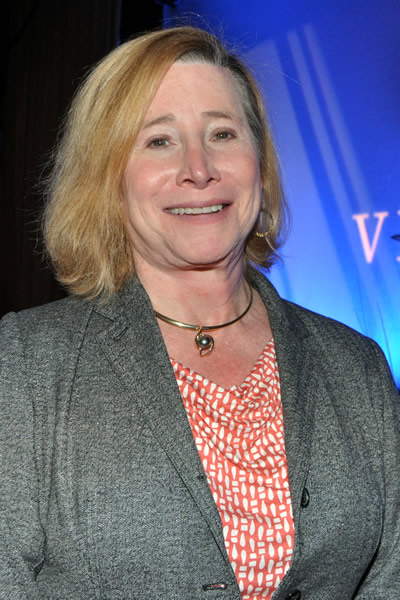
Dana Beyer (Blade file photo by Michael Key)
In a statement released on Tuesday, the newly formed group Gender Rights Maryland announced that former eye surgeon and nationally recognized transgender rights advocate Dana Beyer will serve as the group’s executive director.
Sharon Brackett, president and CEO of a Maryland-based systems engineering company, will serve as chair of the group’s board, a statement released by the group said.
Three other founding board members include Donna Cartwright, co-president of Pride AT Work, an LGBT group within the AFL-CIO; Caroline Temmermand, division chief for Parks and National Resources for Arlington County, Va.; and Alex Hickcox, former board member of Equality Maryland.
“The purpose of Gender Rights Maryland is to promote civil rights, education, tolerance, equality and acceptance on the basis of sex and gender identity/expression in the State of Maryland,” the group said in its statement. “Gender Rights Maryland’s initial legislative goal is to see the passage of a comprehensive gender identity anti-discrimination bill by the end of the 2012 legislative session.”
Beyer told the Blade that the new group plans to work closely with Equality Maryland, which led efforts to push for the gender identity bill this year and in past years.
But she noted that the staff shake-up at Equality Maryland in April, when the board fired Meneses-Sheets and its chief fundraiser resigned in protest, has raised questions about whether it has the capability to begin lobbying effectively on the gender identity bill between now and January, when the legislature begins its 2012 session.
Beyer said one of the group’s first objectives will be to raise funds needed to hire a professional lobbyist to coordinate a campaign on behalf of the gender identity bill.

Advice
We’re getting married but our parents object
Will their disapproval and shortcomings derail our hopes for a happy life?

Dear Michael,
My girlfriend and I are getting married! We’re really excited, but we’ve got some big concerns as well.
All of our parents have had multiple marriages. I think 10 between the four of them. So we don’t have much in the way of role models for a successful marriage.
Also, we don’t have any parental support. Except for one of my ex-stepmothers whom I’m close to, none of our parents are happy that their daughter is getting married to another woman. That’s an understatement. Religious objections, moral objections, being angry that we’re “embarrassing them,” these are some of the things we’ve been told.
We do have some supportive siblings and step-siblings, which is great, although they’re getting pushback from parents about attending our wedding.
Given all this, what suggestions do you have for how we can make a go of our marriage? The divorce rate is over 50 percent for everyone. With all this baggage, we’re worried that we have even less of a chance. Thank you.
Michael replies:
First, congratulations!
Regarding your lack of family support: I’m sorry that you both have to deal with so much criticism, disdain, and judgment. Please don’t let your parents’ negativity influence your own views of yourselves and your relationship. Focus instead on the love and caring you will get from friends, community and the family who are present on your big day (I hope your siblings are brave enough to make it!). Being the recipients of that support is one of the sweetest parts of getting married.
Don’t worry about the high divorce rate. While some couples really shouldn’t stay married, lots of people get divorced because they don’t know what is required to have a good marriage, or don’t put in the effort to do so. That does not have to be your fate.
Similarly, your parents’ terrible track record doesn’t mean you have to repeat their marital histories. The skills to have a strong marriage are learnable.
To that end, here are the best tips I can offer the two of you:
- If you want a loving marriage, be a loving partner. Don’t snipe, sulk, or do the silent treatment when you’re mad. Unconditional love is largely a myth. Even our dogs won’t love us if we are mean to them.
- Don’t spend much time or effort focusing on what your spouse is doing wrong or how she is letting you down. Doing so leads to resentment and feeling like you’re a powerless victim. Instead, ask yourself what your own contribution is to the problem, and what you can do to make things better. You don’t have much power over your partner, but you have a lot of power over yourself.
You can certainly ask your spouse for what you’d like from her, but don’t expect to always get it. And don’t base your own wellbeing or good behavior on what your partner does or doesn’t do.
- Because any two people are always different in some important ways, there is no way that you both can always want the same things, or think the same way, or have the same priorities. Accept this! There has to be room for each of you to be an individual, not only part of a couple.
- Be generous as often as you can be, and have a boundary when it’s important for you to have one.
- When your spouse states that she has a boundary, respect it. Do not push her to back off from something that is important to her.
- Don’t keep score, including how much more you do or how often you don’t get your way. Instead, work together to have a collaborative marriage where you work together to make decisions and get things done.
- Strive not to weigh the relationship down with neediness. Once we’re grownups, it’s mainly our own job to soothe ourselves. You don’t want to burn out your partner’s empathy.
Of course you can ask for a hug, love, reassurance, support, advice, and a shoulder to cry on when you’re down. Just aim be the first person you turn to when you’re upset, and do your best to keep your own mood steady.
- Do not wait for your significant other to go first. Not on planning a date, not on apologizing, not on loading the dishwasher or cleaning the bathroom. If you wait for her to make the first move, you will have a resentful relationship where nothing good ever happens.
Keeping these principles part of your operating system, even — and especially — at those moments when your spouse isn’t doing her best, will go a long way toward helping you build and maintain a loving and happy marriage.
Michael Radkowsky, Psy.D. is a licensed psychologist who works with couples and individuals in D.C., Maryland, Virginia, New York, and all PSYPACT states. He can be found online at michaelradkowsky.com. All identifying information has been changed for reasons of confidentiality. Have a question? Send it to [email protected].
Technology
E-INFOSOL leaders encourage youth to pursue tech careers
Service-disabled, veteran-owned business based in Rockville
The technology field can be a gateway to economic mobility.
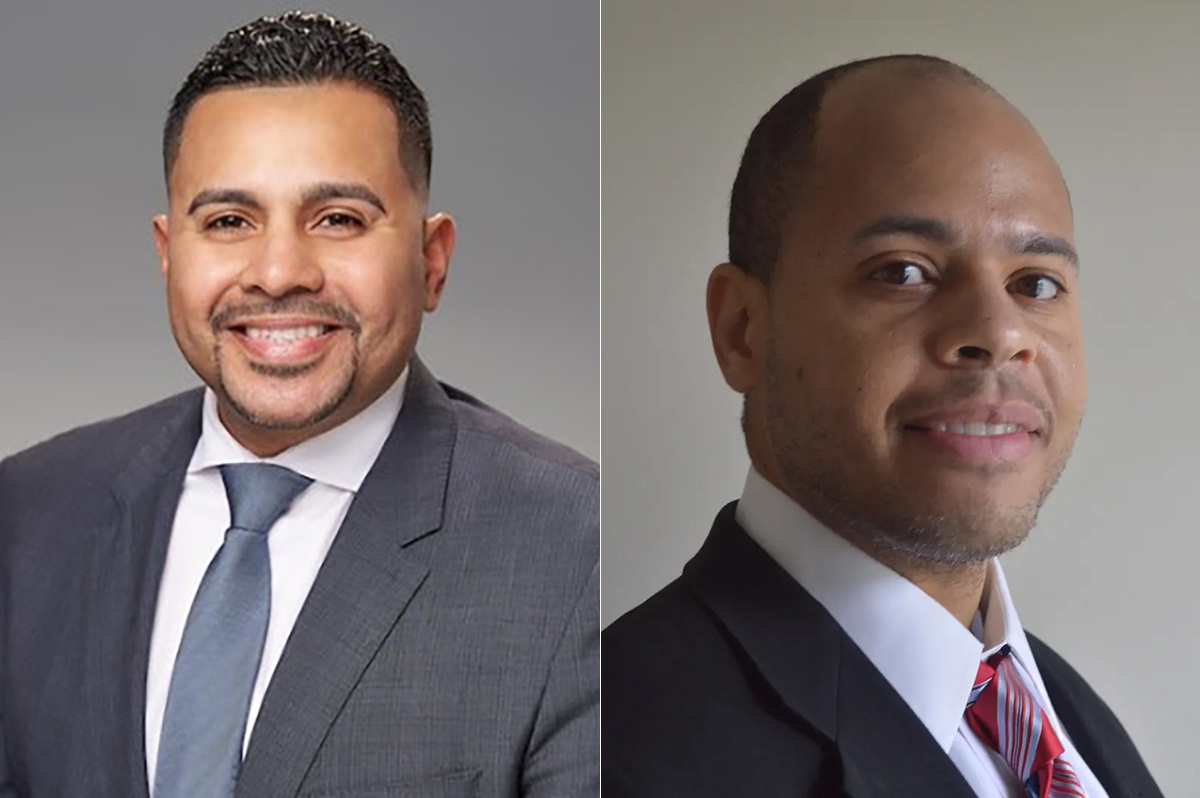
At E-INFOSOL, a service-disabled, veteran-owned business based in Rockville, Md., CEO and co-founder Fredy Pesante and Vice President of Service Delivery Charles Barnett say internships, mentorship and free online resources can help young people break into IT. The U.S. Bureau of Labor Statistics projects an average of 317,000 job openings per year in the field until 2034.
Led by Iraq War Army veteran Pesante, E-INFOSOL stands out for its efforts to increase opportunities for veterans, people of color and others in under-resourced communities to find careers in tech and its mental health support for employees.
Pesante and Barnett spoke with Youthcast Media Group about technology careers. The executives also talked about the value of government security clearances, stressing that the choices youth make today — including their digital footprints and personal conduct — can shape tech workforce opportunities.
The interview has been edited for clarity and length.
Can you describe what E-INFOSOL does and what your role is there?
BARNETT: We focus mainly [on] providing IT services to the federal government. And those IT services consist of cloud engineering, cloud development, cloud security, app development and cybersecurity, and a lot of infrastructure virtualization-type work. My role is [vice president] of service delivery, responsible for ensuring that we are providing great customer service to our customers [and] that we are meeting our deliverables and our requirements to our customers. But also, one of the key focuses is ensuring that our employees have the tools [and] resources to be successful, and that includes coaching, training and developing our employees, and obviously treating them like they want to be treated.
Is IT a career that can help reverse the cycle of poverty in low-income parts of the D.C. area? What more would need to be done to potentially get more youth access to the right technology and training?
BARNETT: One thing we’ve got to ensure is that we, as professionals that have been through it, that have had a lot of experience in the IT space, provide that mechanism to bring folks along with us. That is, exposing our youth to information technology at a young age. If we can show that it’s very interesting, and it’s beneficial, and if they are committed to it and they show a sense of pride and commitment, I think it works out for a lot of people that are coming up from disadvantaged communities that don’t have technology within the house and who don’t have mentors that come from the technology field.
PESANTE: I still think internships work well for high school, even college. IT certifications are still something in demand in specific areas … Charles and myself, we’re part of the Technology Advisory Board at [Montgomery College] and they offer free resources as well to give an advantage to students that don’t have a career path. So find a way to leverage those local resources that are available and try to capitalize on those. IT is such a great field because even though it’s great to have an undergraduate (degree), that is not always a full basis into having an IT career. So you could start in high school … There’s a lot of free stuff online. There’s a lot of YouTube videos. There’s so many resources. To be honest, there’s even now AI that can really teach you [and] it’s free to a certain level that you could use.
As a veteran-led company with a significant veteran workforce, how does E-INFOSOL support employee well-being and mental-health awareness?
PESANTE: Approximately 35 percent to 40 percent of our employees are veterans. Veterans often gravitate toward working with one another because we share a mission-focused mentality and a commitment to getting the job done.
Mental health has always mattered to us, but it became even more personal after we lost one of our respected leaders, a fellow veteran who had battled mental illness. I worked closely with his family to help honor his story and legacy.
That experience reinforced the importance of supporting mental health across our entire workforce. We encourage managers to maintain meaningful contact with employees, provide appropriate training, and connect people with available resources. We want our actions to match what we say about being a people-first company. Our employee retention has remained strong, and I believe the way we care for our people has contributed to that.
How does getting or having a U.S. government security clearance help? How would a young person pursue getting a security clearance, and what should they keep in mind if they plan to do so?
PESANTE: We live in a world of social media. Make sure you’re … not going to be concerned with somebody finding you on the Internet behaving a certain way. Even though, in some locations, drugs like medical marijuana and what not are considered legal, [that is] not [the case] in the federal government. The use of any substances that could be mind-altering, that’s not a thing [that’s allowed] in the federal government. Also, from a legal perspective, from a criminal background perspective, that’s something that any checkup is going to come up [with], so [make] sure that you’re behaving in a manner exemplifying honesty, reliability, sound judgment, responsible conduct, and trustworthiness. The best thing for getting clearances at that early jump is internships. We’ve been able to get people clearances through the internship process. After a person fits a specific requirement, you train them and they get a government clearance, and that helps them have a head start. When I moved out here after living in Puerto Rico and I was in the Army, I had a clearance. I was able to find a job quickly.
Any other advice for young people considering this path?
PESANTE: I would say go for it. As minorities, there are a lot of external factors we can’t control, but nobody can ever stop you if you’re great at what you do, if you have a strong work ethic and if you put a lot of effort into making the best out of yourself. It’s never too early to work on yourself and look for ways to work on your professional career, work on your soft skills… Make sure you are working with peers and surrounding yourself with the right people throughout your whole life. I had a mentor myself when I started in the business — Carlos Rivera. He’s from Puerto Rico. He was a veteran. And that always helped me out, having somebody that you want to aspire to [be].
BARNETT: Do not be afraid to fail. You know you’re going to make mistakes. People around you are going to make mistakes. Learn from it, and learn from that, and don’t allow people to impact your goals and objectives. You set your path and if you set your path, you’re going to go a very long way, and if you’re really committed and continue to establish relationships along your entire path, you’re going to reap the benefits of ensuring that you are in a position to take advantage of opportunities that are in front of you.
Joseph Jackson is in the class of 2027 at Bard High School Early College DC, one of Youthcast Media Group’s partner schools. Shreya Jyotishi, YMG Assistant Manager of Content and Programs, also worked on this story.

Remember when buying a new car didn’t require the financial stamina of a “Succession” character? This summer, the average new-vehicle price hit $49,758—basically $50,000 with a little lipstick on it. That makes the Kia K4 hatchback and Nissan Kicks especially refreshing. Neither requires a second mortgage, a trust fund or a makeover to look good. And both prove you can still buy a new vehicle without selling your soul — or your vacation plans.
KIA K4 HATCHBACK
$25,000
Mpg: 28 city/34 highway
0 to 60 mph: 9.1 seconds
Cargo space: 22.2 cu. ft.
PROS: Edgy exterior. Roomy interior. User-friendly controls.
CONS: So-so base engine. Pricy turbo. No all-wheel drive.
WHAT’S NEW: Basically everything. The K4 hatchback debuted earlier this year, joining the K4 sedan.
Kia’s stylish five-door K4 boasts three trim levels. The first two use a capable four-cylinder engine, while the top-of-the-line model comes with a turbo.
That turbo provides some genuine zip, though it won’t blow your socks off. Think Janelle Monáe in a tailored suit, not Brad Pitt arriving at the F1 racetrack in a fireproof jumpsuit.
The real star, though, is the design. Sleek. Upscale. A tad mysterious.
Inside, another surprise: vast legroom and storage. Fold the backseats and you can toss in the usual road-trip clutter, plus that regrettable piece of furniture you bought after watching one too many HGTV shows.
Technology is also a bonus, including a digital key that lets you use a smartphone or smartwatch as a direct key fob. You can even share this digital key with friends or family. Just don’t share it with anyone who often loses their actual keys.
Despite some SUV vibes, the K4 remains unapologetically car-like. It sits lower. Feels more conventional. And offers hatchback practicality without itching to conquer the Rockies.
The biggest downside? No all-wheel drive.
Still, for shoppers who crave style, space and gadgetry, the K4 won’t break the bank. To me, it’s like finding a designer jacket at a thrift shop.
NISSAN KICKS

$23,000
Mpg: 28 city/35 highway
0 to 60 mph: 8.9 seconds
Cargo space: 23.9 cubic feet
PROS: Dashing design. Safety gear galore. All-wheel drive.
CONS: Bit pokey. Noisy engine. Limited rear visibility.
WHAT’S NEW: Redesigned last year with a bit more power, bigger cabin and bold looks, Nissan leaves the winning formula alone.
Like the Kia K4, the Nissan Kicks comes in three trims levels. But it also includes all-wheel drive — a nice plus when navigating snow, sleet or cratered alleys.
There’s an extensive suite of active and passive safety features. And the high ground clearance improves driver visibility, which is somewhat hindered in the back by thick roof pillars.
Styling is tastefully flamboyant. Dramatic lighting. Two-tone finishes. Cheerful, without being cartoonish. Miranda Priestly would approve.
Power, though, is more akin to Miranda’s art director Nigel Kipling. Dependable. Functional. Just not enthusiastic.
Inside, the mod cabin has large 12.3-inch displays, wireless smartphone connectivity and charging, and “zero gravity seats” designed to reduce driver fatigue and stiffness. Add in the stunning Bose Personal Plus audio system, with 10 speakers—including those integrated into the headrests—for an immersive 360-degree sound experience.
The Kicks doesn’t try to be rugged or luxurious. It simply offers a lot of everyday usefulness in a small package.
There is a trade-off. The engine gets noisy when pushed, and there are sportier (often pricier) competitors. But that’s hardly a crime. Not every vehicle needs to perform catwalk struts down the street.

PHOTOS: Miss Gay Old Bay

SUNFESTIVAL takes center stage as Rehoboth Beach closes out summer

Anne Arundel schools now need parent permission to call trans students by preferred names

Shooting outside gay bar in Ariz. leaves three dead

‘People don’t see me. They see a trend’

San Francisco, long a queer safe haven, remains competitive for homebuyers

Trans, nonbinary Americans find refuge in the Netherlands

Calendar: August 28-September 3

‘Teenage Sex and Death’ has never been more entertaining

Actor Tim Curry dies at 80
-

 California4 days ago
San Francisco, long a queer safe haven, remains competitive for homebuyers
-
Calendar5 days ago
Calendar: August 28-September 3
-
Netherlands5 days ago
Trans, nonbinary Americans find refuge in the Netherlands
-
Movies5 days ago
‘Teenage Sex and Death’ has never been more entertaining