
Arts & Entertainment
A lovable wooly tale
Lesbian leaves city life behind to run sheep farm

 You tried everything.
When you had trouble with insomnia the other night, it seemed like nothing would lull you back to sleep. Warm milk tasted bad. That previously boring book on your bedside table suddenly turned intriguing. Even infomercials held your interest, so you started counting sheep.
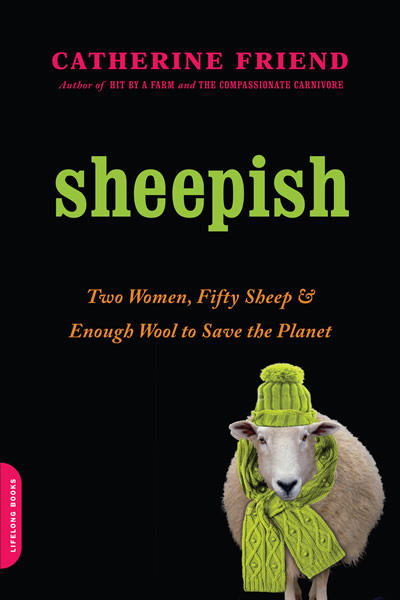
Then you got to wondering — why sheep? Why not count cows or dogs? Is it because sheep are, well, like sheep? Author Catherine Friend wondered that herself because she has a flock of them on her Minnesota farm, and in her new book “Sheepish,” she writes of the good and the ba-a-a-ad, the wild and the wooly.
Though her grandmother raised them on a Montana ranch, Catherine Friend had little experience with sheep – that is, until her partner, Melissa, wistfully admitted her dream of owning a farm and raising the critters.
And thus it came to pass that Catherine had a little lamb.
Fifteen years later, Friend has morphed from City Girl to Backup Farmer. It hasn’t been a gentle-as-a-lamb transformation, but Friend now appreciates her flock.
Ovines have a long history in North America, she says. Sheep were shipped to the New World in 1609 and within 60 years, there were more than 100,000 sheep on our shores. English lawmakers tried to outlaw the sale of wool but colonists managed to outwit the Brits and wool gathering became patriotic.
Sheep “show up everywhere in our language,” Friend says, and they’re good for supper, of course, but it’s their wool that she fell in love with.
Because of the price of fleece, she says, many farmers shear their sheep and throw the wool away. Most small operations won’t get rich on their wool, but Friend discovered the rich colors of wool dyes. Although she first makes fun of “fiber freaks” (knitters who bleat rhapsodically about wool fibers), she couldn’t wait to see what “her sheep” produced.
But life on the farm isn’t always laid back. Where there’s livestock, “there’s dead stock,” says Friend. Animals, like humans, don’t always do what you want them to do; they’re never born at convenient times; and sometimes, they get sick. When these things happen, even Backup Farmers do their best for their animals – even if it means giving those animals up.
Imagine a serene pasture filled with contented (nameless) sheep. Then imagine a reluctant shepherdess at the helm, add llamas, cats and dogs, chickens and a peacock, frisky calves, knitters, and Elvis, and you’ve got a good yarn called “Sheepish.”
Author Catherine Friend gives her readers a sense of the bucolic. She lulls us into total serenity with her poetic descriptions of her flock and then she knocks us upside the funny bone with asides that are dyed-in-the-wool hilarious. In between, Friend has a way of bringing tears to our eyes before she pulls us back to the funny farm.
If a taste of the country is what you crave this summer, if you’re a farmer or a wannabe, a knitter, or just love a wooly tale, here’s a book you’ll enjoy. “Sheepish” is perfect for ewe.
‘Sheepish: Two Women, Fifty Sheep & Enough Wool to Save the Planet’
By Catherine Friend
$16
263 pages
Theater
Round House explores serious issues related to privilege
‘A Jumping-Off Point’ is absorbing, timely, and funny
‘A Jumping-Off Point’
Through May 5
Round House Theatre
4545 East-West Highway, Bethesda, Md.
$46-$83
Roundhousetheatre.org
In Inda Craig-Galván’s new play “A Jumping-Off Point,” protagonist Leslie Wallace, a rising Black dramatist, believes strongly in writing about what you know. Clearly, Craig-Galván, a real-life successful Black playwright and television writer, adheres to the same maxim. Whether further details from the play are drawn from her life, is up for speculation.
Absorbing, timely, and often funny, the current Round House Theatre offering explores some serious issues surrounding privilege and who gets to write about what. Nimbly staged and acted by a pitch perfect cast, the play moves swiftly across what feels like familiar territory without being the least bit predictable.
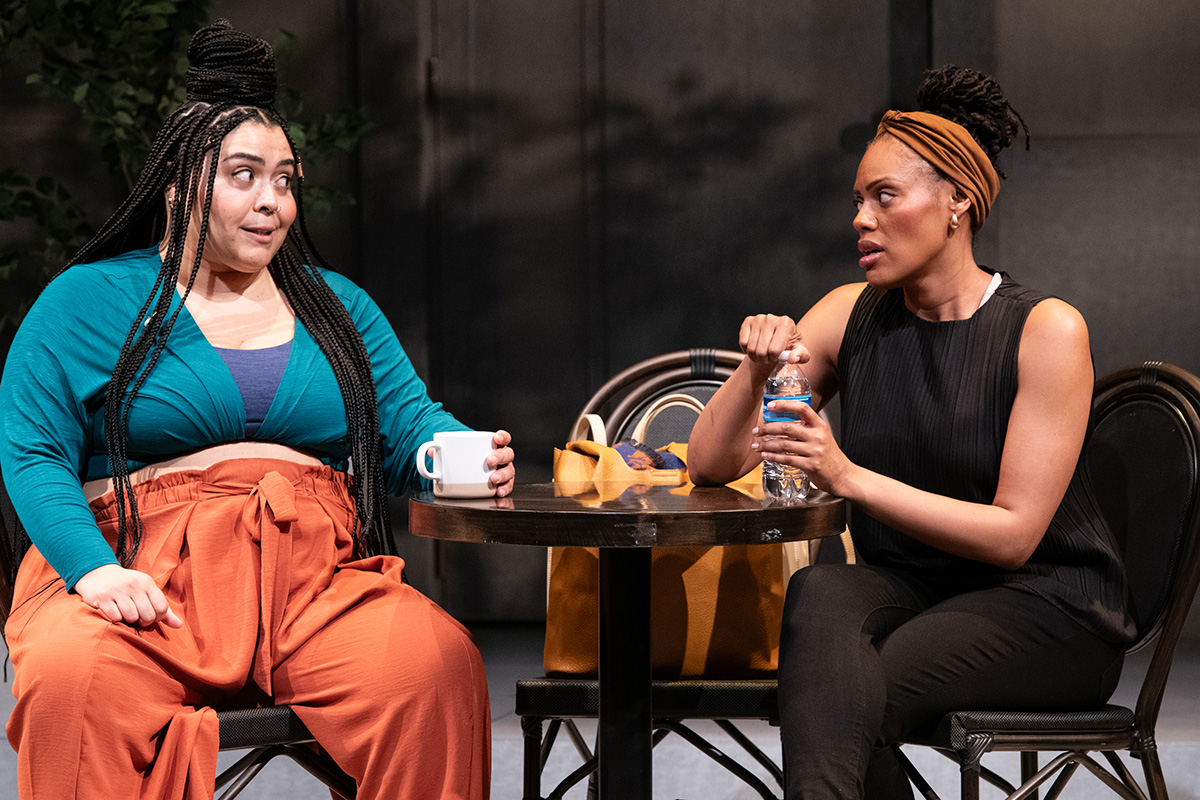
After a tense wait, Leslie (Nikkole Salter) learns she’s been hired to be showrunner and head writer for a new HBO MAX prestige series. What ought to be a heady time for the ambitious young woman quickly goes sour when a white man bearing accusations shows up at her door.
The uninvited visitor is Andrew (Danny Gavigan), a fellow student from Leslie’s graduate playwriting program. The pair were never friends. In fact, he pressed all of her buttons without even trying. She views him as a lazy, advantaged guy destined to fail up, and finds his choosing to dramatize the African American Mississippi Delta experience especially annoying.
Since grad school, Leslie has had a play successfully produced in New York and now she’s on the cusp of making it big in Los Angeles while Andrew is bagging groceries at Ralph’s. (In fact, we’ll discover that he’s a held a series of wide-ranging temporary jobs, picking up a lot of information from each, a habit that will serve him later on, but I digress.)
Their conversation is awkward as Andrew’s demeanor shifts back and forth from stiltedly polite to borderline threatening. Eventually, he makes his point: Andrew claims that Leslie’s current success is entirely built on her having plagiarized his script.
This increasingly uncomfortable set-to is interrupted by Leslie’s wisecracking best friend and roommate Miriam who has a knack for making things worse before making them better. Deliciously played by Cristina Pitter (whose program bio describes them as “a queer multi-spirit Afro-indigenous artist, abolitionist, and alchemist”), Miriam is the perfect third character in Craig-Galván’s deftly balanced three-hander.
Cast members’ performances are layered. Salter’s Leslie is all charm, practicality, and controlled ambition, and Gavigan’s Andrew is an organic amalgam of vulnerable, goofy, and menacing. He’s terrific.
The 90-minute dramedy isn’t without some improbable narrative turns, but fortunately they lead to some interesting places where provoking questions are representation, entitlement, what constitutes plagiarism, etc. It’s all discussion-worthy topics, here pleasingly tempered with humor.
New York-based director Jade King Carroll skillfully helms the production. Scenes transition smoothly in large part due to a top-notch design team. Scenic designer Meghan Raham’s revolving set seamlessly goes from Leslie’s attractive apartment to smart cafes to an HBO writers’ room with the requisite long table and essential white board. Adding to the graceful storytelling are sound and lighting design by Michael Keck and Amith Chandrashaker, respectively.
The passage of time and circumstances are perceptively reflected in costume designer Moyenda Kulemeka’s sartorial choices: heels rise higher, baseball caps are doffed and jackets donned.
“A Jumping-Off Point” is the centerpiece of the third National Capital New Play Festival, an annual event celebrating new work by some of the country’s leading playwrights and newer voices.
Nightlife
Ed Bailey brings Secret Garden to Project GLOW festival
An LGBTQ-inclusive dance space at RFK this weekend
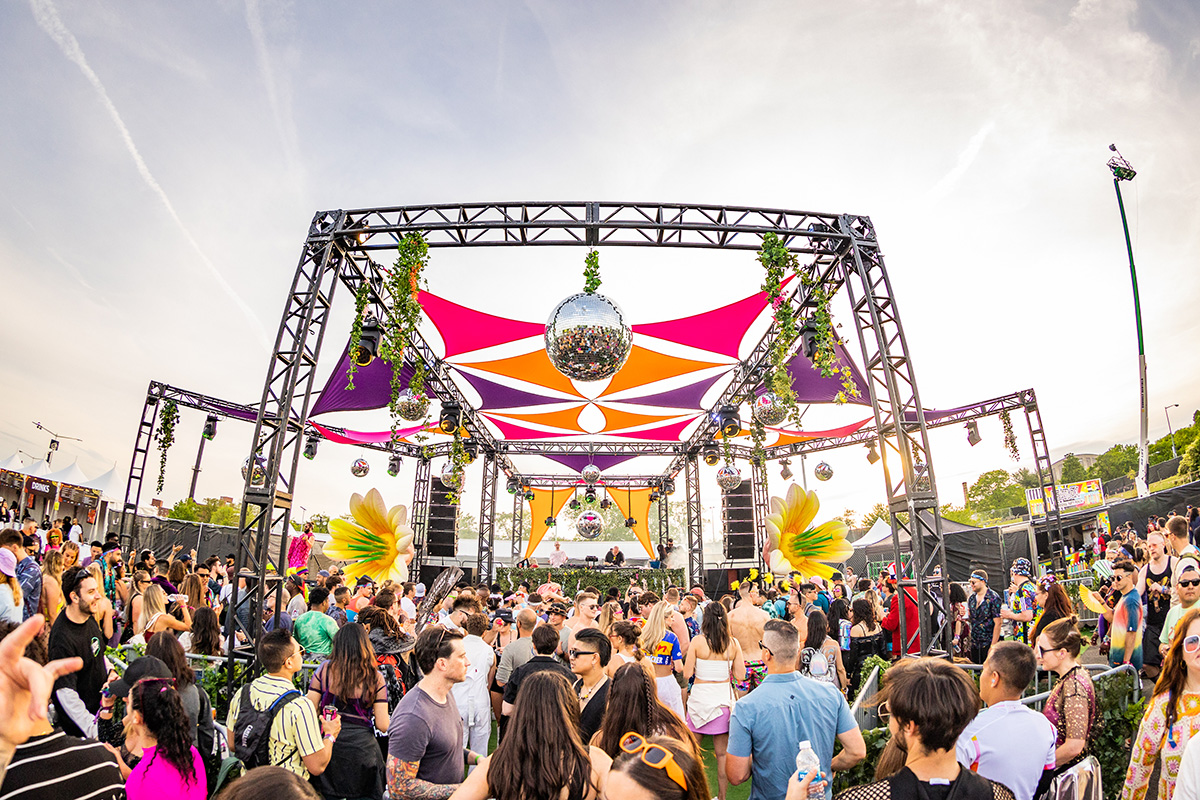
When does a garden GLOW? When it’s run by famed local gay DJ Ed Bailey.
This weekend, music festival Project GLOW at RFK Festival Grounds will feature Bailey’s brainchild the Secret Garden, a unique space just for the LGBTQ community that he launched in 2023.
While Project GLOW, running April 27-28, is a stage for massive electronic DJ sets in a large outdoor space, Secret Garden is more intimate, though no less adrenaline-forward. He’s bringing the nightclub to the festival. The garden is a dance area that complements the larger stages, but also stands on its own as a draw for festival-goers. Its focus is on DJs that have a presence and following in the LGBTQ audience world.
“The Secret Garden is a showcase for what LGBTQ nightlife, and nightclubs in general, are all about,” he says. “True club DJs playing club music for people that want to dance in a fun environment that is high energy and low stress. It’s the cool party inside the bigger party.”
Project GLOW launched in 2022. Bailey connected with the operators after the first event, and they discussed Bailey curating his own space for 2023. “They were very clear that they wanted me to lean into the vibrant LGBTQ nightlife of D.C. and allow that community to be very visibly a part of this area.”
Last year, club icon Kevin Aviance headlined the Secret Garden. The GLOW festival organizers loved the its energy from last year, and so asked Bailey to bring it back again, with an entire year to plan.
This year, Bailey says, he is “bringing in more D.C. nightlife legends.” Among those are DJ Sedrick, “a DJ and entertainer legend. He was a pivotal part of Tracks nightclub and is such a dynamic force of entertainment,” says Bailey. “I am excited for a whole new audience to be able to experience his very special brand of DJing!”
Also, this year brings in Illustrious Blacks, a worldwide DJ duo with roots in D.C.; and “house music legends” DJs Derrick Carter and DJ Spen.
Bailey is focusing on D.C.’s local talent, with a lineup including Diyanna Monet, Strikestone!, Dvonne, Baronhawk Poitier, THABLACKGOD, Get Face, Franxx, Baby Weight, and Flower Factory DJs KS, Joann Fabrixx, and PWRPUFF.
Secret Garden also brings in performers who meld music with dance, theater, and audience interactions for a multi-sensory experience.
Bailey is an owner of Trade and Number Nine, and was previously an owner of Town Danceboutique. Over the last 35 years, Bailey owned and operated more than 10 bars and clubs in D.C. He has an impressive resume, too. Since starting in 1987, he’s DJ’d across the world for parties and nightclubs large and intimate. He says that he opened “in concert for Kylie Minogue, DJed with Junior Vasquez, played giant 10,000-person events, and small underground parties.” He’s also held residencies at clubs in Atlanta, Miami, and here in D.C. at Tracks, Nation, and Town.
With Secret Garden, Bailey and GLOW aim to bring queer performers into the space not just for LGBTQ audiences, but for the entire music community to meet, learn about, and enjoy. While they might enjoy fandom among queer nightlife, this Garden is a platform for them to meet the entirety of GLOW festival goers.
Weekend-long Project GLOW brings in headliners and artists from EDM and electronic music, with big names like ILLENIUM, Zedd, and Rezz. In all, more than 50 artists will take the three stages at the third edition of Project GLOW, presented by Insomniac (Electric Daisy Carnival) and Club Glow (Echostage, Soundcheck).
Out & About
Washington Improv Theatre hosts ‘The Queeries’
Event to celebrate queer DMV talent and pop culture camp

The Washington Improv Theatre, along with the Mayor’s Office of LGBTQ Affairs and the Gay Men’s Chorus of Washington DC, will team up to host “The Queeries!” on Friday, April 26 at 9:30 p.m. at Studio Theatre.
The event will celebrate Queer DMV talent and pop culture camp. With a mixture of audience-submitted nominations and blatantly undemocratically declared winners, “The Queeries!” mimics LGBTQ life itself: unfair, but far more fun than the alternative.
The event will be co-hosted by Birdie and Butchie, who have invited some of their favorite bent winos, D.C. “D-listers,” former Senate staffers, and other stars to sashay down the lavender carpet for the selfie-strewn party of the year.
Tickets are just $15 and can be purchased on WITV’s website.

The rise of virtual home tours

Round House explores serious issues related to privilege

Successful open relationships take effort

Ed Bailey brings Secret Garden to Project GLOW festival

Washington Improv Theatre hosts ‘The Queeries’

State Department releases annual human rights report

Argentina government dismisses transgender public sector employees

Joe Vogel campaign holds ‘Big Gay Canvass Kickoff’

Catching up with the asexuals and aromantics of D.C.

Smithsonian staff concerned about future of LGBTQ programming amid GOP scrutiny
-
 State Department3 days ago
State Department releases annual human rights report
-
 South America1 day ago
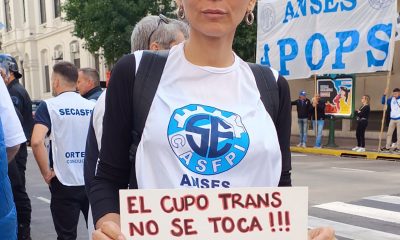
Argentina government dismisses transgender public sector employees
-
 Maryland5 days ago
Joe Vogel campaign holds ‘Big Gay Canvass Kickoff’
-
 District of Columbia1 day ago
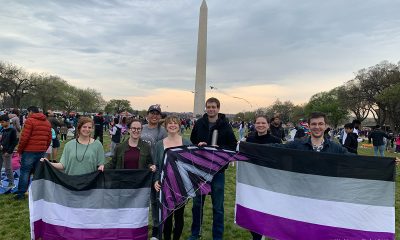
Catching up with the asexuals and aromantics of D.C.