
Arts & Entertainment
Portrait of a ‘Lady’
Streep reliably good in new Thatcher biopic

In her latest cinematic turn, “The Iron Lady,” screen legend and two-time Academy Award winner Meryl Streep moves seamlessly into Number 10 Downing Street as iconic British Prime Minister Margaret Thatcher. From the opening scenes, she’s unrecognizable as a shaky, old Thatcher going out for milk — totally overlooked and unnoticed by former constituents.
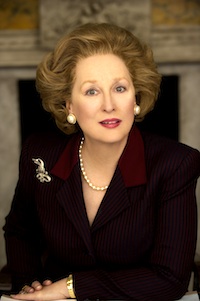
Meryl Streep as Margaret Thatcher in ‘The Iron Lady.’ (Photo courtesy the Weinstein Company)
The scene serves as foreshadowing for the flashback-fueled biopic about one of history’s more formidable females and how her haunted mind recalls the monumental events of her past and her struggle to stay firmly rooted in the present. The film opens today (Friday) in Washington; Landmark — both E Street and Bethesda Row — has it.
A lengthy knowledge of British politics isn’t required to thoroughly enjoy the film, which stirs empathy and respect for the tough and determined Prime Minister, but it can’t hurt. In her declining years, Thatcher relives her marriage to her husband (delightfully portrayed by Jim Broadbent), ascent to major political success and numerous battles against her male counterparts in Parliament. The format of using flashbacks to create a fluid, if not completely chronological, biopic is a tricky one. However, it works here because as Thatcher’s physical and mental decline are apparent, it’s logical that dementia, or at least a deep longing for her illustrious past, would play a role in her aging.
Unlike 2011’s uneven biopic “J. Edgar,” which was also told in a flashback format, “The Iron Lady” gives the feeling of a well-rounded and human portrait of a controversial leader. Even if one disagrees with Thatcher’s policies, the film inspires respect for the determined woman, who rose from a working middle-class background to be the first female Prime Minister of Briton.” J. Edgar,” followed a more traditional flashback format of a retiring official dictating an autobiography filled with embellishments. Late in the film the audience learns of the half-truths and is left with more questions and skepticism rather than any form of insight.
But forget the format. Forget the director. It is Streep who is the film’s anchor, mast and sail. While some critics have bemoaned the storyline and structure, all agree Streep is mesmerizing. There are few actors who could legitimately be compared to Meryl Streep and her performance in “The Iron Lady” is a perfect representation of why. She vanishes into Thatcher’s mannerisms, speech and aura. She never appears to acting or in costume and make up. The transformation of she undergoes is truly unbelievable. Her recent portrayal of Julia Child displayed once again her trademark ability to master speech patterns and accents, which she also nails in this film.
While Thatcher’s persona and impact were larger than life, Streep exercises perfect restraint in bringing the Prime Minister’s greatest moments to the screen. She keeps her teeth far enough away from the scenery as not to turn Maggie into “Mommie Dearest” when tensions rise. Thatcher is known for her outspoken personality and Streep does an impeccable job of conveying that without sacrificing authenticity.
When the final credits roll, the audience is left not with an ideological or chronological picture of a politician, but the snapshots of the life of someone who believed wholeheartedly in what she said and did. “The Iron Lady” leaves one with a curiosity to know more about Margaret Thatcher but not because the film is incomplete but because its subject is masterfully portrayed and presented. Political subject matter almost always proves divisive, but not “The Iron Lady.” A jumble of understanding, empathy and respect is what is created in the wake of the Prime Minister — even if her political views are not in concert with those of audience members.
As the days before the 84th annual Academy Award nominations are announced dwindle, Street is assuredly guaranteed her 18th nomination. Whether she or Viola Davis, who starred in 2011’s massively successful film “The Help,” will take home the top prize remains to be seen. But after seeing both films, one is inclined to believe that Meryl’s mantle might become a bit more crowded by another golden incarnation of Thatcher in February.





Television
ICYMI: ‘Overcompensating’ a surprisingly sweet queer treat
A sweet, savvy show about breaking free to embrace your true self
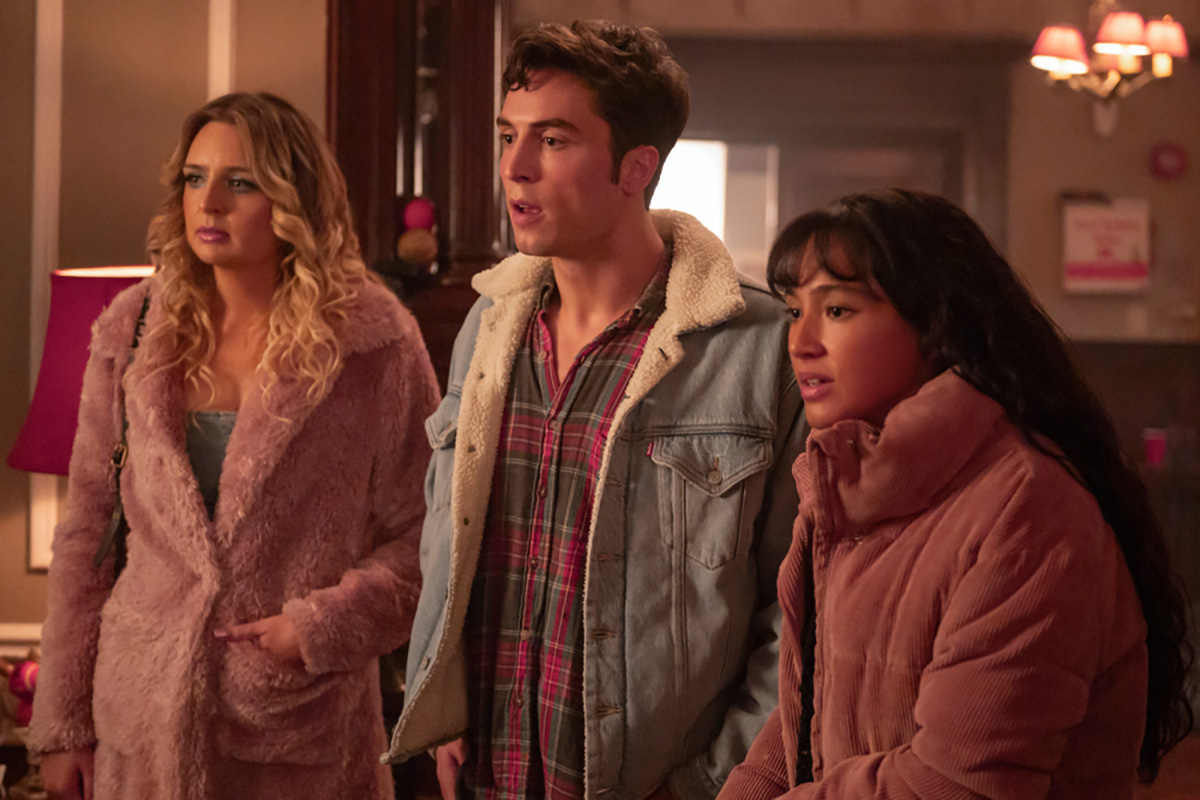
Pride month 2025 is now behind us, and while it’s safe to say that this year’s celebrations had a darker edge than usual, it’s also true that they came with a particularly rich bounty of new queer movies and shows to entertain us – so many, in fact, that even if we are facing a lull until the fall another harvest of fresh content, there are still plenty of titles – which, for whatever reason, were off your radar – for you to catch up on in the meantime.
One of the most notable of these – the bingeworthy series “Overcompensating” (now streaming on Amazon Prime) – will most definitely have been ON the radar for the plentiful fans of creator and star Benito Skinner, the actor/comedian who rose to viral fame through his content on platforms like Instagram, YouTube, and TikTok. For anyone else, it might have easily slipped through the cracks.
Created and written by Skinner as a loosely autobiographical “college comedy,” it aims for the kind of raucous, explicitly sexed-up tone one expects from the genre as it centers on Benny (Skinner), newly arrived as a freshman at prestigious Yates University. A former football jock and “golden boy” at his midwestern high school, he’s the picture of idealized youthful masculinity; he’s also deep in the closet, struggling to keep his sexuality hidden and maintain his macho front under the intense scrutiny of the college’s social scene – and under the resentful eye of his older sister Grace (Mary Beth Barone), who has already secured her own place at the top of the pecking order.
In the first episode, Benny’s difficulties are eased when he meets Carmen (Wally Baram), another freshman trying to navigate the politics of college life; a gamer from a home marred by tragedy, she’s an outsider who feels like she’s putting on an act, too, and they click – giving him the convenient “cover” of female companionship while providing them both with much-needed support and encouragement. He’s also befriended by a handsome film major from England (Rish Shah), who has already caught his eye, stirring other kinds of feelings and possibly even reciprocating them. Meanwhile, he’s being courted by the school’s “exclusive secret society” – headed by his sister’s aggressively “alpha” boyfriend Pete (Adam DiMarco) – and trying to stay interested in his studies, despite a growing realization that a career in business doesn’t actually appeal to him all that much.
That’s a lot to juggle for anybody, even an overachiever like Benny – whose “lucky” life so far has largely been the result of playing a role he is finding harder and harder to maintain. As the series goes on through its eight-episode arc, it becomes clear that he’s not the only one who is “keeping up appearances,” and he, along with the other confused and damaged young people in his orbit, begins the painful (but often hilarious) process of evolution that is required in order to become truly oneself.
Directed toward appealing to a younger demographic, “Overcompensating” is the kind of show that requires a few episodes worth of invested time to make an impression that feels like substance. Full of the bawdy farcical antics that go hand in hand with stories about hormonally charged college kids, it’s not above leaning into the formulas and tropes that have always driven these kinds of comedies. At first, while its broadly comedic strokes and frequently explicit sexual hijinks might elicit plenty of chuckles, the show might easily feel tiresome for more mature audiences; there’s a nostalgic fun to it, made even more appealing, somehow, by the “political incorrectness” of its frequently sexist and homophobic humor, but for a while things may feel like an unnecessary attempt to reinvent “Animal House” for the Gen Z crowd.
By the time the season reaches its halfway point, however, things have started to get real. The antics of these horny almost-adults take on a more pointed absurdity, informed by the increasingly tangled web of defensive deceit they weave among themselves – and, as things draw toward a cliffhanger climax, the consequences of maintaining it – until it achieves a sense of empathy toward them all. There’s a wisdom that smacks of lived authenticity underlying the whole affair, transforming it from the “sexploitative” teen comedy of its surface into something deeper. To be sure, things stay expectedly wacky, and the soap-operatic melodrama of its twists and reversals continue to maintain the show’s “mature YA” appeal; but beneath those trappings, by the end of the season a truer identity has begun to emerge, just as its characters have begun to find their own levels of self-actualization for themselves.
As creator, primary writer, and star, it’s obviously Skinner who deserves much of the credit. While it might be tempting, early on, to dismiss the show as an “ego project,” the internet-spawned sensation proves his talents quickly enough to get past such judgy suspicions, delivering a pitch-perfect blend of sauciness and sensitivity that extends its appeal toward both ends of the taste spectrum; just as crucially, he brings the same aforementioned “lived authenticity” to his winning performance – after all, he’s essentially playing himself in a fictionalized version of his own life – while also making sure that equal time (and compassion) is afforded all the other characters around him, each of whom are pushing at the boundaries of their own respective “closets,” too. It’s unavoidable to notice that – like most of his co-stars – he’s plainly a decade too old to be playing a college student; but by the time we reach that crucial halfway turning point, we’ve become too engaged by him to care.
The show is full of excellent performances, in fact. Relative newcomers Baram and Barone offer layers of complex nuance, while the more familiar DiMarco (“White Lotus”) is close to heartbreaking as the toxic BMOC clinging to the illusion of power as his life begins unraveling around him. Other standouts include the mononymic actress Holmes as Carmen’s “wild child” roommate, solidly likable turns as Benny’s parents from mature veterans Connie Britten and Kyle MacLachlan (whose presence, along with stylish elements in several key scenes, hints at an homage-ish nod to the late David Lynch), and podcaster Owen Thiele as an openly gay fellow student who has Benny “clocked” from the moment they meet. Finally, Lukas Gage makes a deep impression as a former high school teammate at the heart of Benny’s most haunting memory.
There’s no official word yet on whether “Overcompensating” will be renewed for a second season, despite the multiple loose ends left dangling at the end of its first; it has proven to be popular, and Skinner’s large fanbase makes it likely that the story will continue. Even if it doesn’t, the place of uncertainty in which it has left its characters rings true enough to serve as a satisfying endpoint.
As for us, we hope that won’t happen. For all its sophomoric humor, generic plot twists, and purposefully gratuitous sexual titillation, it’s one of the sweetest, kindest, and most savvy shows we’ve seen about breaking free from conformity to embrace your true self – and that’s a message that applies whether you’re queer, straight, or anywhere in between.
Photos
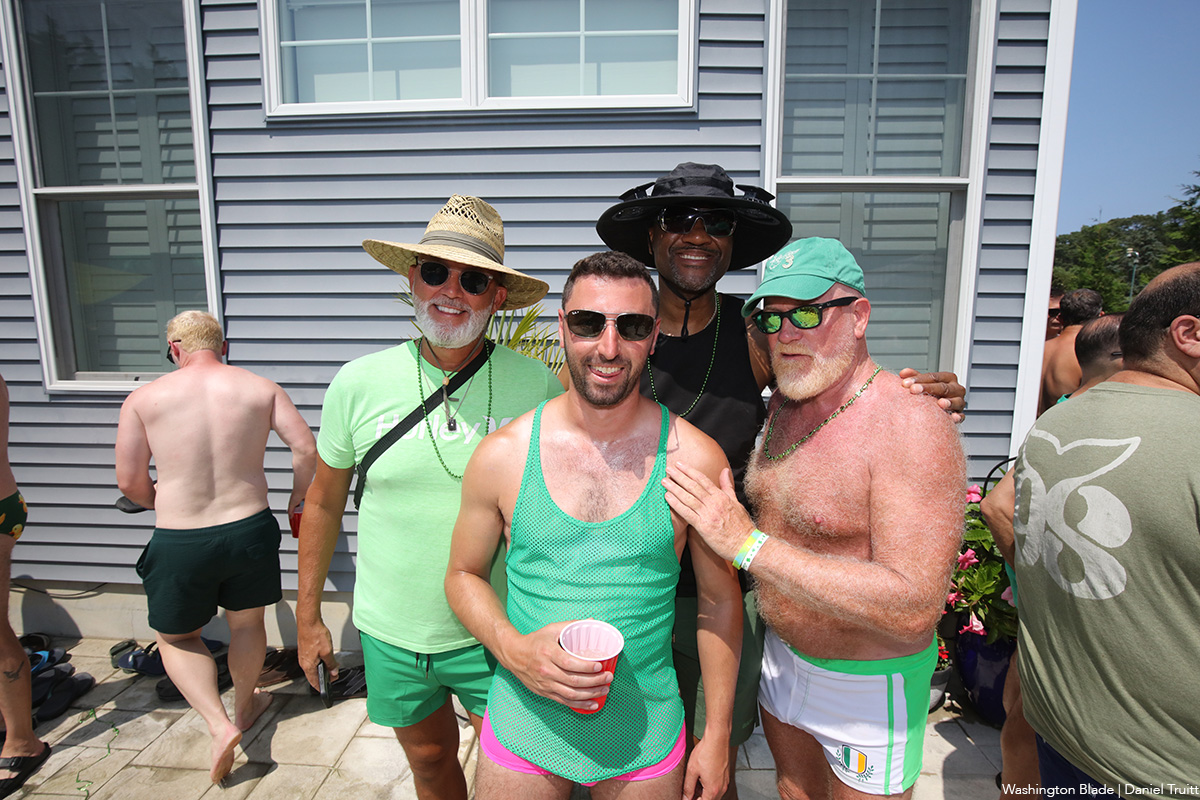
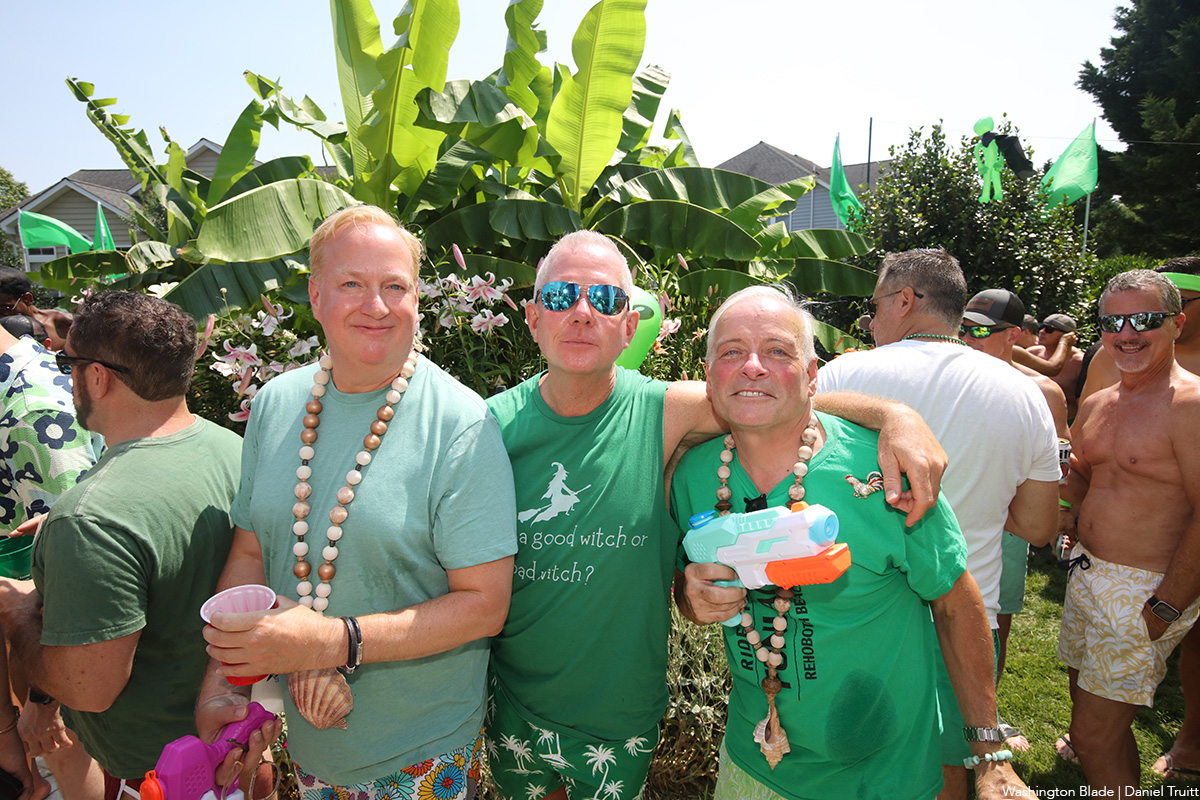
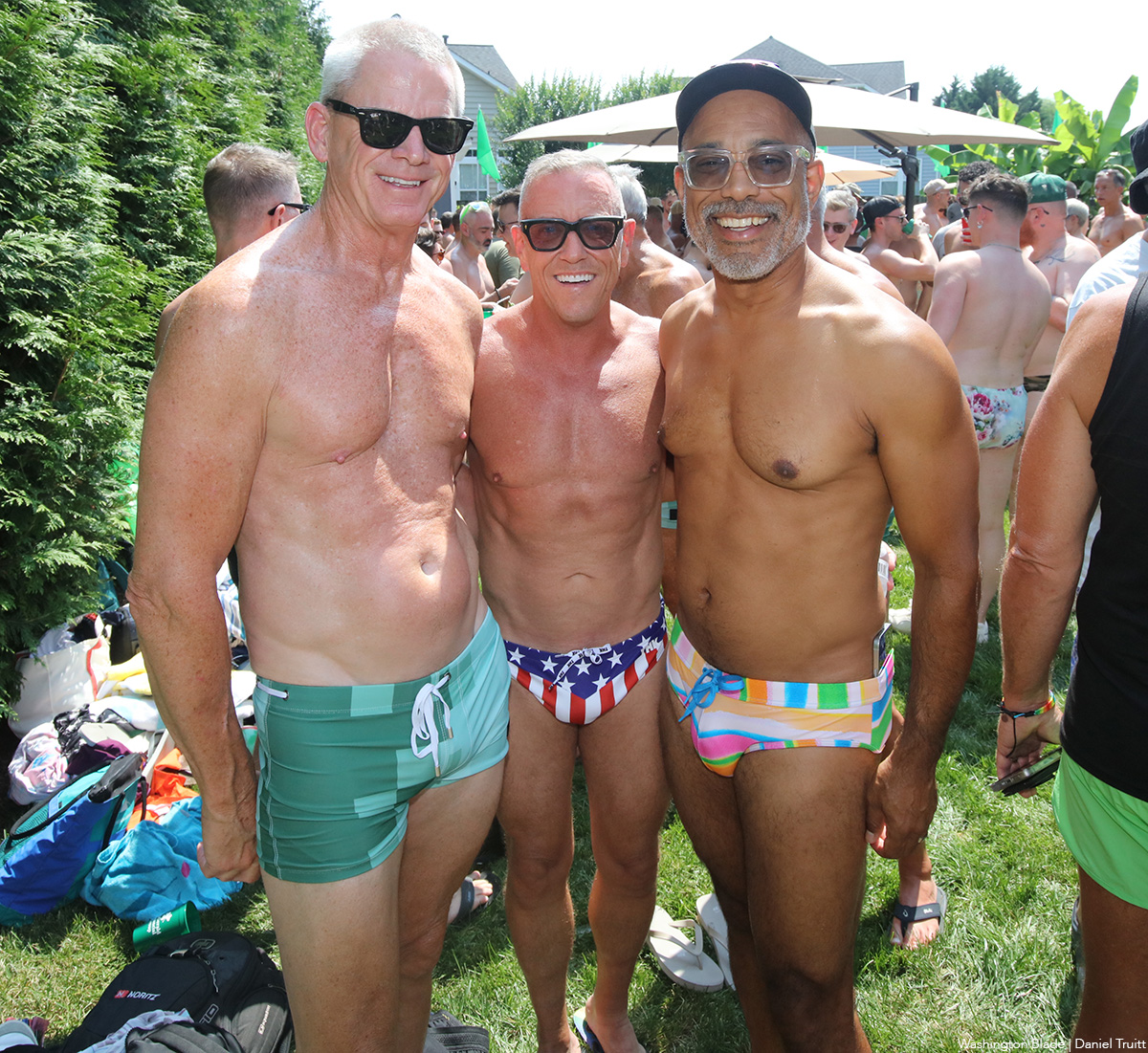
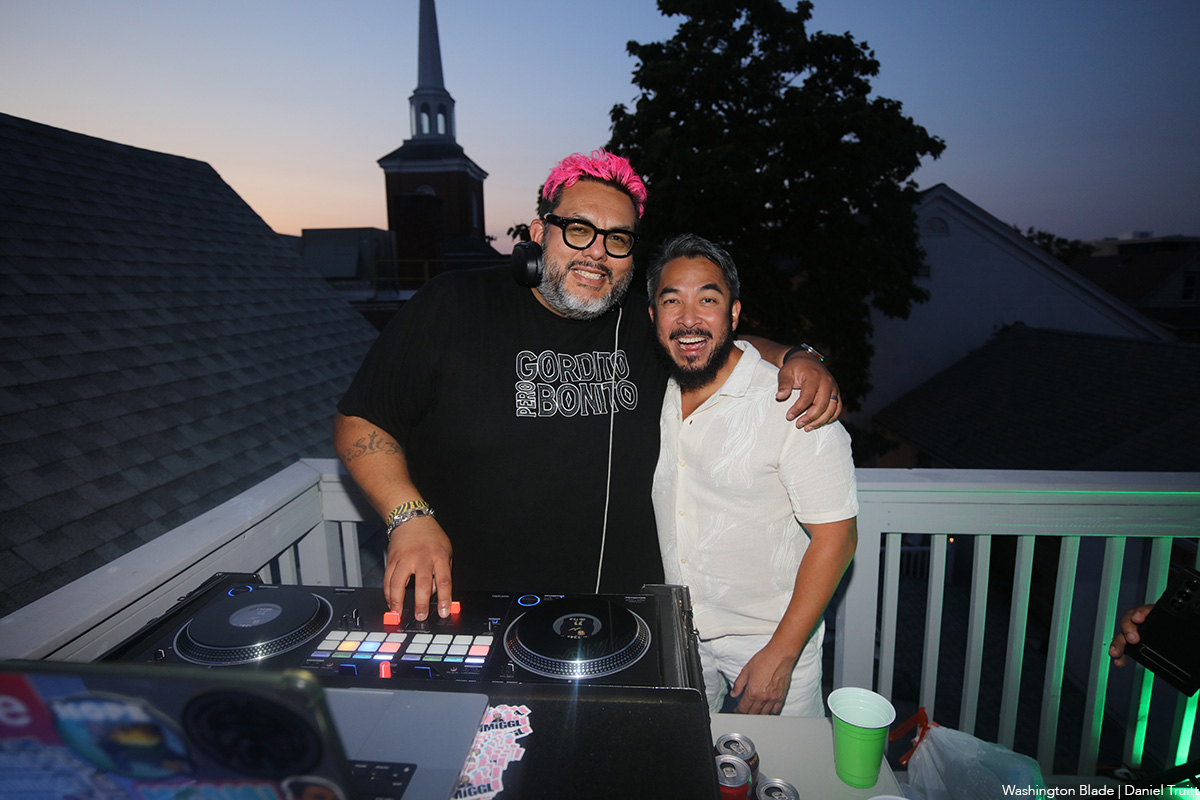
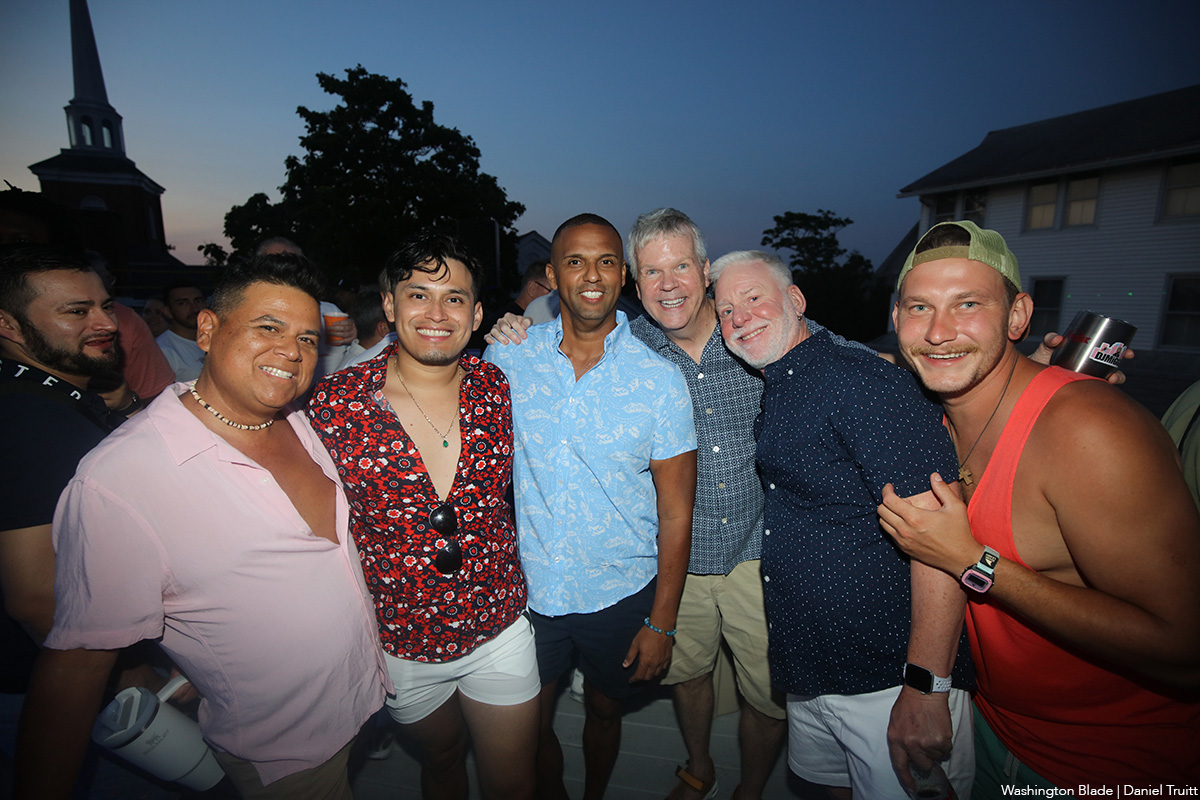
PHOTOS: Independence Day Weekend in Rehoboth
Wicked Green Pool Party, fireworks among festivities

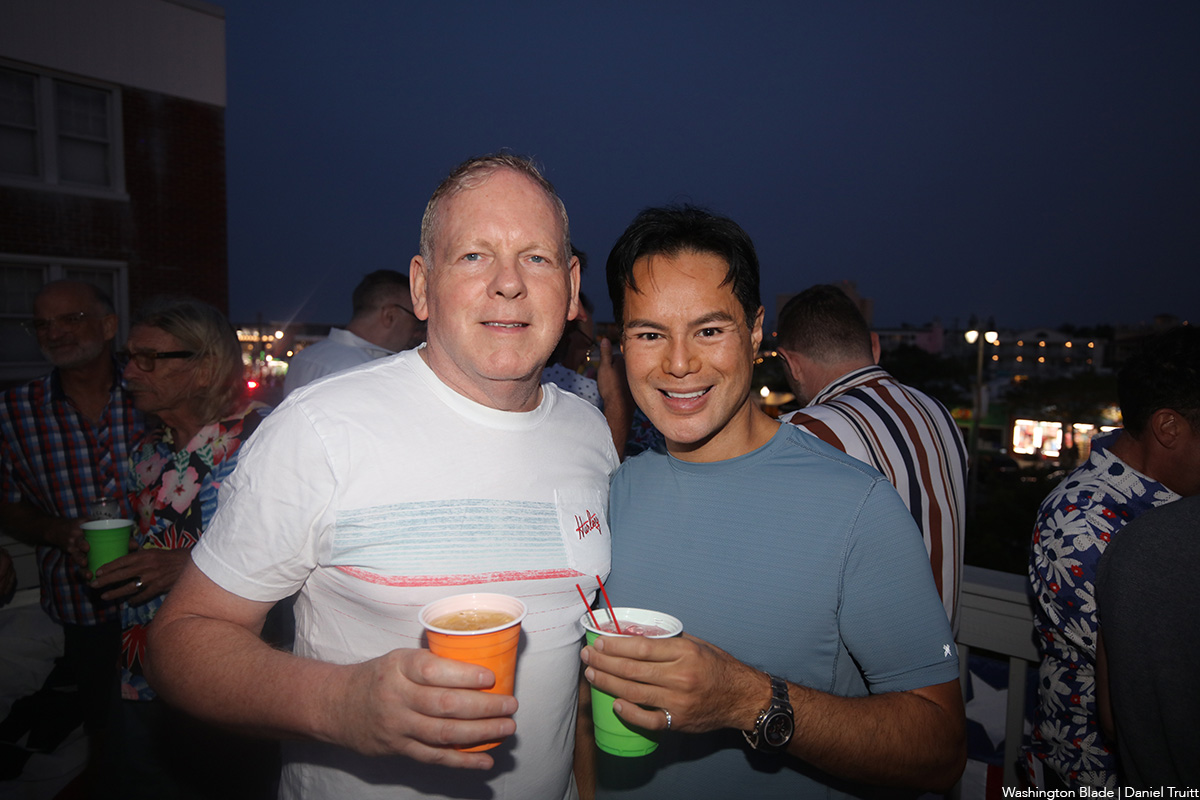
Vacationers and residents alike enjoyed Independence Day Weekend activities in Rehoboth Beach, Del. The Wicked Green Pool Party drew hundreds to the CAMP Rehoboth fundraiser on Saturday. That evening, revelers went to the rooftops to watch the fireworks display.
(Washington Blade photos by Daniel Truitt)







Music & Concerts
Red, White, and Beyoncé: Queen Bey takes Cowboy Carter to D.C. for the Fourth of July
The legendary music icon performed on July 4 and 7 to a nearly sold-out Northwest Stadium.
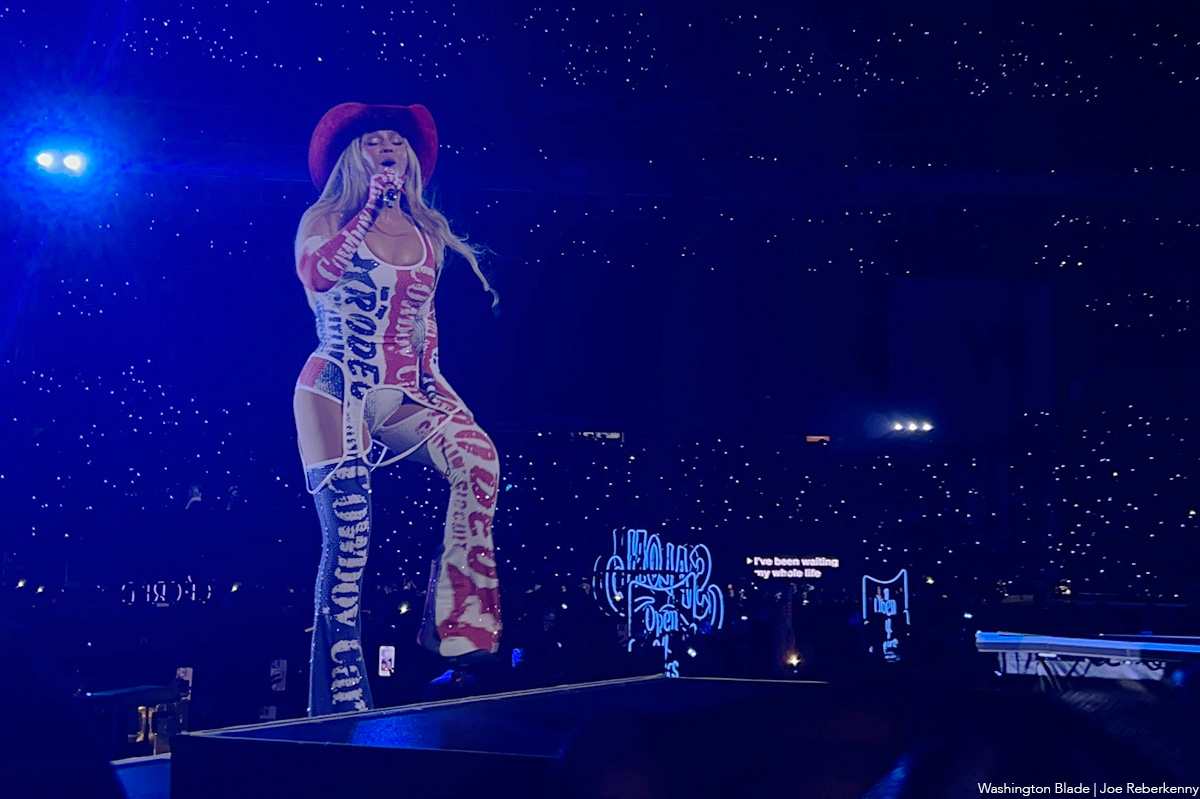
Just in time for Independence Day, Beyoncé lit up Landover’s Commanders Field (formerly FedEx Field) with fireworks and fiery patriotism, bringing her deeply moving and genre-defying “Cowboy Carter” tour to the Washington, D.C. area.
The tour, which takes the global icon across nine cities in support of her chart-topping and Grammy-winning country album “Cowboy Carter,” landed in Prince George’s County, Maryland, over the Fourth of July weekend. From the moment Beyoncé stepped on stage, it was clear this was more than just a concert — it was a reclamation.
Drawing from classic Americana, sharp political commentary, and a reimagined vision of country music, the show served as a powerful reminder of how Black Americans — especially Black women — have long been overlooked in spaces they helped create. “Cowboy Carter” released in March 2024, is the second act in Beyoncé’s genre-traversing trilogy. With it, she became the first Black woman to win a Grammy for Best Country Album and also took home the coveted Album of the Year.
The record examines the Black American experience through the lens of country music, grappling with the tension between the mythology of the American Dream and the lived realities of those historically excluded from it. That theme comes alive in the show’s opening number, “American Requiem,” where Beyoncé sings:
“Said I wouldn’t saddle up, but
If that ain’t country, tell me, what is?
Plant my bare feet on solid ground for years
They don’t, don’t know how hard I had to fight for this
When I sing my song…”
Throughout the performance, Beyoncé incorporated arresting visuals: Black cowboys on horseback, vintage American iconography, and Fox News clips criticizing her genre shift — all woven together with voiceovers from country legends like Dolly Parton and Willie Nelson. The result was a multimedia masterclass in storytelling and subversion.
The “Cowboy Carter” tour has been a social media sensation for weeks, with fans scrambling for tickets, curating elaborate “cowboy couture” outfits, and tailgating under the summer sun. At Commanders Field, thousands waited in long lines for exclusive merch and even longer ones to enter the stadium — a pilgrimage that, for many, felt more like attending church than a concert.
One group out in full force for the concert was Black queer men — some rocking “denim on denim on denim on denim,” while others opted for more polished Cowboy Couture looks. The celebration of Black identity within Americana was ever-present, making the concert feel like the world’s biggest gay country-western club.
A standout moment of the night was the appearance of Beyoncé’s 13-year-old daughter, Blue Ivy Carter. Commanding the stage with poise and power, she matched the intensity and choreography of her mother and the professional dancers — a remarkable feat for someone her age and a clear sign that the Carter legacy continues to shine.
It’s been nearly two decades since Beyoncé and Destiny’s Child parted ways, and since then, she’s more than lived up to her title as the voice of a generation. With “Cowboy Carter,” she’s not just making music — she’s rewriting history and reclaiming the space Black artists have always deserved in the country canon.

India’s first transgender healthcare clinic reopens

Rehoboth Pride festival to take place July 19

Gay ANC member announces candidacy for Ward 1 D.C. Council seat

ICYMI: ‘Overcompensating’ a surprisingly sweet queer treat

Democrats need to stop the self-immolation

Treasury Department has a gay secretary but LGBTQ staff are under siege

Defying trends, new LGBTQ center opens in rural Winchester, Va.

Gay GOP group hosts Ernst, 3 House members — all of whom oppose Equality Act

D.C. police seek public’s help in July 5 murder of trans woman

USAID’s demise: America’s global betrayal of trust with LGBTQ people
-
 Federal Government2 days ago
Treasury Department has a gay secretary but LGBTQ staff are under siege
-
 Virginia3 days ago
Defying trends, new LGBTQ center opens in rural Winchester, Va.
-
 District of Columbia2 days ago
Gay GOP group hosts Ernst, 3 House members — all of whom oppose Equality Act
-
 District of Columbia2 days ago
D.C. police seek public’s help in July 5 murder of trans woman