National
Obama vs. Bush: Who’s done more on HIV/AIDS?
Lifting of HIV travel ban initiated by previous administration
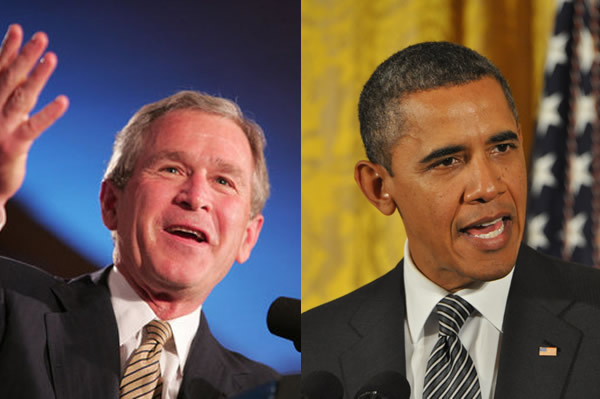
Who’s done more on HIV/AIDS: George W. Bush or President Obama? (Bush photo public domain; Obama photo Blade photo by Michael Key)
HIV/AIDS advocates from around the world are descending on D.C. for the 19th International AIDS Conference with a shared goal: to eliminate a disease that has taken the lives of more than 25 million people worldwide.
Despite unity on this goal, politics inevitably plays a role in the response to the epidemic and advocates have widely differing views on who has done more in recent years to combat HIV/AIDS both at home and abroad: former President George W. Bush or President Obama.
Some praise the Obama administration for laying out a comprehensive plan and bumping up domestic funding to confront the epidemic, while others yearn for the Bush days because of the global initiatives the Republican president started despite his reputation for anti-gay policies.
Jim Driscoll, a gay Nevada-based HIV/AIDS activist who served on the Presidential Advisory Council on HIV/AIDS during the Bush administration, is among those who believes Bush did more to stop the epidemic.
“I never sat down and had a one-on-one conversation with him, but people who did talked about how open he was to doing things on AIDS and how interested he was in that subject,” Driscoll said. “There wasn’t anything the community asked him to do that I was involved in that he didn’t do.”
Those who say Bush has done more for HIV/AIDS identified three major initiatives under the Bush administration: the start of a program called the President’s Emergency Plan for AIDS Relief, or PEPFAR, to confront the global AIDS epidemic; streamlining fund allocation under the Ryan White Care Act to consider people who have HIV infection without full-blown AIDS; and allowing the first-ever rapid HIV tests to be used outside medical offices.
Driscoll, a Republican who’s backing GOP presumptive nominee Mitt Romney in the upcoming presidential election, recalled the process by which Bush approved rapid testing and said it was praised by many — with the exception of some Food & Drug Administration officials whom he overruled.
“It was a big step forward, and George Bush actually personally had a lot to do with that,” Driscoll said. “The president actually overruled FDA, and I was in the room when this was announced. There were about 100 people in the room, I think. I remember still that when he announced his approval of rapid testing … everybody in the room gave him a standing ovation except for the three people from FDA, who sat glumly. They didn’t applaud or anything.”
The AIDS Drug Assistance Programs under Bush didn’t see the waiting list levels that have been seen under the Obama administration. Under Obama, the waiting list last year reached an all-time high of 9,928 low-income people awaiting HIV drugs. That number has since dropped to about 2,000 today, according to the administration.
That’s not the only complaint that’s been lodged against Obama, who’s been criticized for reducing the global AIDS program that was set up by Bush. In his most recent budget request to Congress, the White House cut the program by half a billion dollars.
Michael Weinstein, president of the AIDS Healthcare Foundation, said HIV/AIDS was a “higher priority” for Bush than it is for Obama, citing the ADAP waiting list and the distinction in PEPFAR as a key difference between the presidents.
“We had practically no global AIDS program prior to President Bush taking office, and before he left office, they approved a $48 billion plan for PEPFAR, which Sen. Obama voted to authorize and enact,” Weinstein said. “This year, President Obama for the first time in the history of the program asked for less money for global AIDS than we had last year, and there’s $1.4 billion in unspent money in PEPFAR.”
However, the president’s most recent budget request includes an increase for domestic programs against HIV/AIDS: a $75 million increase for Ryan White and an increase of $67 million for ADAP from last year to eliminate waiting lists by 2013.
As for PEPFAR, the White House has maintained that the program is doing more with less by using generic drugs and shipping commodities more cheaply. On World AIDS Day, Obama announced he would fully fund the balance of the administration’s three-year, $4 billion pledge to the Global Fund to Fight AIDS, Tuberculosis, and Malaria.
Shin Inouye, a White House spokesperson, defended the administration’s work on HIV/AIDS by citing achievements as well as plans set into motion to confront the epidemic.
“President Obama and his administration are unwavering in their commitment to addressing the issue of HIV/AIDS — on both the domestic and global fronts,” Inouye said. “These include steps such as establishing and implementing the first comprehensive National HIV/AIDS Strategy, lifting the HIV entry ban, and strengthening the impact and sustainability of PEPFAR and the Global Fund to Fight AIDS, Tuberculosis, and Malaria.”
Obama’s signature legislative achievement, the Affordable Care Act, is also slated to have significant impact on people living with HIV. The Medicaid expansion under the health care reform law is expected to significantly expand coverage because half the people living with HIV already receive care through the program.
Carl Schmid, deputy executive director of the AIDS Institute, said Obama has “definitely” done more on HIV/AIDS — at least on the domestic front — in part because of his willingness to talk about how the disease impacts gay men.
“They are over 60 percent of the epidemic,” Schmid said. “Focusing on this community that has been ravaged by HIV, allowing a discussion and making gay people more acceptable — this could really turn the tide on HIV prevention for gay men. We have a president who is focusing on the community [and directing] resources that are more in line with how the epidemic is.”
In comparison, Bush took flak from HIV/AIDS advocates for not taking action on the epidemic in ways that might upset his conservative base. Among his actions: promoting abstinence-only sex education, opposing federal funds for needle exchange programs and remaining silent on gay men and condoms for much of his administration.
Michael Rajner, a gay Fort Lauderdale-based HIV/AIDS advocate who’s living with AIDS and has been selected as a delegate for the Democratic National Convention, said he thinks Obama has “absolutely” done more to fight HIV/AIDS based on a more science-based approach he’s taken against the disease.
“The difference between Republican and Democrat — in this case, George W. Bush and President Obama — is really the difference in thought, whether they’re going to be addressing HIV/AIDS through ideology or through science, and President Obama has certainly embraced the issues of science,” Rajner said.
One achievement often attributed to Obama is the lifting of the regulatory travel ban that prevented HIV-positive foreign nationals from entering the country — a move that enabled the International AIDS Conference to take place in the United States. But this process actually started under the Bush administration. Under Bush’s leadership, Congress repealed a law that barred HIV-positive foreign nationals from entering as part of the legislative package authorizing PEPFAR.
Schmid said he was “intimately involved” in the process under which Bush starting lifting the HIV travel ban.
“Credit goes to George Bush’s administration and the Congress for lifting the travel ban in reauthorization of PEPFAR,” Schmid said. “There still was a process at HHS, and Obama finished that process. It wasn’t completed in time, unfortunately, under President Bush, but they definitely lifted it congressionally.”
Driscoll said Bush should be commended because he accomplished work on HIV/AIDS despite being beholden to social conservatives who elected him to office.
“Every president, every politician is limited by his constituents, by the people who put him in office, who voted for him and the people he would depend upon to do the same thing should he run again,” Driscoll said. “You have to consider what a president does in terms of the limitations that are imposed. I think, given, the limitations that George Bush’s constituencies imposed, he showed real leadership.”

Federal Government
Protesters say SAVE Act targets voters, transgender youth
Bill described as ‘Jim Crow 2.0’
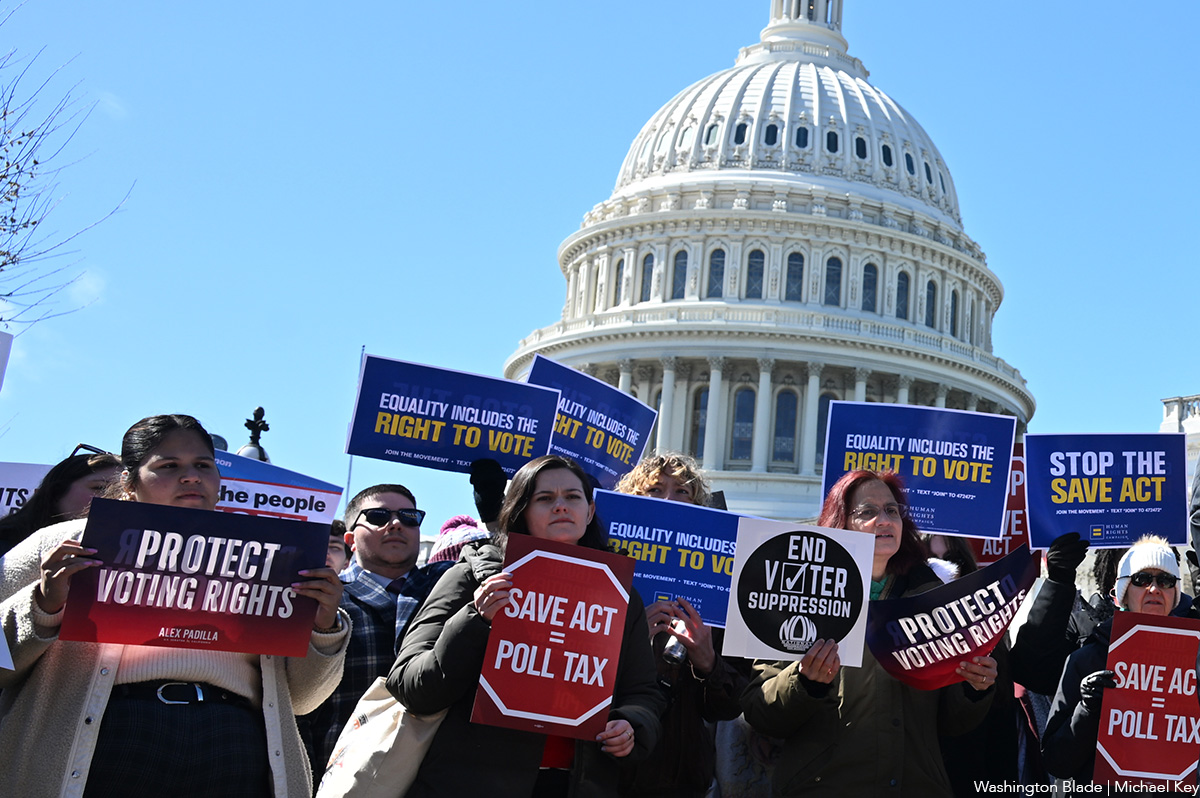
Members of Congress, advocates, and people from across the country gathered outside the U.S. Capitol on Tuesday to protest proposed federal legislation that voting rights activists have deemed “Jim Crow 2.0.”
The Safeguard American Voter Eligibility (SAVE) Act would amend the National Voter Registration Act of 1993 to require in-person proof of citizenship for anyone seeking to vote in U.S. elections.
President Donald Trump has also pushed for the proposed legislation to include a section that would ban gender-affirming medical care for transgender minors, even with parental consent, and prohibit trans people from participating in school or professional sports consistent with their gender identity rather than their sex assigned at birth.
In addition to changing voter registration requirements, the bill would limit acceptable forms of identification to documents such as a birth certificate or passport — records that the Brennan Center for Justice estimates more than 21 million Americans do not have — effectively restricting access to the ballot. It would also ban online voter registration, DMV voter registration efforts, and mail-in voter registration.
A 2021 investigation by the Associated Press found that fewer than 475 people voted illegally or improperly, a tiny fraction of the estimated 160 million Americans who voted in the 2020 election.
Senate Minority Leader Chuck Schumer (D-N.Y.) spoke at the event.
“It will kick millions of American citizens off the rolls. And they don’t even require you to be told,” the highest-ranking Democrat in the Senate told protesters and reporters outside the Capitol. “If this law passes — and it won’t — you’re gonna show up in November … and they’ll say… sorry, you’re no longer on the voting rolls.”
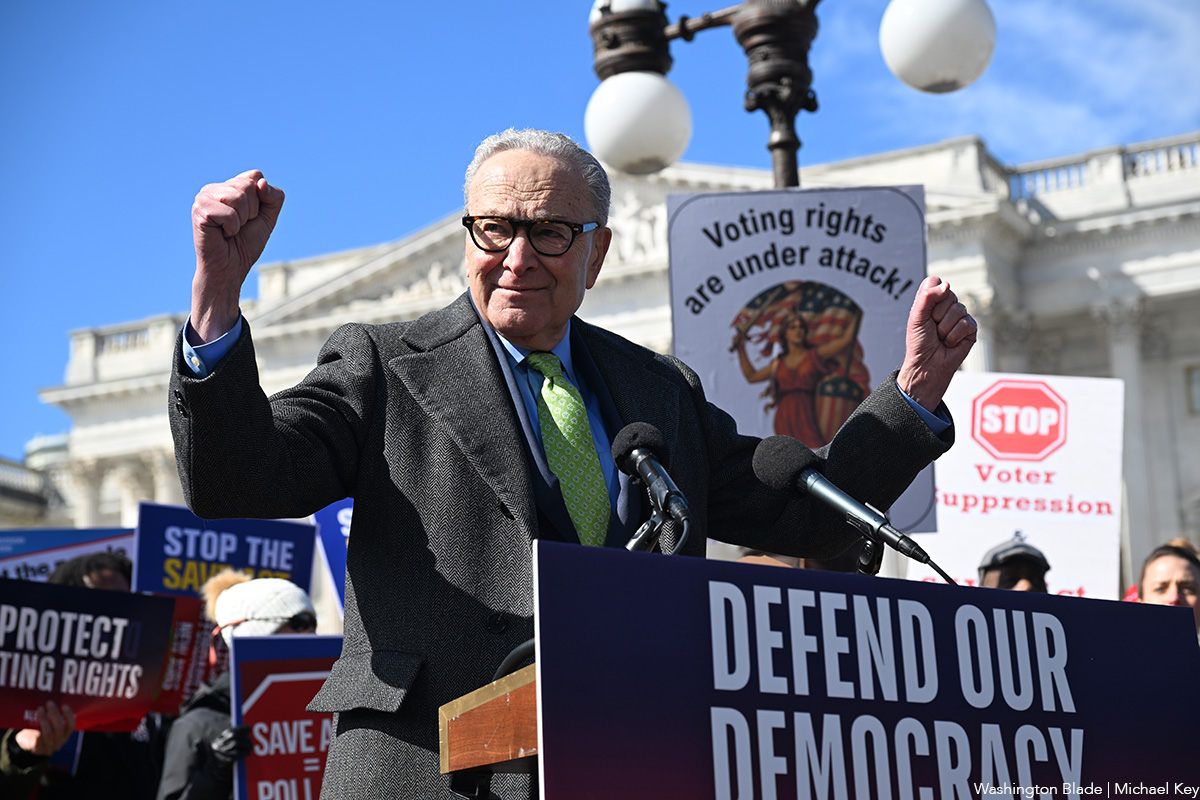
He, like many other speakers, emphasized the bill in the context of American history, pointing to what he described as its racist roots and its impact on Black and brown Americans.
“I have called this act, over and over again, Jim Crow 2.0 … because they know it’s the truth.”
U.S. Sen. Alex Padilla (D-Calif.) was one of the lawmakers leading opposition to the legislation and spoke at the rally.
“It’s not just voting rights that are on the line — our democracy is on the line,” the California lawmaker said. “It’s not a voter I.D. bill. It’s a bait and switch bill.”
He added historical context, noting the significance of voting rights legislation passed more than 60 years ago. In 1965, Alabama civil rights activists marched to protest barriers to voter registration. Alabama state troopers violently attacked peaceful demonstrators at the Edmund Pettus Bridge in Selma, using tear gas, clubs, and whips against more than 500 — mostly Black — protesters.
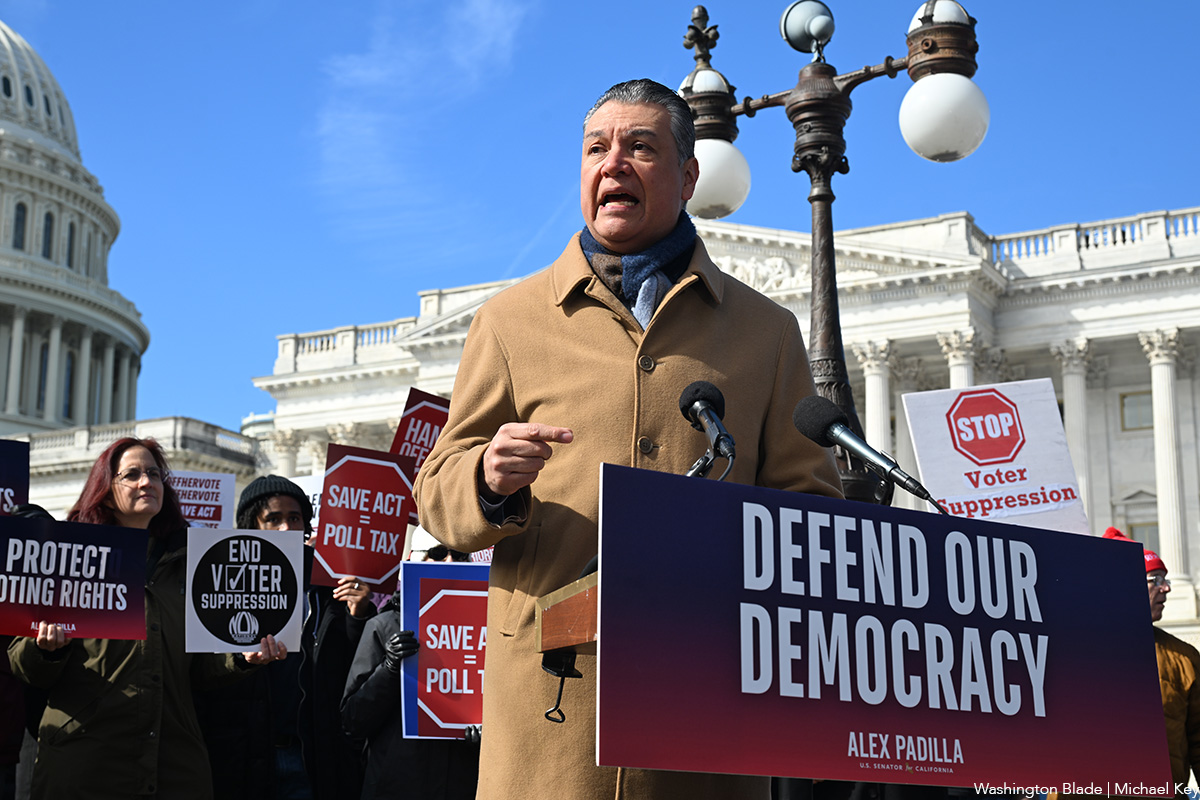
“61 years ago — not to the day — but this week, President Lyndon Johnson came to the Capitol and addressed a joint session of Congress in the wake of Bloody Sunday and pushed Congress to pass the Voting Rights Act,” Padilla said. “61 years later, Donald Trump and this Republican majority wants to take us backwards. We’re not gonna let that happen.”
U.S. Sen. Ben Ray Luján (D-N.M.) also spoke, emphasizing that he views the effort as a Republican-led and Trump-backed attempt to restrict voting access, particularly among Black, brown, and predominantly Democratic communities.
“President Trump told Republicans when they were meeting behind closed doors that ‘The SAVE Act will guarantee Republicans win the midterms and ensure they do not lose an election for 50 years,’” Luján said. “The first time I think Donald Trump’s been honest … This voter suppression bill is only that. Taking away vote by mail? I hope my Republican colleagues from states that voted for Donald Trump or where vote by mail is popular have the courage and the backbone to stand up and say no to this nonsense, because their constituents are going to push back.”
U.S. Sen. Lisa Blunt Rochester (D-Del.) also spoke.
“Our Republican colleagues have already cut Medicaid, Medicare, people don’t know how they’re gonna be able to afford energy,” she said, providing context for the broader political moment. “We’re in the middle of a war that they can’t even get straight while we’re in it and don’t have a way to get out of it. And we are now faced with defending our democracy?”
She then showed the crowd something that she said has been with her throughout her political journey in Washington.
“I brought with me something that I carried on the day that I was sworn into the House of Representatives when I was elected in 2016, and I carried it with me on the day that I was sworn in as United States senator. And I also carried it with me when I was trapped up in the gallery on Jan. 6 and all I could think to do was pray … This document allowed my great great great grandfather, who had been enslaved in Georgia, to have the right to vote. We took this and turned it into a scarf. It is the returns of qualified voters and reconstruction code from 1867. This is my proof of what we’ve been through. This is also our inspiration.”
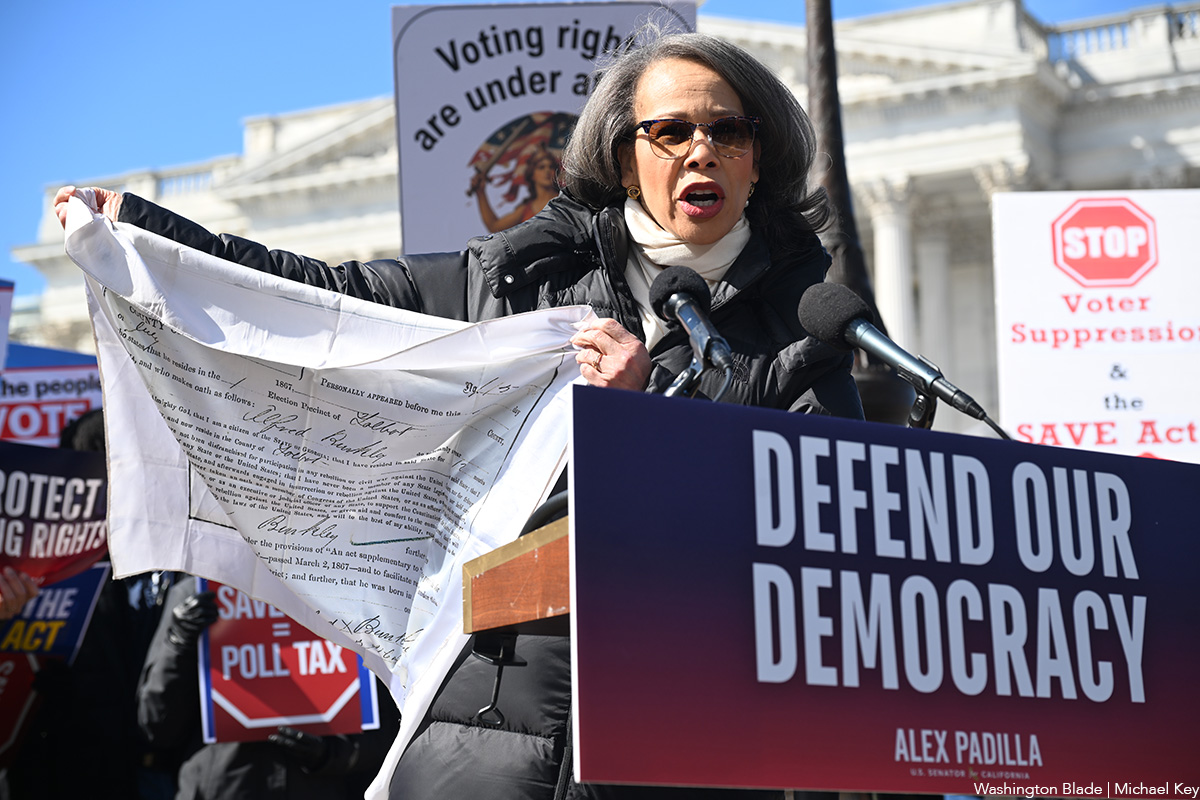
“I got to travel between the Edmund Pettus Bridge two times. And even as I thought about this moment, I recognized that while we wish we weren’t in it, while we don’t know why we’re in it, I do know we were made for it … So I came today to tell you that, um, just like the leader said, that he calls it Jim Crow 2.0. I call it Jim Crow 2.NO.”
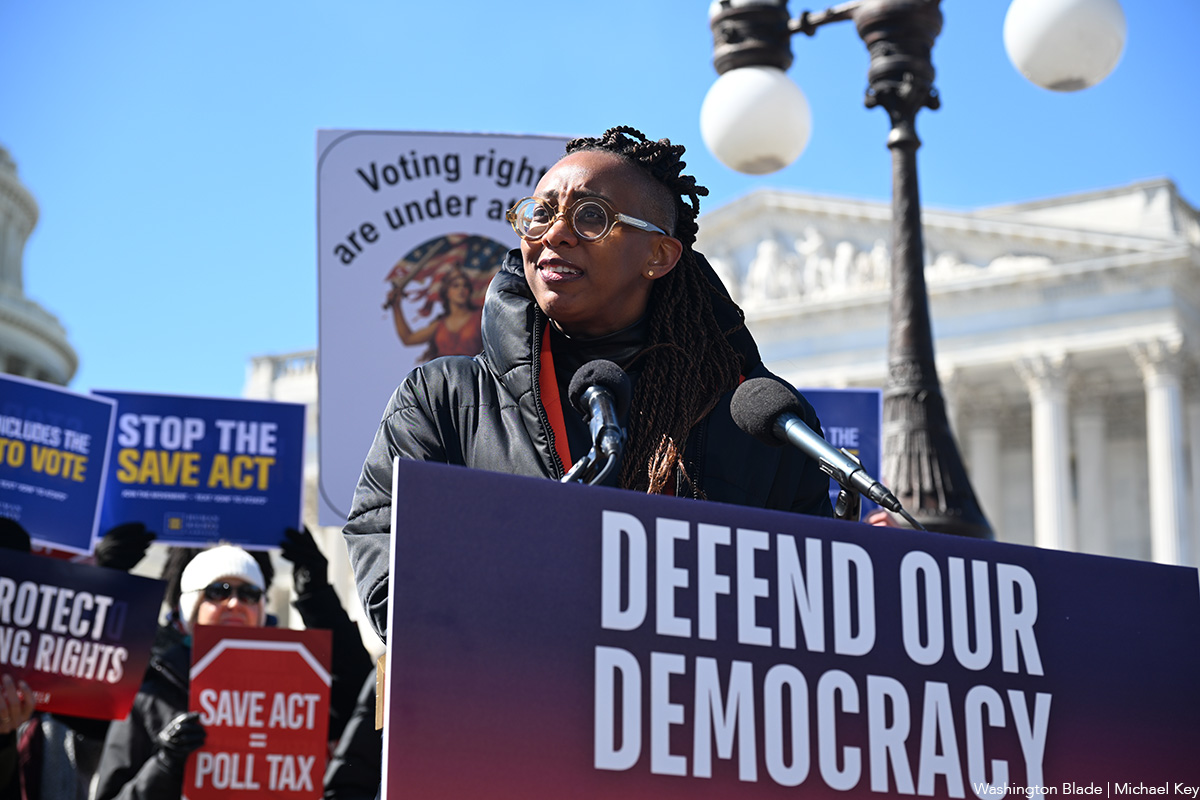
Kelley Robinson, president of the Human Rights Campaign, the largest LGBTQ advocacy organization in the U.S., also spoke, highlighting the impact of the bill’s proposed provisions affecting trans people.
“This bill is not about saving America. This bill is about stealing an election. This bill is about suppressing voters,” Robinson said. “This bill not only tries to disenfranchise voters that deserve their right to vote, it also tries to criminalize trans kids and their families … It tries to criminalize doctors providing medically necessary care for our trans youth.”
The SAVE Act passed the U.S. House of Representatives on Feb. 11 but has not yet been considered in the U.S. Senate.
Idaho
Idaho advances bill to restrict bathroom access for transgender residents
HB 752 passed in state House of Representatives on Monday
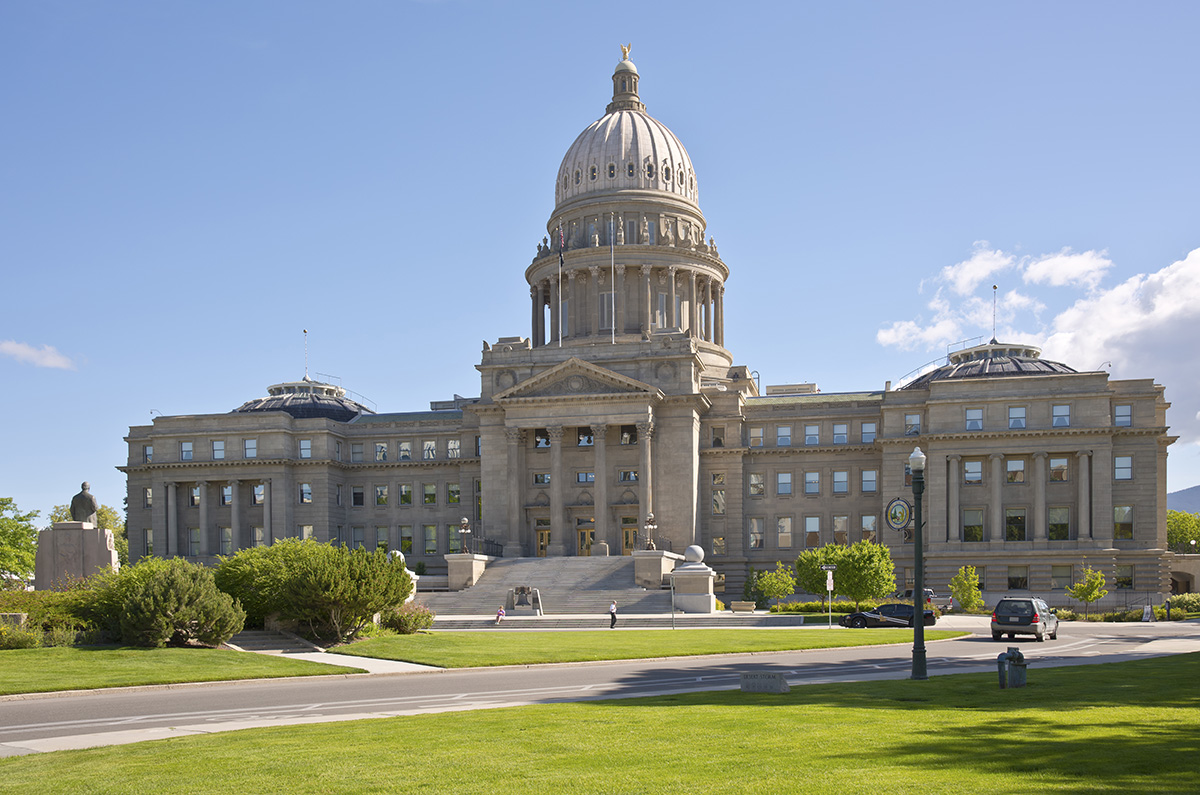
The Idaho House of Representatives passed House Bill 752 on Monday, a measure that would make it a crime for a person to use a bathroom other than the one designated for their “biological sex.”
The story was first reported by the Idaho Capitol Sun after the bill cleared the House.
House Bill 752 would make it a criminal offense — either a misdemeanor or a felony, depending on the number of prior offenses — for individuals who “knowingly and willfully” enter a bathroom or changing room designated for the opposite sex.
The bill would apply to public buildings, including government-owned spaces, and places of “public accommodation,” a category that includes private businesses.
According to the bill’s text, it would “prohibit a person from entering a restroom or changing room designated for the opposite sex; provide a penalty; provide exceptions; define terms; and declare an emergency and provide an effective date.”
A first offense would be a misdemeanor, punishable by up to one year in prison. A second or subsequent offense within five years would be a felony, punishable by up to five years in prison.
The bill passed in a 54–15 vote on Monday. Six Republicans broke with their party’s majority to join nine Democrats in opposing the measure.
The bill’s sponsor, state Rep. Cornel Rasor, a Republican from Sagle near the Washington-Idaho border, told House lawmakers that the legislation is intended to protect women and girls.
“It prevents discomfort and voyeurism escalation and assaults, while preserving single-user options and narrow exceptions so no one is denied access for emergency aid,” Rasor said.
State Rep. Chris Mathias, a Democrat from Boise, disagreed, arguing that the legislation would unfairly target transgender Idahoans.
“The truth of the matter is — and I know a lot of people don’t want to say it — but forcing people who don’t look like the sex they were assigned at birth, or transgender folks, to use other people’s bathrooms is going to put a lot of people in danger,” Mathias said.
The Idaho American Civil Liberties Union made a statement about the bill following its passage.
“Idaho lawmakers continue pushing these harmful, invasive bathroom laws, yet cannot present credible evidence that transgender people using gender-aligned bathrooms threaten public safety,” the Idaho ACLU said. “The bill does nothing to address real criminal acts, such as sexual assault or voyeurism, and disregards concerns from law enforcement about the burden enforcement would place on local resources.”
In addition to human rights advocates, who have spoken out against similar bills advancing in state legislatures across the country, Idaho law enforcement groups have also opposed the measure. They argue that the way the legislation is written would “pose significant practical enforcement challenges,” noting that officers are tasked with maintaining public safety — not conducting gender checks or policing bathroom access.
During a committee hearing last week, law enforcement representatives and several trans Idahoans testified that the bill would make many residents less safe.
“Officers responding to a complaint would be placed in the difficult position of determining an individual’s biological sex in order to enforce the statute,” Idaho Fraternal Order of Police President Bryan Lovell wrote. “In many circumstances, there is no clear or reasonable way for officers to make that determination without engaging in questioning or investigative actions that could be viewed as invasive and inappropriate.”
The Idaho Sheriffs’ Association requested that lawmakers amend the bill to require that individuals be given an opportunity to leave a bathroom immediately before facing potential prosecution.
The bill now heads to the Idaho Senate for consideration. To become law, it must pass both chambers and avoid a veto from the governor.
A separate bathroom bill, House Bill 607, which would be enforced through civil lawsuits, passed the House last month but has not yet received a committee hearing in the Senate.
State Department
Report: US to withhold HIV aid to Zambia unless mineral access expanded
New York Times obtained Secretary of State Marco Rubio memo
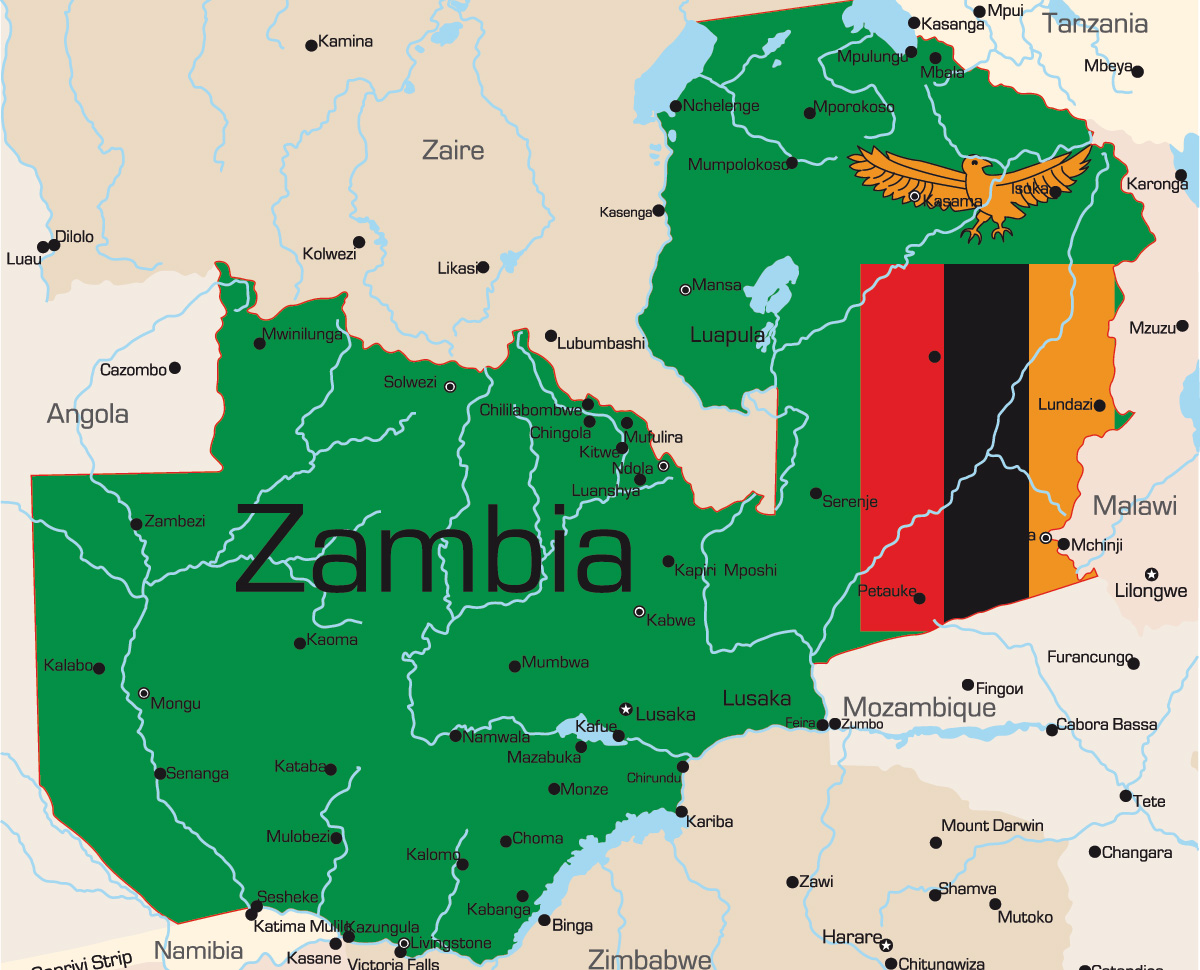
The State Department is reportedly considering withholding assistance for Zambians with HIV unless the country’s government allows the U.S. to access more of its minerals.
The New York Times on Monday reported Secretary of State Marco Rubio in a memo to State Department’s Bureau of African Affairs staffers wrote the U.S. “will only secure our priorities by demonstrating willingness to publicly take support away from Zambia on a massive scale.” The newspaper said it obtained a copy of the letter.
Zambia is a country in southern Africa that borders Tanzania, Malawi, Mozambique, Zimbabwe, Botswana, Namibia, Angola, and the Democratic Republic of Congo.
The Times notes upwards of 1.3 million Zambians receive daily HIV medications through PEPFAR. The newspaper reported Rubio in his memo said the Trump-Vance administration could “significantly cut assistance” as soon as May.
“Reports of (the) State Department withholding lifesaving HIV treatment in return for mining concessions in Zambia does not make us safer, stronger, or more prosperous,” said U.S. Sen. Jeanne Shaheen (D-N.H.), the ranking member of the Senate Foreign Relations Committee, on Tuesday. “Monetizing innocent people’s lives further undermines U.S. global leadership and is just plain wrong.”
The Washington Blade has reached out to the State Department for comment.
Zambia received breakthrough HIV prevention drug through PEPFAR
Rubio on Jan. 28, 2025, issued a waiver that allowed PEPFAR and other “life-saving humanitarian assistance” programs to continue to operate during a freeze on nearly all U.S. foreign aid spending. HIV/AIDS service providers around the world with whom the Blade has spoken say PEPFAR cuts and the loss of funding from the U.S. Agency for International Development, which officially closed on July 1, 2025, has severely impacted their work.
The State Department last September announced PEPFAR will distribute lenacapavir in countries with high prevalence rates. Zambia two months later received the first doses of the breakthrough HIV prevention drug.
Kenya and Uganda are among the African countries have signed health agreements with the U.S. since the Trump-Vance administration took office.
The Times notes the countries that signed these agreements pledged to increase health spending. The Blade last month reported LGBTQ rights groups have questioned whether these agreements will lead to further exclusion and government-sanctioned discrimination based on sexual orientation and gender identity.

Small is beautiful: subcompact SUVs

‘Inherit the Wind’ isn’t about science vs. religion, but the right to think

‘How We Survived’ panel set for March 25

Calendar: March 21-26

Queer American in Israel discusses Iran war’s impact

Report: US to withhold HIV aid to Zambia unless mineral access expanded

Idaho advances bill to restrict bathroom access for transgender residents

Gay candidate running for D.C. congressional delegate seat

SAVE Act could silence millions of trans voters

Thomas A. Decker of Arlington dies at 73
-

 State Department5 days ago
Report: US to withhold HIV aid to Zambia unless mineral access expanded
-
Idaho4 days ago
Idaho advances bill to restrict bathroom access for transgender residents
-
District of Columbia4 days ago
Gay candidate running for D.C. congressional delegate seat
-
Opinions3 days ago
SAVE Act could silence millions of trans voters