
Opinions
A tribute to David Rakoff
Gay essayist infused reportage with humor

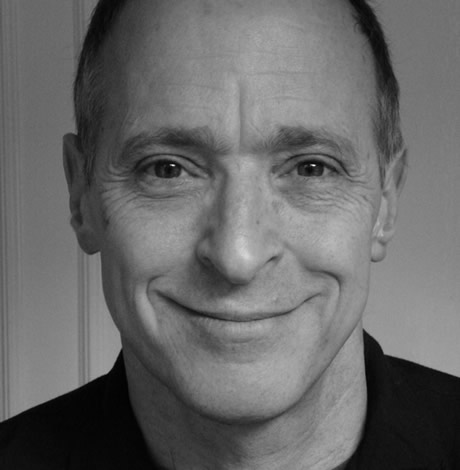
In Manhattan during Christmas time in 1996, exhausted by holiday cheer, a tableau in the windows in Barneys New York brought Yuletide peace to my neurotic heart. In the store’s Christmas display, was a replica of Sigmund Freud’s study, including the Good Doctor himself. You could see Freud, brought to life by the gay essayist David Rakoff, talking to “patients” lying on the couch.
Rakoff, a prize-winning humorist, who wrote with wit and poignancy on topics from his stint as Freud to his trip on the last flight of the Concorde to his struggles with cancer, died on Aug. 9 at age 47. He is best known for his frequent contributions to the radio program “This American Life” and essays that appeared in “Details” and other magazines as well as in the “New York Times” and other outlets. He received Lambda Literary Awards for his essay collections “Fraud” and “Don’t Get Too Comfortable.”
Born and reared in Canada, Rakoff spent much of his life in New York City. His work is often compared to that of his mentor David Sedaris. Rakoff wrote about himself as being an outsider because he was Jewish, gay and a Canadian native. From this viewpoint, he observed the customs of U.S. culture much as an anthropologist from Mars might report on the mores of Earth.
Too often we pooh-pooh humor – treating comedy and satire as lowly stepsisters to tragedy. Laughter doesn’t mesh with emotional depth or matters of life, we think. But these wrong-headed assumptions misperceive the nature of humor.
“Humor is a serious thing,” renowned humorist James Thurber said, “I like to think of it as one of our greatest…resources, which must be preserved.”
Rakoff, whose essay collection “Half Empty” received the Thurber Prize for American Humor, proves the truth of Thurber’s dictum. His pieces, even when laugh-out-loud funny, are frequently infused with melancholy and filled with mordant reportage; and oases of humor can be found in his most serious essays.
Take Rakoff’s essay “Christmas Freud.” “I am gnawed at by two fears: one, that I’m being upstaged by Linda Evans’s wig in the Blondes window next door,” he writes of being the Yuletide Freud, “and two, that a car…will suddenly lose control…and kill me. An ignoble end, to be sure. A life given in the service of retail.”
In the same piece, Rakoff fantasizes about starting a worldwide “Christmas Freud movement” that would provide “grown-ups and children alike with the greatest gift of all: insight.”
Just as you think, Rakoff’s a fake Freud, but maybe he does provide insight to his “patients,” Rakoff makes you laugh again. “There s an unspeakably handsome man outside the window right now,” he writes, “I hope it is his phone number … how does one cruise someone through a department store window?”
Most of us, if we had cancer, wouldn’t be able to write not only well, but with humor, about our experience. This wasn’t so with Rakoff. “Hodgkin’s disease…is …,” he joked in the essay “I Used to Bank Here, But That Was Long Ago,” “So highly curable…that I like to refer to it as the dilettante cancer.”
A respect for responsibility was intertwined with his humor. In his essay “Isn’t It Romantic,” Rakoff skewers those who romanticize artists and suffering. “It can be delightful…to spend one’s days engaged in carnal hijinks and creative pursuits,” he writes, “Exponentially more delightful … than a life of responsibility.”
Though Rakoff doesn’t pretend that his illness imparts meaning to his life, he doesn’t give in to self-pity. “Everybody’s got something,” he wrote in the piece “Another Shoe,” “…what choice does one really have but…to really take it in, and then…get on with the business of one’s life.”
David, you got on with the business of your life – writing. We’ll miss you more than our words can say. R.I.P.



The felon in the White House, who has lied his way to victory, has now signed his ‘big disgusting bill’ into law. He has managed to get members of Congress to agree to screw their own constituents, and vote for this abomination of a bill.
Republican members of Congress who have said it will be a disaster in their states. Who have said it will force the closure of rural hospitals, and throw seniors out of nursing homes, in their states, because they will lose their Medicaid. Who have said they oppose the bill because it will add $3.3 trillion to the deficit, which young people will suffer for in years to come. They have said they oppose it because it pretends to help those earning tips and overtime, but close reading of the fine print shows it does practically nothing for them. But because their lips are firmly attached to Trump’s ass, they voted for it anyway. It is the biggest transfer of wealth from the poor to the rich in the country’s history. Now if that doesn’t give decent people the incentive they need to fight, to take back their country, nothing will. And when I say fight, I mean with their votes.
To win, Democrats need to stop the self-immolation. Democrats are doing fine across the nation. Winning many special elections for state legislatures and the judiciary. Even when they don’t win, the margins in solid Republican districts are way down. Democrats will win governorships in New Jersey and Virginia this year. So instead of Democrats constantly talking about how bad the polls are for the party, and trashing each other, they need to focus on what it will take to win back Congress in 2026. The best way to start is to trash Republicans. I am concerned about groups like David Hogg’s PAC, and figures like Sen. Bernie Sanders, supporting candidates against sitting Democrats. Spending money and time on primaries against sitting democrats, even old ones, may not be the way to go this cycle. We need one focus — taking back Congress in 2026. That means laser like focus on which seats are winnable; open seats, and Republican seats, in both the House and Senate. Doing this is the only way we can stop the felon in the White House, and his MAGA sycophants in Congress, from doing more damage in his final two years as president. Time to face reality, that is really all that can be done for now.
If Democrats take back the House, they can stop the budget machinations Trump is trying to get done. If Democrats take the Senate, they can stop the felon from getting any more MAGA judges, or disgusting unqualified executive branch nominees, confirmed. Again, that has to be the singular focus for 2026 for anyone serious about stopping Trump. I, too, want younger members of Congress. I would urge older Democrats, those in safe districts, to voluntarily step aside. But spending millions to primary them, when in most cases history shows they will win anyway, seems counterproductive at this time. Choose the best candidates in primaries for open and Republican seats — those with the best chance of winning in the general election. I have given my support at this time to Zach Wahls, running to unseat Sen. Joni Ernst in Iowa.
Democrats must remember that most of the voters in the nation are moderate and concerned with kitchen table issues. So, while there are districts far left candidates can win, like Mamdani who just won the mayoral primary in New York City, we have seen such candidates lose in most of the country. There are takeaways from Mamdani’s win in New York for every candidate, other than everyone likes things for free. I recommend candidates look at the brilliant way he used social media. That is something Democrats around the country need to learn. People, especially young people, get their news that way these days. Then Democrats must accept the midterm elections are really local elections. They will be about what the local Democratic candidate campaigns on, and the contrast to what the Republican Party is doing for, or in most cases to, the voters in that particular district.
If Democrats do anything nationally it should be to flood the airwaves with the negatives of Trump’s bill. If done right Democrats will win. Then stop trashing Democrats who don’t agree with you on every issue. Again, stop listening to the likes of Bernie Sanders, who tells people if they don’t like everything about a Democrat, they can vote for an independent. History tells us that only helps Republicans.
Understand the most important vote any legislator makes is their first one. It determines who will control the legislature. Who will be Speaker of the House, and Majority Leader in the Senate, and most state legislatures. If the vote is for the Democratic leadership, then Democrats control the agenda, and committees. That is how to make a real difference.
Stop listening to those who claim the Democratic Party is not clear on what it stands for. The Democratic platform has been clear for years. Democrats support equality, unions, working people, Social Security, Medicare, and Medicaid. They support the right of women to control their bodies; support equality for the LGBTQ community. Democrats are for a fair immigration policy; doing everything possible to fight climate change, and protect the environment; bringing down prices for groceries, gas, and rent. If Democrats take back control of committees, in both state legislatures, and Congress, they can once again begin to move forward on all those issues.
So, stop the self-immolation, and attack Republicans. They are the enemy of the people, not a Democrat who you may not agree with on every issue. Try to move forward as a united Democratic Party. If everyone understands and does that, Democrats will win in 2025 and 2026, and will stop the felon in the White House before he totally destroys our country.
Peter Rosenstein is a longtime LGBTQ rights and Democratic Party activist.
Opinions
USAID’s demise: America’s global betrayal of trust with LGBTQ people
Trump-Vance administration dismantled agency after taking office
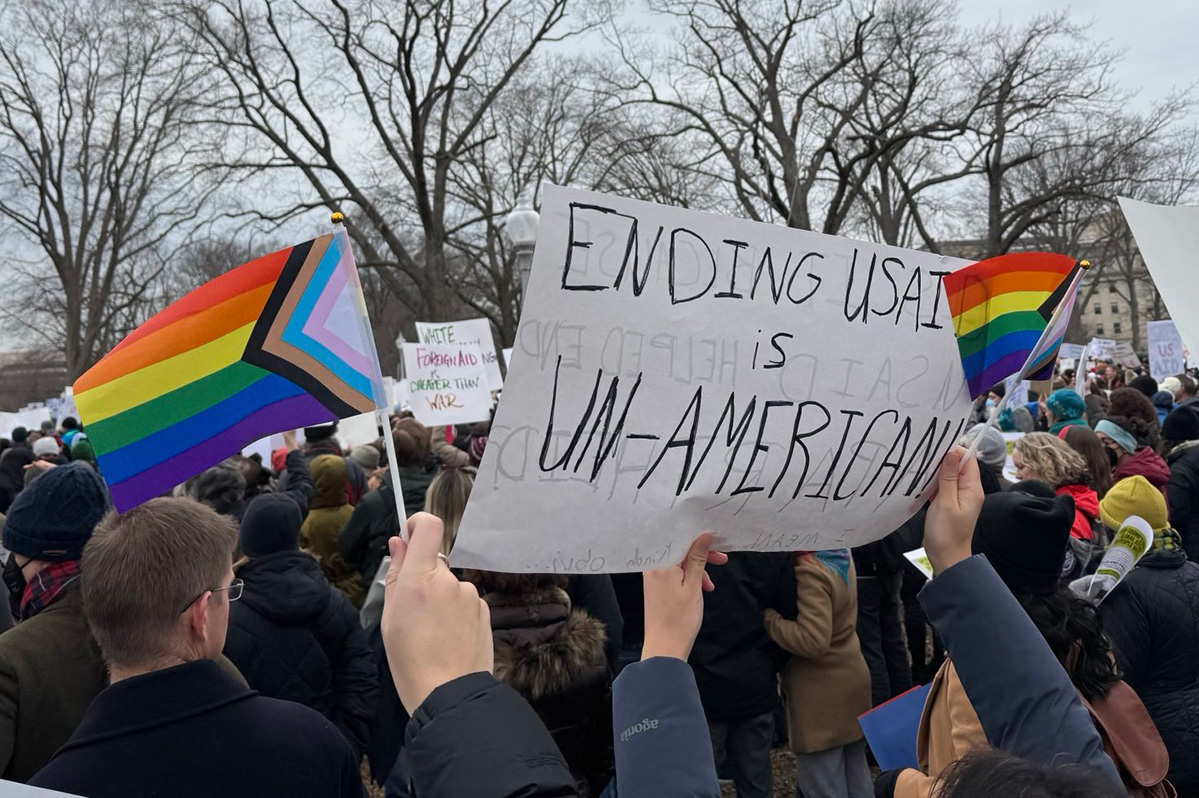
The U.S. Agency for International Development — proudly my institutional home for several years of my international development career and an American institutional global fixture since November 1961 — is no more.
How will USAID’s closure impact LGBTQI+ people around the world, especially in poor, struggling countries (“the Global South”)? Time will tell, but “dire,” “appalling,” and “shameful” are appropriate adjectives, given the massive increase in HIV/AIDS deaths that follow the callous, abrupt, and unspeakably cruel cut-off of funding for USAID’s health and humanitarian programming in HIV/AIDS prevention, treatment, and care.
Regarding LGBTQI+ people and issues, USAID worked in a tough neighborhood. In Africa alone, more than 30 countries in which USAID had programming still criminalize same-sex relationships, often to the point of imposing the death penalty. These fiercely anti-LGBTQI+ countries share harsh anti-LGBTQI+ punishments with most countries in the Middle East and North Africa. Other countries where USAID formerly worked retain colonial-era sodomy laws.
Where did USAID fit into all this turbulence? The agency was not allowed to transgress local laws, so how could it support the human rights of local LGBTQI+ people? USAID did so by building close and trusting relationships with local LGBTQI+ civil society, and by “superpower advocacy” for the universal human rights of all people, including those of us in the queer community.
I served at USAID’s Africa Bureau under the Obama administration, becoming the only openly transgender political appointee in USAID’s history. In that role, I was privileged to have a platform that caught the astounded attention of both queer people and of anti-LGBTQI+ governments around the world. If the president of the United States can elevate a transgender woman to such a senior position within the U.S. government, that open declaration of acceptance, inclusion, worth, and recognition set a precedent that many in the LGBTQI+ community worldwide hoped their countries would emulate.
Serving as an openly queer person at USAID also afforded me the opportunity to meet with many fiercely anti-LGBTQI+ senior politicians and government officials from African countries who sought USAID funding. Uganda’s first woman speaker of the parliament, Rebecca Alitwala Kadaga and her whole delegation came to see me at USAID in Washington about such funding. I had some very frank (and USAID-approved) “talking points” to share with her and her team about President Obama’s strong and secular commitment to equal human rights for all people. My tense meeting with her was also an opportunity to educate her as to the nature of the transgender, nonbinary, and intersex community — we who are simply classified and discriminated against as “gay” people in Uganda and in most countries in the Global South. I also had the chance to represent USAID in the “inter-agency” LGBTQI+ human rights task team led by openly gay U.S. Ambassador David Pressman, whose effective leadership of that Obama-era initiative was inspirational.
Working closely with professional, capable, and caring USAID career employees such as Ajit Joshi and Anthony Cotton, and with the strong and open support of the USAID Deputy Administrator Don Steinberg, I helped to craft and promote USAID’s very first LGBTQI+ policy. Under President Obama, USAID also created the LGBT Global Development Partnership, a public-private partnership supporting LGBTQI+ civil society groups throughout the Global South. USAID funding also increased for programs promoting LGBTQI+ inclusion, anti-violence, and relevant human rights protections. This programming expanded further (albeit never adequately funded) during the Biden administration under the able leadership of USAID Senior LGBTQI+ Coordinator Jay Gilliam and his team.
So what did it all mean? Has USAID left a footprint for the global LGBTQI+ community? Will its absence matter?
In my view, that answer is an emphatic yes. International development and humanitarian response go to the heart of recognizing, respecting, and caring about universal human dignity. USAID converted those ethical commitments into tangible and meaningful action, again and again, and modelled for the world what it means to truly include all persons.
My time serving at USAID was a high point of my career, being surrounded by the best of American civil servants and foreign service officers. For me, “USAID Forever” remains my battle cry. Let’s start thinking of how we will rebuild it, beginning in three years.
Chloe Schwenke is a professor at Georgetown University’s McCourt School of Public Policy.
Opinions
Community comes together to repair WorldPride history exhibition
Vandals damaged pictures, timeline walls on June 22

Earlier this month, vandals shouting homophobic slurs damaged the 8-foot hero cubes and timeline walls of the Rainbow History Project’s (RHP) WorldPride exhibition “Pickets, Protests, and Parades: The History of Gay Pride in Washington.” The week’s incident was the fifth homophobic attack on the exhibition chronicling DC’s LGBTQ+ History, the vandalism damage was only made worse by the storms this past week.
In response, RHP posted a call online for volunteers and donations and over a dozen volunteers showed up on Saturday to repair the exhibition in its final stretch.
It took three hours, but the group assembled during a heat advisory to bend the fences back into place, fix the cubes and zip tie all the materials together to keep them safe. Some of those who came out to volunteer, Slatt said, were known RHP volunteers but most were total strangers who had attended an event here or there or just wanted to get involved for the first time, one was even in D.C. as an out-of-town guest and after seeing the Instagram call, decided to spend their day lifting some heavy fencing back into place.
When asked why they showed up, volunteer Abbey said: “especially during Pride month, it’s so important to come together as a community, not just to celebrate, but to support each other. To know that this historic exhibit is even able to exist right now under this administration is really amazing. The fact that we’re just able to help continue it in its last leg of being out here is really important.”
“Rainbow History Project does a lot of work for the community,” another volunteer Ellie said, “they show up in a lot of ways that I think we really need right now, so in terms of being asked to come out and do a couple hours of lifting, that is something that we can easily support and do.”
“We put out a call asking for support from the community, and so we didn’t know what we’d get,” Slatt continued, “but strangers have shown up. We were upset, we were crying. We were trying to come up with a battle plan and more and more people have shown up with open arms and empty hands to do this. It’s 95 degrees, we are melting in the heat. It’s just amazing the number of people who have come here.”
If anything, the anonymous exhibit designer said, the people who vandalized the exhibit made the community stronger and mobilized members passionate about preserving and sharing our histories. Their efforts backfired in a big way — bringing together people who had only attended one or two RHP events or had read about the organization online to actively contribute to the work.
It’s a meaningful representation of the history of D.C.’s LGBTQ+ community, one that often starts with a small group of people who come together to protest but soon mobilize their communities and enact monumental change in the nation’s capital.
“If Pride in D.C. started with 10 people picketing the White House,” Slatt remarked, “you just got 12 more to join the gay history movement.”
This was especially poignant, another volunteer Mattie said, on the week that the Supreme Court issued a decision allowing Tennessee to ban puberty blockers and hormone therapy for minors seeking gender affirming care. It was a devastating moment for the LGBTQ+ community who mobilized once more in front of the Supreme Court this past Friday.
“It’s been actually really important to see this community come together in the face of direct attack on our history in the wake of direct attacks on our rights,” Mattie said, “and we stand up to that. We come together, and we represent. That is so important to maintaining our strength and our community throughout trying times now and ahead.”
When asked about how community members can support RHP’s work and repair the damage long-term to the exhibit, Slatt urged people to donate to RHP, to volunteer as exhibit monitors, and to come visit the exhibit.
“We’ve been doing this for 25 years. This is our 25th anniversary, and if it weren’t for volunteers donating their time and their talents, if it weren’t for small dollar donors, we would never have gotten anything done,” Slatt said. “I’d say to anyone out there that we are on this plaza all through Independence weekend, we are here through the Smithsonian Folklife Festival, people can come on down.”
Slatt and other volunteers will be leading tours each evening at 7 p.m. at Freedom Plaza, and people can pre-order the exhibition catalog right now, which will be delivered in time for LGBTQ+ History Month in October.
Emma Cieslik is a D.C.-based museum worker and public historian.

Gay ANC member announces candidacy for Ward 1 D.C. Council seat

ICYMI: ‘Overcompensating’ a surprisingly sweet queer treat

Democrats need to stop the self-immolation

Spanish women detail abuses suffered in Franco-era institutions

PHOTOS: Independence Day Weekend in Rehoboth

Treasury Department has a gay secretary but LGBTQ staff are under siege

Defying trends, new LGBTQ center opens in rural Winchester, Va.

Gay GOP group hosts Ernst, 3 House members — all of whom oppose Equality Act

USAID’s demise: America’s global betrayal of trust with LGBTQ people

D.C. police seek public’s help in July 5 murder of trans woman
-
 Federal Government2 days ago
Treasury Department has a gay secretary but LGBTQ staff are under siege
-
 Virginia3 days ago
Defying trends, new LGBTQ center opens in rural Winchester, Va.
-
 District of Columbia2 days ago
Gay GOP group hosts Ernst, 3 House members — all of whom oppose Equality Act
-
 Opinions4 days ago
USAID’s demise: America’s global betrayal of trust with LGBTQ people