News
Utah places ‘on hold’ recognition of same-sex marriages
Letter to staff comes after Supreme Court issued a stay on gay nuptials
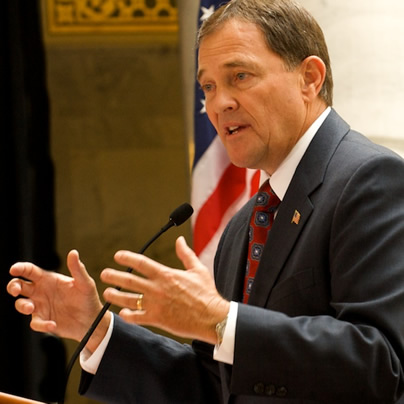
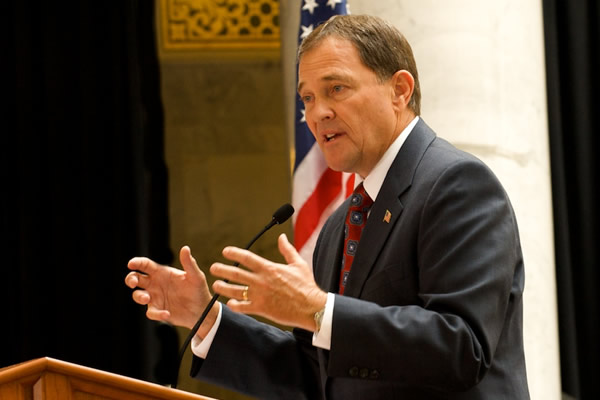
Utah Gov. Gary Herbert has placed on hold recognition of same-sex marriages in Utah. (Photo public domain)
Utah Gov. Gary Herbert has placed on hold recognition of same-sex marriages in the state following a stay on gay nuptials put in place this week by the Supreme Court.
The governor’s chief of staff Derek Miller indicated recognition of same-sex marriages would be placed on hold in an email Tuesday to Cabinet members on Herbert’s staff.
“Based on counsel from the Attorney General’s Office regarding the Supreme Court decision, state recognition of same-sex marital status is ON HOLD until further notice,” Miller writes.
On Monday, the Supreme Court placed a stay on marriage equality in Utah, which started occurring in the state on Dec. 20 after U.S. District Judge Robert Shelby ruled against Amendment 3, the state law prohibiting same-sex marriage. Utah state officials — Herbert and Attorney General Sean Reyes— requested the stay on gay nuptials pending the results of the litigation, which is currently before the U.S. Tenth Circuit Court of Appeals.
Although the letter doesn’t explicitly say for how long the hold recognition on same-sex marriages will last, the suggestion is that the state won’t recognize the marriages until the courts say otherwise. Nate McDonald, a Herbert spokesperson, said the hold on recognition of same-sex marriages will continue “until it goes through the legal process.”
Chad Griffin, president of the Human Rights Campaign, criticized Herbert for the decision, saying it “harms hundreds of Utah families” seeking legal protections.
“Governor Herbert has once again planted himself firmly on the side of discrimination by preserving the second-class status he believes gay and lesbian Utahans merit,” Griffin said. “These families deserve better and I have no doubt the courts will soon grant them the justice and equality that our Constitution demands.”
Elizabeth Cooper, a law professor at Fordham Law School, said Utah has taken a highly unusual step by not recognizing the same-sex marriages because a stay should only freeze more from occurring and not be retroactive.
“Although the state may believe it is stabilizing the situation, it, in fact, is adding more uncertainty to the situation,” Cooper said. “The issue of whether same-sex couples may marry in Utah ultimately will be answered by the courts, not by the state’s unilateral action. Had it wanted to legitimately roll back the clock, the state should have petitioned the courts with its request.”
One question that remains is whether the federal government will recognize the same-sex marriages if Utah won’t recognize them. On Wednesday, Dena Iverson, a Justice Department spokesperson, said, “The department is reviewing the governor’s decision.”
Adam Umhoefer, executive director of the American Foundation for Equal Rights, joined other LGBT advocates in calling for federal government to recognize the marriages.
“These families should not be stuck in legal limbo while the State’s appeal plays out,” Umhoefer said. “We call on the federal government to give them some measure of human dignity to which they are constitutionally entitled by recognizing their marriages under federal law.”
The complete email follows:
Dear Cabinet,
I’m sure you are all aware of the issuance of the stay regarding same-sex marriage in Utah from the United States Supreme Court yesterday. This stay effectively puts a hold on the decision of the district court, which found state laws prohibiting same-sex marriage in Utah to be unconstitutional.
After the district court decision was issued on Friday, December 20th, some same-sex couples availed themselves of the opportunity to marry and to the status granted by the state to married persons. This office sent an email to each of you soon after the district court decision, directing compliance.
With the district court injunction now stayed, the original laws governing marriage in Utah return to effect pending final resolution by the courts. It is important to understand that those laws include not only a prohibition of performing same-sex marriages but also recognizing same-sex marriages.
Based on counsel from the Attorney General’s Office regarding the Supreme Court decision, state recognition of same-sex marital status is ON HOLD until further notice. Please understand this position is not intended to comment on the legal status of those same-sex marriages – that is for the courts to decide. The intent of this communication is to direct state agency compliance with current laws that prohibit the state from recognizing same-sex marriages.
Wherever individuals are in the process of availing themselves of state services related to same-sex marital status, that process is on hold and will stay exactly in that position until a final court decision is issued. For example, if a same-sex married couple previously changed their names on new drivers licenses, those licenses should not be revoked. If a same-sex couple seeks to change their names on drivers licenses now, the law does not allow the state agency to recognize the marriage therefore the new drivers licenses cannot be issued.
We appreciate your patience and diligence in this matter. We recognize that different state agencies have specific questions and circumstances that will need to be worked through. Please do so with the Assistant Attorney General assigned to your respective agency in coordination with the Governor’s General Counsel. We also recognize that these changes affect real people’s lives. Let us carefully and considerately ensure that we, and our employees throughout the state, continue to treat all people with respect and understanding as we assist them.
Regards,
Derek B. Miller
Chief of Staff
Governor’s Office
State of Utah





The Comings & Goings column is about sharing the professional successes of our community. We want to recognize those landing new jobs, new clients for their business, joining boards of organizations and other achievements. Please share your successes with us at [email protected].
The Comings & Goings column also invites LGBTQ college students to share their successes with us. If you have been elected to a student government position, gotten an exciting internship, or are graduating and beginning your career with a great job, let us know so we can share your success.
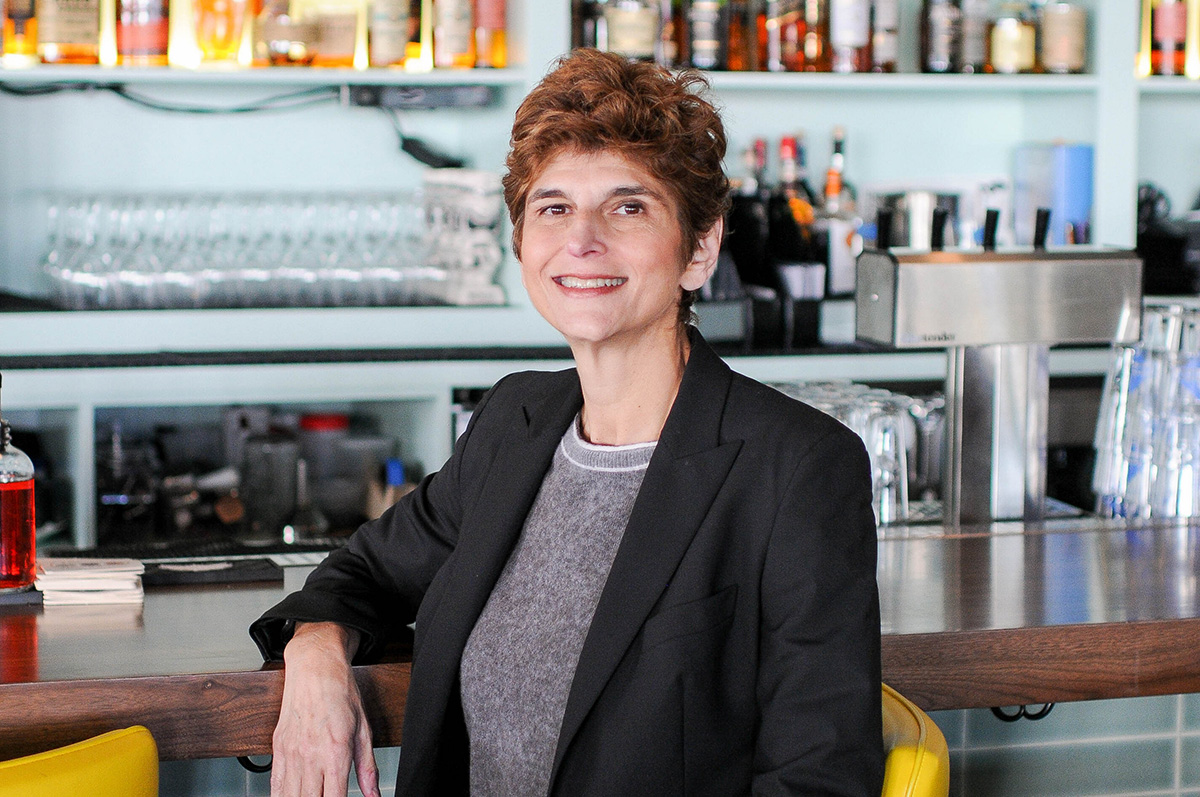
Congratulations to Jamie Leeds, chef extraordinaire, and owner of Hank’s Oyster Bars, as she ventures into some new areas. Leeds is an award-winning Washington, D.C.–area chef, restaurateur, and entrepreneur with more than three decades of experience shaping the region’s dining scene.
Her first new venture is a restaurant opening in Alexandria this week. It will be called Hank’s Pasta Bar, bringing a personalized twist to classic Italian dining with a hiddenrestaurant-inside-a-restaurant in Old Town, Alexandria. The new trattoria is above Hank’s Oyster Bar, and will feature a build-your-own menu, marking a new direction for Leeds in partnership with chef Darren Norris. Norris brings more than three decades of experience to Hank’s Pasta Bar, with a foundation grounded in Italian cooking. The grand opening was scheduled for May 14. The elevated casual eatery blends an inventive chef-driven menu with an easy-going, sit-down dining experience that puts guests in charge. Hank’s Pasta Bar bridges the gap between elevated fast casual, like Norris’s Shibuya, and full-service dining, like Leeds’s Hank’s Oyster Bar. Diners order electronically at the table, but unlike fast casuals, food and beverages are delivered on plate ware, and a server is on site at all times.
The restaurant-inside-a-restaurant, welcomes guests to dine in with a full bar, including Italian wines and craft cocktails, maintaining its focus on traditional Italian fare with contemporary touches, including a build-your-own pasta bowl experience starting at $16. Create your own pasta bowl from seven artisanal pastas (including gluten-free), nine made-in-house sauces, proteins, vegetables, and toppings. Leeds said, “It’s the kind of place you’d find down a side street in a Tuscan hill town, after being tipped off by a friend who says, ‘trust me.’ If you know, you know.”
The restaurant will continue Hank’s community partnerships, including with Real Food for Kids, supporting programs that improve school food and nutrition equity.
In addition to this you should try Jaimie’s other new venture. Back Door Taco at Hank’s in Dupont Circle. You walk down the alley from 17th Street to the back door of Hank’s, and enter a small patio to partake of great tacos and interesting cocktails.
District of Columbia
HIV Vaccine Awareness Day set for May 18
Whitman-Walker joins nationwide recognition of efforts to develop vaccine
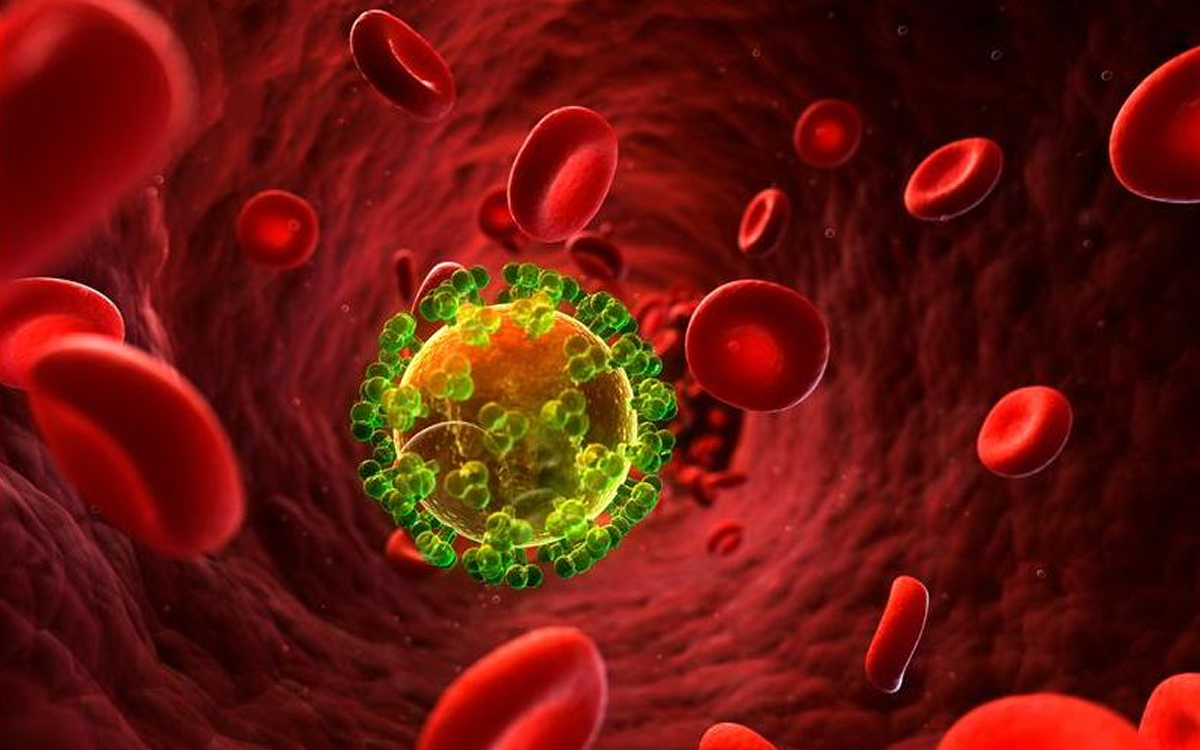
Whitman-Walker Health, the D.C.-based community healthcare center that specializes in HIV/AIDS and LGBTQ-related health services, will join health care advocates from across the country to support efforts to develop an HIV vaccine on HIV Vaccine Awareness Day on May 18.
“HIV Awareness Day, observed annually on May 18, was established to recognize and thank the volunteers, scientists, health professionals, and community members working toward a safe and effective prevention HIV vaccine,” Whitman-Walker said in a statement.
“Led by the National Institutes of Health’s National Institute of Allergy and Infectious Diseases (NIAID), the day is also an opportunity to educate communities about the critical importance of preventive HIV vaccine research,” the statement says.
It adds, “The reality is that any new vaccine discovery must be built community by community, institution by institution, and then it must reach everyone – especially the communities who have carried the heaviest burden of this epidemic.”
On its own website, the National Institutes of Health says HIV Vaccine Awareness Day also highlights its longstanding efforts, coordinated by its Office of AIDS Research, to support researchers’ efforts to develop an HIV vaccine.
“Researchers are making promising headway in efforts to develop a safe, effective HIV vaccine,” it says in a statement on its website.
A Whitman-Walker spokesperson said Whitman-Walker was not holding a specific event to observe HIV Vaccine Awareness Day, but it will recognize the day as a way of encouragement for its ongoing work to address the AIDS epidemic and support for vaccine research.
“Today, no one has to die from HIV,” said Whitman-Walker’s Health System division’s CEO, Dr. Heather Aaron in the Whitman-Walker statement. “We have the treatments, the technology, and the research to change outcomes, and yet people in our community are still dying from HIV//AIDS,” she said in the statement.
“That is unacceptable, and it is exactly why our work continues,” she added. “Here in D.C. with more focus on Southeast D.C., the Whitman-Walker Health System remains committed to making a difference through cutting-edge research, policy advocacy, and philanthropy, because fair access to life-saving treatment is not a privilege. It is a right.”
World
This year’s IDAHOBiT to highlight democracy
Criminalization laws, US funding cuts among global movement’s challenges

Activists around the world on Sunday will mark the International Day Against Homophobia, Transphobia, and Biphobia.
The IDAHOBiT Advisory Group — which includes 18 LGBTQ and intersex rights organizations around the world — in a press release notes IDAHOBiT events are expected to take place in more than 60 countries. Advocacy groups are also using IDAHOBiT to highlight discrimination and violence based on sexual orientation and gender identity and other LGBTQ-specific issues.
Caribe Afirmativo, a Colombian advocacy group, on May 8 released a report that notes one LGBTQ person was reported murdered in the country every 32 hours in 2025. Caribe Afirmativo also said the Colombian government has not done enough to address anti-LGBTQ violence.
“The evidence is clear: violence against LGBTIQ+ persons in Colombia does not begin with homicide, but with tolerated prejudice and ignored threats,” reads Caribe Afirmativo’s report. “In 2025, the State not only failed to protect — it also failed to count, investigate, and sanction. The crisis is not invisible. It is structural. And it requires an urgent, comprehensive, and sustained response.”
The Initiative for Equality and Discrimination, a Kenyan group known by the acronym INEND, issued a report that details how the country’s law enforcement treats LGBTQ and intersex people. “A widespread pattern of arbitrary arrests, extortion, and both physical and sexual violence” are among the abuses the INEND report notes.
“These abuses not only inflict severe physical and psychological trauma but also foster a widespread distrust of the law enforcement, further marginalizing the community and hindering its ability to seek justice, access essential services such as healthcare, and fully enjoy fundamental freedoms,” it reads.
IDAHOBiT commemorates the World Health Organization’s declassification of homosexuality as a mental disorder on May 17, 1990. This year’s IDAHOBiT theme is “At the Heart of Democracy.”
This year’s IDAHOBiT will take place against the continued impact that the lack of U.S. funding is having on the global LGBTQ and intersex rights movement.
The IDAHOBiT Advisory Group notes consensual same-sex sexual relations remain criminalized in 65 U.N. member states, and the number of countries with criminalization laws increased in 2025. The IDAHOBiT Advisory Group also indicates more than 60 countries have laws that restrict “freedom of expression related to sexual and gender diversity issues.”
“No matter where we live, who we are, or the faiths that drive us, most people want to nurture neighborhoods and communities where every life can bloom,” said the IDAHOBiT Advisory Group. “But today, reactionary governments worldwide are poisoning our gardens with the invasive weeds of their authoritarian policies and exclusionary legislations.”
‘Progress is still happening’
Activists around the world since last year’s IDAHOBiT have seen several legal and political victories.
New Hungarian Prime Minister Péter Magyar on April 12 defeated his predecessor, Viktor Orbán, whose government faced widespread criticism over its anti-LGBTQ crackdown.
The Eastern Caribbean Supreme Court last July struck down St. Lucia’s colonial-era laws. The Dominican Republic’s Constitutional Court a few months later ruled the country’s National Police and Armed Forces cannot criminalize consensual same-sex sexual relations among its members. Botswana late last month repealed a provision of its colonial-era penal code that criminalized homosexuality.
A Hong Kong judge last September ruled in favor of a lesbian couple who sought parental recognition for their son. The European Union Court of Justice over the last year issued two landmark decisions: one said EU countries must recognize same-sex marriages legally performed in other member states and another directed member states to allow transgender people to legally change their name and gender on ID documents.
“Time and again, LGBTQIA+ people have resisted, rolled up their sleeves together with all the good people caring about their communities, and sowed the seeds of change,” said the IDAHOBiT Advisory Group in its press release.

Honey, have we been priced out of gay paradise?

Comings & Goings

IDAHOBiT a reminder we all must stand up against transphobia

Disillusioned about democracy? Think of it as a community garden

‘The Inheritance’ is most-nominated at this year’s Helen Hayes Awards

Jason Collins dies at 47

Polish government to recognize same-sex marriages from EU countries

European Commission says all EU countries should ban conversion therapy

Pride faith services in Washington, D.C.