Commentary
Bruce Jenner’s transition is the most public ever
Kudos to ABC News for responsible interview
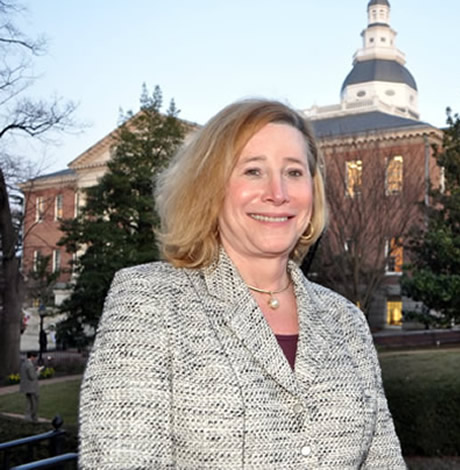
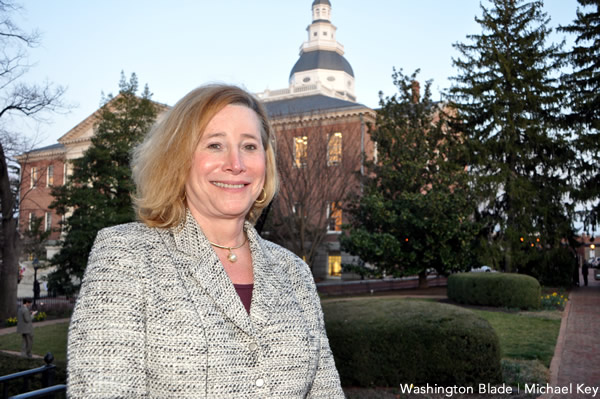
Dana Beyer is a longtime LGBT rights advocate. (Washington Blade file photo by Michael Key)
After months of teasing, tabloid intrusions, a fatal car crash and a trans community holding its breath, America’s hero, who, in Sawyer’s words, “embodied the muscle and glory of America,” had come home, and said, simply, “I am a woman.”
Most remarkably, Jenner, who still wants to be called Bruce and “he” at this stage of the transition, a transition that has progressed in fits and starts for 30 years, was humble and respectful to the trans community. Admitting his ignorance and stating, “I am not a spokesperson for the community,” nevertheless he was proud and hopeful that his courage, recognized by all of his children and his mother, his sister and his exes, would bring about change. Considering that fewer than 10 percent of Americans knew a trans person before Friday night, that change is very likely. The vast reach of this program, on television and social media, globally as well as nationally, makes this the most public of all gender transitions. His refusal to be personally dragged into tabloid style journalism comes as a relief to many who feared the worst.
Jenner’s story is one I could have written for myself, one familiar to me from my friends and colleagues. It’s a story of the trans movement of the past half century, but most importantly, can now be seen as just the beginning of the story. The discussion about trans children, highlighted by the very common, now classical tale of most adult trans women having been confused about their gender as children, laid a marker for the next generation. Drs. Norman Spack and Jo Olson spoke eloquently about their work with children, and to ABC News’ credit, they only promoted one opponent of transition, Dr. Stephen Levine. His words were relatively benign and lost in the overwhelming positivity of the representatives from the trans community, from Professor Jenny Boylan to model Geena Rocero and political and corporate activist Diego Sanchez.
The role of the Kardashians was minimized, as Jenner made clear he was a Jenner, not a Kardashian. Yet the Kardashians, like Jenner’s children, were also highly supportive of their stepfather. Very significantly, while the program followed the traditional structure of a trans coming-out story, with the visit to the childhood home, replete with decades of family photo albums, Jenner made it very clear he would stay away from the salacious. He stated that, “filming and shooting [surgery] would be degrading.” So we weren’t, and can hope not to be, subjected to the usual shots pre and post-operatively, and maybe even spared the makeup lessons and getting dressed. After all, how exciting is watching all that? This is real progress in the evolution of telling trans stories.
Notably Jenner emphasized that his brain was always more female than male, that while he never felt “trapped in the wrong body” it was a situation that he knew was a fact of his life, and that the lonely, introverted child who rarely socialized has never really disappeared. As Dr. Spack said very simply about all trans persons, “If they were wonderful people before, they’ll be wonderful people after.” Transition just makes you authentic; it doesn’t change your personality or character.
Like most trans women of his generation, he tried to prove his masculine gender to himself, but in spite of being hailed as the greatest male athlete of 1976, he felt defeated by his failure to be himself. If that won’t give pause to the proponents of reparative therapy for trans kids, nothing will. It’s fitting that Jenner’s story has arrived so soon after the statement from the White House in opposition to conversion therapy for gay and trans kids. There must be some very unhappy Republicans listening to this religious person speak so clearly and humbly.
Oh, wait, it gets worse – Jenner is also a Republican! Not a surprise, as wealth and privilege do have a habit of causing people to prioritize their personal assets over societal needs. Jenner isn’t the first Republican public transitioner, either, as Susan Stanton had him beat by almost a decade. While he said he’s willing to meet with Sen. Mitch McConnell and House Speaker John Boehner, I have a feeling he will learn quickly just who his friends really are. He unassumingly recognized that much of the trans community fares far worse than he because of his class and racial status, and I don’t expect the Republican Party to embrace him. But if Ted Cruz would love his daughters if they were gay, I suppose anything is possible.
This program was an example to America of responsible journalism, free from titillation and the usual intrusive questions. It should also be an example to those Republican legislators who have introduced a slew of anti-trans (and anti-gay) legislation this year, particularly targeting children in school. There is hope that after seeing this broadcast their shame will cause them to reconsider and back down like some of their colleagues have already done.
And as for Nikolai Avilov, 1976 decathlon bronze medalist from the defunct Soviet Union – “yes, you former commie bastard, you did lose to a woman.”




Commentary
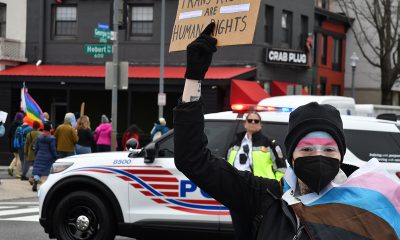
Protecting the trans community is not optional for elected allies and candidates
One of oldest political tactics is blaming vulnerable group for societal woes

Being an ally to the trans community is not a conditional position for me, nor should it be for any candidate. My allyship doesn’t hinge on polling, focus groups, or whether courage feels politically convenient. At a time when trans people, especially trans youth of color, are under coordinated attack, elected officials and candidates must do more than offer quiet support. We must take a public and solid stand.
History shows us how these moments begin. One of the oldest political tactics is to single out the most vulnerable and blame them for society’s anxieties — not because they are responsible, but because they are easier to blame than those with power and protection. In Nazi Germany, Jewish people were primarily targeted, but they were not the only demographic who suffered elimination. LGBTQ people, disabled people, Romani communities, political dissidents, and others were also rounded up, imprisoned, and killed. Among the earliest acts of fascistic repression was the destruction of Berlin’s Institute for Sexual Science, a pioneering center for gender-affirming care and LGBTQ research. These books and medical records were among the first to be confiscated and burned. It is not a coincidence that these same communities are now the first to suffer under this regime, they are our canaries in the coal mine signaling what’s to come.
Congress, emboldened by the rhetoric of the Donald Trump campaign, recently passed HR 3492 to criminalize healthcare workers who provide gender-affirming healthcare with fines and imprisonment. This bill, sponsored by celebrity politicians like Marjorie Taylor Greene, puts politics and headlines over people and health outcomes. Healthcare that a number of cis-gendered people also benefit from byway of hair regeneration and surgery, male and female breast augmentation, hormone replacement therapy etc. Even when these bills targeting this care do not pass, they do real damage. They create fear among patients, legal uncertainty for providers, and instability for clinics that serve the most marginalized people in our communities.
Here in D.C., organizations like Planned Parenthood and Whitman-Walker Health are lifelines for many communities. They provide gender-affirming care alongside primary care, mental health services, HIV treatment, and preventative medicine. When healthcare is politicized or criminalized, people don’t wait for court rulings — they delay care, ration medication, or disappear from the system entirely.
As a pharmacist, I know exactly what that means. These are life-saving medications. Continuity of care matters. Criminalizing and politicizing healthcare does not protect children or families — it puts lives at risk.
Instead of centering these realities, political discourse has been deliberately diverted toward a manufactured panic about trans women in sports. Let me be clear: trans women deserve to be protected and allowed to compete just like anyone else. Athletics have always included people with different bodies, strengths, and abilities. Girls and women will always encounter competitors who are stronger or faster — that is not a gender or sports crisis, it is the nature of competition.
Sports are meant to teach fairness, mutual respect, and the shared spirit of competition — not suspicion or exclusion. We should not police young people’s bodies, and we should reject attempts to single out trans youth as a political distraction. Families and doctors should be the authority on sex and gender identity.
This narrative has been cynically amplified by the right, but too often Democrats have allowed it to take hold rather than forcefully rejecting it. It is imperative to pay attention to what is happening — and to push back against every attempt to dehumanize anyone for political gain.
Trans people have always been part of our communities and our democracy. Protecting the most vulnerable is not radical — it is the foundation of a just society. My work is grounded in that commitment, and I will not waver from it. I’m proud to have hired trans political team Down Ballot to lead my campaign for DC Council At Large. We need more ally leaders of all stages to stand up for the LGBTQ+ community. We must let elected detractors know that when they come for them, then they come for all of us. We cannot allow Fox News and social media trolls to create a narrative that scares us away from protecting marginalized populations. We must stand up and do what’s right.
Anything less is not leadership.
Rep. Oye Owolewa is running for an at-large seat on the D.C. Council.
Commentary
America is going in the wrong direction for intersex children
Lawmakers are criminalizing care for trans youth, while permitting irreversible harm to intersex babies

I live with the consequences of what America is willing to condone in the name of “protecting children.”
When I was young, doctors and adults made irreversible decisions about my body without my informed consent. They weren’t responding to an emergency. They were responding to discomfort with innate physical differences and the social and medical pressure to make a child’s body conform to a rigid female-male binary. That’s the part people like to skip over when they talk about “child welfare”: the harm didn’t begin with my identity. It started with adults deciding my healthy body needed fixing.
That’s why the hypocrisy unfolding right now from statehouses to Capitol Hill feels so familiar, and so dangerous.
While harmful medical practices on intersex children, the nearly 2 percent born with differences in one or more of their physical sex characteristics, have been ongoing in the U.S. for decades, until recently, there was no law specifically condoning it.
This month, House Republicans passed one of the most extreme anti-trans bills in modern American history, advancing legislation that would criminalize gender-affirming medical care for transgender youth and threaten doctors with severe penalties for providing evidence-based treatment. The bill is framed as a measure to “protect children,” but in reality, it weaponizes the criminal legal system against families and providers who are trying to support young people in surviving adolescence.
At the same time, the administration has proposed hospital and insurance policies designed to choke off access to affirming care for trans youth nationwide by making providers fear loss of federal funding, regulatory retaliation, or prosecution. This is a familiar strategy: don’t just ban care outright; instead, make it so risky that hospitals stop providing it altogether. The result is the same everywhere. Young people lose access to care that major medical associations agree can be lifesaving.
All of this is happening under the banner of preventing “irreversible harm.”
But if America were genuinely concerned about irreversible harm to minors, the first thing lawmakers would address is the medically unnecessary, nonconsensual surgeries still performed on intersex infants and young children, procedures that permanently alter healthy tissue, often without urgent medical need, and long before a child can meaningfully participate in the decision. Human rights organizations have documented for years how these interventions are justified not by medical necessity, but by social pressure to make bodies appear more typically “female” or “male.”
Here is the uncomfortable truth: all of the state laws now banning gender-affirming care for transgender youth explicitly include exceptions that allow nonconsensual and harmful intersex surgeries to continue.
A recent JAMA Health Forum analysis found that 28 states have enacted bans on gender-affirming care for minors that carve out intersex exceptions, preserving doctors’ ability to perform irreversible “normalizing” procedures on intersex children even while prohibiting affirming care for trans adolescents.
This contradiction is not accidental. It reveals the real priority behind these laws.
If the goal were truly to protect children from irreversible medical interventions, intersex kids would be protected first. Instead, these policies target one group of children, transgender youth, while continuing to permit permanent interventions on another group whose bodies challenge the same rigid sex and gender binary that lawmakers are trying to enforce.
Intersex people are routinely erased from American policy debates, except when our bodies are invoked to justify harmful laws, warning that intersex children are being used as legal loopholes rather than protected as human beings. This “protect the children” rhetoric is routinely deployed to justify state control over bodies, while preserving medical practices that stripped intersex children like me of autonomy, good health, and choice. Those harms are not theoretical. They are lifelong.
What makes this moment even more jarring is that the federal government had finally begun to recognize intersex people and attempt to address the harms suffered.
In 2024, at the very end of his term, the Biden administration released the first-ever intersex health equity report — a landmark admission that intersex people have been harmed by the U.S. health care system. Issued by the Department of Health and Human Services, the report documents medically unnecessary interventions, lack of informed consent, and systemic erasure and recommends delaying irreversible procedures until individuals can meaningfully participate in decisions about their own bodies.
This should have been a turning point. Instead, America is moving in the opposite direction.
On day one, President Trump issued an executive order defining “sex” in a way attempting to delegitimize the existence of transgender Americans that also erased the existence of many intersex people.
When medicine is used to erase difference, it is called protection, while care that supports self-understanding is treated as a threat. This is not about medicine. It is about control.
You cannot claim to oppose irreversible harm to children while legally permitting surgeries that intersex adults and human rights experts have condemned for decades. You cannot claim to respect bodily autonomy while denying it selectively, based on whose bodies make lawmakers uncomfortable.
Protecting children means protecting all children, transgender, intersex, and cisgender alike. It means delaying irreversible interventions when they are not medically necessary. It means trusting and supporting young people and families over politicians chasing culture-war victories.
America can continue down the path of criminalizing care for some children while sanctioning harm to others, or it can finally listen to the people who have lived the consequences.
Intersex children deserve laws that protect their bodies, not politics that hurt and erase them.
Kimberly Zieselman is a human rights advocate and the author of “XOXY: A Memoir”. The author is a co-author of the JAMA Health Forum article cited, which examined state laws restricting gender-affirming care.

Today, on World AIDS Day, we honor the resilience, courage, and dignity of people living with HIV everywhere especially refugees, asylum seekers, and queer displaced communities across East Africa and the world.
For many, living with HIV is not just a health journey it is a journey of navigating stigma, borders, laws, discrimination, and survival.
Yet even in the face of displacement, uncertainty, and exclusion, queer people living with HIV continue to rise, thrive, advocate, and build community against all odds.
To every displaced person living with HIV:
• Your strength inspires us.
• Your story matters.
• You are worthy of safety, compassion, and the full right to health.
• You deserve a world where borders do not determine access to treatment, where identity does not determine dignity, and where your existence is celebrated not criminalized.
Let today be a reminder that:
• HIV is not a crime.
• Queer identity is not a crime.
• Seeking safety is not a crime.
• Stigma has no place in our communities.
• Access to treatment, care, and protection is a human right.
As we reflect, we must recommit ourselves to building systems that protect not punish displaced queer people living with HIV. We must amplify their voices, invest in inclusive healthcare, and fight the inequalities that fuel vulnerability.
Hope is stronger when we build it together.
Let’s continue to uplift, empower, and walk alongside those whose journeys are too often unheard.
Today we remember.
Today we stand together.
Today we renew hope.
Abraham Junior lives in the Gorom Refugee Settlement in South Sudan.

Long-awaited ‘Pillion’ surpasses the sexy buzz

Trump’s ‘American people derangement syndrome’

Reasons to be optimistic about 2026

Using movement to boost your mental health during holidays

Protecting the trans community is not optional for elected allies and candidates
Reasons to be optimistic about 2026

America is going in the wrong direction for intersex children

Rush reopens after renewing suspended liquor license
Long-awaited ‘Pillion’ surpasses the sexy buzz