Opinions
As D.C. celebrates, Md. girds for fight
There’s been much hard earned celebrating in D.C. this week, as the first same-sex couples obtained marriage license applications. The first wedding ceremonies are scheduled to be held next Tuesday.
This was a long and hard road, with the groundwork laid decades ago, election by election, until a supportive Council, mayor and electorate were ready to walk the aisle. Congratulations to all the activists and politicians who worked so hard for this day and to the couples who finally will enjoy at least some of the rights and responsibilities of marriage.
Of course, there are pitfalls ahead. If Republicans retake either the House or Senate in 2010 (or beyond) there’s the likelihood that conservative lawmakers will try to interfere with D.C.’s marriage law via the appropriations process. They’ve done it before with the city’s domestic partner program and needle exchange laws, so there’s no reason to expect Sam Brownback and his ilk to look the other way on marriage.
As the excitement of the moment fades, reality will set in. For some couples, that reality will inevitably include divorce, so it’s imperative that couples take this step seriously and consult lawyers and their accountants before rushing into a marriage just to prove a political point.
And couples that marry in D.C. (or in the handful of other U.S. jurisdictions that allow it) are not entitled to the federal benefits of marriage. That will require repeal of the Defense of Marriage Act, something that this spineless Congress will not attempt anytime soon.
The status of LGBT rights in D.C.’s bordering states of Virginia and Maryland highlights the need for federal action. Without it, D.C. couples that hop the Metro and ride into Maryland or Virginia go from legally married to complete strangers in the eyes of the law upon leaving the city. Although Virginia is a lost cause for the next four years following the election of conservative Gov. Bob McDonnell and anti-gay Attorney General Ken Cuccinelli, there are glimmers of hope in Maryland.
Maryland Attorney General Douglas Gansler last week issued a long-awaited opinion that the state may recognize out-of-state same-sex marriages. The operative word is “may.” It appears that a court ruling or legislation will be required to clarify the law and spell out the rights afforded to same-sex couples.
Morgan Meneses-Sheets, executive director of Equality Maryland, urged state residents with legal marriage licenses from other jurisdictions to start demanding various rights that come with those marriages.
“This is a thorough opinion, and more comprehensive than we expected,” she said. “… Those Marylanders with valid licenses should go to their employers to have their rights recognized.”
Meneses-Sheets said she expects state agencies to begin honoring same-sex marriages immediately but conceded that getting private entities to comply will likely require litigation.
She cited the right of partners of state workers to inherit pensions as one key area to watch. State employees, including those who work in potentially dangerous jobs like law enforcement and firefighting, cannot leave pensions to their partners. Under Gansler’s opinion, that could change, as state agencies are required to comply with state law.
“There are still questions to be answered,” Meneses-Sheets said. “But this increases momentum for full equality in Maryland.” She added that the opinion doesn’t change her group’s strategy, which likely includes pushing for a full marriage bill again in 2011, and noted the opinion “creates a better foundation for our legislative work.”
State Sen. Richard Madaleno (D-Montgomery County), who is gay, requested Gansler’s review of the law nine months ago and Gansler had come under fire — from the left and right — for the delay in releasing it.
There were reports of much behind-the-scenes angst over the opinion, including what exactly it should say and even who should write it. But hopes among LGBT rights supporters were high, given Gansler’s past support for marriage equality, a sharp contrast to Gov. Martin O’Malley, who privately told gay supporters he backed marriage rights during his campaign but then denied it after the state’s high court ruled against gay and lesbian plaintiffs in 2007.
O’Malley has been wishy-washy about his personal views on marriage rights, even though a Baltimore TV station caught him endorsing same-sex marriage on camera years ago. Following Gansler’s opinion, O’Malley released a written statement that, “I expect all State agencies to work with the Attorney General’s office to ensure compliance with the law.” Not exactly a bold stance or ringing endorsement. O’Malley was later quoted by the Washington Examiner as saying Gansler’s opinion “makes sense.”
The Maryland-D.C.-Northern Virginia region is a megalopolis with people living, working, socializing and commuting in and among two states and the District, which makes this patchwork approach to recognizing same-sex relationships more complicated and a likely legal battleground in the years ahead.
So let us celebrate this important milestone in Washington with an eye toward protecting these advances and expanding them to those in other states who aren’t so lucky to live in a place where lawmakers, the mayor, many religious leaders and everyday citizens recognize the value of our loving relationships.





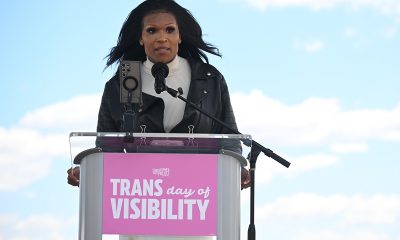


The state of Tennessee has a long history of political discrimination against its 225,000 LGBTQ citizens. In 2019, a district attorney remarked that gay people should not receive domestic violence protections, and in 2023, for five months in Murfreesboro, homosexual acts in public were illegal, prompting a federal judge to have the ordinance removed.
In 2022, I briefly lived in Tennessee and played rugby with the LGBTQ-inclusive Nashville Grizzlies, who welcomed me with open arms as an ally, teaching me that rugby isn’t always about winning or losing – it’s about creating a safe, inclusive, and joyful space for people looking to feel welcome.
In Tennessee, where 87% of the LGBTQ community has experienced workplace discrimination, and where, each year, countless bills that target their identities are introduced, it can be difficult to feel welcome. The Nashville Grizzlies played rugby with the exuberance of newly liberated people who were finally able to be their authentic selves. I was inspired by their brotherhood.
When I read about the Charlie Kirk Act being passed last week, I felt a visceral need to write about it.
While the bill is presented as legislation that strengthens free speech and encourages greater public discourse on campuses, it would effectively allow a school to expel a student who felt compelled to walk out on a speaker with hateful views, forcing marginalized groups to sit through existentially harmful rhetoric.
And ironically, it doesn’t seem like free speech goes both ways — a Tennessee University administrator lost their job last year for sharing negative views on Charlie Kirk, and countless LGBTQ books have been banned not only in schools, but even in adult libraries.
We like to think that as time moves forward, progress is inevitable, but this isn’t always the case. In a 2023 study, 27% of LGBTQ Tennesseans and 43% of transgender people in the state have considered relocating, forcing them to reckon with leaving home in pursuit of a better life. Nashville Grizzlies Captain Ethan Thatcher told me, “I’ve thought about leaving Tennessee. Hard not to when the government does not want you here. What has kept me here is the Grizzlies community, and the thought that existence is resistance.”
Everybody in our country deserves to feel safe. I thought that was a core value of the American ethos, but apparently, in some states, certain groups are welcome while others are ostracized.
Tennessee Gov. Bill Lee should reject the Charlie Kirk Act.
Tyler Kania is a 2025 IAN Book of the Year nominated author and civil rights activist from Columbia, Conn.
Opinions
The latest Supreme Court case erasing LGBTQ identity
Chiles v. Salazar a major setback for movement
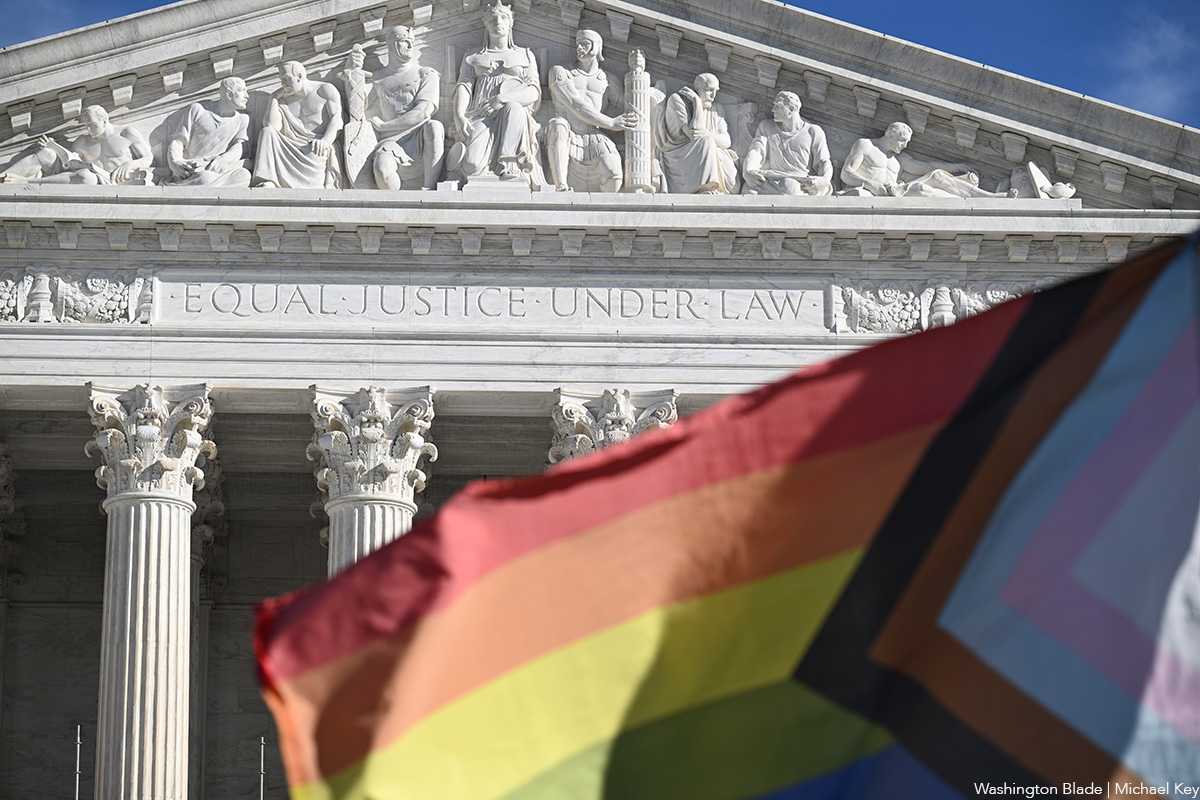
In its recent decision in Chiles v. Salazar, the U.S. Supreme Court invalidated Colorado’s law prohibiting licensed counselors from engaging in efforts to change the sexual orientation or gender identity of minors. The decision, which puts into question similar laws in 22 other states, relied on the First Amendment to hold that the law violates counselors’ free speech rights. But the decision also strikes a blow against LGBTQ dignity, a point the court’s opinion does not even address.
The eight-member majority, which included Justices Elena Kagan and Sonia Sotomayor, who usually side with LGBTQ groups, justified its reasoning by suggesting that the law was one-sided: it permitted treatment that affirms LGBTQ identity but forbade treatment that seeks to change it. But the law is one-sided, as Justice Ketanji Brown Jackson’s lone dissent pointed out, because the medical evidence only supports one side: reams of research show that “survivors of conversion therapy continue to suffer from PTSD, anxiety, and suicidal ideation.” And major medical associations all agree, no evidence demonstrates the efficacy of conversion efforts. This isn’t surprising. Medicine often take sides — some treatments work, and some don’t.
But particularly concerning is the vision of LGBTQ identity that undergirds the majority opinion when compared to the dissent. Justice Jackson’s dissent explains that LGBTQ identity is simply “a part of the normal spectrum of human diversity” — not something to be “cured.” By contrast, for the majority, how best to help LGBTQ minors is “a subject of fierce public debate.” That can hardly be the case if LGBTQ identity stands on equal ground with straight, cisgender identity, or if LGBTQ people are as deserving of safety, rights, and dignity.
Indeed, the LGBTQ rights movement only began in earnest when advocates in the 1960s decided to end the “debate” over gay identity. Until then, community leaders would routinely cooperate with psychiatrists who were interested in researching homosexuality as a medical condition. A new generation of activists, led by Frank Kameny, a key movement founder, began arguing that this got the issue upside down: Rather than wondering if they could be “cured,” LGBTQ people had to assert a right to their identity. As Kameny put it—“we have been defined into sickness.” Only once the case was made that it was society that had to change, and not LGBTQ people, could LGBTQ consciousness, LGBTQ pride and LGBTQ rights develop. Their activism led to the first Pride parade in New York, and the official declassification of homosexuality as a disease in 1973.
The Supreme Court’s conservatives don’t just want to reignite this half-century old medical “debate”; they also treat medical claims that undermine LGBTQ identity very differently from those who support it. Last year, in an opinion backingTennessee’s law that banned gender affirming care for minors, the court sympathetically marched through the reasons Tennessee offered for “why States may rightly be skeptical” of such care, and cited three times, in some detail, to “health authorities in a number of European countries” (that is, some Nordic countries and the UK) that had curbed pediatric care. It failed to mention that most of Western Europe and every major American medical association provides access to this care.
In Chiles, by contrast, the court cites none of the evidence that Colorado amassed that conversion therapy harms LGBTQ children. None of the countries that the court had invoked to justify anti-trans policies allow conversion therapy in their health care systems (indeed, one of them criminalizes such practices). So rather than cite medical evidence, the court simply asked — why trust medical evidence at all? “What if,” asks the court, “reflexive deference to currently prevailing professional views [does] not always end well?” and cites an infamous 1927 Supreme Court case, Buck v. Bell.
In Buck, the Supreme Court embraced eugenic reasoning, backing a eugenic state law that allowed the sterilization of individuals with mental disabilities, on the grounds that such disabilities were hereditary. As Justice Oliver Wendell Holmes opined, “three generations of imbeciles are enough.” Look at what happens when we listen to medical expertise, today’s court seems to say, as an excuse to disregard the LGBTQ-affirming medical evidence they don’t like.
But the court has missed the key lesson of Buck. The law at issue in Buckdiscriminated against a certain group, seeking, through sterilization measures, to erase it from existence. Indeed, LGBTQ people (whom doctors of the day would have referred to as sexual “inverts”) were exactly the kind of people that the eugenic program of Bucksought to eliminate. Conversion therapy seeks similar erasure.
The lesson of the 1960s LGBTQ rights movement remains as relevant today as it was then. Without an unapologetic LGBTQ identity, LGBTQ Pride, LGBTQ rights and the LGBTQ movement itself can all founder. By supporting only the anti-LGBTQ side in this medical saga — and by suggesting that LGBTQ existence is subject to medical debate at all — the court is reaffirming, rather than repudiating, minority erasure.
Craig Konnoth is a professor of law at University of Virginia School of Law.

I was disappointed when the Blade didn’t publish my response to a personal attack on me in a column by Hayden Gise, in last week’s print edition. They did publish it online. To be clear, I have no problem with people disagreeing with my columns and opinions. That is absolutely fair. But when they get into personal attacks, it often means they don’t have enough to say about the ideas they are trying to criticize.
In a recent column ‘Why the Democratic Socialists of America are right for D.C.,’ the author decided to attack me personally. Here is the response I wrote to her column:
“I am responding to a column by Hayden Gise who says in her column she is a transgender, lesbian, Jewish, Democratic Socialist, and supports having the Democratic Socialists of America (DSA) in Washington, DC. She is definitely as entitled to her view on this, as I am to mine. However, I was surprised she clearly felt it important to use the column to attack me personally, without even knowing me. What she didn’t do is respond to the issues in the DSA platform I wrote having a problem with, and which I asked candidates endorsed by the DSA to respond to. 1. Are they for the abolishment of the State of Israel? 2. What is their definition of a Zionist? 3. What is their definition of antisemitism? 4. Will they meet with Zionist organizations? 5. Do they support BDS? One needs to know when a candidate claims they are only a member of the local DSA, according to the DSA bylaws no person can be a member of a local DSA without being a member of the national organization. So Hayden Gise has a little better idea of who I am she should know: I was a teacher and a union member. I worked for the most progressive member of Congress at the time, Bella S. Abzug (D-N.Y.), and supported her when she introduced the Equality Act in 1974, to protect the rights of the LGBTQ community, and have fought for its passage ever since. I have spent a lifetime fighting for civil rights, women’s rights, disability rights, and LGBTQ rights. I have no idea what Hayden Gise’s background is, or what her history of working for the causes she espouses is. But I would be happy to meet with her to find out. But she should know, I take a back seat to no one in the work I have done over my life fighting for equality, including economic equality, for all. So, I will not attack her, as I don’t know her, and contrary to her, don’t personally attack people I don’t know much about.
“I have, and will continue to attack, what the government of Israel is doing to the Palestinian people, and now to those in Lebanon and Iran. I will also attack the government of my own country, and the felon in the White House, and his sycophants in Congress, for what they are doing to our own people, and people around the world, and will continue to work hard to change things. However, I will also continue to stand for a two-state solution with the continued existence of the State of Israel, calling for a different government in Israel. I also strongly support the Palestinian people and believe they must have the right to their own free state.”
I have not heard from Gise, but I hope she knows that since she wrote her column indicating her support for Janeese Lewis George for mayor, her preferred candidate has attended a birthday party to celebrate a person who still refers to gay people as ‘fags.’
We should not personally attack people we don’t know as a way to criticize their views on an issue. Once again, I have no problem with people disagreeing with what I write, and having the Blade publish those contrary columns. But a plea to all who disagree with any columnist, or story: disagree with the issues and refrain from making personal attacks on the writer. That actually takes away from whatever point you are trying to make.
Peter Rosenstein is a longtime LGBTQ rights and Democratic Party activist.

Australia lifts additional restrictions on LGBTQ blood donors

Top EU court strikes down Hungary’s anti-LGBTQ propaganda law

Tennessee’s Charlie Kirk Act is harmful

Victory Fund brunch draws top LGBTQ officials, 2028 hopeful Andy Beshear

Inside the lonely world of MAGA gay men

LGBTQ Catholic groups slam Trump over pope criticism

Calendar: April 17-23

Team DC’s annual gala set for this weekend

The latest Supreme Court case erasing LGBTQ identity