National
‘Don’t Ask’ repeal faces delay, uncertainty
Gates warns Congress not to act; protesters arrested for third time at White House

Supporters of repealing ‘Don’t Ask, Don’t Tell’ have turned up the heat on President Obama in recent weeks. Sunday’s White House protest marked the third time in two months that activists were arrested while demanding action on repeal. (Washington Blade photo by Michael Key)
In the wake of Defense Secretary Robert Gates advising Congress to delay taking action to overturn “Don’t Ask, Don’t Tell,” LGBT advocates remain committed to pushing for repeal this year, but have expressed differing opinions on the best way forward.
In an April 30 letter to House Armed Services Committee Chairman Ike Skelton (D-Mo.), Gates says “in the strongest possible terms” that the Department of Defense must be allowed to conduct its review of lifting the ban on open service before Congress takes “any legislative action.” The report is due to be completed Dec. 1.
Gates says “a critical element” of the review is engaging the armed forces and military families and noted that those in service “must be afforded” the opportunity to share “concerns, insights and suggestions” about the proposed change.
“Therefore, I strongly oppose any legislation that seeks to change this policy prior to the completion of this vital engagement process,” Gates says. “Further, I hope Congress will not do so, as it would send a very damaging message to our men and women in uniform that in essence their views, concerns, and perspectives do not matter on an issue with such a direct impact and consequence for them and their families.”
In a statement responding to the letter, Shin Inouye, a White House spokesperson, said President Obama’s commitment to repealing the ban on service “is unequivocal,” but noted the White House is on board with delaying implementation of repeal.
“That’s why we’ve said that the implementation of any congressional repeal will be delayed until the DOD study of how best to implement that repeal is completed,” he said.
The White House didn’t respond to the Blade’s request to clarify whether this statement rules out an endorsement from Obama on including repeal as part of the upcoming Defense authorization bill or whether the president supports a vote in Congress now to repeal the gay ban, as long as implementation is delayed until 2011.
The impact of the two statements on the effort to achieve legislative repeal of “Don’t Ask, Don’t Tell” this year remains unclear. Some experts previously said repeal was only one or two votes short on the Senate Armed Services Committee, but that may change following Gates’ request for a delay.
David Smith, vice president of programs for the Human Rights Campaign, said repeal remains possible this year.
“We think it should and can happen this year, and that is what we are fighting for,” Smith said. “We continue to work with both the House and the Senate.”
Smith said HRC continues to lobby the White House for support in the effort to repeal “Don’t Ask, Don’t Tell.”
He added the grassroots work and lobbying that HRC is pursuing in six states — Florida, Indiana, Massachusetts, Nebraska, Virginia and West Virginia — would be an important part of the path toward winning the votes necessary for repeal.
In anticipation of the defense authorization bill markup in the Senate Armed Services Committee on May 24, the work is intended to influence key senators on the panel who are uncommitted on repeal: Sen. Bill Nelson (D-Fla.), Sen. Evan Bayh (D-Ind.), Sen. Scott Brown (R-Mass.), Sen. Ben Nelson (D-Neb.), Sen. Jim Webb (D-Va.) and Sen. Robert Byrd (D-W.Va.).
“The key is the votes and we think we’re close and we think that, at the end of the day, we’ll have those votes, and that’s what we continue to work for,” Smith said.
Aubrey Sarvis, executive director of the Servicemembers Legal Defense Network, said the best way to make repeal happen following the publication of the Gates letter is working with repeal advocates on Capitol Hill.
“We strongly believe repeal can happen, but this will require the president to lead the way at this critical hour,” Sarvis said. “To put it bluntly, we need his voice and help now.”
Some Hill supporters of repeal are staying mum following publication of the Gates letter and the White House statement. The office of Senate Armed Services Committee Chairman Carl Levin (D-Mich.) declined to comment on the letter, and the office of Sen. Joseph Lieberman (I-Conn.) didn’t respond to the Blade’s request for comment.
Rep. Patrick Murphy (D-Pa.), the sponsor of repeal legislation in the House, was quoted in an interview with The Advocate this week as saying he was “blindsided” by the Gates letter, but still plans to pursue repeal this year.
“That’s my job — to make sure that we repeal this policy,” he said. “After my three years in Washington, I think when folks tell you to walk away, that’s usually a sign that you’re getting close.”
In the letter, Gates said he was responding to an April 28 inquiry from Skelton, who opposes “Don’t Ask, Don’t Tell” repeal at this time. Skelton’s inquiry and Gates’ letter come on the heels of an announcement from House Speaker Nancy Pelosi (D-Calif.) that she plans to hold a vote on “Don’t Ask, Don’t Tell” repeal this year in her chamber.
“It is the speaker’s intention that a vote will be taken this year on [‘Don’t Ask, Don’t Tell’] in the House,” Drew Hammill, a Pelosi spokesperson, told the Blade last week.
In response to a subsequent Blade inquiry about Gates’ letter, Hammill said April 30 that Pelosi’s position was unchanged, although he used slightly different language.
“The speaker maintains her hope to repeal this discriminatory policy this year,” Hammill said.
Separately, Pelosi issued a statement calling for a moratorium on discharges of gay service members.
“We all look forward to the report on the review of the ‘Don’t Ask, Don’t Tell’ policy by the Defense Department,” she said. “In the meantime, the administration should immediately place a moratorium on dismissals under this policy until the review has been completed and Congress has acted.”
Disappointment with President Obama’s lack of support for a vote on “Don’t Ask, Don’t Tell” this year led around 300 protesters to rally at the White House on Sunday.
Former Democratic National Committee Chairman Howard Dean made a surprise appearance at the rally as six protesters were arrested after they handcuffed themselves to the White House gates.
The rally, a collaborative effort of GetEqual and Queer Rising, was aimed to move President Obama to call on Congress to include repeal of the ban on gays serving openly in the armed forces as part of upcoming Defense Department budget legislation.
People at the rally carried signs reading, “Study: Navy has some bigots — Duh!” and “Mr. Obama, What’s the hold up?”
At one point, demonstrators chanted, “What do we want? Full equality! When do we want it? Now!” They also shouted, “Shame on Obama! Shame on your silence!”
Speaking before attendees, Dean said an end to “Don’t Ask, Don’t Tell” is necessary because it robs the U.S. military of crucial personnel, such as Arabic translators.
“We can’t afford to lose any talented people, and to kick talented people out of the military because they happen to be gay or lesbian makes no sense at all,” he said.
The six protesters who handcuffed themselves to the White House gates Sunday were Anne Tischer of Rochester, N.Y.; Mark Reed of Dallas; and Alan Bounville, Nora Camp, Iana DiBona and Natasha Dillon, all of New York City.
As they handcuffed themselves, protesters chanted, “I am somebody, and I deserve full equality.”
Led by Lt. Dan Choi, who was previously arrested twice for handcuffing himself to the White House fence, the crowd shouted out the Pledge of Allegiance to the six people handcuffed to the fence. After reciting the last line of “With liberty and justice for all,” attendees repeated the refrain, “For all! For all!”
After the six demonstrators were arrested, Paul Yandura, an organizer with GetEqual, said they were charged with misdemeanor failure to obey a lawful order. He noted that each paid a fine of $100 and their cases are now closed.
Those attending the rally said they joined the event to show their frustration with Obama and his approach toward “Don’t Ask, Don’t Tell.”
Erika Knepp of Annapolis, Md., said it’s “absolutely ridiculous” that Obama hasn’t called for repeal this year.
“He was voted on making promises, and that’s all it’s come to,” she said. “We had the National Equality March to make him promise to keep his promises, and there’s been nothing so far, and it makes me very angry.”
Also expressing anger at the rally over Obama’s handling of the issue was a gay Army Reserve Office Training Corps student at Georgetown University, who spoke to the Blade on the condition of anonymity to avoid being expelled under “Don’t Ask, Don’t Tell.”
The student said he felt Obama “betrayed” him because the president has not fulfilled his campaign promise to repeal “Don’t Ask, Don’t Tell.”
“When he said that, I was really relieved, knowing that I might be able to come out without having to lie all the time to my peers,” said the student. “But after learning that the White House is not following through on that, it’s actually disappointing.”
Many repeal advocates now see a delayed implementation bill as the best chance for overturning the law this year.
Such a measure would technically meet the standards set forth in the White House statement, which said “the implementation of any congressional repeal will be delayed until the DOD study of how best to implement that repeal is completed.”
HRC’s Smith called delayed implementation an “essential” component of any bill that would pass this year.
“I believe that the work of the working group likely needs to be completed before repeal can be implemented, but it still can be executed this year and implemented over a period of time based on the working group recommendations,” he said.
Sarvis said SLDN has supported the approach of delayed implementation before in what he called a “60-60-60” plan for repeal.
“We delay repeal of [‘Don’t Ask, Don’t Tell’] for 180 days after the president signs the defense bill to ensure a timely transition to open service and an orderly implementation,” he said.
Under the plan, Gates would retain authority for discharges immediately upon the legislation’s passage. An estimated 60 days later, the Pentagon working group would make its recommendations on Dec. 1. After an additional 60 days passes, the Defense Department could issue guidelines on implementing open service, and 60 days later, the services can issue their own regulations.
The issue of whether the White House would support delayed implementation legislation came up during a panel discussion on May 1 at the Equality Forum, an annual LGBT summit in Philadelphia.
Brian Bond, LGBT liaison for the White House, sidestepped a question about whether the Obama administration would support passing delayed implementation legislation.
When the letter came up during a panel discussion highlighting LGBT officials in the White House, Bond read a prepared White House statement saying Obama’s commitment to repealing “Don’t Ask, Don’t Tell” is “unequivocal,” but that the president wants to wait on implementing repeal until the Pentagon completes its study of the law.
“If change were easy, we wouldn’t be having to have this fight right now,” Bond said. “I think that letter is a good example of how this is going to be a fight and a challenge.”
In response to the statement, Washington Blade Editor Kevin Naff, who was on the panel with Bond, asked whether repeal supporters could infer that the president supports a congressional vote for repeal “as long as the implementation is delayed until after December.”
Bond didn’t say whether the White House supports such a move, but noted an endorsement of such a proposal is part of an “ongoing discussion.”
“I think that’s an ongoing discussion right now,” Bond said. “Again, there are several camps here trying to figure out — don’t forget, at the end of the day, it is Congress that will repeal ‘Don’t Ask, Don’t Tell,’ not us.”
Bond said the president is committed to his campaign promise to repeal “Don’t Ask, Don’t Tell” and that Obama has made clear “on any number of times that we are working on this.”
“It’s not going to be easy,” Bond said. “It’s going to messy. It was about this same time last year that my phone was blowing up and my e-mails were blowing up that we’re not going to get hate crimes done. So, I guess what I would say to you is the president has not changed his position.”
But Bond’s comments didn’t appease some on the panel, who expressed disappointment with Obama’s work on LGBT issues in the nearly 18 months that he’s been in the White House.
Panel moderator Jarrett Barrios, president of the Gay & Lesbian Alliance Against Defamation, noted a growing impatience in the LGBT community with Obama.
“We are impatient and, I think, a lot of the folks out there are impatient,” he said. “Whether it was the ‘fierce advocate’ speech, or whether it was the campaign, we heard a little bit more zeal than we feel right now.”
In a subsequent panel, Choi had stern words for the president on the issue and gave him a D-minus for his handling of LGBT issues.
“I’m absolutely dissatisfied by the thinking of the entire administration that hundreds of soldiers [losing] their jobs this year is not as important as a handful of Democrats who might lose their jobs,” Choi said.






National
Man charged in Mall of America shooting plot inspired by Pulse massacre: report
Suspect exchanged hundreds of messages, pledged loyalty to ISIS
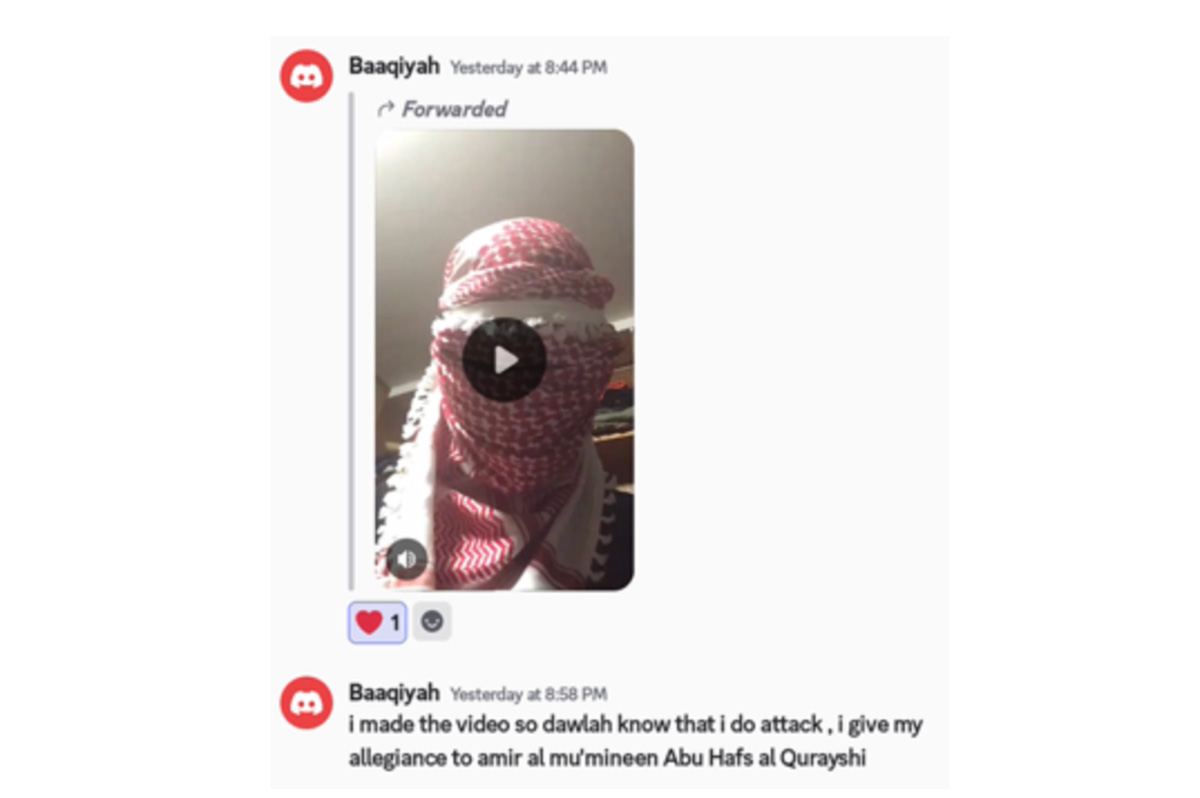
The U.S. Department of Justice charged Sheikhdoon Abdullahi Mohamud, 18, of Richfield, Minn., on Oct. 7 with one count of knowingly receiving a firearm and ammunition in order to commit a federal crime of terrorism. Mohamud allegedly planned to carry out a mass-casualty attack in support of ISIS, inspired in part by the Pulse nightclub massacre that took place on June 12, 2016 when then-29-year-old Omar Mateen murdered 49 people and wounded 58 – one of the deadliest mass shootings in U.S. history, and the deadliest targeting the LGBTQ+ community.
According to a DOJ statement release, Mohamud was arrested on Oct. 6 by the FBI, which had arranged to sell him an AK-47 assault rifle, magazines, and ammunition through an undercover FBI employee. Mohamud was arrested shortly after paying $600 in cash and taking possession of those items; he reaffirmed his intention to shoot people at the Mall of America during the transaction.
“Mohamud allegedly sought to carry out a mass-casualty shooting at the Mall of America, expressing a desire to emulate some of the most horrific ISIS-inspired attacks in the United States, including the atrocities at Pulse Nightclub and 2025 New Year’s Day attack in New Orleans,” said Assistant Attorney General for National Security John A. Eisenberg in the statement by the DOJ. “The National Security Division will continue to work closely with the FBI and Joint Terrorism Task Force to track down and prosecute ISIS-inspired terrorists in the United States.”
According to the complaint, beginning on or about December 2024, Mohamud had exchanged hundreds of messages through multiple social media and messaging apps with a confidential source, and expressed a desire to travel to Somalia to join a designated foreign terrorist organization to fight on their behalf.
The defendant stated many times that if he was unable to travel overseas because of a lack of funds, he planned to carry out a mass-casualty event in Minnesota in support of ISIS.
According to the DOJ, “In July 2026, Mohamud sent messages discussing his intent to carry out a mass-casualty shooting attack at the Mall of America because he claimed it was owned by Jews. He wrote that [he] wanted to kill 30 to 60 people so no one would go there.”
“During the course of his communications, Mohamud stated that he wanted to commit an attack similar to those of the Pulse Nightclub mass-shooting in Orlando, the Bondi Beach mass-shooting in Australia, and the New Year’s Day vehicle-ramming attack in New Orleans.”
This case is being prosecuted by Trial Attorney Ryan White of the National Security Division’s Counterterrorism Section and Assistant U.S. Attorney Benjamin Bejar for the District of Minnesota.
California
Calif. GOP gubernatorial candidate ad ‘disgusting attempt to exploit lesbian intimacy’
Activists, anti-LGBTQ religious leaders criticized Steve Hilton spot

Two women sit on a bed, a Pride flag hanging behind them. One is nervous; the other tells her to be calm and that she’ll do “all the work.” The music swells. The two hold hands and — fill out a ballot voting for Steve Hilton?
This is the new advertisement from the Hilton gubernatorial campaign that is drawing rebuke from both sides of the aisle, but for very different reasons.
Jorge Reyes Salinas, the communications director at Equality California, said the ad was an insult to the queer community.
“This ad is a disgusting attempt to exploit lesbian intimacy for political attention,” he said. The advertisement plays on media tropes that Salinas says “reduce lesbian and bisexual women … to sexual entertainment,” rather than showing them as well-rounded characters. “Any group of the LGBTQ+ community deserves the same dignity and respect as everyone else,” he said.
The ad is truly hyper-sexualized. It ends with one woman telling the other, “Now lick it.” The two pause and stare before she reveals an envelope to send the ballot, and large text pops up saying, “Just try it!”
Salinas characterized the ad as a desperate attempt to get attention from a candidate who is trailing far behind in the polls in heavily Democratic California. The Democratic candidate Xavier Becerra, who is endorsed by Equality California, holds a 25-point lead over Hilton according to recent polling by the UC Berkeley Institute of Governmental Studies.
Conservatives have also criticized the ad.
Influential evangelical Pastor Jack Hibbs thought the ad was distasteful and said, “lesbianism among college girls and some high school girls that right now is an actual pandemic of social ill.” Republican attorney general candidate Michael Gates said it undermines “the sanctity of the relationship between parents and their children.” This criticism is rather confusing because although the ad features two relatively young women, they both appear to be adults, not minors.
“The comments from Pastor Jack Hibbs should be criticized because there is nothing wrong with two women being attracted to each other,” Salinas said. “We’re calling out the ad’s stereotypes, while also rejecting the homophobia in the response to it … by other Republicans.”
The backlash from Hilton’s own party and supporters shows that an advertisement full of queer innuendo was ill-considered, considering the national GOP’s attacks on LGBTQ people in recent years. Hilton himself has been campaigning against transgender girls and women competing in school sports and using locker rooms that correspond with their gender identity. This context might be why Hilton’s political base responded to the ad just as poorly as the liberal voters he was attempting to court.
Hilton says the ad is part of a new series rolling out before Election Day, showing stereotypical California liberal archetypes voting for Hilton. He claims these ads are authentically filmed with real actors, as opposed to being A.I. generated, like many of his previous ads. One other advertisement has been released so far by the campaign showing a man at a spiritual retreat also being swayed to vote for Hilton, although it is notably absent of sexual innuendo.
Caleb Kaufman is a California Local News Fellow placed with the Los Angeles Blade. The California Local News Fellowship is a state-funded initiative to support and strengthen local news reporting. Learn more about it at fellowships.journalism.berkeley.edu/cafellows.
2026 Midterm Elections
Trump uses anti-trans slur against Democratic Senate candidate
President mocked Annie Andrews

President Donald Trump used an anti-trans slur against Democratic South Carolina Senate candidate Annie Andrews on Monday as he sought to rally support for Republicans in the state’s Senate race.
In a post on Truth Social, Trump attacked Andrews three times, referring to her as “trannie” while promoting U.S. Sen. Darline Graham (R-S.C.)’s campaign.
Andrews is running against Graham for a Senate seat in the solidly Republican state.
Earlier this year, Graham was specially appointed to the seat following the death of her brother, Lindsey Graham, who represented South Carolina in the Senate from 2003 to 2026.
Andrews, the Democratic nominee from the state, is a pediatrician that lives in Charleston with her three children. She told NBC News that she will “work with anyone to put South Carolina first.”
“As a mom and a pediatrician, I’m in this race to fight for my patients, my three kids, and South Carolina,” Andrews said, adding that “lowering costs and making life better for families across our state is going to take all of us working together.”
Andrews used the attention from the president’s attack to emphasize what she described as a focus on policy issues rather than the culture wars that have dominated much of the political debate.
“If you care more about your bills than the politics in Washington, this campaign is for you,” she added.
Trump’s remarks have drawn criticism from leaders on both sides of the aisle.
Senate Minority Leader Chuck Schumer (D-N.Y.) condemned Trump’s words Monday night on social media, calling his attacks on Andrews “despicable.”
“Annie Andrews is a mom and pediatrician who’s always put her community first — and she’s exactly who South Carolina needs representing them in the Senate,” Schumer said on X.
Former South Carolina Gov. David Beasley, a Republican, also criticized the president’s attack on Andrews, urging voters to “reject politics based on division and hate.”
“This is abhorrent. Elections don’t have to be about cruelty and lies. South Carolina deserves better,” Beasley wrote Monday night on X.
South Carolina has not elected a Democratic senator in nearly three decades.
Andrews’s campaign website does not mention her positions on LGBTQ issues.
The Washington Blade reached out to Andrews’s campaign for comment on Trump’s attack and her positions on transgender rights but did not hear back by time of publication.

Solidarity beyond the parade: the actual cost of Pride

Physician: addiction doesn’t always look the way you think it does

Calendar: October 9-15

ICC unseals arrest warrants for Taliban officials accused of persecuting LGBTQ people, women

Bet Mishpachah participates in D.C. Oct. 7 commemoration ceremony

Alianza para la Inclusión fortalece la defensa de derechos LGBTQ en Centroamérica

The facts about Victory Fund’s investigation and the path forward

In Ga., 2 trans candidates believe voters are ready for them

Bessent says Trump chose him for his qualifications, not his sexuality

‘Some Like It Hot’ a wild ride at renovated Bernard Family Theatre
-

 Central America4 days ago
Alianza para la Inclusión fortalece la defensa de derechos LGBTQ en Centroamérica
-
Opinions4 days ago
The facts about Victory Fund’s investigation and the path forward
-
Georgia4 days ago
In Ga., 2 trans candidates believe voters are ready for them
-
Federal Government4 days ago
Bessent says Trump chose him for his qualifications, not his sexuality