Bars & Parties
Ginsberg’s Beat memories
Visionary writer’s photographs now on display
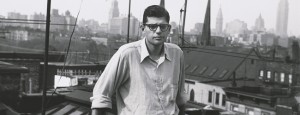
Allen Ginsberg, a visionary writer and author, was also a photographer. An exhibit of his work is on display at the National Gallery of Art. (Photo courtesy of National Gallery of Art)
He saw “the best minds” of his generation” destroyed by madness and as “angel-headed hipsters burning for the ancient heavenly connection to the starry dynamo in the machinery of night.”
He was like an Old Testament prophet preaching in jeremiad poetry to post-World War II America. He was Allen Ginsberg, a visionary writer and author of the above famous opening lines of his celebrated poem “Howl.”
He was an anarchist at heart and anti-war activist, who would try by chanting to levitate the Pentagon in 1967, and avatar to his poetic muse the romantic poet Shelley who had called poets the unacknowledged legislators of mankind.
And he was the iconic poet of gay consciousness and sexual liberation of all men as possible brothers, and indeed as lovers. He channeled the “barbaric yawp” of that poet of free verse and gay affection, Walt Whitman.
But he was also a photographer. And it was Ginsberg, who died in 1997 at age 70, whose little-known treasure trove of photographs — taken of himself and other celebrated “Beat” writers such as Jack Kerouac and William S. Burroughs, among others, between 1953-1963 — forms the remarkable exhibit of some 80 black-and-white portraits in “Beat Memories: The Photographs of Allen Ginsberg,” on view now at the National Gallery of Art’s West Building through early September.
That Ginsberg was gay was never in doubt in “Howl,” his first big success in 1956, in which he sang of those who “purgatoried their torsos night after night, with dreams, with drugs, with waking nightmares, alcohol and cock and endless balls,” and in fact the poem is far more explicit about the particulars of fellatio and sodomy and yet from the very beginning it was hailed as a notable part of the new literary canon.
Eye-opening indeed, and so are this set of unself-conscious photographs that form an intimate vision of Ginsberg as a young man finding his way “to see the world in a grain of sand, and heaven in a wildflower” as one of those who inspired him the most, William Blake, once declared to be the object of poetry.
His postwar generation, including writers like Truman Capote and Norman Mailer, musicians Charlie Parker and Dizzy Gillespie, painters like Larry Rivers and Jackson Pollock, “celebrated an art that was full of rebellion, risk, and experimentation, and one that was highly expressive of their personal experience [and] … a romantic, almost heroic faith in their art and in its redemptive qualities,” says Sarah Greenough, the National Gallery’s senior curator of photographs and curator of this stellar exhibition.
They were soon hailed as “the Beats,” a term taken “from slang first used by jazz musicians and hustlers … to denote not only the down and out but also the physically and emotionally exhausted,” says Greenough.
“Wild child” Ginsberg, while briefly studying literature at Columbia University, famously found himself in Oedipal revolt against his teachers. Instead, Ginsberg followed other teachers — romantic poets like Shelley and sometimes opium-smoking symbolists like Rimbaud, Hart Crane and Dylan Thomas, and of course most of all Whitman, alive to all sensations in his “Song of Myself,” and all of whom Ginsberg called his “secret heroes.”
“What would Allen say? What would Allen say?” Greenough asked aloud about this exhibit in a preview opening of the show, which went public on May 2. And she imagined him answering while chanting in “his candid and even beseeching voice,” with his “deep appreciation for the vernacular and the power of perception.”
In fact the photographs were taken by Ginsberg almost nonstop as he carried his $13 Kodak camera everywhere in his peripatetic life, beginning in 1953 in Greenwich Village and later San Francisco and then “on the road” in Europe, India and Southeast Asia until he lost the camera in 1963 and with it also his interest in recording life as “snapshots” of what he called “certain moments in eternity” and “the sacredness of the moment.”
All along he simply showed them to friends and then tossed them as forgotten “keepsakes,” packages of negatives pushed to the back of a desk-drawer or shoved to the bottom of his closet, where they would remain ignored by him until the early 1980s. At that point, Ginsberg came to realize that he should show them to the world — reprinted and sometimes enlarged, with extensive written inscriptions added.
Ginsberg later said that they were “meant more for a public in heaven than one here on earth, and that’s why they are charming.”
In addition to photographing his lifelong lover and companion, Peter Orlovsky, as youthful and so sexually appealing, Ginsberg also recorded snapshots of the bisexual writer Jack Kerouac, with whom he was in love, and the older novelist William S. Burroughs.
Burroughs in fact lived with Ginsberg for three months and the younger man wrote that the novelist whom he saw as “the most intelligent man in America … fell in love with me and we slept together and I saw a soft center where he felt isolated, alone in the world.” Ginsberg later admitted he took advantage of their intimacy to “invade” Burroughs’ privacy and record him lying in bed, clad only in his underwear and glancing longingly toward him.
Such photos form the backbone of this exhibit, telling a story from his earlier life but also his later life, for he resumed taking pictures from the early 1980s until his death – revisiting people like Orlovsky and Kerouac later in their lives and new faces like Bob Dylan. See this exhibit for the narrative of a generation and the faces that depict it, in this first scholarly presentation through Sept. 6.
Greenough herself will give a public lecture based on her exhibit catalogue, including a book signing, at 2 p.m. Saturday, May 23. Gallery talks meanwhile will be offered by lecturer Diane Arkin at 11 a.m. on May 18 and 25, and June 1, 15, and 17.
Other events – held in the NGA East Building auditorium – include films:
• “Lowell Blues” (2000), celebrating Jack Kerouac’s early years and featuring actor Johnny Depp, musician David Amram, and poet Gregory Corso – 2 p.m. Saturday, June 26.
• “Patti Smith: Dream of Life” (2008), the documentary record of the punk singer, songwriter and poet and Beat avatar as recorded by filmmaker Stephen Sebring, 4:30 p.m. on Sunday, June 27.
Also, the NGA’s summer tradition, the “Jazz in the Garden” concert series, begins its 10th season on Friday, May 28 with weekly performances every Friday evening from 5 to 8:30 p.m. in the Sculpture Garden. In honor of the exhibit, the first concert, May 28, features be-bop jazz performed by female jazz vocalist Leslie Summey.
Bars & Parties
Lesbian Bar Project co-founder: purity politics could destroy our remaining spaces
Last Ditch’s decision to lift its mask requirement for one night a week has sparked intra-queer controversy
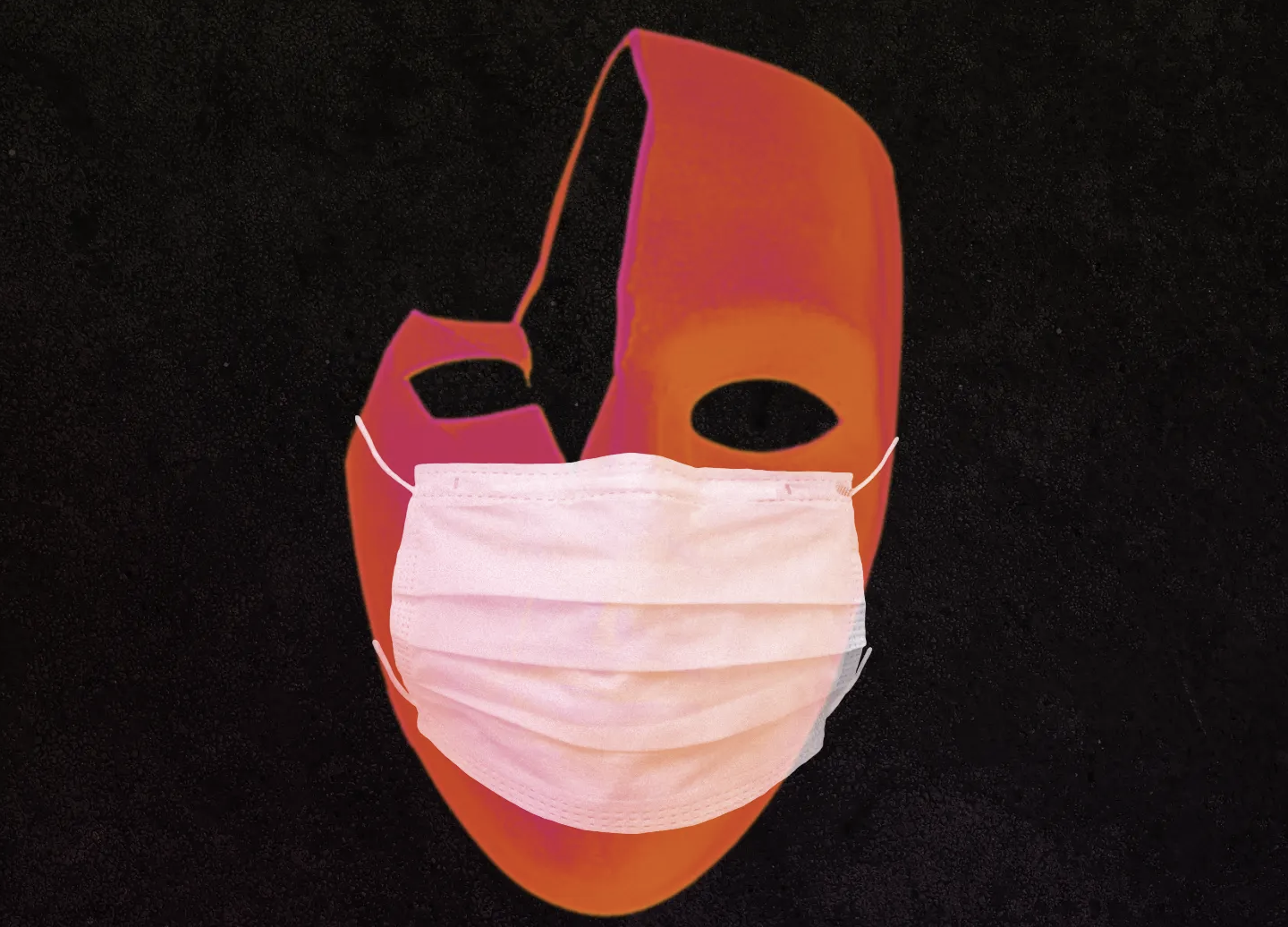
Uncloseted Media published this story on Sept. 29
By ERICA ROSE and THE LESBIAN BAR PROJECT | As a professional lesbian and Massachusetts native, I’ve recently been asked by a lot of folks what I think about the saga unfolding at Last Ditch. The now-viral story, first reported by the Boston Globe, centers on a Western Massachusetts lesbian bar that lifted its mask requirement for one night a week to help drum up business.
The decision ignited an intra-queer controversy that has been feasted on by media outlets across the political spectrum — from the New York Post to LGBTQ Nation — and is even reportedly being eyed for a Hollywood adaptation. Apparently nothing is more entertaining than a bunch of lesbians and queers fighting with each other over KN-95s.
What has been lost in all of the chatter and media coverage is the very real possibility that Last Ditch, which just opened in April 2025, will have to close its doors. The venue’s one remaining founder, Jackie Matellian, revealed in a community Zoom meeting that she’s working four jobs, is now solely responsible for the bar’s $50,000 business loan and is struggling to keep up with the bills. So as we laugh about the controversy’s similarity to a “Portlandia” skit and how one of the bar’s founders left to enroll in clown school, we forget that yet another lesbian bar is facing an existential crisis — and this time the call is coming from inside the house.
In 2020, my friend Elina Street and I created The Lesbian Bar Project, an Emmy-, Webby- and GLAAD Media Award-winning docuseries and initiative that tells the stories of lesbian queer bars around the world. We were moved to act because at the time there were only an estimated 16 lesbian bars in the United States, and the pandemic threatened to bring that number down even further.
There are now more sapphic bars than there were just before the pandemic — about 36 of them in total — but this is down from approximately 200 in 1980. Maybe that doesn’t mean much to you, but for the millions of sapphics living in the U.S., this number is calamitous.
As the world laughs at lesbians and sapphics, I want to take a second and tell you what I feel when I walk into one of these bars, which are all unique and irreplaceable in their own way: I feel seen.
Sometimes I think Cubbyhole in New York City’s West Village neighborhood knew I was gay before I did. When I walked in there for the first time, before I was even out, I was transfixed by the colorful array of tchotchkes hanging from the ceiling and how the women standing next to me were completely unafraid to express their desire for one another. I knew the minute I was ready to come out, I had a home. I also felt the joy of a new couple falling in love at Seattle’s Wildrose, the quiet confidence of a short king lining up her shot at the pool table at Ginger’s in Brooklyn and the kick of cayenne pepper in Julie Mabry’s crawfish at Houston’s Pearl Bar.
Lesbian bars don’t just serve lesbians; they serve queer folks across the spectrum, including bisexual, pansexual and trans people. As Elina and I traveled across the U.S. and Europe and to parts of Latin America to document the bar owners, staff and patrons that make up the ecosystems of these spaces, we also became uniquely acquainted with the factors that threaten their existence: gentrification, wage gaps, sexism, environmental disasters, gun violence, rising insurance premiums and political administrations working to annihilate queer people and their families.
Lesbian bar owners, like all leaders and entrepreneurs, are imperfect. There have been significant issues over the years at lesbian bars: employee harassment, racism, lack of accessibility, sexual assault and transphobia. All bar owners should be held accountable and should listen to their communities to evolve into safer and more equitable spaces. I also acknowledge my privilege: I am able-bodied, white, cis and from a family system that loves me for who I am. Not everyone has that.
Queer people, especially trans and bisexual people, are suffering from disproportionately high levels of depression, and our mental health system isn’t equipped to support them. Immunocompromised people and long COVID are real, and many of my friends are suffering to this day. The people with the least safety net are often the ones for whom a bar closing costs the most. And yet, as we’re seeing with Last Ditch, the queer community often lashes out at each other. It’s also the mainstream media taking the internal conflict and making a mockery out of it, distracting from the real possibility that this bar could close due to financial pressures. A bar that many people loved and needed is facing extinction. Perhaps it’s safer to dissent with one another than with the larger forces trying to eradicate us, but in doing so, we risk destroying the few spaces we have left.
Due to the constraints of purity politics — some in good faith, some not so much — lesbian bar owners, almost all of whom are queer women themselves, are forced to be everything for everyone, similarly to how women are forced to be everything for everyone. By asking these bars to uphold impossible standards — standards very few other third spaces are asked to consider — we all end up losing.
I want to move as a community toward dialogue, compassionate dissent and collaboration to make our spaces better with the goal of keeping them OPEN and thriving, rather than destroying them from the inside with expectations that are arguably unattainable.
While I have your attention — for this fleeting second of the news cycle — may I urge us to spearhead a way to keep these small businesses afloat without attacking our own community along the way? Bar owners are left with an impasse: They want to be community-centered, but they also have to make money to keep their doors open. Sometimes they might make business decisions that don’t work for everyone — and that’s partly because different patrons have different priorities and want different things — but these owners deserve the opportunity for productive dialogue. We have to work with them and with each other to keep our spaces open, to keep them growing.
Lesbian bars raised me into the queer woman I am today. One thing I think about as I reflect on the six years of work we’ve done to document these spaces is that shared, unspoken language I have with a stranger the moment we both walk into one of these bars: the nod, the ease, the not having to explain ourselves. I don’t want to lose that, and neither should you.
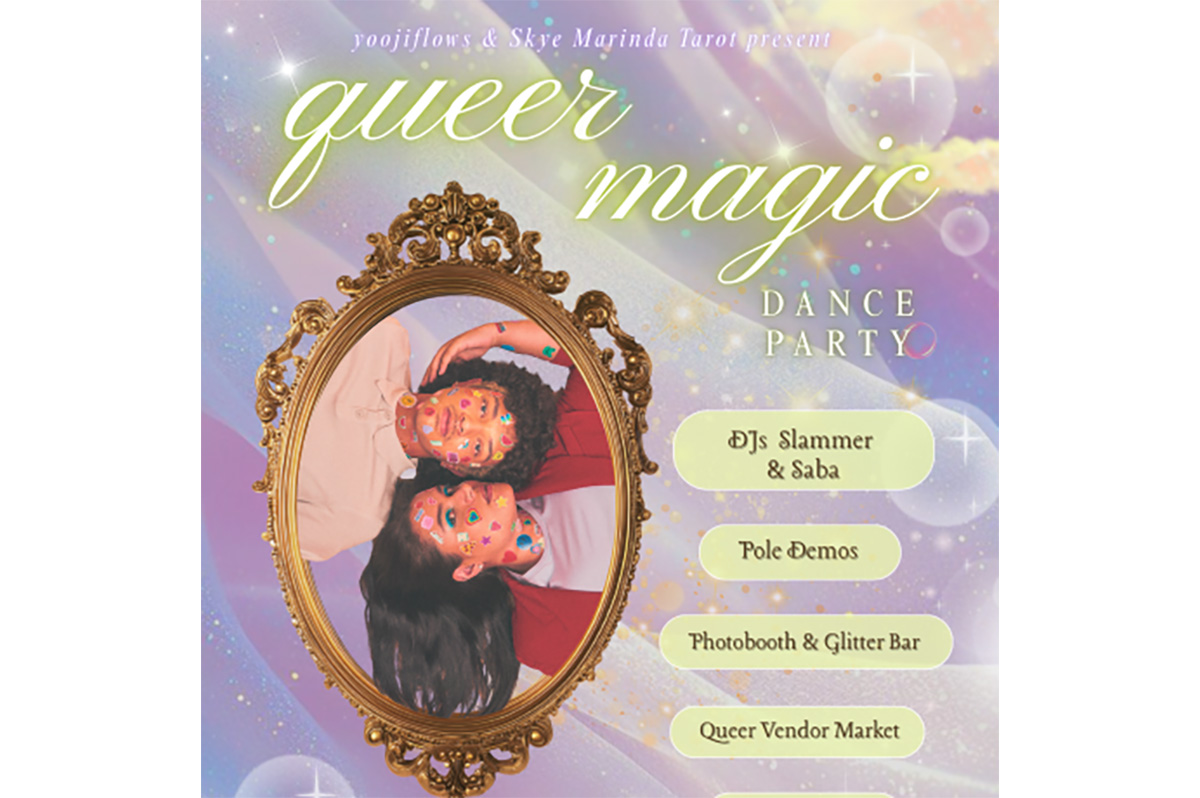
Celebrate the start of Pride month at the Queer Magic Dance Party at the Black Cat on Saturday, June 6. Doors open at 9 p.m.
There will be pole performances and demonstrations, a free photo booth with glitter bar, a queer vendor market, tarot readings by Skye Marinda Tarot, a drag performance by Sapphica, and dancing to a blend of smooth R&B, Afrobeats, hip-hop and pop by Slammer & Saba. Tickets are $20 at the door or $15 (plus fees) in advance, purchased here.
Bars & Parties
Here’s where to watch ‘RuPaul’s Drag Race’ with fellow fans
Entertainers TrevHER and Grey host event with live performance
Spark Social Events will host “Ru Paul’s Drag Race S18 Watch Party Hosted by Local Drag Queens” on Friday, Jan. 23 at 8 p.m.
Drag entertainers TrevHER and Grey will provide commentary and make live predictions on who’s staying and who’s going home. Stick around after the show for a live drag performance. The watch party will take place on a heated outdoor patio and cozy indoor space.
This event is free and more details are available on Eventbrite.

Lula, Flávio Bolsonaro to face off in second round of Brazilian presidential election

The financial realities facing LGBTQ+ first-time buyers

‘Merrily’ is for Sondheim super fans, the uninitiated, and anyone in between

Engrossing ‘Tip Toe’ delivers tension and an ominous warning

Eliot Glazer’s new book an engaging collection of essays

Meet the LGBTQ candidates running for U.S. House, Senate

Ana Brnabić becomes world’s first openly lesbian head of state

Vote now! Best Of LGBTQ DC readers’ choice awards

Gay Va. couple hopeful voters will enshrine marriage equality in state constitution

Victory Fund board investigates former staffers’ allegations against CEO Evan Low
-

 2026 Midterm Elections5 days ago
Meet the LGBTQ candidates running for U.S. House, Senate
-
Serbia5 days ago
Ana Brnabić becomes world’s first openly lesbian head of state
-
Arts & Entertainment5 days ago
Vote now! Best Of LGBTQ DC readers’ choice awards
-
Virginia4 days ago
Gay Va. couple hopeful voters will enshrine marriage equality in state constitution