Arts & Entertainment
Calendar for May 28
Friday, May 28, to Wednesday, June 2, 2010
Friday, May 28
Premiere of the newest LGBT Latin dance party: S-Kandalo at Remington’s, 639 Pennsylvania Avenue S.E., from 10 p.m.-2 a.m. Music by DJ Fantasy, visit latinsouldc.com for more information.
Girl Party every Friday night at the Black Squirrel, 2427 18th St., N.W., 21+/no cover, starts at 9:30 p.m.
Gay District, from 8:30-10:30 p.m. at St. Margaret’s Episcopal Church, a weekly, non-church affiliated discussion and social group for GBTQ men between 18 and 35. The group meets at St. Margaret’s Episcopal Church, 1820 Connecticut Ave., N.W. For more information, e-mail [email protected].
Friday Night Erev Shabbat Services 8:30-10 p.m., Washington, D.C. Jewish Community Center, 1529 16th St. Friday Night Services are followed by an Oneg Social. Please use the Q Street entrance.
Sunset Celebration at Mount Vernon, 6-9 p.m. Enjoy evening tours of the mansion, 18th century music, dancing, games and wagon rides. Stroll the lantern-lit grounds and visit with Lady Washington and her granddaughter Nelly. Adults, $18; children 6-11, $12; and children under 5 are admitted free.
Saturday, May 29
SHIFT takes over Cobalt, 1639 R St., N.W., from 10 p.m.-3 a.m. with music by guest DJs Zack Rosen and Wesley D.
DJ Billy Steele at Town Danceboutique, 2009 8th St. N.W. A former Elite fashion model, Steele began his DJ career two months after purchasing his first set of turntables with a Saturday night residency at Manhattan’s Limelight at age 22. $2 drinks from 10-11 p.m. Drag show starts at 10:30 p.m. Music and videos downstairs by Wess. $8 from 10-11 p.m. and $12 after 11 p.m. 21 and over.
Delaplane Strawberry Festival, Saturday and Sunday, 10 a.m.-5 p.m. at Sky Meadows State Park, Delaplane, Va. The annual festival includes live entertainment, children’s games, pony rides, hayrides, a petting zoo, a 5K fun run, a raptor exhibit, antique cars, food, crafts and strawberries.
MANdance at Rehoboth’s Double L Bar, 622 Rehoboth Ave., with DJ Stephen Durkin, drink specials, go-go dancers. And if you’re not danced out, come back for COCKdance on Sunday.
Sunday, May 30
Drag Brunch at Nellie’s Sports Bar, 900 U St., N.W., hosted by Shi-Queeta Lee. Every Sunday from 11-4 p.m. $20 brunch buffet and your first mimosa is free.
X: Blackout at Cobalt, 1639 R St. N.W., with music by DJ Pete Glow. Cobalt will blanket the dance floor with low lighting, black lights — and at times complete darkness. Doors open at 10 p.m., 21+, $5 before 11 p.m., $7 after.
African-American Collective Theater debuts new play “Something Borrowed, Something Blue” at Warehouse Theater, 645 New York Ave., N.W., one block away from the D.C. Convention Center where D.C. Black Pride’s “Legacy Festival and Wellness Expo” is being held earlier that afternoon. A limited number of tickets are available at $15. For additional ticket, performance time and venue information, e-mail [email protected] or call 202-745-3662.
A very special WTF at Town Danceboutique, 2009 8th St. N.W. WTF presents: Prom Night. 18+, $5.
PBS’ National Memorial Day Concert starts at 8 p.m.; gates open at 5 p.m. PBS sponsors a free concert on the West Lawn of the U.S. Capitol. The concert features actors Joe Mantegna and Gary Sinise and other guest artists along with the National Symphony Orchestra.
Wolf Trap Farm Park’s Summer Blast Off, “The President’s Own,” at 8 p.m. The park for performing arts kicks off the summer season with a free performance by the U.S. Marine Band followed by fireworks. The Filene Center gates open at 6:30 p.m. Arrive early because the park closes once capacity is reached.
Monday, May 31
National Memorial Day Parade, beginning at 2 p.m. The parade of marching bands and veterans units from all 50 states steps off at the corner of Constitution Avenue and 7th Street, N.W., and proceeds along Constitution Avenue, past the White House, ending at 17th Street.
The National Park Service and the Friends of the National World War II Memorial will sponsor a wreath-laying ceremony in honor of U.S. veterans at the World War II Memorial at 9 a.m. Guest speakers will give remarks. The theme for the commemoration is “Honoring our Fallen Warriors.” Many surviving WWII veterans will be in attendance.
Country Western dance lessons at Remington’s, 639 Pennsylvania Avenue, S.E. (½ block West of Eastern Market Metro) from 8:30-9:30 p.m., $5 per person, per lesson (dance class participants should wear boots or shoes with leather soles).
Tuesday, June 1
Drag Bingo at Nellie’s Sports Bar, 900 U St., N.W., hosted by Shi-Queeta Lee, every Tuesday starting at 8 p.m. Free to play.
Wednesday, June 2
The Tom Davaron Social Bridge Club meets at 7:30 p.m., at the Dignity Center, 721 8th St., S.E. (across from Marine Barracks) for Social Bridge. No partner needed. Visit lambdabridge.com.
Each Wednesday at the Green Lantern is POZ Wednesday. Starting at 8 p.m., POZ mixers provide a supportive atmosphere for those who are HIV positive and those who want to help eradicate the stigma surrounding HIV. The Green Lantern is located at 1335 Green Ct., N.W.
General Program Wednesdays, 7-8:30 p.m., $12, at the Vajroyogini Buddhist Center, 1803 Connecticut Ave., N.W., 2nd floor. Learn to enjoy our relationships and benefit others via study of the Lamrim meditations in The New Meditation Handbook. Topics include: The Prison of the Ego; All You Need is Love; Building Empathy; Developing Authentic Compassion. Each class includes a teaching, guided meditations and time for Q&A. For more information visit meditation-dc.org or call 202-986-2257 or [email protected]
Line dance lessons at Remington’s, 639 Pennsylvania Ave., S.E. (½ block West of Eastern Market Metro) from 8:30-9:30 p.m., $5 per person, per lesson.
Out & About
Annapolis Pride arrives this weekend
Sixth annual LGBTQ celebration held in Maryland capital
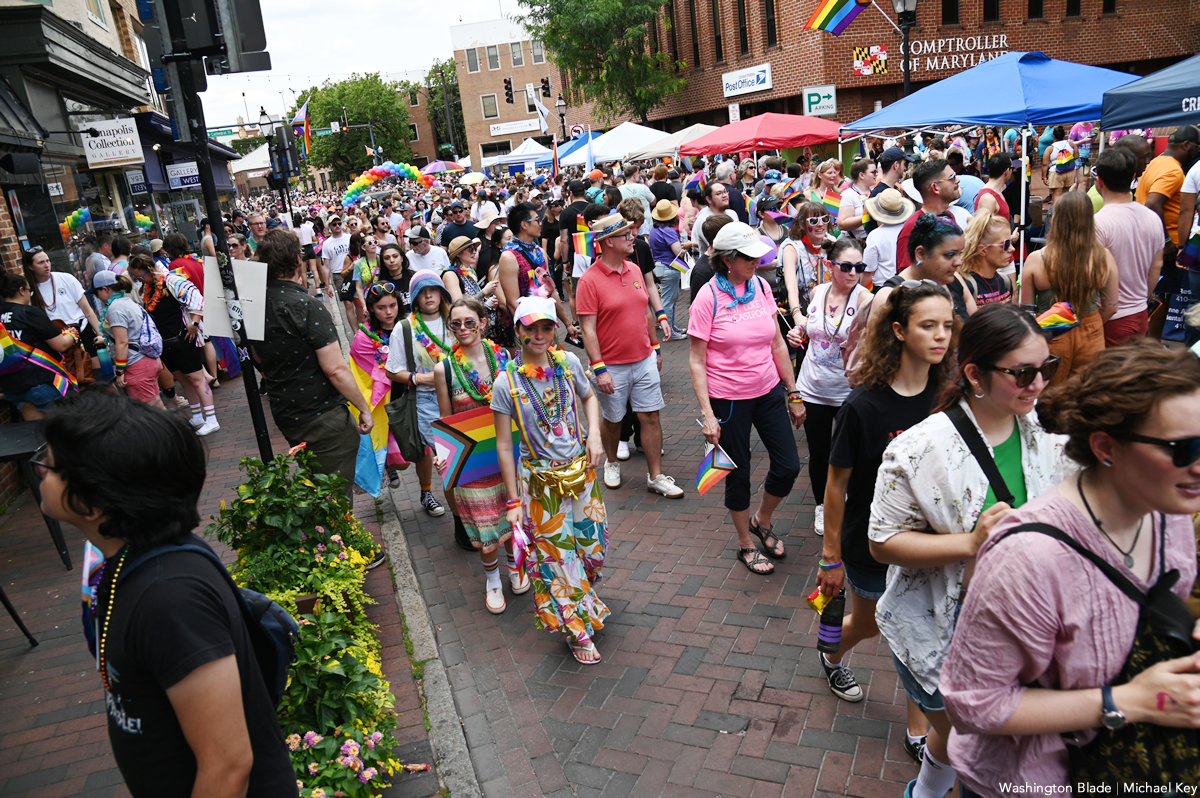
The Sixth Annual Annapolis Pride Parade and Festival will be held on Saturday, Oct. 3 at 11 a.m. on the streets adjacent to St. John’s College.
The theme of this year’s Annapolis Pride Parade and Festival celebration is “United in Pride, Together We Thrive!” Saturday’s parade will begin on St. John’s Street adjacent to St. John’s College, continue along Calvert Street to Northwest Street, to Church Circle, and onto West Street. The parade route then turns onto Amos Garrett Boulevard and eventually ends on Constitution Avenue near Maryland Hall.
Those with disabilities will be able to watch the parade from a special viewing porch at the Graduate Hotel at 126 West St. An Annapolis Pride volunteer will be there and available to assist.
For more details, visit the festival’s website.
Friday, October 2
Go Gay DC will host “First Friday LGBTQ+ Community Happy Hour” at 7 p.m. at Freddie’s Beach Bar and Restaurant. This is a chance to relax, make new friends, and enjoy happy hour specials at this classic retro venue. Attendance is free and more details are available on Eventbrite.
Saturday, October 3
Go Gay DC will host “LGBTQ+ Community Brunch” at 11 a.m. at Freddie’s Beach Bar & Restaurant. This fun weekly event brings the DMV area LGBTQ+ community, including allies, together for delicious food and conversation. Attendance is free and more details are available on Eventbrite.
“Nellie’s DC Drag Brunch” will be at 12 p.m. at Nellie’s Sports Bar. Come get served like a queen by a queen. Join Sapphire Blue, Deja Diamond and their team of amazing drag performers for the most fun you’ll have all weekend. Tickets cost $58.51 and are available on Eventbrite.
Sunday, October 4
Spark Coffee Club will be at 12 p.m. at Spark Social. This is a laid-back daytime hangout built entirely around making new connections. Whether you’re new to the city, new to the community, or just looking to expand your social circle, this is an easy, low-pressure way to spark up a conversation with the person next to you. Come solo or with a friend — you never know who you might meet. For more details, visit Eventbrite.
Monday, October 5
“Center Aging: Monday Coffee Klatch” will be at 10 a.m. on Zoom. This is a social hour for older LGBTQ+ adults. Guests are encouraged to bring a beverage of choice. For more information, contact Adam ([email protected]).
Tuesday, October 6
DC SAFE and the Mayor’s Office of LGBTQ+ Affairs will host “The Relationship Lab” at 6 p.m. This is a four-week series for LGBTQ+ communities exploring love, boundaries, communication, and connection. Through real conversations and engaging discussions, participants will explore what makes relationships healthy and how to recognize the signs when they’re not. For more details, visit Eventbrite.
Wednesday, October 7
Job Club will be at 6 p.m. on Zoom upon request. This is a weekly job support program to help job entrants and seekers, including the long-term unemployed, improve self-confidence, motivation, resilience and productivity for effective job searches and networking — allowing participants to move away from being merely “applicants” toward being “candidates.” For more information, email [email protected] or visit www.thedccenter.org/careers.
Center Aging Women’s Social & Discussion Group will be at 6 p.m. on Zoom. This group is a place where older LGBTQ+ women can meet and socialize with one another. To register, visit the DC Center’s website.
Thursday, October 8
The DC Center’s Fresh Produce Program will be held all day at the DC LGBTQ+ Community Center. People will be informed on Wednesday at 5 p.m. if they are picked to receive a produce box. No proof of residency or income is required. For more information, email [email protected] or call 202-682-2245.
South Asian LGBTQ+ Support Group will be at 7 p.m. on Zoom. KHUSHDC provides a safe, confidential space for South Asian LGBTQ community members to come together and share experiences. The peer support group is an outlet for South Asian-identified LGBTQ individuals to come and talk about anything affecting them. It’s a secure, judgement-free environment to discuss relationships, sexuality, health, well-being, identity, culture, religion, or anything that is on your mind. Please feel free to join, and share stories, learn about available resources, and join our community. For more details, email [email protected].
a&e features
Ryan Murphy’s ‘Monster’ vilifies the lesbian
Netflix show promotes stereotype that queer women are dangerous
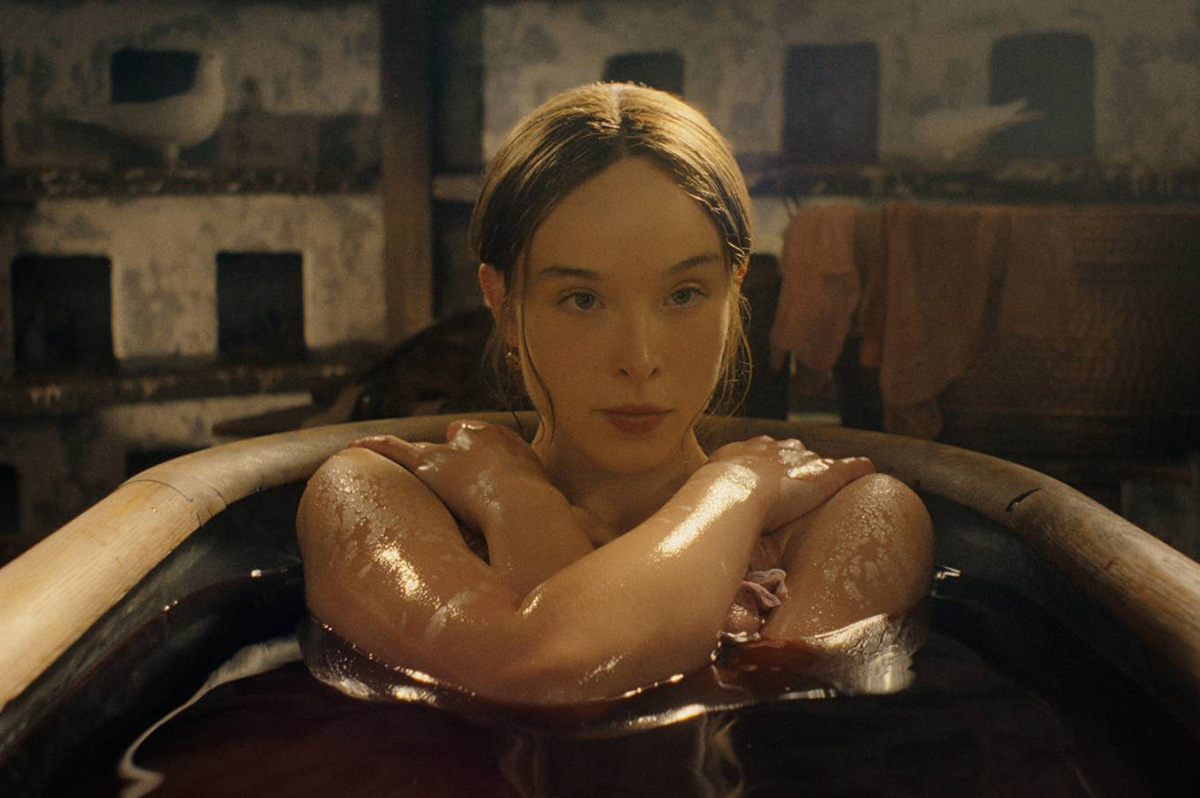
Ryan Murphy’s “Monster: The Lizzie Borden Story” just premiered on Netflix and became the most watched show on the platform. Murphy and his series are deeply controversial. The past three seasons have focused on convicted killers Jeffrey Dahmer, Lyle and Erik Menendez, and Ed Gein, and have garnered considerable criticism for sensationalizing real-life trauma, exploiting victims for entertainment, and glorifying the perpetrators.
But his newest season centers on Lizzie Borden, the white, affluent Massachusetts woman still referenced today in nursery rhymes who was never convicted of killing her parents Andrew and Abby Borden. As with Murphy’s other seasons, the show plays fast-and-loose with real-life history, instead turning a real-life crime into a psychosexual spectacle.
In real life, Lizzie was found not guilty by an all-male jury in the highly publicized 1892 trial, largely due to a lack of evidence including blood on her clothing and a murder weapon. Her initial statement contradicted her later testimony but her defense team argued that the morphine a doctor repeatedly gave her likely caused her confusion. But despite the fact that Lizzie was acquitted in court, she was ostracized by her community during her life and has been branded a murderer ever since.
Murphy’s highly fictionalized retelling of Lizzie’s story leans into this accusation not only that Lizzie murdered her father and stepmother with an axe but that she was successful in covering it up with the help of the maid Bridget Sullivan. Murphy not only concocts a sapphic relationship between Lizzie and Bridget, pinning the idea of killing Lizzie’s parents on the widely traveled woman who dyes her hair and is repeatedly called a lesbophobic slur by Lizzie’s stepmother, but also portrays Lizzie as an inspiration to Aileen Carol Wuornos, a woman who killed seven men who solicited sex and was also in a relationship with a woman.
Further, Murphy’s retelling creates a false ending to Lizzie’s story. While in real life, Lizzie and her sister Emma buy a house called “Maplecroft” and live there for the rest of their lives, Murphy instead imagines Bridget returning sporadically for romantic rendezvous with Lizzie and eventually moving back in with her and marching together for women’s right to vote. In real life, Bridget left town immediately after providing testimony and lived in Montana until she died.
Lesbophobia is at the heart of this retelling of Borden’s story. Despite the fact that Murphy depicts Lizzie and Bridget having sex and possibly getting married or at least promising themselves to one another wearing flower crowns, there is no evidence that Lizzie and Bridget had any romantic or sexual relationship. If they did have a relationship, it would likely have been hidden and any evidence destroyed, but records show that Lizzie herself refused to call Bridget by her real name, instead referring to her as “Maggie,” the name of their previous maid. It was only Lizzie’s stepmother Abby who called Bridget her real name. In Murphy’s retelling, it’s Lizzie’s stepmother Abby who refuses to learn or use Bridget’s actual name and treats her with disdain along with her stepdaughter.
Some people online argue that we are witnessing Lizzie’s story retold through Wuornos’s perspective, so adding in elements of child abuse and sapphic relationships would make sense, but there is no record that Wuornos ever visited Lizzie Borden’s home, or that she was inspired by Borden throughout her life. Instead, Murphy and his co-creator Ian Brennan use (or I would say exploit) Wuornos as a thematic device to make broad stereotypes about female rage across generations. In doing so, they conflate two real-life examples of violence to sapphic individuals.
Depicting a lesbian relationship in this way is not progress, nor is it fruitful representation today. As sapphic shows are increasingly cut and cancelled, Murphy’s inclusion just reinforces the lesbophobic and sexist stereotype that lesbians and queer women are “dangerous” to straight women and abet or incite violence against men and a family unit. At a time when anti-LGBTQ+ legislation and real-world violence and murder of LGBTQ+ people, especially queer and trans people of color, is exploding, stories that frame murder of a family unit as germinating from a sapphic relationship feed into far right narratives.
They further the myth popularized by far right leaders (including those in the highest echelons of government) that LGBTQ+ people are dangerous, a threat to heterosexual norms and family life, despite the data showing that children of same-sex parents have above average health and well-being according to research by the University of Melbourne.
Today, many LGBTQ+ people feel they have to be (or are forced to be) idealized versions of themselves in order to stave off anti-LGBTQ+ stigma, policing and violence. These “acceptable” behaviors and appearances are rooted not only in cisgender, heterosexual norms but also white supremacy, colonialism, xenophobia, and ableism. It is respectability politics that tell us how we can and should behave (including those perpetuating in the wider LGBTQ+ community) and push LGBTQ+ people to assimilate into a society governed by queerphobic normativity.
I hope it’s clear that I’m not trying to argue that we cannot and should not have shows that depict queer women who kill, or at the very least queer women who are unethical or morally complex. We need these depictions because they ask difficult questions and they reference how some LGBTQ+ people can be and are unethical. In fact, several public LGBTQ+ figures are associated with employee abuse and exploitation, ableism, and fat phobia.
But when Lizzie’s sapphic identity is invented to drive the story along, arguably to generate interest (especially straight men’s interest) in this spectacle of historical slop, it’s not a story that invites discourse and dimensionality, it’s one that collapses Lizzie, Wuornos, and queer women’s identities and relationships to plot devices. It objectifies and fetishizes queer women, arguably committing violence against not only Lizzie but also Wuornos.
And when there is so little representation of sapphic relationships on mainstream television or streaming platforms, it makes this the vast majority of representation that queer girls and women will see of themselves first, and that the straight public will see. Historians will know that Murphy’s depiction of Lizzie’s life is wrong, but many viewers will not and may not go digging for the truth.
Why not focus on the stories of bisexual, lesbian, and queer women who really existed, shared their identities (sometimes covertly, sometimes not), and had long-term partners? In fact, “Boston marriages” were common in this time period and referred to women living together when sexual and romantic relationships between women were illegal, partially because penal systems didn’t know how women could have sex with one another and didn’t want to put the idea in “impressionable” women’s minds. Why not focus on these stories instead of creating a fictionalized account? We have always existed; we do not need to invent relationships.
Murphy’s depiction of Lizzie Borden is deeply problematic. Lesbophobia is not the only issue at the heart of Murphy’s drama, but it merits a broader discussion about how mainstream media routinely hurt queer women and is part of perpetuating queerphobic violence, and what we all lose in the process.

Annapolis Pride arrives this weekend

Calendar: October 2-8

Renee Good’s family files two federal lawsuits

House Democrats urge White House to confront Turkish government over anti-LGBTQ crackdown

988 restores crisis services for LGBTQ youth

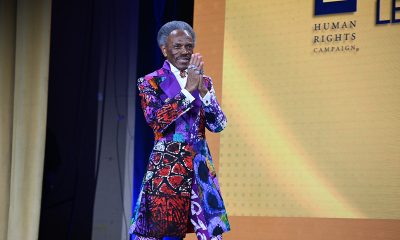
HRC National Dinner 2026: A night of music, activism, LGBTQ history

Lesbian Bar Project co-founder: purity politics could destroy our remaining spaces

529 openly LGBTQ candidates running in Brazilian election

HRC report: LGBTQ students face ‘far greater challenges’ in non-supportive states

Meet the LGBTQ candidates running for U.S. House, Senate
-

 LGBTQ Non-Profit Organizations5 days ago
HRC National Dinner 2026: A night of music, activism, LGBTQ history
-
Bars & Parties4 days ago
Lesbian Bar Project co-founder: purity politics could destroy our remaining spaces
-
Brazil4 days ago
529 openly LGBTQ candidates running in Brazilian election
-
National4 days ago
HRC report: LGBTQ students face ‘far greater challenges’ in non-supportive states