National
Senate could take up ‘Don’t Ask’ repeal this month
Lugar says he won’t support efforts to derail vote

U.S. Sen. Richard Lugar (center) said he isn’t concerned about the ‘Don’t Ask, Don’t Tell’ repeal language in the fiscal year 2011 defense authorization bill and wouldn’t support an effort to rid the legislation of the provision. (Photo by Pete Pouza, photo courtesy White House)
As opponents of “Don’t Ask, Don’t Tell” are pushing for the Senate to take up repeal legislation this month, one key senator says he won’t support an attempt to remove the language from a larger defense bill.
U.S. Sen. Richard Lugar (R-Ind.) told the Blade last week that he isn’t concerned about the “Don’t Ask, Don’t Tell” repeal language in the fiscal year 2011 defense authorization bill and wouldn’t support an effort to rid the legislation of the provision.
Asked whether he would support a substitute amendment or a motion to strike, Lugar replied, “No. I would just leave it as it is.”
Lugar said he would “presume” that he would vote against any filibuster of the defense bill as a whole, but expressed concern about the legislation being used as a vehicle for other costly programs unrelated to “Don’t Ask, Don’t Tell.”
“The defense bill, as it stands, seems to me to be a good piece of legislation, but I think the issue was the additions that were not paid for in various other ways,” Lugar said.
Often regarded on Capitol Hill as a centrist Republican, Lugar voted in favor of hate crimes protections legislation after twice backing the Federal Marriage Amendment.
Aubrey Sarvis, executive director of the Servicemembers Legal Defense Network, said Lugar’s comments on “Don’t Ask, Don’t Tell” are “good news.”
“That is consistent with what we have been hearing from his staff,” Sarvis said. “My view is that Sen. Lugar’s response is very encouraging.”
Lugar’s support for allowing the “Don’t Ask, Don’t Tell” repeal language to stay in the defense bill could be a sign the provision would survive the legislative process once it reaches the Senate floor.
On May 27, the Senate Armed Services Committee voted to attach language leading to repeal of “Don’t Ask, Don’t Tell” to the defense bill. But while the repeal language has been attached to the defense bill, a number of obstacles remain that could prevent the “Don’t Ask, Don’t Tell” language from passing in the Senate.
One such obstacle is a filibuster of the defense bill as whole. Additionally, a substitute amendment or a motion to strike could strip the legislation of repeal language.
Mounting a filibuster of the defense bill would take 41 votes in the Senate. Such an effort would be politically challenging because pay for troops and defense programs are included in the larger bill.
A substitute amendment or motion to strike with regard to the “Don’t Ask, Don’t Tell” language would require 51 votes.
Senate Armed Services Committee Chair Carl Levin (D-Mich.), a proponent of “Don’t Ask, Don’t Tell” repeal, cited a filibuster and a motion to strike as potential dangers for the “Don’t Ask, Don’t Tell” language in a brief interview.
“I wouldn’t be surprised if there’s a motion to strike,” he said. “There’s even a threat of a filibuster against the bill.”
Levin said a filibuster of the defense bill is possible based on a number of factors, including “Don’t Ask, Don’t Tell” as well as a provision for funding for legal abortions on military bases.
Sen. John McCain (R-Ariz.), the lead opponent of repeal in the Senate, has threatened to spearhead a filibuster and “do everything” he can to stop repeal language from reaching the president’s desk.
His office didn’t respond to the Blade’s request to comment on whether he’s still pursuing a filibuster or planning a legislative maneuver to strip the “Don’t Ask, Don’t Tell” language from the bill.
Another issue for the defense bill is when the legislation would come up for Senate consideration. Levin said he didn’t know when the bill would reach the floor.
Still, Levin said he wants the Senate to take up the legislation this month. Asked about his predictions for when the defense bill would reach the Senate floor, Levin replied, “Hopefully, we’ll do it in July.”
Sarvis also said the most “immediate challenge” advocates face with the defense authorization bill is finding time for floor discussion. Like Levin, Sarvis noted that he’s hopeful the bill will come up for discussion this month.
“But the floor calendar is very crowded, so I’m not sure we’re going to get on in July,” Sarvis said.
Sarvis said he’s been told the defense bill will need several days for consideration on the floor and the scheduling wouldn’t be “a matter of getting this bill on and off the floor in a day or two.”
A knowledgeable Hill source said Senate consideration of the defense authorization bill could take two weeks before a final vote is cast.
Other senators on Capitol Hill recognized as politically moderate lawmakers have expressed varying degrees of support regarding the “Don’t Ask, Don’t Tell” repeal language.
One is Sen. Jim Webb (D-Va.), the lone Democrat to vote in committee against attaching repeal to the defense bill. He said he didn’t yet know whether he would support a substitute amendment or a motion to strike regarding the “Don’t Ask, Don’t Tell” language.
“I don’t know,” Webb said. “We’ll see what it says.”
Webb noted that his May vote in committee against ending “Don’t Ask, Don’t Tell” was “to delay repeal until we received this report” from the Pentagon, which is due Dec. 1.
“I’ve been very involved in it,” he said. “In terms of putting together the study, I think it’s going to be a great piece of work that’s going out to between three and four hundred thousand people in the military.”
Webb emphasized the importance of the having the study completed before taking action as “a measure of respect” for those in the U.S. military who would implement the repeal process.
Sarvis said he’s heard reports that Webb wouldn’t support a filibuster of the defense authorization bill based on the “Don’t Ask, Don’t Tell” repeal language.
Although Webb voted against the “Don’t Ask, Don’t Tell” language in committee, the senator also voted to report out the legislation as a whole to the Senate floor.
“He’s a member of the committee,” Sarvis said. “Historically, he’s been an advocate for the Defense Department. It would be extraordinary if he objected to Sen. Levin proceeding to a debate on the defense authorization bill.”
Still, Sarvis said his understanding is that Webb would vote to strike the “Don’t Ask, Don’t Tell” language from the defense bill based on his earlier vote against the amendment in committee.
Many repeal advocates also are watching Sen. Mark Warner (D-Va.), the junior senator from the state, to see if he’ll follow suit with Webb on “Don’t Ask, Don’t Tell” when the defense bill reaches the Senate floor.
Kevin Hall, a Warner spokesperson, said via e-mail the senator is watching the process for how “Don’t Ask, Don’t Tell” will be repealed.
“Sen. Warner supports repeal of “Don’t Ask, Don’t Tell” in an orderly way, working with members of the uniformed services and our military leadership,” Hall said.
Hall said Warner wouldn’t support a filibuster of the defense authorization bill. Regarding whether the senator would support a substitute amendment or a motion to strike the “Don’t Ask, Don’t Tell” language, Hall said he’d “let our previous statement speak for itself.”
Another moderate senator who’s reportedly opposed to filibuster is Sen. Scott Brown (R-Mass.). He voted against attaching repeal to the larger defense bill, but voted in favor of reporting the legislation as a whole to the floor.
“Filibuster’s never — it’s not my style. I want to make sure that we have a full and fair debate on it,” Brown was quoted as saying in May in a Boston Globe article.
Other senators that activists have discussed as being in question on whether they would support repeal of “Don’t Ask, Don’t Tell” are Sens. George Voinovich (R-Ohio), Mark Pryor (D-Ark.) and Blanche Lincoln (D-Ark.). Their offices didn’t respond to the Blade’s request for comment.





National
Man charged in Mall of America shooting plot inspired by Pulse massacre: report
Suspect exchanged hundreds of messages, pledged loyalty to ISIS
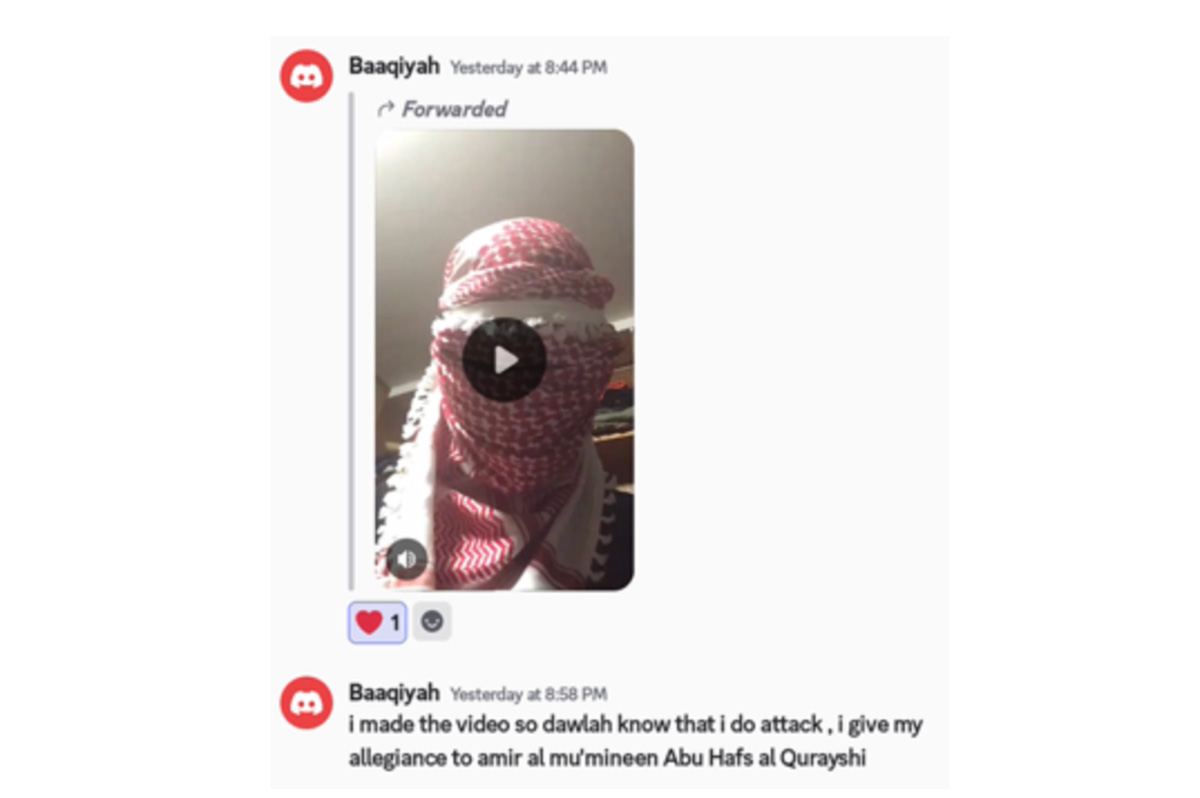
The U.S. Department of Justice charged Sheikhdoon Abdullahi Mohamud, 18, of Richfield, Minn., on Oct. 7 with one count of knowingly receiving a firearm and ammunition in order to commit a federal crime of terrorism. Mohamud allegedly planned to carry out a mass-casualty attack in support of ISIS, inspired in part by the Pulse nightclub massacre that took place on June 12, 2016 when then-29-year-old Omar Mateen murdered 49 people and wounded 58 – one of the deadliest mass shootings in U.S. history, and the deadliest targeting the LGBTQ+ community.
According to a DOJ statement release, Mohamud was arrested on Oct. 6 by the FBI, which had arranged to sell him an AK-47 assault rifle, magazines, and ammunition through an undercover FBI employee. Mohamud was arrested shortly after paying $600 in cash and taking possession of those items; he reaffirmed his intention to shoot people at the Mall of America during the transaction.
“Mohamud allegedly sought to carry out a mass-casualty shooting at the Mall of America, expressing a desire to emulate some of the most horrific ISIS-inspired attacks in the United States, including the atrocities at Pulse Nightclub and 2025 New Year’s Day attack in New Orleans,” said Assistant Attorney General for National Security John A. Eisenberg in the statement by the DOJ. “The National Security Division will continue to work closely with the FBI and Joint Terrorism Task Force to track down and prosecute ISIS-inspired terrorists in the United States.”
According to the complaint, beginning on or about December 2024, Mohamud had exchanged hundreds of messages through multiple social media and messaging apps with a confidential source, and expressed a desire to travel to Somalia to join a designated foreign terrorist organization to fight on their behalf.
The defendant stated many times that if he was unable to travel overseas because of a lack of funds, he planned to carry out a mass-casualty event in Minnesota in support of ISIS.
According to the DOJ, “In July 2026, Mohamud sent messages discussing his intent to carry out a mass-casualty shooting attack at the Mall of America because he claimed it was owned by Jews. He wrote that [he] wanted to kill 30 to 60 people so no one would go there.”
“During the course of his communications, Mohamud stated that he wanted to commit an attack similar to those of the Pulse Nightclub mass-shooting in Orlando, the Bondi Beach mass-shooting in Australia, and the New Year’s Day vehicle-ramming attack in New Orleans.”
This case is being prosecuted by Trial Attorney Ryan White of the National Security Division’s Counterterrorism Section and Assistant U.S. Attorney Benjamin Bejar for the District of Minnesota.
California
Calif. GOP gubernatorial candidate ad ‘disgusting attempt to exploit lesbian intimacy’
Activists, anti-LGBTQ religious leaders criticized Steve Hilton spot

Two women sit on a bed, a Pride flag hanging behind them. One is nervous; the other tells her to be calm and that she’ll do “all the work.” The music swells. The two hold hands and — fill out a ballot voting for Steve Hilton?
This is the new advertisement from the Hilton gubernatorial campaign that is drawing rebuke from both sides of the aisle, but for very different reasons.
Jorge Reyes Salinas, the communications director at Equality California, said the ad was an insult to the queer community.
“This ad is a disgusting attempt to exploit lesbian intimacy for political attention,” he said. The advertisement plays on media tropes that Salinas says “reduce lesbian and bisexual women … to sexual entertainment,” rather than showing them as well-rounded characters. “Any group of the LGBTQ+ community deserves the same dignity and respect as everyone else,” he said.
The ad is truly hyper-sexualized. It ends with one woman telling the other, “Now lick it.” The two pause and stare before she reveals an envelope to send the ballot, and large text pops up saying, “Just try it!”
Salinas characterized the ad as a desperate attempt to get attention from a candidate who is trailing far behind in the polls in heavily Democratic California. The Democratic candidate Xavier Becerra, who is endorsed by Equality California, holds a 25-point lead over Hilton according to recent polling by the UC Berkeley Institute of Governmental Studies.
Conservatives have also criticized the ad.
Influential evangelical Pastor Jack Hibbs thought the ad was distasteful and said, “lesbianism among college girls and some high school girls that right now is an actual pandemic of social ill.” Republican attorney general candidate Michael Gates said it undermines “the sanctity of the relationship between parents and their children.” This criticism is rather confusing because although the ad features two relatively young women, they both appear to be adults, not minors.
“The comments from Pastor Jack Hibbs should be criticized because there is nothing wrong with two women being attracted to each other,” Salinas said. “We’re calling out the ad’s stereotypes, while also rejecting the homophobia in the response to it … by other Republicans.”
The backlash from Hilton’s own party and supporters shows that an advertisement full of queer innuendo was ill-considered, considering the national GOP’s attacks on LGBTQ people in recent years. Hilton himself has been campaigning against transgender girls and women competing in school sports and using locker rooms that correspond with their gender identity. This context might be why Hilton’s political base responded to the ad just as poorly as the liberal voters he was attempting to court.
Hilton says the ad is part of a new series rolling out before Election Day, showing stereotypical California liberal archetypes voting for Hilton. He claims these ads are authentically filmed with real actors, as opposed to being A.I. generated, like many of his previous ads. One other advertisement has been released so far by the campaign showing a man at a spiritual retreat also being swayed to vote for Hilton, although it is notably absent of sexual innuendo.
Caleb Kaufman is a California Local News Fellow placed with the Los Angeles Blade. The California Local News Fellowship is a state-funded initiative to support and strengthen local news reporting. Learn more about it at fellowships.journalism.berkeley.edu/cafellows.
2026 Midterm Elections
Trump uses anti-trans slur against Democratic Senate candidate
President mocked Annie Andrews

President Donald Trump used an anti-trans slur against Democratic South Carolina Senate candidate Annie Andrews on Monday as he sought to rally support for Republicans in the state’s Senate race.
In a post on Truth Social, Trump attacked Andrews three times, referring to her as “trannie” while promoting U.S. Sen. Darline Graham (R-S.C.)’s campaign.
Andrews is running against Graham for a Senate seat in the solidly Republican state.
Earlier this year, Graham was specially appointed to the seat following the death of her brother, Lindsey Graham, who represented South Carolina in the Senate from 2003 to 2026.
Andrews, the Democratic nominee from the state, is a pediatrician that lives in Charleston with her three children. She told NBC News that she will “work with anyone to put South Carolina first.”
“As a mom and a pediatrician, I’m in this race to fight for my patients, my three kids, and South Carolina,” Andrews said, adding that “lowering costs and making life better for families across our state is going to take all of us working together.”
Andrews used the attention from the president’s attack to emphasize what she described as a focus on policy issues rather than the culture wars that have dominated much of the political debate.
“If you care more about your bills than the politics in Washington, this campaign is for you,” she added.
Trump’s remarks have drawn criticism from leaders on both sides of the aisle.
Senate Minority Leader Chuck Schumer (D-N.Y.) condemned Trump’s words Monday night on social media, calling his attacks on Andrews “despicable.”
“Annie Andrews is a mom and pediatrician who’s always put her community first — and she’s exactly who South Carolina needs representing them in the Senate,” Schumer said on X.
Former South Carolina Gov. David Beasley, a Republican, also criticized the president’s attack on Andrews, urging voters to “reject politics based on division and hate.”
“This is abhorrent. Elections don’t have to be about cruelty and lies. South Carolina deserves better,” Beasley wrote Monday night on X.
South Carolina has not elected a Democratic senator in nearly three decades.
Andrews’s campaign website does not mention her positions on LGBTQ issues.
The Washington Blade reached out to Andrews’s campaign for comment on Trump’s attack and her positions on transgender rights but did not hear back by time of publication.

Center for Black Equity honors leaders, activists at BE. Gala

In ‘The Lost Brontë,’ a complicated lie can lead to danger

CAMP Rehoboth Block Party returns Oct. 18

Essential queer horror classics for Halloween

Solidarity beyond the parade: the actual cost of Pride

10 years later, we still can’t shake Barry Jenkins’s ‘Moonlight’

‘Some Like It Hot’ a wild ride at renovated Bernard Family Theatre

D.C.’s LGBTQ homeless facilities face possible hit from Trump funding cuts

Trump uses anti-trans slur against Democratic Senate candidate

U.S. int’l trade negotiator, consultant James Bedore dies at 82
-

 Movies5 days ago
10 years later, we still can’t shake Barry Jenkins’s ‘Moonlight’
-
Theater5 days ago
‘Some Like It Hot’ a wild ride at renovated Bernard Family Theatre
-
District of Columbia5 days ago
D.C.’s LGBTQ homeless facilities face possible hit from Trump funding cuts
-
2026 Midterm Elections5 days ago
Trump uses anti-trans slur against Democratic Senate candidate