Local
Gay cop says dog shooting was necessary
Caretaker, animal rescue group call for police investigation
Editor’s note: This story has been updated since it was posted as the Blade’s Lou Chibbaro Jr. received returned calls from sources he hadn’t heard from when he initially filed. The additions are in bold text. Subsequently some of the initial reader comments are addressed in the additions.

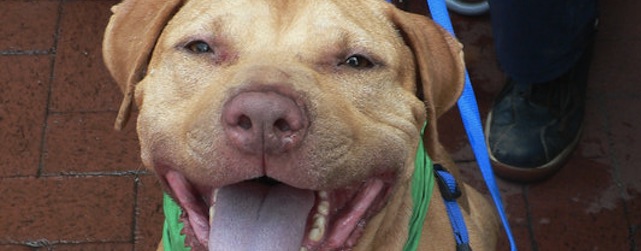
A gay D.C. police officer and a gay caretaker of a dog named Parrot have become involved in a highly emotional dispute following the officer’s decision to shoot the dog before dozens of bystanders at D.C.’s annual Adams Morgan Day festival on Sept. 12.
Dale Edwin Sanders, an attorney representing Officer Scott Fike, said extensive media coverage of the incident has failed to report that Fike is a dog lover assigned to the department’s canine unit and takes home each night one of the unit’s German Shepherds.
“He’s being portrayed as a monster by bloggers and it’s totally unfair,” Sanders said. “He’s the last person in the world to shoot a dog if it wasn’t absolutely necessary.”
But Dupont Circle resident Aaron Block, 25, who was caring for Parrot through a dog foster care program run by the local group Lucky Dog Animal Rescue, told the Washington Post that Fike shot and killed the dog without justification after Parrot and a poodle being walked by a woman got into a fight on the street.
Fike said he isn’t authorized to speak to the media and referred a reporter to Sanders for comment.The owner of the poodle, Adams Morgan resident Sheila Martins-Silva, could not be reached.
John Valentine, an attorney representing Lucky Dog Animal Rescue, said Block told him Fike took hold of Parrot after Block had already subdued the dog and had him under his control.
Block said Fike forcefully pressed the dog into the pavement with his knee then tossed Parrot into a stairwell before shooting him in the neck and killing him in the stairwell.
“There were dozens of people watching,” Block said. “I can tell you that if you ask any of them they will tell you this was so unnecessary. There was no reason for that police officer to shoot Parrot.”
Sanders points to a police account that Parrot locked his jaws on the poodle’s paw as Block and others who rushed to the scene tried to free the poodle from Parrot’s mouth. Sanders said Fike told him Block had not been able to regain control over Parrot and the dog – who has been identified as a Shar-pei-pit bull mix breed – posed a threat to the safety of nearby festival goers.
Sanders said Fike, who was on patrol duty at the Adams Morgan Festival at the time of the incident, reported what he described as a chaotic scene, with festival goers screaming and a young man later identified as Block on the ground with his hand inside Parrot’s mouth.
“There was blood all over the place,” Sanders quoted Fike as saying in describing Block’s hand and arm. Sanders said Fike’s immediate observation was that Parrot was not under control and that Bock was being injured and he and others in the crowd were in imminent danger.
At the time Fike arrived on the scene, the Poodle had already been disengaged from Parrot’s mouth and Fike initially didn’t know another dog was involved in the incident, Sanders said. All Fike saw upon his arrival was Block’s hand locked inside Parrot’s mouth.
It was at that time when Fike kneeled on the dog and pulled on his leash, enabling Block to free his hand from the dog’s mouth, Sanders said.
Block called that account “not even remotely true,” saying he freed his own hand from Parrot’s mouth. He said he scraped his own fingers and hand as he pulled open Parrot’s mouth to secure the release of the poodle’s paw. He said his injury “was not big deal” and he didn’t need medical attention.
Sanders said Fike claims Parrot bit him as he tried to subdue the dog. Fike threw the dog into the stairwell as part of a “conservative measure” to try to injure and subdue the animal without having to use lethal force, Sanders said. But Sanders recounted Fike’s claim that Parrot began to charge at Fike from the staircase, prompting Fike to shoot the dog to protect himself and others standing nearby.
“If Scott hadn’t done what he did that dog could have gone into the crowd and killed somebody,” Sanders said.
Block said he was looking in another direction when the confrontation between the two dogs started and he did not see which dog started what he called a fight between the dogs. Valentine said other witnesses on the scene reported that the poodle inflicted injuries on Parrot’s face and they were unclear as to which dog started the fight
The poodle’s owner has said she allowed her dog to walk over to Parrot while both dogs were on leashes and without any indication that the dogs would get into a fight, Valentine said.
Block said Parrot has no history of biting anyone and described the dog as gentle and friendly to people. Valentine and Block said many witnesses who have come forward have backed up Block’s version of what happened.
Block said he doesn’t believe Parrot bit Fike and believes the injury reported on Fike’s hand was likely caused by chaffing from Parrot’s leash.
Valentine notes that a police report refers to Fike’s hand injury as an “abrasion” rather than a dog bite.
Sanders calls that account “absolutely false,” saying a police evidence technician examined and photographed Fike’s wound and observed puncture marks, confirming it as a dog bite. He said a police official also alerted Fike that he may have to undergo rabies shots if an autopsy of Parrot tests positive for rabies.
In a development that alarmed Fike and police investigators, according to Sanders, officials with Lucky Dog Animal Rescue couldn’t immediately find records showing whether or not Parrot had been given rabies shots. Sanders said that Fike was also concerned that Block wasn’t using an appropriate dog leash for taking Parrot into an area crowded with people, noting that Block should have used a “looped” leash that can be pulled over a dog’s snout and is far better suited to control a dog.
Block said Lucky Dog Animal Rescue, for which he is a volunteer, had all the necessary records for Parrot, including Rabies immunization records.
Sanders said witnesses, including a local judge whom he did not identify, have come forward to support Fike’s version.
Sanders said that before leaving the scene of the incident, Fike responded to pleas for help by Martins-Silva, the owner of the injured poodle, by arranging for a police officer in a cruiser to take the poodle to an animal hospital in Northwest Washington, where the dog received emergency treatment.
He said police officials have put Fike on temporary administrative leave as the department’s Internal Affairs unit investigates the incident.
The dog shooting, which received national media coverage, took place on 18th Street, N.W., with hundreds of festival goers standing nearby and dozens watching in horror as the incident unfolded.
Maryland
Supreme Court ruling against conversion therapy bans could affect Md. law
Then-Gov. Larry Hogan signed statute in 2018
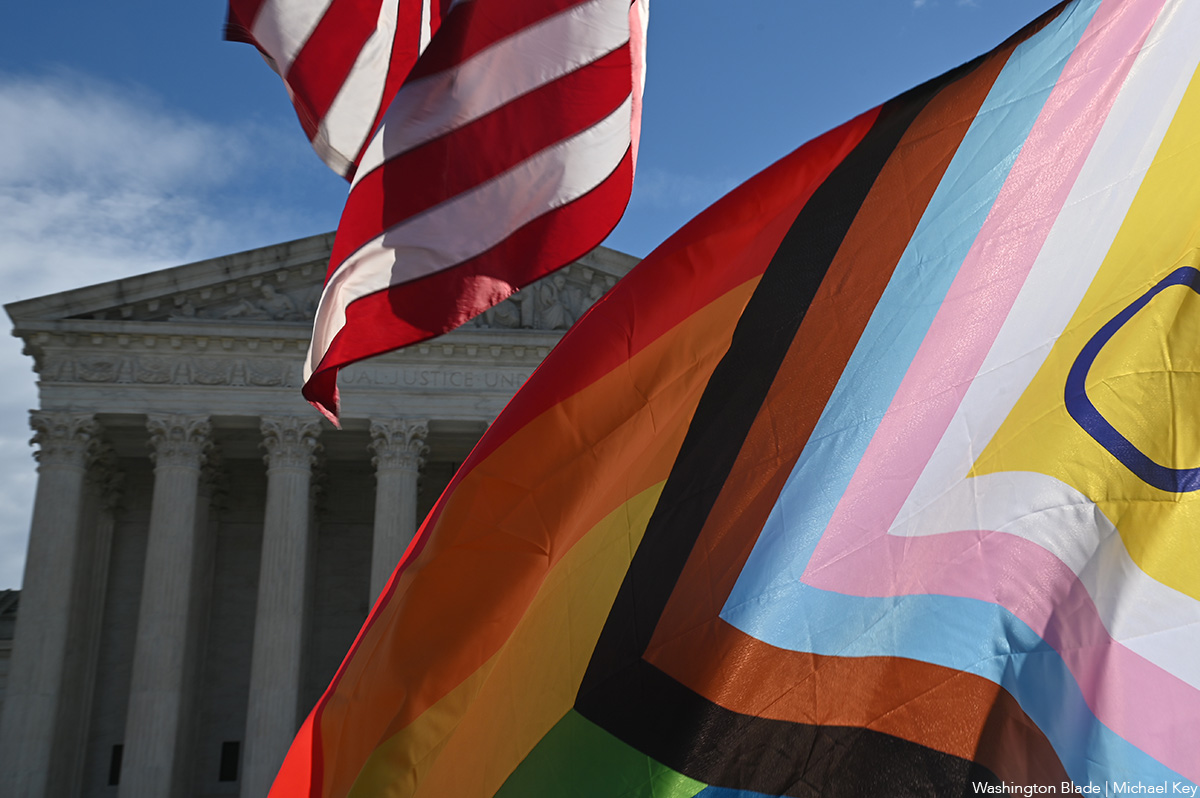
By PAMELA WOOD, JOHN-JOHN WILLIAMS IV, and MADELEINE O’NEILL | The U.S. Supreme Court on Tuesday ruled against a law banning “conversion therapy” for LGBTQ kids in Colorado, a ruling that also could apply to Maryland’s ban on the discredited practice.
An 8-1 high court majority sided with a Christian counselor who argues the law banning talk therapy violates the First Amendment. The justices agreed that the law raises free speech concerns and sent it back to a lower court to decide whether it meets a legal standard that few laws pass.
Justice Neil Gorsuch, writing for the court’s majority, said the law “censors speech based on viewpoint.” The First Amendment, he wrote, “stands as a shield against any effort to enforce orthodoxy in thought or speech in this country.”
The rest of this article can be read on the Baltimore Banner’s website.
District of Columbia
As mayor’s race takes shape, candidates endorse LGBTQ equality
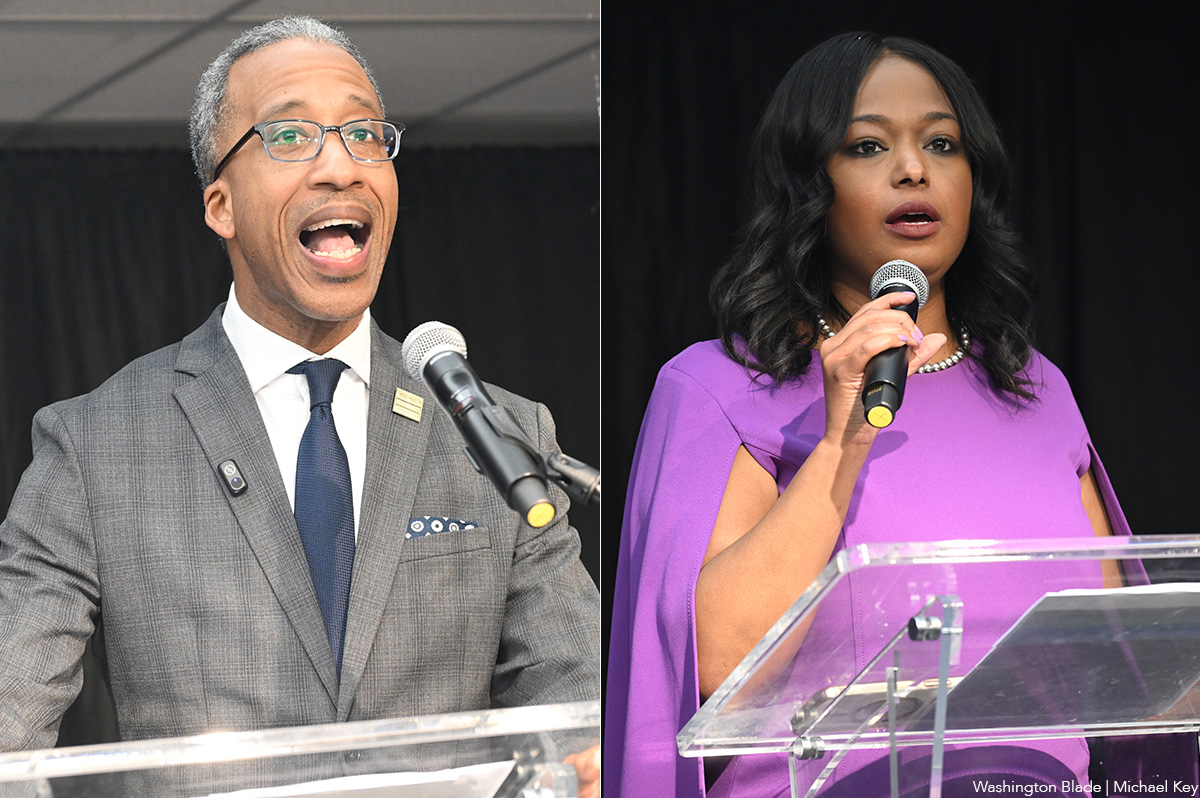
Like nearly all recent D.C. elections, LGBTQ voters will be choosing a candidate for mayor in 2026 from a list of mostly strong LGBTQ rights supporters in the city’s June 16 primary.
As of March 30, the D.C. Board of Elections’ list of candidates who submitted the required number of petition signatures for the June 16 primary ballot included 10 mayoral candidates: nine Democrats and one Statehood Green Party candidate.
Among those candidates, six, all Democrats, have issued statements expressing strong support for LGBTQ rights, including the two leading Democratic contenders, former D.C. Council member Kenyan McDuffie and current Council member Janeese Lewis George, who represents Ward 4.
One of the lesser-known Democratic candidates who released an LGBTQ supportive statement, Rini Sampath, a cyber security consultant, told the Washington Blade she identifies as queer, becoming one of the first known LGBTQ D.C. mayoral candidates to gain access to a major party primary ballot.
“We’re living in an extremely diverse community, an extremely unique community,” she told the Blade. “And being able to self-label, self-identify as queer is something that I just want to take pride in.”
Similar to McDuffie and Lewis George, Sampath released statements to the Blade and the Capital Stonewall Democrats, the city’s largest LGBTQ local political group, expressing support for LGBTQ rights and outlining plans for LGBTQ supportive policies if elected mayor.
Although many D.C. LGBTQ activists have said they have yet to decide whom to support for mayor, those who have decided appear to be divided between McDuffie and Lewis George. Most D.C. political observers consider McDuffie and Lewis George to be the two leading candidates in the mayoral race.
The other Democratic mayoral contenders who have released statements expressing support on LGBTQ issues include Gary Goodweather, a local real estate manager and developer who has been actively campaigning at LGBTQ events; Vincent Orange, a former At-Large and Ward 5 D.C. Council member; and Kathy Henderson, a longtime Ward 5 community activist and elected Advisory Neighborhood Commissioner.
The remaining two Democratic mayoral candidates, Hope Solomon, a former U.S. Department of Homeland Security contractor and Dupont Circle civic activist; and Ernest Johnson, a real estate broker and Ward 1 community activist, did not respond to inquiries from the Blade and Capital Stonewall Democrats seeking information about their position on LGBTQ related issues.
Robert Gross, the Statehood Green Party candidate who is running unopposed in the June 16 primary, also didn’t respond to inquires from the Blade about his position on LGBTQ issues.
D.C. Board of Elections records show that at least five Republican candidates filed papers to run for mayor in the June 16 GOP primary, but none of them remained as candidates as of March 30, when the election board issued its updated candidate list.
Just one of the five Republican candidates replied to an email message from the Washington Blade sent to all mayoral candidates in early March seeking their position on LGBTQ issues. That candidate, Esa Muhammad, whose website identifies him as an engineer, consultant, and local business owner, sent a reply expressing opposition to LGBTQ rights.
“Unfortunately, I do not support LGBTQ because The God only created 2 genders (Adam/Eve),” he wrote. “Anyway, I will be fair to you all despite your sick way of looking at life,” he stated.
Capital Stonewall Democrats President Stevie McCarty said his group sent questionnaires to all the Democratic mayoral candidates as well as to Democrats running for other offices such as D.C. Council. Information posted on the group’s website shows only four of the mayoral candidates returned a complete questionnaire: McDuffie, Lewis George, Goodweather, and Sampath.
Each of them provides detailed information of their plans for supporting LGBTQ policies if elected and their record of support on LGBTQ issues. McCarty said the questionnaire responses for all candidates that submitted them can be accessed at outvotedc.org.
He said Capital Stonewall Democrats will hold virtual LGBTQ forums in April, including a mayoral forum on April 8. He said the group’s members will vote on the candidate endorsements online from April 20 through May 11, and the group expects to announce its endorsements May 14.
GLAA DC, formerly known as the Gay and Lesbian Activists Alliance of Washington, has issued candidate ratings for most D.C. elections since the 1970s, and the nonpartisan LGBTQ group was expected to issue ratings for mayoral candidates this year. But like in recent years, the group is expected to base its ratings on mostly non-LGBTQ issues, with a progressive, left-leaning perspective, according to a nine-page “Back to Basics GLAA Policy Brief 2026” that the group released in March.
The LGBTQ activists who are backing McDuffie or Lewis George appear to be gravitating to the two based on their political leanings separate from LGBTQ issues, just like voters in general. Lewis George, who identifies as a democratic socialist, is popular among LGBTQ and non-LGBTQ “progressives.”
McDuffie, who is seen as a more moderate candidate along the lines of current D.C. Mayor Muriel Bowser, is being supported by LGBTQ activists who hold those views, some of whom currently work in the Bowser administration.
Among Lewis George’s LGBTQ supporters are longtime Ward 8 community leader Philip Pannell and former Capital Stonewall Democrats president Howard Garrett. Among the LGBTQ McDuffie backers are longtime D.C. Democratic activists John Fanning and David Meadows.
Longtime D.C. LGBTQ Democratic Party activist Peter Rosenstein, who is supporting McDuffie, has raised concerns about Lewis George’s backing by the national group Democratic Socialists of America. In Facebook postings, Rosenstein points to the Democratic Socialists of America’s opposition to Israel as a country and said it is viewed by many in the Jewish community as promoting antisemitism. He has criticized Lewis George for not speaking out against that and for accepting the DSA’s endorsement.
In an interview with the Blade, Lewis George strongly disputed that assessment, saying she has been a strong ally and supporter of the Jewish community.
“I’m a member of the Metro DSA here in D.C. that I work with to fight for labor and for tenant rights,” she said. “I’m also a member of the Democratic Party,” she added, saying, “There are things that the Democratic Party does that I don’t agree with. There are things that the national DSA does that I don’t agree with. That’s a group that I work with.”
“But I want to be clear that I am running for mayor to represent all of our community, and that includes our amazing and historical Jewish community here in D.C.,” she said. “I have had the amazing opportunity to spend time at synagogues and talking to Jewish leaders and groups and institutions. And so, there should be no worry here.”
Following are short excerpts from the detailed statements five of the nine Democratic mayoral candidates submitted to the Capital Stonewall Democrats or the Washington Blade.
Kenyan McDuffie: “As mayor, every piece of legislation I sign, craft, or endorse should also encompass the interest and input of the LGBTQ community members and advocates…From housing to health care and everything in between… We have a dire crisis regarding the rise in homelessness especially among the youth in our LGBTQ communities. In my administration that simply cannot be the status quo and will not be…I have been a consistent champion for our LGBTQ community and will remain so as Mayor of D.C.’
Janeese Lewis George: “As mayor, I will protect our LGBTQ+ neighbors against federal attacks on their identity, including their health care…On the Council I have been a strong supporter of pro-LGBTQ+ bills, including making D.C. a sanctuary for people seeking gender-affirming health care as well as addressing discrimination and harassment in nightlife and hospitality…And as mayor, I am prepared to move up and win those fights – a fight for D.C. statehood, a fight for our true economy, and a real opportunity to uplift our Black queer and trans youth.”
Gary Goodweather: “A Goodweather administration will defend every D.C. law protecting LGBTQ residents. I will establish a Defend DC office to coordinate the District’s legal and public response to federal overreach, with LGBTQ+ protections explicitly within its mandate…My affordable D.C. plan will produce 50,000 new homes with 36,000 affordable units, and I will ensure LGBTQ+ youth housing programs are funded as a budget priority.”
Rini Sampath: “I am an immigrant, proud queer woman, and a 10-year resident of Washington, D.C…For me, LGBTQ+ voters including transgender and nonbinary residents, are not a separate or symbolic constituency; they are a core part of a broader, multiracial, cross-ward coalition rooted in in equity and opportunity.”
Vincent Orange: “I have a long and consistent record of supporting LGBTQ+ equality and inclusion in the District of Columbia, grounded in both policy and personal commitment. As the District’s Democratic Committeeman from 2006 to 2015, I publicly supported marriage equality and voted accordingly … During my time on the D.C. Council, I worked to advance protections for LGBTQ+ residents, including authoring and passing legislation to prohibit discrimination against transgender individuals in the workplace.”
Kathy Henderson: Kathy Henderson has maintained a consistent record of treating all members of the community with dignity, compassion, and respect, regardless of gender, race, ethnicity, sexual orientation, identity, political party, national origin, or ideology. Kathy Henderson embraced the late Wanda Alston as a colleague and good friend…Alston was the first director of the Mayor’s Office of LGBTQ Affairs and Henderson helped to organize and facilitate the first LGBTQ citizens summit.”
Local
D.C.’s affirming congregations to mark Holy Week, Easter
Dignity Washington among groups holding events
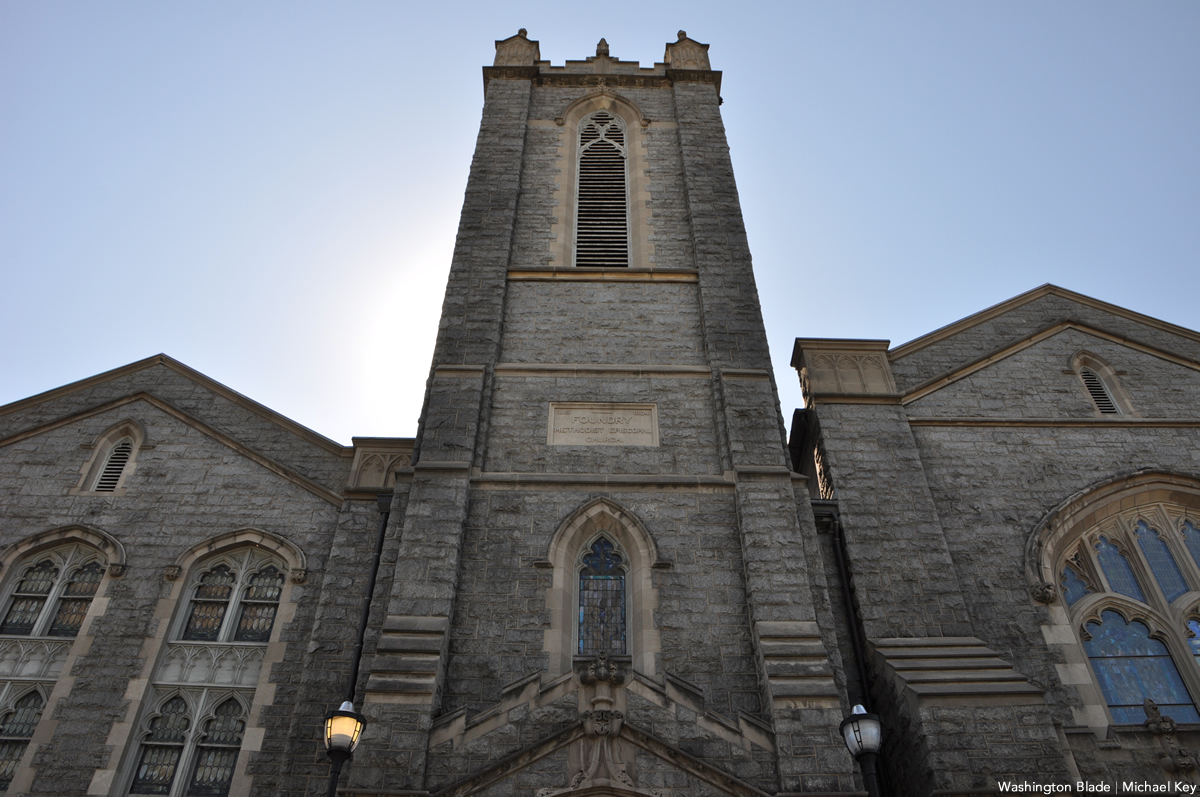
LGBTQ-friendly congregations in the D.C. area this week are marking Easter and Holy Week.
The Metropolitan Community Church of Washington, D.C., located in Mount Vernon Square, holds both online and in-person services.
An online-only Good Friday service will take place on April 3 at 7 p.m. In person or online Resurrection Sunday services will take place on April 5 at 10:30 a.m.
Dignity Washington, an LGBTQ Catholic group, is also holding Holy Week and Easter events.
The group on March 29 held a Palm Sunday prayer event. Dignity Washington on April 5 will hold a Mass at St. Margaret’s Episcopal Church at 6 p.m. It will be livestreamed on Facebook.
Foundry United Methodist Church holds two Easter Sunday services at 9 and 11:15 a.m.
Riverside Baptist Church, located in Southwest Washington, is an “Inclusive, Multicultural, Christ-Centered” congregation that also offers Holy Week and Easter activities.
The church on Good Friday at 3 p.m. is holding an outreach period in which they will clean up the neighborhood. Easter Sunday services will be held at 9:45 a.m., starting with a musical prelude, followed by services.
The church offers weekly “Wednesday Witness,” a youth and safety zone drop-in, serving as a safe space for the students of Jefferson Middle School and the community. It takes place from 3-5 p.m.
The DC LGBTQ+ Community Center offers a comprehensive list of inclusive faith communities on its website. The Association of Welcoming and Affirming Baptists offers a list of churches partnered with their organization that are inclusive and mainly Baptist, but the group does feature churches of other denominations.
The 18th National Rainbow Seder took place at the Human Rights Campaign on March 29. The sold out event is the country’s largest Passover Seder for the Jewish LGBTQ community.
Organizations behind the event included Bet Mishpachah, a local D.C. LGBTQ synagogue that Rabbi Jake Singer-Beilin leads, and GLOE, an Edlavitch DC Jewish Community Center program that sponsors events for the queer Jewish community. The theme for this year’s Seder was “Liberation for All Who Journey: Remembering, Resisting, Rebuilding.” Rabbis Atara Cohen, Koach Frazier, and Avigayil Halpern led it.
The Seder honored the late GLOE co-chair Michael Singer. Singer also served on the Edlavitch DC Jewish Community Center’s board.
“This Seder is both a celebration of how far we have come and a call to continue building a more just and inclusive world.” Bet Mishpachah Executive Director Joshua Maxey told the Washington Blade.

LGBTQ community plays integral role in autism advocacy

Kristi Noem ‘devastated’ as husband’s alleged fetish spending surfaces

Colo. activists condemn SCOTUS conversion therapy ruling

Is Ghana’s selective justice a human rights contradiction?

Supreme Court ruling against conversion therapy bans could affect Md. law

‘Out for McDuffie’ event held at D.C. gay bar

The Oscar-losing performance that’s too good to miss

‘Jonah’ an undeniably compelling but unusual memory play

PHOTOS: ‘No Kings’ rally and march