Local
Judge rules against Choi in ‘vindictive’ prosecution claim
Gay activist on trial for arrest over White House protest

A federal judge ruled on Oct. 11 that gay former Army Lt. Dan Choi cannot argue in his ongoing trial that he was targeted for “selective” or “vindictive” prosecution following his arrest last year for chaining himself to the White House fence in a protest against “Don’t Ask, Don’t Tell.”
In a 17-page decision, Chief Judge Royce Lamberth of the U.S. District Court for the District of Columbia overturned an earlier ruling by Magistrate Judge John Facciola that allowed Choi’s lawyers to pursue allegations of selective or vindictive prosecution in the trial, which began Aug. 29.
Lamberth’s decision, among other things, granted a petition by prosecutors for a Writ of Mandamus, a formal and unusual request challenging a ruling of a trial judge by appealing to a higher court or to another judge with greater authority.
Under Lamberth’s decision, Facciola is prohibited from “considering selective or vindictive prosecution as a defense to the merits of the prosecution,” prohibited from “allowing evidence as to either claim” and barred from entertaining any motion filed by Choi to dismiss the case based on selective or vindictive prosecution.
Facciola is presiding over a non-jury trial in which Choi is being prosecuted for a misdemeanor charge of disobeying a lawful police order to disperse from the White House fence. Although the prohibition against Choi’s use of a defense based on selective or vindictive prosecution is a blow to the defense, one of his attorneys, Norman Kent, said Sunday that the defense will move forward on other grounds and that Choi’s defense team remains confident that Choi will be found not guilty.
Choi was the only one of a group of protesters arrested during the November 2010 protest that did not agree to plead guilty to the charge in exchange for having the case dismissed if they weren’t arrested again at the White House within a four-month period.
Through his attorneys, Choi has argued that he had a constitutional right to handcuff himself to the White House fence. The attorneys also have contested the government’s case on a technicality, saying police ordered Choi to disperse from the sidewalk. They note that Choi was standing on an elevated ledge on which the White House fence is attached, not the sidewalk itself and thus Choi was not legally bound to obey the police order.
Lamberth said in his decision that prosecutors were correct in arguing that under longstanding court rules of evidence, a case alleging selective or vindictive prosecution must be initiated in a pre-trial motion, not during the trial itself.
Choi’s attorneys — Kent of Fort Lauderdale, Fla., and Robert Feldman of New York — have argued that they lacked sufficient evidence of selective or vindictive prosecution prior to the start of the trial. The two said persuasive evidence of a selective-vindictive prosecution only emerged during their cross-examination of government witnesses during the trial itself.
Following strong opposition by the prosecutor in the case, Facciola ruled on Aug. 31 that preliminary evidence existed to show a selective or vindictive prosecution could have occurred against Choi. Facciola ruled that Choi’s lawyers could go forward with using selective-vindictive enforcement as a defense.
Feldman and Kent argued that Choi’s decision to handcuff himself to the White House fence in November 2010 was identical to two prior White House protests in which he and others handcuffed themselves to the fence. They noted that while prosecutors charged Choi in the earlier protests under a local municipal statute that carried no jail time, in the November 2010 protests, they charged Choi under a more stringent federal statute that includes a possible sentence of six months in jail.
Feldman and Kent alleged that prosecutors chose the more stringent statute in the November case because Choi’s protests were embarrassing the Obama administration over the gays in the military issue. They said the harsher prosecution was in retaliation for Choi’s political message that the White House wasn’t moving fast enough to repeal “Don’t Ask, Don’t Tell.”
Assistant U.S. Attorney Angela George, the lead prosecutor in the case, disputed that assertion, saying the government prosecuted Choi for refusing to obey a lawful order by police to move away from the White House fence. She said Choi’s political message was irrelevant to the government’s case and had no role in the decision to prosecute him.
In court briefs, George said prosecutors charged Choi under a more stringent law in the November case because it was the third time in less than a year that he had been arrested for the same illegal conduct and the government has legal discretion to select different statutes or regulations under which to make an arrest in such a case.
Facciola put the trial on hold on Aug. 31 after George said the government would take the unusual step of challenging his ruling through a Petition for a Writ of Mandamus. Under U.S. District Court rules, the court’s chief judge rules on such a petition.
Kent told the Blade on Oct. 16 that following consultation with Choi he and Feldman are strongly considering appealing Lamberth’s decision to the U.S. Court of Appeals for D.C. He said Choi’s legal team would make a final decision on whether to file an appeal by Oct. 20, a deadline set by Judge Facciola for the two sides to inform the court whether an appeal will be made or whether the trial will resume.
Choi enjoyed widespread support from LGBT activists when he worked with the LGBT direct action group GetEqual last year in a series of non-violent civil disobedience protests at the White House and other locations to pressure Congress and the Obama administration to push harder for repeal of “Don’t Ask, Don’t Tell.”
But since Obama signed legislation approved by Congress repealing “Don’t Ask, Don’t Tell” and since the repeal took effect on Sept. 20, some activists have questioned the rationale for Choi’s decision to demand a trial in the current case. Some have asked why Choi is contesting the type of civil disobedience arrest that most other protesters acknowledge involves breaking a law and choose to resolve by paying a small fine or agreeing to a plea offer like the one prosecutors made to Choi.
Gay rights attorney and television commentator Mark Levine called non-violent civil disobedience arrests an important and historic tradition in the U.S. civil rights movement made famous by Martin Luther King Jr. in his efforts to end racial discrimination. Levine said the benefit of drawing public attention to an injustice comes from the arrest itself, “not a long drawn out trial that has the potential for wasting court resources that would be better used for something else.”
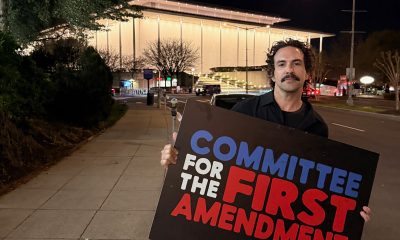
Choi has said he chose to take his case to trial because he believes his action handcuffing himself to the White House fence is protected by his First Amendment right to free speech and should not be considered an illegal act.



District of Columbia
Key lifestyle changes can help patients cope with diabetes
Small daily choices make a big difference in one’s health

One Tuesday evening after my family finished dinner, I noticed my grandmother sitting on the couch, sweating more than usual. The family room wasn’t hot, and she hadn’t eaten a lot of salty food that day, so seeing her like that made me worry.
My grandmother, Shirley Mitchell, is a 72-year-old who lives with Type 2 diabetes, and moments like this, when her blood sugar gets dangerously low, can happen without warning. Watching her reach for her glucose tablets reminded me how serious her condition is.
Each day, millions of people living with diabetes face a choice that can either play a role in protecting their health or putting it at risk– namely, what they eat. Nationally, 12 percent of the population lives with diabetes, according to the Centers for Disease Control. In D.C., nine percent of residents are known to have diabetes, with likely many more undiagnosed, said Dr. Marcy Oppenheimer, a family medicine doctor who practices in Northeast D.C.
“It’s super common, especially as you get older,” she said, estimating that 15 to 20 percent of her patients have diabetes, and another 20 percent have pre-diabetes, where blood sugar is higher than normal but not yet at the level to trigger a diabetes diagnosis.
What is diabetes?
Diabetes is a long-term condition that affects how the body controls blood sugar. When blood sugar levels are not managed properly, they can rise too high and cause serious damage to the body. This happens when the body does not make enough insulin or cannot use insulin correctly, which means sugar stays in the blood instead of being moved into the body’s cells where it’s needed for energy.
Having high levels of sugar in the blood over long periods of time causes damage to just about every body system, said Oppenheimer. “It can pretty much cause any part of your body to start failing over the long term, if you have high sugar for a long time.”
While food isn’t the only factor that affects diabetes — genetics play an even bigger role — certain foods can worsen diabetes by spiking the amount of sugar in the blood.
What foods should you eat if you have diabetes?
Healthy food choices play a major role in helping people with diabetes manage their condition. Foods such as vegetables, whole grains, lean proteins like fish and chicken, beans, nuts, and healthy fats digest slowly and provide steady energy. These foods help prevent sudden spikes in blood sugar, which are dangerous for people with diabetes.
Many people with diabetes learn that planning meals, watching portion sizes, and choosing healthier options can make a big difference in how they feel each day.
“I had to slow down and pay attention to what I ate because everything affected my sugar levels,” says Mitchell.
Even small choices, like drinking a lot of soda or eating too much white bread, can cause blood sugar levels to rise quickly, said Oppenheimer.
Which foods can increase the risk or harm of diabetes?
Unhealthy food choices like these can seriously harm those with diabetes. Sugary foods such as candies, cake, cookies, and sweetened drinks cause blood sugar to spike quickly. Processed foods, white bread, and fast food are also harmful because they can be high in unhealthy saturated fats and refined carbohydrates.
When these foods are eaten often, they can lead to weight gain and they make diabetes harder to control and increase the risk of long-term health problems, said Oppenheimer.
Over time, poor eating habits that lead to prolonged high blood sugar can lead to heart disease, nerve damage, kidney problems, and even vision loss.
“Basically, diabetes is an all-body condition or disease, and it just varies from person to person in how it affects you,” said Oppenheimer. “If you have uncontrolled diabetes, it definitely has a negative impact on both your daily life and your long-term health.”
Anyone with diabetes can develop serious complications like blindness — or diabetic retinopathy — and the risk factors are higher for Black, Latino and American Indian or Alaska Native groups, according to the CDC.
What you or a loved one can do to manage diabetes
Mitchell warns others not to ignore the impact of food on their health. “Don’t ignore your health,” she says. “Fix your problems early before they get worse.”
Making lifestyle changes is key because, after all, diabetes changes your entire lifestyle, says Mitchell. “Walking throughout the day has helped me feel better.”
Daniel Dow, a middle school coach at Friendship Blow Pierce Elementary & Middle School in Northeast D.C. who also has diabetes agreed with Mitchell.
“Don’t wait to change your habits, start right away,” he says. “I learned that what I eat before practice affects my sugar for the whole day.”
Mitchell’s and Dow’s experiences show that small daily choices can make a big difference in one’s health. By paying attention to what you eat and how your body responds, you can prevent problems before they get worse. Starting healthy habits early can help you stay strong, focused, and in control of your well-being.
(This article was written by a student in the journalism program at Bard High School Early College DC. This work is part of a partnership between the Washington Blade Foundation and Youthcast Media Group, funded through the FY26 Community Development Grant from the Office of D.C. Mayor Muriel Bowser.)
District of Columbia
How Pepper the courthouse dog helps victims of abuse
Reshaping how the legal system balances compassion with procedure

Deborah Kelly’s blind husband, Alton, was dragged for blocks to his death by a hit-and-run driver who had already plowed into her on Alabama Ave., S.E., in June 2024.
But her trauma had only just begun. It took 10 months before the driver, Kenneth Trice, Jr., was arrested, and another six months before he was sentenced to just six months behind bars.
As she heaved and sobbed in the courtroom in November, Kelly had a steady four-legged presence by her side: Pepper the Courthouse Dog, as the black Labrador retriever is known in D.C. Superior Court.
Abby Stavitsky, a former federal prosecutor who now serves as a victims’ advocate, is the owner and handler of nine-year-old Pepper. She says that one of the things that has made Pepper such a great asset in the court in the past six years is the emotional support and comfort she provides to victims.
“She absorbs all of the feelings and the emotions around her, but she’s very good at handling it,” Stavitsky said.
Pepper and Stavitsky started working in Magistrate Judge Mary Grace Rook’s courtroom — and now works in Magistrate Judge Janet Albert’s — to provide support for youth who suffer trauma, especially young survivors of commercial sexual exploitation.
These specially trained dogs offer emotional support to trauma victims of all ages. Courthouse dogs can reduce victims’ and witnesses’ anxiety and stress, making it easier for them to provide clear statements in the courtroom, according to a 2019 report in the Criminal Justice Review.
“Having something to pet and interact with is a distraction that results in victims being calmer when testifying in court,” says Stavitsky. “This gives them an extra level of comfort.”
What brought Stavitsky and Pepper together
Stavitsky, who spent 25 years as an assistant U.S attorney, handled a lot of victim-based crimes, mostly domestic violence and sex offenses. She was also a dog lover, and once she learned about courthouse dogs and their use, she was inspired.
In 2019, Pepper was given to Stavitsky by a Massachusetts-based organization, NEADS, formerly known as the National Education for Assistance Dog Services. Although Pepper was originally trained to be a service dog, evaluators determined her character was best suited for a courthouse dog.
Pepper now works regularly in various treatment court cases involving juveniles, many of whom have experienced trauma or are involved in the child welfare system. She also sits with victims while they are testifying in a trial.
“She loves people, especially children,” Stavitsky said. “She loves that interaction.”
Courthouse dogs have a long history
In courthouses across the U.S. specially trained “facility dogs” are becoming an important part of how the justice system supports vulnerable victims and witnesses.
Since the late 1980s, these dogs were used to help trauma survivors and anxious children during testimonies and interviews. The first dog to make an appearance in a courtroom was Sheba, a German shepherd who assisted child sexual abuse victims in the Queens (N.Y.) District Attorney’s Office. Courthouse dogs help them communicate more clearly, especially in these settings that make them anxious and stressed.
Unlike service dogs, courthouse facility dogs are professionally trained through accredited assistance dog organizations and work daily alongside prosecutors, victim advocates, and forensic interviewers. For example, courthouse dogs can have more social interaction, unlike service dogs.
Courthouse dogs’ growing use has prompted state laws and professional guidelines to recognize the dogs as a trauma-informed tool that helps victims participate in the justice process without compromising courtroom fairness.
As more jurisdictions adopt these programs, courthouse dogs are reshaping how the legal system balances compassion with procedure, ensuring that victims’ voices can be heard in environments that might otherwise silence them.
Pepper makes it easy to see why.
“I really love people, especially kids, and can provide emotional support and comfort during all stages of the court process,” reads the business card Stavitsky hands out with Pepper’s picture. “I’m calm, quiet and can stay in place for several hours.”
(This article was written by a student in the journalism program at Bard High School Early College DC. This work is part of a partnership between the Washington Blade Foundation and Youthcast Media Group, funded through the FY26 Community Development Grant from the Office of D.C. Mayor Muriel Bowser.)
Rehoboth Beach
Women’s FEST returns to Rehoboth Beach next week
Golf tournament, mini-concerts, meetups planned for silver anniversary festival

Women’s+ FEST 2026 will begin on Thursday, April 9 at CAMP Rehoboth Community Center.
The festival will celebrate a remarkable milestone in 2026: its silver anniversary. For 25 years, Women’s+ FEST has brought fun and entertainment for all those on the spectrum of the feminine spirit. There will be a variety of events including a golf tournament, mini-concerts and happy hour meetups.
For more information, visit Camp Rehoboth’s website.

D.C. is the place for the Democratic Socialists of America

Key lifestyle changes can help patients cope with diabetes

PHOTOS: The Bonnet Ball

Risking it all for love during World War II

Surviving spring cleaning

Kristi Noem ‘devastated’ as husband’s alleged fetish spending surfaces

VIDEO: Gay journalist detained for booing Trumps at ‘Chicago’ opening night

Trans-driven ‘Serpent’s Skin’ delivers campy sapphic horror

D.C. not the place for antisemitic Democratic Socialists of America

Pam Bondi ousted as attorney general
-

 The White House5 days ago
Kristi Noem ‘devastated’ as husband’s alleged fetish spending surfaces
-
The White House4 days ago
VIDEO: Gay journalist detained for booing Trumps at ‘Chicago’ opening night
-
Movies4 days ago
Trans-driven ‘Serpent’s Skin’ delivers campy sapphic horror
-
Opinions4 days ago
D.C. not the place for antisemitic Democratic Socialists of America