National
Carney mum on contractors allowing anti-gay harassment
White House asked to respond to EEOC settlement with DynCorp

White House Press Secretary Jay Carney didn’t have an immediate answer on Tuesday when asked whether the White House has a problem with federal money going to companies that engage in anti-gay discrimination.
“Why don’t I take that question because I know none of the details that you just described,” Carney said. “I don’t want to make a general statement about it since I know nothing about the specifics. But I’ll take the question.”
MORE IN THE BLADE: DYNCORP URGED TO ADOPT NON-DISCRIMINATION POLICY
The Washington Blade has asked Carney to respond to a $155,000 settlement the Equal Employment Opportunity Commission reached this month with the military contractor DynCorp International LLC, a military contractor and aircraft maintenance company in Fairfax, Va.
A straight employee at the company, James Friso, was allegedly harassed in 2006 based on his perceived sexual orientation, and when he complained the company did nothing. Friso was awarded $155,000 in a settlement, but the contractor isn’t required to change its non-discrimination policy to include protections based on sexual orientation.
According to Freedom to Work, Dyncorp receives more than 96 percent of its revenue from federal contracts that amount to $2 billion each year, making it the 32nd largest federal contractor.
One possible way to require companies like DynCorp to adopt LGBT-inclusive non-discrimination policies would be for President Obama to issue an executive order prohibiting federal dollars from going to companies that don’t have non-discrimination policies based on sexual orientation and gender identity. The White House hasn’t said if Obama would be open to issuing this order.
A transcript of the exchange between Carney and the Blade follows:
Washington Blade: Jay, I want to ask you about a settlement that the Equal Employment Opportunity Commission reached early this month with a military contractor called Dyncorp.
A straight employee there was allegedly harassed based on his perceived sexual orientation, and when he complained the company did nothing. He was awarded $155,000, but the company isn’t required to change its non-discrimination policy to include protections based on sexual orientation.
Dyncorp receives more than 96 percent of its revenue from federal contracts that amount to $2 billion each year, making it the 32nd largest federal contractor.
Does the White House have a problem with companies having policies allowing this kind of anti-gay harassment if they receive this amount of federal money?
Jay Carney: Chris, why don’t I take that question because I know none of the details that you just described, so I wouldn’t — I don’t want to make a general statement about it since I know nothing about the specifics. But I’ll take the question.
Blade: But generally speaking —
Carney: Again, I don’t want to do — you just listed a number of details about a case that I don’t have any information on, so why don’t we take that question and I’ll get back to you.





Tennessee
Tenn. lawmakers pass transgender “watch list” bill
State Senate to consider measure on Wednesday
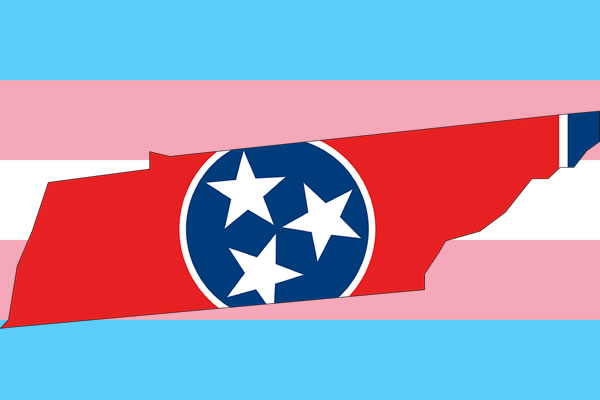
The Tennessee House of Representatives passed a bill last week to create a transgender “watch list” that also pushes detransition medical treatment. The state Senate will consider it on Wednesday.
House Bill 754/State Bill 676 has been deemed “ugly” by LGBTQ advocates and criticized by healthcare information litigators as a major privacy concern.
The bill would require “gender clinics accepting funds from this state to perform gender transition procedures to also perform detransition procedures; requires insurance entities providing coverage of gender transition procedures to also cover detransition procedures; requires certain gender clinics and insurance entities to report information regarding detransition procedures to the department of health.”
It would require that any gender-affirming care-providing clinics share the date, age, and sex of patients; any drugs prescribed (dosage, frequency, duration, and method administered); the state and county; the name, contact information, and medical specialty of the healthcare professional who prescribed the treatment; and any past medical history related to “neurological, behavioral, or mental health conditions.” It would also mandate additional information if surgical intervention is prescribed, including details on which healthcare professional made a referral and when.
HB 0754 would also require the state to produce a “comprehensive annual statistical report,” with all collected data shared with the heads of the legislature and the legislative librarian, and eventually published online for public access.
The bill also reframes detransitioning as a major focus of gender-affirming healthcare — despite studies showing that the number of trans people who detransition is statistically quite low, around 13 percent, and is often the result of external pressures (such as discrimination or family) rather than an issue with their gender identity.
This legislation stands in sharp contrast to federal protections restricting what healthcare information can be shared. In 1996, Congress passed the Health Insurance Portability and Accountability Act, or HIPAA, requiring protections for all “individually identifiable health information,” including medical records, conversations, billing information, and other patient data.
Margaret Riley, professor of law, public health sciences, and public policy at the University of Virginia, has written about similar efforts at the federal level, noting the Trump-Vance administration’s push to subpoena multiple hospitals’ records of gender-affirming care for trans patients despite no claims — or proof — that a crime was committed.
It has “sown fear and concern, both among people whose information is sought and among the doctors and other providers who offer such care. Some health providers have reportedly decided to no longer provide gender-affirming care to minors as a result of the inquiries, even in states where that care is legal.” She wrote in an article on the Conversation, where she goes further, pointing out that the push, mostly from conservative members of the government, are pushing extracting this private information “while giving no inkling of any alleged crimes that may have been committed.”
State Rep. Jeremy Faison (R-Cosby), the bill’s sponsor, said in a press conference two weeks ago that he has met dozens of individuals who sought to transition genders and ultimately detransitioned. In committee, an individual testified in support of the bill, claiming that while insurance paid for gender-affirming care, detransition care was not covered.
“I believe that we as a society are going to look back on this time that really burst out in 2014 and think, ‘Dear God, What were we thinking? This was as dumb as frontal lobotomies,’” Faison said of gender-affirming care. “I think we’re going to look back on society one day and think that.”
Jennifer Levi, GLAD Law’s senior director of Transgender and Queer Rights, shared with PBS last year that legislation like this changes the entire concept of HIPAA rights for trans Americans in ways that are invasive and unnecessary.
“It turns doctor-patient confidentiality into government surveillance,” Levi said, later emphasizing this will cause fewer people to seek out the care that they need. “It’s chilling.”
The Washington Blade reached out to the American Civil Liberties Union of Tennessee, which shared this statement from Executive Director Miriam Nemeth:
“HB 754/SB 676 continues the ugly legacy of Tennessee legislators’ attacks on the lives of transgender Tennesseans. Most Tennesseans, regardless of political views, oppose government databases tracking medical decisions made between patients and their doctors. The same should be true here. The state does not threaten to end the livelihood of doctors and fine them $150,000 for safeguarding the sensitive information of people with diabetes, depression, cancer, or other conditions. Trans people and intersex people deserve the same safety, privacy, and equal treatment under the law as everyone else.”
Iran
LGBTQ groups condemn Trump’s threat to destroy Iranian civilization
Ceasefire announced less than two hours before Tuesday deadline

The Council for Global Equality is among the groups that condemned President Donald Trump on Tuesday over his latest threats against Iran.
Trump in a Truth Social post said “a whole civilization will die tonight” if Tehran did not reach an agreement with the U.S. by 8 p.m. ET. on Tuesday.
Iran is among the handful of countries in which consensual same-sex sexual relations remain punishable by death.
Israel and the U.S. on Feb. 28 launched airstrikes against Iran.
One of them killed Supreme Leader Ayatollah Ali Khamenei. Iran in response launched missiles and drones against Israel and other countries that include Kuwait, Bahrain, Qatar, the United Arab Emirates, Jordan, Saudi Arabia, Azerbaijan, and Cyprus.
Gas prices in the U.S. and around the world continue to increase because the war has essentially closed the Strait of Hormuz, a strategic waterway that connects the Persian Gulf and the Gulf of Oman through which roughly 20 percent of the world’s crude oil passes.
Trump less than 90 minutes before his deadline announced a two-week ceasefire with Iran that Pakistan helped broker.
“We the undersigned human rights, humanitarian, civil liberties, faith-based and environmental organizations, think tanks and experts are deeply alarmed by President Trump’s threat regarding Iran that ‘a whole civilization will die tonight’ if his demands are not met. Such language describes a grave atrocity if carried out,” reads the statement that the Council for Global Equality more than 200 other organizations and human rights experts signed. “A threat to wipe out ‘a whole civilization’ may amount to a threat of genocide. Genocide is a crime defined by the Genocide Convention and by the Rome Statute of the International Criminal Court as committing one or more of several acts ‘with intent to destroy in whole or in part a national, racial or religious groups as such.'”
The statement states “the law is clear that civilians must not be targeted, and they must also be protected from indiscriminate or disproportionate attacks.”
“Strikes on civilian infrastructure — such as the recent attack on a bridge and the attacks President Trump is repeatedly threatening to carry out to destroy power plants — have devastating consequences for the civilian population and environment,” it reads.
“We urge all parties to respect international law,” adds the statement. “Those responsible for atrocities, including crimes against humanity and war crimes, can and must be held accountable.”
The Alliance for Diplomacy and Justice, Amnesty International USA, Human Rights Watch, the American Civil Liberties Union, the NAACP, MADRE, and the Robert and Ethel Kennedy Human Rights Center are among the other groups that signed the letter.
National
Glisten’s 30th annual Day of Silence to take place April 10
Campaign began as student-led protests against anti-LGBTQ bullying, discrimination

Glisten’s 30th annual Day of Silence will take place on April 10.
The annual Day of Silence began as a student-led protest in response to bullying and discrimination that LGBTQ students face. It is now a national campaign for the LGBTQ community and their allies to come together for LGBTQ youth.
It takes place annually and has multiple ways for supporters to get involved in the movement.
Glisten, originally GLSEN, champions LGBTQ issues in schools, grades K-12. Glisten’s mission is to create more inclusive and accepting environments for LGBTQ students through curriculum, supportive measures, education campaigns, and engagement, such as the Day of Silence.
There are three main ways for the community to get involved in the Day of Silence.
Glisten has a Day of Silence frame, a series of pictures used as profile photos across social media that feature individuals holding signs. The signs allow for personalization, by providing a space to put the individual’s name, followed by filling in the prompt “ … and I am ENDING the silence by…”
Participants are encouraged to post the photo on social media and use it as a profile picture. The templates can be found on Google Drive through this link.
Using #DayOfSilence and #NSCS, as well as tagging Glisten’s official Page @glistencommunity, is another way to participate in the Day of Silence.
Glisten also encourages participants to tag creators, friends, family and use a call to action in their caption, to call attention to the facts and stories behind the Day of Silence.
“Today’s administration in the U.S. wants us to stay silent, submit to their biased and hurtful conformity, and stop fighting for our right to be authentically ourselves,” said Glisten CEO Melanie Willingham-Jaggers. “We urge supporters to use their social platforms and check in with local chapters to be boots on the ground to help LGBTQ+ students feel seen, heard, supported, and less alone. By participating in the ‘Day of Silence,’ you are showing solidarity with young people as they navigate identity, safety, and belonging. Our voices matter.”

Cuba bajo presión y sin respuestas
Tenn. lawmakers pass transgender “watch list” bill

LGBTQ groups condemn Trump’s threat to destroy Iranian civilization

Glisten’s 30th annual Day of Silence to take place April 10

D.C. Council member honored by LGBTQ homeless youth group

How Pepper the courthouse dog helps victims of abuse

Iconic Eddie Izzard takes on 23 characters in ‘Hamlet’

Surviving spring cleaning

Risking it all for love during World War II