Living
Sails, skis and snowboards
Several gay and lesbian winter trips and parties planned in major cities

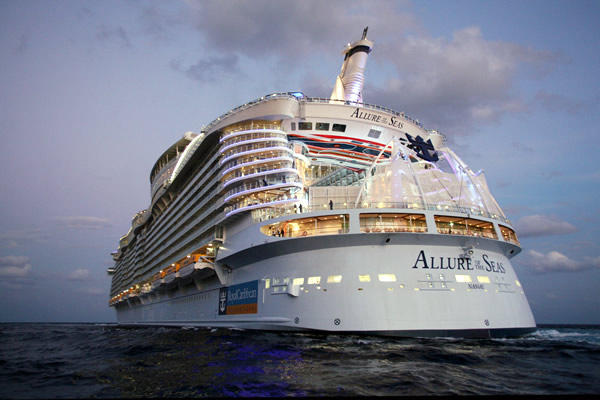
Royal Caribbean’s Allure of the Seas goes gay this weekend. (Photo courtesy Fifteen Minutes PR)
From gay ski weeks to gay rodeos, some of the most popular LGBT events happen during the winter. Whether your tastes lean toward the more laid back affair, such as a romantic dinner for two, or if you are a social butterfly looking to be surrounded by thousands of gay counterparts, here are some must-do events that are happening throughout the remaining winter season:
Elevation Utah 2012
Rated as the No. 1 ski destination by Ski Magazine, Park City, Utah, presents its second annual Gay Ski Week Feb. 23-26. According to founder Tom Whitman, “Unlike some of the other ski weeks, the Elevation events are geared to be friendly and open and fun, not really geared toward VIP velvet ropes.” Although these events are described as laid-back, the DJ line-up is quite impressive. World-class DJs such as Roland Belmares, Josh Peace and Pornstar will spin. “Daytime activities are usually taken up by skiing and snowboarding, while the official events happen at après-ski time,” Whitman says. The welcome event is held Feb. 23, and culminates in a series of evening parties at venues such as Downstairs, Sidecar, and Jam Salt Lake City. Purchase tickets and get discounted hotel rates at utahgayski.com.
Telluride Gay Ski Week
Can’t get enough of Elevation Utah? Hop over to its neighboring state Colorado where the city of Telluride presents its own Gay Ski Week, Feb. 25 through March 3. This weeklong event is produced by StraightOut Media & Marketing and supports the Telluride AIDS Benefit. Activities include Nuclia’s Get Wasted Party, the annual White Night party, and the first ever “Wig Run,” where everyone from locals to gay skiers can celebrate the week by skiing in their best wig creation. The guest list will be jumping, as three “A-Listers” from Logo TV will be in attendance, including Reichen Lehmkuhl, Chase Hutchison and Levi Crocker. To top the week off, the resort will be celebrating the repeal of “Don’t Ask, Don’t Tell” by allowing active members of the military to party for free the entire week and receive military discounts from lift tickets to rentals all over town. Purchase tickets and weekly passes at telluridegayskiweek.com.
Royal Caribbean’s Allure of the Seas
Set sail with the world’s largest cruise ship and surround yourself with 5,400 like-minded gay travelers. Royal Caribbean’s Allure of the Sea departs Sunday and cruises to the Mexican cities of Cozumel, Costa Maya and Hispanolia and returns after an indulgent seven days on Feb. 5. The LGBT vacation company Atlantis Events, Inc. brings you attractions such as five architectural dance floors, 13 restaurants and cafes, a plethora of theaters presenting performances such as “Chicago” and Dixie Longate’s “Tupperware” show, and adventuresome activities such as rock climbing, zip lining and ice skating. At the western Caribbean ports, you can take part in island excursions such as diving, snorkeling, exploring Mayan ruins or kicking back on the powder-white sand beaches. Broadway diva Idina Menzel and gay comedian Bruce Vilanch will appear. Go to atlantisevents.com for details.
Arizona Gay Rodeo
Looking for something low-key with warm weather, surrounded by dozens of gay cowboys? Visit the Rawhide at WildHorse Pass during Presidents Day weekend (Feb. 17-19) located in Chandler, Ariz. This is the kick-off Rodeo of 2012 hosted by the 25-year-old Arizona Gay Rodeo Association (AGRA). Experience events such as bull riding, roping challenges, speed events on horseback and the Wild Drag Race. Located only 17 miles from the city of Phoenix, you can end your day at one of the popular gay pubs in the capitol, such as Charlie’s Phoenix, Kobalt or Apollo’s Lounge, which offer specials during rodeo weekend. Visit agra-phx.com to purchase tickets and to obtain a discount code at the Radisson Hotel Phoenix-Chandler. For an affordable $25 weekend pass to all Rodeo events, gay cowboy heaven is only a Stetson away.
LGBT Winter Weekend in NYC
Taking a trip to New York City is always a blast, but now various Travel Alternatives Group (TAG) approved hotels offer an even greater incentive for a weekend trip to the city. Visit the Danfords Hotel & Marina Feb. 24 through March 31 and purchase the “Romance” package for two, starting at $429, which includes a one-night accommodation, Champagne and strawberries upon arrival, a 50-minute side-by-side couples massage at Blue Sapphire Spa and $100 credit toward the Wave Seafood Kitchen. The Garden City Hotel, also located in Long Island, is offering the “All for Love” couple’s retreat ($399). Included are overnight deluxe accommodations, chocolate-covered strawberries and a three-course Valentine’s dinner for two in the private dining room of the hotel’s signature restaurant, Rein. Prefer to stay on the island of Manhattan? Enter the promo code, GLBT11 for up to 20 percent off the best available rate at the Hilton New York (newyork.hilton.com).
Winter Party Miami
Surround yourself with miles of white sandy beaches, thousands of men in Speedos and the bumping base of music spun by legendary DJs such as DJ Joe Gauthreaux. The expected attendance of 10,000 LGBT partiers will benefit the National Gay & Lesbian Task Force through each event and ticket purchased at the Winter Party. Heavily anticipated events include the Under One Sun Pool Party, Boiling Point (Sunday night dance party at Cameo nightclub), and Heaven & Hell at the Pool. Women can experience girls-only events at The Tudor House, which will host the Sunday Brunch party March 4, as well as dance parties at The Stage and Trio on the Bay. The Surfcomber Miami is the official hotel for the Winter Party and will host the welcome event Spark on Feb. 29 as well as being the location of the two pool parties. Tickets and weekly passes to the events can be purchased at winterparty.com.
Vallarta Girl
A chance to experience a five-day lesbian party in Puerto Vallarta, Mexico is worth the last minute splurge. The “Vallarta Girl” event is in its second year and takes place Feb. 16-20. Daily events include lesbian cruises, jungle excursions and night parties with world-class DJs. Celebrities such as Rose and Whitney from “The Real L World” will be in attendance as well as well-known artists, DJ Lezlee and DJ Saratonin. A popular gay-friendly destination, Puerto Vallarta offers a selection of women-only bars, such as CC, The Palms and Mañana. Purchase tickets and receive a discount fare from Alaska Airlines at vallartagirl.com.
Gay Mardi Gras, New Orleans
Famous for its huge Carnival celebrations, rowdy Bourbon Street crowds and inspirations from the French, Spanish and Native American cultures, Mardi Gras is one of the most anticipated annual celebrations in America. Thankfully, the “Fat Tuesday” festival offers a variety of LGBT events to celebrate our own Gay Mardi Gras. For example, The Mardi Gras Bourbon Awards has been an annual costume event for more than 40 years, where contestants can win awards in categories such as Best Drag, Best Leather, or Best of Show. This event will be held on Feb. 21. Other events include the Krewe Balls and Mardi Gras Bead Toss. Check out these after-party gay bars: Bourbon Pub, Café Lafitte, and Le Roundup.
Whistler Winter Pride
Not just another winter ski trip, Whistler presents an entire week of activities much like the summer Prides that take place across the U.S. From Feb. 5-12, Whistler Ski Resort in British Columbia, Canada organizes daily activities, ski trips and après-ski parties to keep you busy. For example, daytime activities include ski and snowboard lessons, snowmobile tours, inner tubing in the Coca-Cola Tube Park, dog sledding, zip lining and skeleton sliding. Evening activities include captivating events such as the Gender Bender Drag Ball at Garfinkles nightclub, a Ho Down at the Echo Valley Ranch & Spa, and a comedy night hosted by Vancouver’s Drag Diva, Symone Says. Women don’t get left behind, as there are special events just for the girls, such as the Burlesque show, starring Burgundy Brixx and the closing party, Shred Betties Bash. Tickets can be purchased for all events at gaywhistler.com/events.






Large SUVs are fine for long-distance travel. But in the city? Not so much.
That’s where subcompacts come in. They fit anywhere. Yet they often remind me of sensible shoes: practical, dependable and kinda dull.
Now, though, more and more small crossovers are starting to channel their inner Christian Louboutin. Stylish. Sassy. And with some swagger to make things interesting.
CHEVROLET TRAX
$22,000
MPG: 28 city/32 highway
0 to 60 mph: 9.1 seconds
Cargo space: 54.1 cu. ft.
PROS: Affordable. Updated. Roomier than expected.
CONS: So-so acceleration. No all-wheel drive. Some road noise.
The Chevrolet Trax has undergone a stunning redo. Longer. Lower. Sharper. And more muscular — especially in sporty trims like the RS, which adds darker accents and a bit of attitude.
It’s like watching an understudy get a breakout moment.
Under the hood sits a three-cylinder turbo. No, that’s not NASCAR material, but it’s perfectly adequate for daily life. Around town, the Trax felt light, easy to maneuver and surprisingly smooth. While I wasn’t going to be chasing lap times like Brad Pitt in “F1,” this pint-sized SUV kept up with traffic comfortably.
Another plus: Chevy re-tuned the suspension. Rough pavement softens. Long drives are relaxed.
Inside, the dashboard is more upscale than the price tag suggests. A large infotainment display dominates the center stack, and wireless smartphone connectivity is standard. Rear passenger room is generous thanks to the longer wheelbase, and cargo space is decent.
Inexpensive, yes. And now stylish enough to earn an ovation.
MAZDA CX-30

$26,000
MPG: 24 city/31 highway
0 to 60 mph: 8.0 seconds
Cargo space: 45.2 cu. ft.
PROS: Sexy exterior. Chic cabin. Sporty handling.
CONS: Limited rear visibility. Smallish cargo area.
Mazda has mastered the art of making affordable cars feel expensive, and the CX-30 might be its best performance yet. Sculpted curves. Dramatic fenders. Rich paint colors that shimmer under sunlight. Park this crossover next to competitors and it looks like it wandered in from a more upscale showroom.
The base four-cylinder engine is lively enough. But the real fun starts with the optional turbo. Press the throttle and the CX-30 surges forward with gusto, whipping you from 0 to 60 mph in as little as 5.9 seconds. Suddenly, merging onto the highway feels less like commuting and more like making an entrance worthy of Lady Gaga.
Handling also shines, with sharp steering, minimal body roll and controlled cornering. To me, the CX-30 is one of the few small rides that genuinely rewards enthusiastic driving.
Inside, the cabin feels premium. Soft-touch materials, elegant stitching and a minimalist dashboard create a refined atmosphere.
There are tradeoffs. Backseat legroom is tighter than some rivals, and outward visibility can feel limited due to the thick roof pillars.
But if you enjoy driving — really enjoy it — the CX-30 stands apart.
VOLVO XC40

$40,000
MPG: 23 city/30 highway
0 to 60 mph: 8.1 seconds
Cargo space: 57.5 cu. ft.
PROS: Euro styling. High-quality materials. Top safety gear.
CONS: Bit jarring over potholes. Average fuel economy.
For a more sophisticated look, there’s the Volvo XC40. Crisp lines. Upright stance. Signature “Thor’s hammer” LED headlights that give the front-end an unmistakable presence.
Under the hood, the XC40 pairs a four-cylinder turbo with standard all-wheel drive. While the XC 40 won’t outrun a true sports car, it moves with purpose. Think quiet confidence — like Jodie Foster in practically all her movies.
The ride balances comfort and composure nicely. Firm enough for zigzagging through congested traffic, but smooth enough to endure long highway drives.
Inside, the cabin is modern, airy and beautifully assembled. Volvo uses soft textiles, brushed metal and minimalist trim pieces to create an upscale aura. The vertically oriented touchscreen integrates Google apps, like Maps and Assistant. Once you get used to it, the system feels intuitive and tech-forward.
Volvo also excels at clever practicality. Door pockets are enormous. There’s even a removable trash bin in the center console.
While the XC40 may cost more than its mainstream rivals, it offers something they can’t quite replicate. Effortless cool.

In September 2024, I wrote about the District’s Lead-Free D.C. initiative, an ambitious effort to remove lead pipes and make drinking water safer for every resident in our city. Since that original article, a number of important developments have taken shape that affect everyone living in the District. Key drivers in the legal landscape surrounding this issue such as disclosure, testing, and infrastructure planning have been sharpened. The city’s sweeping pipe replacement efforts are continuing to evolve against the backdrop of broader federal drinking-water rules and funding changes.
What was once largely public health conversation for the future is now a practical reality for many property owners and renters. The water service line replacement project has moved from planning and is presently underway throughout the city.
Elevated levels of lead in drinking water is a perplexing challenge in many U.S cities. Researchers documented elevated lead levels in D.C.’s water system more than two decades ago, spotlighting how old infrastructure can pose a hidden health risk even in one of America’s wealthiest cities. Local leaders responded with pipe replacement plans that have continued in the years since.
The Lead-Free D.C. initiative remains the central effort to reduce that risk by replacing water supply lines. These are the pipes that carry water to your home or rental property from the street. D.C. Water estimates that tens of thousands of lead or galvanized service lines still exist in the city and must be systematically replaced to eliminate this exposure.
What Has Changed Since September 2024
Over the past 18 months, several shifts have rippled through policy, practice, and the daily experience of both landlords and tenants:
- Local Disclosure and Tenant Rights: The city has strengthened disclosure requirements. Today, property owners are expected to provide clear written disclosures about known lead service lines, any testing that has been done, and records of past replacements. Tenants also have the right to request lead testing of their tap water, and landlords are responsible for ordering and passing along the test kit, and are required by law to share results with tenants when requested.This reflects an ongoing push toward transparency and an informed occupancy.
- Pipeline Replacement Planning: D.C. Water and the District Government are continuing to roll out their block-by-block lead service line replacement work, with construction schedules publicly available through a Lead-Free D.C. construction dashboard. The goal is to remove by 2030 all lead service lines on both the public and private side, though timelines and funding mechanisms are still being refined as the work continues. D.C.’s Lead-Free DC initiative stipulates that DC Water is responsible to replace the public portion of a lead service line at no cost to the property owners. This is the section running from the water main under the street to the property owner’s lot line. When DC Water is already replacing the public side as part of a scheduled infrastructure project, it will also offer to replace the private-side service line (into the building) at no cost to the owner, as long as the owner grants access and signs a right-of-entry agreement. In these cases, DC Water pays the contractor directly, and the entire lead service line is removed in one coordinated effort.
When no public-side project is scheduled, owners may still qualify for full private-side replacement coverage through the District’s Lead Pipe Replacement Assistance Program (LPRAP). If approved, the program covers the cost of replacing the private-side lead pipe, with funds paid directly to the contractor. Property owners are typically responsible for selecting the contractor, coordinating the work, and covering any costs outside the approved scope of work. Funding is subject to availability, and eligible applicants may be placed on a waiting list depending on annual program budgets.
- Implementation Best Practices: To avoid challenges and misunderstandings regarding the responsibilities during such a significant undertaking, fully investigating the program and how it works is a good first start as is regular and clear communications.
It’s helpful for both property owners and residents to have a clear understanding of what D.C. Water and construction crews will be doing during a lead service line replacement and what follow-up work may remain once the project is complete. Like any major infrastructure upgrade, the process can involve temporary water shutoffs, excavation around the building, and some restoration afterward, such as repairing landscaping or sections of sidewalk. While these short-term disruptions can be inconvenient, they’re a normal and necessary part of modernizing the city’s water system and ensuring safer drinking water for the long term.
- Federal Drinking Water Rules: On the national stage, the U.S. Environmental Protection Agency (EPA) finalized in October 2024 the Lead and Copper Rule Improvements (LCRI). The LCRI requires public water systems across the country to inventory and plan to replace lead service lines, and to remove all lead pipes within about a decade. It also strengthens testing, monitoring, and public notification requirements and lowers the action level for lead exposure, building on earlier revisions to the Lead and Copper Rule.
While these federal changes do not rewrite Washington, D.C.’s specific legal requirements for landlords and tenants, they do help shape funding opportunities, compliance expectations, and the broader national push to eliminate lead plumbing, which can affect utilities, state programs, and local infrastructure planning.
Federal drinking water regulations are subject to administrative review, litigation, and potential revisions as presidential administrations change. While the EPA’s 2024 Lead and Copper Rule Improvements remain in effect as of this writing, aspects of implementation, enforcement timelines, or funding mechanisms may evolve through future rulemaking, court decisions, or congressional action. These federal rules do not override Washington, D.C.’s independent authority to adopt and enforce its own public health, housing, and water safety requirements, which continue to govern landlord and tenant obligations within the District regardless of federal regulatory shifts.
What Landlords Should Know
For landlords in D.C., these evolving expectations matter in 3 key ways:
- Disclosure Is Now a Must: You are expected to provide prospective tenants with upfront information about lead service lines, known test results, and replacement history before lease signing. Existing tenants must also be informed if you learn anything new about the plumbing system.
- Testing Should Be Welcomed, Not Avoided: When tenants request a lead water test, you’re now required to provide D.C. Water’s approved kit and cooperate with the process. The test results give both sides clear information about water quality and whether additional remediation is advisable.
- Capital Investment May Be Unavoidable: Even if much of the public-side work is funded by D.C. Water, private-side service line replacement costs and restoration work may still fall to the property owner if the home still has lead service lines. Planning for both the expense and the logistics is key to be able to take advantage of this program being offered to D.C. homeowners.
What This Means for Tenants
For renters, the changes bring clearer rights and fewer unknowns. Tenants no longer have to guess whether lead pipes serve their home; they can request testing, receive timely results, and rely on official disclosures when deciding where to live and how to protect their health.
Transparent communication with the landlord, responsiveness to testing requests, and participation in replacement programs turn regulatory requirements into real-world safeguards. In that way, landlord action directly shapes tenant trust, housing stability, and long-term public health outcomes.
At a moment when the District is investing heavily in its infrastructure, landlords who plan ahead and participate help to ensure that these public resources translate into safer housing, stronger neighborhoods, and a city better equipped for the future.
Why This Still Matters
Lead-free water shouldn’t be a luxury. Continued investment by federal and local governments in Washington, D.C.’s water infrastructure reflects a shared commitment to the city’s long-term health and livability. Modernizing service lines helps ensure that people can raise families here, age in place, and remain part of their communities without the added health concerns associated with lead exposure.
Landlords who take the time now to understand, disclose, and plan for lead service line replacement not only comply with evolving expectations, but they also strengthen the long-term value and marketability of their properties.
Scott Bloom is owner and senior property manager of Columbia Property Management.

As the days grow longer and buyers re-emerge from winter hibernation, the spring market consistently proves to be one of the strongest times of year to sell a home. Increased inventory, motivated buyers, and picture-perfect curb appeal make it a prime window for homeowners ready to list.
The good news? Preparing your home for spring doesn’t require a full renovation or a contractor on speed dial. A few thoughtful, cost-effective updates can dramatically elevate your home’s appeal and market value.
Here are smart, inexpensive ways to get your property market-ready:
Fresh Paint: The Highest Return on a Small Investment
Few improvements transform a home as quickly and affordably as paint. Neutral tones remain the gold standard, but today’s buyers are gravitating toward warmer tan hues that create an inviting, elevated feel without overwhelming a space. Soft sandy beiges and warm greige-leaning tans provide a clean backdrop that photographs beautifully and allows buyers to envision their own furnishings in the home.
Freshly painted walls signal care and maintenance — two qualities buyers subconsciously look for when touring properties.
Removable Wallpaper: Style Without Commitment
For homeowners wanting to introduce personality without permanence, removable wallpaper offers a stylish solution. A subtle textured pattern in a powder room, a soft botanical print in a bedroom, or a modern geometric accent wall can add depth and character. Because it’s easily removed, it appeals to both sellers and buyers — creating visual interest without long-term risk.
Upgrade Light Fixtures for Instant Modernization
Outdated lighting can age a home instantly. Swapping builder-grade fixtures for modern, streamlined options is one of the simplest ways to refresh a space. Consider warm metallic finishes or matte black accents to create a cohesive, updated look. Proper lighting not only enhances aesthetics but also ensures your home feels bright and welcoming during showings.
Elevate Curb Appeal: First Impressions Matter Most
Spring buyers often decide how they feel about a home before they ever step inside. Refreshing curb appeal doesn’t require major landscaping. Simple updates such as fresh mulch, trimmed shrubs, seasonal flowers, a newly painted front door, and updated house numbers can dramatically improve first impressions. Power washing the driveway and walkways also delivers a clean, well-maintained appearance for minimal cost. Even if you don’t have a curb to appeal- think potted plants on your patio, balcony and change out your door mat.
Deep Clean & Declutter (Seriously, It Matters)
A deep, top-to-bottom cleaning is basically free and one of the most impactful things you can do. Scrub floors, windows, grout, baseboards, appliances, bathrooms, and everything in between. Don’t forget to clean windows inside and out — natural light is a huge selling point. Declutter by packing up excess stuff, clearing off countertops, and minimizing personal items so buyers can see the space, not your life.
Let the Light Shine
Make your home feel bright and inviting by cleaning windows, opening blinds, and replacing dark or dated light fixtures with contemporary, budget-friendly options. Swapping in LED bulbs offers brighter light and lower utility costs — a small change that buyers appreciate. Pro tip: I always recommend removing widow screens to allow as much light in as possible
Neutralize Scents
Make sure the home smells fresh. Neutralizing odors — whether from pets, cooking, or moisture — creates a clean, welcoming atmosphere. Light natural scents like citrus or subtle florals can be inviting during showings. Think of how your favorite hotel smells and go for that.
Spring market rewards preparation. By focusing on high-impact, low-cost improvements, sellers can position their homes to stand out in a competitive environment. With thoughtful updates and strategic presentation, homeowners can maximize both buyer interest and potential sale price — all without overextending their renovation budget.
As activity increases and inventory begins to rise, now is the time to prepare. A little polish today can translate into significant results tomorrow.
Justin Noble is a Real Estate professional with Sotheby’s International Realty Servicing Washington D.C., Maryland, and the beaches of Delaware.

Trans activists gather on National Mall for Transgender Day of Visibility

The cost of speaking one’s mind

Senegalese president signs bill that further criminalizes homosexuality

Md. lawmakers reaffirm legislative priorities

Supreme Court rules against Colo. law banning conversion therapy for minors

Celebrate cherry blossoms the drag way

Lorato ke Lorato: marriage equality, democracy, and the unfinished work of justice in Botswana

Japanese Supreme Court to consider marriage equality

The outrage economy is not the LGBTQ community

Anti-trans visa ruling echoes Nazi regime destroying trans documents
-

 Out & About4 days ago
Celebrate cherry blossoms the drag way
-
Botswana4 days ago
Lorato ke Lorato: marriage equality, democracy, and the unfinished work of justice in Botswana
-
Japan4 days ago
Japanese Supreme Court to consider marriage equality
-
Opinions4 days ago
The outrage economy is not the LGBTQ community