Arts & Entertainment
Out & About: DC and Baltimore events
Swimsuit show and WTF at Town, several black LGBT theater events, a Whitney Houston tribute in Baltimore and more


A production still from ‘The Ice Child,’ being staged now in Washington. (Photo courtesy Factory 449)
‘Ice Child’ play finds inspiration in creepy Poe tales
Inspired by the chilling tales of Edgar Allan Poe, Factory 449 company members Lisa Hodsoll, Hunter Styles and Rick Hammerly (who is gay) have co-written “The Ice Child,” a terrifying hour-long theater piece guaranteed to resonate with audiences.
Now in production at Mead Theatre Lab at Flashpoint, “The Ice Child” centers on Catherine (Sara Barker), a young woman who awakens to find herself imprisoned in a coffin-sized freezer. Held captive by former co-worker Kidd (Dexter Hamlett), Catherine soon learns her release is not imminent and escape from what could easily be a lethal situation depends on not angering her creepy captor. Meanwhile outside the freezer, Catherine’s treatment and fate is being considered as well.
Slickly produced, “The Ice Child” is compellingly told through a mash up of performance, film, and projected photos. It runs through June 3 at the Mead Theatre Lab at Flashpoint (916 G Street, NW). Tickets are $20. Visit factory449.com for details or call 866-811-4111.
Swimsuits and WTF at Town this weekend
Town (2009 8th St., N.W.) has a couple events happening this weekend.
On Saturday, the club is hosting a swimwear fashion show featuring models in “2xist” swimsuits courtesy of Universal Gear. DJ Chord spins. Doors open at 10 p.m. and cover is $7 until 11 p.m. and $12 afterward.
Sunday brings the return of “WTF” and this week’s theme is airlines. The night will feature several DJs including the Pocket Gays, Aaron Riggins and Ed Bailey. Doors open at 10 p.m. and cover is $5.
Attendees must be 21 or older for both events.
Several black LGBT theater events on weekend slate
Tonight and Saturday, “She’Baltimore” by Ira Kip is premiering in the D.C. area at Warehouse Theater (645 New York Ave.,) as an official part of Black Pride at 8 p.m.
The play, which takes place in Baltimore, deals with issues of battery and abuse in the LGBT community. Admission is $25.
Another official Black Pride theater event is a reading of “The Four of Us” at Mead Lab Theater (916 G St., N.W.) on Saturday at 2 p.m. Admission is $20 and includes a small reception.
Although not an official part of Pride, the African-American Collective Theater is observing the 20th anniversary of its first D.C. Black Pride theater showcase on Sunday with two stage readings of “Here. And Now.” by ACT founding directo Alan Sharpe at Warehouse Theater at 5 and 8 p.m. The play is a family drama in which the relationship of a middle-aged, male couple with two sons is tested. Tickets are $15. Contact [email protected] for more information and advance tickets.
Komen race to benefit Mautner Project
The 23rd annual Susan G. Komen Global Race for the Cure will happen June 2 on the National Mall in Washington. The annual breast cancer benefit awarded a $200,000 grant to lesbian health organization the Mautner Project, which expanded its breast cancer program. The grant was awarded in 2011 and runs for two years.
The event starts at 8 a.m. It’s still possible for those wishing to participate to register. Details are at globalraceforthecure.org. Or call 1-877-GOKOMEN.
Soulful Symphony to honor Houston
Hippodrome Theater at the France-Merrick Performing Arts Center (12 North Eutaw St.) hosts the Soulful Symphony on June 1 at 8 p.m. as it honors the late Whitney Houston.
The concert will feature Houston’s hits ranging from gospel to pop, R&B to film music and more.
This performance will also act as the groups season-ending gala event.
Tickets range from $30 to $250 and are available online at ticketmaster.com. Special gala tickets include dinner, concert and VIP after party.
For more information on Soulful Symphony, visit soulfulsymphony.org.
Grand Central has specials, theme nights and more
Grand Central (1001/1003 N. Charles St.) has several events this week.
Tonight is the club’s weekly dance party with $2.50 drinks until 11 p.m. Sappho’s is having its own happy hour from 8 to 10 p.m.
Saturday has two-for-one drinks until 8 p.m. and Glow with DJ Arturo. Admission to Glow is $5.
Sunday is the club’s kick off to summer beach party with DJ Arturo.
Monday and Tuesday, Grand Central has karaoke with host Nikki Cox from 10 p.m. to 1 a.m.
Wednesday is “Hump Wednesdays,” an electropop, alternative, indie dance night with DJ Arturo.
The week ends Thursday with ladies night featuring DJ Lems and $2.50 drinks until 11 p.m.
Sci-fi/fantasy convention in town this weekend
Balticon 46, the Maryland regional science fiction and fantasy convention, runs today through Monday at Marriott’s Hunt Valley Inn (245 Shawan Rd.) with special guests Jody Lynn Nye, Jim Odbert, Heather Dale, Ben Deschamps and William D. Phillips.
There will be a variety of panels and workshops covering topics such as anime, dance, gaming, music, video and more.
There will also be an art show, various dealers selling books, memorabilia and more.
Registration ranges from $17 for a single day to $62 for the whole weekend for adults and $9 to $31 for children ages 6 through 12.
For more information and to register online, visit balticon.org.
Trans, poz, coming-out groups to meet at Center
The GLBT Community Center of Baltimore and Central Maryland (241 West Chase St.) has several programs this week.
Three groups are slated to meet Saturday: Sufficient As I Am, a group for youth 24 and younger dealing with issues of sexuality, coming out, relationships, family and more, meets in room 201 at 12:30 p.m.; GIG: Baltimore Trans-Masculine Alliance, a FTM support group, meets at 6 p.m. in room 202; and GIG: Tran*quality, a MTF support group, meets at 8 p.m. in room 202.
On Monday, Men Like Me, a support group for adult men who love other men, is facilitated by licensed clinicians and meets 6 p.m. in room 202.
POZ Men, an LGBT-affirming peer support group for all HIV-positive men, meets Wednesday in room 202 at 6 p.m.
Women of Color, a social and discussion group, meets Thursday at 7:30 p.m. in room 202.
The center also has HIV and STD testing on Wednesdays from 5 to 8 p.m. provided through a collaboration between the GLCCB Health Committee and the Baltimore City Health Department.
Friday, March 27
Center Aging Monthly Luncheon With Yoga will be at 12 p.m. at the DC Center for the LGBT Community. Email Mac at [email protected] if you require ASL interpreter assistance, have any dietary restrictions, or questions about this event.
Go Gay DC will host “LGBTQ+ Happy Hour” at 7 p.m. at Dupont Italian Kitchen. This is a chance to relax, make new friends, and enjoy happy hour specials at this classic retro venue. Attendance is free and more details are available on Eventbrite.
Trans and Genderqueer Game Night will be at 7 p.m. at the DC Center for the LGBT Community. This is a relaxing, laid-back evening of games and fun. All are welcome and there’ll be card and board games on hand. Feel free to bring your own games to share. For more details, visit the DC Center’s website.
Trans Discussion Group will be at 7 p.m. on Zoom. This event is intended to provide an emotionally and physically safe space for trans people and those who may be questioning their gender identity/expression to join together in community and learn from one another. For more details, email [email protected].
Saturday, March 28
Go Gay DC will host “LGBTQ+ Community Brunch” at 11 a.m. at Freddie’s Beach Bar & Restaurant. This fun weekly event brings the DMV area LGBTQ+ community, including allies, together for delicious food and conversation. Attendance is free and more details are available on Eventbrite.
The DC Center for the LGBT Community will host “Sunday Supper on Saturday” at 2 p.m. It’s more than just an event; it’s an opportunity to step away from the busyness of life and invest in something meaningful, and enjoy delicious food, genuine laughter, and conversations that spark connection and inspiration. For more details, visit the Center’s website.
Black Lesbian Support Group will be at 1 p.m. on Zoom. This is a peer-led support group devoted to the joys and challenges of being a Black Lesbian. For more details, email [email protected].
Monday, March 30
“Center Aging: Monday Coffee Klatch” will be at 10 a.m. on Zoom. This is a social hour for older LGBTQ adults. Guests are encouraged to bring a beverage of choice. For more information, contact Adam ([email protected]).
“Tea Time! A Local DC Drag Comedy Show” will be at 3 p.m. at Spark Social. This is a live drag comedy show where drag legends TrevHER & Tiara Missou Sidora host spill all the tea in the DMV. This event is free and more details are available on Eventbrite.
Tuesday, March 31
Visibili-TEA Party will be at 6 p.m. at Restoration Station. Guests are encouraged to come sip, celebrate, and shine together. This event is a Trans Day of Visibility celebration and a special collaboration between Auntie’s Home and Damien Ministries. This is a boozy tea party with intention and the dress code reflects the vibe. More details are available on Eventbrite.
Wednesday, March 1
Job Club will be at 6 p.m. on Zoom upon request. This is a weekly job support program to help job entrants and seekers, including the long-term unemployed, improve self-confidence, motivation, resilience and productivity for effective job searches and networking — allowing participants to move away from being merely “applicants” toward being “candidates.” For more information, email [email protected] or visit thedccenter.org/careers.
Thursday, April 2
The DC Center’s Fresh Produce Program will be held all day at the DC Center for the LGBT Community. People will be informed on Wednesday at 5 p.m. if they are picked to receive a produce box. No proof of residency or income is required. For more information, email [email protected] or call 202-682-2245.
Virtual Yoga Class will be at 7 p.m. on Zoom. This free weekly class is a combination of yoga, breathwork and meditation that allows LGBTQ+ community members to continue their healing journey with somatic and mindfulness practices. For more details, visit the DC Center’s website.
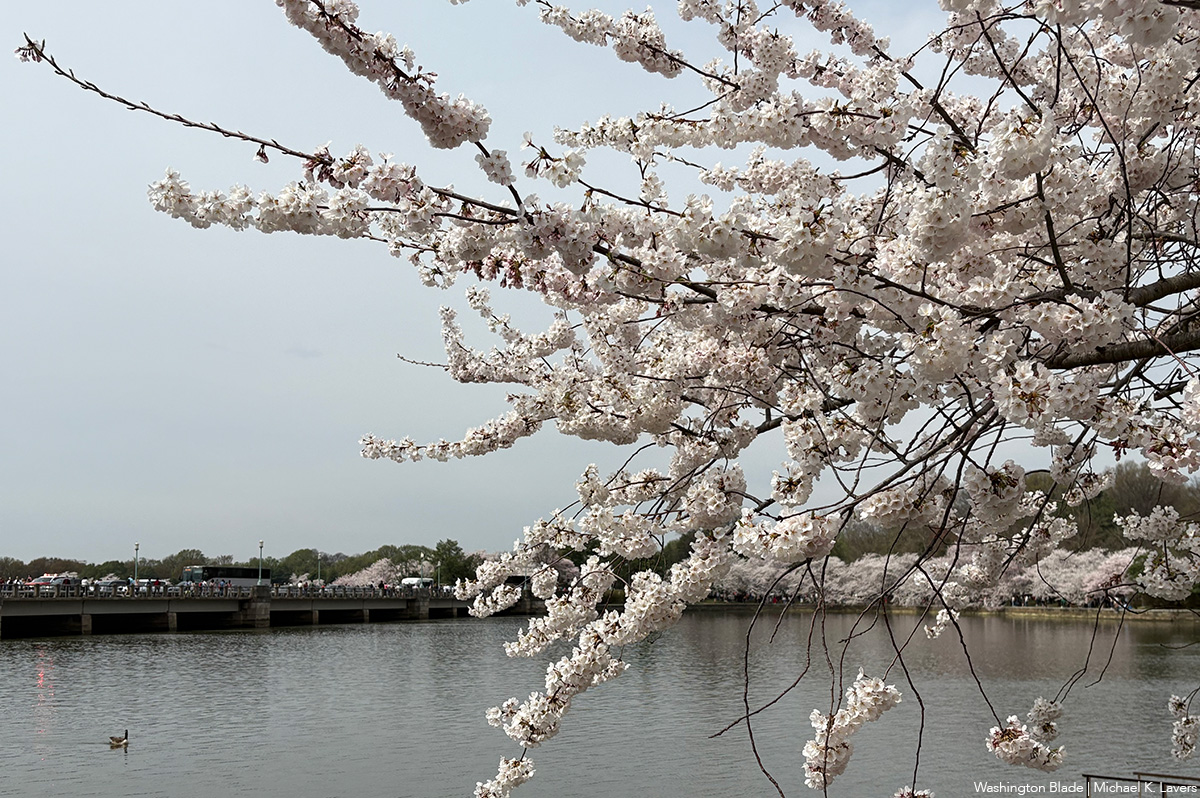
Unconventional Diner will host “Cherry Blossom Drag Bingo Party” on Friday, April 3, at 6:30 p.m.
Guests will be treated to an unforgettable night of drag performances, bingo, food and drink and prizes. Highlights of the evening include themed cocktails, drag performances and bingo prizes.
Tickets can be secured via Resy.
Sports
New IOC policy bans trans women from Olympics
New regulation to be in effect at 2028 summer games in Los Angeles
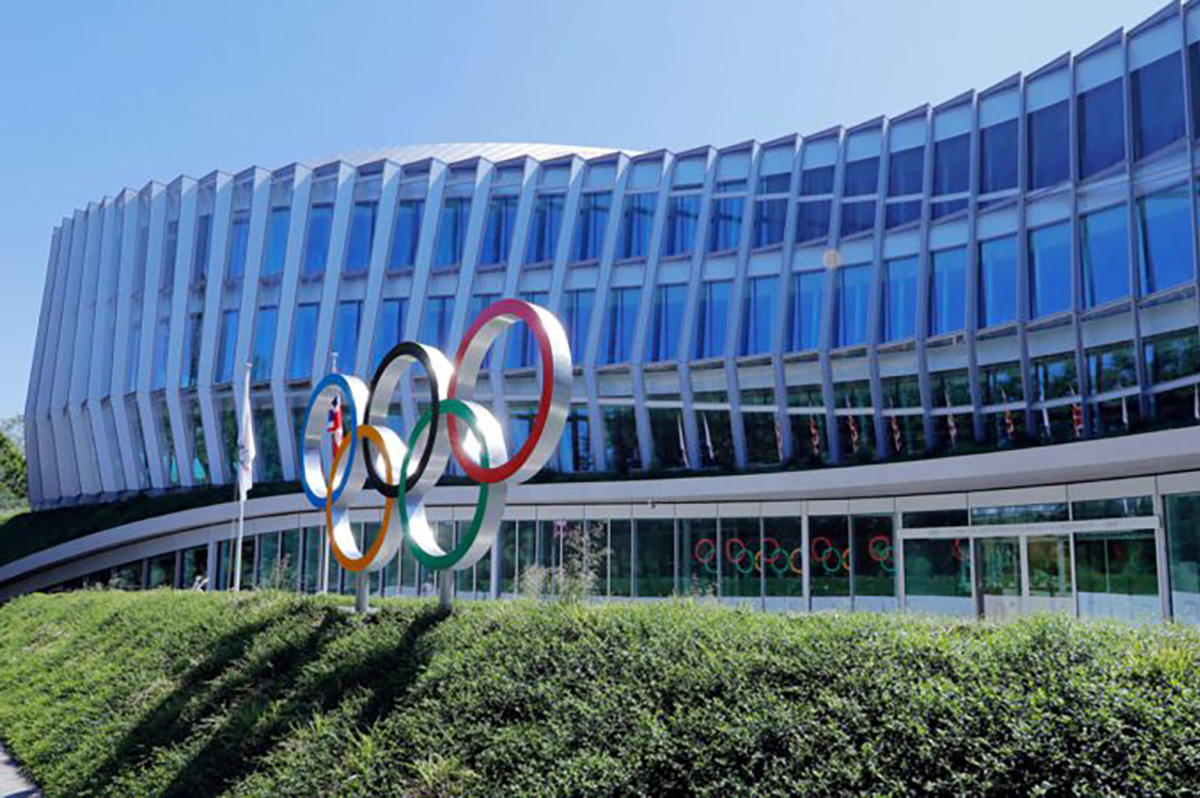
The International Olympic Committee on Thursday announced it will not allow transgender women from competing in female events at the Olympics.
“For all disciplines on the Sports Program of an IOC event, including individual and team sports, eligibility for any Female Category is limited to biological females,” reads the new policy.
The policy states “eligibility for the Female Category is to be determined in the first instance by SRY Gene screening to detect the absence or presence of the SRY Gene.”
“On the basis of the scientific evidence, the IOC considers that the SRY (sex-determining Region Y) Gene is fixed throughout life and represents highly accurate evidence that an athlete has experienced or will experience male sex development,” it reads. “Furthermore, the IOC considers that SRY Gene screening via saliva, cheek swab or blood sample is unintrusive compared to other possible methods. Athletes who screen negative for the SRY gene permanently satisfy this policy’s eligibility criteria for competition in the Female Category.”
The policy states the test “will be a once-in-a-lifetime test” unless “there is reason to believe a negative reading is in error.”
The new regulation will be in place for the 2028 Summer Olympics in Los Angeles.
“I understand that this a very sensitive topic,” said IOC President Kirsty Coventry on Thursday in a video. “As a former athlete, I passionately believe in the rights of all Olympians to take part in fair competition.”
“The policy that we have announced is based on science and it has been led by medical experts with the best interests of athletes at its heart. The scientific evidence is very clear: male chromosomes give performance advances in sport that rely on strength, power, or endurance,” she added. “At the Olympic Games, even the smallest margins can be the difference between victory and defeat. So, it is absolutely clear that it would not be fair for biological males to compete in the female category. In addition, in some sports it would simply not be safe.”
(Video courtesy of the IOC)
Laurel Hubbard, a weightlifter from New Zealand, in 2021 became the first trans woman to compete at the Olympics.
Imane Khelif, an Algerian boxer, won a gold medal at the 2024 Summer Olympics in Paris. Khelif later sued JK Rowling and Elon Musk for cyberstalking after they questioned her gender identity.
Ellis Lundholm, a mogul skier from Sweden, this year became the first openly trans athlete to compete in any Winter Olympics when he participated in Milan Cortina Winter Olympics in Italy.
President Donald Trump in February 2025 issued an executive order that bans trans women and girls from female sports teams in the U.S.
The U.S. Olympic and Paralympic Committee last July banned trans women from competing in female sporting events. Republican lawmakers have demanded the IOC ban trans athletes from women’s athletic competitions.
“I’m grateful the Olympics finally embraced the common sense policy that women’s sports are for women, not for men,” said U.S. Sen. Tom Cotton (R-Ark.) on X.
An IOC spokesperson on Thursday referred the Washington Blade to the press release that announced the new policy.

Trump tells Fox News he won the ‘gay vote’ — but polls tell a different story

Anti-trans visa ruling echoes Nazi regime destroying trans documents

Japanese Supreme Court to consider marriage equality

The outrage economy is not the LGBTQ community

Calendar: March 27-April 2

Trans Day of Visibility events planned

Virginia General Assembly’s 2026 legislative session ends

Markwayne Mullin confirmed as next DHS secretary

Gay man murdered in Va.