Arts & Entertainment
‘Body’ of evidence
Well-crafted lesbian-themed character study closes at Theater J Sunday
‘Body Awareness’
Theater J
1529 Sixteenth Street, NW
Through Sept. 23
Tickets: $25
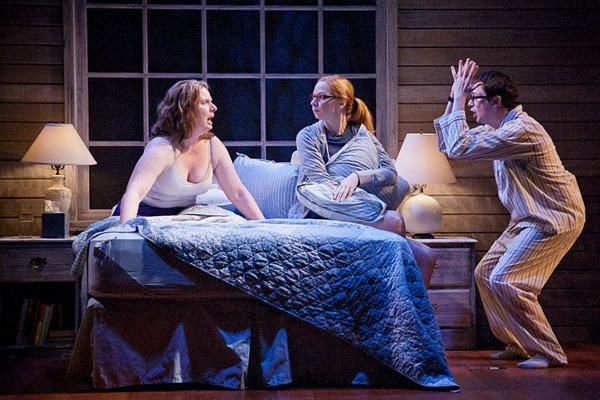
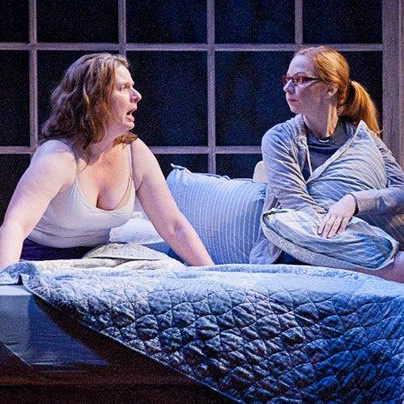
MaryBeth Wise, Susan Lynskey and Adi Stein in ‘Body Awareness’ by Annie Baker at Theater J through Sunday. (Photo by C. Stanley Photography)
It’s wonderful when you leave a play wanting more — more of the interesting multi-faceted characters, more of the thought-provoking themes, more of the crackling dialogue and more of the nuanced acting, striking design and confident direction. And luckily for Washington’s LGBT theater audiences, that is definitely the case with Theater J’s excellent production of Annie Baker’s “Body Awareness.” But act fast — this is the last weekend to catch it as it closes Sunday.
As the play opens, it’s Body Awareness week at Shirley State College in Vermont. Psychology professor Phyllis (Susan Lynskey) predicts all too accurately that, “we have five eventful days ahead of us.” Like Wendy Wasserstein’s “The Heidi Chronicles,” “Body Awareness” is structured around a series of addresses by a feminist academic, but Baker’s writing is less self-conscious and more self-assured and her character’s use of humor is more organic and less self-defensive.
One of the guest artists for the politically correct-yet-intellectually-and-artistically-scattershot week is Frank Bonitatibus who takes nude photographs of women of all ages. Frank is staying with Phyllis and her partner Joyce, and that’s when the drama starts.
Phyllis categorically rejects Frank’s photos as manipulative and exploitative. Joyce quickly sees Frank as a kindred spirit with a common interest in Judaism and a mutual yearning for self-expression. Joyce’s 21-year-old son Jared, who still lives with Joyce and Phyllis, sees Frank as a potential role model who might be able to teach him how to get a girlfriend.
Baker skillfully draws out the shifting alliance and antagonisms between the characters: the feminist psychologist verses the visionary artist; the arrogant college professor and the caring high school teacher (“your mother’s job does not count as academic”); the politically correct lesbian versus the warm fuzzy lesbian hippy; the well-meaning mothers and the quirky son who insists he does not have Asperger’s Syndrome, despite his lack of social skills, his obsessive interest in etymologies and his bursts of violent language.
Under the smooth direction of Eleanor Holdridge, the cast brings these rich characters to energetic theatrical life, Lynskey is strong as a rather rigid ideologue whose more tender feelings are betrayed by a suspected facial tic and a meltdown during her Friday lecture. MaryBeth Wise is superb as Joyce, the woman who plays peacekeeper to the warring factions and still tries to address her own needs. Michael Kramer is fascinating as Frank, striking a fine balance between a sensitive empowering artist and a somewhat creepy voyeur who has his own issues relating to women.
Adi Stein is somewhat less successful as Jared, who may, or may not, have Asperger’s Syndrome. He captures the character’s mood swings and idiosyncrasies with admirable precision, but his lively performance leaves the young man’s diagnosis in little doubt. A flatter aspect might have preserved more of the character’s mystery.
The play is also well served by the subtle work of the design team (Scenic Designer Daniel Ettinger, Lighting Designer Nancy Schertler, Costume Designer Kelsey Hunt and Sound Designer Chas Marsh). The set design is fluid and effective and the lighting evocatively captures the shifting moods of the different scenes. Director Holdridge brings all this together with a casual effortlessness that works well with the tricky verbal and emotional rhythms of Baker’s dialogue. The scene transitions are especially effective, creating lovely stage pictures with lively underscoring while giving the actors and audience a chance to regroup and rethink.
There are a few bugs in the writing. Phyllis’s instant antagonism to Frank and his art, and her lack of awareness about the content of his exhibition, don’t make a lot of sense and a final twist involving Jared and one of his mother’s students comes out of nowhere. Despite these relatively minor flaws, “Body Awareness” is an exciting early work by an important new female playwright.





a&e features
Tickets on sale for chef Patrick O’Connell’s book launch event
Sept. 18 kickoff to feature José Andrés, Tom Sietsema

Acclaimed chef Patrick O’Connell is preparing to publish his new memoir, “Main, Middle & Gay” in September and he’s launching the book with an event on Sept. 18 at 6 p.m. at Lisner Auditorium featuring Chef José Andrés and former Washington Post food critic Tom Sietsema.
Tickets for the event go on sale Tuesday, July 21 at Ticketmaster; prices start at $55.
O’Connell, who’s gay, is the pioneering Michelin-starred chef and longtime proprietor of the Inn at Little Washington. He spoke with the Blade about the September event and the launch of his first memoir.
“I’ve known [Andrés and Sietsema] for more than 25 years and I have great respect for them,” O’Connell said. “I felt that it would allow us to add a different dimension rather than just have an interviewer. The chemistry will be fun and lively and unpredictable and exciting. I think we’re all different personalities and we’ll compliment each other.”
O’Connell has published cookbooks but this is his first memoir. The event will feature a short film that will highlight his work and the Inn.
“What I hope to do with the event is bring the book to life visually,” he said. “So we’re producing a short film that will be part of it. Most of the audience will not have read the book so it’ll give them a visual flavor of the book. It parallels the evolution of American cuisine over 50 years. It’s a rare perspective to be in the trenches for that long.”
The book’s title refers to the location of the garage on the corner of Main, Middle, and Gay streets in Washington, Va., where he launched his restaurant that became an international culinary destination.
The Blade will publish the rest of its wide-ranging interview with O’Connell in September in conjunction with the book’s release.
Arts & Entertainment
Sci-fi has long been at vanguard of LGBTQ representation
Story lines now criticized as ‘woke’ is weird
Since I was a teenager, I have liked sci-fi because of the depth with which it explores social issues. At the time, I didn’t know that I was autistic and queer, so I couldn’t see myself in other autistic and queer people. Instead, I saw myself in androids, mutants, telepaths, and sometimes aliens who were portrayed as minorities persecuted by the human majority. It was a universal language for talking about alienation, systemic discrimination, conversion therapy, segregation, and internalized self-hatred.
Now, when so many sci-fi stories are being criticized online as “woke,” it seems weird for me. This is especially true when we are talking about franchises, such as the British TV series “Doctor Who” and American franchise “Star Trek,” both of which have always been remarkably progressive by the standards of their own time.
Let’s take a closer look at “Doctor Who.”
In June 2026, the BBC cancelled the planned Christmas special, saying that viewers would have to wait longer for the next season after internal studio issues, and now the BBC is looking for new production partners. “Doctor Who” is the longest-running science fiction television series in the world, originally airing from 1963 to 1989 before returning in 2005. The future of the franchise is currently unclear, and many people online immediately began blaming “wokeness” for what had happened to their favorite show.
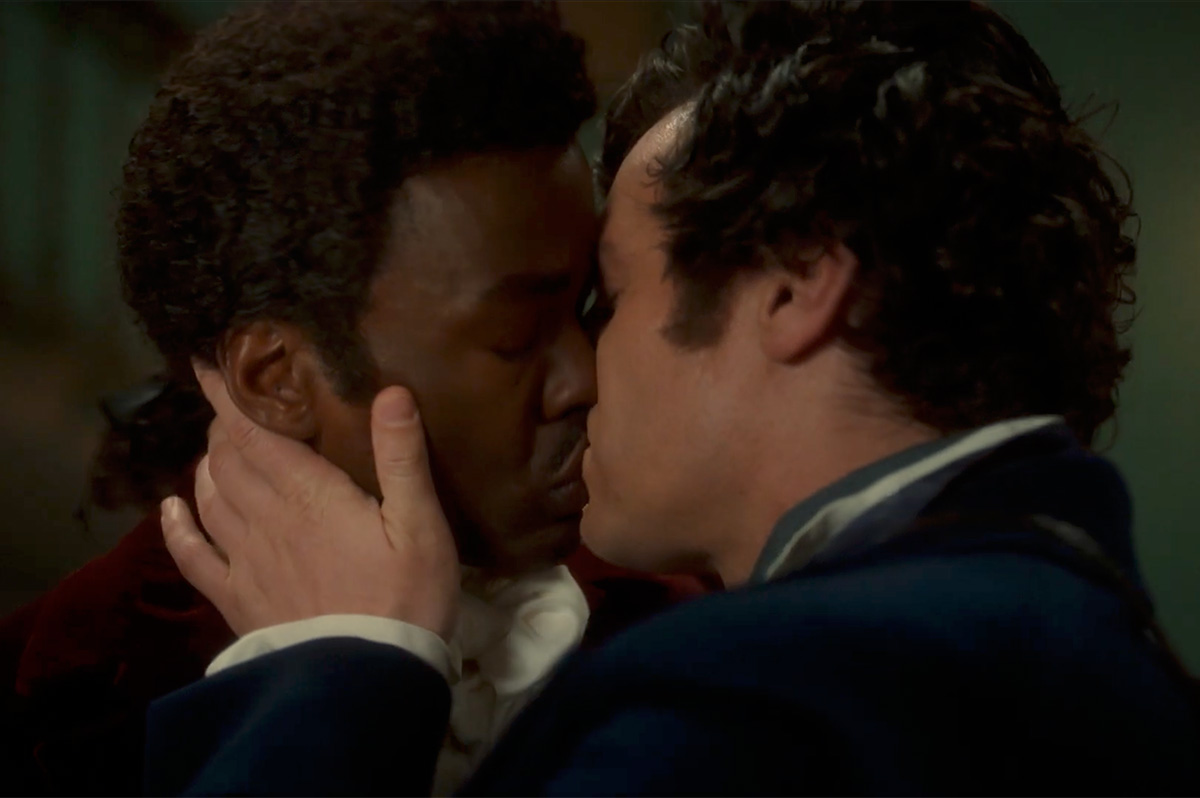
After all, the Doctor, an alien Time Lord who can regenerate and literally change faces, had traditionally been played by white men. But the last, Fifteenth Doctor was played by Ncuti Gatwa, a Black Scottish-Rwandan actor who has publicly identified as queer (and the doctor himself was first presented as queer character after a queer romantic episode where he kissed a man), while the Thirteenth Doctor was played for three seasons by Jodie Whittaker, the first woman to portray the Doctor. In 2023, the series also introduced Rose Noble, a trans feminine nonbinary teenager and supportive character played by transgender English actress Yasmin Finney.
But despite popular stereotypes online, “Doctor Who” did not suddenly “go woke.” The program has existed in two main eras: the classic series, which aired from 1963 to1989, and the modern revival, which has been broadcast on BBC One since 2005.
Even in the 1960s, one of the program’s earliest stories, “The Daleks” (1963–64), presented an obvious allegory for fascism, racial purity, bigotry and the horrors of war. Throughout the classic era, the Doctor frequently opposed militarism, authoritarian governments, and dictatorships. Many fans have also pointed to moments of queer coding and subtext throughout the classic series.
However, openly queer characters appeared as soon as the modern revival began.
The 2005 revival introduced Captain Jack Harkness, played by John Barrowman, one of the first openly queer recurring characters in the “Doctor Who” universe. He openly flirted with people regardless of their gender and later became the lead character of the spin-off series “Torchwood.” “Torchwood” went even further with LGBTQ representation, featuring multiple queer characters, including trans and nonbinary characters whose identities were treated as a normal part of the story.
“Doctor Who” has always been remarkably progressive for its time. The franchise doesn’t suddenly change its values, it’s always been “woke.”
The same happened with the American franchise “Star Trek.”
It is widely known as one of the most openly left-wing and progressive television franchises ever broadcast. The original series, which aired from 1966-1969, was created during the Cold War and featured the utopian United Federation of Planets, a society without poverty or money that can be characterised as socialist or even communist. It also featured Lt. Uhura, played by Nichelle Nichols, a Black woman serving as a highly respected bridge officer at a time when Black women weren’t portrayed in positions of authority on American television. The series also included one of the first interracial kisses in modern American television, between Capt. James T. Kirk (William Shatner) and Uhura in the 1968 episode “Plato’s Stepchildren,” a moment that had a significant cultural impact.
Gene Roddenberry, the creator of the franchise, said that he had wanted to include openly queer characters as well, but believed it would have been impossible to keep the show on the air because it had already pushed social boundaries in so many other ways.
Today, many viewers — including Elon Musk — claim that “Star Trek” has only recently become “woke.” In reality, I think it actually became less radical than the original series. Even queer characters are not a recent addition to the franchise. One of the earliest major queer characters appeared in “Star Trek: Deep Space Nine” (1993–1999): the Trill officer Jadzia Dax, played by Terry Farrell. In the 1995 episode “Rejoined,” she shared one of the first same-sex kisses in the history of the franchise.
However, for some reason, it was the openly gay couple Paul Stamets (Anthony Rapp) and Hugh Culber (Wilson Cruz) in “Star Trek: Discovery” (2017–2024), together with the trans Trill character Gray Tal, played by trans actor Ian Alexander, that triggered a major backlash among conservative parts of the fandom. That backlash reached another peak with “Star Trek: Starfleet Academy,” which features the canonically gay Klingon cadet Jay-Den Kraag. The actor has spoken about receiving abuse and threats because of the role, despite the fact that there was nothing especially ideological about his character. He was simply a gay character whose sexuality was only one aspect of who he was. In fact, considering the ideals of the original “Star Trek,” I was more surprised that the franchise still includes relatively few trans or polyamorous characters, and that they are not part of the lead cast. After all, the franchise was created to imagine a future that was ahead of its time.
So why do conservatives and anti-LGBTQ people continue to watch franchises that have always been deliberately progressive? And why do they keep claiming that these shows have only recently “gone woke”?
A more logical explanation is that parts of the audience have become less willing to accept the same kinds of progressive ideas that these franchises have embraced for decades. In other words, it is not the shows that fundamentally changed. Some long-time viewers have become more conservative than they were in their youth, while newer conservative audiences have joined them and begun criticizing franchises without knowing their real history.
In many ways, geeks have changed more than these shows have. Sci-fi hasn’t “gone woke.” Some of its fans have simply become less comfortable with the same progressive values these franchises have promoted for decades.
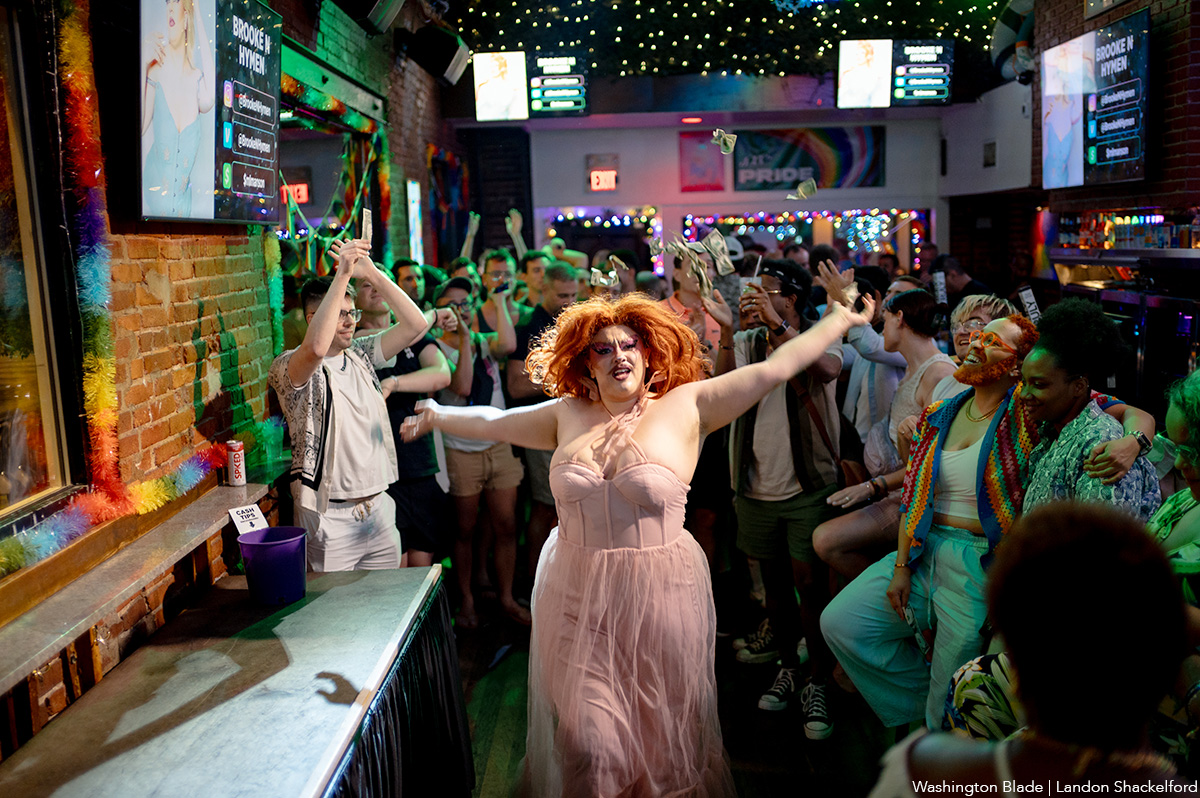
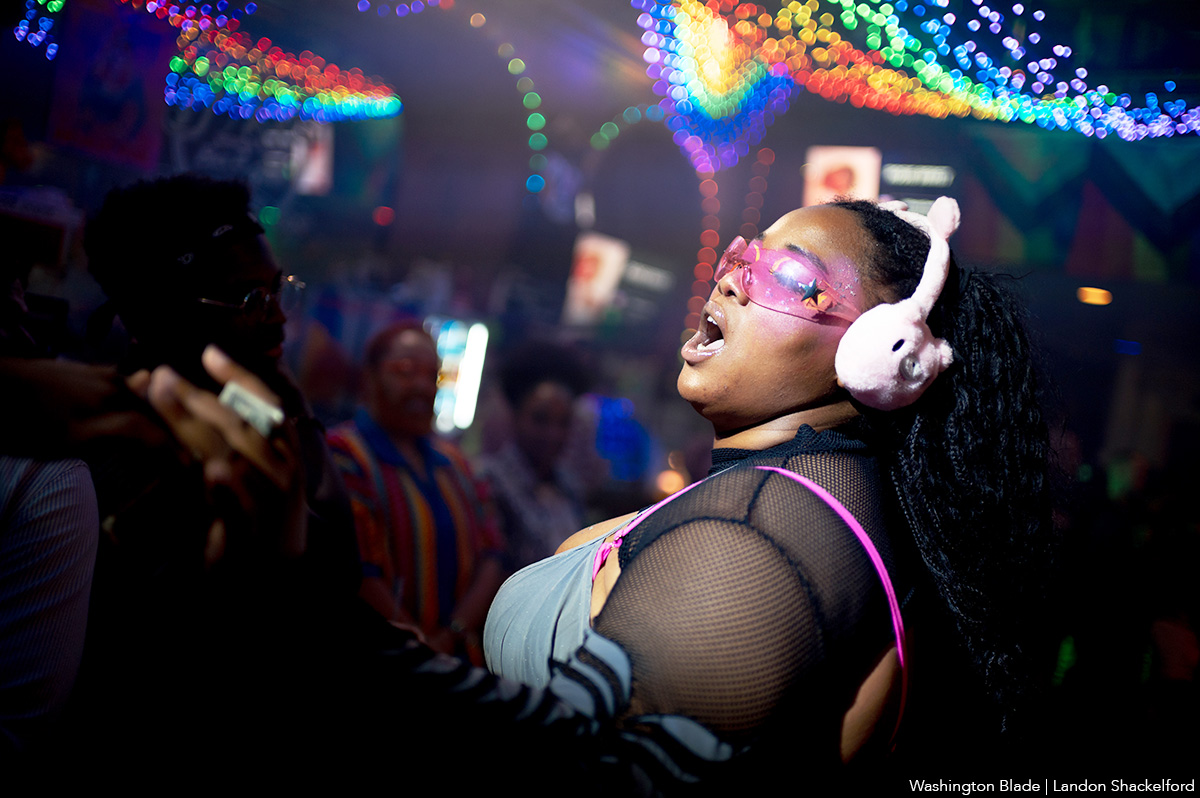
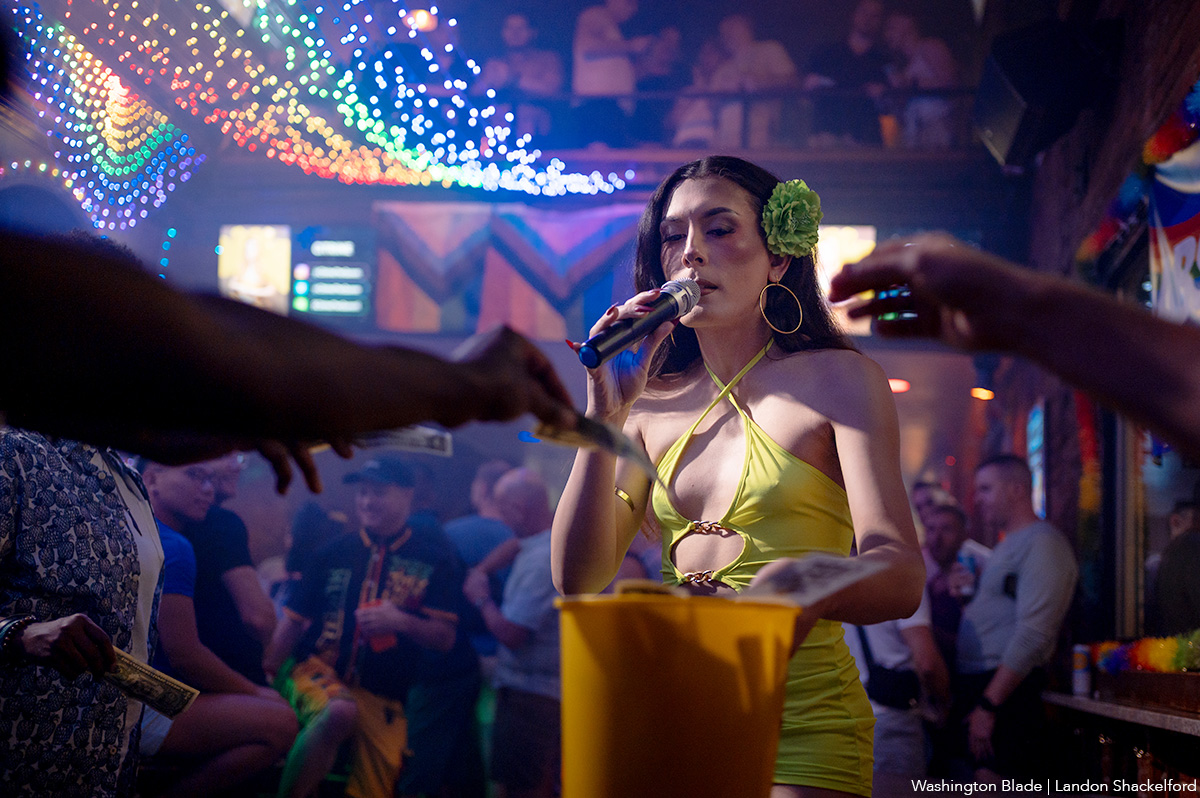
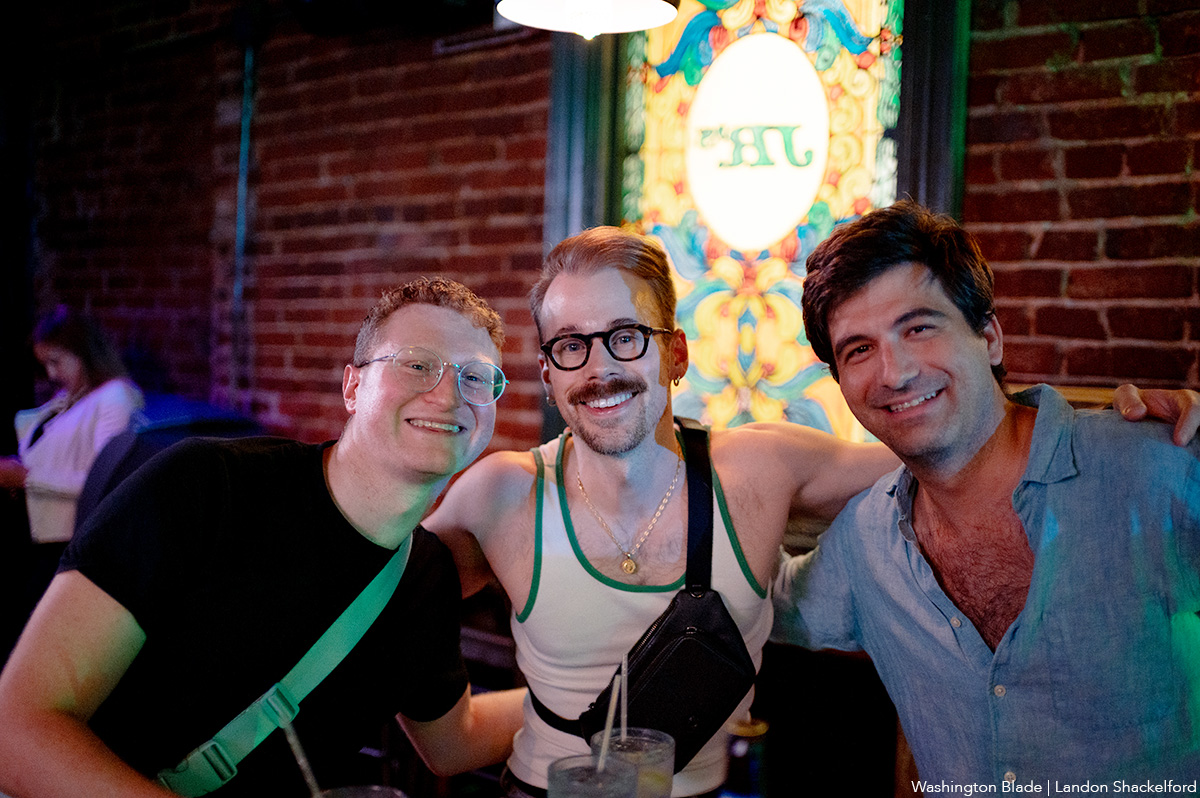
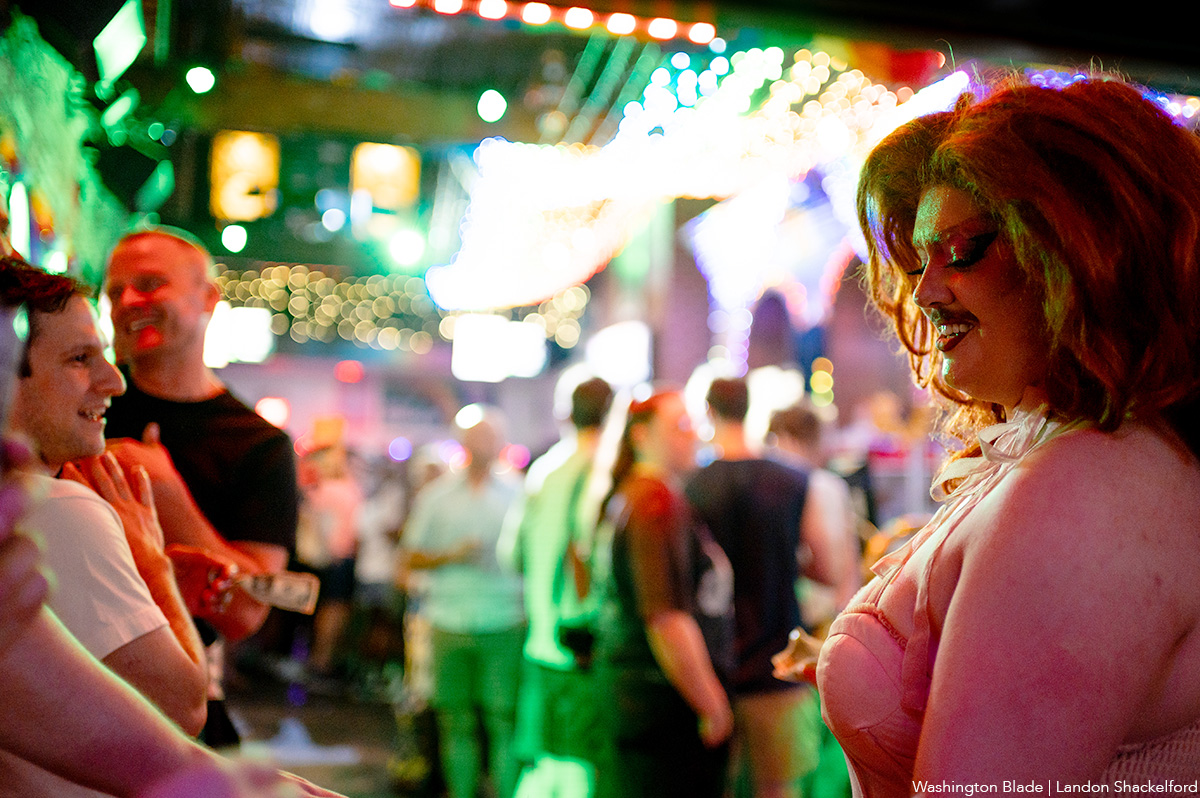
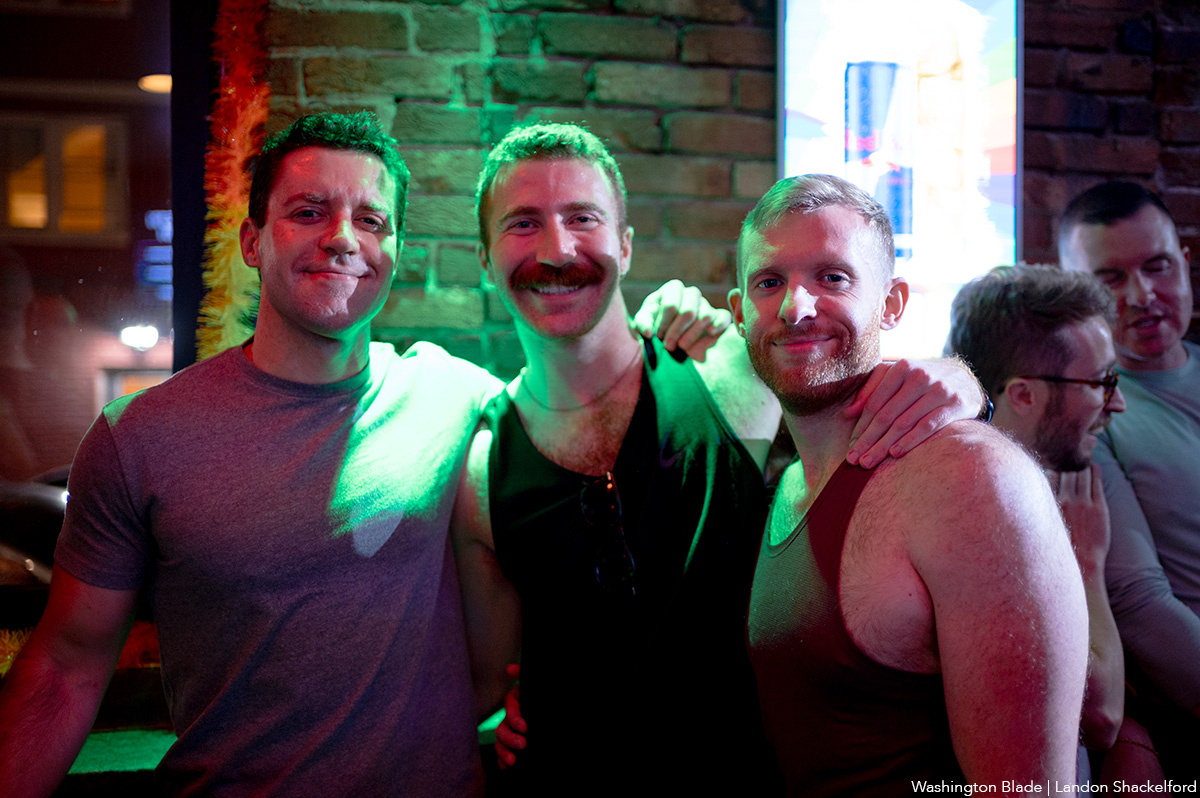
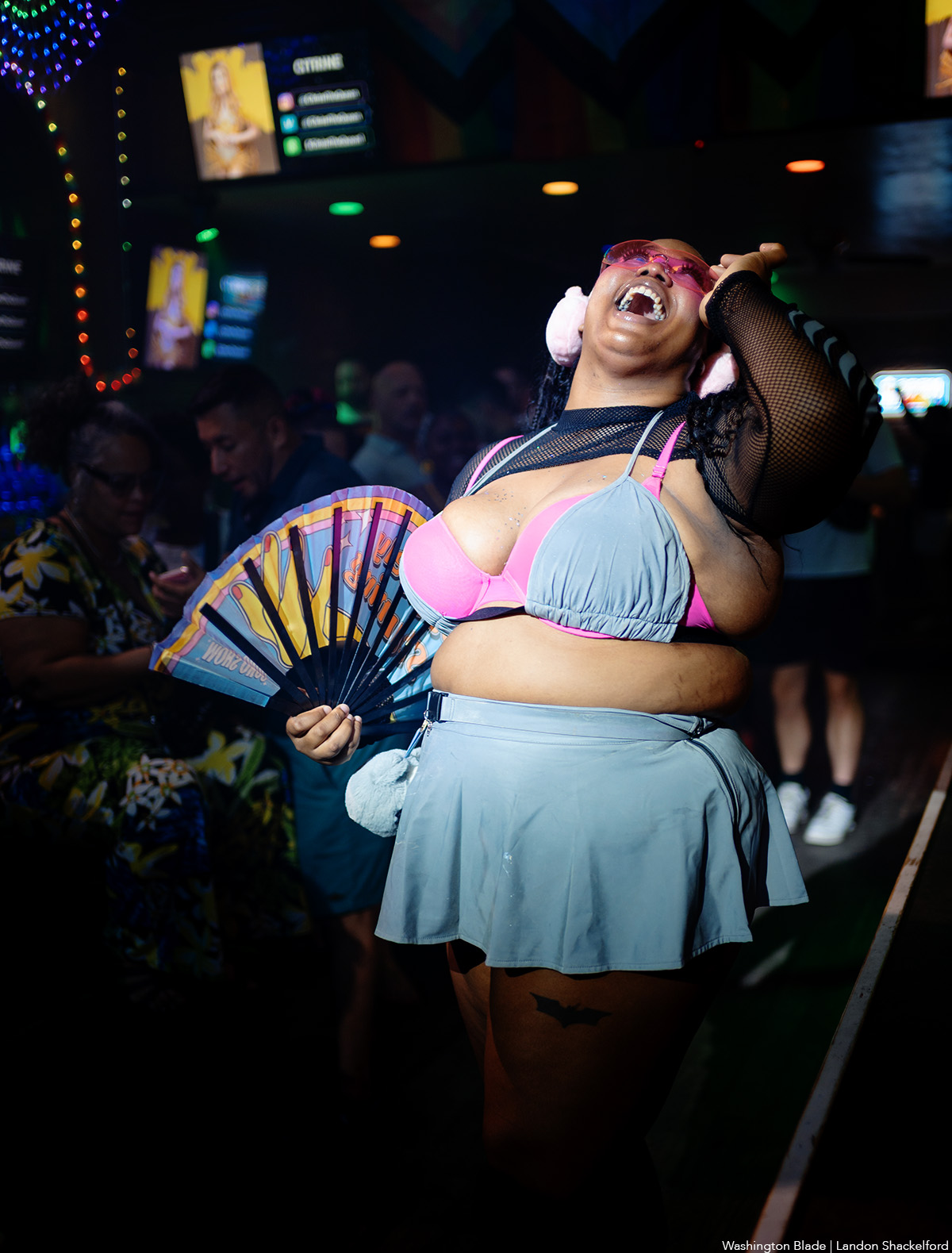
JR.’s Bar held a “RuPaul’s Drag Race: All Stars” watch party followed by a live drag show on Friday, July 17. The Vitamin C weekly drag show was hosted by Citrine with performers Brooke N Hyman and Rosie Beret.
(Washington Blade photos by Landon Shackelford)





House blocks effort to codify transgender servicemember ban into law

D.C. Council approves increased funding for Mayor’s Office of LGBTQ Affairs

Craig Thier says experience, civility are key to Rehoboth’s future

Is the Metro safe for riders?

LGBTQ ‘human rights crisis is unfolding in Puerto Rico’

DOJ seeks to dismiss some claims in gay FBI employee’s bias lawsuit

PHOTOS: Vitamin C at JR.’s

PHOTOS: Rehoboth Beach Pride Festival

Hot hatchbacks: Honda Civic, Subaru Impreza