Local
D.C. gays mobilize to re-elect Obama
Supporters traveling to help in Colorado, Virginia, Ohio
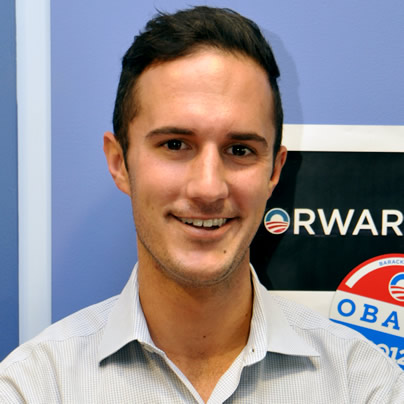
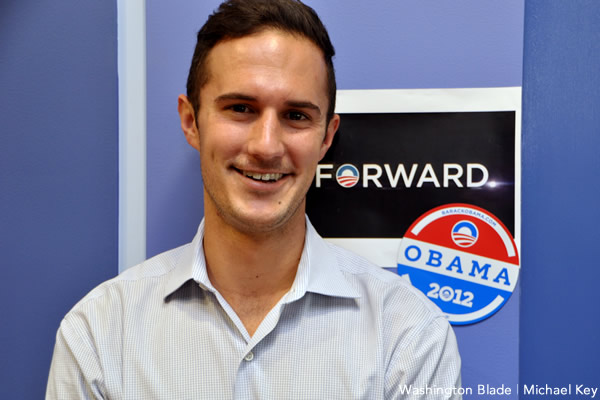
Crosby Burns will travel to Colorado next week to campaign for President Obama. (Washington Blade photo by Michael Key)
With only a few weeks remaining before Election Day, several members of D.C.’s LGBT community are literally going to great lengths to ensure President Obama wins another four years in the White House.
Opportunities to help push Obama over the edge in battleground states are driving local LGBT supporters to travel to far off places — including Colorado and Ohio — where the results on Nov. 6 could decide the election.
Crosby Burns, 25, a gay D.C. resident, said he agreed to travel to Colorado to help the Obama campaign — an expedition he made during Obama’s first campaign in 2008 — after looking at polls showing a tightening race between Obama and Mitt Romney.
“A couple of weeks ago, I was just looking at polls and seeing Mitt Romney speak, and I was just thinking the president needs us more than ever,” Burns said. “That’s what I did back in 2008, I’m going to do the exact same thing, if not more, to ensure that the president is re-elected and that Colorado stays ‘blue’ for him in 2012.”
Burns, a research associate on LGBT issues at the Center for American Progress Action Fund, said the Obama campaign is sending him Monday to West Denver, Colo. — a predominately Latino area — where he intends to employ his Spanish-speaking skills to help with get-out-the-vote efforts.
“I’m going to be going door-to-door using my Spanish skills and talking with people about the election and making sure they know where their polling place is and making sure they support the president,” Burns said.
Collin Burton, 32, a gay D.C. resident, said he’s taking personal leave from his job to make a similar trip to his hometown of Columbus, Ohio, on Monday to help manage out-of-state volunteers coming into the battleground state to campaign for Obama.
“As we get closer to Election Day, we’ll be running some GOTV operations and helping out with the regional work, so it’ll be good,” Burton said. “We will hopefully get a lot of people through and get a lot of voters contacted, make sure that they know they need to turn out.”
Burton, who handles government relations as an appointee to the Corporation for National & Community Service, estimated that he would manage between 20 and 100 Obama supporters coming into the state from more assuredly Democratic parts of the country, such as D.C., New York and Eastern Pennsylvania.
It’s not the first time Burton has helped with Democratic Party efforts. In 2010 for the mid-term elections, he was designated the LGBT caucus director for the Ohio Democratic Party.
But Burton said he hopes the outcome is different this time around as opposed to the mid-term election, when an anti-incumbent wave swept a sea of Republicans into office, including in Ohio.
“I hope it’s a hell of a lot better, I’ll be honest, because the outcome in 2010 in Ohio was pretty bad,” Burton said. “It went from a wonderfully “blue” state to an incredibly red state. I’m confident that it will [be better this time]. I’m certain that the Obama ground game is up and running and will be rocking it for Ohio.”
Some LGBT Obama supporters in D.C. are taking advantage of opportunities within the area to campaign for the president, especially because the battleground state of Virginia is just across the Potomac River.
Clarence Fluker, 33 and a gay D.C. resident, said he’s been participating in LGBT phone banking each Thursday night at the Democratic National Committee to talk with potential voters — mainly in Virginia — and educate them about Obama’s record.
“Sometimes people say that they’re undecided, but we talk to them and log all of the information from the calls and send it over at the end of the night to the person who’s running the phone bank,” Fluker said.
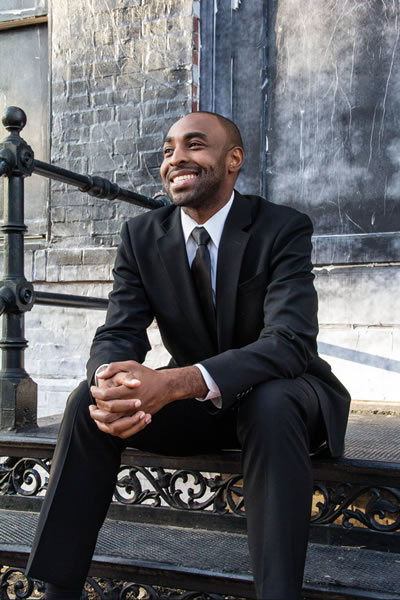
Clarence Fluker is participating in weekly phone banks at the Democratic National Committee (Photo by Cesar Vence Photography)
Fluker, who works for the D.C. Commission on National and Community Service, said he also plans to make a trip during an upcoming weekend to Virginia to knock on doors and talk about Obama personally with voters.
“I think it’s helpful because this campaign is really going to be won on the ground, and it’s going to be won by reaching out to everyday Americans and asking for their support, educating them about all the wonderful things the Obama administration has done and all the things that we know that they’re going to do in the second term,” Fluker said.
Clo Ewing, an Obama campaign spokesperson, said Obama’s LGBT supporters recognize the president “has done more to advance gay rights than any other president” — citing “Don’t Ask, Don’t Tell” repeal, mandating hospital visitation rights and calling for repeal of the Defense of Marriage Act as among his accomplishments.
“That record stands in stark contrast to Mitt Romney’s, who promised to be to the left of Sen. [Ted] Kennedy on gay rights and then made clear he would have left ‘Don’t Ask, Don’t Tell’ in place and is working to enshrine discrimination into the Constitution by passing a federal marriage amendment,” Ewing said. “From grassroots organizing to phone banking to registering voters, LGBT supporters are working hard because there’s too much at stake to sit on the sidelines.”
The Washington Blade was unable to find local LGBT supporters of Mitt Romney’s campaign who are undertaking efforts to help the Republican nominee win the White House.
Each of the Obama LGBT supporters who spoke with the Washington Blade said the president’s work on LGBT issues was deeply personal for them and a motiving factor in helping them decide to contribute to the campaign.
Burton said he was particularly grateful Obama took action to benefit LGBT people through administrative steps, such as the hospital visitation rights memo he issued for same-sex partners.
As a federal employee, Burton took particular note of the memorandum Obama signed in 2009 granting limited domestic partner benefits to government workers.
“Extending those rights, it matters quite a bit, and it’s incredible to see him actually move the pen for that,” Burton said.
Fluker said he was moved when Obama announced in May he had completed his evolution to support marriage equality — particularly because those words came from the nation’s first black president.
“When President Obama talked about his own personal walk, how he got to the point where he also supports same-sex marriage, that meant a lot to me not just as black gay man, but as an American, to have a leader who felt that way,” Fluker said.
For Burns, the president’s announcement that he now supports marriage equality was important, as well as Obama’s other work in advancing gay rights.
“That’s an issue that’s near and dear to my heart and to see him fully evolve on this issue was just very validating as an Obama supporter and as a gay man,” Burns said.


District of Columbia
D.C.’s LGBTQ homeless facilities face possible hit from Trump funding cuts
38 percent of homeless youth identify as LGBTQ, up from 2025
(Editor’s note: This article is part of our 2026 contribution to the D.C. Homeless Crisis Reporting Project in collaboration with other local newsrooms. The collective works will be published throughout the week at bit.ly/DCHCRP.)
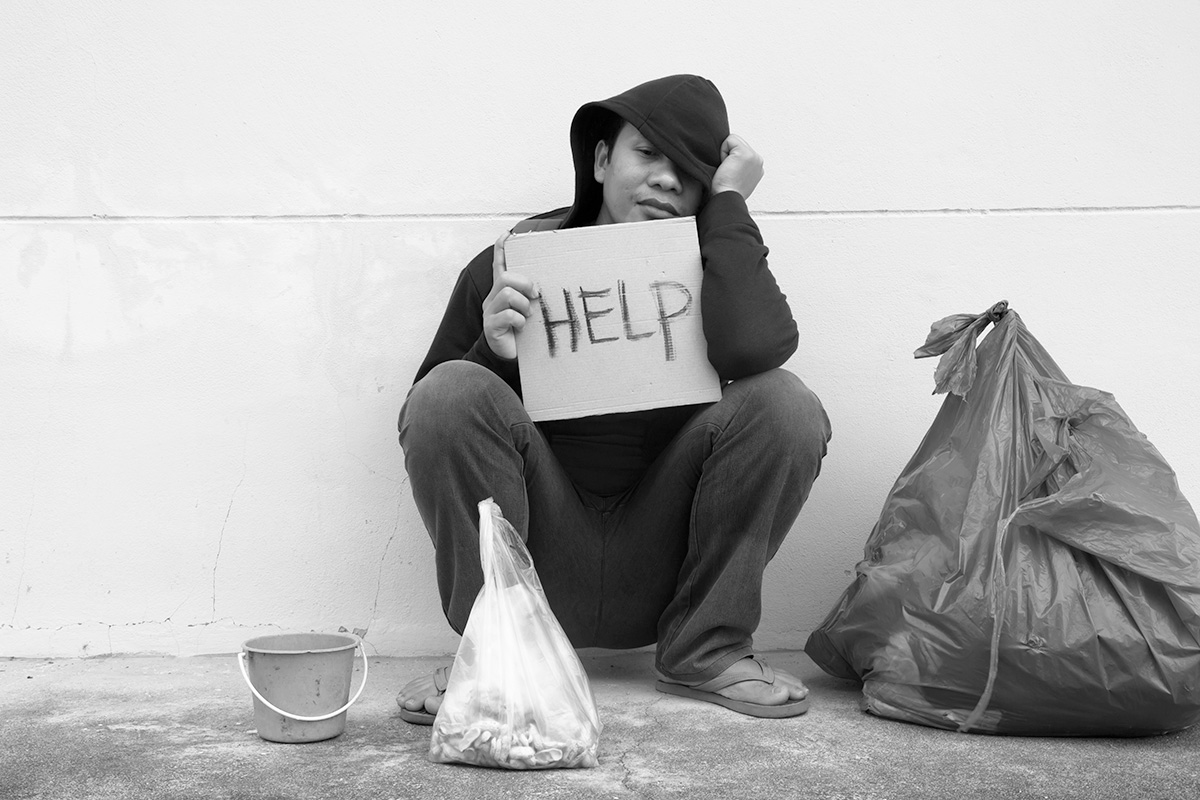
A decision by President Trump’s administration to eliminate most federal funding for community-based programs to place homeless people in permanent subsidized housing could have a severe adverse impact on LGBTQ people facing homelessness in D.C., according to local advocates.
Officials with organizations that provide services for homeless people in the D.C. area and nationally have pointed to an executive order issued by Trump last year that calls for ending federal support for so-called “Housing First” programs that arrange for permanent subsidized housing for homeless people. The officials note that Trump’s proposed fiscal year 2027 budget calls for eliminating funding for the Housing First programs.
Advocates for programs providing support for homeless people note that ending federal funding for permanent housing for homeless people will — and in some cases already has — resulted in occupants of homeless shelters and short-term transitional housing facilities remaining in those facilities far longer than in the past, preventing openings for others who need housing.
A lawsuit filed by several states and homeless advocacy organizations, including the D.C.-based National Alliance To End Homelessness, to block the Trump efforts to cut off those funds has temporarily delayed some of the funding cuts. A decision in August by a federal judge in Rhode Island declared the Trump action a violation of a federal law for failing to open the proposal for the funding cuts to public comment before putting it in place.
Court records show the U.S. Department of Housing and Urban Development (HUD), which provides the federal funding for homeless related programs, appealed the lower court ruling and an appeals court reversed the ruling pending further appeal by the parties that filed the lawsuit.
At least two of the five D.C. organizations that provide housing for homeless LGBTQ youth have said their funding so far has not been cut due to the Trump actions.
Cesar Toledo, executive director of the Wanda Alston Foundation, which currently provides transitional housing for 20 LGBTQ homeless youth, said his organization receives local D.C. government funding but no federal funding so his group has so far not been impacted by the Trump action.
Debby Shore, executive director of the Sasha Bruce Youthwork organization that provides housing for young people ages 18-24, including some LGBTQ youth, said her organization also had not yet been impacted but it could be impacted soon.
“We have not had that funding cut,” she told the Washington Blade. “What we understand is if HUD is allowed to go through with those changes, then we will,” she said. “Because we have one of our programs that’s funded directly by HUD,” which she said could be considered the type of “long term” housing that HUD wants to cut.
A spokesperson for the local LGBTQ youth advocacy organization SMYAL, which currently provides housing for 55 homeless LGBTQ youth according to its website, didn’t immediately respond to a Blade inquiry into whether they have been impacted by the Trump actions. Toledo of the Alston Foundation said he understood that SMYAL has received federal funding for its homeless program.
At least two other D.C. organizations that provide housing for homeless youth, including some LGBTQ youth – Covenant House and the Latin American Youth Center – also couldn’t immediately be reached for comment on whether they have been impacted by the Trump funding cuts.
The city’s only shelter for homeless LGBTQ adults, which is operated by the D.C. Department of Human Services and is D.C. funded, has not been immediately impacted by the Trump funding cuts, according to a DHS statement sent to the Washington Blade in response to a Blade inquiry. Called Living Life Alternative, the low-barrier shelter accommodates 40 individuals, the statement says.
It says DHS receives federal funding for its homeless services programs, and it was awaiting HUD approval for its annual federal funding grant for the city’s Permanent Supportive Housing program for homeless residents. It says the current funding for that program expires Jan. 31, 2027.
According to the statement, a separate federal grant DHS receives from HUD for homeless assistance services was approved for next year but included “a slight reduction in funding of $22,808.”
The annual 2026 Point-In-Time (PIT) count of homeless people in D.C., conducted in January, recorded a total of 5,363 people who were homeless, a 4 percent increase over the previous year.
The PIT count report shows 424 adults, or 12 percent of the adults counted, identified as members of the LGBTQ community, a slight increase over the 11.7 percent of homeless LGBTQ people counted in 2025. It shows that 38 percent of “Transition Age Youth” ages 18-24 identified as LGBTQ, an increase of one percent over the 37 percent of LGBTQ youth counted in 2025.
The Trump administration through HUD has said it supports housing for homeless people that lasts no more than two years and participants should be required to get treatment for the mental illness and substance use disorders such as drug addiction and alcoholism that many homeless people suffer from.
The Washington Post has cited studies showing that up to two-thirds of homeless people have a mental illness and two in five have a substance use disorder.
“Housing First has failed our most vulnerable and enabled addiction,” the Post quoted HUD saying in an email message. “HUD’s proposed reforms seek to address the root cause of homelessness and advance recovery, self-sufficiency, and competition that drives accountability,” the Post quoted the HUD statement as saying.
Shore, director of Sasha Bruce Youthwork, disputes that assessment, saying treatment for disorders should not be a replacement for longer term housing programs, which she said improves the outcome of treatments for disorders.
“I think the idea of putting more services in place – I don’t have any problem with that,” she said. “But suggesting that you do that in exchange for longer term supports for people does not seem to be the right way to go.”
District of Columbia
Bowser, Office of LGBTQ Affairs announce LGBTQ+ History Month events
High Heel Race to take place Oct. 27
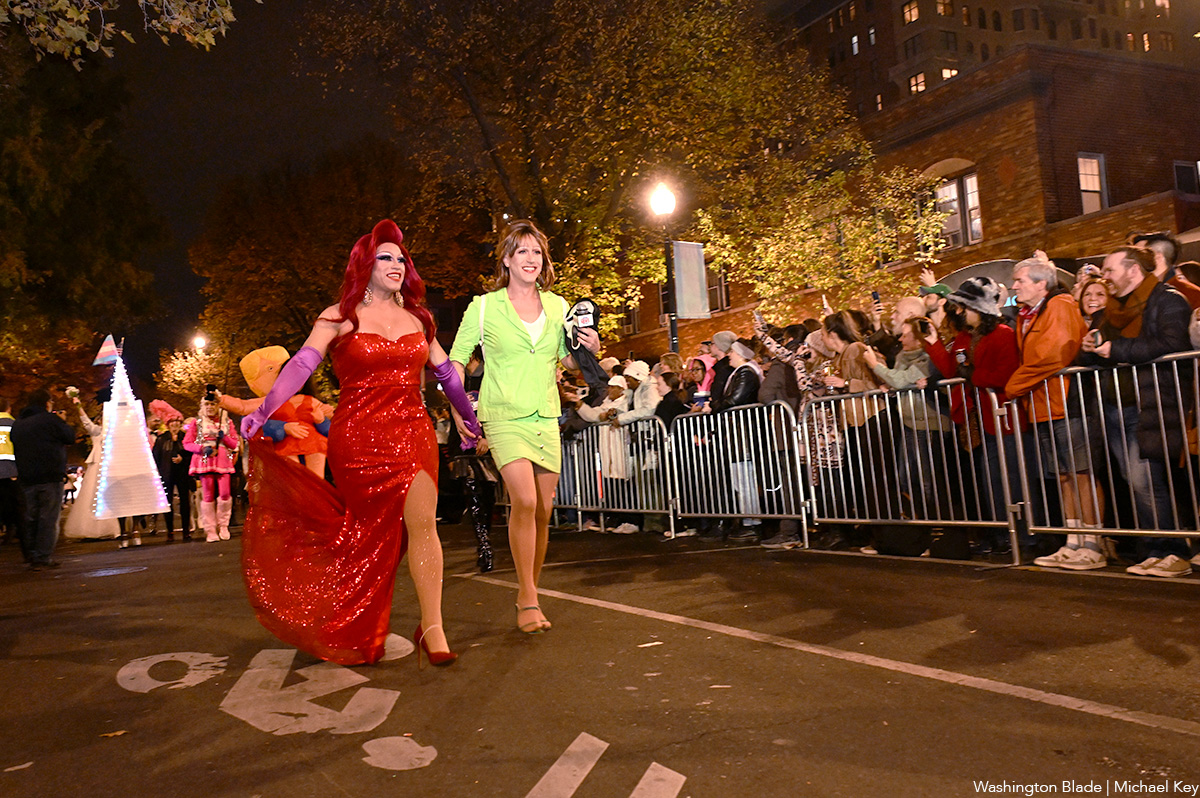
D.C. Mayor Muriel Bowser and the D.C. Mayor’s Office of LGBTQ Affairs have announced they will join the local LGBTQ community in celebrating LGBTQ+ History Month throughout October.
An Oct. 2 joint statement from Bowser and the Office of LGBTQ Affairs says the celebration will include several events in partnership with D.C. LGBTQ organizations and LGBTQ businesses. It says among the events will be a “Birthday Bash” celebrating the 20th anniversary of the Office of LGBTQ Affairs.
“Throughout October, Washingtonians are invited to honor the people, places, movements, and milestones that have shaped the District’s LGBTQIA+ community and the community’s ongoing contributions to Washington, D.C.,” the statement says.
“LGBTQIA+ History Month is a reminder that our history is not simply something we look back on — it is something we continue to make,” Japer Bowles, director of the Office of LGBTQ Affairs said in the statement.
Bowles added that in celebrating the 20th anniversary of the Office of LGBTQ Affairs “we honor the generations of advocates, artists, organizers, businesses, and residents who built our community and continue to shape its future. This milestone is an opportunity to celebrate how far we have come while continuing to build a more welcoming, inclusive and connected Washington, D.C.”
Equality Forum, the Philadelphia-based group that initiated the nationwide annual LGBTQ+ History Month in October, has said it recognizes the history, achievements, and contributions of LGBTQ people and the organizations they have led to advance the rights of LGBTQ people.
The statement released by Bowser and the D.C. Mayor’s Office of LGBTQ Affairs says these are among the upcoming events planned for October:
The Relationship Lab: A Healthy Relationships Series
Join us for an engaging series exploring what makes relationships healthy and how to recognize the signs when they’re not. Facilitated by DC SAFE in partnership with MOLGBTQA (The Mayor’s Office of LGBTQ Affairs.)
- When: Tuesday, Oct. 6, 13, and 20, 6-7:30 p.m.
- Where: 899 North Capitol St. N.E.
- RSVP: The Relationship Lab
MOLGBTQA Birthday Bash
Join us for the 20th Anniversary Celebration! We will be hosting an upbeat gathering, highlighting community leaders, advocates, artists, and institutions who have advanced LGBTQIA+ progress in Washington, D.C. over the last two decades. This event will highlight key milestones and the contributions of LGBTQIA local community partners with live entertainment and free refreshments.
- When: Thursday, Oct. 15, 6-9 p.m.
- Where: Penn Social (801 E St. N.W.)
- RSVP: s.dc.gov/MOLGBTQABday
Mayor’s LGBTQ+ Advisory Committee
Come get to know the newest members of the Mayor’s LGBTQ+ Advisory Committee. This diverse group of leaders, business owners, and advocates advise the mayor and Director Bowles on issues relating to DC’s LGBTQIA+ community and the Office of LGBTQ Affairs.
- When: Monday, Oct. 19, 6-7 p.m.
- Where: DC LGBTQ+ Community Center (1827 Wiltberger St., N.W.)
- RSVP: s.dc.gov/LGBTQMACoct
39th Annual 17th Street High Heel Race
Join us for the High Heel Race, cheering the queens, kings, and our community members as they sprint down 17th Street in heels, creativity, and pure D.C. spirit. From lively drag performances to thousands of neighbors filling the street, don’t miss this D.C. night!
- When: Tuesday, Oct. 27, 6-10 p.m.
- Where: 17th Street between R and P Streets, N.W.
- RSVP: s.dc.gov/2026HHR
What appeared to be the first LGBTQ+ History Month-related event to take place in D.C., called PRIDEtoberfest, was held Saturday, Oct. 3 from noon to 11:30 p.m. at the city’s Wunder Garten outdoor beer garden and event facility at 1101 First St., N.E. A flyer announcing the event says the Capital Pride Alliance and the Mayor’s Office of LGBTQ Affairs were among the event’s participants.
“We proudly attended, tabled, and I gave remarks at the Pridetoberfest this weekend,” Japer Bowles, director of the LGBTQ Affairs Office told the Blade.”
District of Columbia
To school to homeschool to school again
‘Pandemic took more than 2 years of school. It took 2 years of my childhood’
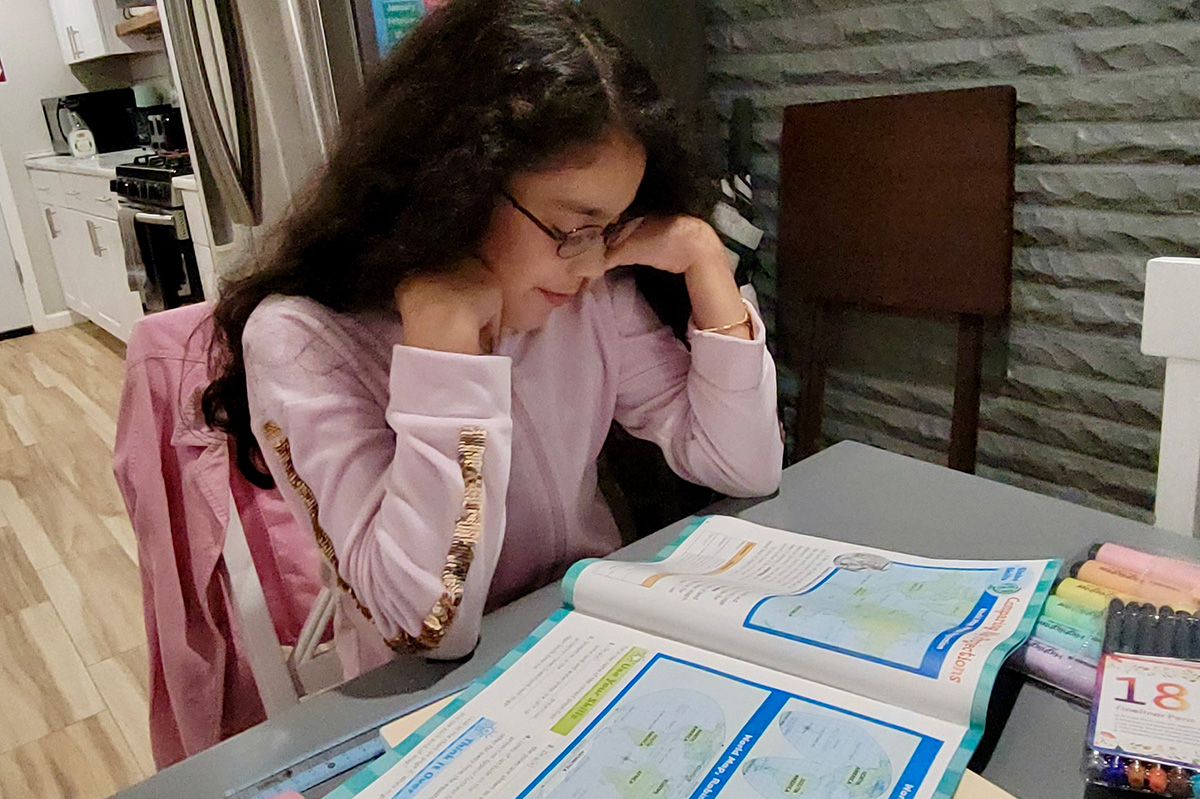
It wasn’t until I no longer had those 30 minutes of lunch and recess, when all the boys and girls would come together to trade bracelets, make up games, gossip about who we liked, play tag and sports, that I realized how much of my childhood happened during the parts of school that had nothing to do with schoolwork.
I was in the third grade when the COVID-19 pandemic began. I remember my parents explaining that I couldn’t go back to school and wondering when I would see my friends again — or whether I wanted to go back at all. But after spending two years learning from home, cut off from the friends, teachers and routines I had known, I began to understand what I had lost.
For many of my friends and classmates, going to school changed from a bus ride every morning to clicking a link and seeing their teachers and classmates through a screen. My experience was a little different. Instead of going to virtual school, I was homeschooled. My new routine was sitting at my kitchen table, with my mom teaching me how to write a paragraph or solve a math problem, surrounded by the same walls I saw every day.
My family was not alone. Many families across the country turned to homeschooling after schools shut down. Homeschooling increased sharply during the pandemic, especially among Black families, rising from 3.3 percent in the spring of 2020 to 16.1 percent that fall, according to the U.S. Census Bureau’s Household Pulse Survey.
It would be two years before I entered a classroom again.
At first, I loved homeschooling.
I didn’t have to wake up early or put on a uniform. I liked the comfort of my own room, surrounded by my stuffed animals and toys. I didn’t have to push my way through that horrible lunch line because my food was now waiting for me at the kitchen table.
It felt like a fever dream where school was canceled and all day was fun. That was my view as a 9-year-old.
But as days turned into weeks and weeks into months, that initial excitement wore off.
Every day became the same routine. There was no recess when I could play princess with all the other girls. There were no conversations in the lunch line and none of the small things that had broken up the school day before. I didn’t realize how much those moments mattered until I could no longer experience them.
With less to look forward to, I started spending more time on the internet.
I turned to platforms such as YouTube and TikTok to distract myself. Instead of seeing what the kids around me were doing every day, I could watch people online show off their clothes, makeup, dances, art and lives.
Over time, I started comparing myself with what I saw. I thought the way I dressed was childish and wanted to be like the superstars I saw online. I followed what was trendy and admired the girls and boys who looked so confident on screen.
Before the pandemic, my friends and I didn’t need the internet to tell us what was popular. But during those years at home, I became much more aware of what other people thought was cool and what someone my age was supposedly supposed to like. I felt as though I was growing up without getting to experience all the steps in between.
When I finally returned to school, I thought my classmates would be excited to see each other again after spending so much time apart.
Instead, I realized how much we all changed.
When I walked through those doors, I remembered vague memories of running down those halls and always seeing my peers with smiles on their faces. Now those same faces were tired, with eye bags. The lunchroom, which used to be full of life with happy kids eating to their hearts’ content, turned into a lunch where all the girls controlled what they ate and talked about the latest trend on TikTok.
Maybe some of that change would have happened anyway. Kids grow up. Interests change. Middle school has always been awkward.
But I didn’t get to watch my classmates gradually change or change alongside them. I left one social world and came back to another.
When I returned, I was expected to understand a social world that had changed while I was gone. I felt I missed so much that I would never get back, and without that day-to-day learning to help me adapt to these new norms, I struggled.
Those everyday interactions are an important part of how children learn to get along with others: A 2026 meta-analysis of 157 studies from 33 countries published in the academic journal Child Development found that children’s social and emotional skills declined during the pandemic, along with their overall well-being. The researchers noted that schools are not just places where children learn math and reading. They are also places where children learn how to make friends, work through disagreements, understand other people’s feelings and manage their own emotions.
Years later, many parents say some of those effects are still being felt. In a 2025 Gallup survey, 45 percent of parents with school-age children said the pandemic hurt their child’s social skills, and 22 percent said those problems were still ongoing. Forty-two percent said the pandemic negatively affected their child’s mental health. Parents were more likely to report problems with their children’s social skills and mental health than with their academics or physical health.
I saw some of those changes around me, too. Classmates who once seemed outgoing became quieter or more withdrawn. Starting conversations felt harder. Making new friends felt harder. Sometimes retreating into myself felt easier than trying to figure out where I belonged.
Now, the kids who were in elementary school when the pandemic began are moving through high school. We are older, but some of us are still figuring out what those missing years meant.
Before the pandemic, I thought lunch and recess were simply breaks from learning. Now I understand that we were learning during those 30 minutes, too. We were learning how to make friends, how to disagree and make up, how to be embarrassed and recover from it, what we liked and what we didn’t, and slowly who we wanted to become.
I can’t know exactly who I would be if I had spent those years inside a classroom instead of at home. Maybe middle school still would have been awkward. Maybe I still would have worried about fitting in.
But I know I missed something I didn’t understand was important until it was gone: the ordinary, sometimes boring, sometimes ridiculous parts of growing up alongside other kids.
You can make up schoolwork. You can return to the classroom. But there are some parts of childhood you don’t get to repeat.
Gloria Collazo Huamani is a sophomore at Benjamin Banneker Academic High School in D.C., one of Youthcast Media Group’s journalism class partners. Gloria worked with James Jarvis, a YMG mentor-editor and reporter for Inside Health Policy, on this story.

Trump uses anti-trans slur against Democratic Senate candidate

D.C.’s LGBTQ homeless facilities face possible hit from Trump funding cuts

10 years later, we still can’t shake Barry Jenkins’s ‘Moonlight’

‘Some Like It Hot’ a wild ride at renovated Bernard Family Theatre

Bessent says Trump chose him for his qualifications, not his sexuality

Eliot Glazer’s new book an engaging collection of essays

Equality Chamber hosts Pride in Business Expo and Profits & Pours

Learn more about Virginia’s queer history

Lula, Flávio Bolsonaro to face off in second round of Brazilian presidential election

‘Merrily’ is for Sondheim super fans, the uninitiated, and anyone in between
-

 Books3 days ago
Eliot Glazer’s new book an engaging collection of essays
-
Out & About3 days ago
Equality Chamber hosts Pride in Business Expo and Profits & Pours
-
Out & About3 days ago
Learn more about Virginia’s queer history
-
Brazil3 days ago
Lula, Flávio Bolsonaro to face off in second round of Brazilian presidential election