National
Vote nears on Boy Scouts gay ban
National Council expected to weigh in next week
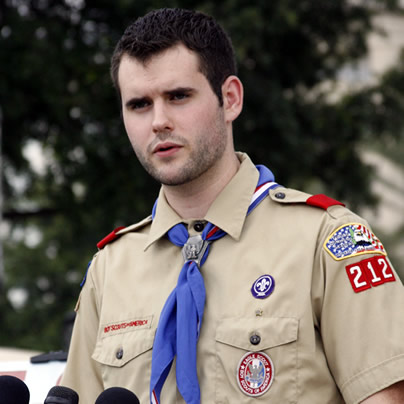
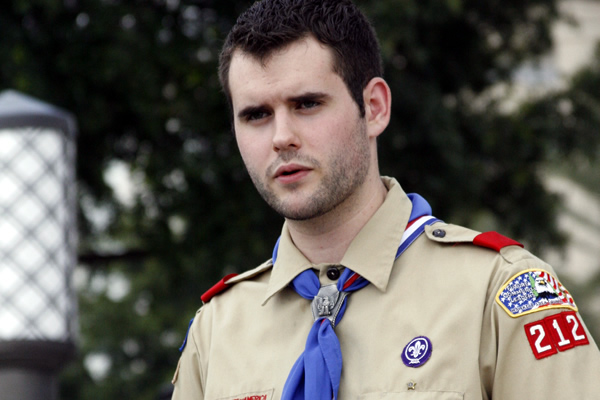
Zach Wahls is a leading voice against the Boy Scouts’ gay ban (Photo courtesy of Change.org)
All eyes will be on the Boy Scouts of America next week when members of the National Council vote on whether to partially lift a ban that LGBT advocates have sought to remove for at least a decade.
On May 23, 1,400 members of the National Council will gather at the National Annual Meeting in Dallas and take action on the pending resolution, which would allow all youths to participate in the Boy Scouts regardless of sexual orientation.
However, the resolution leaves in place the rule prohibiting openly gay adults from participating as leaders in the Boy Scouts. Further, the proposal maintains youth adhere to a “duty to God” and behavior consistent with the highest level of good conduct.
Zach Wahls, a 21-year-old activist and Eagle Scout — who gained notoriety for speaking on behalf of his lesbian parents before the Iowa Legislature — is the leading voice for a group called Scouts for Equality that is urging the Boy Scouts to adopt the change.
“The resolution that the Scouts are voting on clearly is not fully adequate,” Wahls said. “It still sends, I think, potentially harmful messages to the youth — both gay and straight — about discrimination being OK. That being said, I think it’s absolutely a step in the right direction, which is going to get started going down their path of evolution, as it were. And we all kind of know where evolution goes.”
Wahls said Scouts for Equality for the last two-and-a-half months has been mobilizing grassroots supporters across the country to talk with parents, scout leaders and scout masters about support for changing the gay ban.
“That really can only happen within the scouting community,” Wahls said. “It was through those conversations our incredible grassroots volunteers on the ground that we were able to identify and have conversations indirectly with huge amounts of voting members.”
In February, amid heightened calls for the organization to end its gay ban, the Boy Scouts started a review process to consider the impact of a change. Part of the review consisted of a questionnaire sent to members asking them if they’re OK with certain hypothetical scenarios involving gay scouts and whether they support or oppose lifting the ban.
The decision to partially lift the gay ban in the Boy Scouts may be an attempt to mollify religious groups affiliated with the Boy Scouts. According to the organization’s website, seven in 10 units in the Boy Scouts are chartered to faith-based organizations.
In response to a request for comment from the Washington Blade, the Boy Scouts provided an organizational statement maintaining the issue of allowing openly gay scouts to participate in the organization is a complex one.
“Scouting’s review confirmed that this remains among the most complex and challenging issues facing the BSA and society today,” the response reads. “Even with the wide range of input, it is extremely difficult to accurately quantify the potential impact of maintaining or changing the current policy. While perspectives and opinions vary significantly, parents, adults in the Scouting community, and teens alike tend to agree that youth should not be denied the benefits of Scouting.”
According to recent polls, a majority of the American public wants the Boy Scouts to lift its gay ban. A Washington Post/ABC News poll published on May 9 found that 63 percent back the idea of allowing gay youth to participate while 56 percent oppose the continued ban on participation from gay adults.
Asked whether he’s confident the resolution will be approved, Wahls replied, “As a Boy Scout, our motto is ‘Be Prepared.’ So we’re prepared for any kind of outcome, but we are feeling really, really good about where we are.”
But anti-gay activists are also at work urging the Boy Scouts to maintain its policy prohibiting out youths from participating. An organization called On My Honor is leading these efforts. It didn’t respond to the Washington Blade’s request for comment.
Ending the gay ban in the Boy Scouts is a goal that the LGBT community has long pursued. In 2000, a case known as Dale v. Boy Scouts was argued before the U.S. Supreme Court by Evan Wolfson, now president of Freedom to Marry. He maintained New Jersey’s enforcement of its non-discrimination law to prohibit the Boy Scouts, as a place of accommodation, from banning gay scouts wasn’t a violation of the First Amendment. However, the court determined in a 5-4 decision that current policy for the organization was constitutional.
Texas Gov. Rick Perry (R) has emerged as one of the most high-profile voices in opposition to lifting the gay ban. Last week, as reported by Right Wing Watch, the former Republican presidential candidate appeared on a Family Research Council webcast urging the Boy Scouts to resist the “flavor of the month” by changing its policy.
“The fact is, this is a private organization,” Perry said. “Their values and principles have worked for a century now, and for pop culture to come in and try to tear that up because it just happens to be the flavor of the month, so to speak, and to tear apart one of the great organizations that have served millions of young men — to help them become men and become great fathers — that is just not appropriate.”
Wahls responded to Perry’s position by saying the Texas governor is entitled to his views, but they’re at odds with the American people.
“It’s a free country,” Wahls said. “Gov. Perry can offer his opinion. It doesn’t change the fact that a strong majority of Americans want to lift the ban, and keeping the ban in place is highly detrimental to the future of scouting.”
CORRECTION: An initial version of this article mischaracterized attorney Evan Wolfson’s attorney argument against the Boy Scouts gay ban in 2000. The Blade regrets the error.


National
Man charged in Mall of America shooting plot inspired by Pulse massacre: report
Suspect exchanged hundreds of messages, pledged loyalty to ISIS
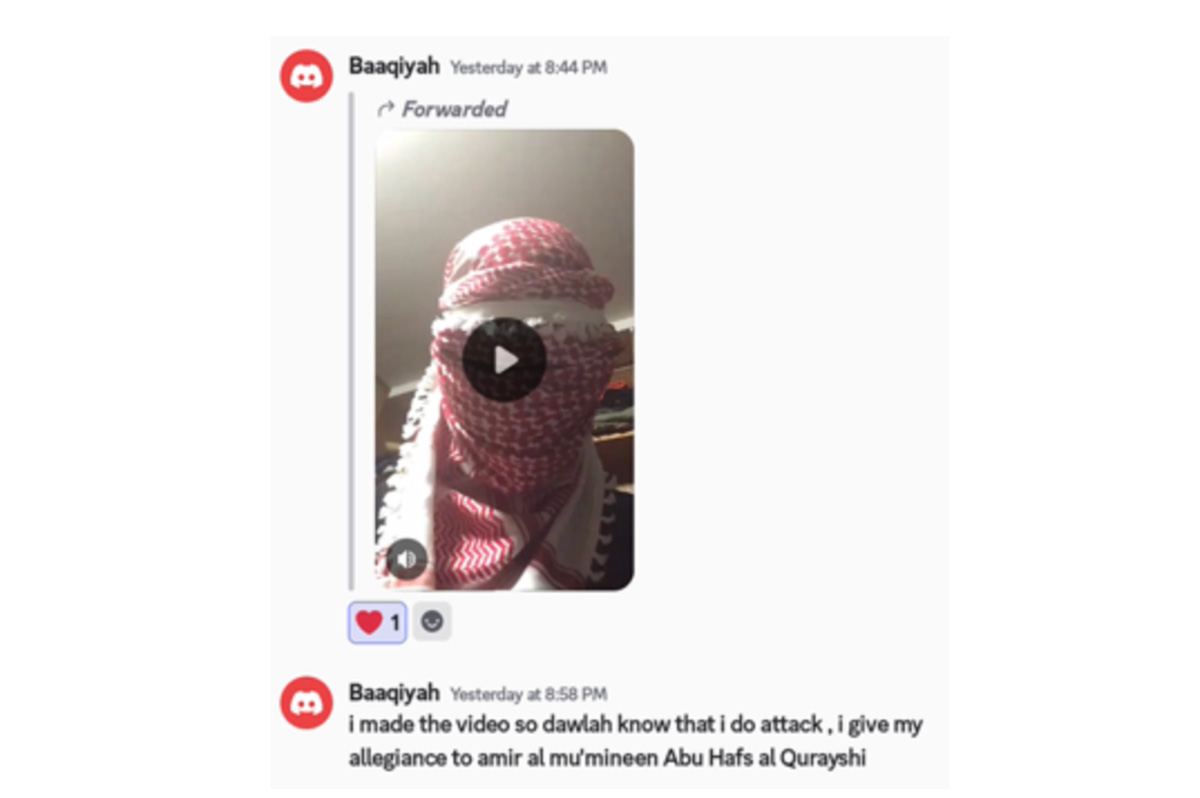
The U.S. Department of Justice charged Sheikhdoon Abdullahi Mohamud, 18, of Richfield, Minn., on Oct. 7 with one count of knowingly receiving a firearm and ammunition in order to commit a federal crime of terrorism. Mohamud allegedly planned to carry out a mass-casualty attack in support of ISIS, inspired in part by the Pulse nightclub massacre that took place on June 12, 2016 when then-29-year-old Omar Mateen murdered 49 people and wounded 58 – one of the deadliest mass shootings in U.S. history, and the deadliest targeting the LGBTQ+ community.
According to a DOJ statement release, Mohamud was arrested on Oct. 6 by the FBI, which had arranged to sell him an AK-47 assault rifle, magazines, and ammunition through an undercover FBI employee. Mohamud was arrested shortly after paying $600 in cash and taking possession of those items; he reaffirmed his intention to shoot people at the Mall of America during the transaction.
“Mohamud allegedly sought to carry out a mass-casualty shooting at the Mall of America, expressing a desire to emulate some of the most horrific ISIS-inspired attacks in the United States, including the atrocities at Pulse Nightclub and 2025 New Year’s Day attack in New Orleans,” said Assistant Attorney General for National Security John A. Eisenberg in the statement by the DOJ. “The National Security Division will continue to work closely with the FBI and Joint Terrorism Task Force to track down and prosecute ISIS-inspired terrorists in the United States.”
According to the complaint, beginning on or about December 2024, Mohamud had exchanged hundreds of messages through multiple social media and messaging apps with a confidential source, and expressed a desire to travel to Somalia to join a designated foreign terrorist organization to fight on their behalf.
The defendant stated many times that if he was unable to travel overseas because of a lack of funds, he planned to carry out a mass-casualty event in Minnesota in support of ISIS.
According to the DOJ, “In July 2026, Mohamud sent messages discussing his intent to carry out a mass-casualty shooting attack at the Mall of America because he claimed it was owned by Jews. He wrote that [he] wanted to kill 30 to 60 people so no one would go there.”
“During the course of his communications, Mohamud stated that he wanted to commit an attack similar to those of the Pulse Nightclub mass-shooting in Orlando, the Bondi Beach mass-shooting in Australia, and the New Year’s Day vehicle-ramming attack in New Orleans.”
This case is being prosecuted by Trial Attorney Ryan White of the National Security Division’s Counterterrorism Section and Assistant U.S. Attorney Benjamin Bejar for the District of Minnesota.
California
Calif. GOP gubernatorial candidate ad ‘disgusting attempt to exploit lesbian intimacy’
Activists, anti-LGBTQ religious leaders criticized Steve Hilton spot
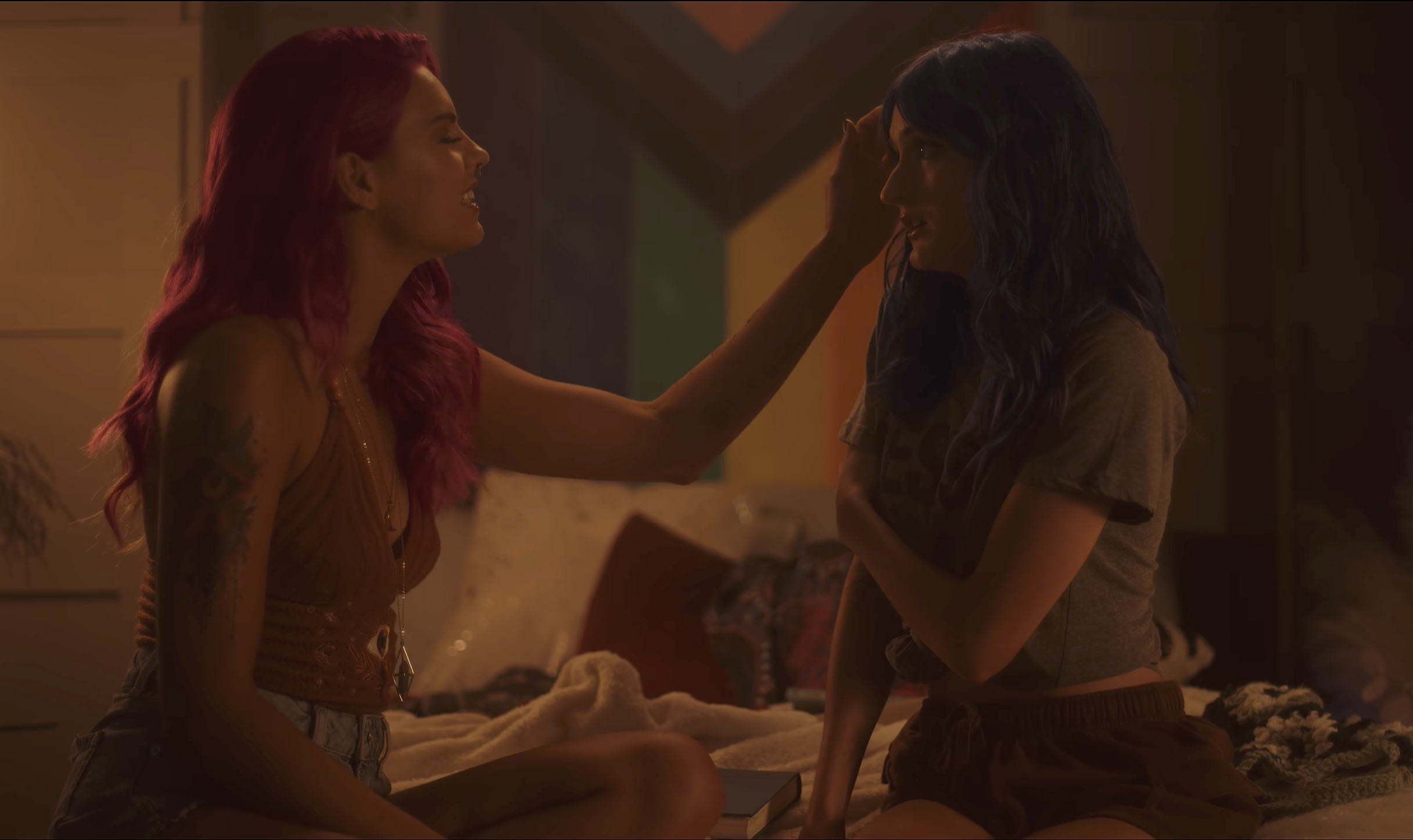
Two women sit on a bed, a Pride flag hanging behind them. One is nervous; the other tells her to be calm and that she’ll do “all the work.” The music swells. The two hold hands and — fill out a ballot voting for Steve Hilton?
This is the new advertisement from the Hilton gubernatorial campaign that is drawing rebuke from both sides of the aisle, but for very different reasons.
Jorge Reyes Salinas, the communications director at Equality California, said the ad was an insult to the queer community.
“This ad is a disgusting attempt to exploit lesbian intimacy for political attention,” he said. The advertisement plays on media tropes that Salinas says “reduce lesbian and bisexual women … to sexual entertainment,” rather than showing them as well-rounded characters. “Any group of the LGBTQ+ community deserves the same dignity and respect as everyone else,” he said.
The ad is truly hyper-sexualized. It ends with one woman telling the other, “Now lick it.” The two pause and stare before she reveals an envelope to send the ballot, and large text pops up saying, “Just try it!”
Salinas characterized the ad as a desperate attempt to get attention from a candidate who is trailing far behind in the polls in heavily Democratic California. The Democratic candidate Xavier Becerra, who is endorsed by Equality California, holds a 25-point lead over Hilton according to recent polling by the UC Berkeley Institute of Governmental Studies.
Conservatives have also criticized the ad.
Influential evangelical Pastor Jack Hibbs thought the ad was distasteful and said, “lesbianism among college girls and some high school girls that right now is an actual pandemic of social ill.” Republican attorney general candidate Michael Gates said it undermines “the sanctity of the relationship between parents and their children.” This criticism is rather confusing because although the ad features two relatively young women, they both appear to be adults, not minors.
“The comments from Pastor Jack Hibbs should be criticized because there is nothing wrong with two women being attracted to each other,” Salinas said. “We’re calling out the ad’s stereotypes, while also rejecting the homophobia in the response to it … by other Republicans.”
The backlash from Hilton’s own party and supporters shows that an advertisement full of queer innuendo was ill-considered, considering the national GOP’s attacks on LGBTQ people in recent years. Hilton himself has been campaigning against transgender girls and women competing in school sports and using locker rooms that correspond with their gender identity. This context might be why Hilton’s political base responded to the ad just as poorly as the liberal voters he was attempting to court.
Hilton says the ad is part of a new series rolling out before Election Day, showing stereotypical California liberal archetypes voting for Hilton. He claims these ads are authentically filmed with real actors, as opposed to being A.I. generated, like many of his previous ads. One other advertisement has been released so far by the campaign showing a man at a spiritual retreat also being swayed to vote for Hilton, although it is notably absent of sexual innuendo.
Caleb Kaufman is a California Local News Fellow placed with the Los Angeles Blade. The California Local News Fellowship is a state-funded initiative to support and strengthen local news reporting. Learn more about it at fellowships.journalism.berkeley.edu/cafellows.
2026 Midterm Elections
Trump uses anti-trans slur against Democratic Senate candidate
President mocked Annie Andrews

President Donald Trump used an anti-trans slur against Democratic South Carolina Senate candidate Annie Andrews on Monday as he sought to rally support for Republicans in the state’s Senate race.
In a post on Truth Social, Trump attacked Andrews three times, referring to her as “trannie” while promoting U.S. Sen. Darline Graham (R-S.C.)’s campaign.
Andrews is running against Graham for a Senate seat in the solidly Republican state.
Earlier this year, Graham was specially appointed to the seat following the death of her brother, Lindsey Graham, who represented South Carolina in the Senate from 2003 to 2026.
Andrews, the Democratic nominee from the state, is a pediatrician that lives in Charleston with her three children. She told NBC News that she will “work with anyone to put South Carolina first.”
“As a mom and a pediatrician, I’m in this race to fight for my patients, my three kids, and South Carolina,” Andrews said, adding that “lowering costs and making life better for families across our state is going to take all of us working together.”
Andrews used the attention from the president’s attack to emphasize what she described as a focus on policy issues rather than the culture wars that have dominated much of the political debate.
“If you care more about your bills than the politics in Washington, this campaign is for you,” she added.
Trump’s remarks have drawn criticism from leaders on both sides of the aisle.
Senate Minority Leader Chuck Schumer (D-N.Y.) condemned Trump’s words Monday night on social media, calling his attacks on Andrews “despicable.”
“Annie Andrews is a mom and pediatrician who’s always put her community first — and she’s exactly who South Carolina needs representing them in the Senate,” Schumer said on X.
Former South Carolina Gov. David Beasley, a Republican, also criticized the president’s attack on Andrews, urging voters to “reject politics based on division and hate.”
“This is abhorrent. Elections don’t have to be about cruelty and lies. South Carolina deserves better,” Beasley wrote Monday night on X.
South Carolina has not elected a Democratic senator in nearly three decades.
Andrews’s campaign website does not mention her positions on LGBTQ issues.
The Washington Blade reached out to Andrews’s campaign for comment on Trump’s attack and her positions on transgender rights but did not hear back by time of publication.

In ‘The Lost Brontë,’ a complicated lie can lead to danger

CAMP Rehoboth Block Party returns Oct. 18

Essential queer horror classics for Halloween

Solidarity beyond the parade: the actual cost of Pride

Physician: addiction doesn’t always look the way you think it does

10 years later, we still can’t shake Barry Jenkins’s ‘Moonlight’

Bessent says Trump chose him for his qualifications, not his sexuality

‘Some Like It Hot’ a wild ride at renovated Bernard Family Theatre

D.C.’s LGBTQ homeless facilities face possible hit from Trump funding cuts

Trump uses anti-trans slur against Democratic Senate candidate
-

 Movies4 days ago
10 years later, we still can’t shake Barry Jenkins’s ‘Moonlight’
-
Federal Government5 days ago
Bessent says Trump chose him for his qualifications, not his sexuality
-
Theater4 days ago
‘Some Like It Hot’ a wild ride at renovated Bernard Family Theatre
-
District of Columbia4 days ago
D.C.’s LGBTQ homeless facilities face possible hit from Trump funding cuts