Arts & Entertainment
Staying in tune
Emily Saliers on the economics of recording circa 2013, caring for guitars on the road and more
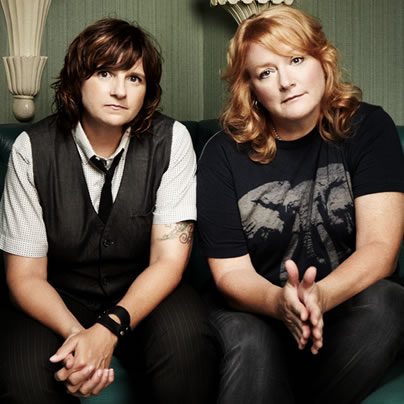
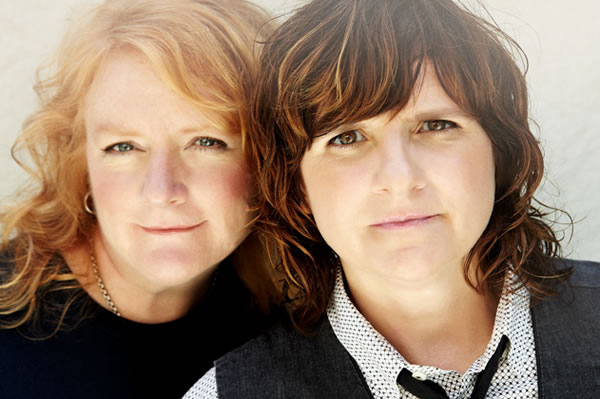
The Indigo Girls are Amy Ray, left, Emily Saliers. (Photo by Jeremy Cowart; courtesy Propeller Publicity)
Indigo Girls/Joan Baez concert
Wolf Trap
1551 Trap Road
Vienna, VA
Wednesday
8 p.m.
$28-$42
wolftrap.org
indigogirls.com
It’s easy to take the Indigo Girls for granted. They keep the albums coming every couple years, play the D.C. region often and despite their insistence on keeping things fresh, still manage to feel — and sound — like sonic comfort food.
From her home in Atlanta on the eve of embarking on a 10-date mini-tour with Joan Baez (sandwiched between a slew of other dates), Emily Saliers took a few minutes with us and was as unpretentious and down-to-earth as she’s always been. They play Wolf Trap Wednesday night. Her comments have been slightly edited for length.
BLADE: Why Joan, why now?
SALIERS: Our manager knows Joan’s and we’ve been friends for about 10 years and have toured with her before. The timing was just right and Joan was wanting to do it.
BLADE: Full band?
SALIERS: Yeah, we’re bringing the Shadowboxers with us. They’re a great group of young guys and an up-and-coming band. Usually they open for us but since this will be a full show with two sets, they’re the house band. We call Joan our matriarch and then these guys are younger so I really like the intergenerational aspects of the tour.
BLADE: Will you be collaborating with Joan on anything or is it separate sets?
SALIERS: We’ll do ours first, then Joan, then we’ll do a handful of songs together.
BLADE: Picked the songs yet for the collaborations?
SALIERS: We know we’ll do “Don’t Think Twice It’s All Right” but the others are still in the works. We might do a couple Indigo Girls songs and a couple of Joan’s. There’ll be others we might do some nights and others on other nights.
BLADE: For some musical acts — perhaps even most — the general public tends to heavily identify the band or singer with the era in which it had its biggest commercial success. This would be true of both Joan Baez and Indigo Girls. Yet fans know there’s usually so much more to an artist than one era. Does this bother you?
SALIERS: I know that kind of typecasting musically exists. It doesn’t really bother me although I wish people would be a little more broad minded when it comes to such things. We continue to put out new records every couple of years and we’ve had our fingers all over the board in all kinds of genres. I think our discography proves we’re still viable and relevant. For a long time we were just the lesbian band or people just thought of the skits on “Saturday Night Live.” But Amy and I would be so bored if that’s all we were and we feel we’ve done our very best work since then. It’s the same thing in many ways with Joan. She was and still is a tremendous activist and it just goes on and on and on. She’s been very brave and courageous in dangerous times and she’s been true to her vision of social justice. It’s not just old stuff from the ‘70s. She’s that kind of person to us and hopefully we can inspire people the same way.
BLADE: So many acts now are just touring on their catalog or might do an EP here or there yet the Indigo Girls, like you said, have kept up with adding to your discography. Has there been any sense that they’ve yielded diminishing returns in some ways or are they creatively satisfying enough for you to have kept at it?
SALIERS: We really don’t make any money selling records, I’ll tell you that. Those days are long, long gone. But I get so fucking excited when an artist I love has a new album out so we try to think of the fans and approach it that way. It’s important for the fans and also for our own musical growth. And yes, we have to think economically, which is a total bummer. There were some glory days when we didn’t have to. It does suck sometimes. Like just recently we were going to do a symphonic record and right in the middle of planning it, the union law changed for the musicians and the studio scale just took it totally out of our league. It’s a shame because we were dying to make that record, but of course we’re also not going to go in the hole for tens of thousands of dollars to do it. It’s just a very different landscape than we came up in so we make a lot of tactful decisions based on economics while also honoring our belief that we have to keep making new music.
BLADE: You play D.C. regularly. How are audiences here different from other comparable-size regions?
SALIERS: D.C. audiences are really distinctive. Like Florida in the sense that, well, it’s just so different from anyplace else. Just kind of this strange, exotic place. D.C. has been very loyal to us and we love playing Wolf Trap which in some ways I can’t believe we can still play it because it’s one of the larger venues but we always do well there and we have such a great time. With many amphitheaters the spacial difference can really sop up a lot of the energy but that doesn’t happen at Wolf Trap.
BLADE: There are many, many lesbian singer/songwriter-type musicians who have and have had loyal followings in certain circles but never cracked the mainstream zeitgeist in any way. How do you think you and Amy managed to do that?
SALIERS: I think a lot of it was really just timing. We were signed in the era when you had people like Tracy Chapman and Melissa Etheridge and Jewel and Suzanne Vega and a slew of women with acoustic guitars selling a bunch of records. We got signed at that time and radio was friendly to us then. REM gave us a leg of their tour which really helped with visibility. If we came out now, we’d just totally be swimming upstream to maintain successful long careers. I also think because Amy’s music is different from mine, there’s kind of two musical lives playing out here, people don’t get bored by it. We don’t just think of it as music with acoustic guitars. I mean Amy rocks hard. But the reality is it’s a male-dominated business and most women artists have to sell their sexuality to be successful. For men it’s true to a degree but not the same extent. Rock and roll is a male genre and that’s really its power structure.
BLADE: How many guitars do you travel with?
SALIERS: We have these massive guitar coffins, they’re called, these travel cases where a bunch can fit in rather than having to line them all up individually. Let’s see, probably about 15-20 including banjo, mandolin and classical guitar, which we use for a few songs.
BLADE: Some folks — perhaps the less musically inclined — have asked if it’s really necessary to keep changing guitars every song. Is it because different tunings are used for different songs, overall sonic variety or what? I’m sure you have a guitar tech, right?
SALIERS: It’s all those things, yes. It may seem a bit absurd but trust me, if we didn’t do that or have a guitar tech, which is a very necessary luxury. Our guitar tech Sully has been with us 17 years and really is part of the fabric of the Indigo Girls. But yes, we’d spend half our set just tuning if we didn’t have her. It really contributes a lot to show flow. It really disrupts the flow of things if you have to stand there and keep tuning. So part of it is keeping things interesting for the audience, too. Doing some on mandolin or some on banjo varies it up. If it were all the same sonically it would be very boring.
BLADE: Did you have to learn good pitch, both with the guitar and vocally, or did that always just come natural for you? Are there ever times where you go back and think, “Yikes, we went a little flat there.”
SALIERS: Oh yeah, it happens all the time but I grew up in a very musical family and singing in choirs so we were taught to be very mindful of pitch and learned all the little tricks you can do to stay on pitch. I have a good ear and can always tell if something’s a little flat or sharp. I’m very mindful of that, especially on records. In fact, that’s one way Amy and I differ a little. Her feeling would be if a take catches the vibe but is a little pitchy, she’d be more inclined to go with it. I have a little different approach. If the pitch is off, I just can’t live with it.
BLADE: How long of a set do you have planned for next week?
SALIERS: Probably an hour to and hour-15 then about four songs with Joan.
BLADE: Thanks for your time!
SALIERS: Thanks, take care.





Out & About
Annapolis Pride arrives this weekend
Sixth annual LGBTQ celebration held in Maryland capital
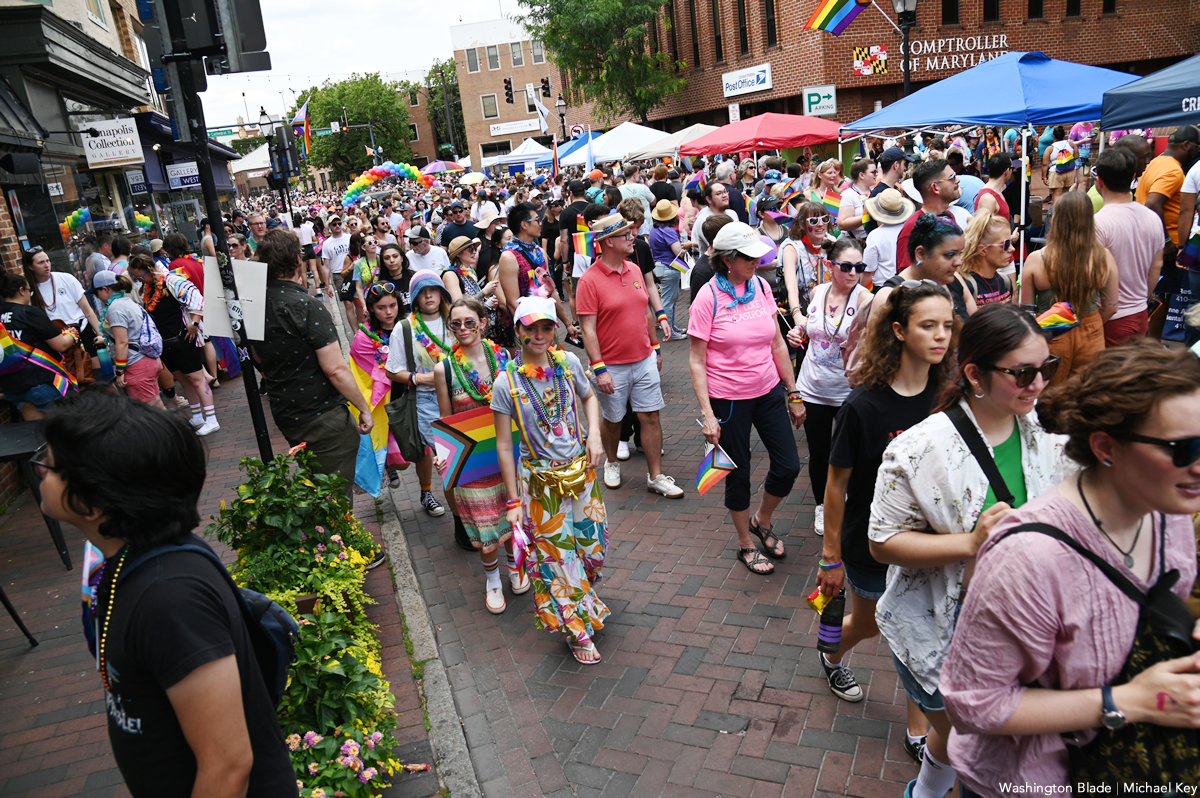
The Sixth Annual Annapolis Pride Parade and Festival will be held on Saturday, Oct. 3 at 11 a.m. on the streets adjacent to St. John’s College.
The theme of this year’s Annapolis Pride Parade and Festival celebration is “United in Pride, Together We Thrive!” Saturday’s parade will begin on St. John’s Street adjacent to St. John’s College, continue along Calvert Street to Northwest Street, to Church Circle, and onto West Street. The parade route then turns onto Amos Garrett Boulevard and eventually ends on Constitution Avenue near Maryland Hall.
Those with disabilities will be able to watch the parade from a special viewing porch at the Graduate Hotel at 126 West St. An Annapolis Pride volunteer will be there and available to assist.
For more details, visit the festival’s website.
Friday, October 2
Go Gay DC will host “First Friday LGBTQ+ Community Happy Hour” at 7 p.m. at Freddie’s Beach Bar and Restaurant. This is a chance to relax, make new friends, and enjoy happy hour specials at this classic retro venue. Attendance is free and more details are available on Eventbrite.
Saturday, October 3
Go Gay DC will host “LGBTQ+ Community Brunch” at 11 a.m. at Freddie’s Beach Bar & Restaurant. This fun weekly event brings the DMV area LGBTQ+ community, including allies, together for delicious food and conversation. Attendance is free and more details are available on Eventbrite.
“Nellie’s DC Drag Brunch” will be at 12 p.m. at Nellie’s Sports Bar. Come get served like a queen by a queen. Join Sapphire Blue, Deja Diamond and their team of amazing drag performers for the most fun you’ll have all weekend. Tickets cost $58.51 and are available on Eventbrite.
Sunday, October 4
Spark Coffee Club will be at 12 p.m. at Spark Social. This is a laid-back daytime hangout built entirely around making new connections. Whether you’re new to the city, new to the community, or just looking to expand your social circle, this is an easy, low-pressure way to spark up a conversation with the person next to you. Come solo or with a friend — you never know who you might meet. For more details, visit Eventbrite.
Monday, October 5
“Center Aging: Monday Coffee Klatch” will be at 10 a.m. on Zoom. This is a social hour for older LGBTQ+ adults. Guests are encouraged to bring a beverage of choice. For more information, contact Adam ([email protected]).
Tuesday, October 6
DC SAFE and the Mayor’s Office of LGBTQ+ Affairs will host “The Relationship Lab” at 6 p.m. This is a four-week series for LGBTQ+ communities exploring love, boundaries, communication, and connection. Through real conversations and engaging discussions, participants will explore what makes relationships healthy and how to recognize the signs when they’re not. For more details, visit Eventbrite.
Wednesday, October 7
Job Club will be at 6 p.m. on Zoom upon request. This is a weekly job support program to help job entrants and seekers, including the long-term unemployed, improve self-confidence, motivation, resilience and productivity for effective job searches and networking — allowing participants to move away from being merely “applicants” toward being “candidates.” For more information, email [email protected] or visit www.thedccenter.org/careers.
Center Aging Women’s Social & Discussion Group will be at 6 p.m. on Zoom. This group is a place where older LGBTQ+ women can meet and socialize with one another. To register, visit the DC Center’s website.
Thursday, October 8
The DC Center’s Fresh Produce Program will be held all day at the DC LGBTQ+ Community Center. People will be informed on Wednesday at 5 p.m. if they are picked to receive a produce box. No proof of residency or income is required. For more information, email [email protected] or call 202-682-2245.
South Asian LGBTQ+ Support Group will be at 7 p.m. on Zoom. KHUSHDC provides a safe, confidential space for South Asian LGBTQ community members to come together and share experiences. The peer support group is an outlet for South Asian-identified LGBTQ individuals to come and talk about anything affecting them. It’s a secure, judgement-free environment to discuss relationships, sexuality, health, well-being, identity, culture, religion, or anything that is on your mind. Please feel free to join, and share stories, learn about available resources, and join our community. For more details, email [email protected].
a&e features
Ryan Murphy’s ‘Monster’ vilifies the lesbian
Netflix show promotes stereotype that queer women are dangerous
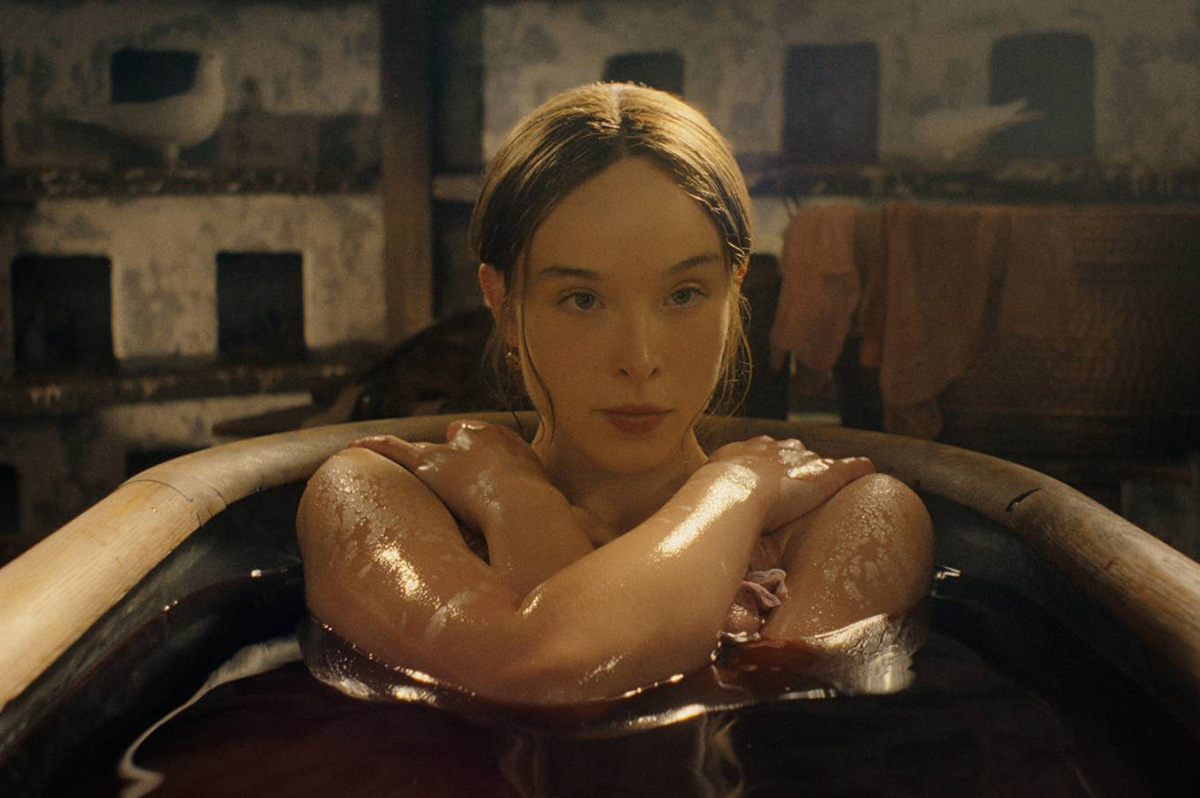
Ryan Murphy’s “Monster: The Lizzie Borden Story” just premiered on Netflix and became the most watched show on the platform. Murphy and his series are deeply controversial. The past three seasons have focused on convicted killers Jeffrey Dahmer, Lyle and Erik Menendez, and Ed Gein, and have garnered considerable criticism for sensationalizing real-life trauma, exploiting victims for entertainment, and glorifying the perpetrators.
But his newest season centers on Lizzie Borden, the white, affluent Massachusetts woman still referenced today in nursery rhymes who was never convicted of killing her parents Andrew and Abby Borden. As with Murphy’s other seasons, the show plays fast-and-loose with real-life history, instead turning a real-life crime into a psychosexual spectacle.
In real life, Lizzie was found not guilty by an all-male jury in the highly publicized 1892 trial, largely due to a lack of evidence including blood on her clothing and a murder weapon. Her initial statement contradicted her later testimony but her defense team argued that the morphine a doctor repeatedly gave her likely caused her confusion. But despite the fact that Lizzie was acquitted in court, she was ostracized by her community during her life and has been branded a murderer ever since.
Murphy’s highly fictionalized retelling of Lizzie’s story leans into this accusation not only that Lizzie murdered her father and stepmother with an axe but that she was successful in covering it up with the help of the maid Bridget Sullivan. Murphy not only concocts a sapphic relationship between Lizzie and Bridget, pinning the idea of killing Lizzie’s parents on the widely traveled woman who dyes her hair and is repeatedly called a lesbophobic slur by Lizzie’s stepmother, but also portrays Lizzie as an inspiration to Aileen Carol Wuornos, a woman who killed seven men who solicited sex and was also in a relationship with a woman.
Further, Murphy’s retelling creates a false ending to Lizzie’s story. While in real life, Lizzie and her sister Emma buy a house called “Maplecroft” and live there for the rest of their lives, Murphy instead imagines Bridget returning sporadically for romantic rendezvous with Lizzie and eventually moving back in with her and marching together for women’s right to vote. In real life, Bridget left town immediately after providing testimony and lived in Montana until she died.
Lesbophobia is at the heart of this retelling of Borden’s story. Despite the fact that Murphy depicts Lizzie and Bridget having sex and possibly getting married or at least promising themselves to one another wearing flower crowns, there is no evidence that Lizzie and Bridget had any romantic or sexual relationship. If they did have a relationship, it would likely have been hidden and any evidence destroyed, but records show that Lizzie herself refused to call Bridget by her real name, instead referring to her as “Maggie,” the name of their previous maid. It was only Lizzie’s stepmother Abby who called Bridget her real name. In Murphy’s retelling, it’s Lizzie’s stepmother Abby who refuses to learn or use Bridget’s actual name and treats her with disdain along with her stepdaughter.
Some people online argue that we are witnessing Lizzie’s story retold through Wuornos’s perspective, so adding in elements of child abuse and sapphic relationships would make sense, but there is no record that Wuornos ever visited Lizzie Borden’s home, or that she was inspired by Borden throughout her life. Instead, Murphy and his co-creator Ian Brennan use (or I would say exploit) Wuornos as a thematic device to make broad stereotypes about female rage across generations. In doing so, they conflate two real-life examples of violence to sapphic individuals.
Depicting a lesbian relationship in this way is not progress, nor is it fruitful representation today. As sapphic shows are increasingly cut and cancelled, Murphy’s inclusion just reinforces the lesbophobic and sexist stereotype that lesbians and queer women are “dangerous” to straight women and abet or incite violence against men and a family unit. At a time when anti-LGBTQ+ legislation and real-world violence and murder of LGBTQ+ people, especially queer and trans people of color, is exploding, stories that frame murder of a family unit as germinating from a sapphic relationship feed into far right narratives.
They further the myth popularized by far right leaders (including those in the highest echelons of government) that LGBTQ+ people are dangerous, a threat to heterosexual norms and family life, despite the data showing that children of same-sex parents have above average health and well-being according to research by the University of Melbourne.
Today, many LGBTQ+ people feel they have to be (or are forced to be) idealized versions of themselves in order to stave off anti-LGBTQ+ stigma, policing and violence. These “acceptable” behaviors and appearances are rooted not only in cisgender, heterosexual norms but also white supremacy, colonialism, xenophobia, and ableism. It is respectability politics that tell us how we can and should behave (including those perpetuating in the wider LGBTQ+ community) and push LGBTQ+ people to assimilate into a society governed by queerphobic normativity.
I hope it’s clear that I’m not trying to argue that we cannot and should not have shows that depict queer women who kill, or at the very least queer women who are unethical or morally complex. We need these depictions because they ask difficult questions and they reference how some LGBTQ+ people can be and are unethical. In fact, several public LGBTQ+ figures are associated with employee abuse and exploitation, ableism, and fat phobia.
But when Lizzie’s sapphic identity is invented to drive the story along, arguably to generate interest (especially straight men’s interest) in this spectacle of historical slop, it’s not a story that invites discourse and dimensionality, it’s one that collapses Lizzie, Wuornos, and queer women’s identities and relationships to plot devices. It objectifies and fetishizes queer women, arguably committing violence against not only Lizzie but also Wuornos.
And when there is so little representation of sapphic relationships on mainstream television or streaming platforms, it makes this the vast majority of representation that queer girls and women will see of themselves first, and that the straight public will see. Historians will know that Murphy’s depiction of Lizzie’s life is wrong, but many viewers will not and may not go digging for the truth.
Why not focus on the stories of bisexual, lesbian, and queer women who really existed, shared their identities (sometimes covertly, sometimes not), and had long-term partners? In fact, “Boston marriages” were common in this time period and referred to women living together when sexual and romantic relationships between women were illegal, partially because penal systems didn’t know how women could have sex with one another and didn’t want to put the idea in “impressionable” women’s minds. Why not focus on these stories instead of creating a fictionalized account? We have always existed; we do not need to invent relationships.
Murphy’s depiction of Lizzie Borden is deeply problematic. Lesbophobia is not the only issue at the heart of Murphy’s drama, but it merits a broader discussion about how mainstream media routinely hurt queer women and is part of perpetuating queerphobic violence, and what we all lose in the process.

Annapolis Pride arrives this weekend

Calendar: October 2-8

Renee Good’s family files two federal lawsuits

House Democrats urge White House to confront Turkish government over anti-LGBTQ crackdown

988 restores crisis services for LGBTQ youth

HRC National Dinner 2026: A night of music, activism, LGBTQ history

Lesbian Bar Project co-founder: purity politics could destroy our remaining spaces

529 openly LGBTQ candidates running in Brazilian election

HRC report: LGBTQ students face ‘far greater challenges’ in non-supportive states

Meet the LGBTQ candidates running for U.S. House, Senate
-

 LGBTQ Non-Profit Organizations5 days ago
HRC National Dinner 2026: A night of music, activism, LGBTQ history
-
Bars & Parties4 days ago
Lesbian Bar Project co-founder: purity politics could destroy our remaining spaces
-
Brazil4 days ago
529 openly LGBTQ candidates running in Brazilian election
-
National5 days ago
HRC report: LGBTQ students face ‘far greater challenges’ in non-supportive states