News
LGBT Catholics welcome Francis’ comments on marriage
Pontiff says church has grown ‘obsessed’ with gay nuptials, abortion

Pope Francis
LGBT Catholics have welcomed Pope Francis’ comments that the church has grown “obsessed” with same-sex marriage, abortion and contraception.
“We find much to be hopeful about, particularly in the Pope’s firm desire that the church be a ‘home for all people,’ and his belief that God looks on lesbian, gay, bisexual and transgender people with love rather than condemnation,” Dignity USA Executive Director Marianne Duddy-Burke said in a statement on Thursday after America, a Jesuit magazine, published the pontiff’s extensive interview with with Rev. Antonio Spadaro, editor-in-chief of La Civiltà Cattolica, an Italian Jesuit magazine, that took place during three separate meetings last month in Rome.
Francis DeBernardo, executive director of New Ways Ministry in Mount Rainier, Md., said Francis’ comments amount to a “new dawn” for the Catholic Church.
“Pope Francis’ words and example have opened up new opportunities for the Catholic Church to welcome and dialogue with LGBT people,” DeBernardo said. “His words will give courage and hope to thousands of pastoral ministers and Catholic faithful who have been doing this work for many decades, but who have often received penalties and discouragements from church leaders who did not share this pope’s broad vision.”
Francis’ comments come less than two months after he told reporters who asked him about the reported homosexuality of the man whom he appointed to oversee the Vatican bank on his flight back to Rome after a week-long trip to Brazil for World Youth Day that gay men and lesbians should not be judged or marginalized. The Argentine-born pontiff reiterated this statement during his interview with Spadaro.
“In life, God accompanies persons, and we must accompany them, starting from their situation,” Francis said. “It is necessary to accompany them with mercy. When that happens, the Holy Spirit inspires the priest to say the right thing.”
A spokesperson for the Archdiocese of Washington told the Washington Blade that Cardinal Donald Wuerl was traveling on Thursday and did not have any comment on Francis’ statements.
“He is a man who profoundly believes in the mercy of a loving God, and who wants to bring that message of mercy to the entire world, including those who feel that they have been wounded by the church,” New York Cardinal Timothy Dolan said in a statement. “As a priest and a bishop, I particularly welcome his reminder that the clergy are primarily to serve as shepherds, to be with our people, to talk with them, to be pastors, not bureaucrats.”
Dolan, who is president of the U.S. Conference of Catholic Bishops, further discussed the pontiff’s comments on “CBS This Morning” on Friday.
“If we keep [a] kind of a negative, finger-wagging tone, it’s counterproductive,” Dolan said.
LGBT Catholics greeted Francis’ election in March to succeed Pope Benedict XVI, who vehemently opposed same-sex marriage and condom use to stop the spread of HIV/AIDS and enforced the Vatican’s moral doctrine before ascending the papacy, with cautious optimism.
Francis, who is the former archbishop of Buenos Aires, in 2001 visited a hospice to kiss and wash the feet of 12 people with AIDS. He told Spadero he used to receive letters from gay people who said they were “socially wounded” because they felt “like the church has always condemned them.”
“The church does not want to do this,” Francis told Spadero.
The pontiff was among those who led the opposition to Argentina’s same-sex marriage law that President Cristina Fernández de Kirchner signed in 2010. Francis described the measure as a “machination of the Father of Lies that seeks to confuse and deceive the children of God” before Argentine lawmakers approved it.
Fernández herself criticized then-Buenos Aires Archbishop Jorge Bergoglio’s comments against the measure that included references to it as a “demonic plan.” Francis also called for a “holy war” against the gay marriage bill.
“He says not to interfere with the lives of gays, but in the countries where lawmakers are debating laws of equality, the Catholic hierarchy lobbies ferociously to ensure that these laws don’t advance (the same pope played a part of this in Argentina,)” Lesbian, Gay, Bisexual and Trans Federation of Argentina President Esteban Paulón told the Blade on Friday. “This leads us to ask ourselves who is the Pope? Is he the same Bergoglio of the holy war and demonic plan (about marriage equality) or the ‘compassionate’ Francis toward gays.”
Even though it appears Francis’ comments will have no impact on Catholic teachings on same-sex marriage and other social issues, Human Rights Campaign President Chad Griffin on Thursday wrote to Dolan as president of the U.S. Conference of Catholic Bishops and Knights of Columbus CEO Carl Anderson. He urged them to end their public opposition to pro-LGBT measures.
“Doing anything less will put you in direct conflict with Pope Francis’ message of welcome and mercy — and create an even greater gulf between you and the broad majority of the American Catholic laity, who support their LGBT neighbors’ freedom to marry the person they love in a civil ceremony,” Griffin wrote.





National
Anti-trans visa ruling echoes Nazi regime destroying trans documents
Trump administration escalates attacks on queer community

The Lemkin Institute for Genocide Prevention and Human Security earlier this month released its third Red Flag Alert for the United States about the Trump administration’s anti-trans legislation. As the Lemkin Institute shared in the press release, “the Administration has moved from identifying transgender people as as threat to the family and to the nation’s military prowess to claiming that transgender people constitute a cosmic threat to the spiritual health of the nation and the great direct threat to the US national security in the world.”
The news came the same day that the State Department issued a new rule, “Enhancing Vetting and Combatting Fraud in the Immigrant Visa Program.” Under this new guidance, all visa applicants are required to disclose their “biological sex at birth” during all stages of the process, “even if that differs from the sex listed on the applicant’s foreign passport or identifying documentation.”
This rule also orders that applicants to the green card lottery program share their passport information, so in knowingly collecting passport information that the agency knows will not match a person’s biological sex at birth, it’s creating grounds to deny trans peoples’ biases on the basis of “fraud,” Aleksandra Vaca of Transitics explains.
As is written in the new ruling, “the Department is replacing ‘gender’ with ‘sex’ in accordance with E.O. 14168, Defending Women From Gender Ideology Extremism and Restoring Biological Truth to the Federal Government, which provides that the term ‘sex’ shall refer to an individual’s sex at birth. Only male and female sex options are available for entrants completing the Diversity Visa entry form.”
Along with outright denying the existence of nonbinary, genderqueer and gender expansive people, this policy creates a precedence for trans people to be stripped of their visas and deported because under 8 U.S.C. § 1182(a)(6)(C)(i), any foreigner found to have obtained or possess a visa “by fraud or willfully misrepresenting a material fact” will have their visa revoked and face deportation.
By requesting information on “biological sex at birth,” the State Department is forcing a mismatch between documents and enabling officials to accuse trans, nonbinary, and gender expansive immigrants of fraud. Thus, trans and nonbinary immigrants can have their visas revoked and can be deported, and information gathered from immigrants during the visa request process can be added to federal databases and used by immigration authorities, including ICE agents.
With the Supreme Court’s decision this past year allowing ICE officers to use racial profiling, Vaca argues that “now, The Trump administration has given ICE the reason it needs. Under this rule, ICE agents now have the enforcement rationale to assert that trans people–especially those belonging to racial minority groups–are more likely than cis people to have ‘misrepresented’ themselves during the visa process, and therefore, are more likely to enter the country ‘unlawfully.’”
This would enable ICE agents to target trans individuals specifically for being trans. If the goal of this were unclear, a day later the Trump administration released its statement for Women’s History Month 2026, writing that “we are keeping men out of women’s sports, enforcing Title IX as it was originally written and ensuring colleges preserve–and, where possible, expand–scholarships and roster opportunities for female athletes. We are restoring public safety and upholding the rule of law in every city so women, children, and families can feel safe and secure.”
And this is not the first time that ICE has targeted and harmed trans and nonbinary immigrants. Last June, Vera reported that ICE is not including trans people in detection in their public reports, and back in 2020, AFSC reported that trans people held in ICE detention faced “dreadful, ugly” conditions.
While it seems like a new development in Trump’s anti-trans escalation, it echoes a deeply upsetting history of denying and destroying transgender people’s documents following members of the Nazi party seizing power in 1933.
In the early 20th century, Weimar, Germany was an epicenter for gender affirming care with Maganus Hirschfeld’s Institute for Sexual Science. One of the first book burnings of the rising Nazi regime destroyed the Institute’s extensive clinical records and library on trans health and history by Nazi students and stormtroopers. In doing so, the Nazis effectively destroyed the world’s first trans health clinic and one of the richest and most comprehensive collective of information about trans healthcare.
Similarly, the Nazi government invalidated or refused to recognize what was called “transvestite passes,” or passing certificates that allowed trans people to avoid arrest under Paragraph 175 which prohibited cross-dressing. During the Weimar Republic — the regime that preceded the Third Reich — recognized and affirmed the identities of trans people (in limited ways) with specific documentation that helped prevent them from arrest. Invalidating and disregarding these passes allowed police and Nazi officials to target trans people and harass, extort and arrest them, and the record of passes themselves helped officials target trans people.
The changes to visa guidelines — alongside Kansas’s move to revoke trans drivers’ licenses last month — is reflective of this escalation of violence against trans people during the Nazi’s rise to power, which scholars like Dr. Laurie Marhoefer is just beginning to uncover. And along with the revocation of identification documents this past week, a recent Fourth Circuit Court ruled that states can deny Medicaid coverage for gender-affirming surgery.
The Fourth Circuit Court decision affirmed the Supreme Court’s decision in Skrmetti, which ruled that bans on gender affirming healthcare for young people are constitutional. This ruling extends this ban to include adult healthcare bans, allowing West Virginia’s exclusion of Medicaid coverage for adult gender affirming healthcare to take full effect. Even more upsetting was what the ruling itself said, calling gender affirming healthcare “dangerous.”
As was written in the Fourth Circuit Opinion, “it’s not irrational for a legislature to encourage citizens ‘to appreciate their sex’ and not ‘become disdainful of their sex’ by refusing to fund experimental procedures that may have the opposite effect.”
In reality, what this ruling and the opinion reflect, is the next step in government regulation and oversight over marginalized peoples’ bodies. From the overturn of Roe v. Wade, which removed federal protection of access to abortion, this next step represents the denial of people’s access to vital, lifesaving care–and to be clear, gender affirming care is not just for trans, nonbinary, and intersex people. It’s a dangerous escalation and one that echoes previous violence against trans people under fascist regimes; the Lemkin Institute is right to raise concern.
Japan
Japanese Supreme Court to consider marriage equality
Japan only G7 country that does not legally recognize same-sex couples
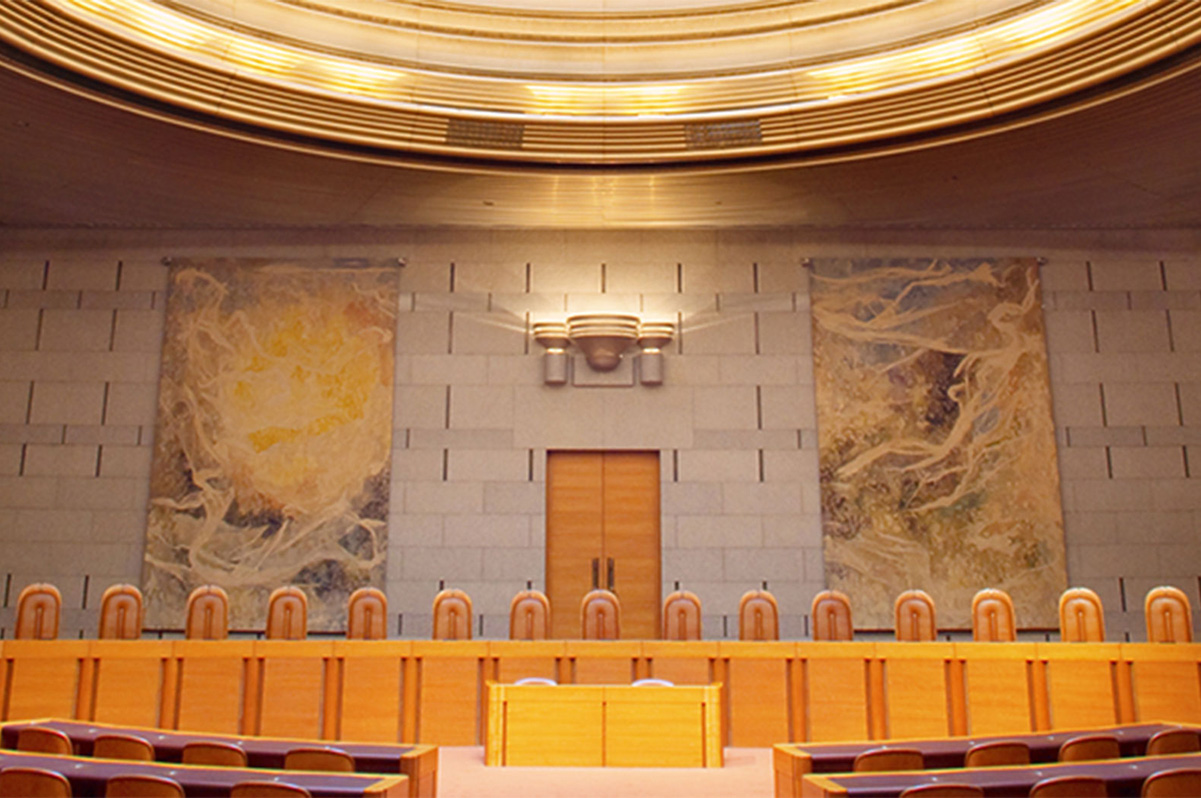
The Japanese Supreme Court on Wednesday said it will consider six marriage equality lawsuits.
NHK, the country’s public broadcaster, noted all 15 of the court’s justices will consider the case.
Japan is the only G7 country that does not legally recognize same-sex couples, despite several court rulings in recent years that found the denial of marriage benefits to gays and lesbians unconstitutional.
Tokyo High Court Judge Ayumi Higashi last November upheld Japan’s legal definition of a family as a man and a woman and their children.
Prime Minister Sanae Takaichi, who became the country’s first female head of government last October, opposes marriage rights for same-sex couples. She has also reiterated the constitution’s assertion that the family is an institution based around “the equal rights of husband and wife.”
Same-sex couples can legally marry in Taiwan, Nepal, and Thailand.
NHK reported the Supreme Court is expected to issue its ruling in early 2027.
Botswana
Lorato ke Lorato: marriage equality, democracy, and the unfinished work of justice in Botswana
High Court considering marriage equality case

As Botswana prepares for the resumption of a landmark marriage equality case before the High Court on July 14–15, the country finds itself at a critical constitutional crossroads.
At first glance, the matter may appear to be about whether two women, Bonolo Selelelo and Tsholofelo Kumile, can have their love legally recognized. At its core however, this case is about something far more profound: the dismantling of patriarchy, the decolonization of law, and the integrity of Botswana’s constitutional democracy.
Beyond marriage: a question of power
Marriage, as a legal institution, has never been neutral. It has historically functioned as a mechanism for regulating women’s bodies, sexuality, and social roles within a patriarchal order. To deny LBQ (lesbian, bisexual, and queer) women access to marriage is not merely to exclude them from a legal benefit, it is to reinforce a hierarchy of relationships, where heterosexual unions are deemed legitimate and all others invisible. This case therefore challenges the very foundations of who gets to love, who gets to belong, and who gets to be protected under the law.
As feminist scholars have long argued, patriarchy is sustained through institutions that appear ordinary but are deeply political. The law is one such institution. And it is precisely here that this case intervenes: by asking whether Botswana’s legal system will continue to uphold exclusion, or evolve to reflect the constitutional promise of equality.
A constitutional journey: Botswana’s courts and human dignity
This is not the first time Botswana’s courts have been called upon to affirm the dignity of LGBTQI+ persons. Over the past decade, the judiciary has built a progressive body of jurisprudence grounded in equality, nondiscrimination, and human dignity.
In Attorney General v. Rammoge and Others (Court of Appeal Civil Appeal No. CACGB 128-14, 2016), the Court of Appeal upheld the right of LEGABIBO to register as an organization. The court affirmed that:
“The refusal to register the appellant society was not only unlawful, but a violation of the respondents’ fundamental rights to freedom of association.”
This was followed by the ND v. Attorney General of Botswana (MAHGB-000449-15, 2017) case, where the High Court recognized the right of a transgender man to change his gender marker. The court held:
“Gender identity is an integral part of a person’s identity … and any interference with that identity is a violation of dignity.”
In Letsweletse Motshidiemang v. Attorney General (MAHGB-000591-16, 2019), the High Court decriminalized same-sex activity, declaring sections of the Penal Code unconstitutional. Justice Leburu powerfully stated:
“Human dignity is harmed when minority groups are marginalized.”
This decision was affirmed by the Court of Appeal in Attorney General v. Motshidiemang (CACGB-157-19, 2021), where the court emphasized:
“The Constitution is a dynamic instrument … it must be interpreted in a manner that gives effect to the values of dignity, liberty, and equality.”
These cases collectively establish a clear principle: the Constitution of Botswana protects all persons, not just the majority.
The marriage equality case now asks a logical next question: If LGBTQI+ persons are entitled to dignity, identity, and freedom from criminalization, why are their relationships still denied recognition?
Decolonizing the law: What is truly ‘UnAfrican’?
Opponents of marriage equality often argue that homosexuality is “unAfrican.” This claim, while politically powerful, is historically inaccurate. Same-sex relationships and diverse gender identities have existed across African societies long before colonial rule. What is foreign, however, are the laws that criminalize these identities.
Botswana’s anti-sodomy laws were inherited from British colonial legal systems, not from indigenous Tswana culture. As scholars of African history have demonstrated, colonial administrations imposed rigid Victorian moral codes that erased and suppressed existing sexual diversity. To claim that homosexuality is unAfrican, while defending colonial-era laws, is therefore a contradiction.
A truly decolonial approach to the law requires us to ask: Whose morality are we upholding? And whose history are we erasing?
Marriage equality, in this sense, is not a Western imposition: it is part of a broader project of reclaiming African dignity, plurality, and humanity.
Democracy on trial: the question of separation of powers
This case also raises important questions about the health of Botswana’s democracy.
Following the 2021 Court of Appeal decision affirming the decriminalization of same-sex relations, Botswana witnessed public demonstrations, including marches led by groups such as the Evangelical Fellowship of Botswana (EFB), opposing the judgment and calling for the retention of discriminatory laws.
While public participation is a cornerstone of democracy, these events raise deeper concerns about the separation of powers. Courts are constitutionally mandated to interpret the law and protect fundamental rights, even when such decisions are unpopular. When judicial decisions grounded in constitutional principles are publicly resisted on moral or religious grounds, it risks undermining the authority of the courts and the rule of law itself.
Democracy is not simply about majority opinion: it is about the protection of minority rights within a constitutional framework.
Botswana is not a theocracy
It is also important to clarify a recurring misconception: Botswana is not a Christian nation.
Botswana is a secular constitutional democracy and more accurately, a pluralistic society that recognizes and respects diversity of belief, culture, and identity. The Constitution does not elevate one religion above others, nor does it permit religious doctrine to dictate legal rights. The law must serve all citizens equally, regardless of faith.
To frame marriage equality as a threat to Christianity is therefore misplaced. The question before the courts is not theological, but constitutional: Does the exclusion of same-sex couples from marriage violate the rights to equality and nondiscrimination?
Love, equality, and the future of justice
At its heart, this case is about love, but it is also about power, history, and justice. It asks whether Botswana is prepared to move beyond colonial legal frameworks and patriarchal norms, and to embrace a future grounded in equality, dignity, and inclusion.
It asks whether the Constitution will continue to be interpreted as a living document, one that evolves with society, or remain constrained by outdated moral assumptions. Ultimately, it asks whether Botswana’s democracy can hold true to its founding promise: that all persons are equal before the law.
As the High Court prepares to hear this case in July 2026, the nation has an opportunity to affirm not only the rights of two individuals, but the broader principle that love, in all its diversity, deserves recognition, and protection.
Lorato ke lorato.
Love is love.
Justice, if it is to mean anything at all, must make space for it.
Nozizwe is the CEO of LEGABIBO (Lesbians, Gays and Bisexuals of Botswana)

Anti-trans visa ruling echoes Nazi regime destroying trans documents

Japanese Supreme Court to consider marriage equality

The outrage economy is not the LGBTQ community

Calendar: March 27-April 2

Celebrate cherry blossoms the drag way

PHOTOS: Capital Stonewall Democrats 50th anniversary

Polish court rules country must recognize same-sex marriages from EU states

Capital Stonewall Democrats 50th anniversary gala draws sold out crowd

Trans Day of Visibility events planned

Virginia General Assembly’s 2026 legislative session ends
-

 Photos4 days ago
PHOTOS: Capital Stonewall Democrats 50th anniversary
-
Poland4 days ago
Polish court rules country must recognize same-sex marriages from EU states
-
District of Columbia4 days ago
Capital Stonewall Democrats 50th anniversary gala draws sold out crowd
-
District of Columbia3 days ago
Trans Day of Visibility events planned