Arts & Entertainment
Synetic expands tableau
‘Dorian Gray’ intersperses dialogue with company’s signature moves
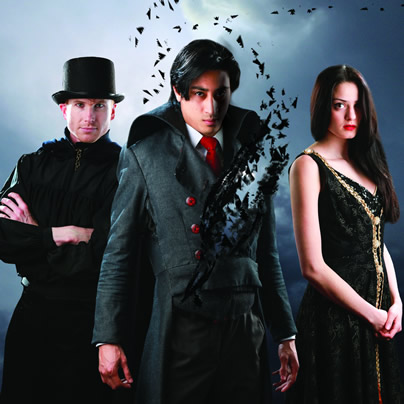
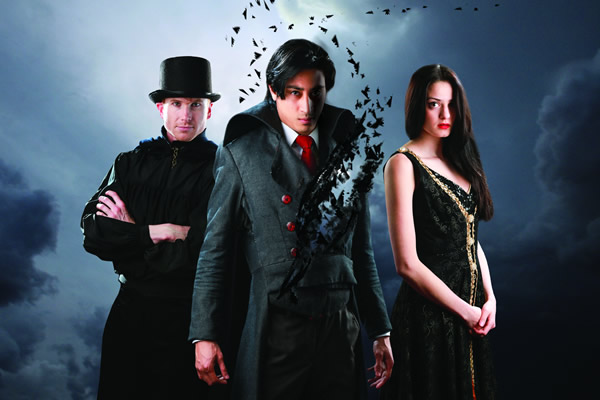
The cast of Synetic’s ‘Picture of Dorian Gray.’ The production represents a bold move for the company. (Photo courtesy Synetic)
‘The Picture of Dorian Gray’
Through Nov. 3
Synetic Theater
1800 South Bell Street, Crystal City
$35 and up
866-811-4111
Synetictheater.org
In adapting Oscar Wilde’s “The Picture of Dorian Gray,” Synetic Theater turns its attention to that eternal nagging question: What price beauty? The 1891 work, Wilde’s only novel, chronicles the downfall of a handsome Londoner who trades his soul to remain eternally young. While Dorian never ages, his physical decline and moral purification is reflected in a portrait tucked safely away in the attic. Tempting tradeoff, eh?
“The only way to get rid of a temptation is to yield to it,” advises decadent Lord Henry (Joseph Carlson) to his willing young student Dorian (Dallas Tolentino). And yield Dorian does: he enthusiastically tastes all the pleasures that the British metropolis has to offer, tragically seducing young actresses, damaging the reputations of respectable married ladies and bedding their sons. He dips into opium, orgies, blackmail and along the way develops an increasingly cruel edge that takes him from pleasure seeking fop to cold-hearted killer.
Typically Synetic follows a fast-paced mostly mute, 90-minute formula. Many past productions have succeeded using this recipe. For “Dorian Gray,” they’ve veered from the course. At two-and-a-half hours, it combines spates of wordy dialogue intercut with choreographer Irina Tsikurishvili’s endlessly imaginative, athletic dance movement for which the company is best known.
And though heavier on witticisms and lyricism than action (despite a murder-filled plotline), “Dorian Gray’s” poetry and foray into the unreal give director Paata Tsikurishvili a lot to play with. Rather than a static painting, the picture is portrayed by Synetic veteran Philip Fletcher, allowing Dorian to interact and struggle with his likeness — these curious and sometimes combative interactions are the most interesting part of the play. As the portrait, Fletcher (who is gay) changes from enigmatically beautiful to hideously debauched, effectively demonstrating Dorian’s excessively naughty behavior. Fletcher’s is a strong and graceful performance.
With his gravity defying backside and enviable abs, Tolendo’s Dorian is the envy of his contemporaries including besotted portraitist and eventual victim Basil (Robert Bowen Smith) and Lord Henry who revels in his ageless friend’s possibilities to continue on a path of evil indefinitely. But despite a good long run of nastiness, Dorian grows tired and reconsiders his wicked ways.
Daniel Pinha’s versatile set is made up of stark metal frames suspended at different heights, beautifully fostering a complete multimedia experience. It’s clear from Coin K. Bills’ wonderfully evocative lighting and Kendra Rai’s gorgeous late Victorian costumes and orgy gear (including Dorian’s tight pleather briefs) that Synetic’s once shallow pockets have grown deservedly deeper in recent years.
While Wilde identified with Dorian, Basil and Lord Harry, his most worldly, pithiest philosophies are voiced through the self-serving aristocrat Lord Henry, haughtily delivered by Carlson. Maxims spoken to Dorian include “there is only one thing in the world worse than being talked about, and that is not being talked about,” and “to get back my youth, I would do anything in the world, except take exercise, get up early or be respectable.”
Other than Wilde’s clever words, the play is mostly devoid of wit, which seems a missed opportunity since Synetic productions are typically peppered with amusing movement bits. Here, they take their decadence and immorality quite seriously.
And while the exchanges between Carlson’s Lord Henry and Tolentino Dorian gives insight into the title character’s motives and emotional turmoil, the play’s best moment are not spoken. And though this production is without Synetic’s more virtuosic choreographic moves, there are moments of sheer ingenuity. For instance, when Dorian visits an opium den, Irina Tsikurishvili uses splattered Day-Glo paint and a plastic screen to transform one more orgy gone wrong into a stunningly dramatic tableau. It’s just another inspired Synetic moment. And this is why even though “Dorian Gray” is not the company’s most sterling effort, it’s still something beautiful and not to be missed.







Friday, March 27
Center Aging Monthly Luncheon With Yoga will be at 12 p.m. at the DC Center for the LGBT Community. Email Mac at [email protected] if you require ASL interpreter assistance, have any dietary restrictions, or questions about this event.
Go Gay DC will host “LGBTQ+ Happy Hour” at 7 p.m. at Dupont Italian Kitchen. This is a chance to relax, make new friends, and enjoy happy hour specials at this classic retro venue. Attendance is free and more details are available on Eventbrite.
Trans and Genderqueer Game Night will be at 7 p.m. at the DC Center for the LGBT Community. This is a relaxing, laid-back evening of games and fun. All are welcome and there’ll be card and board games on hand. Feel free to bring your own games to share. For more details, visit the DC Center’s website.
Trans Discussion Group will be at 7 p.m. on Zoom. This event is intended to provide an emotionally and physically safe space for trans people and those who may be questioning their gender identity/expression to join together in community and learn from one another. For more details, email [email protected].
Saturday, March 28
Go Gay DC will host “LGBTQ+ Community Brunch” at 11 a.m. at Freddie’s Beach Bar & Restaurant. This fun weekly event brings the DMV area LGBTQ+ community, including allies, together for delicious food and conversation. Attendance is free and more details are available on Eventbrite.
The DC Center for the LGBT Community will host “Sunday Supper on Saturday” at 2 p.m. It’s more than just an event; it’s an opportunity to step away from the busyness of life and invest in something meaningful, and enjoy delicious food, genuine laughter, and conversations that spark connection and inspiration. For more details, visit the Center’s website.
Black Lesbian Support Group will be at 1 p.m. on Zoom. This is a peer-led support group devoted to the joys and challenges of being a Black Lesbian. For more details, email [email protected].
Monday, March 30
“Center Aging: Monday Coffee Klatch” will be at 10 a.m. on Zoom. This is a social hour for older LGBTQ adults. Guests are encouraged to bring a beverage of choice. For more information, contact Adam ([email protected]).
“Tea Time! A Local DC Drag Comedy Show” will be at 3 p.m. at Spark Social. This is a live drag comedy show where drag legends TrevHER & Tiara Missou Sidora host spill all the tea in the DMV. This event is free and more details are available on Eventbrite.
Tuesday, March 31
Visibili-TEA Party will be at 6 p.m. at Restoration Station. Guests are encouraged to come sip, celebrate, and shine together. This event is a Trans Day of Visibility celebration and a special collaboration between Auntie’s Home and Damien Ministries. This is a boozy tea party with intention and the dress code reflects the vibe. More details are available on Eventbrite.
Wednesday, March 1
Job Club will be at 6 p.m. on Zoom upon request. This is a weekly job support program to help job entrants and seekers, including the long-term unemployed, improve self-confidence, motivation, resilience and productivity for effective job searches and networking — allowing participants to move away from being merely “applicants” toward being “candidates.” For more information, email [email protected] or visit thedccenter.org/careers.
Thursday, April 2
The DC Center’s Fresh Produce Program will be held all day at the DC Center for the LGBT Community. People will be informed on Wednesday at 5 p.m. if they are picked to receive a produce box. No proof of residency or income is required. For more information, email [email protected] or call 202-682-2245.
Virtual Yoga Class will be at 7 p.m. on Zoom. This free weekly class is a combination of yoga, breathwork and meditation that allows LGBTQ+ community members to continue their healing journey with somatic and mindfulness practices. For more details, visit the DC Center’s website.

Unconventional Diner will host “Cherry Blossom Drag Bingo Party” on Friday, April 3, at 6:30 p.m.
Guests will be treated to an unforgettable night of drag performances, bingo, food and drink and prizes. Highlights of the evening include themed cocktails, drag performances and bingo prizes.
Tickets can be secured via Resy.
Sports
New IOC policy bans trans women from Olympics
New regulation to be in effect at 2028 summer games in Los Angeles
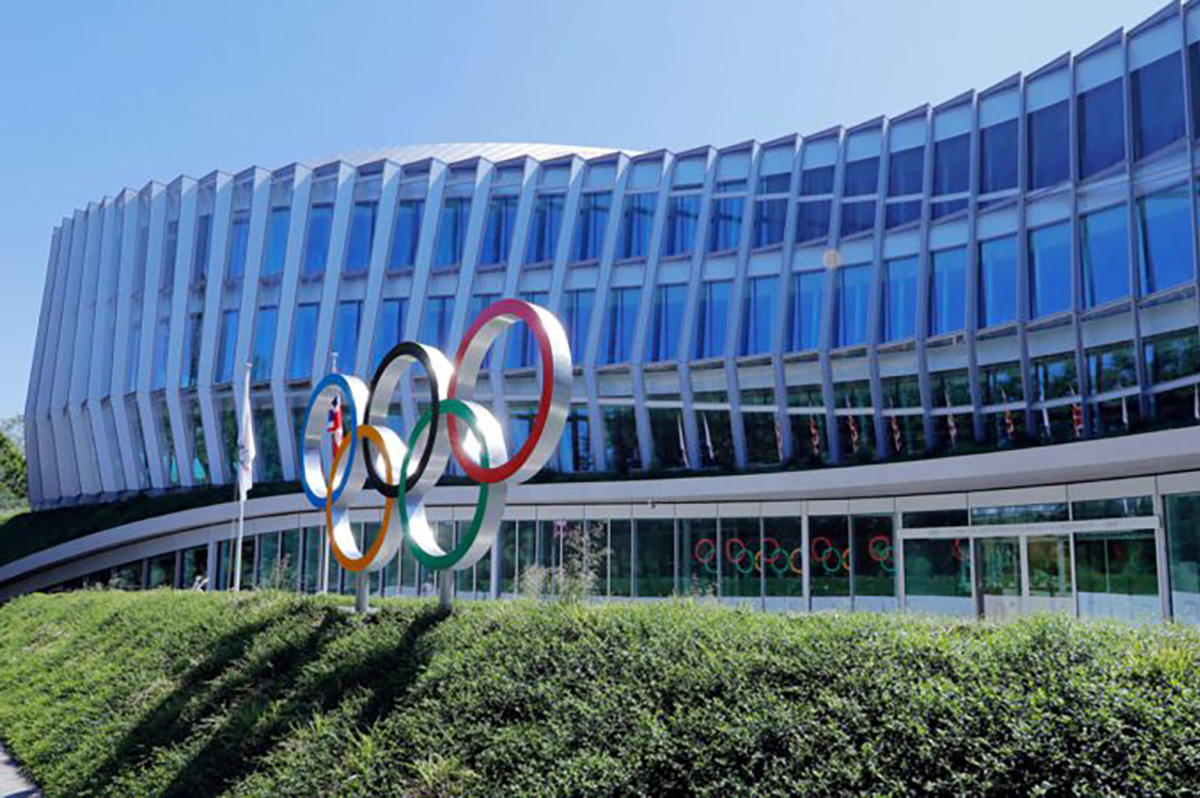
The International Olympic Committee on Thursday announced it will not allow transgender women from competing in female events at the Olympics.
“For all disciplines on the Sports Program of an IOC event, including individual and team sports, eligibility for any Female Category is limited to biological females,” reads the new policy.
The policy states “eligibility for the Female Category is to be determined in the first instance by SRY Gene screening to detect the absence or presence of the SRY Gene.”
“On the basis of the scientific evidence, the IOC considers that the SRY (sex-determining Region Y) Gene is fixed throughout life and represents highly accurate evidence that an athlete has experienced or will experience male sex development,” it reads. “Furthermore, the IOC considers that SRY Gene screening via saliva, cheek swab or blood sample is unintrusive compared to other possible methods. Athletes who screen negative for the SRY gene permanently satisfy this policy’s eligibility criteria for competition in the Female Category.”
The policy states the test “will be a once-in-a-lifetime test” unless “there is reason to believe a negative reading is in error.”
The new regulation will be in place for the 2028 Summer Olympics in Los Angeles.
“I understand that this a very sensitive topic,” said IOC President Kirsty Coventry on Thursday in a video. “As a former athlete, I passionately believe in the rights of all Olympians to take part in fair competition.”
“The policy that we have announced is based on science and it has been led by medical experts with the best interests of athletes at its heart. The scientific evidence is very clear: male chromosomes give performance advances in sport that rely on strength, power, or endurance,” she added. “At the Olympic Games, even the smallest margins can be the difference between victory and defeat. So, it is absolutely clear that it would not be fair for biological males to compete in the female category. In addition, in some sports it would simply not be safe.”
(Video courtesy of the IOC)
Laurel Hubbard, a weightlifter from New Zealand, in 2021 became the first trans woman to compete at the Olympics.
Imane Khelif, an Algerian boxer, won a gold medal at the 2024 Summer Olympics in Paris. Khelif later sued JK Rowling and Elon Musk for cyberstalking after they questioned her gender identity.
Ellis Lundholm, a mogul skier from Sweden, this year became the first openly trans athlete to compete in any Winter Olympics when he participated in Milan Cortina Winter Olympics in Italy.
President Donald Trump in February 2025 issued an executive order that bans trans women and girls from female sports teams in the U.S.
The U.S. Olympic and Paralympic Committee last July banned trans women from competing in female sporting events. Republican lawmakers have demanded the IOC ban trans athletes from women’s athletic competitions.
“I’m grateful the Olympics finally embraced the common sense policy that women’s sports are for women, not for men,” said U.S. Sen. Tom Cotton (R-Ark.) on X.
An IOC spokesperson on Thursday referred the Washington Blade to the press release that announced the new policy.

Trump tells Fox News he won the ‘gay vote’ — but polls tell a different story

Anti-trans visa ruling echoes Nazi regime destroying trans documents

Japanese Supreme Court to consider marriage equality

The outrage economy is not the LGBTQ community

Calendar: March 27-April 2

Markwayne Mullin confirmed as next DHS secretary

D.C. goes gaga for Gaga

HRC to host National Rainbow Seder

Menaka Guruswamy celebrated as India’s first openly LGBTQ MP