News
Coast Guard enacts pro-gay non-discrimination policy
Move prompts new calls for Pentagon to enact protections for gay service members
The Coast Guard has added sexual orientation to its non-discrimination policy (Image public domain).
The U.S. Coast Guard with little fanfare has added protections based on sexual orientation to its equal opportunity policy, prompting new calls for the Pentagon to do the same with other branches of the military.
The guidance, made public Thursday morning by the American Military Partners Association and dated Oct. 13, says “sexual orientation and genetic information” are now included as part of equal opportunity and anti-discrimination/anti-harassment policy statements within the Coast Guard. The guidance is signed at the bottom by Coast Guard Commandant Adm. Bob Papp.
“We must continue to uphold our core values of Honor, Respect and Devotion to Duty which underlie our excellence in mission execution, good order and discipline, and morale,” Papp writes. “Maintaining workplaces that are free from harassment and discrimination is essential to our readiness and to ensure we remain, Semper Paratus, Always Ready.”
Stephen Peters, president of the American Military Partners Association, commended Papp for taking action to protect gay members of the coast guard and said the Pentagon should make similar policy for other branches of the armed forces.
“We urge the Secretary of Defense to do the same in order to ensure all uniformed service members are protected from unjust discrimination, not just those in the Coast Guard,” Peters said. “While Department of Defense civilian employees are protected, the DoD has yet to add orientation to its non-discrimination policy for uniformed troops. This lack of inclusion has a direct impact on not only the service member’s ability to serve openly and honestly without fear of harassment, but their spouse and family as well.”
LGBT advocates have been pushing for the enactment of an explicit non-discrimination protections for gay members of the armed forces even before “Don’t Ask, Don’t Tell” repeal. Currently, service members have no recourse for anti-gay discrimination outside of their chain of command.
In response to calls for an explicit non-discrimination policy, the Pentagon has consistently said it treats all service members with respect without committing to a new policy.
Lt. Cmdr. Nathan Christensen, a Pentagon spokesperson, responded to the renewed calls by pointing to Pentagon guidance during the process of lifting “Don’t Ask, Don’t Tell” stating sexual orientation won’t “be considered along with race, color, religion, sex, and national origin as a class under the Military Equal Opportunity (MEO) program.”
Christensen added that the reason for the difference between the Coast Guard and the Pentagon is the Coast Guard isn’t structured in the same way as other military services. The Coast Guard, he said, doesn’t have an Inspector General system like the Army, Air Force, Navy and Marine Corps.
“Simply put: DoD directs discrimination cases on the basis of sexual orientation to be handled by the DoD IG system,” Christensen said. “As such, DoD does not include sexual orientation as part of our Military Equal Opportunity (MEO) program.”
Unlike other branches of the military, the Coast Guard operates under the Department of Homeland Security and is subject to different policy. Nonetheless, the Coast Guard often implements policy similar to the Pentagon’s.
For example, after former Defense Secretary Leon Panetta announced at the start of this year the Pentagon would extend partner benefits for service members in same-sex relationships, Secretary of Homeland Security Janet Napolitano followed immediately with a statement saying the Coast Guard would do the same.
One advocate for enacting an explicit non-discrimination policy for troops based on sexual orientation is Acting Air Force Secretary Eric Fanning, who espoused the idea during an interview with the Washington Blade in May.
“Speaking personally, I always think it’s important to have non-discrimination policies codified to include everyone,” Fanning said. “The military, because it has a chain of command, has a different attitude about this and a different way to try to go about protecting airmen, sailors, soldiers, Marines — but Eric Fanning? Yes. I personally like to see these things in writing and codified.”
Additionally, the Coast Guard guidance says nothing about adding gender identity to equal opportunity and anti-discrimination/anti-harassment policy statements as transgender advocates are pushing for openly transgender service in the armed forces.
Brynn Tannehill, director of advocacy for the LGBT military group SPART*A, commended the Coast Guard for adding the protections, but said the service is unable to change transgender policy because it’s “modeled after that of the DoD’s.”
“We believe that it is time to revisit these outdated policies,” Tannehill said. “The SPART*A Transgender Chapter has members who are part of the Coast Guard. The existing medical policies on transgender Coast Guard service are every bit as harmful to them as DADT was to lesbian, gay, and bisexual service members, and have nothing to do with their actual ability and desire to serve.”



Federal Government
Markwayne Mullin confirmed as next DHS secretary
Okla. senator to succeed Kristi Noem
The U.S. Senate confirmed Markwayne Mullin as the next secretary of Homeland Security on Monday, as the agency continues to grapple with what lawmakers have described as a “never-ending” funding standoff, with Democrats attempting to withhold funding from one of the nation’s largest and most costly agencies.
Mullin — a Republican senator from Oklahoma, former mixed martial arts fighter, and plumbing business owner — was confirmed in a 54–45 vote. Two Democrats — U.S. Sens. John Fetterman (D-Pa.) and Martin Heinrich (D-N.M.) — sided with Republicans in supporting his confirmation.
The new agency head is expected to follow the policy direction set by President Donald Trump, emphasizing stricter immigration enforcement. This includes proposals to support immigration agents at polling sites and to cut funding to so-called “sanctuary cities.”
Mullin replaces Kristi Noem, who was fired earlier this month following a widely scrutinized 2-day congressional hearing on Capitol Hill.
During the hearing, Noem faced intense questioning over her response to several crises, including the fatal shooting of two American citizens in Minneapolis by U.S. Immigration and Customs Enforcement agents, a $220 million border security advertising campaign that featured her on horseback near Mount Rushmore amid one of the largest federal workforce reductions in U.S. history, and the federal response to major natural disasters such as the July 2025 Texas floods and Hurricane Helene in 2024.
Noem had previously drawn criticism for a series of policy decisions in South Dakota that broadly focused on restricting the rights of LGBTQ individuals. In 2023, she signed House Bill 1080, banning gender-affirming medical care for transgender minors. She also signed legislation and executive orders restricting trans athletes’ participation in women’s sports, as well as the state’s “Religious Freedom Restoration Act,” which critics argued enabled discrimination against LGBTQ individuals. Additionally, the state canceled contracts related to LGBTQ support services — including suicide prevention and health care navigation programs‚ and later agreed to a $300,000 settlement with trans advocacy group, The Transformation Project.
Despite her removal from DHS, Noem will remain in the Trump-Vance administration as a special envoy for the “Shield of the Americas,” an initiative aimed at promoting U.S. influence in the Western Hemisphere, including efforts to counter cartel networks, reduce Chinese influence, and manage migration.
The new head of DHS has served in Congress since 2013, in both houses of the federal legislature. While in the Senate and a member of the Health, Education, Labor, and Pensions (HELP) Committee, Mullin has been a vocal critic of policies aimed at expanding LGBTQ inclusion. He led a group of lawmakers in urging the Administration for Community Living to reverse a rule requiring states to prioritize Older Americans Act services based on sexual orientation and gender identity, arguing the policy could have unintended consequences.
Mullin also makes history as the first Native American — and a citizen of the Cherokee Nation — to lead the Department of Homeland Security. He was also among the 147 Republicans who voted to overturn the 2020 presidential election results despite no evidence of widespread fraud, and was present in the U.S. House of Representatives chamber on Jan. 6.
A gay man was murdered in Petersburg, Va., on March 13.
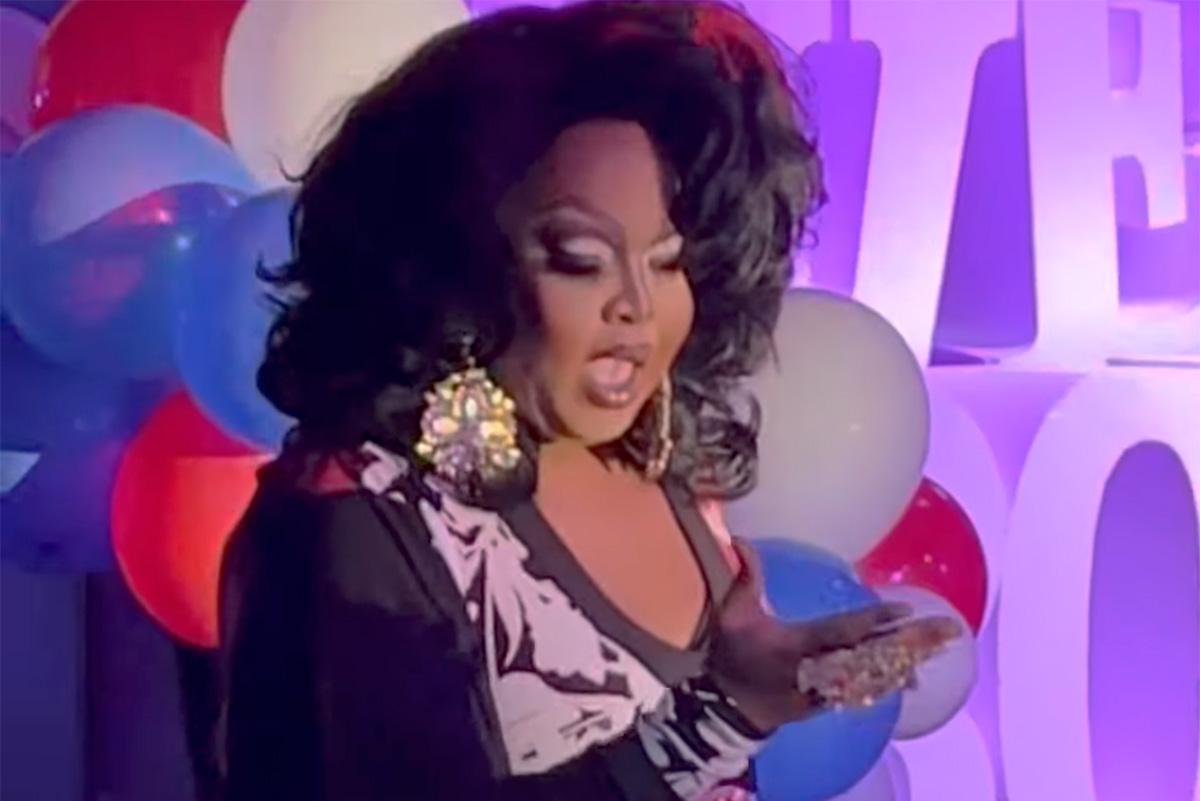
Shyyell Diamond Sanchez-McCray, who was also known as Saamel and Mable, was a drag queen who won the Miss Mayflower EOY pageant in 2015. Reports also indicate Sanchez-McCray, 42, was a well-known community activist in Virginia and in North Carolina.
Local media reports indicate police officers found Sanchez-McCray shot to death inside a home in Petersburg.
Sanchez-McCray’s brother, Jamal Mitchell Diamond, in a public statement the Washington Blade received from Equality Virginia and GLAAD, said Sanchez-McCray was not transgender as initial reports indicated.
“Our family has always embraced the fullness of who he was. He used the names Saamel, Shyyell, and Mable interchangeably, and we honor all of them. There is no division within our family regarding how he is being represented — only a shared commitment to preserving his truth with love and respect,” said Diamond.
“He was also deeply committed to community work through Nationz Foundation, where he worked and completed multiple state-certified programs to support marginalized communities,” added Diamond. “That work meant a great deal to him.”
Authorities have not made any arrests.
The Petersburg Bureau of Police has asked anyone with information about Sanchez-McCray’s murder to call Petersburg-Dinwiddie Crime Solvers at 804-861-1212.
District of Columbia
Trans Day of Visibility events planned
Rally on the National Mall scheduled for Saturday

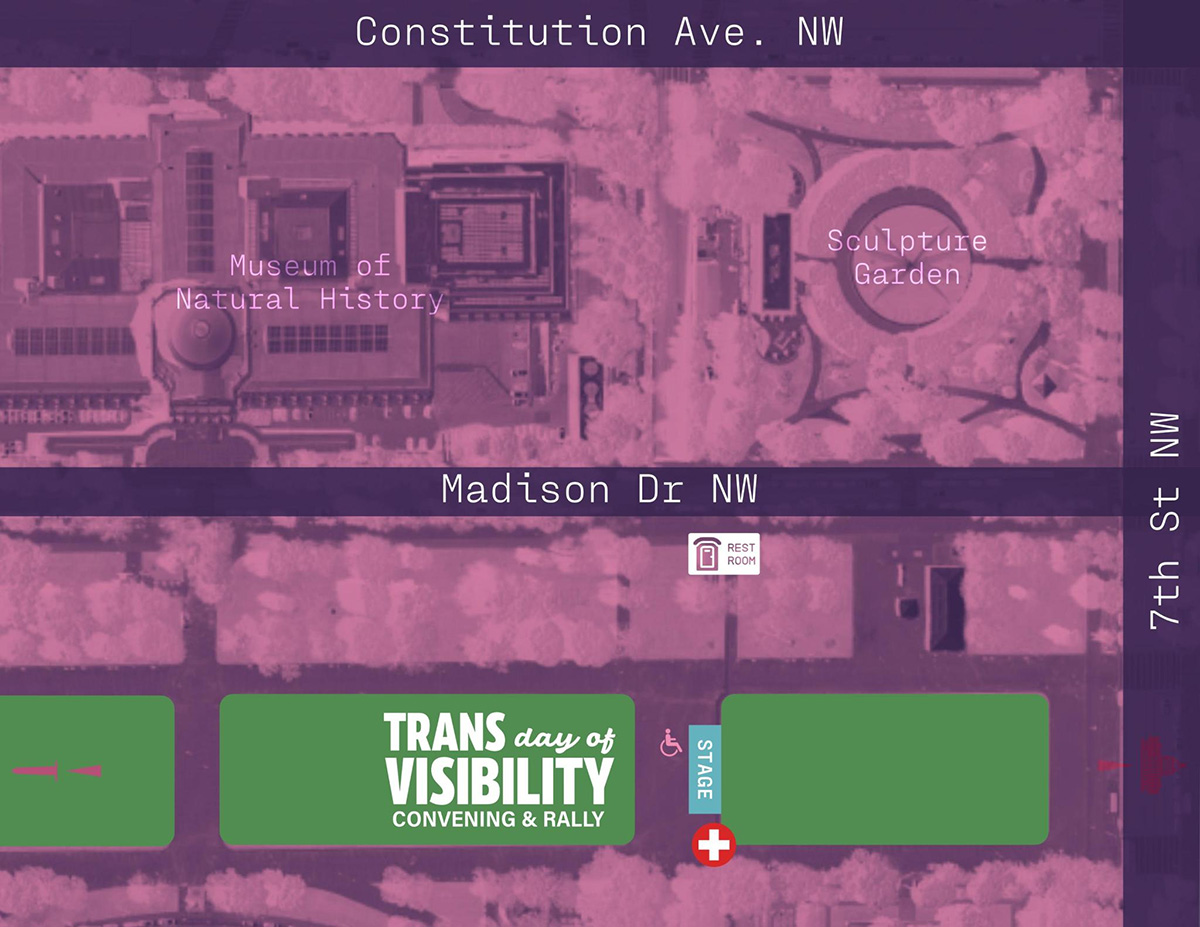
The Christopher Street Project has a number of events planned for the 2026 Trans Day of Visibility, including a rally on the Mall and an “Empowerment Ball” at the Eaton Hotel. Plenaries, panel discussions and meetings with members of Congress are scheduled in the three days of programming.
Announced speakers include N.H. state Rep. Alice Wade; Commissioner of the Metropolitan Water Reclamation District of Greater Chicago Precious Brady-Davis; activist and performer Miss Peppermint (“RuPaul’s Drag Race”); Lexington, Ky. Councilwoman Emma Curtis; Rabbi Abby Stein; D.C. activist and host Rayceen Pendarvis; Air Force Master Sgt. Logan Ireland; among other leaders, advocates and performers.
Conference programming on Thursday and Friday includes an educational forum and a Capitol Hill policy education day. Registration for the two-day conference has closed.
The “Trans Day of Visibility PAC Reception” is scheduled for Thursday, March 26 from 7:30-9 p.m. at As You Are (500 8th St., S.E.). Special guests include Rep. Dina Titus (D-Nevada) and Rep. Delia Ramirez (D-Ill.). Tickets are available at christopherstreetproject.org starting at $25.
The National Council of Jewish Women and the Christopher Street Project host a “Trans Day of Visibility Shabbat” on Friday, March 27 from 7-8 p.m. at Sixth & I (600 I St., N.W.). The service is to be led by Rabbi Jenna Shaw and Rabbi Abby Stein.
The “Now You See Me: Trans Empowerment Social & Ball” is scheduled for Friday, March 27 from 6-11 p.m. at the Eaton Hotel (1201 K. St., N.W.). The trans-themed drag ball is hosted by the Marsha P. Johnson Institute with support from the D.C. Mayor’s Office of LGBTQ+ Affairs, the Capital Ballroom Council, the Christopher Street Project, the Center for Black Equity, Generation for Common Good, and Parenting is Political. RSVP online at christopherstreetproject.org.
The National Transgender Day of Visibility Rally is scheduled for Saturday, March 28 on the National Mall at 11 a.m. The rally will include speakers and performances. Following the rally, attendees are encouraged to participate in the “No Kings” rally being held at Anacostia Park.

Markwayne Mullin confirmed as next DHS secretary

Gay man murdered in Va.

Trans Day of Visibility events planned

Virginia General Assembly’s 2026 legislative session ends

Polish court rules country must recognize same-sex marriages from EU states

Queer American in Israel discusses Iran war’s impact

Calendar: March 21-26

‘How We Survived’ panel set for March 25

Small is beautiful: subcompact SUVs