
Arts & Entertainment
Sympathetic siblings
Memoir chronicles journey through a transition
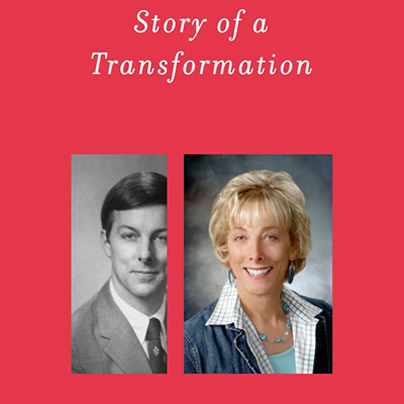
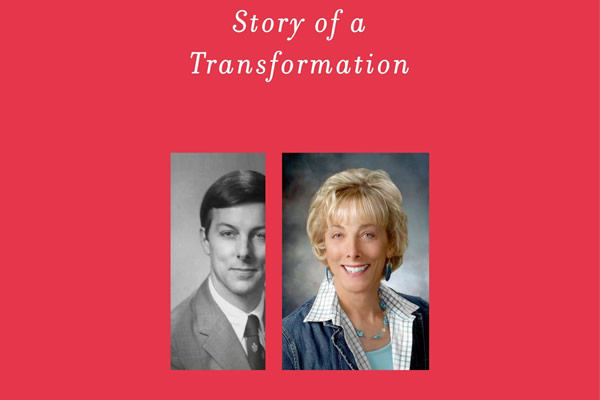
Cover to ‘My Brother My Sister.’ (Image courtesy of Viking)
‘My Brother My Sister’
By Molly Haskell
Viking
$26.95
213 pages
Mom always said you were two of a kind.
You and your favorite sibling: yin and yang, two halves of a whole. A lot of film was spent documenting your lives. A lot of memories are shared when you get together.
Once upon a time, you knew exactly what your sib was thinking — or did you? Read the new book “My Brother My Sister” by Molly Haskell, and you might wonder.
Growing up in Richmond , Va., in the post-WWII years, Molly Haskell, her brother Chevey and their friends enjoyed the same clubs, schools, cotillions and churches. She remembers a childhood of privilege and happiness.
Her brother remembers sneaking up to Haskell’s closet to try on her clothes.
Of course, that was unknown to Haskell until years later, when Chevey came to her in New York and told her that he’d decided to act on something that had vexed him for decades: nervously, he explained that he had gender dysphoria. He’d been on hormones for months. Years ago, he’d thought of himself as “Ellen,” the woman he knew he was inside.
It was something that Haskell never saw coming.
Chevey had been married twice. His first wife knew of his feelings, as did his second wife, but the latter was struggling with acceptance. So, in fact, was Haskell, though she was also curious to know the particulars.
When did Chevey know? (At age 7). How did he decide to do this? (The urge was so strong that he could do nothing else). Why did he wait 50-some years to transition? (Many reasons, including family). He likened his gender to a “birth defect.” It was time to make things right.
As Chevey became Ellen, Haskell mourned the loss of her brother. When Ellen informed the rest of the family of her news, Haskell kept “waiting for the sky to fall” but nothing happened. Yes, there were slips, gaffes, hurts and a few surprising revelations, but the world didn’t end.
“Lucky for me,” says Haskell, “my newly minted sister is still the magnificent human being my brother was.”
There’s an awful lot of “poor-me”-ing in the beginning of “My Brother My Sister;” a lot of hand-wringing from author Molly Haskell, and too much fretting about how her brother’s transformation would affect her. While some readers might imagine how they’d feel in the same situation, it’s pretty tedious, angst-ridden reading.
Thankfully, the book gets better.
Once Haskell’s story gets around to acceptance, readers are treated to a more relaxing read, one of discovery (both on Haskell’s part, and that of her sister), devotion, and of delight. That’s the raison d’etre of this book. What you’ll find from there to the end is why you’d want to read this book in the first place.
Aside from a bumpy beginning and some surgery descriptions that are TMI-overload, “My Brother My Sister” is ultimately satisfying, especially for those who may be going through these same issues.
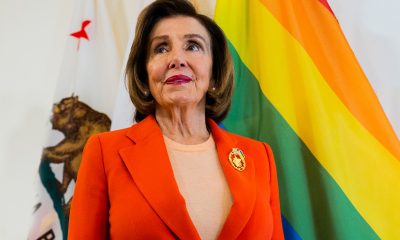



The Capital Pride Alliance presented the 2026 Capital Pride Honors at “The Audacity Brunch: In Full Fuchsia” at the Four Seasons Hotel Washington, D.C. on Sunday, June 7.
(Washington Blade photos by Landon Shackelford)


Out & About
Congressional Cemetery hosts Gays & Graves
Daylong Pride celebration blends history, remembrance, art and community

Historic Congressional Cemetery will host the second annual “Gays & Graves: A Big Gay Festival” on Sunday, June 14 at 11 a.m.
The event will feature pioneering activist Randy Wicker, the Gay Men’s Chorus of Washington, and new public art installations and programs celebrating LGBTQ+ history. Gays & Graves is an official partner event of Capital Pride 2026.
This event is a daylong Pride celebration blending history, remembrance, art and community. Visitors can shop from LGBTQ+ and allied artists and makers, experience performances and interactive installations, and engage with programs exploring LGBTQ+ history and lived experience.
For more details, visit the cemetery’s website.
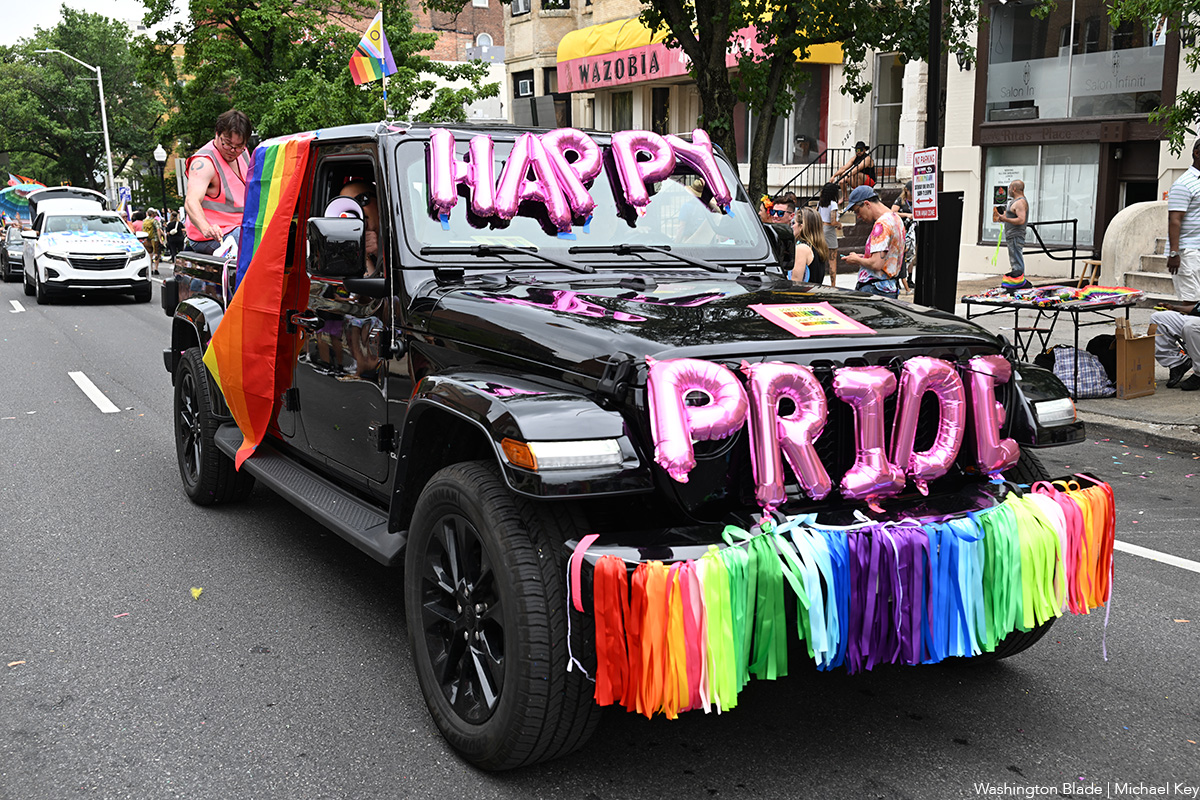
Baltimore Pride is underway, taking place from June 8-14.
The Pride Parade will be on Saturday, June 13 at 12 p.m. at Charles Street & North Avenue, followed by the Pride Block Party at 1 p.m. at Druid Hill Park. And then the Pride Festival will be held on Sunday, June 14 at 12 p.m. at Druid Hill Park.
There will be an array of additional events including: a fashion show, a “Suits and Sneakers” reception and a 5k race, among many other events.
For more details, visit Baltimore Pride’s website.

PHOTOS: The Audacity Brunch

D.C. Council approves expanded grant funding for Mayor’s Office of LGBTQ Affairs

Congressional Cemetery hosts Gays & Graves

Baltimore Pride is here

Calendar: June 12-18

Hundreds of thousands expected to attend D.C. Pride events

PHOTOS: Pride Run

Queen Jean is Tony’s first transgender winner

David Archuleta, Monroe Alise named D.C. Pride parade marshals


