News
Carney riled by questions on ENDA executive order
White House spokesperson won’t say if directive a campaign promise
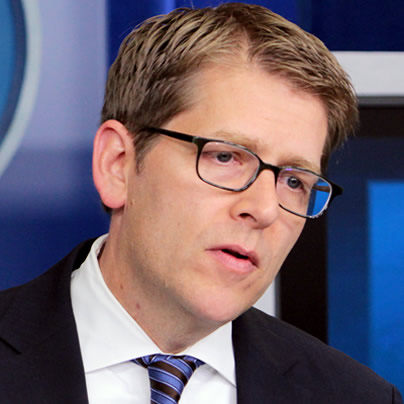
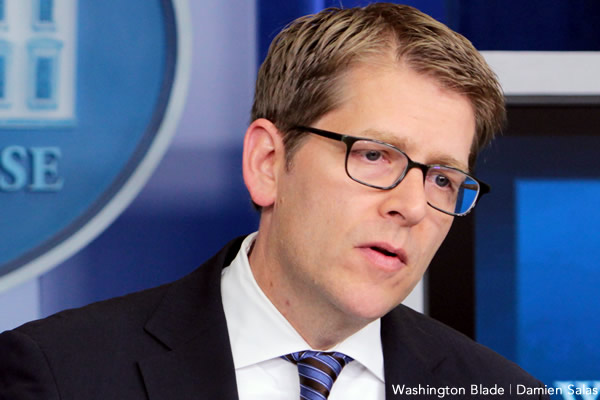
White House Press Secretary Jay Carney had a testy exchange with the Blade over the ENDA executive order (Washington Blade file photo by Damien Salas).
White House Press Secretary Jay Carney had few answers on Friday about a heavily sought executive order from President Obama barring LGBT workplace discrimination during an exchange with the Washington Blade that ended testily.
Responding to the Blade report that House Speaker John Boehner (R-Ohio) told the LGBT Equality Caucus there’s “no way” the Employment Non-Discrimination Act would get done this year, Carney said when asked if it’s time for the federal contractor executive order that House leadership often brings up bills even after making such declarations.
“I would simply say that that is the wrong approach,” Carney said. “The president strongly supports the Employment Non-Discrimination Act. He believes strongly and knows that it’s the right thing to do. I would suggest that there have been occasions when leaders in the House have declared something won’t happen, and it happens anyway. And we certainly hope that’s the case here.”
UPDATE: In a subsequent tweet, Carney clarified that he was referring to the speaker’s remarks as the “wrong approach,” not the executive order.
.@chrisgeidner Think you misunderstood. I was referring to the Speaker saying ENDA wouldn't get done this year as "the wrong approach."
— Jay Carney (EOP) (@PressSec) January 31, 2014
President Obama continues to withhold the executive order as LGBT advocates say the directive is a campaign promise from his 2008 president campaign.
Asked whether the president shares the view the executive order is a campaign promise, Carney dodged.
“I can simply tell, you, Chris, I don’t have any updates for you on the issue of a hypothetical executive order for LGBT non-discrimination for federal contractors,” Carney said. “We’re focused right now on the legislation, which, again has made progress in Congress and we’re going to keep pushing on it.”
The exchanged ended with Carney calling on another reporter in the White House briefing room without responding to the final question from the Blade.
A partial transcript of the exchange follows:
Washington Blade: Thanks, Jay. The Washington Blade reported this week that Speaker Boehner told the LGBT Equality Caucus there’s “no way” the Employment Non-Discrimination Act will get done this session. Given that forecast from the speaker, is it time for the president to sign an executive order to protect LGBT workers from discrimination?
Jay Carney: Well, I would simply say that that is the wrong approach, and the president strongly supports the Employment Non-Discrimination Act. He believes strongly and knows that it’s the right thing to do. I would suggest that there have been occasions when leaders in the House have declared something won’t happen, and it happens anyway. And we certainly hope that’s the case here.
Blade: But if the president is saying he “strong supports” the legislation, and the president is saying there’s “no way” the bill is coming up, so what will it take for the president to sign that executive order?
Carney: Chris, you know, we’ve talked about this a lot. The president believes that an Employment Non-Discrimination Act signed into law is the right way to go here. And we strongly support, and put a lot of energy behind that effort. I don’t think a lot of people predicted it would pass the Senate, but it did, and one person’s opposition to it in the House does not dissuade us from pressing for its passage, and its arriving on the president’s desk so he can sign it into law. We’re going to keep pushing on that.
Blade: LGBT advocates who are pushing for that executive order say it’s a campaign promise from the president. Is that a view the president shares?
Carney: I can simply tell, you, Chris, I don’t have any updates for you on the issue of a hypothetical executive order for LGBT non-discrimination for federal contractors. We’re focused right now on the legislation, which, again has made progress in Congress and we’re going to keep pushing on it.
Blade: In an apparent 2007 questionnaire —
Carney: I want to give others —
Blade: — one last question in. In an apparent 2007 questionnaire to the Houston GLBT Political Caucus signed by then-candidate Obama, the president was asked if he supports for a formal written policy against LGBT discrimination for federal contractors. The response was simply “yes.” How is that not a campaign promise?
Carney: Chris, I’ve answered this question. We believe that right way to go is to pass legislation that applies to everyone that enshrines in law the equal rights that the Employment Non-Discrimination Act spells out. So, I don’t have an update for you on the other issue —
Blade: So you’re disputing the assertions of the president’s supporters on this issue?
Carney: Cheryl.
NOTE: Although the Blade stated during the White House briefing the apparent questionnaire response was from 2007, it was actually dated in 2008.




The Comings & Goings column is about sharing the professional successes of our community. We want to recognize those landing new jobs, new clients for their business, joining boards of organizations and other achievements. Please share your successes with us at [email protected].
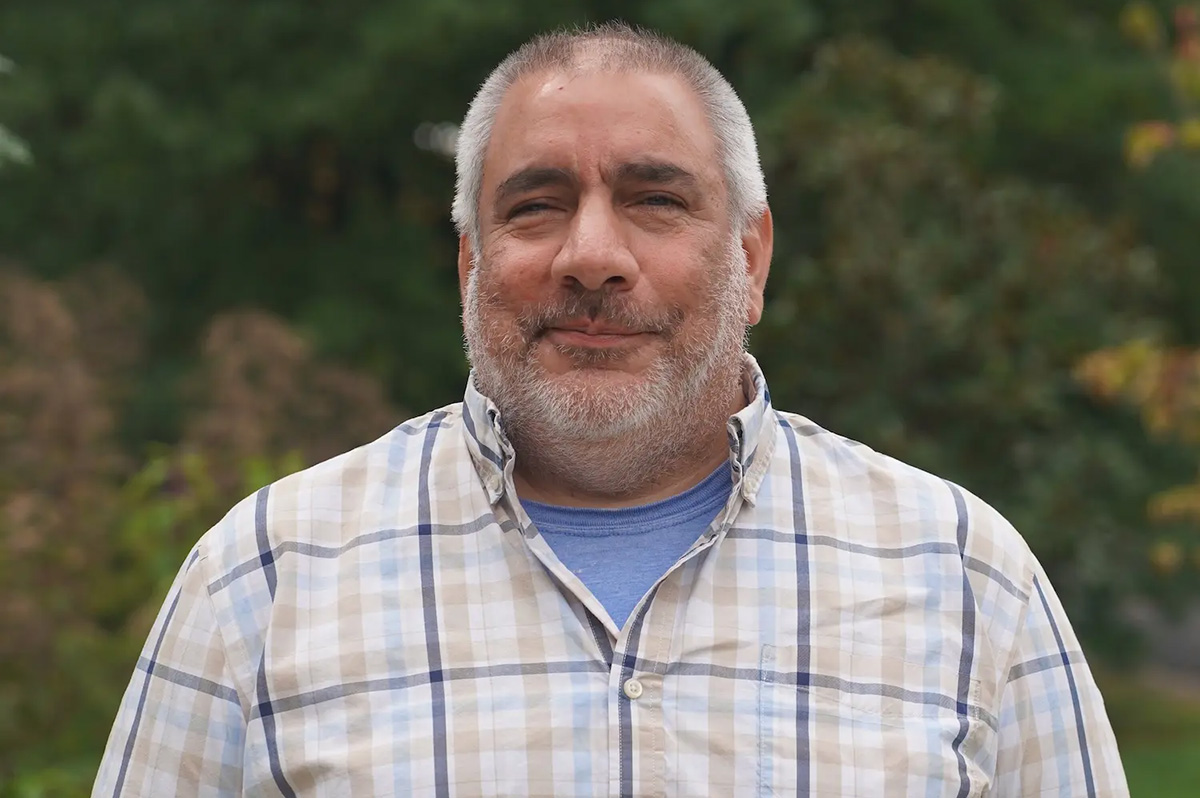
Congratulations to Paul Marengo who has been appointed the new executive director of the Equality Chamber of Commerce.
The Equality Chamber of Commerce is dedicated to advancing economic opportunities, business growth, and advocacy for LGBTQ+ entrepreneurs, professionals, and allies. Through networking, education, and community engagement, the Chamber works to create a thriving and inclusive business environment for all.
On behalf of the Chamber, Edmund Morris said, “We are thrilled to welcome Paul Marengo as executive director. His passion, vision, and dedication to fostering inclusive business environments make him the ideal leader to guide the Chamber into its next phase of growth and success.”
Marengo has been a nonprofit fundraising executive for more than 30 years. He is the founder and CEO of Promethean Fundraising, a grassroots consulting firm that provides assistance, tools, and empowers emerging nonprofits to become competitive fundraisers. His clients have included The Chamber, Ragtag Film Society, and The Cherry Fund. He has served as a grant reviewer for the Maryland State Arts Commission, Virginia Commission for the Arts, DC Commission on the Arts and Humanities, and the National Endowment for the Arts.
Commentary
The boy they refused to forget
Jonathan David Muir Burgos released from Cuban prison after participating in protest
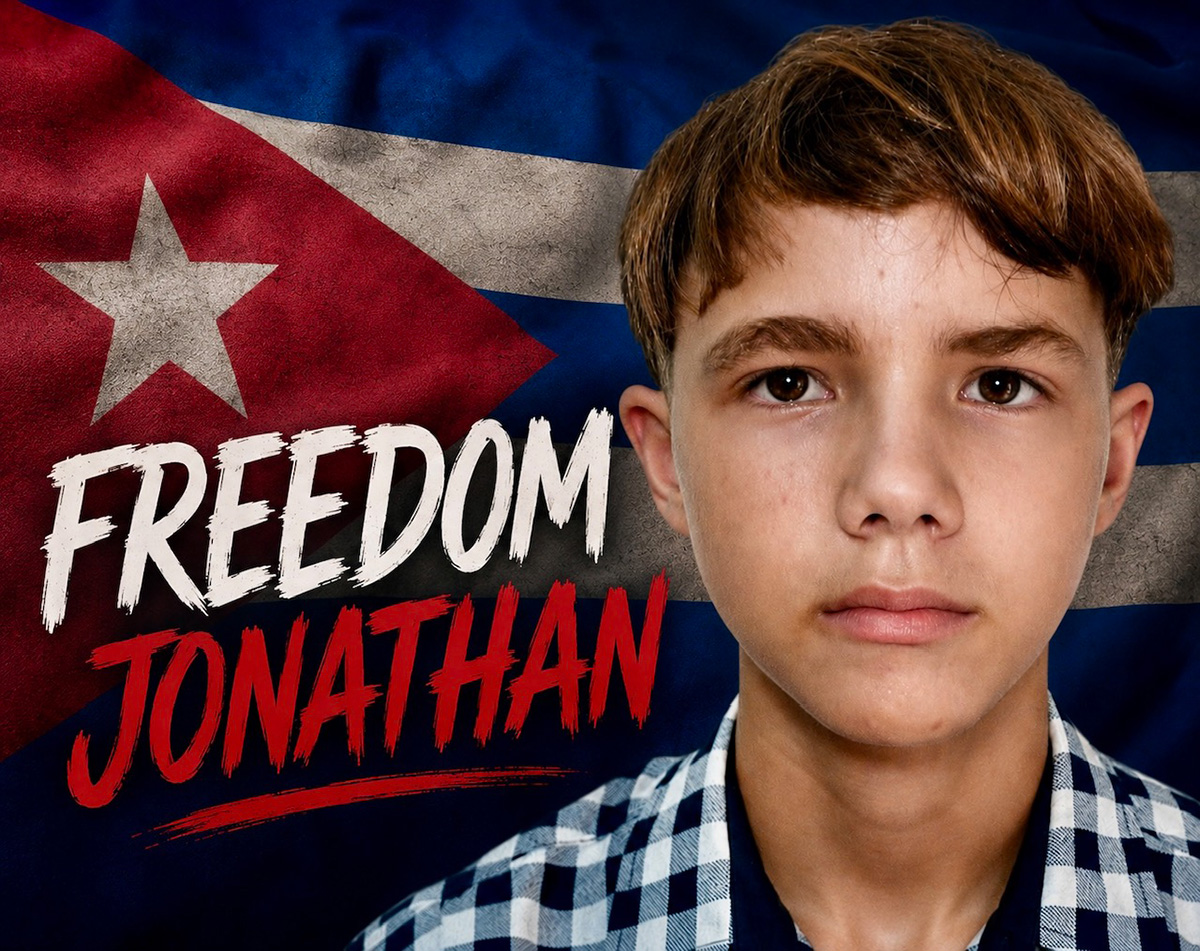
When the Washington Blade first reported the story of Jonathan David Muir Burgos, the news centered on a 16-year-old Cuban teenager who had been sent to prison after taking part in a public protest in Morón, Ciego de Ávila. At the time, the facts were straightforward. A minor had lost his freedom, and his case was beginning to attract attention beyond Cuba’s borders.
Today there is another fact that deserves to be recorded with the same rigor.
Jonathan is no longer in prison.
His release, confirmed by multiple news organizations, closes one chapter of a story that, for months, was followed by journalists, human rights organizations, religious communities, and countless individuals who refused to let his name disappear from public view. Each of them became part of a much larger effort to ensure that the imprisonment of a Cuban teenager would not fade into silence as the news cycle moved on.
That collective attention does not explain every decision that ultimately led to Jonathan’s release, and it would be irresponsible to suggest otherwise. Judicial processes are rarely shaped by a single factor. What can be said with certainty is that Jonathan’s story never disappeared. It continued to be documented, discussed and followed long after the initial headlines were published.
Behind every widely reported case there is a family living a reality that rarely appears in the news. In Jonathan’s case, there was a father who also serves as a Protestant pastor and who spent months speaking publicly about his son while asking others not to forget him. There was a mother enduring the uncertainty familiar to any parent separated from a child. There were classmates, friends, and neighbors waiting for the day when Jonathan would no longer be known as the teenager behind bars, but simply as the young man returning home.
The image of a prison gate opening often marks the end of a news story. In reality, it marks the beginning of something far more difficult. A teenager must resume an interrupted education, reconnect with friends, rebuild ordinary routines, and recover a sense of normalcy after months in confinement. Those experiences seldom become headlines, yet they are part of the true cost of imprisonment.
Jonathan’s release is therefore more than an update to a story previously reported. It is a reminder that public attention has value. Journalism matters because it documents. Human rights organizations matter because they investigate. Communities matter because they refuse indifference. Families matter because they continue to wait, even when the waiting becomes unbearable. None of these efforts should be viewed in isolation. Together they ensure that a person’s story does not disappear simply because time has passed.
Many people leave prison after being forgotten.
Jonathan David Muir Burgos walked out of prison knowing that, throughout those months, thousands of people had continued to speak his name, follow his case and hope for the day when this story could be told differently.
Today, that day has arrived.
District of Columbia
Nearly 6,000 turn out for Pride Night Out at the Nationals
Gay Men’s Chorus sings National Anthem

“Just shy of” 6,000 people purchased tickets for the Wednesday, June 24, 21st annual Pride Night Out at the Washington Nationals baseball stadium, which the Nationals said is the longest running LGBTQ Pride event in Major League Baseball, according to a Nationals spokesperson.
The event was organized with the Nationals by Team D.C., the local LGBTQ sports group that organizes similar Pride Nights for other professional D.C. area sports teams.
“It was a good time had by all as the Nationals celebrated the LGBTQ+ community during the Nationals 21st Pride Night Out, presented by Team D.C.” the Nationals said in a statement.
Nationals spokesperson Erica George said the overall game attendance was 27,200.
Similar to recent past years, the Gay Men’s Chorus of Washington sung the National Anthem at the start of the game, drawing loud cheers from people throughout the stadium.
The Nationals lost the game to the Philadelphia Phillies by a score of 5-4. Although most of the LGBTQ attendees of the event, held in the right-field mezzanine section of the stadium, were cheering for the Nationals, a sizeable number also cheered for the Phillies.
Miguel Ayala, one of Team D.C.’s lead organizers, said he noticed fans displaying Pride flags and recognized LGBTQ people in all parts of the stadium, indicating significantly more LGBTQ people and their supporters attended the game beyond the close to 6,000 or more who purchased the specific Pride Night Out tickets.
“It was a great excitement last night,” he told the Washington Blade on the day following the event. “I saw a lot of big crowds of our people, I saw everybody I can think of in the community. And it was really great to see the turnout.”
Also, like in previous years, Team D.C. along with the Nationals helped to organize a pre-game show on the large concourse platform area next to the stadium seating area involving a drag show led by local drag performer Shi-Queeta Lee.
“During pregame ceremonies, the Nationals Pride employee resource group was recognized on the field,” the statement released by the Nationals says. “Dr. Demetre Daskalakis, a physician and public health leader who has had a profound impact on the LGBTQ+ community and those living with or vulnerable to HIV, threw out the ceremonial first pitch as the guest of Team D.C.,” the statement says.
It adds that Team D.C.’s scholarship recipient Spencer Doll made the ceremonial call to “Play Ball.”
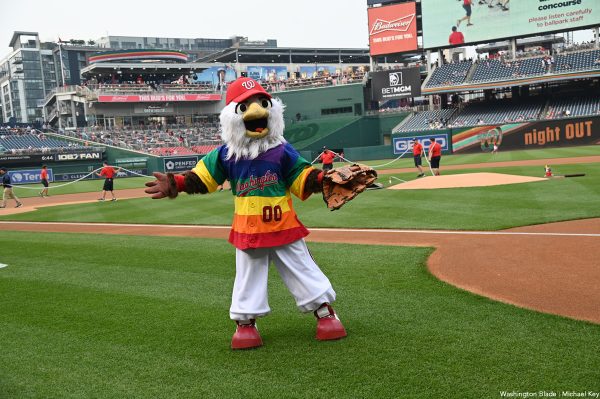
As if all that were not enough, a Nationals employee who entertains during the Nationals pre-game shows on the field dressed as a giant eagle named “Screech” wearing an eagle’s head mask appeared in the seating area where the Pride Night Out crowd was seated and mingled with the LGBTQ fans, many of whom posed for photos with Screech.

Comings & Goings

‘Leviticus’ demonizes homophobia for gripping queer horror yarn

Calendar: June 26-July 2

Orioles take on Nats for Pride Night

My boyfriend is almost perfect

Abelardo de la Espriella elected Colombia’s next president

Capital Pride draws tens of thousands to D.C.

British Prime Minister Keir Starmer to resign

PHOTOS: Capital Pride Festival and Concert