Opinions
D.C. has chance to vote in a new Council
November election to usher in big changes for city

(Photo by Andrew Wiseman; courtesy Wikimedia Commons)
About 11 people have filed nominating petitions for the Council-at-large seat that David Catania will be vacating as of Jan. 1, 2015. Each will try to stand out from their competitors, which won’t be easy to do. On Sept. 8, the Board of Elections will inform the voters of the District who has made the final ballot and that is when those running for all offices become official candidates.
Of those who have filed the required number of petition signatures, those with the best chance of winning changed their registration from Democratic to “Independent” to run for the seat that is one of two set aside for someone other than a Democrat. That quirk is something that should change and preferably there would be no set-asides. If they must continue, it shouldn’t be so easy for candidates to change their party registration to run.
In the next 10 weeks, the media will focus on the mayoral race, which for the first time in years is a real contest. In addition, with this ballot for the first time we will be electing an independent attorney general. Then if there is time left in a TV newscast or space in a newspaper, someone may mention the race for Council-at-large. There are actually two at-large seats up but it is assumed that the winner of one will be Democrat Anita Bonds who currently sits on the Council and won the Democratic primary handily.
It has to be assumed that no voter knows the names of more than three or four of the candidates running. They are all trying to raise money to plaster their names on lampposts and send catchy mailings to voters. They are sitting with their strategists figuring out what they can say, even if it’s outrageous, to get some attention. The problem all have is that they have no voting record and while that can be good when trying to shape their own image, it leaves most voters without any knowledge of what they stand for.
Contrary to some who believe that things never change on the Council, we have seen many new faces in the last few years. There is Kenyan McDuffie in Ward 5; David Grosso at-large; and Anita Bonds at-large. After the November election we will have the replacement for Catania; Brianne Nadeau, if she wins will be the new Council member for Ward 1; a replacement in Ward 6 for Tommy Wells; and if Muriel Bowser becomes mayor, there will be a special election for the Ward 4 seat. That means after that special election more than half the Council will be in office for less than five years with four members being new.
That is a good thing for the District of Columbia and it means that who wins the at-large seat is important. The problem voters have is they don’t know what these candidates stand for on local issues. Reviewing most of their websites tells you about their background; whether they are gay or straight; married or single; have kids or not; and which party they were originally in. What isn’t there is what they think about funding the H Street Trolley; whether we should tax gym memberships; which programs to combat illiteracy they support; do whether they support continued funding for the University of the District of Columbia and for the D.C. Community College. What are their thoughts on the legalization of marijuana? On continued funding of the United Medical Center or building a new hospital east of the river? Do they want to continue FIRE/EMS as one agency or split it in two like they do in Maryland? What are their thoughts on the deal for the soccer stadium, which may still be something they have to vote on in the new Council.
When you don’t have a record to be judged on, it should take more to be elected than simply saying, “Hi, I am running for Council, please donate money and then vote for me.” Voters deserve more and I hope they will get it before Nov. 4 to allow them to make an informed decision.




Opinions
The felon’s gang can’t get their story straight
Silver lining could be a blue wave in November
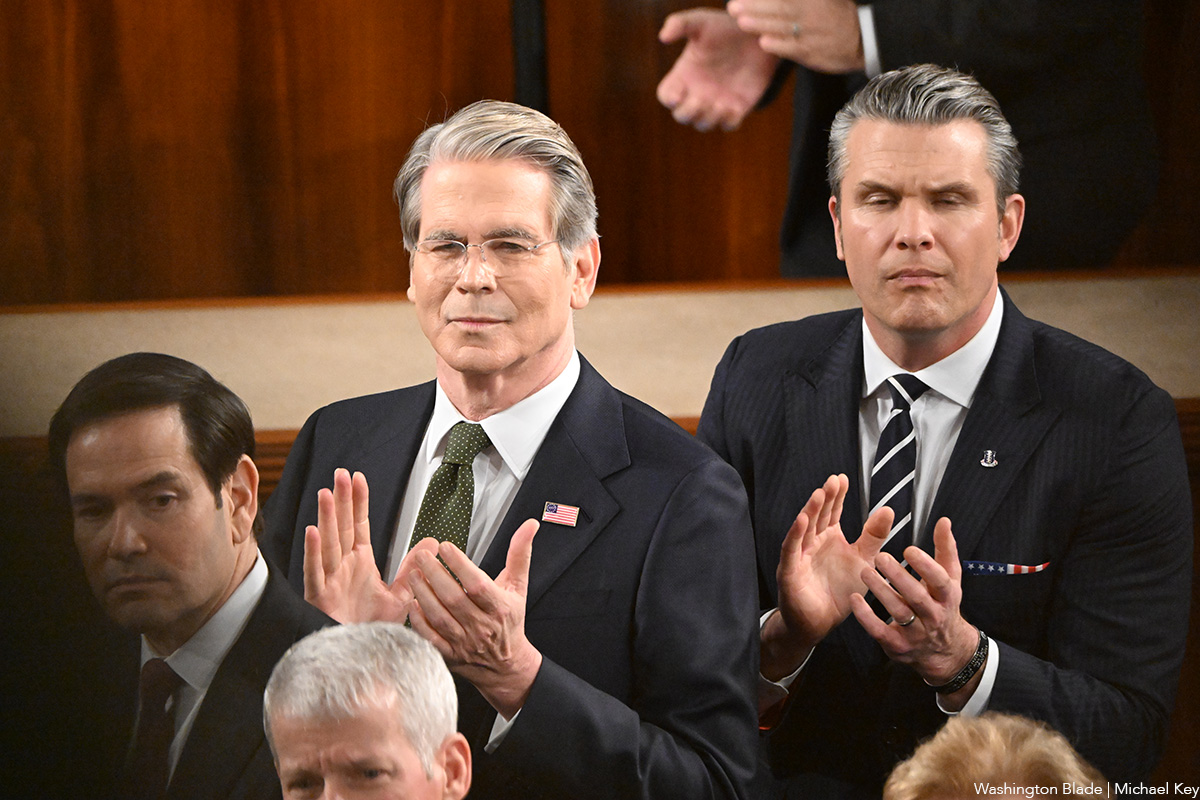
The felon and his administration all come up with different stories about a losing war. It’s bizarre to listen to the felon in the White House, and the different members of his administration, talk about the war in Iran. They can’t get their stories straight. Between gay Secretary of the Treasury Scott Bessent; the signal twins, Sec’y of Defense Hegseth and Michael Waltz, now the U.S. ambassador to the UN; little Marco, our Secretary of State; and the vice president who once called the felon our own Hitler. None of them seem to know what is going on in the world either with Iran, or anywhere else. They do interviews and come up with different stories, and then when asked to be specific they say, “well it’s up to the president.” Clearly, they don’t know, because the felon changes his mind every five minutes. Bessent changes his story on sanctions against Russia, and Waltz tries to justify the felon’s threats against infrastructure and private citizens in Iran, as not war crimes.
As I write this the president again sidelines his vice president, and wants to send the two grifters, Witkoff and Kushner, to Pakistan to try to negotiate with the Iranians who haven’t even said they will be there. These two, who seem to negotiate everything for the felon, while enriching themselves, fail to get any longstanding agreements. Last time they and Vance were in Pakistan, Rubio was attending a wrestling match with the felon in Florida, apparently left out of any negotiations concerning the illegal war the felon began. Some suggest he is looking at how to become the King/Queen of Cuba. Is it any wonder no country in the world trusts us?
As former senator and Secretary of State Hillary Rodham Clinton commented, it was close to criminal the felon claimed he wasn’t made aware Iran had the ability to close the Strait of Hormuz. She described that as “a long known fundamental pillar of geopolitical strategy in the Middle East.” She noted in her national security experience, “closing the Strait was always assumed to be the first thing Iran would do as its primary tool of global leverage.” She is much too polite to call the president a moron, or demented, when he clearly is both, and the moron appellation can easily be applied to people like Pete Hegseth, who surround him. It was reported those with any smarts, like the Chairman of the Joint Chiefs of Staff Dan Caine, told the felon not to start this war.
It looks like the best we can hope for after this illegal and unwise war the LOSER in the White House began, is we get back to about the same place we were before he began it. We were in negotiations, and the Strait of Hormuz was open. That is close to where we were years ago during Trump’s first term, when he pulled out of the agreement with Iran Obama had negotiated.
Now the unintended consequences of this war, and I have to assume they are unintended as why would the felon want to destroy his own credibility and Republican chances of keeping the Congress, which is what is happening. He is disrupting, and destroying, the lives of Americans with his actions and policies. This war has cost the American taxpayer nearly $60 billion so far. We have lost at least 13 of our service members and nearly 500 have been injured. We have bombed schools and hospitals in Iran. Gas prices are through the roof at home, and around the world, and inflation is climbing. Prices for everything are going up. Polling indicates Americans are rightly blaming the felon and Republicans for this. The felon’s approval ratings have hit a new low of about 34%. Even his MAGA cult opposes this war.
We know the felon will try to find some way to end this and claim he is winning. He did that with his tariffs. Anyone with a brain knows after he screwed with them, and then backed off, he claimed getting back to where he was before he levied them was a win. Now that the Supreme Court ruled, he had no authority to levy them, he is figuring out how the government will return the $166 billion that was collected illegally. The average American got screwed as in most cases they won’t get a refund on the cost that was passed on to them.
So, we move from one crisis to the next, all caused by the felon and his administration. The only positive I see in the future is all these disasters the felon is responsible for, might just lead to a blue wave allowing Democrats to take back Congress and some statehouses.
Peter Rosenstein is a longtime LGBTQ rights and Democratic Party activist.
Opinions
Why we need to recognize and celebrate Lesbian Day of Visibility
Fighting erasure inside and outside of the LGBTQ community
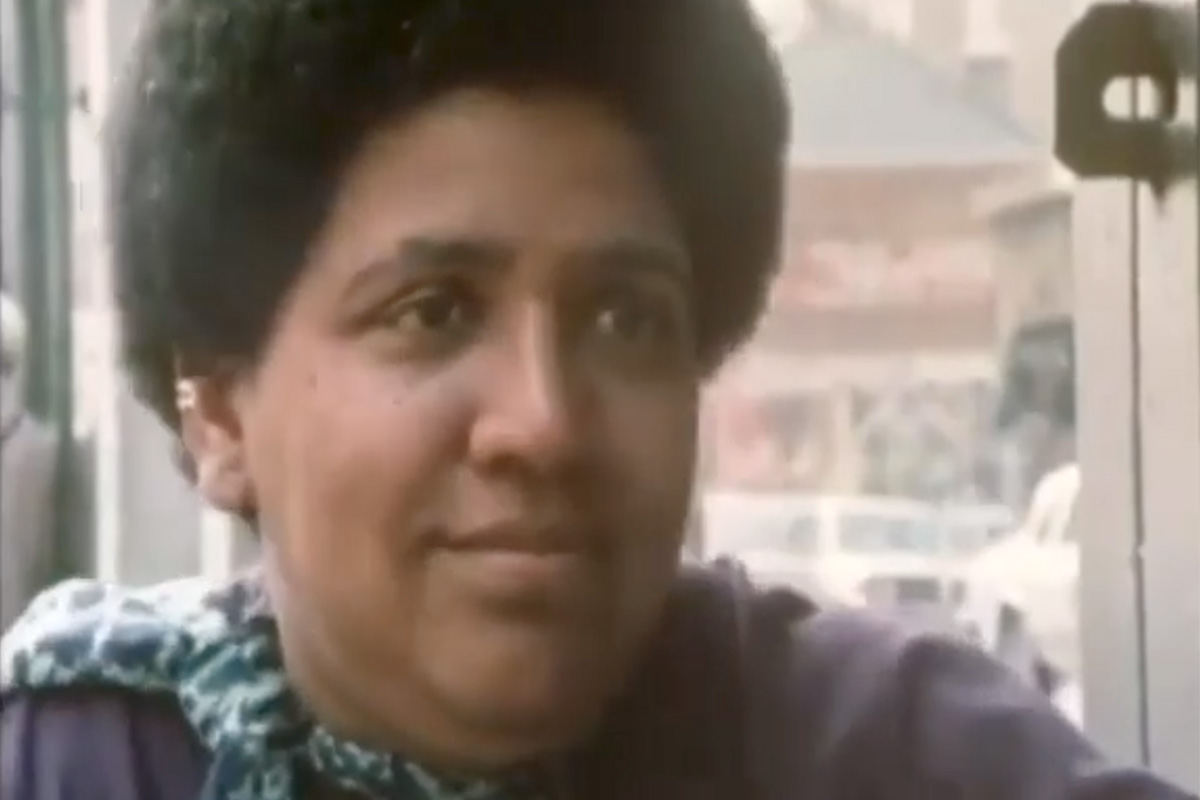
Sunday, April 26 is Lesbian Visibility Day. It concludes Lesbian Visibility Week that started this past Monday. Originally founded back in 2008 by the National Coalition for LGBT Health — and separately by a group of American lesbian activists who ran a social media campaign called “I am a Lesbian” that same year — Lesbian Visibility Day fights lesbophobia, or hatred, discrimination, and violence toward lesbians, and the erasure of lesbians inside and outside of the LGBTQ community.
Amid the rise of anti-LGBTQ and reproductive healthcare legislation and court decisions, there has never been a better time to reflect on the intersectionality of fighting for queer people’s and women’s rights and recognizing the queer women who were integral in the feminist movement that made America what it is today.
From the very beginning, lesbians have been critical to American liberation movements. Lesbian and queer women were key leaders and organizers of the women’s suffrage movement, including Dr. Anna Howard Shaw, Jane Addams, Annie Tinker, Alice Dunbar-Nelson, Molly Dewson, and Sophonisba Breckinridge. Some of these women even lived in same-sex partnerships, known as “Boston marriages,” during a time when homosexuality was illegal.
Similarly, during the Second Wave Feminist movement, lesbians were key activists that fought to integrate issues of LGBTQ equality into the women’s movement.
Lesbian and queer organizers like Audre Lorde, Adrienne Rich, Barbara Smith, and Rita Mae Brown fought for intersectional activism, noting how sexism, racism, homophobia, and ableism intersect to keep women and other marginalized individuals down. But many of these lesbian activists faced backlash from the mainstream women’s movement, called a “lavender menace” that threatened the women’s movement’s progress.
Betty Friedan, then president of The National Organization for Women (NOW), first used this term in 1969 — ironically the same year as the Stonewall Riots — to refer to the danger that integrating lesbian issues into the mainstream women’s movement might pose to the success and timeliness of women’s rights. Friedan and other NOW members worried that intentionally including lesbians in NOW and its objectives would create the impression that the movement was full of misandrists and “a bunch of dykes.”
That same year, NOW removed the Daughters of Bilitis, the first American lesbian organization, from their list of sponsors for the First Congress to Unite Women in November 1969.
In response, a group of lesbian radical feminists reclaimed the term during their protest at the Second Congress to Unite Women in 1970. The group, called Radicalesbians, along with people from the Gay Liberation Front and other allied groups, burst into the Second Congress and demanded that NOW accept and intentionally include lesbians and queer women in the feminist movement. Lesbians, queer women, and allies lined the aisles of the auditorium holding signs and shouting “We are all lesbians” and “Lesbianism is a women’s liberation plot.”
As Karla Jay, another member of the Lavender Menace who stood up in the audience, said, “Yes, yes, sisters! I’m tired of being in the closet because of the women’s movement.”
Not only was this moment a critical challenge of the movement’s tendency to foreground white, straight women’s experiences and rights, and was applauded by feminists of color who routinely felt their voices remained unheard and experience unrepresented in the movement, but it also invited members of the feminist movement to confront their own lesbophobia. The rest of the Second Congress to Unite Women was replaced by workshops on issues lesbian women are facing and a dance hosted by the Gay Liberation Front at the Church of the Holy Apostles.
At the end of the conference, members of the Lavender Menaces shared the resolutions that they and NOW members developed in those two days of workshops to the leaders of NOW, and by 1971, NOW passed a resolution to support lesbians. However, Friedan did not acknowledge the critical contributions of lesbian women in the feminist movement until six years later at the 1977 National Women’s Conference.
Many have pointed out how Friedan and other feminists’ fear about and exclusion of lesbian and queer women in their movement is deeply connected to present opposition against including trans women in modern feminist circles. Often called TERFS or Trans-Exclusionary Radical Feminists, feminists prioritizing womanhood based solely on sex assigned at birth perpetuate the same gender policing of women’s spaces that Friedan and others did over 50 years earlier — this time, excluding not just trans women but also intersex women and denying how transphobia is a critical feminist issue. Black cis women are especially vulnerable to transphobic violence.
Never has it been clearer that women’s liberation is lesbians’ liberation is BIPOC women’s liberation is trans women’s liberation. In fact, the fourth and fifth wave feminist movements that first emerged in the early 2000s strive to re-center the movement on collective, intersectional action rather than individual empowerment. Some feminists have even joined the trans-led Gender Liberation Movement, founded by Raquel Willis and Eliel Cruz in 2024, that fights for bodily autonomy and pushes for organizing and policy that frees all people from gendered expectations.
Lesbophobia remains alive and well
Protecting lesbian, bisexual, and queer women’s rights has never been more timely because lesbophobia is not a thing of the past. Recent backlash to Netflix announcing that the next season of Bridgerton will feature a sapphic storyline makes it clear that lesbophobia is alive and well, even as stories featuring bisexual and gay men are receiving critical and fan praise. In fact, television shows featuring lesbian and queer women were significantly cut. In 2022, more than two-thirds of all cancelled LGBTQ shows featured queer women. Lesbophobia is alive and well sadly, along with the fetishization of lesbian and queer women online.
And just how Friedan and other NOW leaders’ fears around lesbians resonate with current TERF action against trans women, the “Lavender Scare” or systematic firing of LGBTQ employees during the McCarthy Era is making a comeback. Many of the people who were fired by the federal government during this time are still alive and have never been given an apology for how they were treated and discarded by the federal government.
The current administration’s attempts to terminate anyone working in Diversity, Equity, and Inclusion initiatives, disband LGBTQ employee resource groups, and earlier this month, requesting access to the medical records of millions of federal workers, retirees, and their family members, recall another history of excluding LGBTQ people.
As CNN reported earlier this month, a notice that was sent to insurers that offer Federal Employees Health Benefits of Postal Service Health Benefits plans this past December asks them to provide “service and cost data,” which the Office of Personnel Management (OPM) argues will be used to ensure “competitive, quality, and affordable plans.”
Michael Martinez, senior counsel at Democracy Forward, told CNN earlier this month that OPM has given no insight into how they would use and protect this information, and warns that it could be used to target people who have sought or had abortions or those who have had or are inquiring about gender affirming care, again tying together trans liberation with women’s liberation and the protection of bodily autonomy.
So as we celebrate Lesbian Visibility Week, it is critical to acknowledge how lesbian women calling for intersectionality (along with Black, Indigenous, and Latina women who have done this work for centuries), fundamentally changed the trajectory of the feminist movement —and how their call for intersectionality is still timely and important.
Emma Cieslik is a museum worker and public historian.
Opinions
How arts institutions built the city that politics couldn’t
Doing the work that politicians have left undone

Washington is often described as a city consumed by politics. The story is usually about power — who has it, who wants it, who just lost it. But that version of Washington barely scratches the surface.
The real texture of this place — its neighborhoods, its memory, its communities, its soul— rarely fits inside the horse-race coverage that so often defines the city from the outside. Much of that texture lives in the city’s cultural institutions: its theaters, choruses, galleries, and community arts spaces.
And right now, that foundation is under threat from pressures such as rising costs, shrinking grants, and uncertain funding cycles. When arts organizations in this city close or cut back, what disappears is not a season of concerts. It is the room where a teenager finds out the city has a place for them. It is the stage where a neighborhood tells its own story. It is years of civic life, built slowly and at great cost.
I serve as the executive director of the Gay Men’s Chorus of Washington, DC (GMCW). We were founded in 1981, the same year the AIDS crisis began reshaping our community in ways we are still reckoning with. Our first public performance was at the District Building, at Mayor Marion Barry’s invitation. Our first holiday concert was a collaboration with the DC Area Feminist Chorus and D.C.’s Different Drummers. From the very beginning, we were not just a singing group. We were a civic statement. And we were part of a city that had been making civic statements through art for a very long time.
In 1965, Frank Kameny and the Mattachine Society of Washington organized the first gay rights picket at the White House. A decade later, Lambda Rising — founded as the first non-bar business in D.C. serving the gay community — hosted the city’s first official Gay Pride event and became what participants called “The Community Building”: bookstore, meeting hall, political nerve center, and arts hub all at once. DC Black Pride launched in 1991, born directly from the urgent organizing that the HIV/AIDS crisis demanded. In a city where queer people had been fired from federal jobs for who they were, cultural space was a form of resistance.
That is the history we inherited when GMCW held its organizing meeting on June 28, 1981, deliberately chosen as the 12th anniversary of Stonewall. We struggled early on to find a church willing to host us. St. Mark’s Episcopal finally said yes. It was the same church that had hosted Mattachine Society meetings. In that small fact, you can see how Washington works: religious space, movement history, and performing arts overlapping to create something the city needed.
Over more than four decades, we have tried to honor that inheritance. We have performed at the White House and at Washington National Cathedral. We were the first queer choral group invited to perform at a presidential inauguration, appearing during Bill Clinton’s second inaugural in 1997. We have partnered with Whitman-Walker Health, the Library of Congress, and community organizations across the District.

Some of the work I am most proud of is the work we are doing for the future. Our GenOUT Youth Chorus, launched in 2015, was the first LGBTQ+ youth chorus in the D.C. area. These young people find in GenOUT a place that tells them they are not problems to be managed. They are artists. They are part of this community. They belong here, and they have something to say.
That is what arts institutions do that no policy document fully captures. They create the conditions for people to recognize themselves and each other. Dance Place turned an abandoned Brookland warehouse into a community cultural center. GALA Hispanic Theatre has tied performance to youth education for nearly 50 years. Woolly Mammoth has challenged and expanded what theater can hold. Shakespeare Theatre Company’s Free For All has drawn thousands to classical performance, free of charge, year after year.
These organizations are infrastructure. Right now, this infrastructure is fragile. Arts organizations run on thin margins, on the faith of donors and audiences and grantmakers, on the labor of people who could earn more doing something else and choose not to. When that support erodes — as it periodically does, often in the name of austerity or political expediency — what is lost is the connective tissue of civic life.
Washington is a political city. But it is also a city where queer people have sung, mourned, celebrated, and organized for decades. It is a city where arts institutions have again and again shown up to do the work that politics left undone.
Justin Fyala is executive director of the Gay Men’s Chorus of Washington, D.C.

European Parliament backs EU-wide conversion therapy ban

The felon’s gang can’t get their story straight

Advocacy groups issue US travel advisory ahead of World Cup

Rehoboth’s Blue Moon sold; new owners to preserve LGBTQ legacy

Filipino HIV/AIDS group questions US, Philippines health agreement

BREAKING NEWS: Shots fired at the White House Correspondents’ Dinner

An acting legend meets his match in ‘The Christophers’

World premiere of ‘Everything, Devoured’ oozes queer energy
From red carpet to chaos: A first-person narrative of the WHCD shooting

House Republicans push nationwide ‘Don’t Say Gay’ bill
-

 National5 days ago
BREAKING NEWS: Shots fired at the White House Correspondents’ Dinner
-
Movies5 days ago
An acting legend meets his match in ‘The Christophers’
-
Theater4 days ago
World premiere of ‘Everything, Devoured’ oozes queer energy
-
The White House3 days ago
From red carpet to chaos: A first-person narrative of the WHCD shooting