Connect with us

News

Polis, Ros-Lehtinen to co-sponsor LGBT Hill staffer group

In first, Republican lawmaker offers support for LGBT CSA’s charter
Published

on

Ileana Ros-Lehtinen, Jared Polis, United States House of Representatives, gay news, Washington Blade

Ileana Ros-Lehtinen, Jared Polis, United States House of Representatives, gay news, Washington Blade

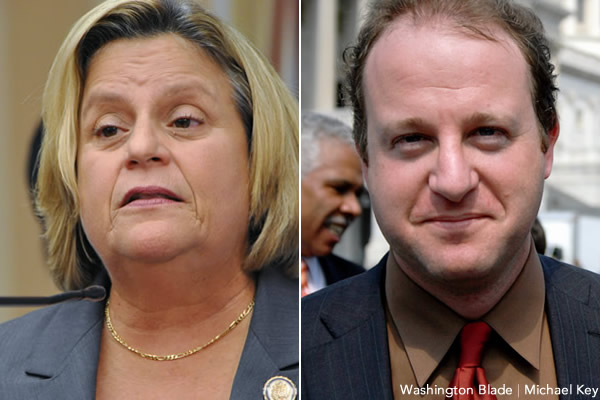
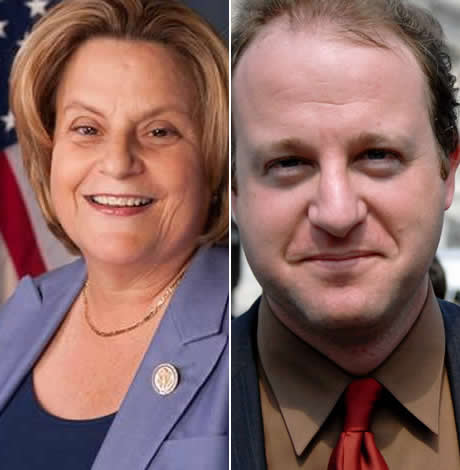
Rep. Ileana Ros-Lehtinen (R-Fla.) and Rep. Jared Polis (D-Colo.) (Washington Blade file photos by Michael Key)

A pair of LGBT advocates in Congress announced on Tuesday they would co-sponsor the affinity group for LGBT Hill staffers working for members of the U.S. House.

Rep. Jared Polis (D-Colo.), who’s gay and chair of the LGBT Equality Caucus, and Rep. Ileana Ros-Lehtinen (R-Fla.), signaled they would support the charter for the LGBT Congressional Staff Association in the 114th Congress.

Because it’s an officially sanctioned, non-partisan group within the U.S. House, the LGBT Congressional Staff Association must have sponsorship of one or more sitting members of Congress.

“I’m proud of so many dedicated congressional staffers who have created the CSA to increase awareness and mentorship on Capitol Hill,” Ros-Lehtinen said. “Congressman Polis is a great leader on LGBT issues and I look forward to continue working with him to promote inclusiveness and acceptance on Capitol Hill and across our nation.”

Ros-Lehtinen’s co-sponsorship of the organization marks the first time a Republican has authored the charter for the LGBT Congressional Staff Association, according to the group. Previously, Rep. Carolyn Maloney (D-N.Y.) and then Polis had sponsored the group — both within the 113th Congress.

“I’m thrilled to be joining Congresswoman Ros-Lehtinen in supporting an organization dedicated to promoting diversity and openness here in Congress,” Polis said. “The values the CSA promotes, by encouraging staff to be honest about themselves and mentoring leaders for tomorrow, help make Congress a better place and I’m excited to join Congresswoman Ros-Lehtinen in supporting their bipartisan work.”

The LGBT Congressional Staff Association is but one group on Capitol Hill for LGBT staffers. That organization, which was initiated 20 years ago and renewed in 2010, is for staffers working for the U.S. House. Another group, the GLASS Caucus, is for staff and interns employed by the U.S. Senate.

Michelle Mittler, president of the LGBT Congressional Staff Association, was among the members of the group praising Polis and Ros-Lehtinen for supporting the organization.

“The LGBT CSA has been sponsored historically by Democrats. However, the fight for LGBT equality is not a partisan issue, it’s a human one,” Mittler said. “It’s incredibly meaningful to have someone who is both a Republican and a woman take on this kind of leadership role. Congresswoman Ileana Ros Lehtinen’s co-sponsorship undoubtedly strengthens our organization and recruitment of new Capitol Hill staffers in the coming term of Congress.”

Mitchell Rivard, vice president of the LGBT Congressional Staff Association, said bi-partisan co-sponsorship sends a strong signal about the organization, which is estimated to have more than 160 members.

“We are honored and proud to partner with Congresswoman Ros-Lehtinen and Congressman Jared Polis to continue advocating for openly LGBT staffers on Capitol Hill,” Rivard said. “Having two champions of LGBT rights sponsor our organization in the 114th Congress — one Republican, one Democrat — sends a strong message that promoting equality isn’t a partisan issue. It is our hope that all Members of Congress can follow the leadership and bipartisan tone set by Congresswoman Ros-Lehtinen and Congressman Polis to order to promote equality for all.”
Advertisement
FUND LGBTQ JOURNALISM
SIGN UP FOR E-BLAST

Florida

AIDS Healthcare Foundation sues Fla. over ‘illegal’ HIV drug program cuts

Tens of thousands could lose access to medications

Published

on

(Photo by Catella via Bigstock)

Following the slashing of hundreds of thousands of dollars from Florida’s AIDS Drug Assistance Program, AIDS Healthcare Foundation filed a lawsuit against the Florida Department of Health over what it says was an illegal change to income eligibility thresholds for the lifesaving program.

The Florida Department of Health announced two weeks ago that it would make sweeping cuts to ADAP, dramatically changing how many Floridians qualify for the state-funded medical coverage — without using the formal process required to change eligibility rules. As a result, AHF filed a petition Tuesday in Tallahassee with the state’s Division of Administrative Hearings, seeking to prevent more than 16,000 Floridians from losing coverage.

The medications covered by ADAP work by suppressing HIV-positive people’s viral load — making the virus undetectable in blood tests and unable to be transmitted to others.

Prior to the eligibility change, the Florida Department of Health covered Floridians earning up to 400 percent of the federal poverty level — or $62,600 annually for an individual. Under the new policy, eligibility would be limited to those making no more than 130 percent of the federal poverty level, or $20,345 per year.

The National Alliance of State and Territorial AIDS Directors estimates that more than 16,000 patients in Florida will lose coverage under the state’s ADAP because of this illegal change in department policy. Florida’s eligibility changes would also eliminate access to biktarvy, a widely used once-daily medication for people living with HIV/AIDS.

Under Florida law, when a state agency seeks to make a major policy change, it must either follow a formal rule-making process under the Florida Administrative Procedure Act or obtain direct legislative authorization.

AHF alleges the Florida Department of Health did neither.

Typically, altering eligibility for a statewide program requires either legislative action or adherence to a multistep rule-making process, including: publishing a Notice of Proposed Rule; providing a statement of estimated regulatory costs; allowing public comment; holding hearings if requested; responding to challenges; and formally adopting the rule. According to AHF, none of these steps occurred.

“Rule-making is not a matter of agency discretion. Each statement that an agency like the Department of Health issues that meets the statutory definition of a rule must be adopted through legally mandated rule-making procedures. Florida has simply not done so here,” said Tom Myers, AHF’s chief of public affairs and general counsel. “The whole point of having to follow procedures and rules is to make sure any decisions made are deliberate, thought through, and minimize harm. Floridians living with HIV and the general public’s health are at stake here and jeopardized by these arbitrary and unlawful DOH rule changes.”

AHF has multiple Ryan White CARE Act contracts in Florida, including four under Part B, which covers ADAP. More than 50 percent of people diagnosed with HIV receive assistance from Ryan White programs annually.

According to an AHF advocacy leader who spoke with the Washington Blade, the move appears to have originated at the state level rather than being driven by the federal government — a claim that has circulated among some Democratic officials.

“As far as we can tell, Congress flat-funded the Ryan White and ADAP programs, and the proposed federal cuts were ignored,” the advocacy leader told the Blade on the condition of anonymity. “None of this appears to be coming from Washington — this was initiated in Florida. What we’re trying to understand is why the state is claiming a $120 million shortfall when the program already receives significant federal funding. That lack of transparency is deeply concerning.”

Florida had the third-highest rate of new HIV infections in the nation in 2022, accounting for 11 percent of new diagnoses nationwide, according to KFF, a nonprofit health policy research organization.

During a press conference on Wednesday, multiple AHF officials commented on the situation, and emphasized the need to use proper methods to change something as important as HIV/AIDS coverage availability in the sunshine state. 

“We are receiving dozens, hundreds of calls from patients who are terrified, who are confused, who are full of anxiety and fear,” said Esteban Wood, director of advocacy, legislative affairs, and community engagement at AHF. “These are working Floridians — 16,000 people — receiving letters saying they have weeks left of medication that keeps them alive and costs upwards of $45,000 a year. Patients are asking us, ‘What are we supposed to do? How are we supposed to survive?’ And right now, we don’t have a good answer.”

“This decision was not done in the correct manner. County health programs, community-based organizations, providers across the state — none of them were consulted,” Wood added. “Today is Jan. 28, and we have just 32 days until these proposed changes take effect. Nearly half of the 36,000 people currently on ADAP could be disenrolled in just over a month.”

“Without this medication, people with HIV get sicker,” Myers said during the conference. “They end up in emergency rooms, they lose time at work, and they’re unable to take care of their families. Treatment adherence is also the best way to prevent new HIV infections — people who are consistently on these medications are non-infectious. If these cuts go through, you will have sicker people, more HIV infections, and ultimately much higher costs for the state.”

“Patients receiving care through Ryan White and ADAP have a 91 percent viral suppression rate, compared to about 60 percent nationally,” the advocacy leader added. “That’s as close to a functional cure as we can get, and it allows people to live healthy lives, work, and contribute to their communities. Blowing a hole in a program this successful puts lives at risk and sets a dangerous precedent. If Florida gets away with this, other states facing budget pressure could follow.”

The lawsuit comes days after the Save HIV Funding campaign pressed Congress to build bipartisan support for critical funding for people living with or vulnerable to HIV. In May of last year, President Donald Trump appeared to walk back his 2019 pledge to end HIV as an epidemic, instead proposing the elimination of HIV prevention programs at the Centers for Disease Control and Prevention and housing services in his budget request to Congress.

House appropriators, led by the Republican majority, went further, calling for an additional $2 billion in cuts — including $525 million for medical care and support services for people living with HIV. 

While Senate appropriators ultimately chose to maintain level funding in their version of the spending bills, advocates feared final negotiations could result in steep cuts that would reduce services, increase new HIV infections, and lead to more AIDS-related deaths. The final spending package reflected a best-case outcome, with funding levels largely mirroring the Senate’s proposed FY26 allocations.

“What the state has done in unilaterally announcing these changes is not following its own rules,” Myers added. “There is a required process — rule-making, notice and comment, taking evidence — and none of that happened here. Before you cut 16,000 people off from lifesaving medication, you have to study the harms, ask whether you even have the authority to do it, and explore other solutions. That’s what this lawsuit is about.”

Continue Reading

China

Two Chinese men detained over AI-generated picture of pandas engaging in same-sex behavior

Arrests part of increased online surveillance, LGBTQ rights crackdown

Published

on

(Photo by Aylandy/Bigstock)

Chinese authorities have detained two men after they shared an artificially altered image that linked queer identity with a specific city.

The Washington Post on Jan. 21 reported the men — who are 29 and 33 — circulated an AI-generated picture depicting pandas engaging in same-sex behavior in Chengdu, a major city in southwestern China often referred to as the “panda capital” due to its association with giant panda conservation. Local officials described the sharing of the image as “malicious,” and police in Chengdu took the men into custody.

Authorities also suspended the two men’s social media accounts, accusing them of spreading misinformation presented as legitimate news. According to the Post, the artificially generated image was posted alongside a fabricated headline, giving the appearance of an authentic news report. The image depicted two male pandas mating.

According to an official police report, police said the fabricated image was presented in the format of a legitimate news article and accompanied by a false headline. The caption read, “Chengdu: Two male Sichuan giant pandas successfully mate for the first time without human intervention,” authorities said.

Chinese regulators have in recent years tightened oversight of AI and online content. 

Under the Interim Measures for the Administration of Generative Artificial Intelligence Services, issued in 2023, providers and users of generative AI systems are required to comply with existing laws, adhere to social and ethical standards, and refrain from producing or disseminating false or misleading information. Additional rules that took effect on Sept. 1, 2025, require online platforms to clearly label AI-generated content, a measure authorities have said is intended to curb misinformation and maintain order in digital spaces.

Police under Chinese law are permitted to impose administrative detention of up to 15 days for offenses deemed to disrupt public order, a category that includes the fabrication or dissemination of false information online. Such cases are handled outside the criminal court system and do not require formal prosecution.

According to a statement the Chengdu Public Security Bureau’s Chenghua branch released, police opened an investigation after receiving public reports that online accounts were spreading false information about the city. Authorities said officers collected evidence shortly afterward and placed the two individuals under administrative detention.

The detentions are not an isolated case. 

The Washington Blade in July 2025 reported a Chinese female writer was arrested and subjected to a strip search after publishing gay erotic fiction online. At least 30 other writers — most of them women in their 20s — in the months that followed publicly described similar encounters with law enforcement, including home raids and questioning related to their online writing.

ShanghaiPRIDE, a Chinese LGBTQ advocacy group that organized annual Pride events in the city, has remained indefinitely suspended since 2021. In the same period, dozens of LGBTQ-focused accounts have been removed from WeChat, China’s largest social media platform, as authorities intensified oversight of online content related to sexual orientation and gender identity.

Authorities in 2021 detained the founder of LGBT Rights Advocacy China. They later released them on the condition that he shut down the organization, which ceased operations shortly afterward.

China decriminalized homosexuality in 1997 when it removed consensual same-sex sexual relations from the country’s criminal code. The Chinese Society of Psychiatry in 2001 formally removed homosexuality from its list of mental disorders. Despite those changes, same-sex relationships remain unrecognized under Chinese law, and there are no legal protections against discrimination based on sexual orientation or gender identity. Public advocacy for LGBTQ rights remains tightly restricted, with authorities continuing to limit community organizing, public events and online expression related to sexual minority issues.

Within China’s LGBTQ community, transgender and gender non-conforming people remain among the most vulnerable. Under current regulations, access to gender-affirming surgery is subject to strict requirements, including being at least 18 years old, unmarried, obtaining parental consent and having no criminal record — procedures that are required in order to legally change one’s gender on official documents.

China’s system of online governance places responsibility on both users and platforms to prevent the spread of prohibited content. Social media companies are required to conduct real-name verification, monitor user activity and remove posts that violate regulations, while individuals can be punished for content authorities determine to have caused public misunderstanding or social disruption.

“Actually, at least three similar incidents have occurred in Chengdu recently, all involving netizens posting on social media linking Chengdu with homosexuality, resulting in legal repercussions. This isn’t just about giant pandas. I think the local police’s reaction was somewhat excessive,” said Renn Hao, a Chinese queer activist. “The content was actually praising Chengdu’s inclusivity, and there was no need to punish them with regulations like ‘maliciously spreading false information.’” 

“This situation reflects the strict censorship of LGBT related content in the area,” they added. “This censorship makes LGBT-related content increasingly invisible, and people are even more afraid to post or mention it. This not only impacts the LGBTQ+ community in China but also hinders public understanding and awareness of this group.”

Continue Reading

National

Federal authorities arrest Don Lemon

Former CNN anchor taken into custody two weeks after Minn. church protest

Published

on

Don Lemon (Screenshot via YouTube)

Federal authorities on Thursday arrested former CNN anchor Don Lemon in Los Angeles.

CNN reported authorities arrested Lemon after 11 p.m. PT while in the lobby of a hotel in Beverly Hills, Calif., while he “was leaving for an event.” Lemon’s lawyer, Abbe Lowell, in a statement said his client was in Los Angeles to cover the Grammy Awards.

Authorities arrested Lemon less than two weeks after he entered Cities Church in St. Paul, Minn., with a group of protesters who confronted a pastor who works for U.S. Immigration and Customs Enforcement. (An ICE agent on Jan. 7 shot and killed Renee Good, a 37-year-old Minneapolis woman who left behind her wife and three children. U.S. Customs and Border Protection agents on Jan. 24 shot and killed Alex Pretti, a 37-year-old nurse who worked for the Department of Veterans Affairs, in Minneapolis.)

Lemon insists he was simply covering the Cities Church protest that interrupted the service. A federal magistrate last week declined to charge the openly gay journalist in connection with the demonstration.

“Don Lemon was taken into custody by federal agents last night in Los Angeles, where he was covering the Grammy awards,” said Lowell in his statement. “Don has been a journalist for 30 years, and his constitutionally protected work in Minneapolis was no different than what he has always done. The First Amendment exists to protect journalists whose role it is to shine light on the truth and hold those in power accountable.”

“Instead of investigating the federal agents who killed two peaceful Minnesota protesters, the Trump Justice Department is devoting its time, attention and resources to this arrest, and that is the real indictment of wrongdoing in this case,” Lowell added. “This unprecedented attack on the First Amendment and transparent attempt to distract attention from the many crises facing this administration will not stand. Don will fight these charges vigorously and thoroughly in court.”

Attorney General Pam Bondi on X confirmed federal agents “at my direction” arrested Lemon and three others — Trahern Jeen Crews, Georgia Fort, and Jamael Lydell Lundy — “in connection with the coordinated attack on Cities Church in St. Paul, Minnesota.”

Fort is also a journalist.

Lemon, who CNN fired in 2023, is expected to appear in court in Los Angeles on Friday.

“Freedom of the press is a cornerstone of a free society; it is the tool by which Americans access the truth and hold power to account. But Donald Trump and Pam Bondi are at war with that freedom — and are threatening the fundamentals of our democracy,” said Human Rights Campaign President Kelley Robinson on Friday in a statement. “Don Lemon and Georgia Fort were doing their jobs as reporters. Arresting them is not law enforcement it is an attack on the Constitution at a moment when truthful reporting on government power has never been more important. These are the actions of a despot, the tactics of a dictator in an authoritarian regime.”

Continue Reading

Popular