a&e features
Fringe Festival rich with LGBT themes
A male pop star, Galactica and more on this year’s slate
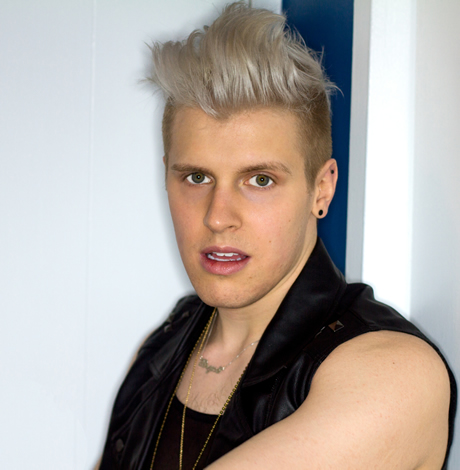
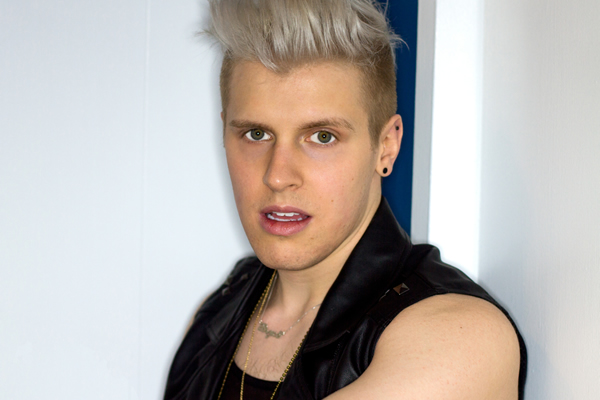
Bryce Sulecki in ‘Bryce: Hydrogen Blonde.’ (Photo courtesy Marc Langston)
Growing up in the suburbs of Pittsburgh, Bryce Sulecki admired the likes of Britney Spears, Lady Gaga and Madonna. While their support of the gay community comforted him, he couldn’t help but feel that there was an absence.
“There was this voice missing,” says Sulecki, who graduated from American University’s prestigious musical theater program in 2015. “From a gay male pop star.”
Sulecki longed to hear a performer directly singing about gay relationships, struggles and even everyday life with the same type of choreography, costumes and theatrics that had inspired him as a child.
Sulecki decided to take matters into his own hands and create the gay pop star he’d been searching for, but he needed an outlet, which he found in the D.C. Capital Fringe Festival.
The Capital Fringe Festival, which just opened and runs through July 31, is a nonprofit organization founded in 2005 by Julianne Brienza and Damien Sinclair. Capital Fringe focuses on bolstering opportunities for audiences to view independent, off-the-beaten-path theater, music, dance and other forms of performance and visual art.
Fringe festivals began in 1947 as an alternative to the Edinburgh International Festival in Edinburgh, Scotland. The festival has since expanded its presence all over the world to countries such as Australia, Canada, the United Kingdom and the United States.
Capital Fringe has become the second largest Fringe Festival in the United States. As of 2015, it had generated $1.7 million for artists, featured more than 600 new productions and generated 886 paid jobs. Roughly 130 shows are featured in the Capital Fringe festival each year.
A spot in Fringe is determined on a first-come, first-served basis by submitting proposals for shows online. Capital Fringe provides the venue for accepted plays and handles the main marketing to promote the shows. The playwright is in charge of all other fees, including costumes, payment to cast, crew and the director and any other costs.
The festival prides itself on its focus of the performing arts community as a whole, rather than just promoting the work of an individual.
With this mission, it’s no wonder that in its 11th year Capital Fringe 2016 will feature a diverse range of LGBT productions, including Sulecki’s interactive-pop-concert- extravaganza, “Bryce: Hydrogen Blonde,” in which he is the producer, co-writer and star.
“I think that [the] most meaningful part of the experience is seeing my own work in front of an audience,” Sulecki says. “I keep getting chills just thinking about it.”
Themes this year touch on a variety of LGBT issues.
Kevin West, an out playwright and director of “The DOMA Diaries,” wants to reveal the struggles and obstacles that the Defense of Marriage Act created in the lives of LGBT couples. While the play is a work of fiction, it is based on real-life experiences.
The play also includes a fictional adaptation of West’s own struggle being part of a bi-national couple. West constantly feared that his then-partner (now husband) would be forced to return to his country of origin, as West could not sponsor him for a green card under DOMA’s restrictions.
“There’s a funny scene in which a gay couple goes to a Mailboxes Etcetera to have their domestic partnership documents notarized, and they treat the event like a mini-wedding,” West says. “Since gay marriage isn’t yet legal, and may never be, they realize that this mundane event is the closest they will ever come to a wedding ceremony.”
One of the stars of the play, Nell Quinn-Gibney, a 20-year-old senior at the University of Maryland, Baltimore County, who was raised by a lesbian couple and was present outside the Supreme Court when the DOMA decision was announced, says she never fully understood the impact of the act until she began working on the show.
“Reading the script for me the first time I got [it], I honestly started crying half-way through because the whole time I was thinking about what my relationship and what my sister’s relationship growing up with our parents was like and how grateful I was to them,” says Quinn-Gibney, a Bethesda, Md., native. “It wasn’t until I got older that I realized that there was anything different, abnormal or unusual about our family.”
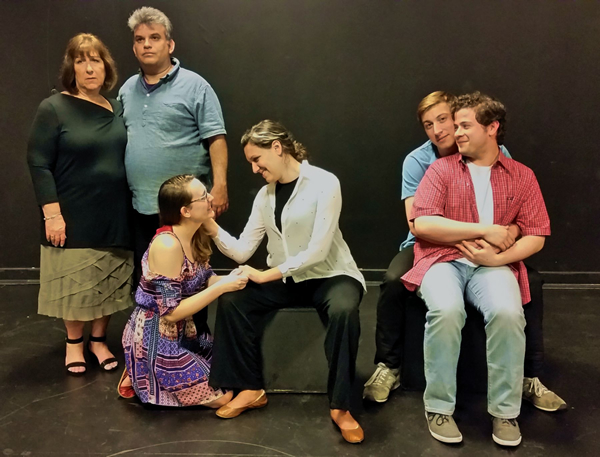
The cast of ‘DOMA Diaries’ featuring Nell Quinn-Gibney, third from left. (Photo courtesy Kevin West)
Other shows to look out for at Capital Fringe include seasoned performer Jeffrey Johnson’s multimedia-drag-production, “A Romp Around Uranus with Special Agent Galactica.”
Johnson, who was the artistic director of the now-defunct, LGBT theater company Ganymede Arts in Washington, is the creator, writer, director and lead performer in the play. Galactica, a lip sync character, was born out of his work with Ganymede.
She became a success and generated a large local following. Johnson has performed as Galactica at almost every gay bar in town.
“A Romp” also features three original songs written by Johnson. Galactica’s spaceship is played by award-winning musician and B-52’s frontman, Fred Schneider.
“This is taking drag performance to a totally different place,” Johnson says. “It’s taking on drag done live, it has clever humor, but, you know, low-brow comedy as well.”
Johnson emphasizes that his production is not a drag show, but a theater piece that uses the elements of drag to enhance the show.
In 2010, Johnson took Galactica from a lip-sync character to a live music songstress and how he says he’s ready for the next chapter in her short, yet eventful life.
“Now, I’m taking her from being just a live cabaret or music show to actually being a theater piece,” Johnson says. “It’s always fun to challenge myself and rethink the presentation of this character and take her into new areas that she hasn’t gone before.”
Another pioneering piece comes from writer, director and professional home and office organizer, Brett Steven Abelman.
Abelman’s play, which he created and directs, is “Play Cupid,” his fourth production at Capital Fringe. The play features five characters that the audience can send on a date. There are two men, two women and one character that identifies as gender-queer.
“Anyone can be paired up with anyone,” says Abelman, a Washington-area native. He likes the component of audience choice in theater, which he says is not common.
Abelman hopes his show can “open little corners” within his audience’s mind by having them go through the process of meeting the characters, getting to know them and pairing them up.
The audience, director and actors will not know, on any given night, who will get sent on a date and who will not. So, as Abelman says, flexibility for everyone involved in “Play Cupid” is important.
“I am thrilled that I found these five collaborators, plus my assistant director and producer,” Abelman says. “The No. 1 thing is getting along with each other and we share stories about dating and romance and all that kind of stuff to help build the show.”
Niusha Nawab, one of the male actors in “Play Cupid,” who graduated from American University in 2015 with a degree in theater arts and audio production, describes the play as “modern” in terms of its LGBT content.
“On the one hand, it’s somewhat of an idealistic alternative reality where the sexuality of all the characters is mostly irrelevant to their lives within the play and isn’t a defining factor of who they are,” Nawab says. “On the other hand, when it does recognize and deal with their sexuality, it does so in specific and useful ways, like the fact that one character is pansexual, not bi, or that the only black character (in the show) has to deal with the intersectionality of being both black and queer in his love life.”
Nawab also emphasizes how gender-queerness plays a role in “Play Cupid.” He says it unfurls in “differing but challenging ways.”
“Our play is a high-scorer on the not-straight-white-cis-dude scale,” Nawab says.
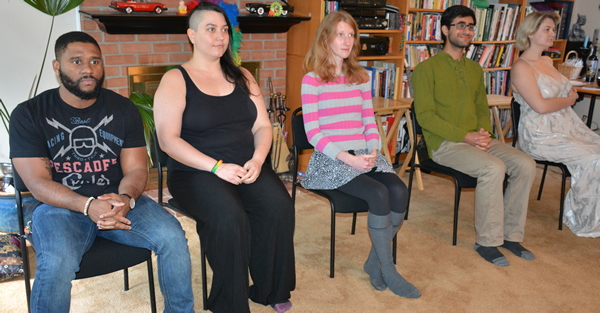
The cast of ‘Play Cupid’ in rehearsal. (Photo by Sonia Zamborsky)
Another LGBT-themed Fringe show is “HUNT: a Political Drama,” written and produced by Jean P. Bordewich and directed by Kristin Shoffner. The play is based on the true story of Sen. Lester Hunt, a Wyoming Democrat, who was blackmailed by Sen. Joe McCarthy’s allies in the Senate over homosexual allegations against his son.
Bordewich, who has spent her life in politics on Capitol Hill as a Senate and House staff member and in Red Hook, N.Y., as a town council member, and as a candidate for Congress and Senate district staffer, says she wanted to explore the dangers of political extremism, demagoguery and homophobia through the lens of the 1950s Cold War era.
“I had no idea when I wrote ‘HUNT,’” she says, “that the rise of a demagogue as a presidential candidate and the massacre at the Pulse nightclub in Orlando would make this history so tragically relevant today.”
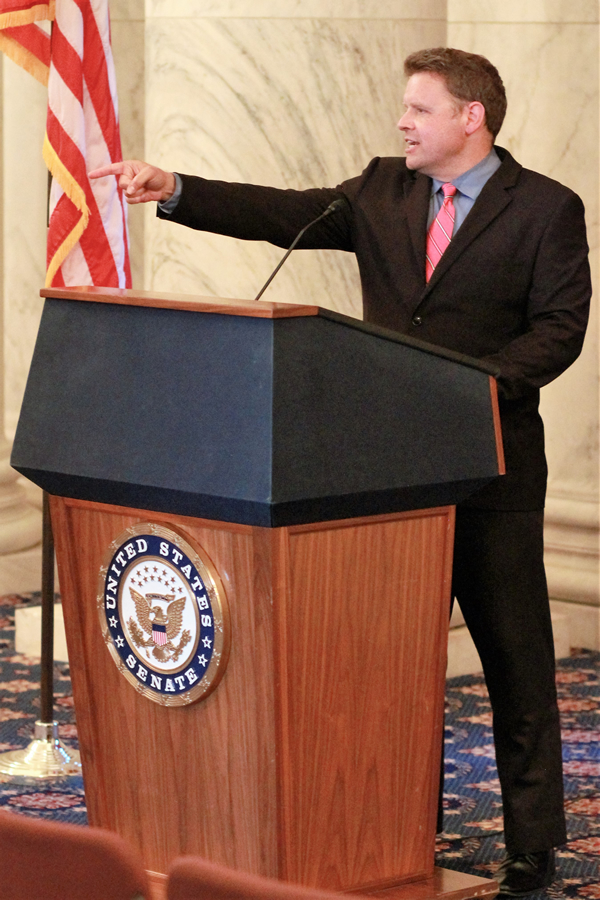
Terry Loveman as Sen. Hunt in ‘HUNT: a Political Drama.’ (Photo courtesy Jean P. Bordewich)
Full details at capitalfringe.org
‘Bryce: Hydrogen Blonde’
Logan Fringe Arts Space: Trinidad Theatre (1358 Florida Ave., N.E.)
Friday, July 8 at 10:15 p.m.
Thursday, July 14 at 7:45 p.m.
Sunday, July 17 at 4:15 p.m.
Friday, July 22 at 9 p.m.
Sunday July 24 at 12:30 p.m.
Tickets are $17
‘The DOMA Diaries’
Flashpoint: Mead Theatre Lab (916 G St., N.W.)
Thursday, July 7 at 6:30 p.m.
Sunday, July 10 at 6:30 p.m.
Friday, July 15 at 8:30 p.m.
Thursday, July 21 at 8 p.m.
Saturday, July 23 at 12:45 p.m.
Tickets are $17
‘A Romp Around Uranus with Special Agent Galactica’
Logan Fringe Arts Space: Upstairs (1358 Florida Ave., N.E.)
Saturday, July 9 at 10 p.m.
Wednesday, July 13 at 8:30 p.m.
Sunday, July 17 at 10 p.m.
Tuesday, July 19 at 9 p.m.
Sunday, July 24 at 6 p.m.
Tickets are $17
‘Play Cupid’
Atlas Performing Arts Center: Lab II (1333 H St., N.E.)
Friday, July 8 at 8:15 p.m.
Sunday, July 10 at 7 p.m.
Friday, July 15 at 10:30 p.m.
Thursday, July 21 at 6 p.m.
Sunday, July 24 at 6:30 p.m.
Tickets are $17
‘HUNT: A Political Drama’
Flashpoint: Mead Theatre Lab (916 G St., N.W.)
Thursday, July 7 at 8:45 p.m.
Wednesday, July 13 at 6:45 p.m.
Saturday, July 16 at 2:30 p.m.
Tuesday, July 19 at 8:45 p.m.
Friday, July 22 at 6:45 p.m.
Sunday, July 24 at 2:15 p.m.
Tickets are $17



a&e features
Queery: Meet artist, performer John Levengood
Modern creative talks nightlife, coming out, and his personal queer heroes
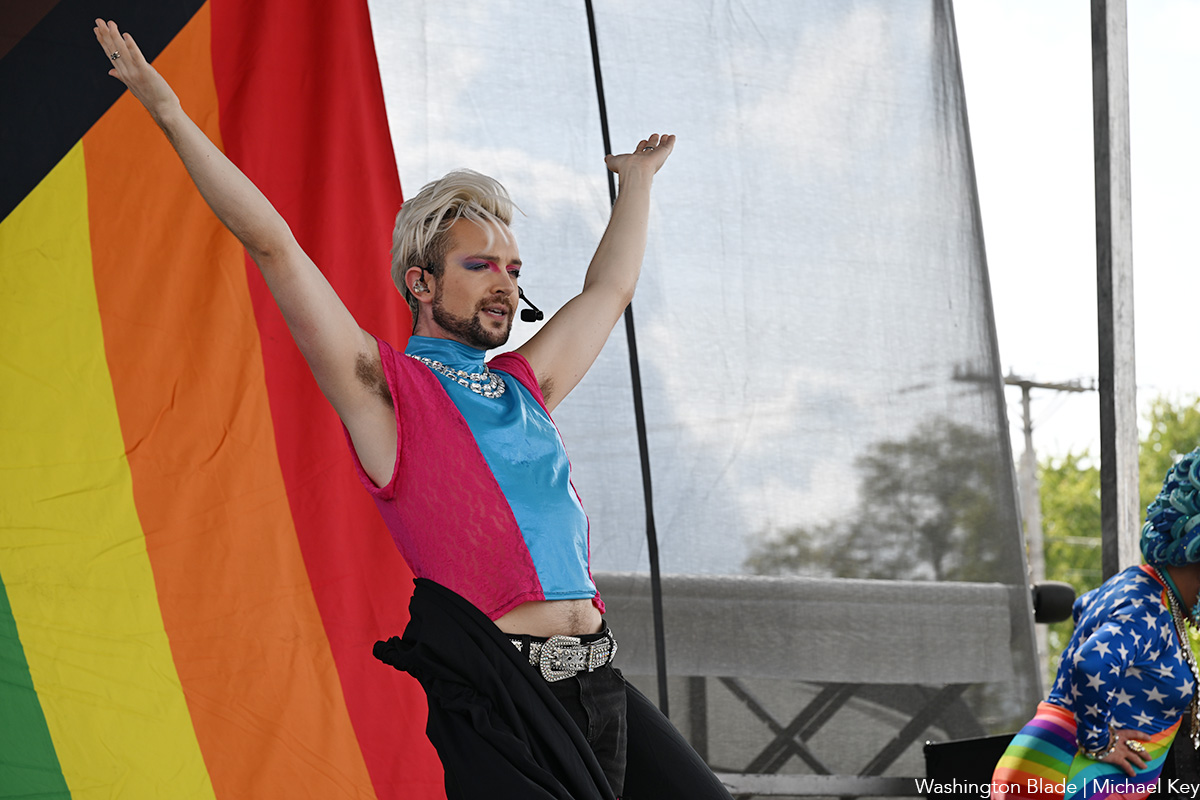
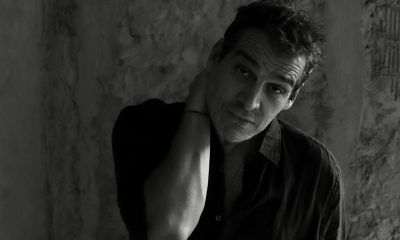
John Levengood (he/him) describes himself as a modern creative with a wide‑ranging toolkit. He blends music, technology, civic duty, and a sharp sense of wit into a cohesive artistic identity. Known primarily as a recording artist and performer, he’s also a self‑taught music producer and software engineer who embodies a generation of creators who build their own lanes rather than wait for one to appear.
Levengood, 32, who is single and identifies as gay and queer, is best known as a recording artist who has performed at Pride festivals across the country, including the main stages of World Pride DC, Central Arkansas Pride, and Charlotte Pride.
“Locally in the DMV, I’m known for turning heads at nightlife venues with my eye-catching sense of style. When I go out, I don’t try to blend in. I hope I inspire people to be themselves and have the courage to stand out,” he says.
He’s also known for hosting karaoke at Freddie’s Beach Bar in Arlington, Va., on Thursday nights. “I like to create a space where people feel comfortable expressing themselves, building community, and showcasing their talents.”
He also creates social media content from my performances and do interviews at LGBTQ+ bars and theatres in the DMV. Follow the Arlington resident @johnlevengood.
How long have you been out and who was the hardest person to tell?
I have been fully out of the closet since 2019. My parents were the hardest people to tell because my family has always been my rock and at the time I couldn’t imagine a world without them. Their reactions were extremely positive and supportive so I had nothing to fear all along.
I remember sitting on the couch with my mom, dad, and sister in our hotel room in New Orleans during our winter vacation and being so nervous to tell them. After I finally mustered up the nerve and made the proclamation, I realized my dad had already fallen asleep on the couch. My mom promised to tell him when he woke up.
Who’s your LGBTQ hero?
My LGBTQ heroes are Harvey Milk for paving the way for gays in politics and Elton John for being a pioneer for the fabulous and authentic. My local heroes in the DMV are Howard Hicks, manager of Green Lantern, and Tony Rivenbark, manager of Freddie’s Beach Bar. Both of them are essential to creating spaces where I’ve felt welcome and safe since moving to the DMV.
What’s Washington’s best nightspot, past or present?
Trade tops the list for me because of the dance floor and outdoor space. It’s so nice to get a break from the music every once and a while to be able to have a conversation.
We live in challenging times. How do you cope?
I’m still figuring this out. What is working right now is writing music and spending time with family and friends. I’ve also been spending less time on social media going to the gym at least three times a week.
What streaming show are you binging?
After “Traitors” Season 4 ended, I was in a bit of a show hole, but “Stumble” has me in a laughing loop right now. The writing is so witty.
What do you wish you’d known at 18?
At 18, I wish I would have known how liberating it is to come out of the closet. It would have been nice to know some winning lottery numbers as well.
What are your friends messaging about in your most recent group chat?
We are planning our next trip to New York City. If you can believe it, I visited NYC for the first time in 2025 for Pride and I’ve been back every quarter since. Growing up in the country, I was subconsciously primed to be scared of the city. But my mind has been blown. I can’t wait to go back.
Why Washington?
It’s the closest metropolitan area to my family, but not too close. I love the museums, the diversity, the history, and the proximity to the beach and mountains. It’s also nice to live in a city with public transportation.
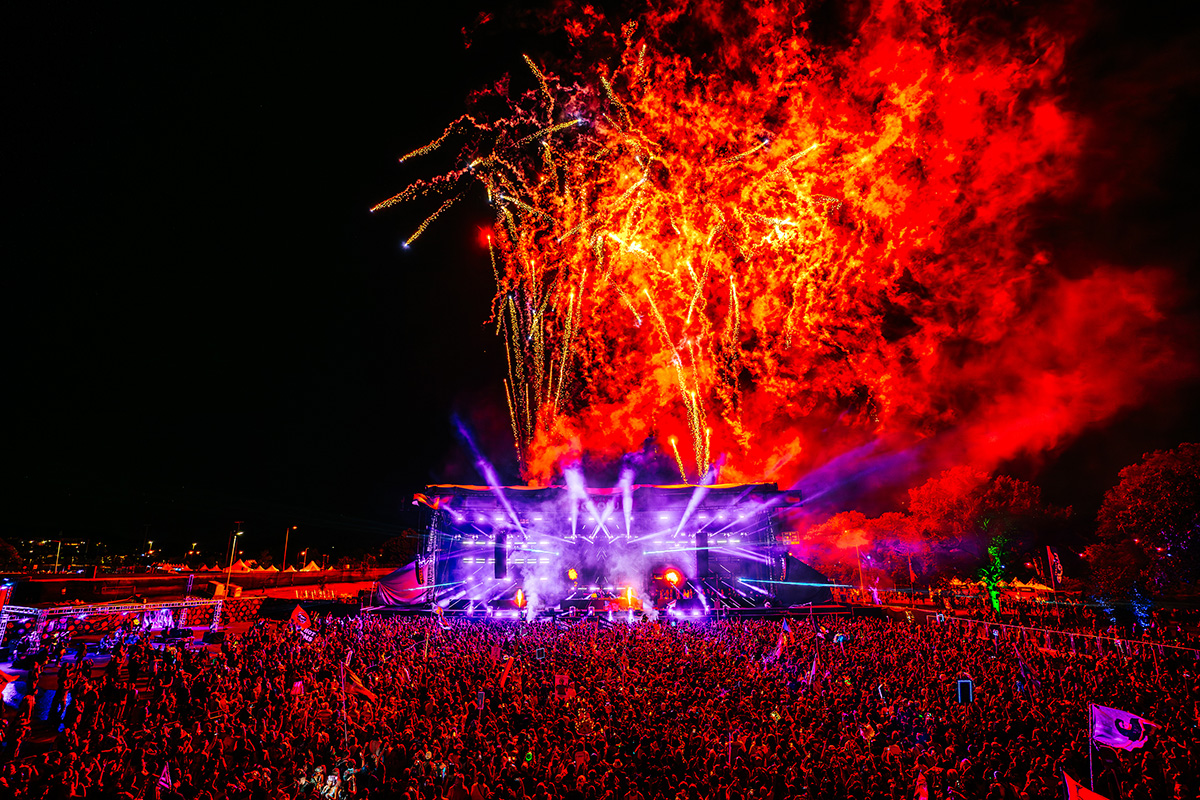
Aging RFK Stadium has come down, but the RFK grounds are still getting lit up. Welcome back to the stage Project GLOW, D.C.’s homegrown electronic festival, on May 30-31. Back for its fifth year on these musically inclined acres, Project GLOW returns with an even more diverse lineup, and one that continues to celebrate LGBTQ antecedents, attendees, and acts.
Project GLOW 2026 headliners include house and techno star Mau P, progressive house legend Eric Prydz, hard-techno favorite Sara Landry, and bass acts Excision b2b Sullivan King, among the lineup of trance, bass, house, techno, dubstep, and others for the fifth anniversary year.
President & CEO Pete Kalamoutsos — born and raised in D.C. — founded Club GLOW in 1999. In 2020, GLOW entered into a partnership with global entertainment company Insomniac Events to produce live events like Project GLOW, which kicked off in 2022.
As in past years, Project GLOW not only makes space, but is intentionally inclusive of the LGBTQ community, one of its most dedicated fan bases. The festival’s LGBTQ-focused Secret Garden stage blooms again — a more intimate dance area that stands on the strength of DJs and musicians who draw from the LGBTQ community. D.C.’s LGBTQ nightlife mastermind Ed Bailey is the creative mind behind Secret Garden again. He joined Project GLOW in 2023.
“Kalamoustos says that “he’s proud of his partnership with Ed Bailey, along with Capital Pride and [nightlife producer] Jake Resnikow. It’s amazing to collaborate with Bailey at the Secret Garden stage, especially after the curated lineup we worked on at Pride last year.”
The Secret Garden will be a bit different from other stages: Eternal (“At the Eternal stage, time stands still. Lose yourself in the dance of past, present, and future, surrendering to the eternal rhythm of the universe”) and Pulse (“Feel the rhythm of the beat pulse through your veins as the heartbeat of the crowd synchronizes into one. Here, every moment vibrates with life as it guides you through a new dimension of euphoria”). The Secret Garden stage is in the round, surrounded by 16 shipping containers. The containers play canvas to muralists from around the world, who are coming in to paint them in a vibrant garden-style vibe. “We gave this stage some extra love with this layout,” K says, “ we finally cracked the code.”
K says that this will be the biggest lineup yet for the Secret Garden, featuring Nicole Moudaber b2b Chasewest, Riordan b2b Bullet Tooth, Ranger Trucco, Cassian, Eli & Fur, Cosmic Gate and Hayla. The stage is also the largest yet, featuring an expanded dance floor and 360-degree viewing.
Across all stages, K says that his goal for the fifth anniversary is “More art and fan interactive experience, more like a festival, strive to be like a Tomorrowland, as budget grows to add more experience.” Last year’s Project GLOW alone drew 40,000 attendees over two days.
K, however, was not satisfied with one festival this spring. GLOW recently announced a “pop-up” one-day event. Teaming up with Black Book Records, GLOW is set to throw a first-of-its-kind dance-music takeover of Pennsylvania Avenue, N.W., headlined by electronic music star Chris Lake. Set for April 18, this euphoric block party will feature bass and vibes blocks from the White House. Organizers expect as many as 10,000 fans to attend. Beyond music, there will be food, activations, and plenty of other activities taking place around 6th St and Pennsylvania Ave NW – a location familiar to many in the LGBTQ community, as this sits squarely inside the blocks of the Capital Pride party that takes place in DC every June.
Over the past two decades, Club GLOW has produced thousands of events, from club nights to large-scale festivals including Project GLOW, Moonrise Festival, and more. Club GLOW also operates Echostage.
a&e features
New book celebrates 1970s dance music icons
‘A Night at the Disco’ features interviews with Donna Summer, Debbie Harry, more
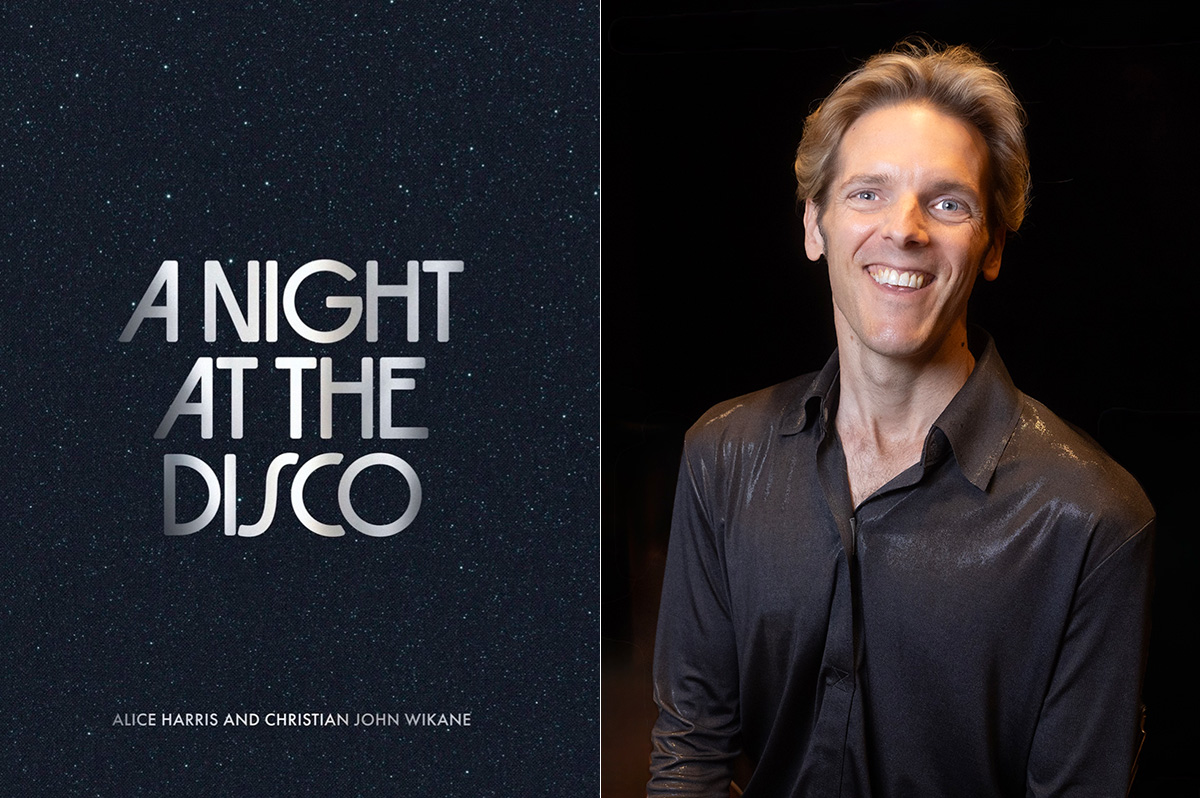
If you’re a fan of 1970s-era dance music, don’t miss the irresistible new book by Christian John Wikane and Alice Harris, “A Night at the Disco,” which revisits more than 90 interviews conducted with some of the biggest names in pop culture.
“A Night at the Disco” (ACC Art Books) was published on March 24, and distributed by Simon & Schuster. It celebrates more than 100 artists who sparked a phenomenon in dance music from 1970-1979 and features excerpts from interviews with everyone from Donna Summer to Debbie Harry.

Lost City Books (2467 18th St., N.W.) will welcome author Christian John Wikane for a book signing and conversation about “A Night at the Disco” on Thursday, April 16 at 6 p.m. Details at lostcitybookstore.com. Bird in Hand Coffee & Books in Baltimore (11 E. 33rd St.) )will also host a Q&A with the author on Wednesday, April 15 at 6 p.m. Details at theivybookshop.com.
Below is an excerpt from “A Night at the Disco.”
“I’ll let in anyone who looks like they’ll make things fun.” Steve Rubell is guiding a New York Times reporter through Studio 54 as resident DJ Richie Kaczor dazzles the crowd with records by CHIC, Odyssey, and T-Connection. “Disco, that’s where the happy people go,” The Trammps sing as dancers spin and twirl underneath tubes of flashing lights. Seven months since Rubell and co-owner Ian Schrager opened Studio 54 in April 1977, it’s welcomed untold numbers of “happy people” … at least those lucky enough to pass through the doors.
“We were part of the chosen few,” says André De Shields, who immortalized the title role in The Wiz on Broadway at the time. “We could show up at Studio 54 and the doorman at the velvet stanchion would look over everyone and point to us from The Wiz to come in, that kind of thing.” As the lead vocalist in the GRAMMY-nominated Dr. Buzzard’s Original Savannah Band, whose debut modernized big band sophistication for the discothèques, Cory Daye had carte blanche in the club. “The energy was like a New Year’s Eve party every night,” she says. “I would go up to the mezzanine and watch the mechanical light pillars go up and down, metallic confetti falling from the ceiling, the spoon and the moon. I was so fascinated and enamored by it.
“When a certain song came on, the people would just rush to the dance floor. There was no contact dancing — the hustle was pretty much on its way out — but it was just an amazing experience to see all the cultures together. It was a fusion of cultures, which described my life and my band, so I was right at home there.”
“Studio 54 was the place,” adds Linda Clifford. “Crazy parties. If you could think it, you would see it. It was like a circus. Just an amazing place to be. I worked 54 so many times. It was like a second home to me. The people there treated me so well. The crowd always seemed to enjoy my show. I always had a good time with them. That was the most important thing: making sure that they had fun.”
Well before Studio 54 opened, disco had become a business juggernaut. “A four billion dollar market and still growing,” Billboard announced in February 1977, with dance music offering more variety than ever. “There is no longer a single, readily identifiable disco beat, but a kaleidoscope of sounds that are melodic and danceable,” Tom Moulton told the magazine. In the clubs, records by veteran artists like Stevie Wonder and the Bee Gees were mixed in with a range of new acts like Grace Jones, Boney M., and The Ritchie Family, while everyone from ABBA to Marvin Gaye scored number one pop hits with songs that had club-centric storylines.
Beyond the charts, disco itself remained as idiosyncratic as ever, especially on several productions by Laurin Rinder and W. Michael Lewis, whose studio creations, El Coco (“Let’s Get It Together,” “Cocomotion”) and Le Pamplemousse (“Le Spank”), joined their own “Lust” from Seven Deadly Sins (1977) among the most tantalizing releases on AVI Records. Rinder & Lewis also produced acts for the newly hatched Butterfly Records in Los Angeles, where Saint Tropez (“On a Rien à Perdre”) and Tuxedo Junction (“Moonlight Serenade”) reflected the duo’s high gloss sound, spanning everything from European sophistication to a more literal translation of the ’40s sensibilities popularized by Dr. Buzzard’s Original Savannah Band.
12-inch singles had also grown as the preferred format to approximate the club music experience at home. Nearly a year after Atlantic Records introduced its series of promotional 12-inch singles for DJs, New York-based Salsoul Records released the industry’s first commercially available 12-inch single, “Ten Percent” by Double Exposure, in May 1976. A year later, T.K. Records was the first label to certify a gold record for a 12-inch single when Peter Brown’s “Do You Wanna Get Funky With Me” tallied one million sales.— Christian John Wikane
(From “A Night at the Disco” by Alice Harris & Christian John Wikane. Published by ACC Art Books.)
The Blade may receive commissions from qualifying purchases made via this post.

Victory Fund brunch draws top LGBTQ officials, 2028 hopeful Andy Beshear

Inside the lonely world of MAGA gay men

PHOTOS: National Champagne Brunch

PHOTOS: Night of Champions

‘Big Mistakes’ an uneven – but worthy – comedic showcase

Science said stop; the Supreme Court said no

Response to a personal attack against me

Queery: Meet artist, performer John Levengood

Charlie Kirk Act advances in Tenn.