a&e features
Check out these holiday shows in D.C.
Renee Fleming, ‘Nutcracker’ and more coming to area stages


The National Philharmonic Orchestra and Chorale will perform ‘The Messiah’ at the Strathmore Dec. 17-18. (Photo by Don Lassell; courtesy National Philharmonic)
There will be lots of chances to get in the holiday spirit in the coming weeks. Here are some you may want to check out.
The National Philharmonic Singers under the direction of conductors Stan Engebretson and Victoria Gau will present a holiday concert on Saturday, Dec. 3 at 8 p.m. at Christ Episcopal Church (107 S. Washington Street) in Rockville. Stanford’s “Magnificat in G Major” and famous Renaissance motets “In Dulci Jubilo” and “Resonent in Laudibus” will be performed along with popular carols and a sing-along. It’s free but donations will be accepted. Details at christchurchrockville.org.
The National Philharmonic will also perform the “Messiah” at the Strathmore Dec. 17-18 with a nearly 200-voice choir. Tickets start at $28. Details at nationalphilharmonic.org.
Olney Theatre Company presents “A Christmas Carol: a Ghost Story of Christmas Past” by Charles Dickens performed as a one-man-show by Paul Morella Nov. 25-Dec. 31 at its Mulitz-Gudelsky Theatre Lab (2001 Olney-Sandy Spring Road, Olney, Md.). Tickets range from $20-40. Details at olneytheatre.org.

Paul Morella as Scrooge in the one-man show ‘A Christmas Carol; a Ghost Story of Christmas Past’ at Olney Theatre Company. (Photo courtesy Olney)
The Washington Revels present “The Christmas Revels: a Nordic Celebration of the Winter Solstice in Music, Dance & Drama” Dec. 10-18 at the GW Lisner Auditorium (730 21st St., N.W.). The performance will include Nordic winter traditions from Denmark, Finland, Iceland, Norway and Sweden performed by a cast of more than 100 ages 8-85. Tickets range from $12-60. Visit revelsdc.org for details.
The Washington Chorus under the direction of Julian Wachner will perform “A Candlelight Christmas” Dec. 11-22 at the Kennedy Center Concert Hall (2700 F St., N.W.) and on Monday, Dec. 19 at the Music Center at Strathmore (5301 Tuckerman Lane, North Bethesda, Md.). The show features brass, organ, sing-alongs, major choral works such as “The Dream Isaiah Saw” and the “Hallelujah Chorus.” Tickets range from $18-72. Details at thewashingtonchorus.org.
Country diva Lorrie Morgan brings her “Enchanted Christmas” tour to the Birchmere (3701 Mount Vernon Ave., Alexandria, Va.) on Sunday, Dec. 18. Tickets are $45. Details at birchmere.com.
The Baltimore Symphony Orchestra has several holiday-themed performances coming up including Handel’s “Messiah” Dec. 2-4, “Family Concert: the Snowman” on Dec. 3, “Swingin’ Nutcracker a la Ellington featuring Step Afrika!” Dec. 8-11, “Music Box: Snowflakes on Parade” Dec. 10, a screening of “It’s a Wonderful Life” in which the score will be performed live on Dec. 15-16, “Holiday Pops with Storm Large” Dec. 17-18 and more. The BSO performs at the Joseph Meyerhoff Symphony Hall (1212 Cathedral St., Baltimore) and at the Music Center at Strathmore (5301 Tuckerman Lane, North Bethesda, Md.). Ticket prices vary. Details at bsomusic.org.

Members of the local dance company Step Afrika! perform ‘A Swingin’ Nutracker a la Ellington,’ which will be performed Dec. 8-11 at the Strathmore in North Bethesda, Md., and the Joseph Meyerhoff Symphony Hall in Baltimore. (Photo courtesy Weinbergharris & Associates)
Drag outfit the Kinsey Sicks perform their show “Oy Vey in a Manger” at Theater J (1529 16th St., N.W.) Dec. 20-28. Tickets are $19-52. Details at theaterj.org.
“Jewmongous,” a comedy-song concert featuring Jewish hipster comedy created and performed by Sean Altman, will be performed on Saturday, Dec. 3 at 8:30 p.m. at BlackRock Center for the Arts (12901 Town Commons Dr., Germantown, Md.). Tickets are $17-25. Details at blackrockcenter.org.
“Kwanzaa Celebration” will be held Dec. 17-18 at Dance Place (3225 8th St., N.E.) featuring the Coyaba Dance Theater under the direction of Sylvia Stoumah. Tickets are $15-30. Details at danceplace.org.
Kwanzaa celebrations for each day will be held at the Smithsonian Anacostia Community Museum (1901 Fort P., S.E.) Dec. 27-Jan. 1 with Culture Queen (Jessica Smith) offering music, movement and storytelling for all ages. It’s free each day at 11 a.m. Details at anacostia.si.edu.
Hot 99.5’s “Jingle Ball 2016” will be held Monday, Dec. 12 at 7:30 p.m. at the Verizon Center (601 F St., N.W.) featuring Meghan Trainor, the Chainsmokers, G-Eazy, Fifth Harmony, Diplo, Ellie Goulding and more. It’s sold out but last-minute tickets may be available on Stubhub.
If you’re up for a New York visit, Cyndi Lauper and friends present their annual “Home for the Holidays” benefit concert on Saturday, Dec. 3 at 8 p.m. at the Beacon Theatre (2124 Broadway) in New York. Lauper’s guests include Aloe Blacc, Ballets with a Twist, Big Thief, Billy Corgan and more in a holiday-themed benefit concert for the True Colors Fund, an LGBT youth charity. Tickets range from $50-150. Details at ticketmaster.com.
Creative Cauldron presents “A Christmas Carol Memory,” a world premiere re-imagining of the Dickens classic featuring puppets, Dec. 1-20 at ArtSpace Falls Church (410 S. Maple Ave., Falls Church, Va.). Tickets are $15-30. Details at creativecauldron.org.
Saxophonist Dave Koz brings his Christmas Tour 2016 to the National Theatre (1301 Pennsylvania Ave., N.W.) on Saturday, Dec. 3 with guests Jonathan Butler, Valerie Simpson and Kenny Lattimore. Tickets are $68-98. Details at davekoz.com.

Out saxophonist Dave Koz returns to the region again this year with his annual Christmas tour. He plays the National on Saturday, Dec. 3. (Photo by Bryan Sheffield)
The Gay Men’s Chorus of Washington presents its annual Christmas show “Naughty and Nice” Dec. 10, 17 and 18 at the Lincoln Theatre (1215 U St., NW.). This year’s show features songs such as “Sleigh Ride,” “Merry Christmas, I Win,” “Snow,” “Text Me Merry Christmas” and more. Tickets range from $25-65. Details at gmcw.org.
The New Wave Singers of Baltimore, an LGBT chorus under the direction of Adam P. Koch, will perform their annual holiday show “Holiday Memories” Dec. 10-11 at Immanuel Church of Christ (1905 Edmonson Ave., Catonsville, Md.). Admission is free. Details at newwavesingers.org.
Contemporary gospel legends Amy Grant and Michael W. Smith bring their show “Christmas” with a full symphony orchestra and guest star Jordan Smith of “The Voice” to Royal Farms Arena (201 W. Baltimore St.) in Baltimore on Sunday, Dec. 18. Tickets range from $36.50-147. Details at ticketmaster.com.
Pope of Trash John Waters brings his show “A John Waters Christmas” to the Birchmere (3701 Mount Vernon Ave., Alexandria) again this year on Tuesday, Dec. 20. Tickets are $49.50. Details at birchmere.com.
The Rockville Civic Ballet will perform “The Nutcracker” Dec. 3-11 at the F. Scott Fitzgerald Theatre (603 Edmonston Dr., Rockville, Md.). Tickets are $17. Details at fscottfitzgerald.showare.com.
The Hope Garden Children’s Ballet presents “A Christmas Carol” at the F. Scott Fitzgerald Theatre (603 Edmonton Dr., Rockville, Md.) on Saturday, Dec. 17 at 1:30 and 6 p.m. Details at hgcbt.org.
The Swingles, a UK-based a cappella group, will perform their show “Yule Songs” at the Barnes at Wolf Trap (1635 Trap Road, Vienna, Va.) on Friday, Dec. 2 at 7:30 p.m. Tickets are $38. Details at wolftrap.org.
Wolf Trap’s annual Holiday Sing-A-Long with the United States Marine Band and members of several local choirs, will be held at the Filene Center (1551 Trap Road, Vienna, Va.) on Saturday, Dec. 3 at 4 p.m. It’s free and gates for the lawn and in-house seating open at 3. New unwrapped toys will be accepted for Toys for Tots at the Filene Center entrance. Donations are optional. Bring a candle and a bell to participate in various parts of the show. Details at wolftrap.org.

The Holiday Sing-A-Long is an annual tradition at Wolf Trap. Bundle up if you go — it’s held at the Filene Center (Wolf Trap’s massive shed) on Saturday, Dec. 3 at 4 p.m. (Photo courtesy Wolf Trap)
The Boston Brass will perform “Christmas Bells are Swingin’!” at the Barns at Wolf Trap (1635 Trap Road, Vienna, Va.) on Sunday, Dec. 4 at 7:30 p.m. Tickets are $38. Details at wolftrap.org.
Metropolitan Community Church of Washington, D.C.’s largest mostly LGBT church, has its annual Christmas concert on Friday, Dec. 3 at 6 p.m. at the church (474 Ridge St., N.W.). The MCC choir under the direction of Tyrone Stanley will perform along with guests. It’s free but reservations are encouraged. Reserve a free ticket by e-mailing the church office at [email protected].
“A Christmas Carol” will be performed at Ford’s Theatre (511 10th St., N.W.) through Dec. 31 with Craig Wallace as Scrooge. Tickets are $22-92. Details at fords.org.
Congressional Chorus will perform “Holiday Cheers: a Musical Champagne Evening for Grownups” on Saturday, Dec. 10 at 8:30 p.m. at the Atlas Performing Arts Center (1333 H St., N.E.). Tickets are $40. Details at congressionalchorus.org.
Congressional Chorus, the American Youth Chorus and the Capital City Symphony will perform “Holiday Sing-a-Long: an Annual H Street Tradition for the Whole Family” on Sunday, Dec. 11 at 4:30 and 7 p.m. at Atlas Performing Arts Center. Tickets are $12.50 but get them now — both shows invariably sell out. Details at congressionalchorus.org.
The Kennedy Center has several holiday-themed events planned.
The Cincinnati Ballet will perform “The Nutcracker” Nov. 23-27 at the Kennedy Center Opera House (2700 F St., N.W.). Renee Fleming will perform “Voices: a Merry Little Christmas” with Megan Hilty Dec. 8-9 in the Kennedy Center Family Theater. The National Symphony Orchestra will perform Handel’s “Messiah” Dec. 15-18 in the Concert Hall. The NSO Pops will perform “A Holiday Pops” featuring Laura Osnes and Santino Fontana Dec. 9-10 in the Concert Hall. NPR’s “A Jazz Piano Christmas” will be held on Saturday, Dec. 10 in the Family Theater. The Second City will perform “Twist Your Dickens” Dec. 9-31 in the Theater Lab. Sherrie Maricle and the DIVA Jazz Orchestra will perform “Ella Wishes You a Swingin’ Christmas” Dec. 16-17 in the KC Jazz Club. A “Messiah” sing-a-long will be held Dec. 23 in the Concert Hall at 6 p.m.
Ticket prices vary. Full details on this and all Kennedy Center shows at kennedy-center.org.


a&e features
Kramers celebrates 50 years as a cultural hub of D.C.
Milestone anniversary event planned for Oct. 22
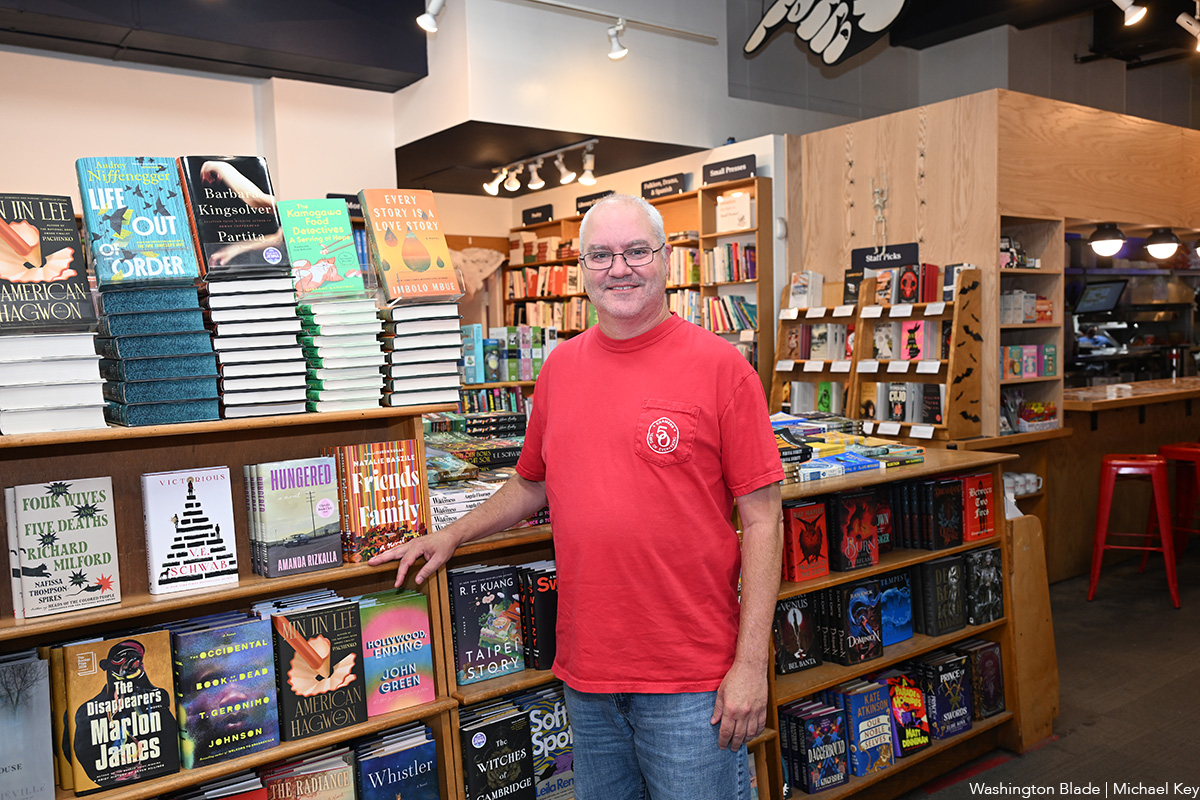
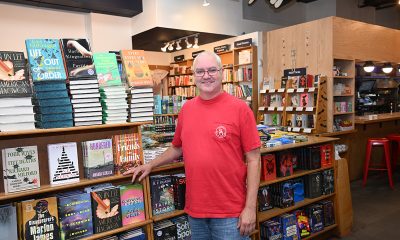
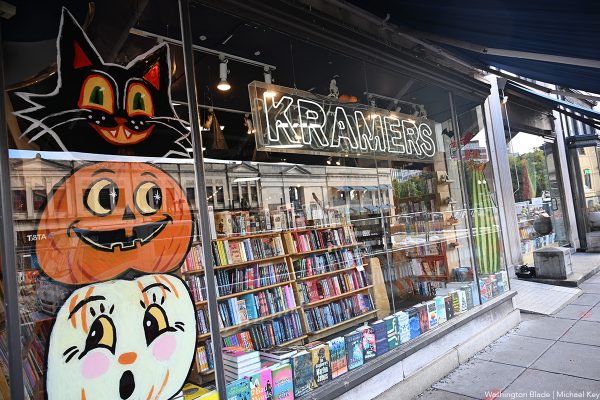
In a world of rapidly diminishing third-place spaces, Kramers – also known as Kramerbooks – is celebrating its 50th anniversary as a beloved cultural Washington, D.C. institution.
Founded in 1976 in the heart of Dupont Circle at the nation’s bicentennial, Kramers is a bookstore, café, restaurant, bar, corner store, gathering place, and multi-generational site for locals, visitors, readers, sippers, and noshers.
Originally owned by Bill Kramer, Henry Posner, and David Tenney, Kramers began first as a bookstore called Kramerbooks, and soon added its coffeeshop and rebranded as Kramerbooks & Afterwords Café. In 2016, the trio sold Kramers to Steve Salis, who expanded the bookstore and rebranded the eatery portion as All Day Café.
As Kramers turns 50, the beloved bookstore and café will honor its rich legacy this month with a milestone anniversary celebration, merchandise, and a look ahead to its next chapter as one of D.C.’s defining cultural gathering places.
The big community day is Oct. 24, bursting with community programs:
· Relume, a local woman-owned home goods and accessories brand, will offer custom book stamping for attendees;
· Aslin Beer Company will offer guests of age a curated on-site beer tasting;
· DuPont Little Flea Market will activate a small pop-up vintage market on site, offering a variety of vintage goods from various vendors;
· The store will partner with Everybody Wins DC, a nonprofit dedicated to advancing child literacy through volunteer-led reading and mentoring programs, donating 20% of all bookstore sales that day. Visit kramers.com to RSVP.
Finally, the shop is throwing a 50th anniversary celebration on Oct. 22, bringing together community leaders and longtime patrons for an event honoring the bookstore’s rich legacy and continued impact on the city.
The 50th anniversary excitement eclipses prior celebrations: for the store’s 20th anniversary, for example, the store gave away one free slice of “three truffle” chocolate cake to customers.
“Kramers has been part of the cultural heartbeat of Washington for 50 years, and that kind of legacy is incredibly rare,” said Salis, who is CEO of Catalogue hospitality, which also runs D.C. favorites like Ted’s Bulletin, Federalist Pig, Honeymoon Chicken, and Sidekick Bakery. “What makes it special is that it has never been just a bookstore — it’s a place where people gather, discover ideas, share meals, and feel connected to the city around them.”
Dupont Circle has always been a center of D.C.’s cultural legacy. The neighborhood continues to evolve, even today, as the Connecticut Avenue deckover project progresses, just outside the doors of Kramers. Just as the neighborhood has changed, Kramers has grown and evolved as well. But its identity as a center of curiosity and connection has remained the same.
Kramers was one of the first bookstores in D.C. – and the nation – to introduce a café on premises. For several years, Kramers would transport bagels from New York daily, unable to source bagels of quality locally. While today Kramers operates regular hours, generally 8 a.m.-10 p.m., for many years it was open 24 hours (literally an All Day Café) on the weekends, not closing its doors once to neighbors and friends. Kramers also branched out across the river, opening two short-lived spots in Arlington. Both are now closed.
Being located in D.C., Kramers has played host to plenty of celebrities: Barack Obama stopped by during his time in office; and Monica Lewinsky shopped there as well. Other celebs who have dropped by include Maya Angelous, Andy Warhol, and Toni Morrison.
In 2020, Salis – after suggesting that he might relocate Kramers from Dupont Circle – refreshed the restaurant, bringing in a new chef and a vibrant new menu with French influences and natural wine pours, plus menu favorites like Crab Deviled Eggs, Chicken & Waffles, and Goober Pie.
Salis recognized the challenges of operating a bookstore and café against the multitude of buffeting headwinds.
“The biggest challenge has been finding ways to evolve while protecting what makes Kramers unique. The bookstore landscape has changed dramatically, and the restaurant business has become increasingly competitive, with rising costs across the board,” he says. Kramers remains relevant by meeting customers where they are: selling a selection of “banned books,” hosting weekly book clubs and trivia nights, alongside poetry readings, writing workshops, and author talks. It even stays open late for special midnight-release parties, and now offers bookstore memberships for especially eager readers.
Kramers has endured because it’s more than the sum of its parts. Reflecting the diversity of the neighborhood, the curated books selection, and the creation of safe spaces for all kinds of readers, Kramers looks forward, Salis says, “to remain a cultural hub for D.C. for the next 50 years and beyond. We’re excited about continuing to grow and evolve while preserving the spirit that has made Kramers special for generations.”
a&e features
Bar Betsie, inviting and intimate, marks one-year anniversary
Not that a basic vodka-soda should ever dare to appear in print on the craft cocktail list at year-old Bar Betsie, but if it did, its name would be written in big black block letters, back-lit, on a marquee behind the 14-seat bar, with its ingredients – Tito’s, seltzer water – sitting visible on a shelf above.
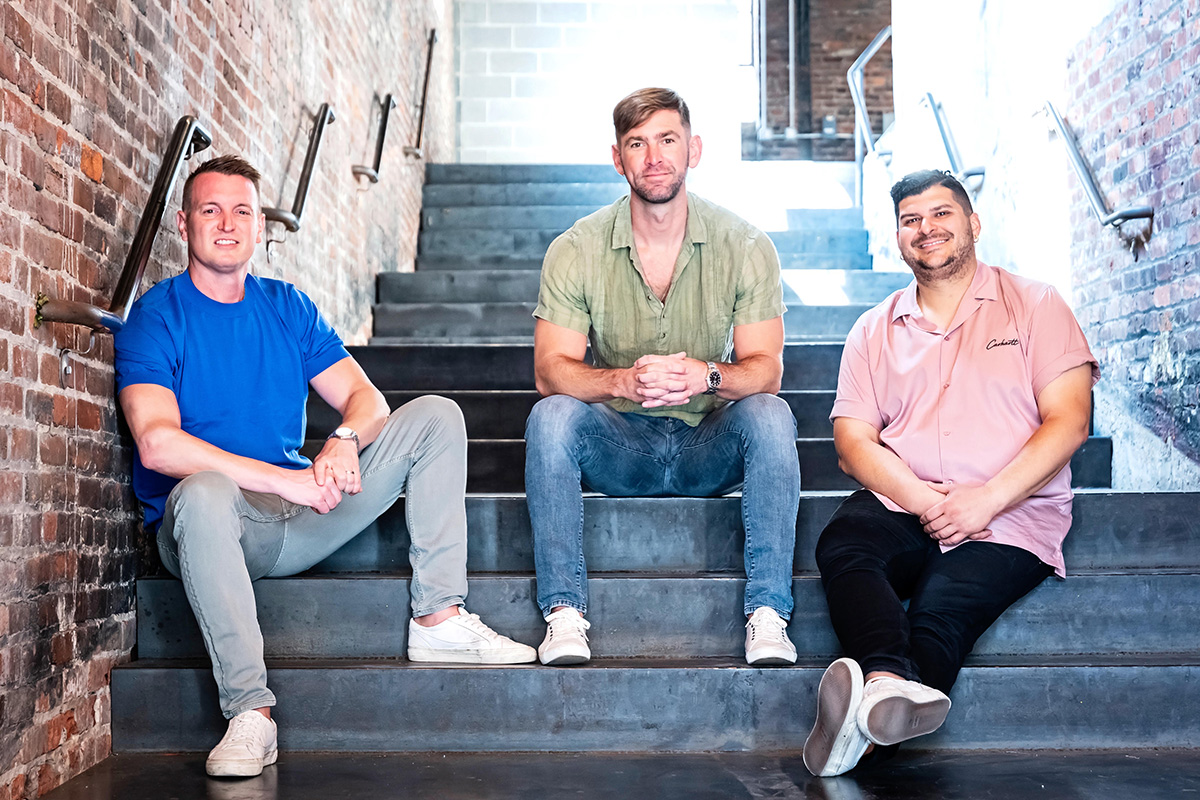
Inviting and intimate, and with that arresting visual representation of cocktail ingredients along the wall, Bar Betsie has brought its vibes-forward approach to a dynamic corner of bustling Union Market. The sophomore effort from owners JP Sabatier, Ralph Brabham, and Drew Porterfield, the trio took a different tack at Bar Betsie than at their other, older (though not by much) 14th Street bar, Jane Jane.
Bar Betsie allowed Sabatier, Brabham, and Porterfield to expand their creativity. The three first connected several years ago, when JP was manager of Maydan and Brabham and Porterfield owned Beau Thai and BKK Cookshop. Immediately hitting it off, they dreamed of opening a bar together and in 2021, it became a reality, in the form of Jane Jane.
Featuring a short list of craft, rotating cocktails and shareable bar snacks, Bar Betsie is Jane Jane’s “grittier, edgier” sister. While Jane is named after Porterfield’s mother, Bar Betsie gets its moniker from Sabatier’s mom.
“While Jane Jane is going on a field trip, Bar Betsie feels like you’re skipping school,” says Brabham. Bar Betsie brings more of a party vibe, he says. They landed in the Union Market neighborhood after thinking through what a second bar might feel like: not a carbon copy, but an atmosphere unique to its physical space and surroundings. Union Market and its transitional nature translates to the bar’s interiors: its mood lighting regardless of time of day, the crushed-velvet booths, the blood-red curved curtains to the bathrooms and kitchen, and the air of timeless mystique contrast to the elevated, buttoned-up cocktail bar that is Jane Jane. No one would bat an eye if a cabaret broke out on top of the bar. When in Bar Betsie, they say, it’s as if the warm lighting cuts through the vibe (and the stories) of 50-year-old cigarette smoke in the air.
They decided to make the cocktail menu more concise: 12 to 15 signature drinks at a time. Tequila and mezcal lead the program (again, a nod to mom Betsie, who prefers agave-based liquors). Drinks rotate seasonally (a cocktail flip is happening this month) and are developed committee-style to ensure that the whole team has input. The Clover Cult has been especially popular, with bluecoat gin, raspberry, vermouth, and lemon, but passed through a high-speed blender that whips the drink into a frenzy: it’s a “yummy, sweet cocktail with foam with a beautiful pink color,” says Brabham.
Beers feature locally brewed options, like from DC Brau and Atlas, alongside a wine program featuring skin-contact wines. And hewing to that party-forward vibe, there’s a host of shooters like the blackberry firing squad with tequila and lime.
As for the food, Bar Betsie has a true kitchen, allowing Sabatier to stretch his cheffy wings (he attended the Culinary Institute of America). Bar snacks are plentiful, including Buffalo chicken dip, a giant pretzel with beer cheese, and chicken tinga nachos that are “fucking delicious” says Raplh. “We’re aiming for food that’s snacky, salty, crunchy, and tasty to pair with the drinks.” Guest chefs show up on Sundays for kitchen cameos.
Since opening Bar Betsie, the trio has welcomed some additional acclaim. They’ve begun to set up activations with other bars; last month, they held a pop-up at new cocktail den Frank’s Wild Years, and there’s an upcoming collaboration with Death &Co, the famed bar in Blagden.
Bar Betsie occupies a unique place in the city’s pantheon of drinking destinations. All three owners are gay, and yet this (like Jane Jane) is not a gay bar.
“We never hide who we are,” say Brabham and Porterfield. “There’s always the recognition of the community we come from, and love, and want to celebrate.”
They want people to know who they are and what they stand for, showing that by being inclusive and open in their support of the community. They work to ensure that the staff is diverse and inclusive as well. They also dropped an exclusive Easter egg: behind the medicine-cabinet mirrors in the bathroom is a video screen playing footage of drag queens either getting ready, fixing, or removing makeup and wigs. “It’s a little IYKYK moment, something fun and true to who we are as a queer-celebrating and owned space,” they say.
a&e features
Ryan Murphy’s ‘Monster’ vilifies the lesbian
Netflix show promotes stereotype that queer women are dangerous
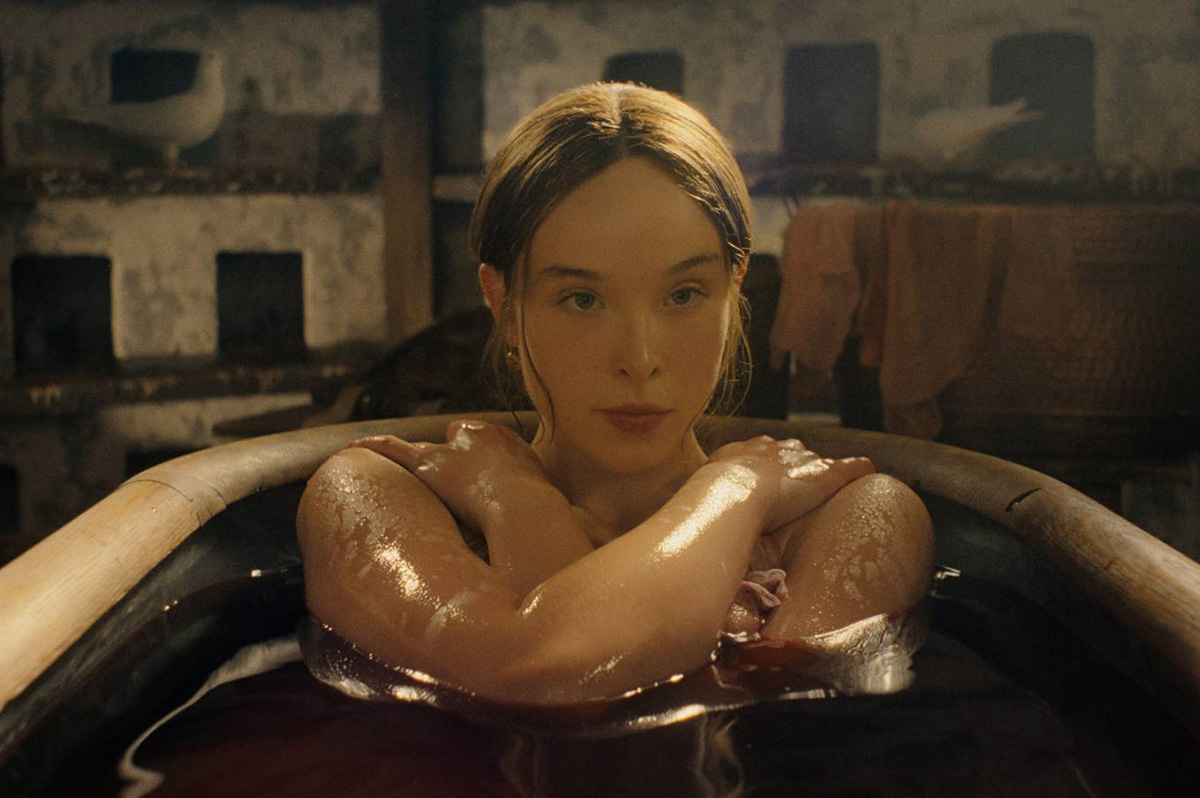
Ryan Murphy’s “Monster: The Lizzie Borden Story” just premiered on Netflix and became the most watched show on the platform. Murphy and his series are deeply controversial. The past three seasons have focused on convicted killers Jeffrey Dahmer, Lyle and Erik Menendez, and Ed Gein, and have garnered considerable criticism for sensationalizing real-life trauma, exploiting victims for entertainment, and glorifying the perpetrators.
But his newest season centers on Lizzie Borden, the white, affluent Massachusetts woman still referenced today in nursery rhymes who was never convicted of killing her parents Andrew and Abby Borden. As with Murphy’s other seasons, the show plays fast-and-loose with real-life history, instead turning a real-life crime into a psychosexual spectacle.
In real life, Lizzie was found not guilty by an all-male jury in the highly publicized 1892 trial, largely due to a lack of evidence including blood on her clothing and a murder weapon. Her initial statement contradicted her later testimony but her defense team argued that the morphine a doctor repeatedly gave her likely caused her confusion. But despite the fact that Lizzie was acquitted in court, she was ostracized by her community during her life and has been branded a murderer ever since.
Murphy’s highly fictionalized retelling of Lizzie’s story leans into this accusation not only that Lizzie murdered her father and stepmother with an axe but that she was successful in covering it up with the help of the maid Bridget Sullivan. Murphy not only concocts a sapphic relationship between Lizzie and Bridget, pinning the idea of killing Lizzie’s parents on the widely traveled woman who dyes her hair and is repeatedly called a lesbophobic slur by Lizzie’s stepmother, but also portrays Lizzie as an inspiration to Aileen Carol Wuornos, a woman who killed seven men who solicited sex and was also in a relationship with a woman.
Further, Murphy’s retelling creates a false ending to Lizzie’s story. While in real life, Lizzie and her sister Emma buy a house called “Maplecroft” and live there for the rest of their lives, Murphy instead imagines Bridget returning sporadically for romantic rendezvous with Lizzie and eventually moving back in with her and marching together for women’s right to vote. In real life, Bridget left town immediately after providing testimony and lived in Montana until she died.
Lesbophobia is at the heart of this retelling of Borden’s story. Despite the fact that Murphy depicts Lizzie and Bridget having sex and possibly getting married or at least promising themselves to one another wearing flower crowns, there is no evidence that Lizzie and Bridget had any romantic or sexual relationship. If they did have a relationship, it would likely have been hidden and any evidence destroyed, but records show that Lizzie herself refused to call Bridget by her real name, instead referring to her as “Maggie,” the name of their previous maid. It was only Lizzie’s stepmother Abby who called Bridget her real name. In Murphy’s retelling, it’s Lizzie’s stepmother Abby who refuses to learn or use Bridget’s actual name and treats her with disdain along with her stepdaughter.
Some people online argue that we are witnessing Lizzie’s story retold through Wuornos’s perspective, so adding in elements of child abuse and sapphic relationships would make sense, but there is no record that Wuornos ever visited Lizzie Borden’s home, or that she was inspired by Borden throughout her life. Instead, Murphy and his co-creator Ian Brennan use (or I would say exploit) Wuornos as a thematic device to make broad stereotypes about female rage across generations. In doing so, they conflate two real-life examples of violence to sapphic individuals.
Depicting a lesbian relationship in this way is not progress, nor is it fruitful representation today. As sapphic shows are increasingly cut and cancelled, Murphy’s inclusion just reinforces the lesbophobic and sexist stereotype that lesbians and queer women are “dangerous” to straight women and abet or incite violence against men and a family unit. At a time when anti-LGBTQ+ legislation and real-world violence and murder of LGBTQ+ people, especially queer and trans people of color, is exploding, stories that frame murder of a family unit as germinating from a sapphic relationship feed into far right narratives.
They further the myth popularized by far right leaders (including those in the highest echelons of government) that LGBTQ+ people are dangerous, a threat to heterosexual norms and family life, despite the data showing that children of same-sex parents have above average health and well-being according to research by the University of Melbourne.
Today, many LGBTQ+ people feel they have to be (or are forced to be) idealized versions of themselves in order to stave off anti-LGBTQ+ stigma, policing and violence. These “acceptable” behaviors and appearances are rooted not only in cisgender, heterosexual norms but also white supremacy, colonialism, xenophobia, and ableism. It is respectability politics that tell us how we can and should behave (including those perpetuating in the wider LGBTQ+ community) and push LGBTQ+ people to assimilate into a society governed by queerphobic normativity.
I hope it’s clear that I’m not trying to argue that we cannot and should not have shows that depict queer women who kill, or at the very least queer women who are unethical or morally complex. We need these depictions because they ask difficult questions and they reference how some LGBTQ+ people can be and are unethical. In fact, several public LGBTQ+ figures are associated with employee abuse and exploitation, ableism, and fat phobia.
But when Lizzie’s sapphic identity is invented to drive the story along, arguably to generate interest (especially straight men’s interest) in this spectacle of historical slop, it’s not a story that invites discourse and dimensionality, it’s one that collapses Lizzie, Wuornos, and queer women’s identities and relationships to plot devices. It objectifies and fetishizes queer women, arguably committing violence against not only Lizzie but also Wuornos.
And when there is so little representation of sapphic relationships on mainstream television or streaming platforms, it makes this the vast majority of representation that queer girls and women will see of themselves first, and that the straight public will see. Historians will know that Murphy’s depiction of Lizzie’s life is wrong, but many viewers will not and may not go digging for the truth.
Why not focus on the stories of bisexual, lesbian, and queer women who really existed, shared their identities (sometimes covertly, sometimes not), and had long-term partners? In fact, “Boston marriages” were common in this time period and referred to women living together when sexual and romantic relationships between women were illegal, partially because penal systems didn’t know how women could have sex with one another and didn’t want to put the idea in “impressionable” women’s minds. Why not focus on these stories instead of creating a fictionalized account? We have always existed; we do not need to invent relationships.
Murphy’s depiction of Lizzie Borden is deeply problematic. Lesbophobia is not the only issue at the heart of Murphy’s drama, but it merits a broader discussion about how mainstream media routinely hurt queer women and is part of perpetuating queerphobic violence, and what we all lose in the process.

D.C. Mayor’s Office of LGBTQ Affairs celebrates 20th anniversary

Victory Institute to honor Nancy Pelosi at D.C. conference

Kramers celebrates 50 years as a cultural hub of D.C.

The UMD student reporter who dared to record Andy Harris — and kept recording

Pride In Dallas was a weekend of unabashed joy for Texas’s queer community

Center for Black Equity honors leaders, activists at BE. Gala

Annie Andrews denounces trans athletes after Trump targets her

On Republican Long Island, gay Democrat Chris Gallant bets on public service over politics

Report: LGBTQ exclusion costs Japanese economy billions a year

‘Governments that attack LGBTQ+ rights learn from each other’
-

 Photos5 days ago
Center for Black Equity honors leaders, activists at BE. Gala
-
2026 Midterm Elections4 days ago
Annie Andrews denounces trans athletes after Trump targets her
-
2026 Midterm Elections4 days ago
On Republican Long Island, gay Democrat Chris Gallant bets on public service over politics
-
Japan4 days ago
Report: LGBTQ exclusion costs Japanese economy billions a year