News
Trump budget assailed for ‘troubling’ cuts to LGBT civil rights
Proposal would zap agency charged with enforcing Obama LGBT order
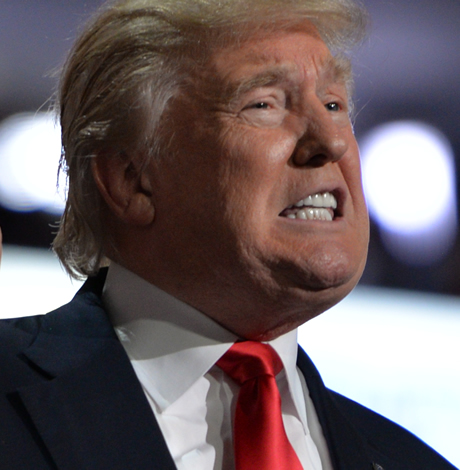
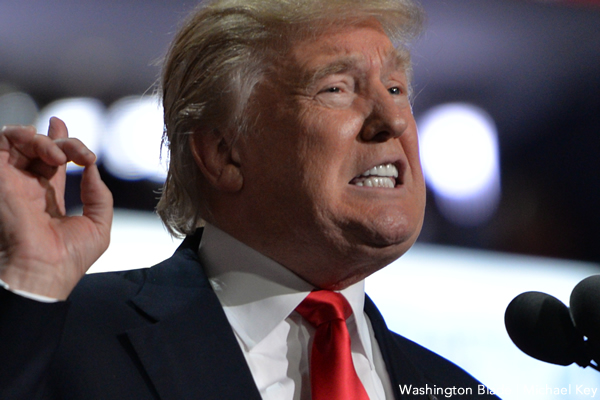
President Donald Trump has proposed a budget that includes cuts to civil rights agencies. (Washington Blade photo by Michael Key)
President Trump’s commitment to upholding civil rights for LGBT people has come into renewed question in the wake of a budget proposal that makes substantial cuts to agencies enforcing non-discrimination laws and cumulative actions over the course of his administration undermining those statutes.
Trump’s $4.1 trillion budget proposal for fiscal year 2018 — unveiled late last month — calls for major cuts from Obama-era levels to civil rights agencies within federal departments across the board, including the Justice Department, the Department of Health & Human Services and the Education Department.
Also, the budget proposes the elimination of the Labor Department’s Office of Federal Contract Compliance — which is charged with enforcing President Obama’s executive order barring anti-LGBT workplace discrimination among federal contractors — and merging it with the U.S. Equal Employment Opportunity Commission, the U.S. agency that enforces federal employment non-discrimination law.
Sharita Gruberg, associate director of LGBT research and communications for the Center for American Progress, said the proposed cuts are “really troubling” for the continued enforcement of laws barring discrimination against LGBT people.
“There are cuts across every single federal agency charged with enforcing civil rights laws and it would undo a lot of the gains that we’ve gotten over the last administration in ensuring that civil rights are robustly enforced,” Gruberg said.
A White House Office of Management & Budget official pointed to other aspects of the Trump budget the administration says demonstrates a commitment to civil rights, such as $2.7 million for the Education Department’s Civil Rights Data Collection program, which is three times more than what was planned for FY-17.
“The president’s budget proposal maintains the administration’s commitment to the enforcement of the nation’s civil rights laws,” the official said. “It straightlines funding for DOJ’s Civil Rights Division, supporting efforts to combat human trafficking; prosecute hate crimes; protect the rights of U.S. workers, service members, and veterans; safeguard the voting rights for all Americans; and promote fair housing and educational opportunities.”
For the HHS Office of Civil Rights, the Trump budget proposes a 15 percent cut — down from an estimated $53 million from FY-17 to $44 million in FY-18 — and a 10 percent staff reduction, from 177 to 161.
That office is charged with enforcing Section 1557 of the Affordable Care Act, which bars discrimination on the basis of sex in health care. The Obama administration issued a rule clarifying that provision applies to transgender people, ensuring access to transition-related care and gender reassignment surgery.
Although U.S. District Judge Reed O’Connor in Texas issued an injunction barring the Obama administration from applying the Section 1557 to cases of transgender discrimination, Gruberg said the HHS Office of Civil Rights “presumably should still be investigating complaints from LGBT people of discrimination in health care” and the cuts would be harmful.
“These are complaints that would not get the resources or staffing needed to ensure that they are investigated and that LGBT people are getting the health care that they’re entitled to without discrimination,” Gruberg said.
For the Education Department’s Office of Civil Rights, which is charged with enforcing Title IX of the Education Amendments of 1972, the funding is maintained between FY-17 and FY-18 at $107 million. However, with the same level of funding the proposed budget calls for a seven percent reduction in staff, from 569 employees to 523.
Courts are beginning to construe Title IX, which bars discrimination on the basis of sex, to apply to LGBT students. The Obama administration issued guidance indicating schools that bar transgender kids from the restroom consistent with their gender identity may lose funding under this law, but U.S. Attorney General Jeff Sessions and Education Secretary Betsy DeVos revoked the guidance.
Even though the Trump administration rescinded the guidance, Gruberg said the Education Department’s Office of Civil Rights is still charged with investigations under Title IX, citing a 75 percent increase in complaints from 2009 to 2015.
“The law is still the law and this would hurt the office’s ability to provide technical assistance about what their obligations are under the law even without the guidance in place,” Gruberg said.
For the Justice Department’s Civil Rights Division, the Trump budget proposes the elimination of 121 staff positions. That division is responsible for upholding civil rights laws, including Title VI of the Civil Rights Act of 1964, which bars employment discrimination based on sex, and the Violence Against Women Act, which specifically bars anti-LGBT discrimination in domestic abuse relief programs.
Under former U.S. Attorney General Loretta Lynch, the civil rights division filed a lawsuit against North Carolina’s anti-LGBT House Bill 2 based on the laws before the litigation was withdrawn under Trump.
“At a time when they filed the most criminal civil rights complaints and trafficking complaints ever, this staffing cut will severely diminish the ability of DOJ civil rights to file and prosecute criminal and civil rights violations,” Gruberg said.
In addition to merging OFCCP with EEOC, the budget calls for the elimination of 130 full-time staff positions from the latter agency since FY-17, although funding would be flatlined at $364 million.
Gruberg said the cuts were “shocking” and the proposed merger spells trouble because OFCCP has oversight authority to investigate federal contractors for violations unlike EEOC, which generally awaits discrimination complaints filed by employees before taking action.
“They’re able to proactively investigate the status of equal opportunity at companies receiving taxpayer funds and ensure that they are not discriminating in ways that individuals employees might not be able to really grasp, such as hiring disparities, pay disparities, some of these systemic issues that an individual employee in their position might not know what’s happening to them,” Gruberg said.
The Department of Housing & Urban Development is also charged with enforcing a non-discrimination policy for LGBT Americans, a Obama administration rule barring anti-LGBT discrimination in government-sponsored housing and homeless shelters.
But assessing the capacity to enforce the rule is hard, Gruberg said, because that task is spread out across the agency. Primarily, HUD implements the rule through the Office of Fair Housing & Equal Opportunity, but the gender identity equal access piece is primarily implemented by the Office of Community Planning & Development, she said.
In Trump’s proposed budget, staffing levels for the Office of Fair Housing & Equal Opportunity would decrease by 10 and 26 full-time equivalents would be cut from Office of Community Planning & Development.
The proposed reductions in the budget for the enforcement of civil rights law are consistent with assertions the Trump administration has undertaken actions undermining civil rights, including a travel ban, review of police consent decrees and formation of an “election integrity” task force that seems to attempt to justify voter suppression efforts. On LGBT rights, the Trump administration has made anti-LGBT appointments, omitted LGBT questions from federal surveys and declined to defend LGBT rights measures in court.
Led by the Leadership Conference on Civil & Human Rights, a coalition of more than 100 groups this week co-signed a letter to Trump earlier this week urging him to reverse course and defend civil rights.
“Our nation should honor equal protection for all, view its diversity as its strength, and strive to be an inclusive place where all in America can live, work, study, and participate in our democracy as free and equal people,” the letter says. “We call on you and your administration to take affirmative steps to halt the problematic policies and initiatives we have outlined, and to provide positive leadership on these issues in order to promote inclusion and respect for the basic rights and dignity of every person in America.”
The EEOC doesn’t seem fazed by the prospects of having to implement the duties of OFFCP in addition to investigations and prosecutions already underway.
Kimberly Smith-Brown, an EEOC spokesperson, said the merger wouldn’t happen until FY-19 and the agency expects a “smooth transition” into the change.
“The FY 2018 budget refers to the proposed merger which would take place in FY 2019, with 2018 being a transition year during which OFCCP and EEOC would engage in transition talks and planning,” Smith-Brown said. “There were no financial or staffing implications for EEOC in FY 2018. Should the proposal to merge OFCCP and EEOC be approved by Congress, we are committed to a smooth transfer and transition.”
The OFFCP never publicly announced any investigations, charges or victories under Obama’s 2014 executive order against LGBT discrimination. It seems unlikely there were any because the Labor Department usually announces them as they occur.
The Labor Department for a span of years under the Obama administration and Trump administration hasn’t responded to the Washington Blade’s request to comment on whether investigations under the order had taken place.
Even though the EEOC has stated it can handle the transition, Gruberg said she thinks those remarks are aspirational and the proposed changes under the Trump budget aren’t “practically feasible.”
“You’re combining two offices that play very different roles in equal opportunity enforcement,” Gruberg said. “At the same time, you’re severely cutting staffing at these offices. And so, I think the combination of these two moves are really going to hinder the ability of these agencies to secure equal opportunity in the workforce for LGBT people.”




Brazil
Lula, Flávio Bolsonaro to face off in second round of Brazilian presidential election
Neither man received at least 50 percent of the vote on Sunday
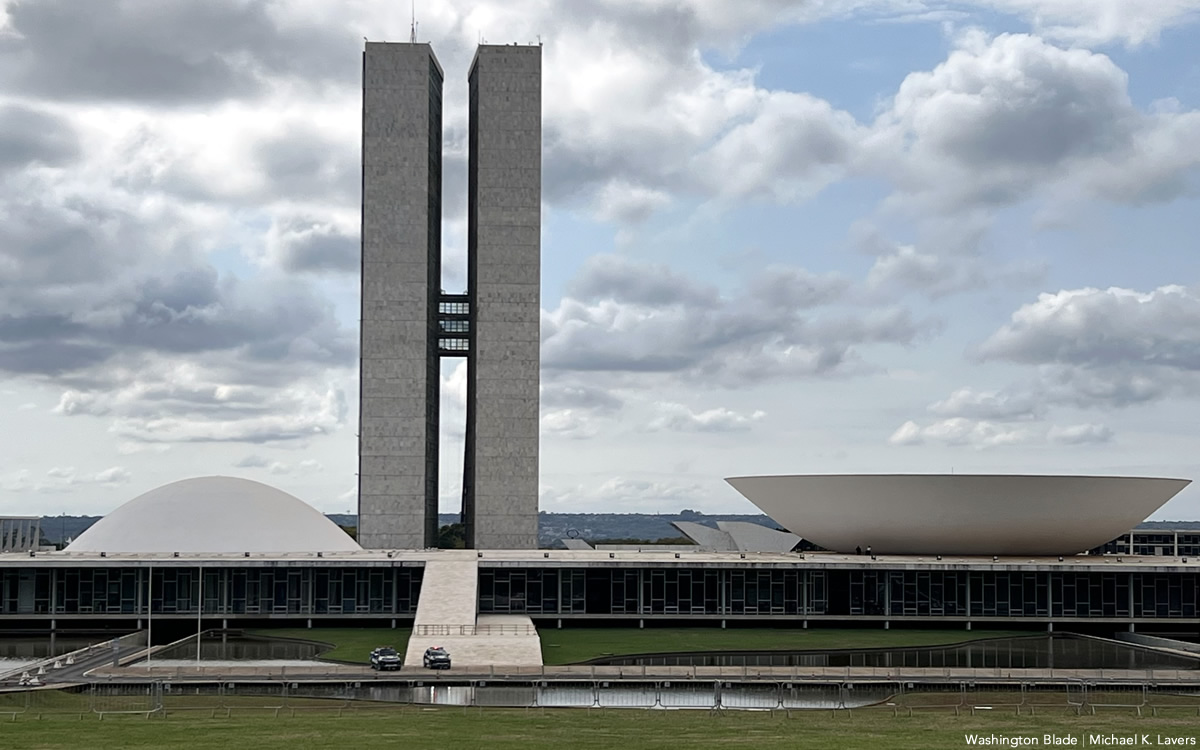
SÃO PAULO — President Luiz Inácio Lula da Silva will face off against Sen. Flávio Bolsonaro in the second round of Brazil’s presidential election on Oct. 25 after neither man received more than 50 percent of the vote in the first round that took place on Sunday.
Bolsonaro was ahead of Lula by a 47.26-44.89 percent margin with 98.65 percent of the vote counted.
Lula in 2022 defeated Bolsonaro’s father, then-President Jair Bolsonaro, in that year’s presidential election.
The Brazilian Supreme Court last year sentenced Bolsonaro — who repeatedly targeted LGBTQ Brazilians and other groups while in office — to more than 27 years in prison for his role in an attempted coup that saw thousands of his supporters storm the Congress, presidential palace, and the Supreme Court itself on Jan. 8, 2023. Bolsonaro is currently serving his sentence at his home in Brasília, the country’s capital, because of his poor health. His son has pledged to pardon him if he becomes the country’s next president.
Lula, who leads Brazil’s leftist Workers’ Party, was Brazil’s president from 2003-2010.
Sergio Moro, a judge who Jair Bolsonaro later tapped as his government’s Justice and Public Security Minister, in 2017 sentenced Lula to 9 1/2 years in prison after his conviction on money laundering and corruption charges that stemmed from Operation Car Wash.
The Supreme Court in November 2019 ordered Lula’s release.

VoteLGBT, an organization that seeks to increase LGBTQ representation in Brazilian politics, noted 529 openly LGBTQ candidates ran in this year’s election. More than 100 of them are either transgender or travesti.
The Washington Blade will cover the results of these races when they become available.
U.S. Federal Courts
Renee Good’s family files two federal lawsuits
ICE officer killed lesbian mother of three in Minneapolis in January
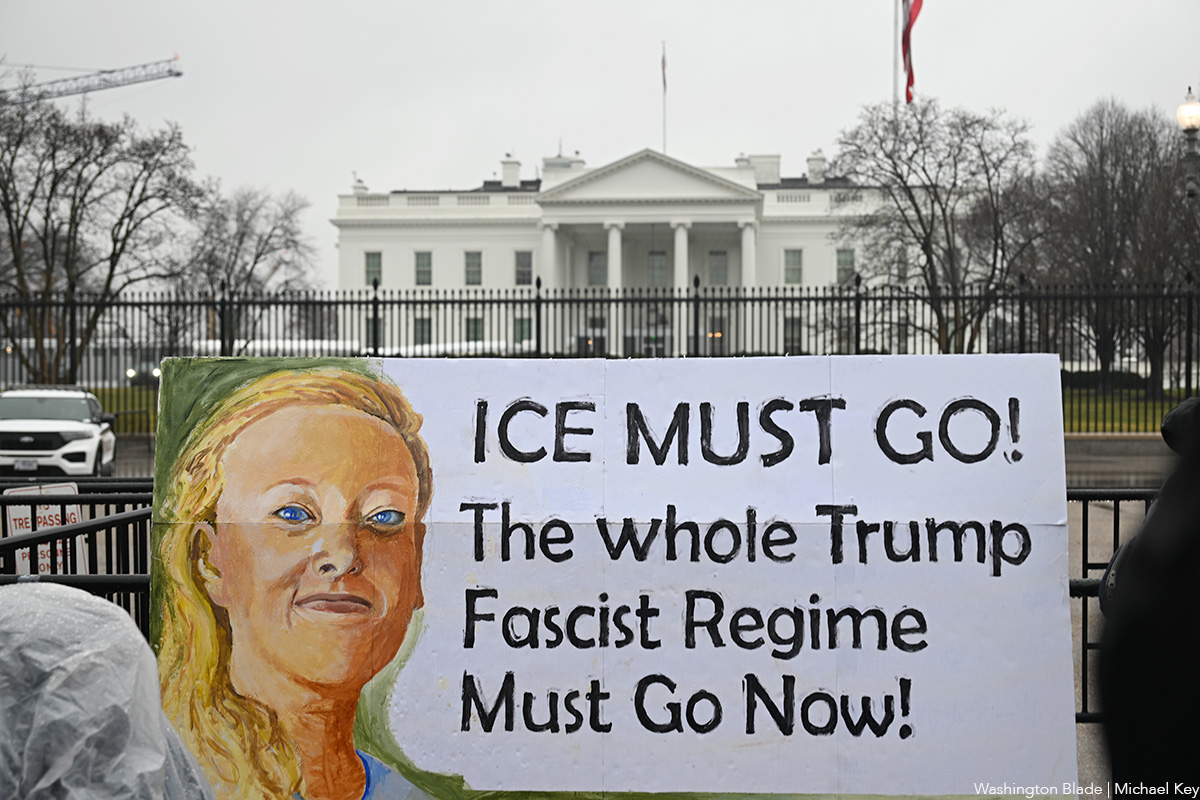
The family of lesbian woman who a U.S. Immigration and Customs Enforcement killed in Minneapolis in January have filed two federal lawsuits.
The Associated Press notes Renee Good’s partner, Becca Good, and her brother, Brent Ganger, in the lawsuits accuse the Trump-Vance administration and ICE officer Jonathan Ross of “unjustified and excessive use of force.”
Renee Good was a 37-year-old mother of three.
Ross on Jan. 7 shot and killed her in Minneapolis.
The shooting took place during the Trump-Vance administration’s so-called Operation Metro Surge that targeted Somalis and other immigrant groups in Minneapolis. U.S. Customs and Border Protection agents on Jan. 24 shot and killed Alex Pretti, a 37-year-old nurse who worked for the U.S. Department of Veterans Affairs, in Minneapolis.
Both shooting sparked outrage across the U.S. and around the world.
“Every morning, she is my first thought. I think about how the kids are growing up without their mama, and how I will grow old without the love of my life. I think about how we should have had 40 more years together. But I also think about what she would have wanted after all of this,” said Becca Good in a statement the Human Rights Campaign released after she and her partner’s family announced the lawsuits.
“As we have tried to navigate our own massive loss, I am also devastated by how many other lives have been destroyed in this darkest of times. So many other families are dealing with the loss of their loved ones; to everyone who has had to witness it — the pain of this moment extends far beyond our family,” added Becca Good. “What happened to us should never happen to any family. No child should grow up without a parent because of it. No one should lose their sister or their daughter. No one should have to live without their soulmate. Accountability — real accountability — is the only way to make sure that no other family has to go through what we have.”
HRC President Kelley Robinson in her own statement said the Good family “is one of our own — and today, the Human Rights Campaign joins them in demanding justice.”
“It has been eight months and 24 days since Renee was shot and killed by an ICE agent, and the United States government has failed to take responsibility for its actions,” said Robinson. “Her partner, Becca, and brother Brent, have made the brave and bold decision to hold the government accountable, and we stand with them. Like every person murdered by ICE, Renee should be alive today. The Goods were robbed of what every American family deserves: to be together.”
Turkey
House Democrats urge White House to confront Turkish government over anti-LGBTQ crackdown
More than 60 lawmakers signed letter to Secretary of State Marco Rubio

More than 60 House Democrats on Thursday called upon the Trump-Vance administration to confront the Turkish government over its anti-LGBTQ crackdown.
Turkish authorities last month detained dozens of people during raids that targeted the country’s LGBTQ community, advocacy groups, and HIV/AIDS service organizations. Journalists were among those taken into custody outside an Istanbul courthouse on Sept. 15 during a protest against the raids that are part of the government’s “My Family Is Safe” campaign.
Council for Global Equality is among the groups that organized a protest outside the Turkish Embassy in D.C. on Sept. 18.
View on Threads
U.N. High Commissioner for Human Rights Volker Türk on Sept. 21 during a U.N. LGBTI Core Group event that took place on the sidelines of the U.N. General Assembly specifically referenced Turkey.
The Core Group is a group of U.N. member states that have pledged to support LGBTQ and intersex rights.
The U.S. withdrew from the Core Group after the Trump-Vance administration took office. The White House has not publicly commented on Turkey’s anti-LGBTQ crackdown.
“These developments warrant an urgent diplomatic response from the United States to protect the rights of freedom of expression, association, and assembly for all Turkish citizens, regardless of their sexual orientation or gender identity,” reads the letter the lawmakers sent to Secretary of State Marco Rubio. “We therefore urge you to use all available channels to raise these concerns directly with the Turkish government; press for the immediate release of those arrested and detained for their legitimate human rights activities; and ensure that the U.S. Embassy in Ankara closely monitors related judicial proceedings.”
“We further urge the Department to press Turkish authorities to cease efforts to criminalize LGBTQI+ organizations and advocacy and to affirm the right of all people to peacefully assemble,” it adds.
Arizona Congresswoman Yassamin Ansari and U.S. Rep. Dina Titus (D-Nev.) spearheaded the letter. House Speaker Emerita Nancy Pelosi (D-Calif.); House Foreign Affairs Ranking Member Gregory Meeks (D-N.Y.); Del. Eleanor Holmes Norton (D-D.C.); Delaware Congresswoman Sarah McBride, and U.S. Rep. Mark Takano (D-Calif.), who chairs the Congressional Equality Caucus, are among the 65 House Democrats who signed the letter.
“The United States must be a leader in defending human rights and what is happening in Turkey demands an urgent diplomatic response. It’s absolutely appalling to see LGBTQI+ people and the organizations that stand up for their rights be targeted by the (President Recep Tayyip) Erdogan regime,” said Ansari in a press release. “I stand proudly with the LGBTQI+ community here and abroad and will continue to fight for their right to live openly, freely, and without fear, anywhere and everywhere.”
The press release notes the Human Rights Campaign, the Council for Global Equality, and the Planned Parenthood Federation of America support the letter.
“Turkey’s attacks on its LGBTQI+ community are a disturbing reminder that the fight for equality and human rights does not stop at our borders. No one should be silenced or detained for simply being who they are or peacefully demanding dignity and freedom,” said HRC Government Affairs Senior Director Jennifer Pike Bailey. “We are grateful to Representatives Ansari and Titus for recognizing that the fight for LGBTQI+ equality is global and that, even amid the many challenges facing our community here at home, we cannot turn our backs on LGBTQI+ people facing persecution abroad.”
A State Department spokesperson on Friday told the Washington Blade that “as a matter of policy, we do not comment on congressional correspondence.”

Lula, Flávio Bolsonaro to face off in second round of Brazilian presidential election

The financial realities facing LGBTQ+ first-time buyers

‘Merrily’ is for Sondheim super fans, the uninitiated, and anyone in between

Engrossing ‘Tip Toe’ delivers tension and an ominous warning

Eliot Glazer’s new book an engaging collection of essays

Meet the LGBTQ candidates running for U.S. House, Senate

Ana Brnabić becomes world’s first openly lesbian head of state

Vote now! Best Of LGBTQ DC readers’ choice awards

Gay Va. couple hopeful voters will enshrine marriage equality in state constitution

Victory Fund board investigates former staffers’ allegations against CEO Evan Low
-

 2026 Midterm Elections5 days ago
Meet the LGBTQ candidates running for U.S. House, Senate
-
Serbia5 days ago
Ana Brnabić becomes world’s first openly lesbian head of state
-
Arts & Entertainment5 days ago
Vote now! Best Of LGBTQ DC readers’ choice awards
-
Virginia4 days ago
Gay Va. couple hopeful voters will enshrine marriage equality in state constitution