Real Estate
Make your home your palette
5 tips to selecting the right artwork for your space
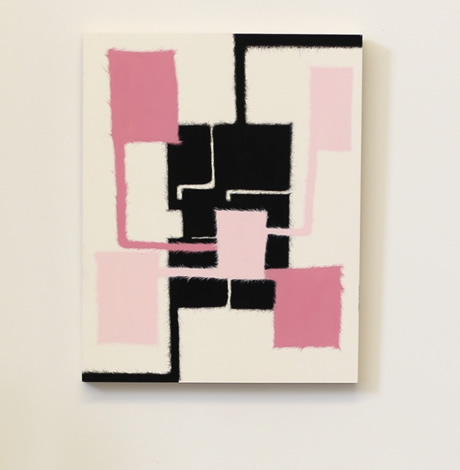
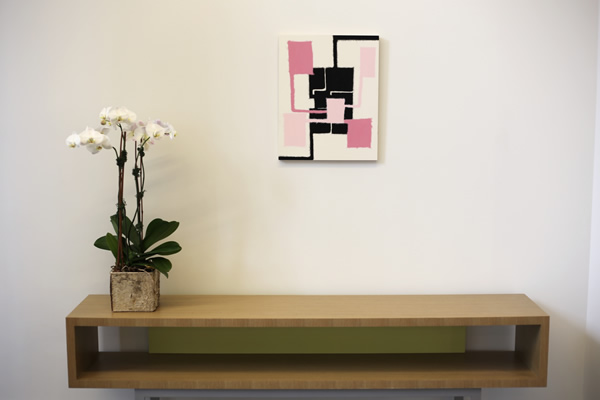
The walls have been adorned with the work of world class artists at The Modern at Art Place in Fort Totten.
Creatively inspired living is a popular trend in Washington, D.C., with continuous pop-up art spaces, colorful neighborhood street murals and Instagram-worthy destinations around the entire city.
A number of residential areas are beginning to incorporate this popular artistic flair into their properties to bring that cool-factor into daily life for residents. One such property is The Modern at Art Place in Fort Totten. There, the walls have been adorned with the work of world class artists, in honor of the Washington Color School. An international art movement of the 1950’s and 60’s, The Washington Color School was a group of Washington D.C. artists that developed a form of abstract art from color field painting. A head-turning chandelier immediately grabs your attention as you enter: the piece, appropriately named “Phoenix” by Susan Chrysler White, symbolizes the revitalization within the Fort Totten community and how The Modern reflects that renewal. Other artists to note are Gene Davis who was the definitive artist of the stripe and the lyrical artist, Sam Gilliam who still lives here in Washington D.C. These pieces from silk screens to prints to photography, bring stunning visual imagery to residents’ lives. The Modern is a community at the forefront of this Washington trend of using artwork to convey a lifestyle or a story throughout a space.
Whether you’re a collector of watercolors, a lover of abstracts or just a curator of local pieces, you too can bring this blend of creativity into your home or apartment to reflect your interests and lifestyle. Here are a few tips to help get you started:
1. Buy What You Love. If the artwork you are choosing for your space doesn’t evoke deep emotions or positive feelings for your everyday life, then don’t buy it. Purchasing and displaying quality artwork in your home is a commitment. You are the one that passes by it each day — so don’t be afraid to let your heart guide you.
2. Be Open to Various Mediums. Artists make beautiful works beyond paintings. Just as The Modern displays a variety of mediums, seek out different pieces that bring depth and diversity to your space. Photography, for example, is a fantastic way to make a strong statement and infuse meaning into your décor.
3. Support Local Artists. Whether you find an artist in your region, city or own backyard — there is nothing better than owning a piece made by a local artist. Not only are you supporting your community, but you are bringing locally sourced life and stories into your space. To find artists in your area, be sure to visit local art galleries, search online and ask friends and neighbors about the artwork in their homes.
4. Contrast + Complement the Space. Hanging artwork in your space is a talent in its own right and takes thoughtful planning. Just like you would style your outfit, you should also consider how you style your space. Pick pieces that complement and balance each other while also considering where you can add contrast in unique ways.
5. Framing and Location are Important. Purchasing and displaying artwork is a commitment. You don’t have to be an art connoisseur, but when you do purchase a quality piece that will hang in your space for a long time, you should give it the respect it deserves with professional framing. These days, professional framing can be done with a click of a button. There are a ton of outlets online to order custom materials — we recommend checking out SnapBox or Simply Framed to get started.
Remember, your home is a canvas that should reflect who you are, your values and the people and things you love. Take your time with the process, explore all that our diverse area has to offer, get inspired and most of all, have some fun.
The Team at The Modern at Art Place – The Modern is the residential cornerstone of the Art Place at Fort Totten development. The residential community is being developed by The Morris & Gwendolyn Cafritz Foundation and managed by Bozzuto Management and features inspired amenity spaces, and studio, one-, and two-bedroom units within the property. Upon completion, the Art Place development will include more than 300,000 square feet of retail, including the Explore! Children’s Museum, an XSport Fitness center and 170,000 square feet of cultural and art spaces to entertain and educate community residents.







One of the biggest headaches of the new home process is the actual moving part. By the time someone is buying a home, most people are beyond the “I just need a pickup truck, a pizza and a case of beer for my friends.”
If that is still someone’s preferred way to move, that’s great. However, many people find they need a much more robust plan. It can also trigger a lot of feelings about items one owns, what to do with them, do they have too much, should I keep this memento that I never use? Etc.
Moving is a chance for a person to “clean house” literally, figuratively, spiritually and energetically. A person can figure out which items they want to keep, and which need to go. As someone who recently moved across the country, I can speak to this experience. It’s also time for what people call “the fresh start effect.” This phenomenon, according to psychologists, can happen in little moments (like the start of a new work week) and bigger moments (such as moving from one home to the next).
The fresh start effect offers these benefits often mentioned by psychologists:
- Mental Accounting: Dates act as chapter breaks, letting you put past failures into a previous period.
- Psychological Distance: You separate your flawed past self from your aspirational future self (“That was the old me”).
- Optimism Boost: New beginnings clear mental clutter and increase your sense of agency and control
Does this mean that “the new you” will be the perfect version you envisioned? Probably not. We are humans. But it might mean you get a chance to “leave some of the old you behind” within the walls you used to live in, and now have a chance to have a new layout, a new décor, a new color pattern, new wallpaper, donate old furniture and books or magazines, throw out clothes you no longer use or fit in, and enjoy the opportunity to literally use the, “Does this spark joy?” method that was made so popular by Marie Kondo in her Netflix series.
So, for all its hassle and headache, moving is a chance to shake off the “old you” and try on the new you, to incorporate the items you would like to keep and use more of, and shed the items, habits, and ways of thinking that you feel no longer serve you.
I can speak to the experiences that several of my clients had when they moved from a previous residence to a newer one. It usually coincided with a change in relationship status, a change in employment, a change in family size, but sometimes it just seemed to correlate to a new attitude and perspective that the client was really hoping for.
I have literally had clients come to me after the fact, in tears, that they were so happy they made the decision to move out of a situation that no longer served them, and move into one that felt like a much better fit.
Change can be annoying and overwhelming at times, but usually most people come out the other side, not wanting to return to the way they were before.
Joseph Hudson is a referral agent with RLAH. Reach him at 703-587-0597 or [email protected].
Real Estate
With gas prices soaring again, a staycation is a good plan
Home can be your personal retreat and your own private resort
When airfare costs more than your monthly utility bill and a weekend road trip requires a second mortgage just to fill the gas tank, many homeowners are discovering an unexpected luxury: the staycation.
A staycation isn’t settling for less—it’s reaping the benefits of one of the biggest investments you can make: your home. Much more than a place to sleep, it’s your personal retreat, your gathering place and, with a little preparation, your very own private resort.
Whether you own a single-family home, a townhouse, or a condo, creating a memorable staycation starts with appreciating what made you fall in love with your property in the first place.
Start with a home refresh. Think about checking into a beautiful vacation rental. It’s spotless, organized, and inviting. You can recreate that same feeling by spending a day preparing your home before your staycation officially begins.
Clear away clutter, deep clean the bathrooms and kitchen, wash the windows, and put fresh linens on every bed – even if you’re not expecting guests. Fluff the pillows, light a favorite candle, and place fresh flowers on the table. These small touches instantly make your home feel more luxurious.
If your budget allows, hiring a professional cleaning service can be one of the best staycation perquisites you make. After all, vacation should begin the moment you wake up and not after you’ve spent the day scrubbing floors.
Treat your staycation like a real trip. Set away messages on your phone and out of office notices on your email. Skip unnecessary chores for a few days. Giving yourself permission to relax may be the most valuable part of the entire experience.
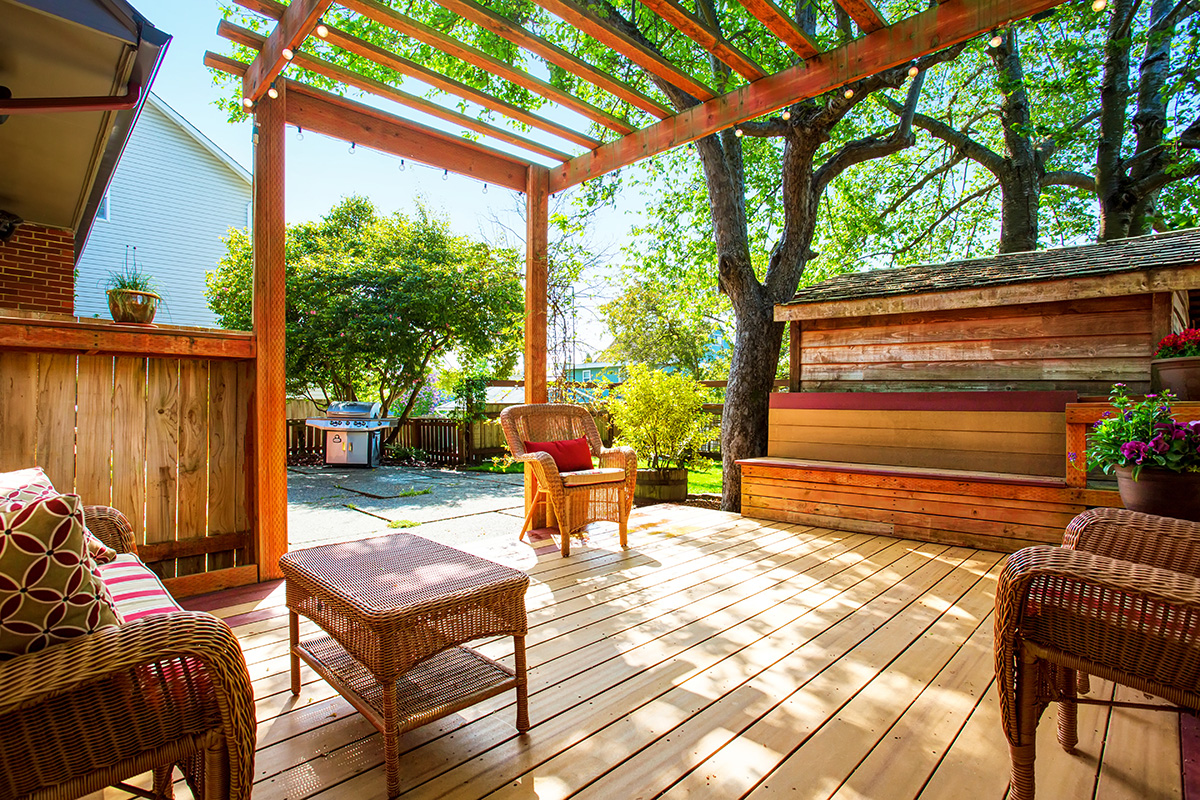
One of the greatest advantages homeowners have over travelers is private outdoor living space. Whether it’s a spacious backyard, a screened porch, a rooftop terrace, or a cozy condo balcony, these areas can become the centerpiece of your staycation.
Stringing lights and adding comfortable seating, colorful planters, and outdoor rugs can completely transform the atmosphere without spending thousands of dollars. Add a portable fire pit, a tabletop fountain, or a hammock, and suddenly your backyard starts competing with many resorts.
Host an evening cookout, organize a game night, invite neighbors over for dessert, or gather around the fire pit for conversation after sunset. These simple moments often become the memories we treasure most.
Inside, transform your family room into a home theater complete with popcorn and comfortable blankets. Turn your breakfast room into a morning coffee café. Designate a quiet reading corner where phones are prohibited. Create a spa-like bathroom with plush towels, candles, bath salts, and relaxing music.
One of the highlights of traveling is experiencing new food. Instead of dining out every night, create themed dinners inspired by your favorite destinations. Prepare homemade Italian pasta one evening, Caribbean grilled seafood another, or a backyard Texas barbecue over the weekend. For a touch of whimsy, dress the part.
Pair each meal with music and libations from the region and enjoy dinner outdoors whenever possible. Suddenly, your dining room becomes part of the vacation experience instead of just another place to eat.
Families with children can turn a staycation into an adventure by seeing their home through a child’s eyes. Set up a backyard camping experience with a tent, flashlights, and s’mores around the fire pit. Transform the living room into an indoor campground complete with sleeping bags and a movie under a blanket “fort.” Organize a backyard Olympics with relay races, water balloon tosses, scavenger hunts, or miniature golf using household items.
Encourage children to plan a family picnic in the backyard or on the patio, choose a theme for a movie marathon, or help prepare meals inspired by countries they’d like to visit someday. The goal is to create experiences your children will remember long after summer is over.
Enjoy the amenities you already pay for. Condominium communities and many planned neighborhoods offer amenities that residents often overlook.
Swimming pools, fitness centers, tennis and pickleball courts, walking trails, clubhouses, grilling stations, and community gardens are designed to enhance your lifestyle. During your staycation, make a point of exploring everything your community offers. You may discover you’ve been living beside your own private resort all along.
Real estate professionals often talk about resale value, appreciation, and return on investment. While those things certainly matter, there’s another return that’s harder to measure: the enjoyment you get from living in your home every day.
You don’t need a boarding pass to recharge. You don’t need a hotel reservation to make memories. Sometimes the perfect getaway is the one you already own.
Valerie M. Blake is a licensed Associate Broker in D.C., Maryland, and Virginia with RLAH @properties. Call or text her at 202-246-8602, email her at [email protected] or follow her on Facebook at TheRealst8ofAffairs.
Real Estate
When buying a home, it’s decisions, decisions, decisions
Keeping notes on the process makes for an informed purchase

When looking to buy a home, there are lots of details to consider. Many of my clients would come to me and say, “Joe I want to buy a place, but I haven’t decided which neighborhood to buy in.” And the struggle was real. A few clients had everything decided from the color of the hallway walls to the cabinet handles and sometimes which three square blocks they wanted to look at.
But other clients were occasionally looking at properties in areas as distinct as Union Market/NOMA, Brookland, Logan Circle, and then we would even go across the river to look at a property in Shirlington or the Van Dorn areas of Virginia, which all have their own unique flavor and characteristics.
Sometimes clients would tell me, “I only want to look in Mount Pleasant or Adams Morgan.” Or, “don’t even show me any properties west of this street or south of that street.” My job wasn’t to convince people where to live. It was to just take the parameters they set for me and find as good of a property in that zone as I could, coordinate the showings and, if necessary, offer the strategy.
One can see that buyers often had more decisions to make than a seller. From a seller’s perspective, the house was where it was, and we just had to make the best of it. But working with a buyer could mean looking at five different neighborhoods, and then being a “thought partner” to help them figure out which were the top two or three areas they had seen, and then further distilling those down into what was available and weighing those options against each other.
One house could have the dream bathroom but also be located six blocks further from a Metro stop, walkable shopping and dining, and “just too far away from my friends.” Another house could have all the neighborhood options a client was looking for, but was just not in turnkey condition, and would require an additional $30,000 of upgrades once purchased to make it into the dream home they envisioned.
One activity I often asked buyers to do was to keep an active list in their heads of the properties they liked, and to keep a running rank of the top three. I often encouraged them to bring a notebook along on the journey where they could take notes and write down questions they thought of as they looked. It was an important decision, and sometimes the largest purchase of their lives. Why not take it a little seriously, and take notes? This could often help the buyer later when they felt it was time to decide.
The point here is, keeping a notebook handy can sometimes help a person with what feels like an overwhelming process. It provides a space to explore how one feels, jot down important details to remember, and then use that to make an informed decision.
Joseph Hudson is a referral agent with RLAH. Reach him at 703-587-0597 or [email protected].

Former Capital Pride board member reiterates sexual harassment allegation

Grace Meng sharply criticizes DOJ over hospital settlements

‘Star Trek: Strange New Worlds’ star Celia Rose Gooding breaks down that finale time travel twist

Center for Black Equity’s annual gala to take place Oct. 3