Arts & Entertainment
Billie Jean King to receive Smithsonian’s ‘Great Americans’ Medal
The tennis legend will be recognized for her decades-long career

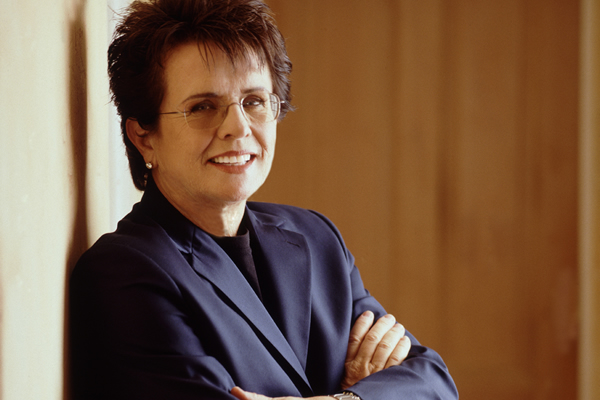
Billie Jean King (Photo via Wikimedia Commons)
Tennis legend Billie Jean King will be honored with the Smithsonian’s “Great Americans” medal at the National Museum of American History (Constitution Avenue N.W. between 12th and 14th Streets) on Tuesday, Sept. 25 at 7:30 p.m.
King, who hails from Long Beach, Calif., will receive the medal“ for lifetime contributions that embody American ideals and ideas.”
She will be interviewed on stage by David M. Rubenstein, chair of the Smithsonian Board of Regents, before being presented with the medal.
In 1973, at the age of 29, King defeated then 55-year-old Bobby Riggs during the historic “Battle of the Sexes” match. The dress she wore at the match is part of the Smithsonian’s collection and is on display at the Bullock Museum in Austin, Texas.
King’s other achievements include winning 39 Grand Slam titles, receiving the Presidential Medal of Freedom in 2009 and being named one of the “100 Most Important Americans of the 20th Century” by Life magazine.
She is the founder of the Women’s Tennis Association and the Billie Jean King Leadership Initiative, a non-profit aimed at making leadership more inclusive, and is co-founder of TeamTennis, a mixed-gender professional tennis league.







The Capital Pride Alliance presented the 2026 Capital Pride Honors at “The Audacity Brunch: In Full Fuchsia” at the Four Seasons Hotel Washington, D.C. on Sunday, June 7.
(Washington Blade photos by Landon Shackelford)


Out & About
Congressional Cemetery hosts Gays & Graves
Daylong Pride celebration blends history, remembrance, art and community

Historic Congressional Cemetery will host the second annual “Gays & Graves: A Big Gay Festival” on Sunday, June 14 at 11 a.m.
The event will feature pioneering activist Randy Wicker, the Gay Men’s Chorus of Washington, and new public art installations and programs celebrating LGBTQ+ history. Gays & Graves is an official partner event of Capital Pride 2026.
This event is a daylong Pride celebration blending history, remembrance, art and community. Visitors can shop from LGBTQ+ and allied artists and makers, experience performances and interactive installations, and engage with programs exploring LGBTQ+ history and lived experience.
For more details, visit the cemetery’s website.
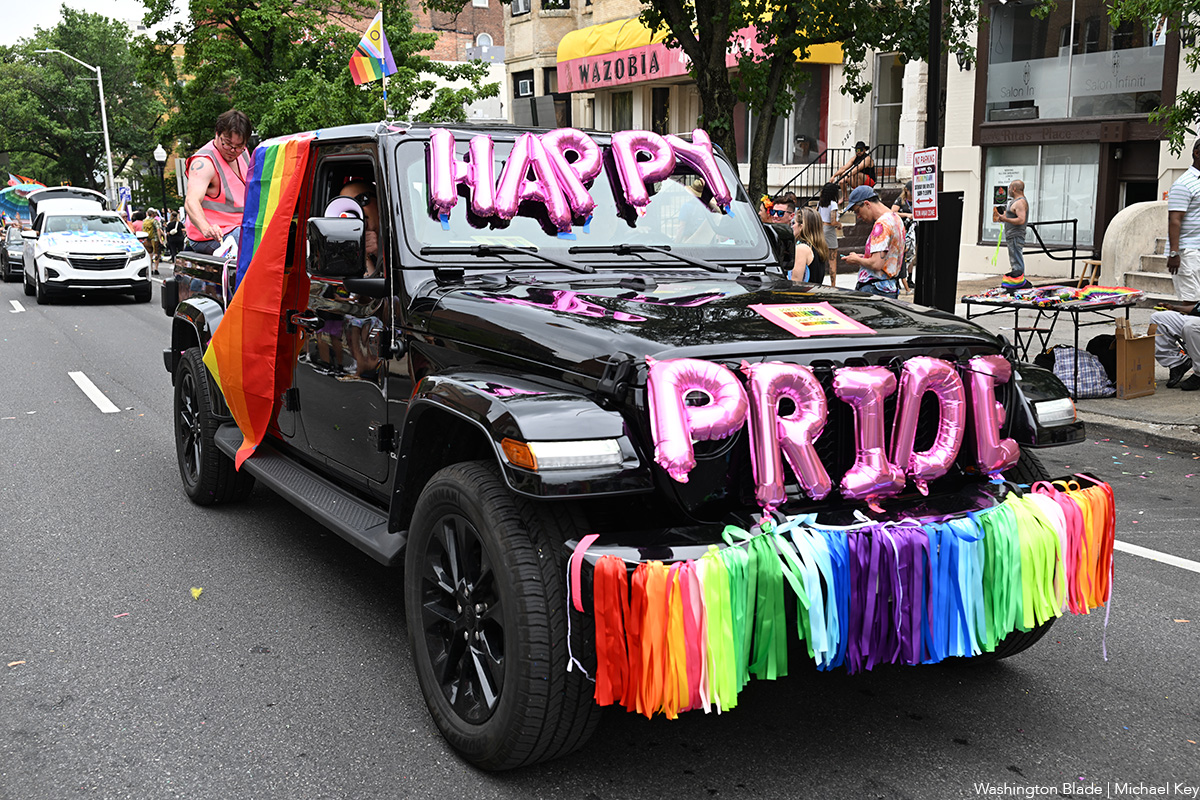
Baltimore Pride is underway, taking place from June 8-14.
The Pride Parade will be on Saturday, June 13 at 12 p.m. at Charles Street & North Avenue, followed by the Pride Block Party at 1 p.m. at Druid Hill Park. And then the Pride Festival will be held on Sunday, June 14 at 12 p.m. at Druid Hill Park.
There will be an array of additional events including: a fashion show, a “Suits and Sneakers” reception and a 5k race, among many other events.
For more details, visit Baltimore Pride’s website.

PHOTOS: The Audacity Brunch

D.C. Council approves expanded grant funding for Mayor’s Office of LGBTQ Affairs

Congressional Cemetery hosts Gays & Graves

Baltimore Pride is here

Calendar: June 12-18

Hundreds of thousands expected to attend D.C. Pride events

Queen Jean is Tony’s first transgender winner

EXCLUSIVE: Pelosi reflects on four decades of LGBTQ advocacy

David Archuleta, Monroe Alise named D.C. Pride parade marshals

D.C. prepares to party as Pride celebrations kick off Saturday
-

 District of Columbia5 days ago
Hundreds of thousands expected to attend D.C. Pride events
-
National5 days ago
Queen Jean is Tony’s first transgender winner
-
Congress4 days ago
EXCLUSIVE: Pelosi reflects on four decades of LGBTQ advocacy
-
District of Columbia4 days ago
David Archuleta, Monroe Alise named D.C. Pride parade marshals