a&e features
‘Black queer people are victimized every day’
Jussie Smollett attack highlights growing problem of hate crimes
Stacey Long Simmons, director of advocacy at the National LGBTQ Task Force, vividly recalls the time, as a young college student, she was walking outside of campus and a group of white men slowed down and shouted, “N-word bitch go home.”
Simmons hails from Queens, N.Y., where she admits racist incidents did occur but being verbally attacked like that was a “shock to my system.” While the men harassed her for being a black woman she has no doubt that they could have easily swapped out the adjectives to harass her for being a black, bisexual woman.
“If I had been walking down the street holding my girlfriend’s hand at the time I’m sure it would have been you ‘black dyke B-word’” Simmons said. “I don’t think we ever really know why we get attacked. The point is for us to recognize that in the eyes of many we’re problematic no matter what point they enter into whether it’s the race lens, the sexual orientation or gender identity lens.”
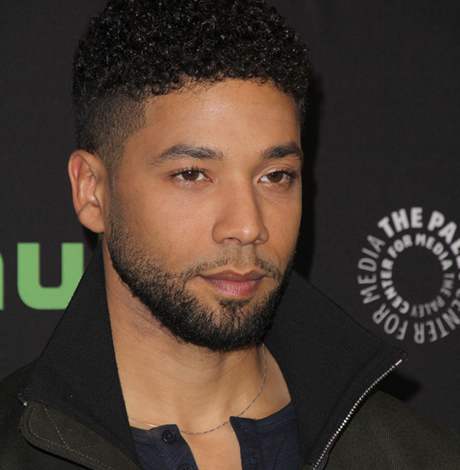
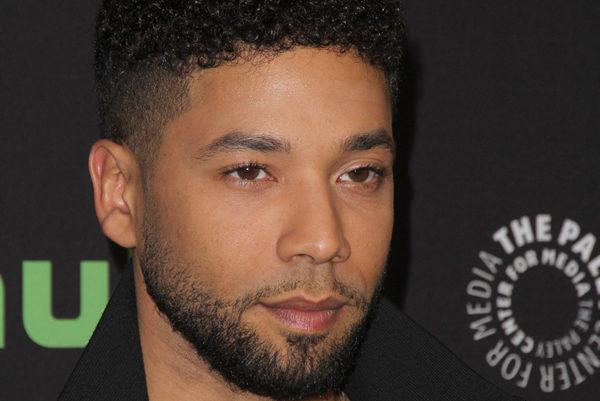
It’s a reality that the black LGBTQ community faces every day but it came to the forefront when it was reported that “Empire” star Jussie Smollett suffered an allegedly homophobic and racist attack. At around 2 a.m. on Jan. 29 in Chicago, Smollett was walking from a Subway restaurant when he alleges that two men dressed in black called him “Empire faggot n—er” to get his attention. The actor alleges that the attackers put his neck in a noose, poured “an unknown chemical substance” on him and ran away. Smollett also reported to police that the assailants yelled “MAGA country” during the attack. A few days prior to Smollet’s alleged physical attack, an anonymous letter was sent to Cinespace Studios where “Empire” is filmed. The letter read, “You will die Black fag” and contained a white powder, later identified by a HAZMAT unit as aspirin. Chicago police are currently investigating the incident as a hate crime.
David Johns, executive director of the National Black Justice Coalition, told the Blade that the LGBTQ black community is “surprised but not shocked” by the attack.
“One of the prevailing sentiments I continue to hear from black queer people generally is how frustrating it is that people seem to be surprised at this occurrence,” Johns says. “Black queer people are victimized every single day. I was just thinking about what we’ve experienced just this year reflecting upon Kevin Hart and the jokes about killing his gay son. I mourned the loss of the life of a young, black boy [Giovanni Melton] in Las Vegas because his father killed him suspecting that he was gay last year. Ed Buck, a white donor in Hollywood, is still walking around free as two gay black men have died at his household in the last year. Many of the media outlets that are covering Jussie’s story now didn’t even acknowledge that earlier this year there was a black trans woman [Keanna Mattel] that was murdered by a pastor in Detroit.”
These aren’t new stories for the black LGBTQ community but Smollett’s story was met with skepticism from some on social media who questioned why Smollett was outside getting food at such a late hour. Smollett also initially refused to hand over his phone to police to corroborate his and his manager’s story that they were on the phone with each other during the time of the attack. He has since handed over redacted phone records to police.
Simmons says she noticed people doubting his story as soon as it made the rounds on media outlets.
“It was just an immediate discounting. People saying ‘Who would be outside in Chicago at that time of night in the cold?’ It’s like people are out in the cold all the time. If you’re hungry you’re going to get something to eat. It’s almost as if people’s minds wouldn’t allow them to accept the fact that these types of violent attacks happen. I think there is a level of ignorance or refusal to accept the fact that these things happen on a day-to-day basis,” Simmons said.
It’s a reaction that Janaya “Future” Khan, Black Lives Matter Toronto co-founder and campaign director of media, democracy & economic justice for Color of Change, is all too familiar with. Khan, who is black, queer and gender non-conforming, says that the race aspect of Smollett’s identity gave him reason to be questioned in the minds of some people.
“Black people historically are not believed when we say something has happened to us, especially when we say something has happened to us because we’re black. When you have to go to the same policing institutions that have historically not believed you, that criminalizes people that look like you disproportionally, that brutalizes people that look like you based on race, it’s a very impossible moment,” Khan told the Blade.
Although the LGBTQ community has had its own complicated and sometimes violent history with police, being black is an added layer of discrimination.
“I think people in society have been conditioned to not believe people who look like Jussie, who look like me,” Khan said. “It’s pretty disgusting. People also historically have not believed anyone in the LGBT community when they say these things have happened to them. But there’s a way that they’re able to assimilate into society around whiteness that you just cannot as a black person. The discrediting of Jussie, the need for a particular kind of irrefutable proof, is something that black people and people of color are very familiar with.”
Khan has their own personal story about being torn between two integral identities.
In July 2016, Black Lives Matter was invited to march in the Pride parade in Toronto. Khan and the rest of the group marched proudly in the parade using chants such as “Michael Brown say his name” and taking a moment of silence to sit in memory of the victims of the Pulse nightclub shooting. In what proved to be a controversial move, the group declared to the crowd that they wanted police floats to be removed from the Pride marches and parade. Some in the crowd began to boo and social media became a firestorm of death threats toward Khan.
“I can tell you as someone who lives as a black person and also identifies as non-binary and queer some of the worst kinds of malice I’ve experienced as a black person have come from the LGBTQ community and it feels like a betrayal,” Khan says. “Now if you’re a black person police continue to brutalize our community and historically that’s also been true of the gay and lesbian community. Stonewall was a riot and it happened because police were brutalizing the LGBTQ population. Somewhere along the line because more seats at the table increased there’s a huge tension point because police at Pride made people of color and black people within the LGBTQ community incredibly uncomfortable. A lot of the contradictions and a lot of the biases and racism really came to a head.”
Black lesbian feminist Audre Lorde famously argued that, “There is no hierarchy of oppression.”
“Within the lesbian community I am Black, and within the Black community I am a lesbian. Any attack against Black people is a lesbian and gay issue, because I and thousands of other Black women are part of the lesbian community. Any attack against lesbians and gays is a Black issue, because thousands of lesbians and gay men are Black,” Lorde wrote in 1983.
Simmons agrees that trying to separate identities isn’t helpful to make progress.
“It’s almost as if the majority of the country refuses to acknowledge the racism that black people experience and black people who aren’t as LGBTQ-affirming as we would like them to be want you to not discuss what you experience as a LGBTQ person because they feel like you’re trying to privilege your LGBTQ identity over your black identity. That’s asking people to carve themselves up in many ways that isn’t fruitful or productive,” Simmons says.
Protection for both black people and LGBTQ people has become an increasing concern over the last couple of years as hate crimes are on the rise.
In D.C., the number of reported hate crimes increased from 179 in 2017 to 209 in 2018, according to a report by the Center for the Study of Hate and Extremism. In 2018, 61 crimes were based on sexual orientation, an increase from 56 in 2017; 49 crimes were based on ethnicity and 39 crimes were based on race, an increase from 47 in 2017.
California State University’s Center for the Study of Hate and Extremism reports that hate crimes have also increased in big cities like New York, Los Angeles and Philadelphia.
As more hate crimes are reported, both Khan and Simmons say they wish black transgender women were given more media attention as their lives become increasingly at risk. Khan notes that as transgender women of color have become more visible on television with shows like “Pose” and activists such as Janet Mock and Laverne Cox, the reality of trans women of color who do not have access to fame or money is often bleak.
What’s the reason for this increase in hate crimes? Khan said it’s related to the Trump administration.
“I think bigots and racists are emboldened. They have found a home and community for themselves that no longer requires hiding on the internet. White supremacists are organizing,” Khan said. “They’ve always existed in America they just are no longer in the underbelly of America anymore. We really need to be confronting that reality that these groups of people will exist far beyond the Trump administration’s rule and they exist far beyond the policies that we can fight. There is something far deeper and darker and more insidious in this country.”
Hope isn’t lost. Khan encourages people to vocalize their beliefs and to “come out of the closet as intersectional feminists, abolitionists, freedom fighters and revolutionaries.”
For Simmons, it’s all about allies showing an interest in learning about the issues the black LGBTQ community faces.
People just have to be willing to take the time.
“If you can learn how to cook a new recipe you can learn how to understand society as it is now and figure out how to be an ally to the different issues that communities of color are grappling with right now,” Simmons says.



a&e features
Introducing the Torchbearers Awards honoring queer, trans women and nonbinary people
Meet the Legends and Illuminators lighting new paths
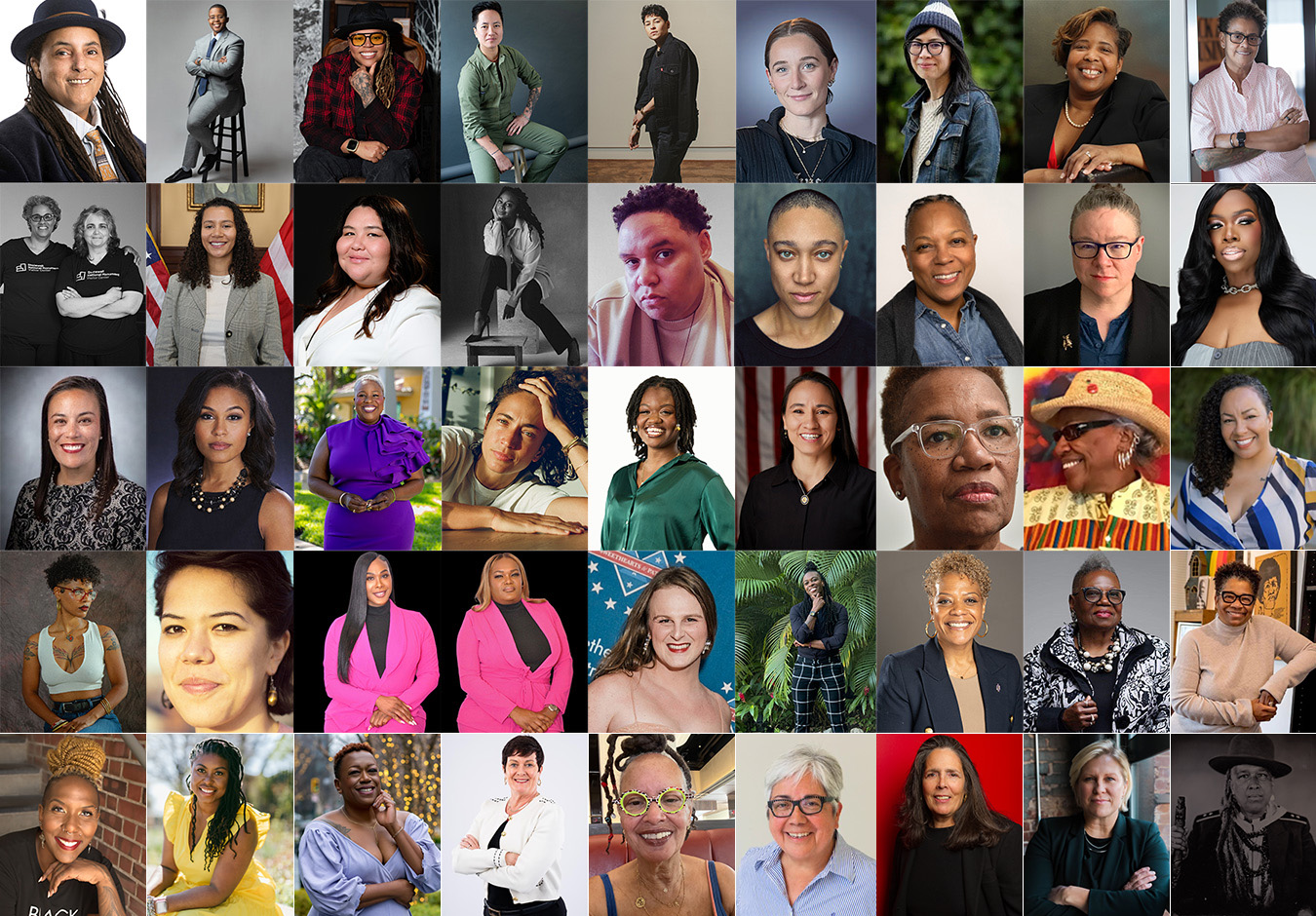
The Torchbearers Awards are more than recognition—they are a continuation of legacy. They honor the quiet architects of progress in our community: those who organize, advocate, build, and protect, often without fanfare but always with purpose. Rooted in a belief in intentional recognition, this honor names those who carry our movements forward—those who make room for others, who remind us that change is both generational and generative. In a time marked by uncertainty and challenge, these leaders push forward with courage, clarity, and an unwavering commitment to expanding opportunity and equity.
This year’s honorees reflect the full breadth of our community, spanning generations, backgrounds, identities, and industries. From Legends, with decades of leadership and having created pathways for others, to Illuminators, who are lighting new paths with creativity and innovation, each Torchbearer represents the power of intergenerational leadership and the strength found in our diversity. They are organizers, advocates, artists, policy leaders, healers, and changemakers whose lived experiences shape a shared vision for equity and liberation.
This award is our love letter to queer and trans women and nonbinary people who carry the flame when it would be easier to let it dim. To those who consistently show up, who use their voice and visibility and stand firm, often without recognition, so that others may live more freely and fully. The Torchbearers Awards celebrates not just what has been done, but the enduring spirit, responsibility, and collective care that ensure the work continues, and that the flame is always passed forward.
Co-Creators of the Torchbearers Awards: Shannon Alston, June Crenshaw, Heidi Ellis
Torchbearers Awards Advisory Board: Aditi Hardikar, Lesley Bryant, Jasmine Wilson-Bryant, Stephen Rutgers
ILLUMINATOR AWARDEES
- Representative Sharice Davids (she/her), (D, KS-03)
— U.S. House of Representatives - Greisa Martinez Rosas (she/her/ella)
— Executive Director, United We Dream - Paola Ramos (she/her)
— Journalist & Correspondent - Meagan A. Fitzgerald (she/her)
— Journalist & Correspondent - Jessica L. Lewis (she/her)
— Founder / Producer, Play Play DC - Savannah Wade (she/her)
— Founder, OAR Agency - Suhad Babaa (she/her)
— Filmmaker/ Former Executive Director of Just Vision - Ashlee Davis (she/her)
— Global Head of Inclusive Outcomes, Ancestry - Jazmine Hughes (she/her)
— Journalist and Former Editor at New York Times Magazine - Queen Adesuyi (they/she)
— Policy Advisor & Organizer, ReFrame Health & Justice - Michele Rayner, Esq. (she/her)
— Civil Rights Attorney, State Representative (Florida House of Representatives) - Gaby Vincent (she/her)
— Sports/Cultural Commentator and Community Leader - Jenny Nguyen (she/her)
— Founder & Owner, The Sports Bra - Denice Frohman (she/her)
— Independent Artist, Poet / Performer - Vida Rangel (she/her)
— Founder, Our Trans Capital - Roxanne Anderson (they/them)
— Executive Director, Our Space - Ann Marie Gothard (she/her)
— Co-Founder & President, Pride Live (Stonewall National Monument Visitor Center) - Diana Rodriquez (she/her)
— Co-Founder & CEO, Pride Live (Stonewall National Monument Visitor Center) - Wendi Cooper (she/her)
— Founder / Executive Director, Transcending Women - Toya Matthews (she/her)
— City of San Antonio, Texas - Mayor Gina Ortiz Jones (she/her)
— Sports/Cultural Commentator and Community Leader - Charity Blackwell (she/her)
— Poet, LGBTQ Advocate & Community Leader - Wilhelmina Indermaur (she/her)
— Director of Communications, Tyler Clementi Foundation - Em Chadwick (she/her)
— CMO, For Them & Autostraddle - Kylo Freeman (they/he)
— CEO, For Them & Autostraddle
LEGEND AWARDEES
- Sheila Alexander-Reid (she/her)
— Executive Director, PHL Diversity, Philadelphia Convention & Visitors Bureau - Cassandra Cantave Burton (she/her)
— Interim Director of Thought Leadership & Senior Research Advisor, AARP - leigh h. mosley (she/her)
— Photographer / Educator, PhotoFlo Photography - Jenn M. Jackson, PhD (they/them)
— Assistant Professor of Political Science; Author & Columnist, Syracuse University - Jordyn White (she/her)
— COO, Washington Prodigy / VP of Leadership Development & Research, HRC Foundation - AJ Hikes (they/them)
— Deputy Executive Director, ACLU - RaeShanda Lias (she/her)
— Digital Creator, RL Lockhart - Donna Payne-Hardy (she/her)
— Educator, EEO Specialist, Founder of NBJC, Former Leader at the Human Rights Campaign - Courtney R. Snowden (she/her)
— Principal, Blueprint Strategy Group - Gaye Adegbalola (she/her)
— Musician & Activist, Musician / Inductee of the Blues Hall of Fame - Cheryl A. Head (she/her)
— Independent Author, Novelist (Crime Fiction) - Letitia Gomez (she/her)
— The American LGBTQ+ Museum, Board Chair - Lynne Brown (she/her)
— Publisher, Washington Blade - Shay Franco-Clausen (She/Her/Ella/Queen)
— Political Strategist and Organizer - Melissa L. Bradley (she/her)
— Founder & Managing Partner, New Majority Ventures - Meghann Burke (she/her)
— Executive Director, NWSL Players Association - Victoria Kirby York, MPA (she/they)
— Director of Public Policy & Programs, National Black Justice Collective - Joli Angel Robinson (she/her)
— CEO, Center on Halsted - Jeannine Frisby LaRue (she/her)
— CEO, Moxie Strategies - Alice Wu (she/her)
— Film Director (Saving Face, The Half of It) / Screenwriter - Storme Webber (she/her)
— Interdisciplinary Artist / Educator, University of Washington - Kim Stone
— CEO of the Washington Spirit, Washington Spirit - Mickalene Thomas
— American Visual Artist, Mickalene Thomas Studio - Erika Lorshbough (any/they/she)
— Executive Director, interACT - J. Gia Loving (she/ella)
— Co-Executive Director, GSA Network
a&e features
D.C. springs back to life with new, returning events
Cherry blossoms, Rehoboth season kickoff, and more on tap
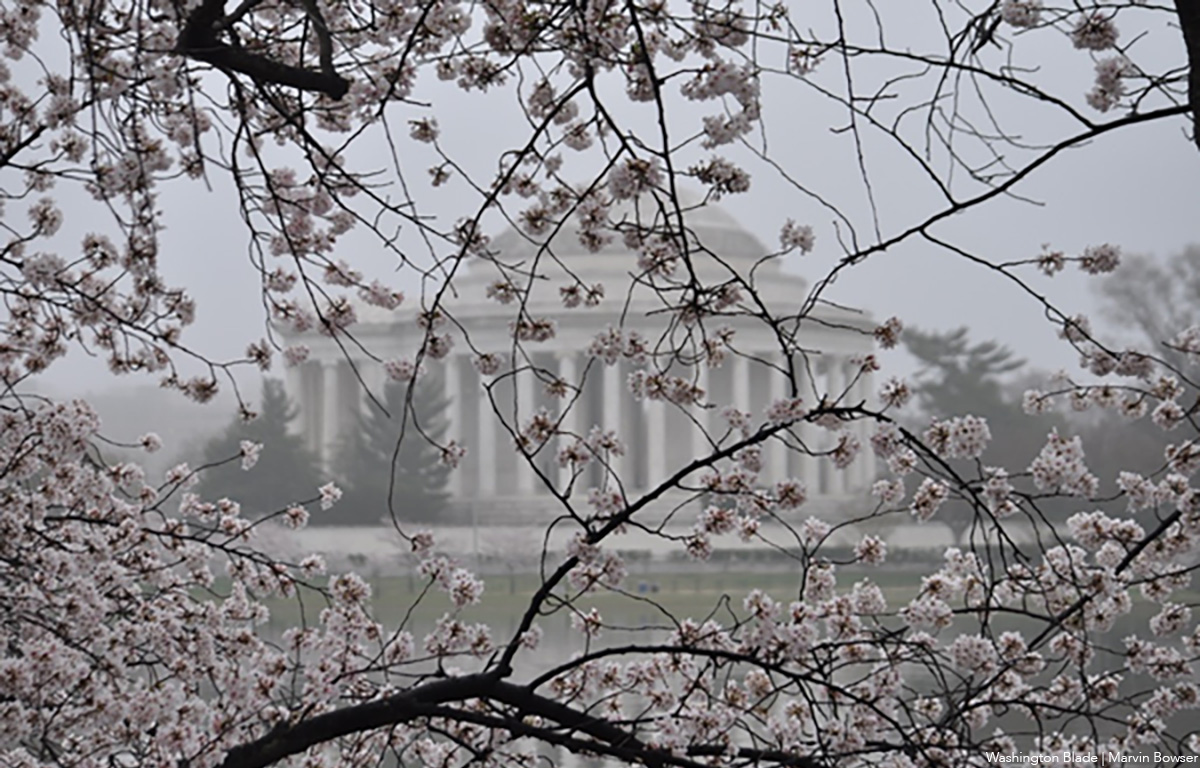
Longer and warmer days are back meaning: It’s time to get out of the house and enjoy Washington D.C.’s many events. Below are a few to check out this spring.
The National Museum of Women in the Arts will host “Making their Mark: Works from the Shah Garg Collection” until Sunday, July 26. This exhibition illustrates women artists’ vital role in abstraction, considers historical contributions, formal and material breakthroughs and intergenerational relationships among women artists over the last eight decades. For more details, visit. NMWA’s website.
Art in the Attic will host a pop-up on Saturday, March 14 at 6 p.m. at 1012 Madison St., Alexandria, Va. There will be a variety of vendors selling products across different modes of art. For more details, visit Eventbrite.
Play Play will host “Indoor Recess – The art of play” on Sunday, March 15 at 2 p.m. This event will embody classic recess energy, including opportunities to build and experience community and connections through games, movement, art stations, and creative freedom. Tickets are $12.51 and can be purchased on Eventbrite.
Spark Social will host “Gay Bar Crawl on U Street” on Friday, March 20 at 7:30 p.m. This will be a fun night out in gay D.C. with other gay people, whether you’re visiting D.C., new to the area, or just looking to expand your social circle. Many crawlers have formed lasting friendships and even romantic relationships after just one night out. Tickets are $35.88 and are available on Eventbrite.
Creative Suitland Arts Center will host “EFFERVESCENT: House of Swann” on Saturday, May 30 at 7 p.m. This will be a gay, good time where we will celebrate love, joy, wellness, and visibility for the LGBTQIA+ community. Tickets start at $17.85 and can be purchased on Eventbrite.
SWAG Works DC will host “Unapologetically Her” on Saturday, March 14 at 2 p.m. at 701 E St., S.E. This event is a powerful celebration of womanhood, resilience, creativity, and self-expression in honor of Women’s History Month. This all-women exhibition highlights the diverse voices, stories, and artistic perspectives of women who create boldly, live authentically, and stand confidently in their truth. This event is free and more details are available on Eventbrite.
9:30 Club will host “Gimme Gimme Disco: A Dance Party Inspired by ABBA” on Saturday, March 14 at 6 p.m. There will also be a “Donna Summer Power Hour – The Queen of Disco” segment during this event. It’ll be one hour of music with no skips. Tickets are available on 9:30 Club’s website.
Harder Better Faster Stronger will host “Heated Rivalry Rave” on Friday, March 20 at 9 p.m. at Howard Theatre. This event is open to all ages. Tickets are available on the theater’s website.
CAMP Rehoboth hosts its 25th annual Women’s+ FEST, April 9-12 in Rehoboth Beach, Del. Entertainers include headliner Mina Hartong, a comedian, storyteller, and founder of Lez Out Loud; and singer Yoli Mayor. There are dances, dinners, pickleball, and much more. Details and tickets at camprehoboth.org.
Also in Rehoboth Beach, the Washington Blade’s 19th annual Summer Kickoff Party is set for Friday, May 15 featuring Ashley Biden, who will accept an award on behalf of her brother Beau. State Rep. Claire Snyder-Hall will also speak. More speakers and the venue to be announced soon.
The annual D.C. Cherry Blossom Festival kicks off March 21 at DAR Constitution Hall and culminates with Petalpalooza on April 4, the day-long, outdoor street party with music and art, stretching across Navy Yard, and ending with fireworks over the Anacostia River.
a&e features
‘Queer Eye’ star Dorriene Diggs on life before and after appearing on hit show
Emotional January episode highlighted 40-year love affair with partner

Dorriene Diggs, 70, whose 40-year relationship with her domestic partner, Diane until Diane’s passing in 2020, the couple’s tense relationship with their respective parents, and Dorriene’s current living arrangement with her straight sister Jo, were the focus of a final season episode of the popular TV series “Queer Eye.”
In a recent interview with the Washington Blade, Diggs told of how her appearance on the show has impacted her life. She elaborated on the many aspects of her life experiences that she told to the five “Queer Eye” co-hosts who interviewed her and her sister in their D.C. home.
Although her parents and her partner’s parents, who have since passed away, were not accepting of their relationship, Diggs has said most of her family members at this time reacted positively to her appearance on the show.
“They loved it,” she told the Blade. “Yes, everybody that saw the show called me and said they loved the show, they really enjoyed themselves watching it.”
Through an arrangement with D.C.’s Rainbow History Project, the “Queer Eye” show featuring Diggs and her sister was presented in a special screening on a large video screen at the D.C. History Center in January.
“Dorriene, a 70-year-old Black lesbian living in Washington, D.C., had spent decades building a life with her partner while navigating silence within her own family,” a “Queer Eye” statement announcing the episode on Diggs states.
“The Fab Five did not arrive to introduce Dorriene to herself, but to help ensure her story was finally heard in full,” the statement says.
Blade: Can you tell us how your appearance on the “Queer Eye” program came about? How did they find out about you?
Diggs: You know, I still don’t have all the details. I think it was my niece, Missy. And she knows somebody there from “Queer Eye.”
Blade: So, did you first learn about it when someone from “Queer Eye” contacted you?
Diggs: No, the “Queer Eye” guy knocked on my bedroom door and started talking. I was in my bedroom watching television and the next thing I know my door opened up and there was Karamo [Karamo Brown, one of the “Queer Eye” co-hosts] with his big black cowboy hat on, opening the door grinning. … They contacted Jo first. And when they came here, they realized there was a gay woman in the house, too. Because my name was not mentioned at first. After they came here, they learned about me, because when Missy reached out to them, she reached out to them about Jo. But that doesn’t bother me. This was all about Jo in the beginning, and not me. … They started talking to me and Jo. And he said, Dorriene, ‘you’ve done so much for so many people, it’s time for someone to do something for you.’ That’s what they said. He said, ‘this is the day we’re doing it for you.’
And so, they put me and my sister up in a hotel for a week. They gave us a personal driver to take us anywhere we wanted to go. And then they took us to a bunch of places. We didn’t know why they were doing all of this. We had no idea that they were renovating the house and renovating our bedrooms. We had no idea.
Blade: What was your reaction when you saw the home renovation?
Diggs: It was amazing. And they bought us all new complete wardrobes – clothes, shoes. But most of the stuff they got me I gave away to a women’s shelter. But it was so nice. Actually, to meet the guys. I’ve been watching the show for 10 years. I have watched it from the beginning. And actually, it brought me and my sister closer – really. We’re closer now than we’ve ever been. She’s my baby sister – not the baby, but next to the baby. She’s the younger one.
Blade: What has been the reaction to your appearance on the show? Do more people now recognize you?
Diggs: Yes, yes. I’m getting phone calls and it’s almost like I’m a celebrity. And I don’t want people to make a fuss over me. All the things I did I did from the heart. I really did. And I don’t want people to think I’m more than I am. I’m just a good Christian woman that believes in giving back.
And I do. God gives me help giving. That’s what I do. And I don’t want anything in return from anyone. You know, because I know what it means to not to have. I know what it means to go to bed hungry, with no food. Going to school with holes in your shoes. I know that. I know that feeling. I’ve been there. And I promised myself as a kid I would never live like this again. And when I got bold enough to leave home, I left home at 14, and I moved in with a drag queen. Damen was his name.
Blade: Did your appearance on the show change your life and your relationship with your sister?
Diggs: Yeah, yeah, it actually did. We are actually closer now than we’ve ever been. Because, like I said, I moved away from home early and I never went back. My parents had a problem with my lifestyle. They really did. My mom looked at me with such hatred. When I was old enough to say goodbye, I never looked back. And to come back around now in the last few years after Diane died, that’s when I came back here.
And at one point I stayed with my nephew Todd and his wife – but he got killed in a car accident. I couldn’t stay at his house anymore. So, then I called Jo and told her I need to get out of here. And without hesitating she came and picked me up and brought me to her home. And I’ve been here ever since.
Blade: Can you tell a little about when it came about and how you met your partner?
Diggs: We lived on 18th Avenue in condos. I just bought one. Hers was above mine. I bought the bottom one. When my brother came over, she was getting out of her car. She was driving a Vega. And I turned to my brother and I said – this is the God’s honest truth – I said Keith, that’s the woman I’m going to spend the rest of my life with. Just like that. And he started laughing. He said, girl you’re crazy. I said I know I’m crazy, Keith, but I’m telling you that woman right there is who I’m going to spend the rest of my life with.
Blade: And when was that?
Diggs: It was 1980 actually. And then I started going to the laundry room to do my laundry. So I started talking to her. She said, ‘I’m not speaking to you.’ Isaid ‘why not?’ She said ‘because you’re nothing but a female gigolo.’ And I said I’m not dating anymore. I’m waiting for you. ‘No, you’re too fast for me.’ I said, ‘well, I’m not giving up.’
And I didn’t give up. So, I was playing an album one day and she knocked on the door and asked what I was playing, I think. I said you liked that. She said yeah. I said OK, I’ll bring it upstairs and we can listen to it together. So, when I went up there to her apartment that day and whenever I went up there, I never left.
Blade: So, your partner’s name was Diane?
Diggs: Yes, Ruth Diane Robinson. But she hated the name Ruth. So, the only people who called her Ruth were at work, the people she worked with. Everybody else called her Diane.
Blade: And how many years were you together?
Diggs: Forty. Forty years together
Blade: And where were you living with her most of the time?
Diggs: We lived in Hagerstown the longest, Hagerstown, Md. And so, if Diane hadn’t died I probably still would have been in our house in Hagerstown.
Blade: Can you tell me a little about what you were doing career wise during those years?
Diggs: I do computers. I used to do computers. And before that I cooked. I love to cook like my mom. And then I wanted to do something else. So, I taught myself computers. I taught myself how to build computers and stuff. So, then I got my own computer business called Ida One Computer Consulting. And so, we helped build computers for people.
Blade: Around when was this, in the 1980a or 1990s?
Diggs: Yes, in the 1980s. I think I stopped I would say around ’96, when I stopped. Because we both said we were going to retire at 55. And we did. We both retired at 55. And then she started diabetes. Every day I had to give her an injection because she was afraid of needles. She couldn’t give it to herself. So, I had to give her an injection every day One time, I don’t remember when, she had a mild stroke. And I had to take care of her. I’ve always taken care of her. And I don’t regret it. I never regretted it. It’s taking care of the one you love.
Blade: When was it that she passed away?
Diggs: In 2020. I found her on the kitchen floor.
Blade: How did your family and your extended family react to your relationship with Diane?
Diggs: Well, her family, oh my God, they hated me – her mother the worst. Because I put a stop to them treating her really bad. I told her mother – I said never in my life – my mother raised me well. Never disrespect someone’s mother. I said but this time I’m going to disrespect you because you are going to start treating Diane like you ought to. This is a wonderful woman and you and your son and you it’s always about your son. You never, ever say anything good about your daughter.
I said it isn’t going to happen again. You’re never going to disrespect her again. I said you take a damn good look at her because you’ll never see her again. I meant that. I grabbed Diane. I said it’s time to go. They don’t care about you.
Blade: Can you tell a little about your family?
Diggs: Yeah, I’m a triplet sister. So, it’s Dorriene, Chorine, and Chrissy — we are the triplets. So, my mom had a set of twins and a set of triplets within nine months. One of the twins died at birth. So, the other twin is Margaret.
Blade: So then how did your family react to you and Jo being on “Queer Eye”?
Diggs: Most of my family really had no problem with it.
Blade: Were you out to them?
Diggs: Oh yeah. I was never in the closet. I didn’t give a damn what people felt about me, sweetheart. I really didn’t. I didn’t care. Because I was going to be me. And for people who didn’t like it, I wasn’t living for them, I was living for me. I’ve always been out. I had a brother who was also gay, Marvin. God rest his soul, too. But he stayed in the closet. He was in the closet until he was about 55 years old.
But everything I said on the show was the truth – my account. The things that I went through with family … You can’t tell me how I felt. If they try to make mom and dad out as perfect, they weren’t perfect. They were the worst parents. That’s my account of it.
So yes, everything I said on that interview was the truth. That’s one thing people who know me know – I do not lie.
Blade: What are some of the things you like to do these days?
Diggs: I’m a sports lover. I love sports. So, my baseball season is getting ready to get started. Baseball is my favorite sport. Yes, I love baseball. I like the statistics of it. And watching the guys. I wish they had a women’s professional baseball team, honestly. … I’m a D.C. sports fan. The Wizards, the Nationals, the Mystics, the Caps. … And see, I’m a diehard Redskins fan and I refuse to call them the Commanders. They’re the Redskins. They will always be the Redskins to me. I love my sports teams.
Blade: Can you tell a little about the history of the house where you and Jo now live and where they did the filming of the “Queer Eye” show?
Diggs: Jo had a house on 17th Street, I think it was Northeast because it was over there by H Street, N.E. And I think somebody wanted to buy her house. I don’t know why she moved. So, she found this house. Because she wanted to buy something where she could buy a house straight out. She didn’t want a mortgage on another house.
Blade: What are your thoughts on being on the last season of “Queer Eye?”
Diggs: Yeah, we were the last ones. We took it out with a bang, me and Jo. That was it.
Blade: Can you say how you and Jo appearing on the show impacted your life?
Diggs: I don’t know. I’m the same person. I’ve been getting calls from people saying I saw you on the show. And friends who I haven’t seen in years have been calling. … So yeah, the show, people I haven’t seen and talked to in years have been calling. I think that’s a good thing.

Blade contributor, husband exchange vows in D.C.

Ghanaian president welcomed to Philadelphia amid backlash over anti-LGBTQ bill

PHOTOS: ‘No Kings’ rally and march

‘Out for McDuffie’ event held at D.C. gay bar

‘Jonah’ an undeniably compelling but unusual memory play

Pa. House passes bill to codify marriage equality in state law

DeSantis signs emergency bill that restores Fla. ADAP funding

Introducing the Torchbearers Awards honoring queer, trans women and nonbinary people

A surtax would end this war quickly

New IOC policy bans trans women from Olympics
-

 Pennsylvania4 days ago
Pa. House passes bill to codify marriage equality in state law
-
Florida5 days ago
DeSantis signs emergency bill that restores Fla. ADAP funding
-
a&e features4 days ago
Introducing the Torchbearers Awards honoring queer, trans women and nonbinary people
-
Opinions4 days ago
A surtax would end this war quickly