Arts & Entertainment
LGBTQ YouTubers file discrimination lawsuit against YouTube
Content creators say the platform targets their content


A group of LGBTQ YouTubers have filed a class-action lawsuit against the video-sharing website, and it’s parent company Google, for restricting LGBTQ content, therefore, preventing them from making money.
The Washington Post reported that the class-action lawsuit was filed in federal court in California on Tuesday.
YouTubers GNews!, Bria Kam and Chrissy Chambers (BriaAndChrissy), Chase Ross (uppercaseCHASE1), Lindsay Amer (Queer Kid Stuff) and Amp Somers (Watts The Safeword) allege that YouTube’s algorithms are targeting LGBTQ content and making videos ineligible for ads and monetization.
They claim YouTube labels their videos as offensive or sexually explicit because they include LGBTQ content such as the words “gay,” “lesbian,” and “bisexual.” As a result, the creators say their videos are being demonetized; their thumbnail videos are changed; they aren’t allowed to purchase ads and their videos aren’t being recommended to other users.
LGBTQ creators say these alleged actions are affecting their financial income which is heavily based on ads and viewership.
Bria Kam and Chrissy Chambers, a married couple behind the popular BriaAndChrissy channel, claim their monthly YouTube revenue dropped to $500 from $3,500. The channel boasts more than 800,000 subscribers.
Bret Somers, who runs the channel Watts the Safeword, decreased from $6,500 to $300.
The lawsuit says YouTube is using “unlawful content regulation, distribution, and monetization practices that stigmatize, restrict, block, demonetize, and financially harm the LGBTQ+ Plaintiffs and the greater LGBTQ+ Community.”
“By controlling an estimated 95% of the public video communications that occur in the world, Google and YouTube wield unparalleled power and unfettered discretion to apply viewpoint-based content policies in a way that permits them to pick winners and losers,” Peter Obstler, the plaintiffs’ attorney, told the Washington Post.
YouTube CEO Susan Wojcicki denies that the YouTube algorithm is targeting LGBTQ content.
“There’s no policies that say ‘If you put certain words in a title that will be demonetized.’” Wojcicki told vlogger Alfie Deyes. “We work incredibly hard to make sure that when our machines learn something — because a lot of our decisions are made algorithmically — that our machines are fair. There shouldn’t be [any automatic demonetization].”




Nightlife
Parties, dinners, concerts and more on tap for fall nightlife
Blade’s 25th Best Of party among highlights
The heat is on in the city this fall for gala season, culture, and nightlife, including many LGBTQ and ally artists. Select shows, parties, and events for the season are below.
September
9/18-20: Fuchsia Fest – The inaugural Fuchsia Fest is a new multi-day celebration created to highlight LGBTQ community and expression, bringing together a mix of community gatherings, entertainment, and nightlife. Hosted by Capital Pride, Fuchsia Fests’s various events take place across the city throughout the weekend.
9/24: Katie Pruitt – The Americana/indie-fold singer-songwriter is known for her soaring vocals and deeply personal storytelling. She is on tour for her latest album, released Sept. 18, “Fools for the Fleeting.” She is part of the LGBTQ community.
9/25-27: All Things Go. This annual music festival at Merriweather Post Pavilion includes performers like Mitski, Hayley Williams, Brandi Carlile, MUNA, Zara Larsson, Ethel Cain, and many more beloved artists. Featuring and highlighting female artists, the festival has turned into a must-see for many LGBTQ audience members. There are single-day and three-day tickets.
9/26: Human Rights Campaign National Dinner – This annual big-ticket fundraiser for HRC (black tie, of course) celebrates achievements and recognizes the road ahead for LGBTQ+ equality. Taking place at the Mayflower, look out for D.C. stars, like members of Congress, former first ladies, and Broadway actors.
9/26 Gorillaz – Two decades strong, this artistic group unites visuals, storytelling, and music across diverse genres, from rock to reggae to electronic, for a show at Capital One Arena.
9/29 Charli XCX – British singer-songwriter and pop diva known for her bold expression, mixes electronic, pop, and dance, will bring thrilled audiences to her show at Capital One Arena as part of her Music, Fashion, Film Tour.
Multiple dates: Smithsonian Festival – This fall, the Smithsonian Institutions is debuting a festival called Rhythms, Roots, Recipes: Community Stories of Food and Music. Across this five-part series, each session features cooking demos, discussions, and live music. All programs are free and open to the public, and take place in the demo kitchen at the National Museum of American History.
October
10/3: GLOW BLock Party – GLOW is back! After throwing a giant party this spring with 10,000-plus dancing fans dancing against the Capitol dome at sunset, GLOW returns with an even more epic lineup: legendary Grammy-winning DJ and producer Diplo leading a seven-hour party with vendors, activations, and a number of other huge acts like Westend, Anabel Englund, Monty Kiddo, and D.C.’s own Ratalina.
10/3: Home Rule Music Festival – Now in its fifth year, this is a free, all-day community-driven event of local music, food trucks, and vendors at the Parks at Walter Reed. The D.C.-focused event features bands playing go-go, soul, hip-hop, jazz, and more, plus a record fair and live art.
10/3: PRIDEtoberfest – Gay-owned Wunder Garten presents PRIDEtoberfest, marrying the festive spirit of Oktoberfest and the joy of the LGBTQIA+ community for an all-day celebration of Pride, community, live music, DJs, overflowing steins of beer, and entertainment. Food will be available from Little Miner Taco and CaliBurger, plus plenty of friendly men in lederhosen.
10/3: Power to the People Festival – The inaugural Power to the People Festival will take place at Merriweather Post Pavilion in Columbia, Md. The festival, curated by Rock & Roll Hall of Fame guitarist and acclaimed activist Tom Morello, is a celebration of peace, justice, solidarity, music, and community action.
10/10: Jessie Ware – British singer and songwriter fully embraced by the LGBTQ community brings her impassioned mix of pop, disco, and electronic genres to Capital One Arena supporting her latest album Superbloom,
10/19: Chefs for Equality – This annual dinner fundraiser for HRC remains in its remixed, diffused form this year. Under the theme of United Plates of America, there will be six different activations: four multi-course collab dinners (at CUT by Wolfgang Puck, Marcus DC, Moon Rabbit, and Centrolina); Drag Brunch for Dinner at Perry’s; and a lavish cocktail party at cocktail lounge Silver Lyan. In any form, Chefs for Equality is a signature benefit toward the fight for full LGBTQ+ equality.
10/20 Rodrigo y Gabriela – Grammy-winning Mexican acoustic guitar duo that blends flamenco, rock, and heavy metal is coming to The Anthem. They have been playing at 9:30 Club and sister venues since 2007.
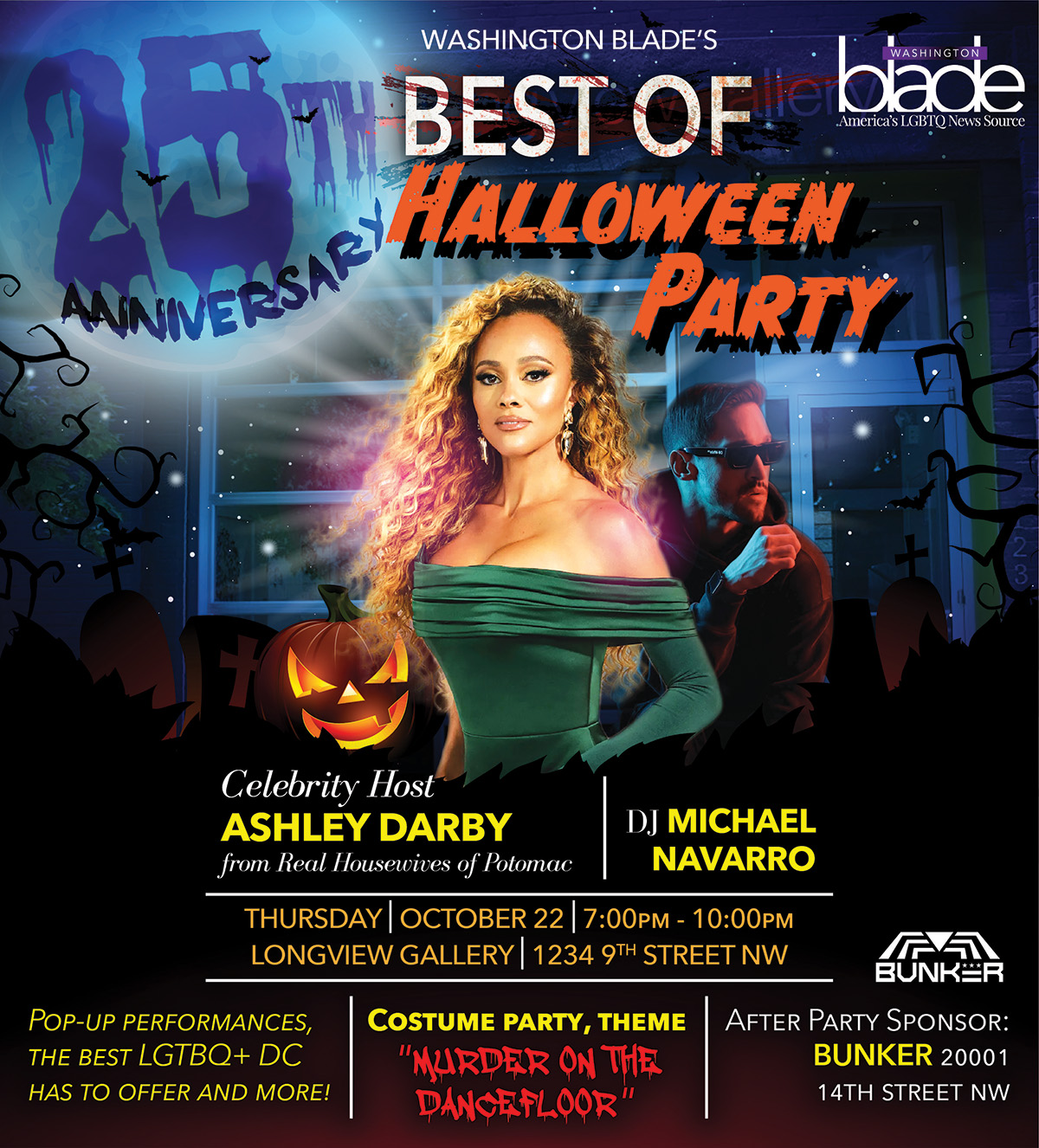
10/22: Washington Blade Best of Party – Celebrate the best of LGBTQ DC at the Blade’s epic Halloween party: Murder on the Dance Floor. Winners of the Blade’s annual Best of DC will be announced at this party at Longview Gallery. This marks the 25th anniversary of the Blade’s Best Of competition. “Real Housewives” star Ashley Darby hosts.
10/31: Into the Shadows – An immersive, indoor/outdoor Halloween party actually on the spooky day itself at Berhta. With multiple stages across multiple rooms, there are various DJs and activations.
November
11/11: Whitman-Walker Gala – This annual fundraiser at the Ritz-Carlton is themed “A Celebration of Impact & Innovation.” It aims to showcase the impact of Whitman-Walker’s healthcare, research, and policy programs, and will include presentation of the Groundbreaker Award for Community Philanthropy.
11/20: Ilana Glazer – Comedian, actor, advocate, and creator best known for co-creating and co-starring in the acclaimed series Broad City brings her act to Lincoln Theater. Her first show is already sold out, but a second show has been added.
Television
All the queer things to watch this fall
Andrew Scott, a new ‘Traitors,’ and plenty of horror
The fall season is barely upon us, and already the “must-see” queer movies and shows are leaping out of the gate. The next two months offer a hearty lineup of big screen and streaming options, with something for every taste. Whether you’re a fan of prestige drama, campy horror, “reality” TV, or just a fan of culturally relevant entertainment in general, you’ll definitely find some titles to pick from in our annual rundown below; and if you don’t want to choose, don’t worry: We won’t judge you if you watch them all.
Monster: The Lizzie Borden Story (Netflix, 9/17) Ryan Murphy starts the countdown to Halloween a little early with a new installment of his always-disturbing (but oh-so-entertaining) anthology series about notorious real-life murderers, and this time he takes us back to one of the most notorious of all. Ella Beatty plays the legendary 19th-century woman who (allegedly) “took an axe” and whacked her mother and father to death with it. Lesbian rumors have long been part of the subtext around the case, so expect a focus there — but given that it’s the series’ first time centered on a woman, and that show creator Ian Brennan includes side-trips into the stories of famous female serial killers from both before and after Lizzie’s day. Vicky Krieps, Charlie Hunnam, Jessica Barden, Billie Lourd, and Sarah Paulson also star.
The Traitors: New Blood (NBC/Peacock, 9/17) The popular reality competition show, in which actor (and queer icon) Alan Cumming presides over a cutthroat game of intrigue and elimination in a Scottish castle, makes its return – but this time, in a new iteration that features non-celebrity contestants, Otherwise, it promises to offer more of the same delicious deception and Machiavellian manipulation that fans have come to love.
Black Church Bay (Theaters, 9/25) “Heartstopper” star Joe Locke is set to make a splash on the big screen opposite Tom Cullen in this brooding mystery thriller as a gay student whose disappearance stirs up long-buried secrets in a small Welsh coastal village. First-time writer/director Rhys Marc Jones says it “explores the lengths some people will go to in order to hide their true self,” so be ready for a dark tale of secrets and lies.
American Horror Story: 13 (FX/Hulu, 9/25) Ryan Murphy is ready, as usual, to hit the fall season with a “one-two” punch, and the second punch is the 13th season of his venerable, campy, and extremely queer horror anthology, which brings back beloved alumni from seasons past (yes, even Jessica Lange) in the roles they originally played. Since a good number of those characters were dead the last we knew of them, seeing how the show manages to bring them all back is itself enough reason to make this landmark installment – which also features Sarah Paulson, Angela Bassett, Kathy Bates, Evan Peters, Emma Roberts, Billie Lourd, and even the Pope of Trash, John Waters himself – required viewing for a whole legion of queer pop culturistas with a taste for the macabre.
East of Eden (Netflix, 10/1) Fans of the late bisexual heartthrob James Dean clearly remember the 1955 film version of John Steinbeck’s classic novel, but that movie only told the second half of the story. This new limited series adaptation (from Zoe Kazan, granddaughter of Elia Kazan, director of the original film) takes advantage of a seven-episode running time to take on the entire novel from the beginning. The saga of a broken family in the Salinas Valley, it sprawls over the first two decades of the 20th century to document the struggles of a wealthy landowner whose wife abandons him to become a brothel madam after giving birth to his twin sons; following the boys as they grow up and apart, it mirrors the Biblical story of Cain and Abel, exploring the dynamics of a family haunted by the shadow of an “original sin” – and whether or not they are doomed to be defined by it. No directly queer content here, perhaps, but the direct family tie to a cinema classic (plus the presence of queer fan favorite Florence Pugh as Cathy, the story’s fabulously monstrous mother) gives it an appeal that feels like must-see TV, anyway.
Tip Toe (STARZ, 10/2) This taut UK miniseries from “Queer As Folk” creator Russell T. Davies has already been a critically lauded sensation in its home country, making its U.S. premiere an event worth putting on your calendar. Alan Cumming stars as a gay bar owner who is forced to face the shifting cultural tide when online homophobia begins to turn his once-friendly neighbor (David Morrissey) into a deadly enemy. A grim psychological thriller for an increasingly unsettling time, it’s bound to strike a chord with queer viewers who remember an era when “the closet” was the safest place to be – and with those who fear its return.
Street Fighter (Theaters, 10/6) It might seem as if a movie based on a 1980s video game would have limited appeal for anyone who isn’t a Gen-X “gaymer” who remembers when it cost 25 cents a pop to be one – but this reboot of the film franchise that sprung from it in 1994 is also the screen debut of gay country-western heartthrob Orville Peck, who appropriately takes on the role of Vega, a fighter who always wears his mask. It also stars Noah Centineo, David Dastmalchian, and Jason Momoa, among others.
Carrie (Prime Video, 10/7) Horror fans may have mixed feelings about this new eight-part miniseries based on Stephen King’s much-adored seminal novel, given that the popular 1976 film adaption has endured as the definitive version – something that proved a factor when filmmaker Kimberly Pierce’s 2013 remake failed to win over fans. Even so, this retelling (featuring Summer H. Howell as the troubled teen title character and Samantha Soyen as her overbearing and increasingly unhinged mom) comes from horror maestro Mike Flanagan (“Oculus,” “The Haunting of Hill House,” “Midnight Mass,” “Dr. Sleep”), who has already proven himself as a director of King’s work and comes to the project with a considerable fanbase of his own. Either way, given its release less than a month before Halloween, we know all you horror fans – queer and otherwise – will be binge-watching it honor of the holiday.
It Gets Worse (UK Channel 4, 10/14) American audiences might have to wait a few months – unless they have access to Britain’s “public access” network Channel 4 – but we’re putting it on our list anyway, mostly because of the presence of premier gay thespian Andrew Scott, whose role as a therapist has already sparked frenzy over a line in the trailer about his patient being “just a hole for daddy.” Consider all of us intrigued, to say the least.
Sense and Sensibility (Theaters, 10/16) The material itself may not be particularly queer, but this new screen adaptation of the classic Jane Austen novel – like anything related to Jane Austen – has queer appeal, anyway. That’s especially true when it comes from lesbian filmmaker Georgia Oakley (“Blue Jean”), who will surely highlight all the reasons why Austen (or any other source for this kind of lush period costume romance) has queer appeal, no matter what. Stars include Daisy Edgar-Jones, Catriona Balfe, George MacKay, and Fiona Shaw.
Klara and the Sun (Theaters, 10/23) Adapted from the 2021 novel by Kazuo Ishiguro, this dystopian fantasy from New Zealand filmmaker Taika Waititi (“What We Do in the Shadows,” “JoJo Rabbit”) may not be directly queer-centric, but its story of an “artificial friend” (Jenna Ortega of “Wednesday” fame) who strives to save the sickly child for whom she has been purchased will surely resonate with queer audiences, evoking themes of otherness, societal disconnection, and simple empathy that transcends the imposed boundaries of what it means to be a conscious being in a world to which you can never truly belong. Amy Adams, Steve Buscemi, and Natasha Lyonne also star.
Club Kid (Theaters, 11/6) A new big-screen offering from gay actor/creator/personality Jordan Firstman (“Rotting in the Sun,” “The English Teacher”), who makes his feature directing debut with this comedy-drama about a washed-up party promoter whose career woes suddenly take a back seat when he is charged with the care of a 10-year-old son (Reggie Absolom) he never knew he had. This one premiered in the “Un Certain Regard” session at this year’s Cannes Film Festival, where it received a glowing response, and has won praise for its candid and non-judgmental depiction of underground queer nightlife and the people who find community there. Also starring Cara Delevingne, Kirby Howell-Baptiste, Colleen Camp, Vicki Pepperdine, Nigil Whyte, Eldar Isgandarov, Saturn Risin9, Miss Benny, Alaska Riley, and Diego Calva.
Yellowjackets, Season 4 (Showtime, 11/22) The fourth (and final) season of this acclaimed Ashley Lyle/Bart Nickerson-created series (the second-most-streamed in Showtime’s history) is on its way into your living rooms, bringing to a close its tangled saga of a group of teen girls forced to survive in the wilderness after a plane crash, and their struggle to repair their damaged lives as adults 25 years later. It’s been a tale full of mysteries, secrets, shocks, and twists, so if you’re a fan, you’re probably eager to get some answers at last awaiting the answers – but don’t be surprised if this devilish show throws a few more curves your way before it finally delivers them! Melanie Lynskey, Tawny Cypress, Christina Ricci, Sophie Nélisse, Jasmin Savoy Brown, Sophie Thatcher. Sammi Hanratty, and Warren Kole all return, with Hillary Swank, Elijah Wood, June Squibb, and Molly Ringwald along for the ride in recurring roles.
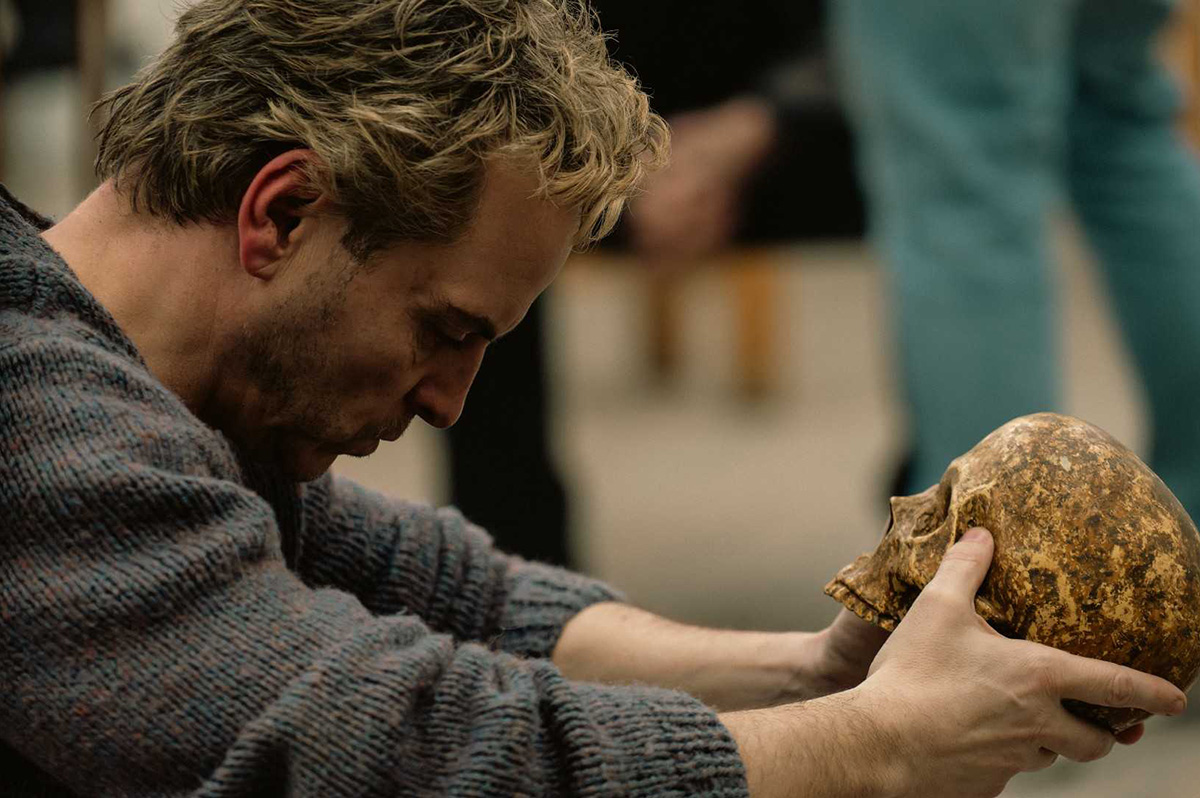
Elsinore (Theaters, 11/20) Andrew Scott reappears on our list as the star of what seems to be the most-anticipated movie of the season, a biographical drama about the last days of gay British actor Ian Charleson (“Chariots of Fire”), as he prepares for the lead role in a National Theatre production of “Hamlet” while secretly dying of AIDS. Scott’s performance as Charleson has been showered with raves, and so has that of Olivia Colman as the doctor who helps him get through the ordeal of rehearsing theater’s most demanding role while suffering from the symptoms of his disease. Director Simon Stone collaborated closely with both Scott and screenwriter Stephen Beresford in developing what was for them a deeply personal project, which explores the challenges of being queer but closeted in the public eye while emphasizing the ability of art and self-expression to empower us “against the slings and arrows of outrageous fortune” even unto the very end. Yes, it sounds like a downer, but the reports from those who saw its premiere at the Telluride Film Festival earlier this month assure us otherwise. The ensemble supporting cast includes Billie Piper, Johnny Flynn, Juliet Stevenson, Joe Locke, Peter Mullan, Georgie Glen, and David Dawson as pioneering queer filmmaker Derek Jarman, a friend of Charleson’s who was also lost to AIDS.
Theater
D.C.’s fall theater season is already well underway
‘Ma Rainey,’ ‘Mama Mia,’ ‘Rocky Horror,’ and much more on tap
Leaves have scarcely turned, but throughout the DMV, the fall theater season is well underway.
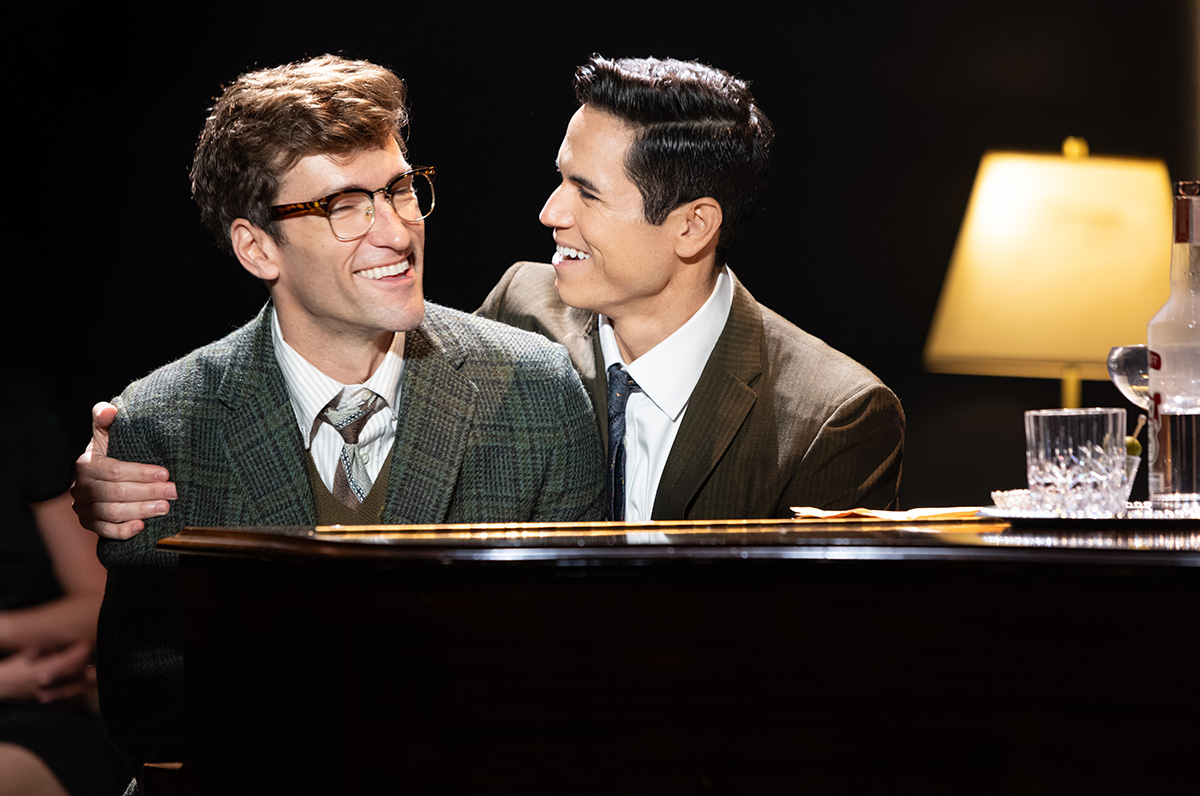
In Arlington, Signature Theatre got a jump on the season with Stephen Sondheim’s musical “Merrily We Roll Along” (through Nov. 1). Told entirely in reverse chronological order, this story of three longtime friends spans the years 1957 to 1976 moving from the trio’s cynical middle-aged present back to their happy and hopeful salad days.
Filled with great promise when it opened in 1981, the original production closed after just 16 official performances despite a terrific score glutted with great tunes like “Our Time,” “Good Thing Going,” and “Not a Day Goes By.” Over the years, the show was tweaked and reimagined, ultimately redeeming itself as a massive Broadway hit revival in 2023.
Signature’s production, directed and choreographed by Matthew Gardiner, features out actors Jason Gotay (Rafa from the “Gossip Girl” reboot) and Signature vet Jake Loewenthal playing, respectively, sellout composer Franklin Shepard and loyal lyricist Charley Kringas. Melanie Field plays witty and increasingly alcoholic Mary Flynn, the third prong of the complex little friend group. Sigtheatre.org
Woolly Mammoth Company has opened with playwright Steve Yockey’s “Venus” (through Oct. 4), a tragicomedy about two women whose first date goes terribly wrong. The lesbian daters are played by Kimberly Gilbert and queer-identified actor Regina Aquino. Woolly’s new artistic director Reggie D. White directs. Woollymammoth.net
At Round House Theatre in Bethesda, August Wilson’s “Ma Rainey’s Black Bottom” continues its compelling exploration of racism, exploitation, and artistic integrity. Helmed by director Lili-Anne Brown, the production runs through Oct. 18. The 10-actor cast includes Yao Dogbe as Levee, a young firebrand trumpeter, and out actor Nicole Michelle Haskins as the queer titular blues legend. Roundhousetheatre.org
Broadway at the National (National Theatre) is ushering in a spate of hit Broadway shows this fall. The musicals include “Dirty Dancing” (Sept. 29–Oct. 4), “Maybe Happy Ending” (Oct. 6–11), and ABBA’s “Mama Mia!” (Oct. 27–Nov. 15) featuring charming out actor Victor Wallace as successful architect and divorced father of two Sam Carmichael. Broadwayatthenational.com
First introduced to theatergoers by MetroStage at the Kennedy Center’s Page to Stage Festival in 2019, Sherman Yellen’s “Cousin Bella–The Whore of Minsk” is the riveting story of Bella, who as a young Jewish woman living in Czarist Russia was sold into prostitution by her stepmother. Later rescued, she immigrated to America, where she lived out the rest of her life in New York.
Now with a shortened title, “Cousin Bella” is going to MetroStage at The Lyceum (Alexandria’s History Museum) as a staged reading for one night only on Sept. 22. Again, Adrienne Nelson plays Bella, but this time, she’s joined by out DMV favorite Michael Russotto as Sherman. MetroStage.org
Hard to believe, but this year marks four decades since the film release of “Little Shop of Horrors.”
To celebrate the anniversary, Ellen Greene (the actor who created Audrey, the show’s sweet and sexy florist, both on stage and screen) is doing a nationwide tour that includes a night at D.C.’s historic Lincoln Theatre (Friday, Sept. 25).
Greene’s appearance offers fans the opportunity to experience the 1986 cult horror/comedy/musical classic alongside its iconic star. Before the screening, Greene will take part in a live Q&A and perform Audrey’s signature song – what else — “Somewhere That’s Green.” Thelincolndc.com
At Olney Theatre Center, the season opens with the regional premiere staging of “Some Like It Hot” (Sept. 18–Nov. 8) directed by Jason Loewith with choreography by Karla Puno Garcia.
Adapted from the classic 1959 Billy Wilder film starring Marilyn Monroe, Tony Curtis, and Jack Lemmon, the Tony Award-winning musical by Marc Shaiman and Scott Wittman (the guys who gave us “Hairspray”) brings the jokes, music, more dance and adds gender identity, self-discovery, and racial representation.
Like the film, the action kicks off in Prohibition-era Chicago when Joe (Jacob Tischler) and Jerry (Tavis Corderll), two straight musicians, witness a mob hit. Averse to being bumped off, they leave town as the newly hired members of an “all-girl band” fronted by the irresistible Sugar Kane (Mot Walker). Laughs and drag ensue. Olneytheatre.org
Spooky Action Theater in association Solas Nua present “Hakawatis: Women of the Arabian Nights” (Sept. 24 – Oct. 18). In this re-imagining, Irish Palestinian playwright Hannah Khalil reclaims the classic “Arabian Nights” through a new feminist lens replete with compelling storytelling by its all women cast of five. Spookyaction.org
The Shakespeare Theatre Company presents “Frida…A Self Portrait” (Oct. 8 – Nov. 8), a stage portrait of Mexican painter and queer icon Frida Kahlo. Written and performed by Brazilian actor Vanessa Severo, the play is set on the eve of Kahlo’s death, exploring her pain, passion, and extraordinary life through a powerful, intimate lens. Shakespearetheatre.org
At 1st Stage in Tysons, the season opens with British playwright Harold Pinter’s “Betrayal” (Oct. 8-25), a play sophisticated in subject and structure. Pinter uses a non-linear timeline spanning the years 1968 to 1977, moving mostly backward from the end of a seven-year affair to its beginning. The adulterous love triangle involves Emma (Katrina Clark), Robert (Shawn Sebastian Naar), and Jerry (played by excellent out actor Jaysen Wright). Alex Levy directs. 1ststage.org
In time for Halloween, Creative Caudron Stage in Falls Church presents “Monsters of the Villa Diodati” (Oct. 8 – Nov. 1), a Gothic-style musical created by local married collaborators Matt Conner (composer) and Stephen Gregory Smith (playwright/lyricist).
The applauded work dramatizes the stormy Geneva summer of 1816 when poet Lord Byron challenged his guests to come up with their best scary tales. Mary Shelley’s “Frankenstein” and John Polidori’s “The Vampyre” were among the better results. Creativecauldron.org
In Rehoboth Beach, Del., Clear Space Theatre Company’s anticipated annual production of “The Rocky Horror Show” (directed by Wes Drummond and choreographed by Shondelle Graulich) is returning to the stage for the Halloween season. (Oct. 9–31). Clear Space invites theatergoers to “revel in a deliciously decadent rock ‘n’ roll party where nothing is sacred, everything is extra, and liberation is the main event.” (Late night audience participation performances every Saturday night.) Clearspacetheatre.org
The first of Arena Stage’s autumn offerings is the Step Afrika! premiere of “The Fruits of Our Labor” (though Nov. 1), a powerful, celebratory production focused on resilience and the unfinished American experience expertly performed by the company’s tremendous step dancers.
Later at Arena, it’s playwright Eric Bentley’s extremely time “Are You Now or Have You Ever Been” (Oct. 17– Dec. 6), directed by Tony Award-winner Anna D. Shapiro. “This docudrama drops you into the tense world of the 1940s House Committee on Un-American Activities hearings, where fame offered no protection and political pressure could end a career.” Arenastage.org
For a bit of Strathmore family fun, AMP presents Disney Pixar’s “Coco Live-to-Film Concert” (matinees on Oct. 31, Nov. 1), a special event for Día de los Muertos where the full animated film Coco is screened on the big screen while its culturally rich score by Michael Giacchino is performed live by the 20-member Orquesta Folclórica Nacional de México. Strathmore.org
In an amusing essay about microaggressions, David Sedaris shares that whenever he and his partner Hugh browse antique stores in England, the shop owners invariably look them over and ask, “Are you dealers?” His usual retort: “No, just homosexuals.”
Playwright JB Miller treads similar terrain with “The Last Victorian,” his new play that kicks off the fall season at Washington Stage Guild with a world premiere production (Nov. 19- Dec. 13) directed by Laura Giannarelli.
In this dark comedy, two failed British antique dealers, same-sex partners in both business and in life, unbelievably inherit the world’s oldest person. When issues of price and provenance come to the fore, the pair turn on each other, and soon it seems the old lady might take charge. Stageguild.org
And to help make the much of the above markedly more affordable, there’s Theater Week. Organized by Theatre Washington, the more than seven days of deals and entertainment is a multi-week regional celebration launching the local fall theater season that runs from Sept. 24 to Oct. 11, featuring discounted tickets priced at $25, $45, and $65 for more than 25 productions alongside a lineup of free community events. For details and participating companies go to Theatrewashington.org.

Jeremy Moss looks to bring LGBTQ advocacy from Lansing to Capitol Hill

Parties, dinners, concerts and more on tap for fall nightlife

All the queer things to watch this fall

Gun reform is an LGBTQ rights issue

Trump’s Cabinet: Dumb, dumber, dumbest, and evil

Dolly Parton biography puts her hardships into context

PHOTOS: SMYAL Fall Brunch

Fashion icon Bob Mackie dead at 87

Transgender woman killed in Barclay community mourned by friends, advocates