Sports
Gay Jamaican swimmer says coming out has not affected career
Michael Gunning hopes to compete in 2020 Summer Olympics
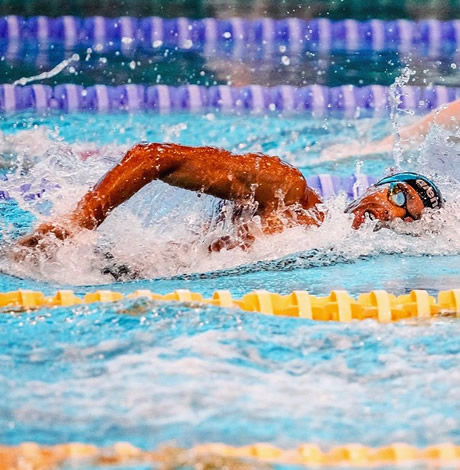
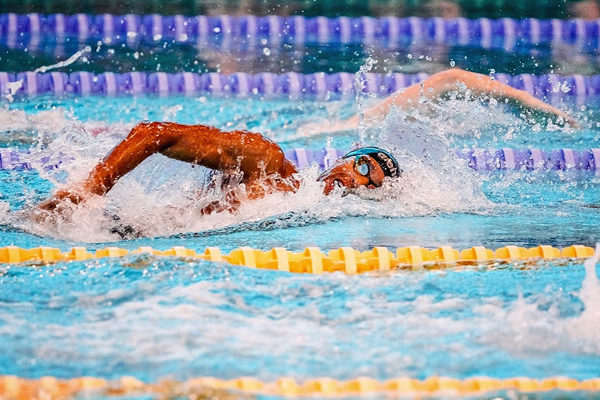
A gay swimmer of Jamaican descent says concerns that his decision to come out would adversely impact his career have not come to pass.
“Everyone has a different story, but for me personally I was worried that ‘coming out’ would take away from my sporting achievements/performances that I’ve worked and decided my whole life to,” Michael Gunning told the Blade on Aug. 8 in an email.
“Most sports are quite masculine dominated and I think it’s a worry for many athletes that it will take away the fear element from their performance — their opponents might see it as a weakness,” he added. “But for me, when I stand up to race I have to be happy — I normally wave to the crowd and listen to upbeat music, so it hasn’t really affected my ‘role’ as an athlete.”
Gunning, 25, lives in London.
He began to swim when he was 4 after his parents made him and his brother take swimming lessons. Gunning said he “hated it at first, but once I started getting confident in the water I was always getting in trouble for diving under the water and not listening to my teachers.”
He joined a swimming club when he was 7.
“I’ve stayed in a competitive swimming club swimming ever since,” said Gunning.
Gunning, whose father was born in Jamaica, spoke with the Blade after he competed in the Pan-American Games in Lima, Peru. Gunning said he hopes to represent Jamaica in the 2020 Summer Olympics in Tokyo.
“The Tokyo 2020 Olympics is the ultimate goal for just now,” said Gunning. “It’s always an honor to represent my county at any competition but the Olympics is so special and it’s something I’ve been working towards all my life so it would be the icing on the cake of my professional career.”
Gunning in 2018 decided to participate in “The Bi Life,” a British dating show that takes place in Barcelona.
“For the past 20 years swimming has taken up the majority of my life as I never dated or been in a relationship before as I never really found the time,” he said. “Despite walking around poolside with fit half naked people, I just learnt to switch off the attraction to anyone and it wasn’t until last year that I felt it was time to put myself out there and find myself a little more and I decided to do the show. I liked the concept of living with like-minded people in a villa for a few weeks — without the competition element — and find out what I was missing out on.
“I’ve met so many people who struggle to come to terms with their sexuality so a part of me wanted to take part in the show to inspire as many people as I possibly could to show them that it’s ok to be new and inexperienced to dating and allow them share the journey with me,” added Gunning.
Gunning told the Blade he was a “real person going into the villa and just acted on real feeling.” He described his first date as “so nice.”
“After I went on a few more dates and a rollercoaster of emotions … I knew automatically that my feelings towards men overpowered the feelings towards women and it was so nice to be able to share those feelings with my villa mates as they were so supportive and were part of the journey with me,” said Gunning. “I had so many wonderful comments towards my coming out scene and it was so comforting to know that many people had been through the same thing too.”
Gunning told the Blade that some people thought “I already knew I was gay.”
“But I felt like I owed it to myself to explore and find out for myself in my own way and it just happened that for me it was on TV,” he added. “The girls I dated on the show were so understanding and it’s wonderful that we live in a society where people are so loving and supporting others finding them self, and I’m still really good friends with them now.”
Gunning met Tom Daley, a British Olympic diver who is married to director Dustin Lance Black, at the London Aquatics Performance Center in 2014. Gunning described Daley as a “great role model” who has “always been a dear friend of mine.”
“I’m also constantly inspired by the current people out in the LGBTQ world making a difference as everyone’s story is so unique and personal to them and it’s great they feel they should share it,” said Gunning.
Jamaica is among the dozens of countries in which consensual same-sex sexual relations remain criminalized. Violence and discrimination against Jamaicans based on their sexual orientation and/or gender identity also continues to make headlines, even though the island’s LGBTI rights movement has become more visible in recent years.
“There is a harsh reality out in many Caribbean countries that any same-sex affection and/or activity is illegal and publishable of up to 10 years imprisonment,” acknowledged Gunning. “It breaks my heart that I would have to keep such affection to myself should I ever go and visit Jamaica.”
Gunning nevertheless told he Blade he regularly receives messages from LGBTI Jamaicans who share their stories with him.
“I do my best to offer them support and guidance,” he said. “I can’t imagine what it’s like to live out there with those legislations put in place, but they come to me because they don’t have anyone else and I try so hard to tell them everything is going to be ok. I hope within time and with the help of more black LGBT representatives, different Caribbean countries will be more willing to accept the developments of same sex couples.”
Amini Fonua, an openly gay Olympic swimmer from Tonga, applauded Gunning for his decision to come out.
“I think him coming out in a country as homophobic is super brave,” Fonua told the Blade.




Sports
New IOC policy bans trans women from Olympics
New regulation to be in effect at 2028 summer games in Los Angeles
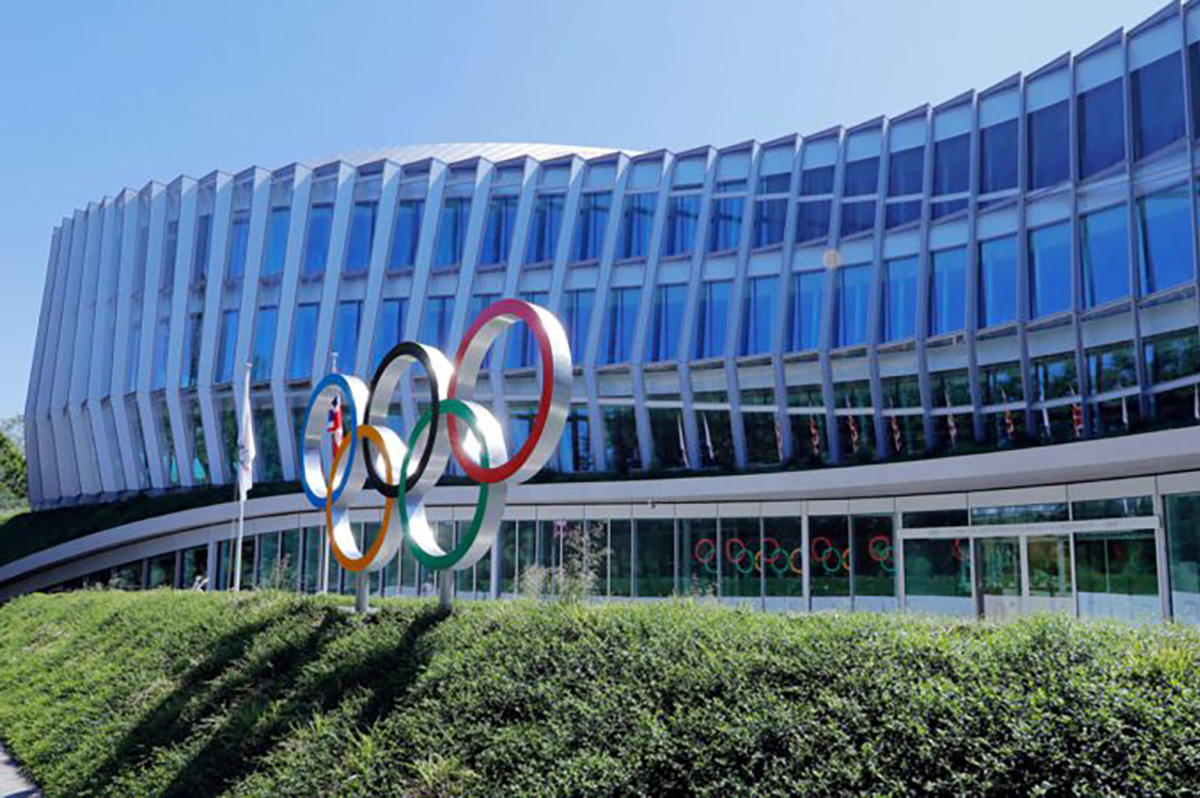
The International Olympic Committee on Thursday announced it will not allow transgender women from competing in female events at the Olympics.
“For all disciplines on the Sports Program of an IOC event, including individual and team sports, eligibility for any Female Category is limited to biological females,” reads the new policy.
The policy states “eligibility for the Female Category is to be determined in the first instance by SRY Gene screening to detect the absence or presence of the SRY Gene.”
“On the basis of the scientific evidence, the IOC considers that the SRY (sex-determining Region Y) Gene is fixed throughout life and represents highly accurate evidence that an athlete has experienced or will experience male sex development,” it reads. “Furthermore, the IOC considers that SRY Gene screening via saliva, cheek swab or blood sample is unintrusive compared to other possible methods. Athletes who screen negative for the SRY gene permanently satisfy this policy’s eligibility criteria for competition in the Female Category.”
The policy states the test “will be a once-in-a-lifetime test” unless “there is reason to believe a negative reading is in error.”
The new regulation will be in place for the 2028 Summer Olympics in Los Angeles.
“I understand that this a very sensitive topic,” said IOC President Kirsty Coventry on Thursday in a video. “As a former athlete, I passionately believe in the rights of all Olympians to take part in fair competition.”
“The policy that we have announced is based on science and it has been led by medical experts with the best interests of athletes at its heart. The scientific evidence is very clear: male chromosomes give performance advances in sport that rely on strength, power, or endurance,” she added. “At the Olympic Games, even the smallest margins can be the difference between victory and defeat. So, it is absolutely clear that it would not be fair for biological males to compete in the female category. In addition, in some sports it would simply not be safe.”
(Video courtesy of the IOC)
Laurel Hubbard, a weightlifter from New Zealand, in 2021 became the first trans woman to compete at the Olympics.
Imane Khelif, an Algerian boxer, won a gold medal at the 2024 Summer Olympics in Paris. Khelif later sued JK Rowling and Elon Musk for cyberstalking after they questioned her gender identity.
Ellis Lundholm, a mogul skier from Sweden, this year became the first openly trans athlete to compete in any Winter Olympics when he participated in Milan Cortina Winter Olympics in Italy.
President Donald Trump in February 2025 issued an executive order that bans trans women and girls from female sports teams in the U.S.
The U.S. Olympic and Paralympic Committee last July banned trans women from competing in female sporting events. Republican lawmakers have demanded the IOC ban trans athletes from women’s athletic competitions.
“I’m grateful the Olympics finally embraced the common sense policy that women’s sports are for women, not for men,” said U.S. Sen. Tom Cotton (R-Ark.) on X.
An IOC spokesperson on Thursday referred the Washington Blade to the press release that announced the new policy.
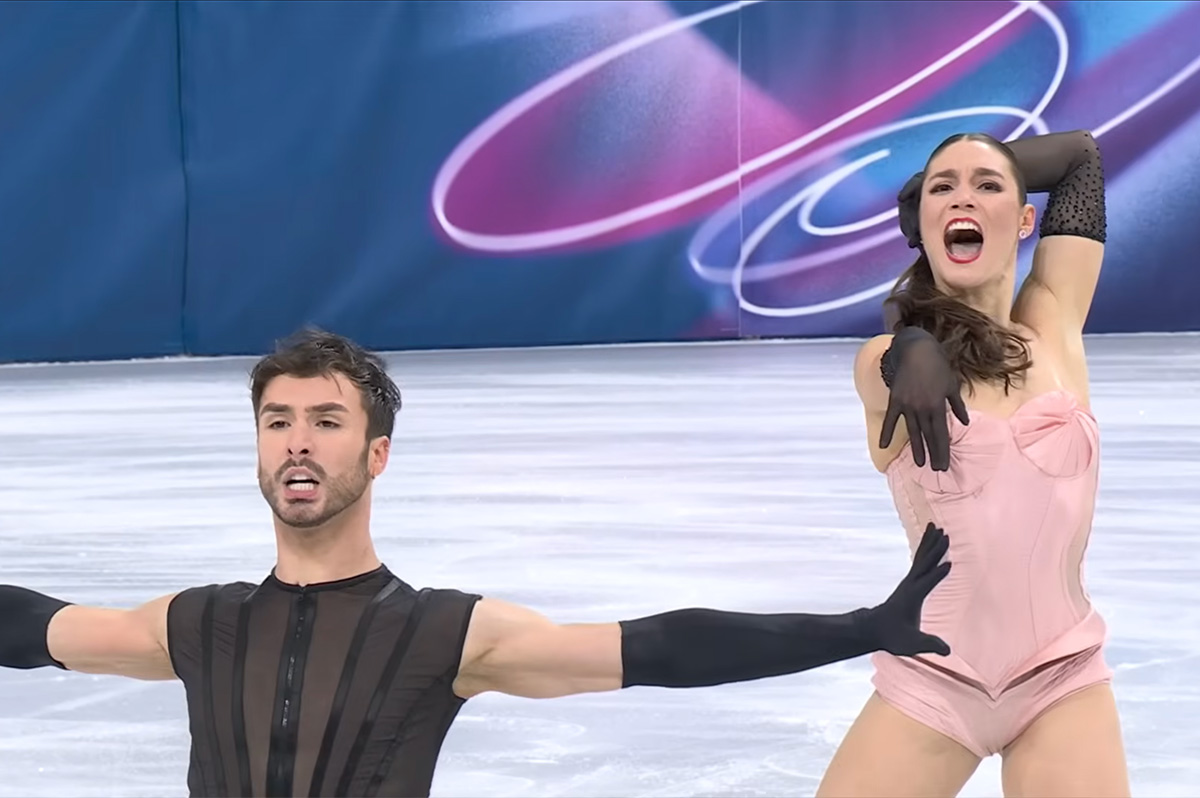
More than a dozen LGBTQ athletes won medals at the Milan Cortina Winter Olympics that ended on Sunday.
Cayla Barnes, Hilary Knight, and Alex Carpenter are LGBTQ members of the U.S. women’s hockey team that won a gold medal after they defeated Canada in overtime. Knight the day before the Feb. 19 match proposed to her girlfriend, Brittany Bowe, an Olympic speed skater.
French ice dancer Guillaume Cizeron, who is gay, and his partner Laurence Fournier Beaudry won gold. American alpine skier Breezy Johnson, who is bisexual, won gold in the women’s downhill. Amber Glenn, who identifies as bisexual and pansexual, was part of the American figure skating team that won gold in the team event.
Swiss freestyle skier Mathilde Gremaud, who is in a relationship with Vali Höll, an Austrian mountain biker, won gold in women’s freeski slopestyle.
Bruce Mouat, who is the captain of the British curling team that won a silver medal, is gay. Six members of the Canadian women’s hockey team — Emily Clark, Erin Ambrose, Emerance Maschmeyer, Brianne Jenner, Laura Stacey, and Marie-Philip Poulin — that won silver are LGBTQ.
Swedish freestyle skier Sandra Naeslund, who is a lesbian, won a bronze medal in ski cross.
Belgian speed skater Tineke den Dulk, who is bisexual, was part of her country’s mixed 2000-meter relay that won bronze. Canadian ice dancer Paul Poirier, who is gay, and his partner, Piper Gilles, won bronze.
Laura Zimmermann, who is queer, is a member of the Swiss women’s hockey team that won bronze when they defeated Sweden.
Outsports.com notes all of the LGBTQ Olympians who competed at the games and who medaled.
Sports
US wins Olympic gold medal in women’s hockey
Team captain Hilary Knight proposed to girlfriend on Wednesday
The U.S. women’s hockey team on Thursday won a gold medal at the Milan Cortina Winter Olympics.
Team USA defeated Canada 2-1 in overtime. The game took place a day after Team USA captain Hilary Knight proposed to her girlfriend, Brittany Bowe, an Olympic speed skater.
Cayla Barnes and Alex Carpenter — Knight’s teammates — are also LGBTQ. They are among the more than 40 openly LGBTQ athletes who are competing in the games.
The Olympics will end on Sunday.

Police mental health struggles gain growing attention
Man faces first S.C. ‘hate intimidation’ charge

Trump budget would codify expanded global gag rule

D.C. is the place for the Democratic Socialists of America

Key lifestyle changes can help patients cope with diabetes

VIDEO: Gay journalist detained for booing Trumps at ‘Chicago’ opening night

Trans-driven ‘Serpent’s Skin’ delivers campy sapphic horror

D.C. not the place for antisemitic Democratic Socialists of America

Pam Bondi ousted as attorney general

Idaho Gov. signs harshest anti-trans bathroom bill in the country
-

 The White House4 days ago
VIDEO: Gay journalist detained for booing Trumps at ‘Chicago’ opening night
-
Movies4 days ago
Trans-driven ‘Serpent’s Skin’ delivers campy sapphic horror
-
Opinions4 days ago
D.C. not the place for antisemitic Democratic Socialists of America
-
The White House4 days ago
Pam Bondi ousted as attorney general