Arts & Entertainment
Transgender filmmaker Lana Wachowski to direct ‘Matrix 4’
Keanu Reeves, Carrie-Ann Moss on board for the sequel
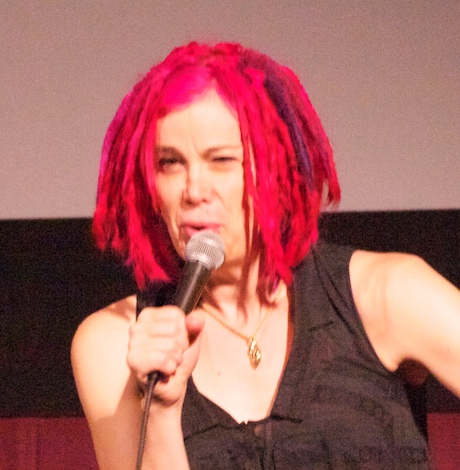
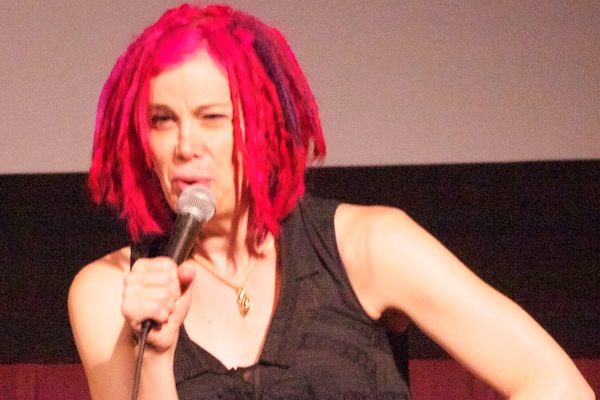
Lana Wachowski will direct “The Matrix 4” with the film’s original stars, Keanu Reeves (Neo) and Carrie-Ann Moss (Trinity), Variety reports. The filmmaker could become the first transgender director to helm a blockbuster film.
Lana and her sister, Lilly Wachowski, co-wrote and directed the original “Matrix” trilogy which released its first film in 1999. The trilogy earned $1.6 billion globally, according to Variety.
“Many of the ideas Lilly and I explored 20 years ago about our reality are even more relevant now. I’m very happy to have these characters back in my life and grateful for another chance to work with my brilliant friends,” Lana said in a statement to Variety.
Warner Bros. Picture Group chairman Toby Emmerich praised Lana in a statement saying, “We could not be more excited to be re-entering ‘The Matrix’ with Lana. Lana is a true visionary — a singular and original creative filmmaker — and we are thrilled that she is writing, directing and producing this new chapter in ‘The Matrix’ universe.”
It doesn’t appear that Lilly will be involved in the upcoming sequel.
“The Matrix 4” is based on a screenplay Lana co-wrote with Aleksander Hemon and David Mitchell. Production is expected to begin early next year.
The Wachowski siblings, who are both transgender, directed the 1996 lesbian mystery film “Bound” together. They also created the sci-fi Netflix series “Sense8.”


Out & About
Learn more about queer love
Friends of Dorothy Cafe hosts event at City-State Public House
Friends of Dorothy Cafe will host “Living History: How We Loved” on Thursday, May 14 at 7:30 p.m. at City-State Public House.
Guests will hear how queer and trans people have loved and cared for one another, especially when legal, medical, and social systems did not recognize those relationships. We’ll reflect on chosen family, long-term partnerships before marriage equality, caregiving during the AIDS crisis, hidden romances, friendship as survival, chosen family, and the loves that changed the course of our lives. This evening is about honoring lived experience, preserving community memory, and strengthening the bridge between generations.
Tickets are $24.57 and are available on Eventbrite.
Friday, May 8
Center Aging Monthly Luncheon With Yoga will be at noon at the DC Center for the LGBT Community. Email Mac at [email protected] if you require ASL interpreter assistance, have any dietary restrictions, or questions about this event.
Women in their Twenties and Thirties will be at 7 p.m. on Zoom. This is a social discussion group for queer women in the Washington, D.C. area. For more details, visit the group’s Facebook.
The DC Center for the LGBT Community will host “We Are Pat” at 12:30 p.m. This event takes a fresh look at the iconic Saturday Night Live sketch “It’s Pat” and traces how ideas about gender and what we laugh at have shifted from the ’90s to today. What began as a character born out of cultural anxiety around gender now lands in a world shaped by ongoing debates about transness and queerness. For more details, visit the DC Center’s website.
Saturday, May 9
Go Gay DC will host “LGBTQ+ Community Brunch” at 11 a.m. at Freddie’s Beach Bar & Restaurant. This fun weekly event brings the DMV area LGBTQ community, including allies, together for delicious food and conversation. Attendance is free and more details are available on Eventbrite.
Sunday, May 10
Drag Queen Sip and Paint Experience Washington DC will be at 4 p.m. at Town Tavern. This is a fabulous experience brought to you by Sip and Paint USA and combines the joy of painting with the lively energy of a drag queen, offering an hour and a half of fun, creativity, and entertainment. Participants paint a canvas while enjoying cocktails, all under the guidance of a glamorous drag queen host. Tickets are $47.19 and can be purchased on Eventbrite.
Monday, May 11
Center Aging: Monday Coffee Klatch” will be at 10 a.m. on Zoom. This is a social hour for older LGBTQ adults. Guests are encouraged to bring a beverage of choice. For more information, contact Adam ([email protected]).
Genderqueer DC will be at 7 p.m. on Zoom. This is a support group for people who identify outside of the gender binary, whether you’re bigender, agender, genderfluid, or just know that you’re not 100% cis. For more details, visit genderqueerdc.org or Facebook.
Tuesday, May 12
Trans Discussion Group will be at 7 p.m. on Zoom. This event is intended to provide an emotionally and physically safe space for trans* people and those who may be questioning their gender identity/expression to join together in community and learn from one another. For more details, email [email protected].
Coming Out Discussion Group will be at 7 p.m. on Zoom. This is a safe space to share experiences about coming out and discuss topics as it relates to doing so — by sharing struggles and victories the group allows those newly coming out and who have been out for a while to learn from others. For more details, visit the group’s Facebook.
Wednesday, May 13
Job Club will be at 6 p.m. on Zoom upon request. This is a weekly job support program to help job entrants and seekers, including the long-term unemployed, improve self-confidence, motivation, resilience and productivity for effective job searches and networking — allowing participants to move away from being merely “applicants” toward being “candidates.” For more information, email [email protected] or visit thedccenter.org/careers.
The DC Center for the LGBT Community will host “Movement for Healing” at 3 p.m. This trauma- and yoga therapy–informed class is designed to help guests gently reconnect with their body and their breath. Through mindful movement, somatic awareness, and grounding practices, guests will explore how to release tension, increase mobility, and cultivate a deeper sense of safety and ease within. For more details, visit the DC Center’s website.
Thursday, May 14
Virtual Yoga Class will be at 7 p.m. on Zoom. This free weekly class is a combination of yoga, breathwork and meditation that allows LGBTQ+ community members to continue their healing journey with somatic and mindfulness practices. For more details, visit the DC Center’s website.
Television
Repression, toxic masculinity fuel intense queer drama ‘Half Man’
A solidly crafted, well-acted, fascinating binge watch
In 2024, when Richard Gadd’s “Baby Reindeer” became a stock-boosting hit for Netflix, there were few Americans who knew his name.
In the UK, however, the Scottish writer/comedian/actor had already emerged as a talent to be reckoned with, blending autobiographical stand-up comedy with theater to create a reputation as an edgy and provocative creator whose shows tended to be equal parts divisive and successful. One of these, his fictionalized true-life story of being stalked and sexually harassed by a female fan, became an Olivier Award-winning hit in the London theater; that was “Baby Reindeer,” and – in the form of a seven-episode miniseries adaptation – it became the vehicle that carried him to wider fame.
Two years later, Gadd has returned with another high-profile miniseries, this time for HBO Max, and like its predecessor, it’s a story that deals with queer sexual repression, unhealthy attachments, and a central relationship that can safely be described without exaggeration as “toxic” – and it’s an even darker (and more twisted) ride that stretches across decades.
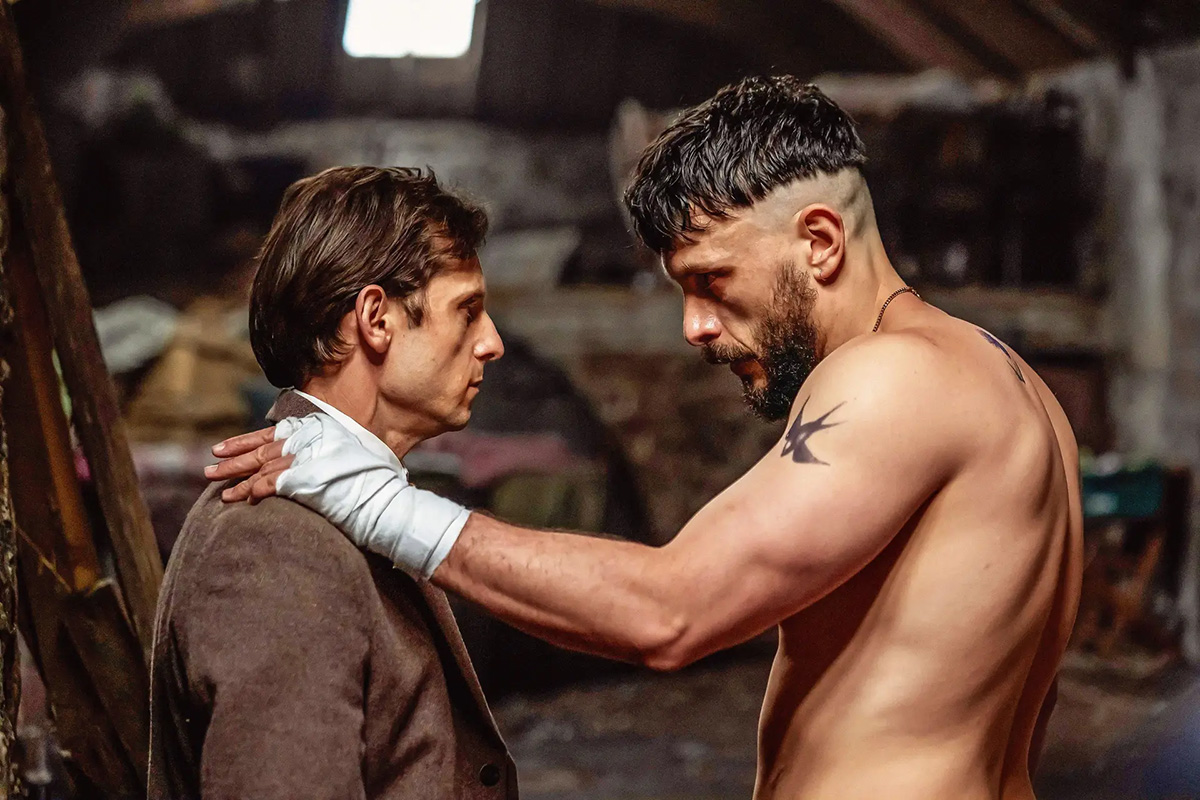
“Half Man,” which debuted on April 23 and continues with one episode per week through May 14, is the story of two “brothers” – Niall (Jamie Bell) and Ruben (Gadd) – whose mothers (Neve McIntosh and Marianne McIvor) have become a lesbian couple after leaving their relationships with the boys’ respective fathers. They are seeming opposites in personality; Niall is quiet, sensitive, and secretly unsure about his sexuality, while Ruben is tough, rebellious, and prone to violence – and unsurprisingly, it’s a match made in hell.
We meet them at the top of the first episode as adults, on the day of Niall’s wedding, when Ruben shows up without warning; his appearance triggers what looks like fear in his “brother from another lover,” and a private meeting between them in a barn at the wedding site turns ugly, launching a flashback format that takes us back to their schooldays, when young Ruben (Stuart Campbell) – already in trouble with the law and trying for a new start – comes home from juvenile detention to become roommate, protector, and bully to young Niall (Mitchell Robertson), all in one.
It’s the dawn of a new and epic relationship, despite a history that has made Niall terrified of the older boy; their seemingly opposite qualities somehow mesh into a kind of symbiotic bubble, in which a tense equilibrium turns them into unlikely allies. Ruben makes sure Niall has nothing to fear from the sniggering schoolyard homophobes who target him, and Niall helps Ruben pass the tests he needs to pass in order to stay in school, Nevertheless, their dynamic is equal parts surprisingly tender and alarmingly lopsided. Though they form a bond, it’s a volatile one, and by the end of episode one – after an uncomfortable-to-watch late night incident that amounts to a sexual assault – there is little doubt that Ruben is a psychopath. By then, however, it’s too late; Niall has become hopelessly ensnared by his manipulations, and their dangerous attachment has taken permanent root.
In episode two, the timeline moves the past forward several years (while rolling the wedding-day story back a few hours as well), bringing Niall forward to his college years. Ruben is once again absent from his life, but the bond is still deep. He struggles to make connections in his new setting – including with another student, the openly gay Alby (Bilal Hasna), who recognizes a side of him that he has still yet to accept for himself. Though he gradually begins to adapt to his new social circle, his insecurities get the better of him – and despite warnings from his mother not to do so, he calls Ruben to come and visit. His arrival triggers another escalating series of incidents, this time entangling Niall’s new friends and culminating in a shocking, jealous-fueled explosion of violence.
Without going on with the story – after all, the two remaining episodes have yet to be released, so we wouldn’t want to spoil anything – it’s safe to say there’s a pattern here, and it’s intentional.
Gadd has already been public about his own struggles with repression, which were directly explored (albeit fictionally) in “Baby Reindeer,” and it’s clear that he had more to say about the effects they had on his life and identity.
As he put it himself, in an interview with the Hollywood Reporter, “Themes of, I guess, masculinity, or what it means to be a man, or ‘I’ve gone through a masculinity crisis’ come into [the show] probably because I’ve been through that in my life, and I feel I can write to it and speak to it.
“I always think that the best kind of art is kept close to your chest, kept close to your heart, kept close to your experiences, and I guess with ‘Half Man,’ there’s a lot in it that I relate to. It’s not an autobiographical piece by any stretch, it’s purely fiction, but it certainly borrows from themes and struggles and issues that I understand.”
That understanding translates to the series through its focus on tracing the roots of Niall and Ruben’s relationship by methodically tracking the cause-and-effect chain that links the major events of their lives together. It explores the contradictory combination of worship and terror, the transgressive eroticism that intertwines danger and desire, the power of the forbidden to make us want it more, and the self-loathing that punishes itself through violence toward others. The inverted framework of the storytelling, which works both forward and back to meet at (we assume) some definitive point, makes following it a bit like putting together a puzzle, which also has the effect of building suspense as we wait to see the “moment of truth.”
Of course, those who prefer a more straightforward narrative might not appreciate the additional challenge, especially when the subject matter – which revolves around experiences, feelings, and behavior that might be entirely unfamiliar to many audiences – is challenging enough by itself, in its own way. Likewise, and for much the same reason, there will be viewers who are unable to relate to its characters, as some of the show’s less-favorable reviews have pointed out.
But it would be naive to assume that the themes in “Half Man” – of fragile masculinity, internalized homophobia, misdirected rage, nihilistic rebellion, conflicted desires, projected shame, and the other ingredients that infuse this shadow-boxing psychodrama with such a distinctive musky odor – do not apply to more men in today’s culture of incels, “looksmaxxers,” and “the Man-o-sphere” than any of them would like to admit. We’d wager that its portrait of a same-sex, sub/Dom, borderline incestuous relationship might resonate more urgently there than within a queer community that has been grappling with those issues for generations already and are just waiting for everybody else to catch up.
In any case, Gadd’s newest variation on a theme is a solidly crafted, well-acted, and hypnotically fascinating (if sometimes uncomfortable) exercise in the kind of “can’t look away” drama that makes for a perfect binge watch. Or, at least, it will once all the episodes drop.

Comings & Goings

Learn more about queer love

Calendar: May 8-14

Va. Supreme Court invalidates Democrat-backed redistricting plan

Maren Morris to headline Capital Pride Concert

Diverse cast tackles ‘Aguardiente’ at GALA Hispanic Theatre

Under new extremism laws, LGBTQ Russians must fight to survive

New books reveal style trends for a more enlightened century

How do you vote a child out of their future?

Gay ICE detainee freed after 150 days in detention
-

 Theater5 days ago
Diverse cast tackles ‘Aguardiente’ at GALA Hispanic Theatre
-
Russia4 days ago
Under new extremism laws, LGBTQ Russians must fight to survive
-
Books5 days ago
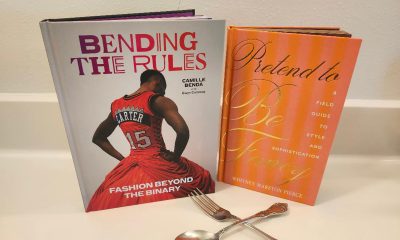
New books reveal style trends for a more enlightened century
-
Commentary4 days ago
How do you vote a child out of their future?